D-Marin Mandalina (Sibenik)
| Posizione | Sibenik, Dalmazia centrale, Croazia, a 43 43,8 N, 15 53,59 E |
|---|---|
| Gestore | D-Marin, sviluppata dal gruppo NCP e dal gruppo Dogus |
| Posti barca | 462 in totale, circa 440 dei quali in acqua |
| LOA massima | 140 m, indicata sia dal gestore sia dalla Yacht Harbour Association |
| Accesso | nessun limite di altezza d'aria o di pescaggio, e 5 miglia nautiche dal mare aperto |
| Avvicinamento | il canale di Sant'Antonio, lungo oltre 2.000 m e largo da 140 m a 220 m, con limite di 6 nodi |
| Corrente nel canale | un deflusso costante da 0,5 a 1,5 nodi, fino a 3 nodi dopo forti piogge |
| Riconoscimenti | Five Gold Anchors della Yacht Harbour Association, più Bandiera Blu |
| Cantiere della marina | travel lift da 50 tonnellate, gru da 1,5 tonnellate, circa 30 posti a secco |
| Cantiere adiacente | NCP Refit Shipyard, con yacht lift da 900 tonnellate, bacino galleggiante da 1.500 tonnellate e capannoni per yacht fino a 70 m |
| Aeroporti | Spalato circa 58 km, Zara circa 84 km |
| Sul posto | hotel D-Resort Sibenik, torre di controllo, canale VHF 17, sicurezza e videosorveglianza 24/7 |
| Berth figures, from the operator's own marina page checked 28 July 2026: 452 berths for yachts to 70 m, and Mandalina described as Croatia's only marina designed for superyachts to 60 m. Higher counts and a 140 m maximum still circulate in third-party listings and are not what D-Marin publishes today | |
| Note on the 140 m figure | 140 m is also the narrowest published width of the St Anthony Channel, and the two numbers are easily conflated. Any yacht above 70 m should have the berth confirmed in writing |
| Travel lift on the marina's own page | 50 tonnes, with 30 dry dock places and hull pressure washing. Anything heavier goes next door to NCP Refit |
| Documents the operator requires on arrival: boat registration and a Croatian sailing permit | |
| Shore power | the operator describes smart pedestals and publishes no amperage, no voltage and no frequency, checked 28 July 2026. Croatia runs 50 Hz at 230 V and 400 V |
| Depth alongside is not published by the operator, checked 28 July 2026. The claim of no draft restriction is an operator statement and not a sounding | |
| No berthing rate of any kind is published by the operator, checked 28 July 2026 | |
Cinque miglia nell'entroterra, e perché la cosa conta
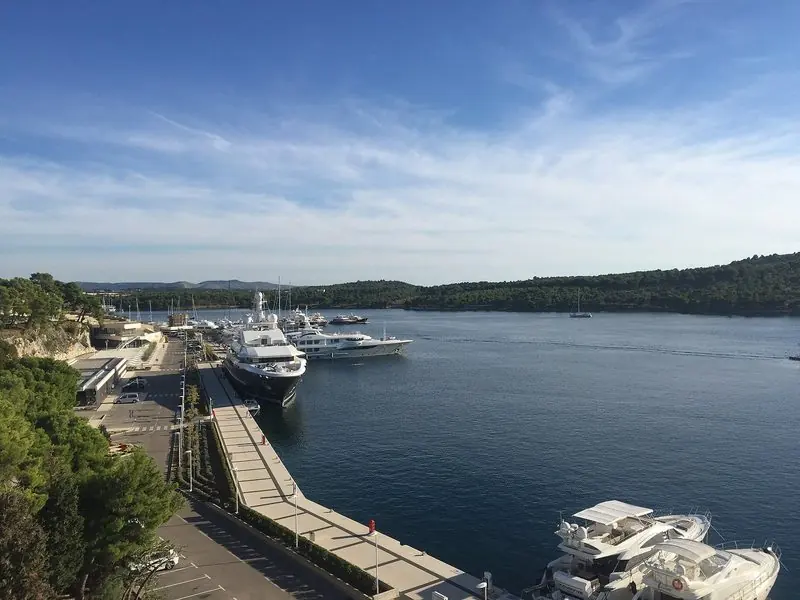
Mandalina si trova sul lato sud della baia di Sibenik, in Dalmazia centrale, uno specchio d'acqua che si apre dietro un lungo istmo ed è alimentato dal fiume Krka. La marina è a cinque miglia nautiche dall'Adriatico aperto, cosa che suona come una scomodità ed è in realtà tutta la proposta. Niente di quello che succede in Adriatico arriva fino a quest'acqua. Il gestore la descrive come uno degli ormeggi più sicuri dell'Adriatico, e i comandanti che ci hanno svernato usano le stesse parole.
È stata costruita come prima marina croata progettata apposta per i superyacht dal gruppo NCP con il gruppo turco Dogus, e fa oggi parte della rete D-Marin che gestisce marine dalla Spagna agli Emirati. Per un armatore la cosa conta perché standard, gestione dell'ormeggio via app e accordi di ormeggio reciproco dentro il gruppo sono coerenti. I posti barca sono 462 in totale, circa 440 dei quali a galla. La lunghezza fuori tutto massima è indicata in 140 metri dal gestore e dalla Yacht Harbour Association, che assegna alla marina il riconoscimento Five Gold Anchors.
Il canale di Sant'Antonio
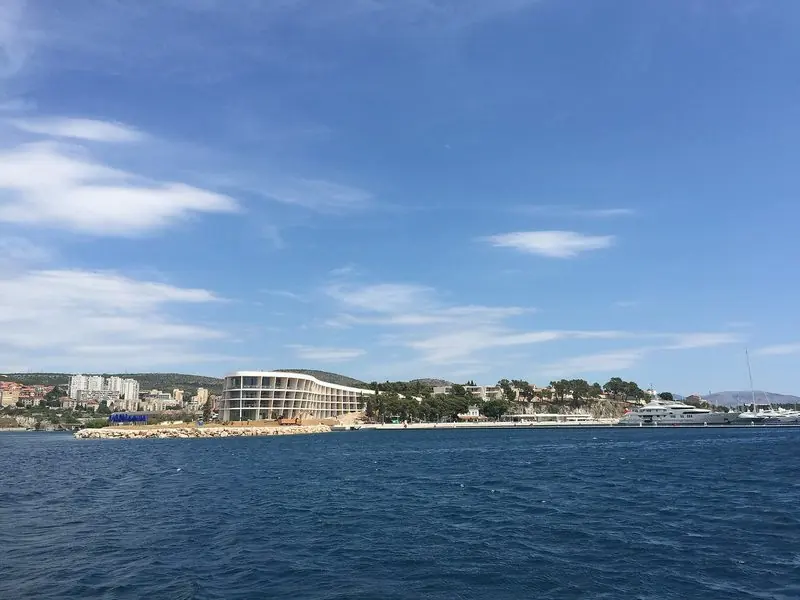
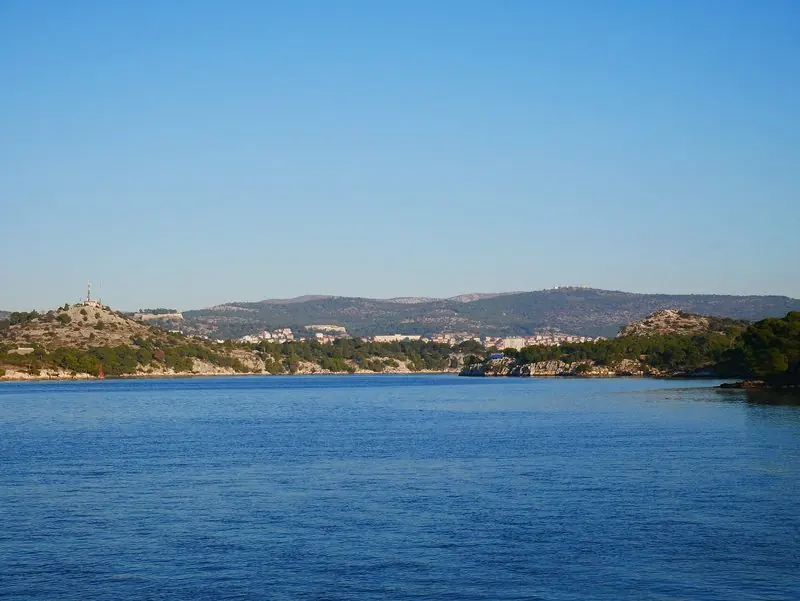
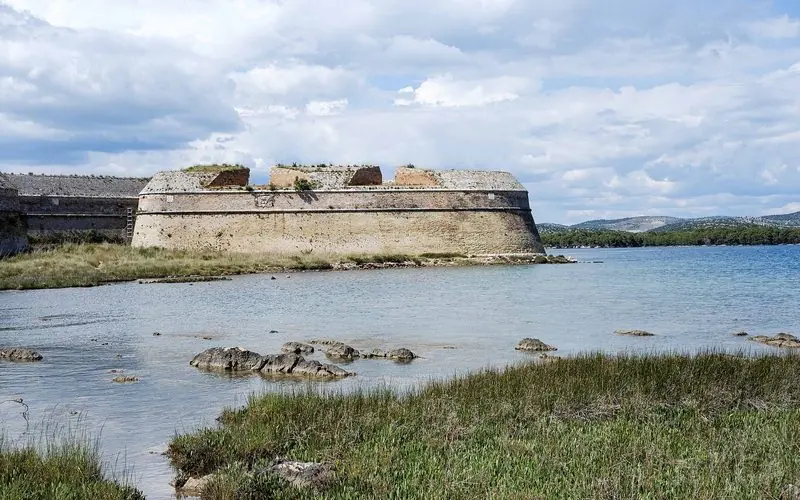
Si entra a Sibenik attraverso il canale di Sant'Antonio, una gola naturale lunga oltre due chilometri e larga tra 140 e 220 metri, scavata tra falesie calcaree e profonda circa 40 metri. È un pezzo di pilotaggio davvero spettacolare, sorvegliato verso il mare dalla fortezza cinquecentesca di San Nicola, struttura riconosciuta dall'UNESCO che sta sul suo isolotto. Il canale è illuminato per l'ingresso notturno con il rosso a sinistra e il verde a destra, e il limite di velocità al suo interno è di sei nodi. Non c'è nessun limite di altezza d'aria, quindi un albero alto o un arco radar ingombrante qui non contano.
L'unica cosa da mettere in conto è la corrente. Nel canale c'è un flusso costante verso il mare da 0,5 a 1,5 nodi, e dopo forti piogge sul bacino del Krka può arrivare a tre nodi e formare risucchi. Per un grande scafo a elica singola che entra contro corrente con vento al traverso è una considerazione reale. Superato il canale, la baia si apre in acqua calma con la marina sulla riva meridionale. Il transito a sei nodi prende circa venti minuti e gli ospiti in genere se lo ricordano.
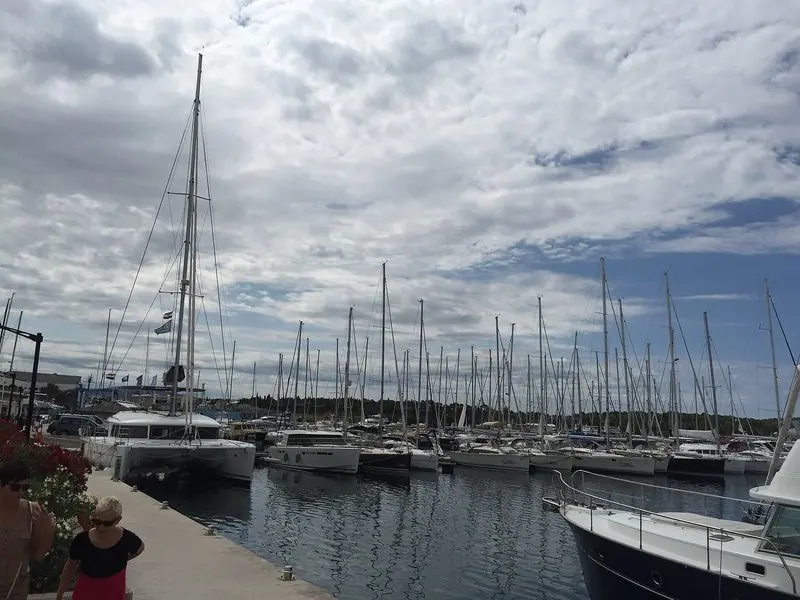
Due chilometri di gola calcarea separano questa marina dall'Adriatico, ed è esattamente questo che un armatore sta pagando.
I posti barca e che cosa reggono
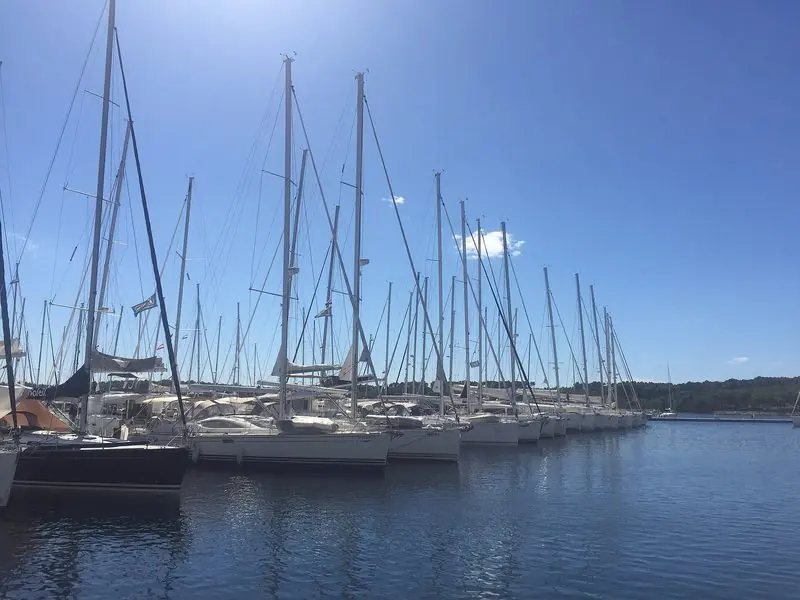
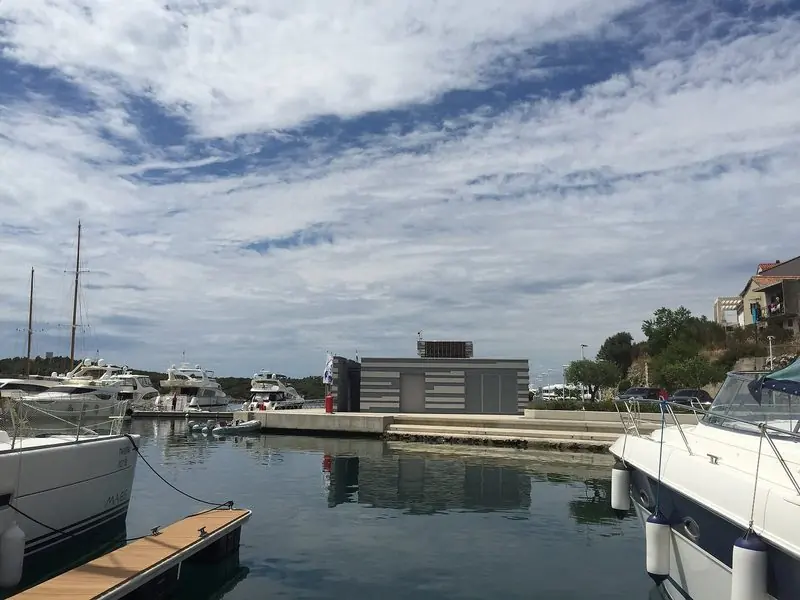
La marina non dichiara alcun limite di altezza d'aria o di pescaggio, e i suoi posti in acqua profonda sulla banchina superyacht sono la parte della struttura che interessa a un armatore dai 60 ai 140 metri. I pontili standard reggono la fascia dai 15 ai 70 metri che fa il grosso della flotta adriatica, e le posizioni più grandi stanno sul muro esterno. Per la maggior parte degli yacht l'ormeggio è con la poppa a banchina, di fianco per i più grandi. Una torre di controllo gestisce i movimenti e gli ormeggiatori sono in servizio tutto il giorno.
In Croazia la disponibilità è un problema d'estate e un'occasione d'inverno. Luglio e agosto sono duri ovunque su questa costa, e Mandalina è la scelta di default per i grandi yacht che arrivano, quindi i posti migliori si impegnano presto. Da ottobre il quadro si rovescia del tutto e la marina diventa una base invernale, in parte per il riparo e in parte per il cantiere accanto. I contratti annuali sono l'assetto normale e portano vantaggi su tutta la rete D-Marin, comprese soste brevi gratuite nelle altre marine del gruppo.
Il cantiere sul lotto accanto
La marina ha un proprio cantiere con travel lift da 50 tonnellate, gru da 1,5 tonnellate, lavaggio dello scafo a pressione e una trentina di posti a secco, che copre tender, chase boat e piccole unità. La capacità seria è a fianco. NCP Refit Shipyard occupa 110.000 metri quadrati nella stessa baia, con 45.000 metri quadrati di officine, uno yacht lift da 900 tonnellate, un bacino galleggiante da 1.500 tonnellate, capannoni coperti per yacht fino a 70 metri e un piazzale dello shiplift che tiene tredici yacht insieme.
Per un armatore quella combinazione è insolita ovunque nel Mediterraneo e unica in Adriatico. Uno yacht può svernare a galla al suo posto barca, salire sul sollevatore per antivegetativa e lavori di visita, riscendere ed essere pronto per una partenza a maggio senza nessun trasferimento. Il costo del lavoro in Croazia sta sotto agli equivalenti italiani e francesi, ed è gran parte del motivo per cui il cantiere si riempie. Il regolamento della marina vieta i lavori di manutenzione di grande entità ai posti barca, quindi tutto ciò che va oltre la cura ordinaria deve spostarsi in cantiere.
Energia, acqua e come è gestita
L'energia è distribuita da colonnine smart con potenza commisurata allo yacht, e la marina insiste su una fornitura stabile e senza oscillazioni per le unità grandi, cosa non scontata su una banchina di un'isola croata. L'acqua c'è 24 ore. I rifiuti vengono ritirati e lo scarico in acqua è vietato del tutto. Il carburante è disponibile, e dentro la marina lavorano un ship chandler, un supermercato e agenzie nautiche. L'hotel D-Resort Sibenik sta dentro l'area della marina, il che risolve la domanda su dove dormono gli ospiti in più.
In marina non è permesso l'uso dei generatori, quindi qui uno yacht va ad alimentazione da banchina e la colonnina va dimensionata correttamente prima dell'arrivo. È un dettaglio da verificare per tempo per una barca con un carico alberghiero pesante e l'armatore a bordo ad agosto. L'assistenza all'ormeggio è prevista e il servizio ormeggiatori è continuo. L'arrivo si annuncia sul canale VHF 17, e al cancello servono i documenti di registrazione della barca e la vignetta croata.
Riservatezza, e le carte croate
La marina è chiusa da cancelli e recinzione, coperta da sicurezza e videosorveglianza sulle 24 ore, e separata dalla città sulla penisola di Mandalina, quindi uno yacht qui non è in mostra al pubblico. Nel bacino sono vietati bagno, immersione e pesca, cosa che tiene libera l'acqua attorno alle barche. Rispetto allo stare con la poppa a banchina sul molo cittadino di Hvar o di Spalato, la differenza di esposizione è netta. Gli ospiti che arrivano in auto entrano da un ingresso controllato.
La Croazia è sia nell'Unione europea sia in Schengen e usa l'euro, il che ha semplificato parecchie cose dal 2013. Serve una vignetta, il permesso di navigazione croato, valida fino alla fine dell'anno solare. Chi intende fare charter deve guardare le regole con attenzione prima di impegnarsi, perché gli yacht battenti bandiera extra-UE oltre i 40 metri di lunghezza di registro hanno bisogno di una licenza di charter per lavorare in acque croate, e dal 1 gennaio 2026 il Paese è passato alla fatturazione elettronica obbligatoria per il charter. La posizione per la navigazione privata è lineare, quella commerciale no.

Sibenik a terra e la navigazione tutto attorno
Sibenik è una città dalmata di circa 34.000 abitanti, costruita su un fianco di collina attorno alla cattedrale di San Giacomo, patrimonio mondiale dell'UNESCO tirata su in pietra senza malta né legno nell'arco di un secolo di lavoro. Tre fortezze guardano dall'alto il centro storico, e quella di San Michele è stata trasformata in un teatro all'aperto che porta avanti un serio programma estivo. Non c'è nessuna scena yachting e nessun denaro in mostra, cosa che per certi armatori è esattamente il punto. I ristoranti sul lungomare sono buoni e senza pretese.
La ragione per essere qui è la navigazione. Il parco nazionale di Krka e le sue cascate stanno su per il fiume dietro la marina, l'arcipelago delle Kornati con più di ottanta isole è a un tiro verso il largo e a nord, e Hvar, Vis e Korcula sono tutte a meno di una giornata. L'aeroporto di Spalato è a circa 58 chilometri di strada e quello di Zara a circa 84, entrambi collegati all'autostrada A1. Nessuno dei due è un hub intercontinentale, quindi gli ospiti in genere fanno scalo a Francoforte, Monaco, Vienna o Zagabria.
Stagione, meteo e il difetto da dire
La stagione croata è corta e intensa, va grosso modo da metà maggio a fine settembre con un picco duro nelle ultime tre settimane di luglio e nelle prime due di agosto. Fuori da quella finestra la costa si svuota in fretta e a novembre le isole sono chiuse. Il vento che definisce l'Adriatico è la bora, il freddo vento da nordest che cade dalle montagne a raffiche violente ed è al suo peggio dall'autunno alla primavera, mentre d'estate lo jugo porta il tempo umido da sudest con la pioggia. La posizione di Mandalina in fondo alla baia fa sì che di questi venti un armatore legga invece di sentirli.
I difetti sono reali. Sibenik è una tranquilla città di provincia senza un collegamento aereo internazionale proprio e senza la profondità di ristoranti e alberghi di Spalato o Dubrovnik, quindi gli ospiti hanno bisogno di un transfer. In piena estate questa costa è affollata fino allo sgradevole nei porti famosi. E la percorrenza del canale di cinque miglia, per quanto magnifica, aggiunge quasi un'ora a ogni partenza e a ogni rientro a sei nodi. Gli armatori che vogliono mollare gli ormeggi ed essere all'ancora in venti minuti sono nel posto sbagliato.
What the operator actually publishes, and what it does not
The headline figures for Mandalina need correcting against the operator's own page. D-Marin states 452 berths for yachts up to 70 m and describes the marina as Croatia's only one designed for superyachts up to 60 m, checked 28 July 2026. It also gives its travel lift as 50 tonnes with 30 dry places. The 462 berths and 140 m maximum length overall that circulate in listings are not the operator's current numbers, and it is worth noting that 140 m is also the narrow end of the published width of the St Anthony Channel, which is exactly the kind of figure that migrates from one column of a specification sheet to another. A yacht above 70 m should have the berth confirmed in writing before committing to the passage up the channel.
Three numbers a captain needs are simply not published. There is no amperage on the pedestals, no depth alongside, and no price. The absence of the amperage is the sharpest of the three because the marina prohibits generator use, which turns the shore supply from a convenience into a go or no-go condition. A yacht that cannot draw its hotel load from the pedestal and cannot run its own set has nowhere to go. Croatia runs 50 Hz at 230 V and 400 V, in common with the rest of the continent, so the frequency is not the problem. The rating is. Ask for the amperage on the specific superyacht berth, ask whether the connection above a given rating is made by the marina or the crew, and get both in the booking confirmation.
The depth question, and the yard on the next plot
Depth is the other unresolved item. The operator's claim is that there are no air draft or draft restrictions and that the marina lies five nautical miles from open sea, which is a statement about the approach rather than a sounding at the berth. On a marina quoting 70 m capability that gap matters, because the binding constraint in a bay this far inside is almost always the water and not the length of the pontoon. The St Anthony Channel itself is over 2,000 m long and between 140 m and 220 m wide with a constant outflow of 0.5 to 1.5 knots, reaching 3 knots after heavy rain, and it is the current rather than the depth that a captain plans for on the way in.
On lifting, the split is clean and it is the reason the place works. The marina's own yard takes 50 tonnes, which covers tenders, chase boats and small craft and nothing else. Everything serious happens on the adjacent plot, now trading as Iskra Shipyard after a sale, which runs a 900-tonne ship lift, a 75-tonne travel lift and covered capability for yachts to 80 m, with a new 110 m, 4,000-tonne floating dock contracted in 2024. That is a genuine large-yacht capability within a walk of the berth, and it is unusual in the Adriatic. No day rate is published for either yard, checked 5 August 2026, and the general observation that Croatian labour sits below Italian and French rates is worth nothing to a budget without a figure attached.
A terra, accessi e prenotazioni
| Getting there | Split Airport is about 57 km away, roughly 49 to 60 minutes' drive, with a private transfer priced around EUR 81 for up to three passengers. Zadar Airport is further, roughly 75 km depending on the route, about 50 minutes by taxi but with no direct bus connection, which favours Split for a guest without a car. |
|---|---|
| Arriving by sea | Work VHF channel 17. The St Anthony Channel entrance is marked by a lighthouse on Cape Jadrija to the north and the sixteenth-century St Nicholas Fortress, built to guard the channel from Ottoman naval attack, to the south. Keep to starboard through the channel, hold the 6-knot limit, and expect a current of 0.5 to 1.5 knots against you on the way in, reaching 3 knots after heavy rain. |
| Reserving a berth | D-Marin takes bookings directly ([email protected], +385 22 460 800, a two-business-day response by its own stated standard) and is also listed on third-party platforms including MarinaReservation.com, Seasy, Metarina and Direct Berth. No forum or broker account gave a specific figure for how far ahead a peak-season berth needs to be secured, so ask the marina directly for current lead times rather than assuming. |
| What a berth costs | No current D-Marin Mandalina rate card is published anywhere Yotters could reach, checked 5 August 2026. One Croatian pricing index states private marinas of this type generally charge 20 to 40 per cent above standard Croatian marina rates, but gives no Mandalina-specific figure. Get a written quote before budgeting a season. |
| The yard next door | Iskra Shipyard (Ship Refit Department, +385 22 312 971, [email protected]) runs the 900-tonne ship lift, a 75-tonne travel lift and a 350 m quay across 45,000 square metres of workshops, with repair capacity to 80 m LOA and new-build supervision to 60 m. No haul-out cost signal or booking lead time is published; ask the yard directly. |
| Eating within walking distance, and after dark | Pelegrini, a Michelin star in the 2025 Guide Croatia, sits by the Cathedral of St James in the old town. The on-quay marina bar and restaurant does handmade pizzas, praised by name in reviews. Sibenik itself is quiet after dark; the area's actual nightclub scene, at Hacienda in Vodice and Aurora in Primosten, is a drive away. |
| What is NOT published, and the fixed dates | No rate card, no haul-out cost signal from Iskra, and no independently confirmed maximum LOA: the operator says 70 m, Dockwalk says 90 m, and 140 m still circulates in older directories. D-Marin runs an annual superyacht showcase, Adriatic Wave Weekend, at Mandalina with a gala dinner at Fortress Barone, though a fixed 2026 date could not be confirmed. Sibenik hosts an International Children's Festival every June; confirm the exact dates directly with the festival organisers before planning around it, since sources checked disagreed on the edition number. |
Cosa riferiscono armatori ed equipaggi
Reviewers consistently praise the cleanliness of the facilities
Named Google reviewers describe "clean and spacey showers and rest room" and a supermarket open till 10pm, and call the marina "modern, super super good on service."
Noam R and A C, Google reviews via WanderlogBut shade and shower capacity draw genuine complaints for a marina this size
The same reviewer who praised the amenities also flagged that "it needs trees and shade, it very much sun exposed," and a second reviewer, while enjoying the quayside pizza bar, separately called it a "busy marina, clean facilities but few showers."
A C and Rory H, Google reviews via WanderlogWeaker, unverified reports describe slow management and berth-availability friction
Tripadvisor-indexed comments describe the marina as having gone into decline with unresponsive management and one visitor being told to look elsewhere for a berth. Yotters could not confirm the reviewers' identities or dates behind these comments, so they are reported here as a pattern worth asking the marina about directly, not as a settled fact.
Tripadvisor (reviewer identities not verifiable)D-Marin's own account of its customer satisfaction
D-Marin reports its own Net Promoter Score rising from 51 to 54 across its marina network and cites an iF Design Service Design Award. This is the operator's own account of its own service, not an independent measurement.
D-Marin, via Boat International
Cosa convince e cosa va valutato
Punti di forza
- The only Croatian marina purpose-built for superyachtsMandalina has held Five Gold Anchors continuously since 2011, a rating no other Croatian marina carries at this level.
- A naturally sheltered, land-locked berthReaching the marina means five nautical miles up the St Anthony Channel, which multiple cruising sources describe as one of the most protected superyacht berths in the Adriatic.
- A serious haul-out yard genuinely next doorIskra Shipyard's 900-tonne ship lift and repair capacity to 80 m LOA sit a walk from the pontoon, so a winter refit does not mean a delivery passage.
- A Michelin-starred restaurant and the old town within ten minutesPelegrini holds a Michelin star in the 2025 Guide Croatia and sits by the Cathedral of St James in Sibenik's UNESCO-listed old town, a short walk from the berth.
- An on-site hotel and spaThe D-Resort Sibenik occupies the same plot, so guests and owners have a hotel to fall back on without leaving the marina.
Da valutare
- No published rate card at allBudgeting a season here means calling the marina and waiting, by its own stated service standard, up to two business days for a quote.
- Public capacity figures genuinely disagreeD-Marin's own site states 452 berths to 70 m; Dockwalk states 90 m and 440 berths; other directories still circulate a 140 m maximum. A yacht above 70 m should get the specific berth confirmed in writing rather than relying on any of these.
- Shower capacity and shade are named, repeated complaintsMore than one named reviewer flags too few showers for the marina's size and a lack of tree cover on the pontoons.
- Weaker but recurring reports of slow managementUnverified Tripadvisor-indexed comments describe unresponsive staff and berth-availability friction; treat as a question to ask the marina directly rather than a settled fact, but do not ignore it.
- The yard next door has changed hands and the listings have not caught upWhat this page long called NCP Refit Shipyard is now Iskra Shipyard, and directories including SuperyachtNews' own still carry the old name and the old, smaller floating-dock figure. A booking made from a stale listing goes to the wrong contact.
A chi si rivolge: L'armatore che naviga l'Adriatico e vuole riparo assoluto, un cantiere di refit con sollevamento pesante a fianco e una base invernale che costa meno dell'Italia.