Al Mouj Marina (Muscat)
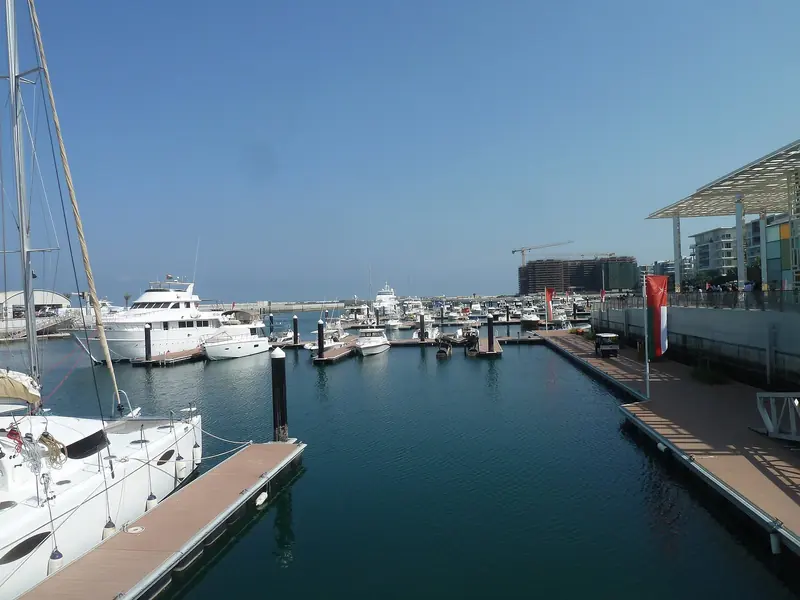
| Posizione | Al Mouj Marina, Al Mouj Muscat, Seeb, Mascate, Sultanato dell'Oman, sulla costa del Golfo di Oman a 23 38,0 N 058 16,2 E, fuori dallo Stretto di Hormuz |
|---|---|
| Gestore e proprietà | il marina è il fronte mare di Al Mouj Muscat, un Integrated Tourism Complex sviluppato come joint venture fra Majid Al Futtaim Properties, Oman Tourism Development Company (Omran) e Oman National Investments Development Company (Tanmia). In precedenza The Wave, Muscat, ribattezzato nel 2018 |
| Posti barca | 165 secondo il sito del marina e la Leisure Marine Association. TYHA ne registra 124 operativi come fase uno di 400 previsti, PredictWind ne registra 132 |
| Taglie ammesse | da 8 a 65 m fuori tutto secondo il marina, da 10 a 40 m secondo TYHA. La tariffa pubblicata si ferma a 40 m e segna 60 m e oltre come su richiesta, senza nulla quotato in mezzo |
| Profondità | minimo quattro metri all'imboccatura; da due a tre metri con bassa marea media all'interno, con un pescaggio massimo pratico di circa tre metri con bassa marea |
| Diga foranea | circa due chilometri, descritta da Al Mouj Muscat come una delle più grandi al mondo. Il flusso di marea in darsena è registrato come trascurabile |
| Dotazione dell'ormeggio | pontili galleggianti con camminamenti larghi sei metri, ormeggio di fianco e di poppa, posti per catamarani disponibili, corrente di banchina fino a 600 ampere, acqua potabile al posto barca e aspirazione delle acque grigie e nere. Non è pubblicata alcuna tariffa unitaria per corrente o acqua |
| Carburante | pontile carburante con benzina e gasolio, addebitati alle tariffe nazionali dell'Oman. Agosto 2026: gasolio OMR 0,26 al litro, E-Plus 91 OMR 0,23, Special 95 OMR 0,24, fissati mensilmente dal Ministero dell'Energia e dei Minerali |
| VHF | canale 74 per il marina, canale 16 per il Port Control e per la chiamata prima dell'arrivo |
| Dogana | porto di ingresso, con immigrazione e sdoganamento gestiti tramite agenti locali autorizzati. L'elenco dei porti di ingresso omaniti di Noonsite non comprende Al Mouj, quindi verificate prima di farne il vostro porto di sdoganamento |
| Licenza di navigazione | dalla Decisione ministeriale n. 30/2026, in vigore dai primi di febbraio 2026, le navi e le unità marittime straniere non possono svolgere alcuna attività nelle acque territoriali omanite senza una licenza di navigazione, richiesta da un agente almeno tre giorni prima. Le sanzioni vanno da OMR 500 a OMR 5.000 |
| Visti | la Decisione n. 109/2026 della Royal Oman Police ha introdotto un visto turistico gratuito di 14 giorni dal 3 agosto 2026, con le nazionalità ammesse non ancora pubblicate, convertibile in categorie a pagamento senza uscire dall'Oman. Restano nel sistema eVisa della ROP i visti da 30 giorni e quello annuale a ingressi multipli. Non è pubblicata alcuna categoria specifica per l'equipaggio |
| Accreditamenti | cinque Gold Anchor, unico marina in Oman a tenerli, più l'accreditamento International Clean Marina e la designazione TYHA Superyacht Marina dal settembre 2024 |
| Alaggio | nessuna portata pubblicata ad Al Mouj. Il sollevamento più grande di Mascate è una gru per barche da 65 tonnellate con tre scivoli a Marina Bandar Al Rowdha |
| Aeroporto | Muscat International da 9 a 10 km di strada, da 12 a 25 minuti, taxi quotato fra OMR 4,5 e OMR 11 a seconda della fonte. Il marina vende a pagamento un'accoglienza VIP in aeroporto con transfer |
| Valuta | il rial omanita è ancorato a USD 2,6008 dal 1986 e la Banca centrale dell'Oman difende il cambio fisso, quindi gli importi in rial si convertono a un tasso stabile |
L'Oman come alternativa al Golfo vero e proprio
L'argomento strategico a favore di Mascate è la geografia. Al Mouj si trova sul Golfo di Oman, fuori dallo Stretto di Hormuz, che è una posizione sostanzialmente diversa da Dubai, Abu Dhabi o Doha. Uno yacht basato qui non è dentro il Golfo Persico, non deve attraversare Hormuz per raggiungere il mare aperto ed è a una giornata di navigazione da un'area di crociera che la maggior parte della flotta regionale non vede mai: le isole Daymaniyat a nord-ovest e Bandar Khayran a sud-est, con le montagne della catena dell'Hajar alle spalle. La rotta per Dubai va nella direzione opposta, verso nord-ovest lungo la costa e attorno alla penisola del Musandam attraverso lo Stretto; il dato in linea d'aria restituito dai calcolatori di distanza, circa 200 miglia nautiche, ignora del tutto la penisola, quindi mettete in conto molta più acqua di così.
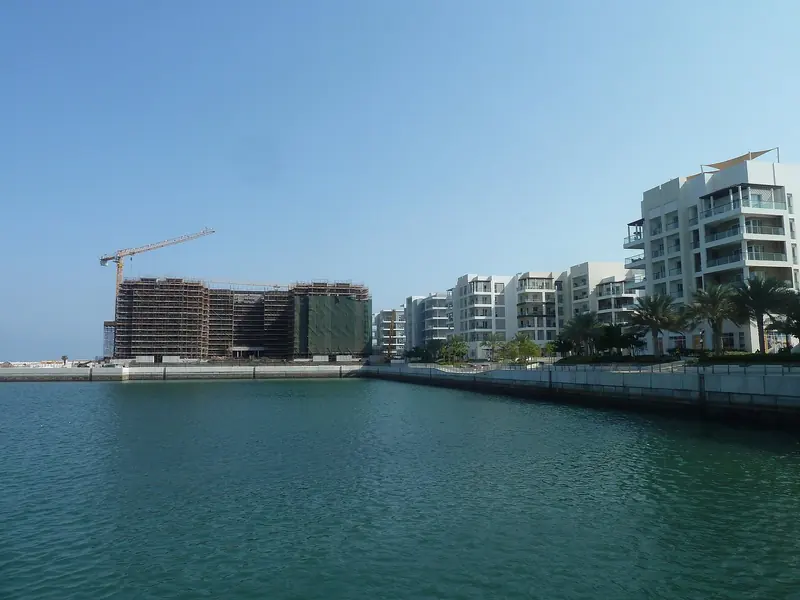
Il marina è il fronte mare di Al Mouj Muscat, un Integrated Tourism Complex nato come joint venture pubblico-privata fra Majid Al Futtaim Properties degli Emirati, la Oman Tourism Development Company (Omran) e la statale Oman National Investments Development Company (Tanmia). Ha aperto come The Wave, Muscat ed è stato ribattezzato Al Mouj Muscat, che in arabo significa la stessa cosa, nel 2018. Per un armatore la cosa conta perché spiega il carattere del posto: una tenuta residenziale e alberghiera che si trova ad avere un porto, non un porto attorno al quale è cresciuta una città. La conseguenza è uno standard molto alto in tutto ciò che sta a terra e uno standard sottile in tutto ciò che è tecnico, e quel compromesso attraversa l'intera pagina.
Il marina, e i quattro conteggi di posti barca in circolazione
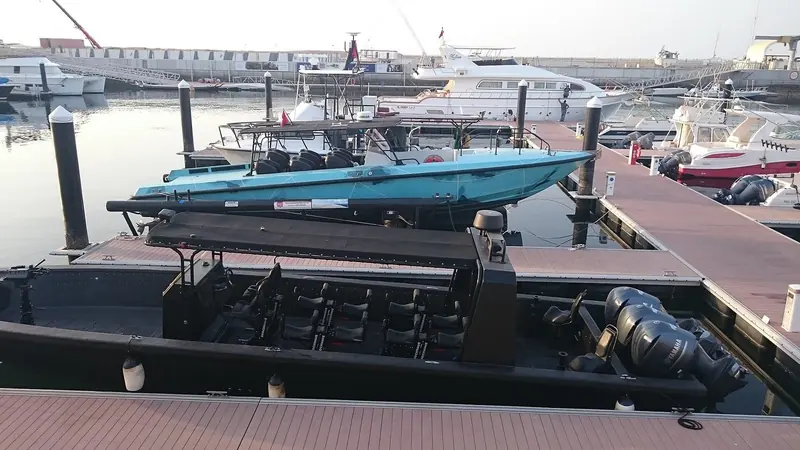
Il sito di Al Mouj Marina e la Leisure Marine Association danno entrambi 165 posti per yacht da 8 a 65 metri. La scheda Global Gold Anchor della Yacht Harbour Association dà 124 posti operativi come fase uno di 400 previsti, per yacht da 10 a 40 metri. La scheda di PredictWind ne dà 132. La pagina del masterplan originale, dell'epoca The Wave, dava 400 posti e barche e yacht fino a 40 metri. Quattro cifre, quattro fonti, e la posizione onesta è che oggi il marina ha fra i 124 e i 165 posti in acqua a fronte di un masterplan che ne ha sempre previsti quattro volte tanti. Chi modella l'occupazione o confronta la capacità con un concorrente del Golfo dovrebbe usare i 165 dichiarati dal marina e trattare i 400 come un'aspirazione, non come un patrimonio.
Quello che non è in discussione è la qualità costruttiva. I pontili sono galleggianti, con camminamenti larghi sei metri, cosa insolitamente generosa e parte del motivo per cui il marina tiene cinque Gold Anchor, unico in Oman, insieme all'accreditamento International Clean Marina e alla designazione TYHA Superyacht Marina assegnata nel settembre 2024. Gli ormeggi si prendono di fianco e di poppa, catamarani compresi. La corrente di banchina arriva a 600 ampere, l'acqua potabile è al posto barca e c'è l'aspirazione delle acque grigie e nere. Il marina ascolta il canale VHF 74, tiene un ormeggiatore di servizio 24 ore su 24 con assistenza all'ormeggio a qualsiasi ora e gestisce un servizio navetta, una lounge sull'acqua, accessi controllati e videosorveglianza. La posizione è 23 gradi 38,0 primi nord, 058 gradi 16,2 primi est.
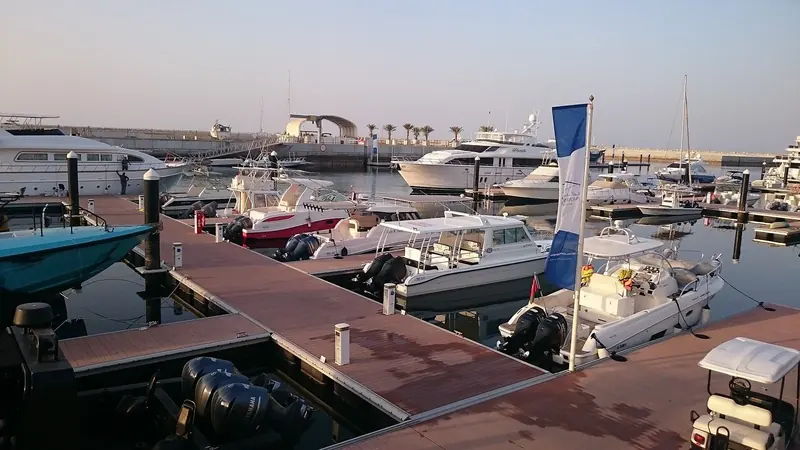
La tariffa si ferma a 40 metri e l'acqua si ferma a circa tre, quindi il titolo dei 65 metri è una lunghezza e non una profondità.
Profondità, imboccatura e diga foranea
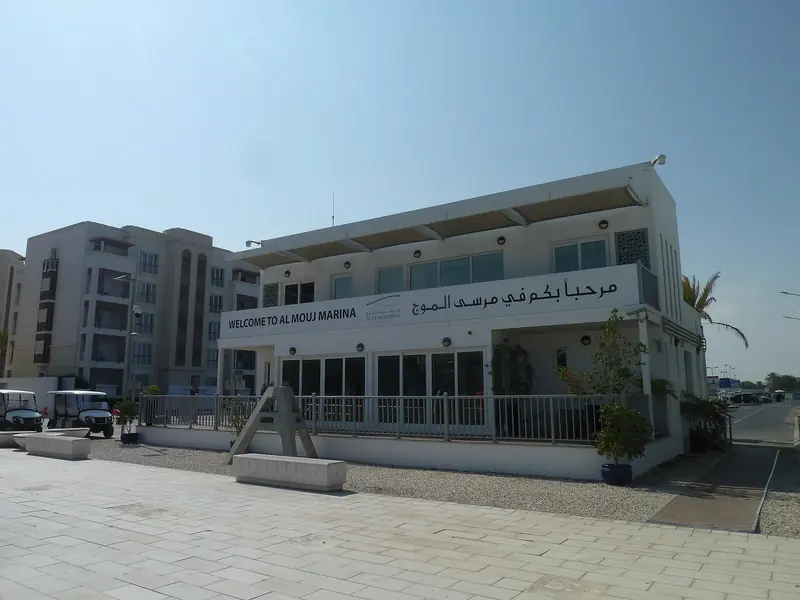
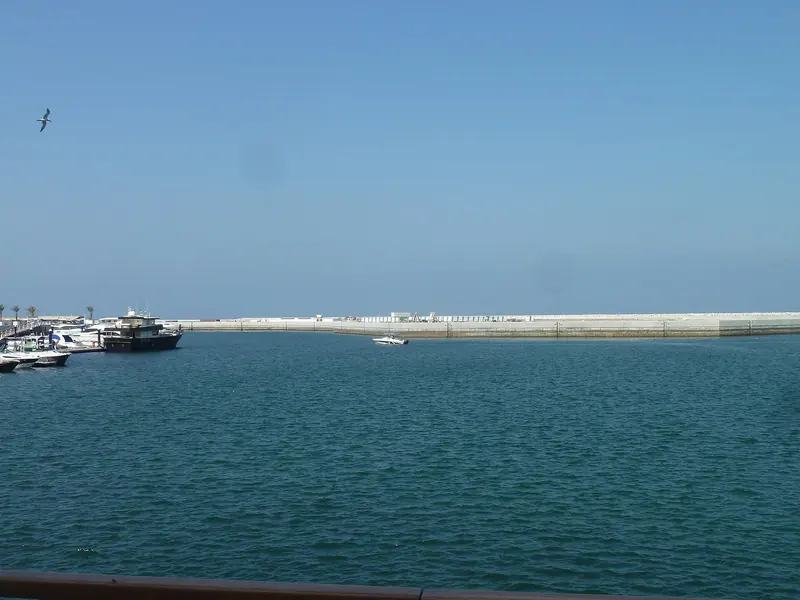
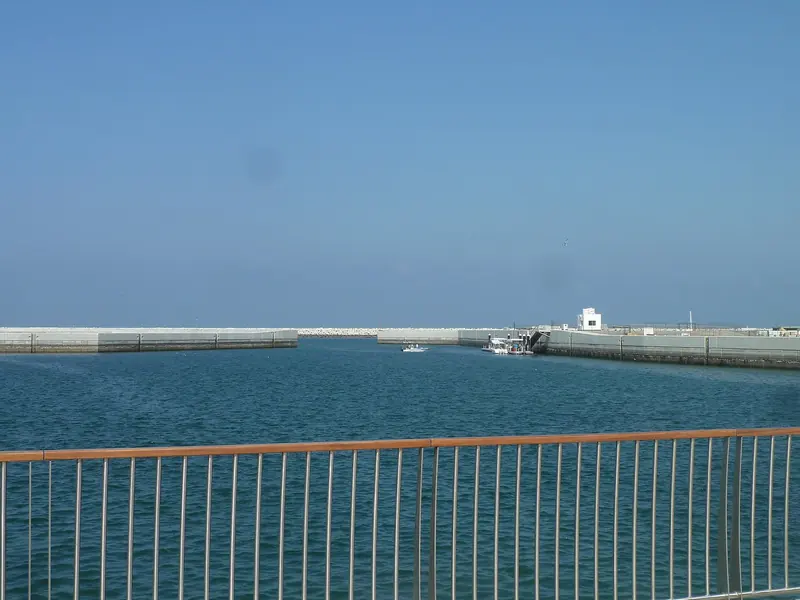
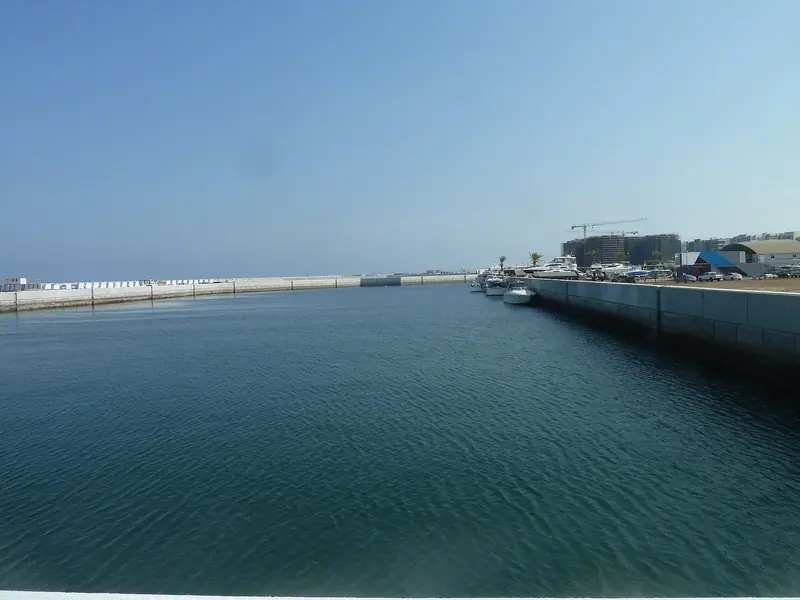
È questa la sezione che decide se Al Mouj funziona per un dato yacht. La diga foranea è lunga circa due chilometri e Al Mouj Muscat la descrive come una delle più grandi al mondo, a protezione della darsena da vento, marea e corrente. All'interno il flusso di marea è registrato come trascurabile. La profondità minima all'imboccatura è indicata in quattro metri dalla Leisure Marine Association. È la profondità interna il vincolo: la scheda di PredictWind dà da due a tre metri con bassa marea media e giudica il segnalamento del canale e lo spazio di manovra discreti anziché buoni, e Acquera Yachting, che qui colloca yacht, indica un pescaggio massimo di circa tre metri con bassa marea.
Mettete quel dato accanto alla lunghezza dichiarata e i conti non tornano. Un motoryacht di 65 metri pesca tipicamente tre metri e mezzo o quattro, uno di 50 metri supera i tre. Sulle profondità pubblicate, la maggior parte degli yacht oltre i 40 metri circa non può proprio stare in questa darsena, a prescindere da quello che dice il marketing, e la tariffa dello stesso marina lo ammette fermandosi a 40 metri e segnando tutto ciò che sta sopra come su richiesta. La lettura pratica è che Al Mouj è un porto eccellente per yacht fino a circa 35 metri, praticabile a 40 con una carena bassa e un posto confermato, e sopra quella soglia una telefonata anziché una prenotazione. Il marina offre anche quello che chiama un ancoraggio riparato e servito, che è la risposta onesta per uno yacht di forte pescaggio che vuole stare a Mascate.
Khareef e shamal, e cosa arriva davvero a Mascate
Le due stagioni con un nome proprio della regione fanno a Mascate meno di quanto un briefing in sala nautica lasci pensare, e il motivo è su quale costa vi trovate. Il khareef è il monsone di sud-ovest, corre per tutta l'estate e, nella descrizione del servizio meteorologico omanita, dura di solito fino a metà settembre, porta umidità dall'Oceano Indiano e costruisce un mare davvero pericoloso. Colpisce la costa del Mare Arabico, cioè il Dhofar, Salalah e il litorale a sud e a ovest di Ras al Hadd. Mascate non è su quella costa. È sul Golfo di Oman, dietro l'angolo. Il bollettino nazionale della Direzione generale di meteorologia dell'Oman, letto il 6 agosto 2026 nel pieno del khareef, dava condizioni agitate lungo le aree costiere del Mare Arabico con un'altezza d'onda massima di quattro o cinque metri, e poco mosso lungo il resto delle coste con un'altezza d'onda massima di 1,25 metri. Al Mouj rientra nella seconda categoria.
Lo shamal è il vento da nord-ovest che soffia lungo l'asse maggiore del Golfo Persico, con una stagione invernale e una estiva, e la climatologia pubblicata indica che la stagione estiva dello shamal tende a estendersi da agosto a settembre. Il suo fetch è dentro il Golfo, dall'altra parte dello Stretto di Hormuz, per cui alla costa del Golfo di Oman arriva il vento e non il mare che quel vento costruisce. La sintesi onesta è che Mascate è un ormeggio relativamente benigno in entrambe le stagioni e che il rischio di risacca qui è reale ma contenuto, un'onda corta da nord-ovest sull'avvicinamento e non il Mare Arabico che corre a quattro metri cento miglia più giù lungo la costa. Yotters non ha trovato alcuno studio pubblicato su onda o sovralzo per la darsena di Al Mouj, quindi trattate la diga foranea di due chilometri e il flusso di marea trascurabile come l'indizio disponibile e non come un dato misurato.
Le pratiche di ingresso, e la licenza nuova di quest'anno
Al Mouj è porto di ingresso e dichiara sulla propria pagina dei servizi di gestire le pratiche di immigrazione e dogana tramite agenti locali autorizzati. La manualistica per l'Oman descrive la procedura standard: chiamare il Port Control sul VHF 16 circa un'ora prima dell'arrivo, attendere l'autorizzazione e le indicazioni su dove presentarsi per le pratiche, disponibili 24 ore su 24, mettere in conto la salita a bordo di sanità marittima, immigrazione, dogana e autorità portuale e non sbarcare nessuno finché le pratiche non sono chiuse. L'elenco dei porti di ingresso omaniti di Noonsite cita Marina Bandar Al Rowdha, Mina al Fahal, Port Salalah e la penisola del Musandam e non cita Al Mouj: se volete certezza a un primo arrivo, fatevelo mettere per iscritto dal marina prima di sceglierlo come porto di sdoganamento.
C'è un cambiamento molto più grande che quasi tutto il materiale di pianificazione del 2025 non riporta. Il 26 gennaio 2026 il Ministero dei Trasporti, delle Comunicazioni e della Tecnologia dell'Informazione dell'Oman ha emesso la Decisione ministeriale n. 30/2026 ai sensi della Legge marittima del Regio decreto 19/2023, in vigore dai primi di febbraio 2026. Alle navi e alle unità marittime straniere è vietato svolgere qualsiasi attività nelle acque territoriali omanite senza una licenza di navigazione. Le licenze sono rilasciate per un singolo viaggio, per viaggi multipli o per una crociera programmata, con la categoria crociera valida un anno e date di entrata e di uscita indicate per ciascun viaggio. Un agente presenta domanda almeno tre giorni prima dell'ingresso con il certificato di registrazione, l'assicurazione e la documentazione P and I, e l'autorità ha tre giorni per decidere. L'agente deve registrare l'unità nel sistema doganale della Royal Oman Police, curare passaporti e dogana, saldare diritti e sanzioni e ottenere un certificato di partenza; un'unità autorizzata deve ripartire entro 24 ore dalla scadenza. Sono esenti le navi militari, le navi che entrano solo per caricare o scaricare in un porto e le emergenze reali. Le sanzioni vanno da OMR 500 a OMR 5.000, con OMR 2.000 per l'esercizio senza licenza e fino a OMR 5.000 per dichiarazioni false. Le sintesi pubblicate non prevedono alcuna esclusione per gli yacht da diporto.
Visti per gli armatori e per gli equipaggi
L'Oman ha appena reso la cosa più facile, e di parecchio. La Royal Oman Police ha emesso la Decisione n. 109/2026 che introduce un nuovo visto turistico gratuito di 14 giorni, in vigore dal 3 agosto 2026, con ingresso turistico esente da diritti per i cittadini dei paesi individuati dalle autorità competenti. L'elenco ufficiale delle nazionalità ammesse non era stato pubblicato quando questa pagina è stata scritta. Il titolare può passare a una categoria turistica a pagamento senza uscire dall'Oman, e restano disponibili i visti turistici da 30 giorni e un visto a ingressi multipli di un anno attraverso il sistema eVisa della ROP. In modo distinto, e già prima di questo, i cittadini di oltre cento paesi erano esentati dall'ottenere un visto in anticipo per soggiorni fino a 14 giorni.
Il buco è l'equipaggio. Yotters non ha trovato alcuna categoria di visto omanita pubblicata specifica per equipaggi di yacht in arrivo via mare, nessun equivalente marittimo o C1/D nominato nel materiale della ROP e nessuna dichiarazione del marina su come venga trattata una lista di equipaggio all'arrivo. In pratica un equipaggio che si imbarca o si sbarca a Mascate viene gestito dentro il quadro generale turistico e di agenzia, e l'obbligo dell'agente ai sensi della Decisione 30/2026 di completare le pratiche sui passaporti e di rispettare le norme sul soggiorno è il punto in cui la cosa va a cadere. Per uno yacht che pianifica rotazioni di equipaggio su Mascate lungo una stagione, è la domanda da porre per iscritto all'agente prima del primo arrivo, perché è l'unica cosa in questa pagina che davvero non è documentata da nessuna parte in pubblico.
Quanto costa un posto barca
Al Mouj pubblica una tariffa annuale completa, cosa che la mette davanti a quasi tutti i marina di questa guida e a quasi tutti quelli del Golfo. Le tariffe annuali standard sulla pagina degli ormeggi del marina, lette il 6 agosto 2026, in rial omaniti, con la tariffa residenti e fedeltà fra parentesi, sono: 10 m a 2.465 (1.726); 12 m a 3.550 (2.485); 15 m a 5.380 (3.766); 18 m a 7.510 (5.257); 20 m a 8.970 (6.279); 25 m a 13.080 (9.156); 30 m a 17.490 (12.243); 35 m a 21.975 (15.382); e 40 m a 26.310 (18.417). Tutto ciò che sta a 60 m e oltre è su richiesta. I residenti di Al Mouj hanno il 30 per cento di sconto. Il rial omanita è ancorato a USD 2,6008 dal 1986 e la Banca centrale dell'Oman difende quel cambio fisso, quindi le conversioni sono stabili: un posto da 20 metri costa circa USD 23.300 l'anno e uno da 40 metri circa USD 68.400.
Letto al metro, fa all'incirca OMR 449 ovvero USD 1.170 al metro all'anno sui 20 metri e OMR 658 ovvero USD 1.710 al metro sui 40, competitivo rispetto ai contratti annuali europei ed economico rispetto a Dubai. Quello che non è pubblicato è tutto ciò che dura meno di un anno. Sulla pagina degli ormeggi non c'è una tariffa giornaliera, né settimanale, né mensile, il che è una lacuna vera per uno yacht di passaggio anziché di base qui, e non c'è una tariffa pubblicata per l'elettricità o per l'acqua nonostante le forniture da 600 ampere. Il carburante è descritto solo come addebitato alle tariffe locali. La tariffa inoltre si ferma di colpo a 40 metri, senza nulla fra 40 e 60, per cui l'armatore di uno yacht di 45 metri non ha né un prezzo pubblicato né un posto dichiarato.
Carburante, rifornimenti e cosa c'è a terra
I prezzi dei carburanti in Oman sono fissati mensilmente dal Ministero dell'Energia e dei Minerali, annunciati intorno al primo del mese e identici in ogni stazione del paese. Per agosto 2026 i prezzi pubblicati al litro sono OMR 0,23 per la E-Plus 91, OMR 0,24 per la Special 95 e OMR 0,26 per il gasolio. GlobalPetrolPrices ha collocato in modo indipendente il gasolio omanita a OMR 0,26, circa USD 0,67 al litro, il 3 agosto 2026, e registra il prezzo come invariato nei dodici mesi precedenti secondo la propria misura, anche se la serie mensile pubblicata dall'Oman è passata da 208 baisa a fine 2025 a 258 entro marzo 2026: leggetelo quindi come fermo dalla primavera più che come fisso. Il marina ha un pontile carburante con benzina e gasolio e addebita a quelle tariffe locali. Non esiste alcun regime pubblicato di bunkeraggio in franchigia o duty free per gli yacht in transito, quindi mettete a budget il prezzo alla pompa.
I rifornimenti e il lato terra sono la parte di Al Mouj che funziona davvero. La tenuta attorno al marina ha un supermercato, una banca, una lavanderia, un centro commerciale, hotel e resort, e le passeggiate commerciali e gastronomiche di Al Mouj Walk, Marsa Plaza e Promenade corrono lungo l'acqua; la piazza del marina ospita ristoranti fra cui HuqqA per la cucina turca moderna e Block2 per gli hamburger, al chiuso e all'aperto, cosa che conta quando l'aria di agosto sta a 41 gradi. Chi ha un posto barca ha il 50 per cento di sconto sugli ingressi giornalieri in palestra e il 15 per cento su green fee e ristorazione di Al Mouj Golf. La meta di crociera dietro casa, la Riserva naturale delle isole Daymaniyat, richiede un permesso di ingresso dell'Autorità per l'ambiente dell'Oman, e lo sbarco e il campeggio sulle isole sono del tutto vietati dal 1 maggio al 31 ottobre per proteggere la fauna in nidificazione, mentre snorkeling e immersioni attorno alle isole proseguono in quella finestra. Il campeggio, quando è consentito, è limitato a 12 persone o cinque tende nei luoghi designati.
Assistenza tecnica e aeroporto, valutati onestamente
L'aeroporto è l'argomento più forte in assoluto a favore di Mascate e l'assistenza tecnica è il più debole. Muscat International dista dal marina circa nove o dieci chilometri, all'incirca da 12 a 25 minuti di strada a seconda dell'ora, con un servizio di transfer che quota da OMR 4,5 a 6 per il taxi e residenti che riferiscono da OMR 9 a 11 per la stessa corsa: concordate la tariffa prima di salire. Il marina vende un'accoglienza VIP in aeroporto con trasporto come extra a pagamento. Dieci minuti da un aeroporto internazionale servito da wide body fino alla passerella sono un transfer più corto di quello che offre quasi ogni marina del Mediterraneo, ed è il motivo per cui gli armatori continuano a guardare a Mascate.
Il lato tecnico non è all'altezza. La scheda della Yacht Harbour Association elenca come disponibili ad Al Mouj un travel lift e l'alaggio, un cantiere, officine meccaniche, elettronica navale e uno ship chandler, ma di nessuno di questi è pubblicata da qualche parte una portata che Yotters sia riuscita a trovare. L'alaggio vero a Mascate è nell'altro porto, Marina Bandar Al Rowdha dall'altra parte della città, servita da tre scivoli e da una gru per barche da 65 tonnellate. In Oman non c'è nulla che sollevi uno scafo di 40 metri, e non c'è alcun cantiere di refit per superyacht nel paese, quindi qualsiasi intervento strutturale significa una navigazione fino agli Emirati o oltre. La stessa Bandar Al Rowdha conta 220 posti in acqua, 184 a secco e 65 per moto d'acqua, con circa tre metri di pescaggio, quindi non è un'alternativa nemmeno per uno yacht grande. Pianificate Mascate come base con manutenzione ordinaria, non come luogo in cui far fare lavori.
A terra, accessi e prenotazioni
| Getting there | Muscat International Airport is about nine to ten kilometres from the marina by road, quoted at 12 minutes on the distance services and 20 to 25 minutes by a transfer operator, which is the honest range once traffic is in it. A taxi is quoted at OMR 4.5 to 6 by one transfer service and reported by residents at OMR 9 to 11 for the same trip, so agree the fare before departure rather than after. The marina sells a VIP airport welcome and ground transport as a chargeable extra, which is worth taking for a first arrival with guests. Muscat International carries wide-body long-haul as well as regional traffic, and the ten-minute transfer is the shortest of any marina in the Gulf region covered here. |
|---|---|
| Arriving by sea and clearing in | Approach from the Gulf of Oman, outside the Strait of Hormuz, with the marina behind a breakwater of about two kilometres. Minimum depth at the entrance is four metres and the basin is two to three metres at mean low water, so confirm your draught with the dockmaster before committing. Channel marking and manoeuvring room are both rated fair rather than good on the PredictWind record, and tidal flow is negligible. Call Port Control on VHF 16 about an hour out for permission and directions to the clearance position; the marina works VHF 74. Expect boarding by quarantine, immigration, customs and port officials, and keep everyone aboard until clearance is done. Al Mouj states it handles immigration and customs clearance through licensed local agents. A 24-hour dockmaster is on duty with berthing assistance round the clock. |
| The navigation licence, which is new | Ministerial Decision No. 30/2026 was issued on 26 January 2026 by the Ministry of Transport, Communications and Information Technology under the Maritime Law of Royal Decree 19/2023 and came into force in early February 2026. Foreign ships and marine units may not conduct any activity in Omani territorial waters without a navigation licence. There are three categories: single voyage, multiple voyage and scheduled cruise, the last valid for a year with entry and exit dates given per voyage. Your agent applies at least three days before entry with the registration certificate, insurance and P and I cover, and the authority has three days to decide. The agent also has to register the vessel in the Royal Oman Police customs system, complete passport and customs procedures, settle any fees and fines and obtain a departure certificate, and the vessel must leave within 24 hours of the licence expiring. Fines run from OMR 500 to OMR 5,000, with OMR 2,000 specified for operating without a licence and up to OMR 5,000 for false information. Naval and military vessels, ships entering only to load or unload and genuine emergencies are exempt; the published summaries do not exempt pleasure yachts. |
| Reserving a berth | Contact the marina on +968 2453 4544 or [email protected], with an online reservation route on the berthing page of its site. Berths are contracted annually against the published tariff, with a 30 per cent discount for Al Mouj residents, and the marina marks 60 m and above as on application. There is no published short-stay booking product, so a yacht passing through negotiates. Given that the marina holds somewhere between 124 and 165 berths depending on which record you read, and that the number of positions able to take anything over 35 metres is not published at all, a large yacht should confirm the specific berth, its length and its charted depth in writing rather than accepting the 65-metre headline. |
| What a berth costs | The tariff published on the marina's berthing page, read 6 August 2026, in Omani rials, standard rate with the resident and loyalty rate in brackets: 10 m 2,465 (1,726); 12 m 3,550 (2,485); 15 m 5,380 (3,766); 18 m 7,510 (5,257); 20 m 8,970 (6,279); 25 m 13,080 (9,156); 30 m 17,490 (12,243); 35 m 21,975 (15,382); 40 m 26,310 (18,417); 60 m and above on application. At the Omani rial's fixed peg of USD 2.6008, in place since 1986, that is roughly USD 23,300 a year for a 20-metre berth and USD 68,400 for a 40-metre one, or about USD 1,170 and USD 1,710 a metre a year respectively. Residents of the estate take 30 per cent off. Nothing between 40 and 60 metres is priced. |
| Fuel, power and water | Oman's retail fuel prices are set monthly by the Ministry of Energy and Minerals, announced on or near the first of the month and the same at every station nationally. August 2026: E-Plus 91 at OMR 0.23 a litre, Special 95 at OMR 0.24 and diesel at OMR 0.26, the last independently confirmed at about USD 0.67 a litre on 3 August 2026 and flat for the preceding year. The marina's fuel dock carries petrol and diesel and charges at local rates. No bonded or duty-free bunkering regime for visiting yachts is published. Shore power runs to 600 amps and potable water is at the berth, with grey and black water pump-out, but no per-kilowatt-hour or per-cubic-metre tariff is published for either, so ask what is metered and at what rate before signing an annual contract. |
| Eating, provisioning and the estate | This is the marina's strongest suit. The Al Mouj estate around the basin carries a supermarket, a bank, laundry, a shopping centre and several hotels and resorts, with the Al Mouj Walk, Marsa Plaza and Promenade running the retail and dining along the water. The marina piazza itself holds indoor and al fresco restaurants including HuqqA for modern Turkish with a marina view and Block2 for burgers, and the estate is set up for year-round dining, which in a place where August afternoons reach 41 degrees means air conditioning rather than terraces. Berth holders get 50 per cent off gym day passes and 15 per cent off rounds and food and beverage at Al Mouj Golf. Muscat itself, with the Grand Mosque, Mutrah souq and the Royal Opera House, is a short drive along the coast. |
| Cruising from here, and the permit you need | The Daymaniyat Islands Nature Reserve to the north-west is the reason to keep a boat in Muscat rather than in the Gulf proper, and it is regulated. Entry needs a permit from Oman's Environment Authority, issued in paid and free categories, and tour operators will arrange one; going without means the trip is stopped and fines follow. Landing or camping on the islands is prohibited outright from 1 May to 31 October each year to protect nesting wildlife, though snorkelling and diving around them continue through that window, and when camping is permitted it is capped at 12 people or five tents in designated places. Bandar Khayran, the drowned inlet system south-east of the capital, is the other short-range destination. Longer legs are real passages: Dubai is up the coast and round the Musandam peninsula through the Strait of Hormuz, materially further than the 200 nautical miles a straight-line calculator returns. |
| What is NOT published | Any daily, weekly or monthly berthing rate. Any rate at all between 40 and 60 metres. Any per-unit price for shore power or water despite 600-amp supplies. Any haul-out capacity, travel lift tonnage or hardstanding area at Al Mouj, despite a boatyard and a hoist being listed as available. Any count of how many berths can take a yacht over 35 metres. Any maximum beam. Any wave, surge or downtime study for the basin. Any Omani visa category specific to yacht crew arriving by sea. And the total berth count is not settled: the marina says 165, TYHA says 124 of a planned 400 and PredictWind says 132. |
Cosa riferiscono armatori ed equipaggi
The accrediting body records a smaller and shallower marina than the marketing does
The Yacht Harbour Association's Global Gold Anchor record for Al Mouj gives 124 berths operational as phase one of a planned 400, accommodating yachts from 10 to 40 metres, on VHF channel 74, with five Gold Anchor accreditation, International Clean Marina accreditation and a Superyacht Marina designation awarded in September 2024. The marina's own material gives 165 berths and 8 to 65 metres. Both cannot be current, and the assessor's figure is the more conservative of the two.
The Yacht Harbour AssociationOman changed the rules for foreign vessels in February 2026 and most planning material has not caught up
Ministerial Decision No. 30/2026, issued on 26 January 2026, prohibits foreign ships and marine units from conducting any activity in Omani territorial waters without a navigation licence. Applications go through an agent at least three days before entry with registration, insurance and P and I documentation. Fines run OMR 500 to OMR 5,000, with OMR 2,000 for operating without a licence. Agents must obtain a departure certificate and the vessel must leave within 24 hours of expiry.
Muscat DailyEntry for owners and guests got materially cheaper three days before this page was written
The Royal Oman Police issued Decision No. 109/2026 introducing a new free 14-day tourist visa, effective 3 August 2026, granting fee-free entry to nationals of countries determined by the competent authorities. Holders can move to a paid tourist category without leaving the country. The official eligibility list had not been published at the time of writing.
Oman ObserverThe largest lift in the country is a 65-tonne hoist at the other marina
Marina Bandar Al Rowdha, on the far side of Muscat, is served by three slipways and a 65-tonne boat hoist. Its own berthing runs 220 wet berths, 184 dry berths and 65 jet-ski berths, at about three metres of draught. Nothing in Oman will lift a 40-metre hull.
Marina Bandar Al RowdhaThe cruising community's own reference does not list Al Mouj as a port of entry
Noonsite's Oman page names Marina Bandar Al Rowdha, Mina al Fahal, Port Salalah and the Musandam peninsula as ports of entry and does not name Al Mouj, while the marina states on its own services page that it is a port of entry with clearance through licensed agents. Noonsite also flags high agent and marina fees in Oman generally, and a cruiser report from Salalah recorded an agent at USD 200 to 300, compulsory third-party liability insurance with a USD 130 fine for its absence, and port fees of about USD 200. Those Salalah figures are dated and are not Muscat figures, but they set expectations about the cost of the paperwork.
NoonsiteThe khareef is on the wrong coast to matter here, and the numbers show it
Oman's Directorate General of Meteorology country outlook, read on 6 August 2026 in the middle of the khareef, gave rough seas along the coastal areas of the Arabian Sea with a maximum wave height of four to five metres, and slight along the rest of the coasts with a maximum wave height of 1.25 metres. Muscat is on the Gulf of Oman and falls in the second category. The Oman Met Office describes the south-west monsoon as running usually to mid-September and as the reason the Arabian Sea coast is dangerous through the summer.
Oman Directorate General of Meteorology
Cosa convince e cosa va valutato
Punti di forza
- A published annual tariff, in a region where nobody publishes anythingStandard and resident rates at nine LOA bands from 10 to 40 metres, in Omani rials, against a currency pegged at USD 2.6008 since 1986. A 20-metre berth is about USD 23,300 a year and a 40-metre berth about USD 68,400.
- Ten minutes from a long-haul international airportMuscat International is nine to ten kilometres by road, 12 to 25 minutes depending on traffic, with a taxi quoted between OMR 4.5 and OMR 11 and a chargeable VIP transfer offered by the marina. No Mediterranean marina of this standard is that close to wide-body service.
- Outside the Strait of Hormuz, with real cruising ground on the doorstepThe Daymaniyat Islands Nature Reserve to the north-west and Bandar Khayran to the south-east, without a Hormuz transit and without the traffic density of the Arabian Gulf.
- Build quality and accreditation that stand upFive Gold Anchors, the only marina in Oman to hold them, plus International Clean Marina and a TYHA Superyacht Marina designation from September 2024, six-metre pontoon walkways, 600-amp shore power and a 24-hour dockmaster.
- Cheap, stable, government-set fuelDiesel at OMR 0.26 a litre in August 2026, about USD 0.67, set monthly by the Ministry of Energy and Minerals, the same at every station nationally and unchanged over the preceding year.
Da valutare
- Two to three metres of water rules out most yachts over 40 metresEntrance minimum four metres, basin two to three metres at mean low water, maximum draught about three metres at low tide. The 65-metre LOA headline cannot be reconciled with those depths, and the marina's own tariff stops at 40 metres.
- No haul-out or refit capacity in the country worth the nameNo lift capacity is published at Al Mouj at all. The largest hoist in Muscat is 65 tonnes, at Marina Bandar Al Rowdha. Anything structural means a passage to the UAE.
- Nothing is published short of a yearNo daily, weekly or monthly rate, no rate between 40 and 60 metres, and no per-unit tariff for the 600-amp power or the water. A yacht passing through has no published number to work from.
- Summer is genuinely punishingJuly runs around 35 degrees Celsius mean maximum with a 29-degree minimum and roughly 60 per cent humidity, and August reaches 41 degrees with humidity around 67 per cent, the highest of the year, over a sea at about 31.5 degrees. The estate is built for indoor dining for a reason.
- A long way from the fleet it would have to compete withDubai and Abu Dhabi are up the coast and round the Musandam peninsula through the Strait of Hormuz, materially further than the 200 nautical miles a straight-line calculator returns, and Muscat has none of the brokerage, charter or crew density of those ports.
- The regulatory position moved in 2026 and the crew position is undocumentedMinisterial Decision 30/2026 now requires a navigation licence for any foreign vessel activity in Omani territorial waters, with three days of lead time through an agent and fines to OMR 5,000, and no published Omani visa category exists for yacht crew arriving by sea.
A chi si rivolge: Un armatore con uno yacht fino a circa 35 metri e sotto i tre metri di pescaggio che vuole una base nella regione del Golfo fuori dallo Stretto di Hormuz, un'area di crociera vera dietro casa e un aeroporto internazionale a venti minuti dalla passerella, e che non ha bisogno di un travel lift, di un cantiere di refit o di un ormeggio per qualcosa che si avvicini ai 50 metri.