Williams Jet Tenders
| Categoria | tender da yacht con propulsione a idrogetto |
|---|---|
| Fondazione | inizio anni Duemila, Regno Unito |
| Sede | Oxfordshire, Inghilterra |
| Prodotti di punta | gamme Turbojet, Sportjet e Dieseljet |
| Prima svolta | piccolo tender a getto a quattro tempi lanciato nel 2004 |
| Propulsione | idrogetto a benzina, diesel ed elettrico |
| Posizionamento | ampiamente indicato come dotazione standard da cantieri di serie e custom |
| DieselJet 415 | 4.16 m, 1.96 m beam, 828 kg dry, Yanmar 4JH of 110 hp, six seats, 68 litres, about 31 knots |
| DieselJet 625 | 6.32 m, Yanmar 4LV of 195 hp, eleven seats, about 38 knots |
| EvoJet 70 | 7.10 m, 2.65 m beam, 2,000 kg dry, Yanmar 4LV of 250 hp, thirteen seats, 200 litres, aimed at yachts of 40 m and above |
| EvoJet 70e | 58.5 kWh lithium-ion pack with control electronics from Evoa, presented by the company's commercial director as a technology demonstrator, with no catalogue listing |
| Warranty | two years from delivery, conditional on the owner returning the warranty document within ten days |
Un avvio da ingegneria britannica
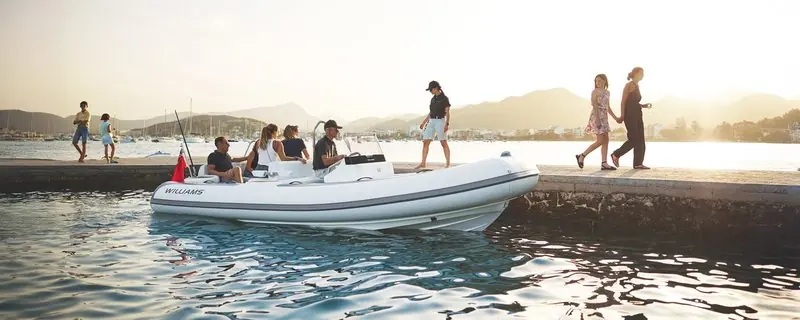
Williams Jet Tenders è nata da un'attività di ingegneria navale nel sud dell'Inghilterra, dove i fondatori hanno passato anni ad assistere e personalizzare barche prima di costruirne di proprie. L'azienda è stata costituita all'inizio degli anni Duemila e si è posta un problema preciso: come far entrare un tender capace nel garage stretto di uno yacht moderno. La svolta è arrivata nel 2004 con un piccolo tender di lusso mosso da un idrogetto a quattro tempi, un formato diventato presto un riferimento. Da quel singolo modello l'azienda si è allargata a un'intera famiglia di unità. Oggi lavora in un grande stabilimento costruito apposta nell'Oxfordshire.
La scelta della propulsione a getto sta al cuore del progetto. Un idrogetto elimina l'elica esposta che rende scomodo un tender fuoribordo convenzionale vicino ai bagnanti e alle spiagge. Permette anche una carena più piatta e meno profonda, che scivola più facilmente dentro un garage. Williams ha costruito la propria reputazione azzeccando questo insieme alle piccole dimensioni, dove l'ingegneria è più difficile. Quella concentrazione iniziale sui tender a getto compatti ha plasmato tutto ciò che l'azienda ha fatto da allora.
La gamma, dal Minijet al Dieseljet
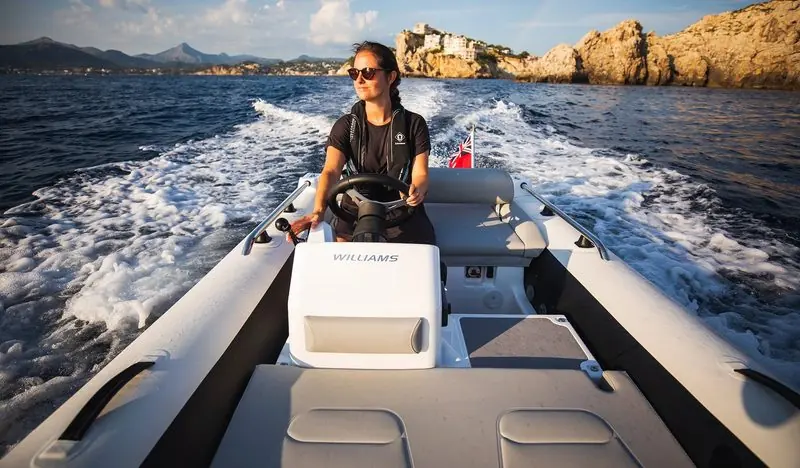
La gamma Williams è organizzata per dimensione e per uso, non attorno a una singola ammiraglia. I modelli Turbojet erano i tender a getto a benzina originali e restano il nucleo della gamma, pensati per ospitare una manciata di persone e per entrare in una grande varietà di garage. La gamma Sportjet aggiunge prestazioni e spazio per gli armatori che vogliono un day boat più veloce. All'estremità superiore i modelli Dieseljet portano più ospiti e usano il diesel, il che si addice agli yacht che tengono gasolio a bordo e preferiscono evitare la benzina. C'è anche un Minijet più piccolo per le unità compatte.
Accanto alle gamme a benzina e diesel c'è una linea elettrica che riflette la direzione del mercato più ampio. Il passaggio all'alimentazione a batteria risponde a una domanda reale degli armatori che vogliono silenzio e nessuna manipolazione di carburante sulla plancetta di poppa. Ogni gamma è offerta in diverse lunghezze, così che un tender si possa abbinare alle dimensioni esatte di un garage. Questo approccio modulare è gran parte del motivo per cui tanti cantieri indicano Williams come dotazione di serie. Il tender viene scelto spesso prima ancora che lo yacht sia finito.
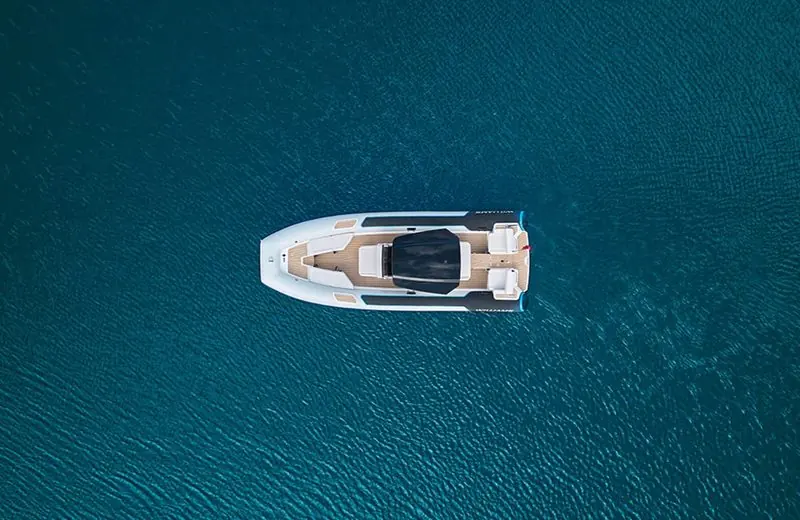
Il tender a getto diventato la porta d'ingresso al mare per tutto il settore.
Costruire per il garage
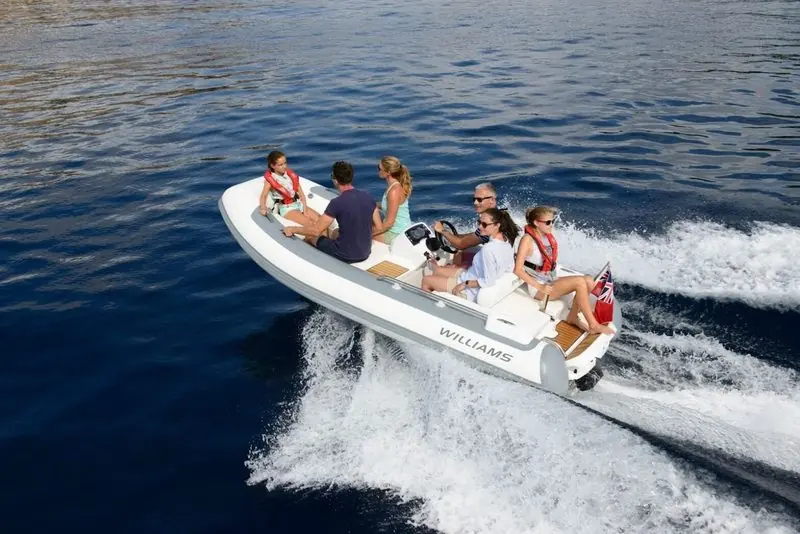
Un tender da yacht ha una vita dura e passa gran parte del tempo stivato in uno spazio angusto. Williams progetta le proprie unità per essere messe in acqua e recuperate in fretta, spesso da un solo membro dell'equipaggio con i mezzi di bordo. L'idrogetto si ritira ordinatamente e lascia una carena pulita che non impiglia cime né mette in pericolo i bagnanti. Finiture e assemblaggio contano, perché il tender viene giudicato accanto alla nave madre. L'azienda costruisce a uno standard che non fa sfigurare uno yacht che costa molte volte tanto.
La sfida ingegneristica è comprimere le prestazioni in una carena piccola e leggera. Un tender deve planare in fretta con un carico pieno di ospiti e pesare comunque abbastanza poco per la gru dello yacht. Williams ha passato due decenni ad affinare quell'equilibrio su tutte le sue gamme. Il risultato è una barca che risulta stabile e prevedibile anche per ospiti che guidano di rado. È quell'affidabilità a tenere fedeli i comandanti al marchio.
La vita a bordo del tender
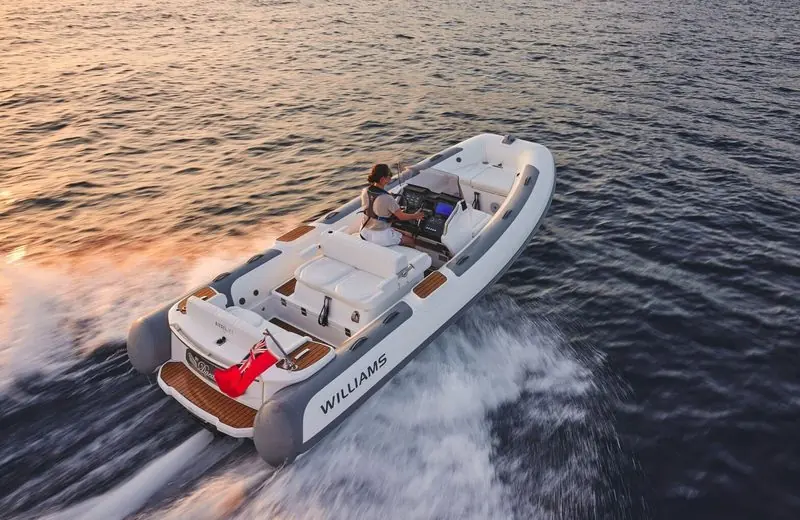
Per gli ospiti il tender è la porta d'ingresso dello yacht. È il modo con cui raggiungono il beach club, la riva, un ristorante a terra o una cala tranquilla per il bagno. Un buon tender rende quei trasferimenti facili e asciutti, uno cattivo li trasforma in una seccatura. Le unità Williams sono impostate esattamente per questo servizio quotidiano, con sedute e disposizioni pensate per il comfort più che per la sola sportività. I modelli più grandi aggiungono prendisole e stivaggio per un'intera giornata lontano dallo yacht.
Il formato a getto si addice anche al modo in cui i tender vengono usati vicino ai bagnanti e alle spiagge. Senza un'elica esposta la barca può accostarsi a un banco di sabbia o restare al minimo fra le persone in acqua con meno rischi. Questo ne fa una scelta naturale per le famiglie e per gli ospiti charter che passano le giornate dentro e fuori dal mare. Il tender diventa una piccola estensione della vita sociale dello yacht. Quell'argomento pratico di sicurezza ha aiutato i tender a getto a prendersi una quota ampia del mercato.
La dotazione standard dei cantieri
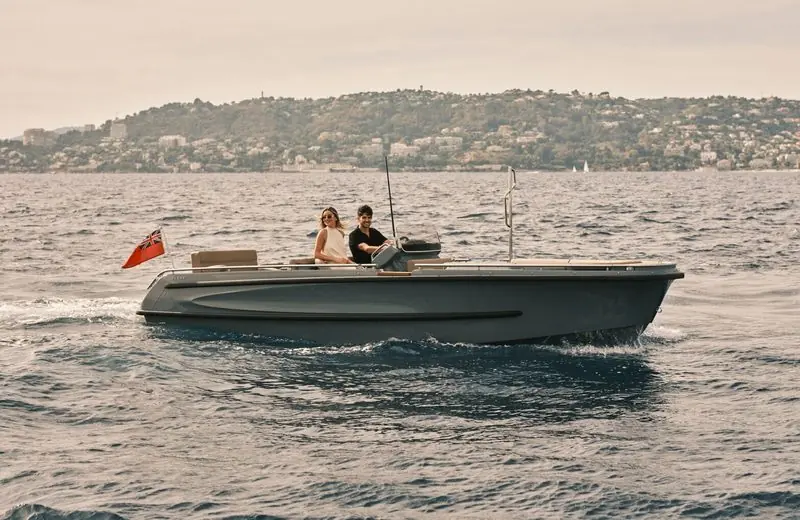
Williams si colloca nella fascia a volume del mondo dei tender di lusso, e la sua forza è l'ampiezza più che l'esclusività del pezzo unico. Molti cantieri di serie e semicustom indicano un tender Williams come abbinamento standard per i propri garage. Quella diffusione ha reso il marchio uno dei nomi più riconosciuti del comparto. Chi compra un nuovo yacht spesso trova un Williams già dimensionato e quotato dentro il pacchetto. L'azienda ha trasformato una nicchia in qualcosa di quasi standard.
La posizione del marchio poggia sulla costanza più che sullo spettacolo. Un tender Williams è una grandezza nota, che i comandanti sanno assistere e tenere in funzione stagione dopo stagione. Per gli armatori che vogliono un'unità collaudata e pratica invece di una dichiarazione su misura, è una scelta sicura e diffusa. Il passaggio alla propulsione elettrica mantiene la gamma attuale mentre il mercato si sposta. Williams è rimasta avanti affinando una formula che ha in larga parte creato lei stessa.
Fuel, charging and the electric question
Petrol on a large yacht is a stowage and insurance problem, and the DieselJet range solves it by drinking what the yacht already carries. On smaller boats the calculation flips, because a 90 hp petrol Rotax is far lighter than any diesel of equivalent output and the weight matters more than the fuel type. Choosing between a TurboJet and a DieselJet is really choosing between crane capacity and fuel logistics.
Williams has shown the EvoJet 70e, an all-electric version running a 58.5 kWh lithium-ion pack through control electronics from the American firm Evoa, with the same thirteen seats and the same published top speed. The company's commercial director called it a technology demonstrator built to prove what could be achieved. Williams publishes no range figure, no charge time and no price. Treat the missing range number as the whole question, because a tender that needs shore power for hours between beach trips changes a day at anchor.
What it costs to buy and to keep
Williams publishes no list prices, and the dealer network quotes against the specification. Motor Boat and Yachting listed the SportJet 520 from GBP 47,178 including VAT in its 2025 coverage. A UK tender guide consulted in July 2026 put TurboJet and SportJet boats at roughly GBP 30,000 to GBP 90,000, DieselJets at roughly GBP 100,000 to GBP 250,000 and the EvoJet 70 from roughly GBP 300,000, and described those as guidance bands with no quote behind them.
The running cost is not the fuel. It is the annual service, the impeller and wear ring that erode on any waterjet, the anodes, the tubes on the inflatable models and the hours the crew spend flushing and cleaning. Tubes are a consumable in Mediterranean sun, and a reasonable owner should budget to retube once in a long ownership. The tender also takes far more cosmetic abuse than the yacht, because it is the thing that touches docks.
Warranty, parts and a breakdown in August
Williams warrants its boats free of material defect for two years from delivery, conditional on the owner returning the completed warranty document within ten days. That clause is the sort of administrative trap that costs owners real money, and it is worth confirming with the yard's project manager that it was actually done at handover. The company runs an owners centre with manuals and parts catalogues, and sells parts through the dealers.
Coverage follows the volume. Factory-trained dealers sit across Europe, the Middle East and North America, so the Riviera, the Balearics, Italy, the Solent and Florida are well served. Caribbean cover is thinner, and a boat wintering in the islands should carry a spare impeller and a service kit. In August on the Cote d'Azur every dealer in the region is at capacity, and a failure in the first fortnight of the month is realistically a failure for the week.
Where it wins, and who should buy elsewhere
Against the custom yards, Williams competes on availability and price and loses on fit. Pascoe International and Compass Tenders design a hull around one specific garage and one owner's arrival ritual, and they will build an enclosed air-conditioned limousine that no Williams matches. Castoldi and Novurania sit between the two. What Williams offers is a boat the yard has already fitted a hundred times, delivered on schedule, with a parts network behind it.
The owner who should buy a Williams has a production or semi-custom yacht up to about 45 m, wants the tender to be a solved problem, and cares that guests can drive it safely off a beach. The owner who should look elsewhere is building full custom with the garage drawn around the tender, wants guests delivered dry and enclosed in a passing squall, or needs to move more than thirteen people in one trip.
Informazioni pratiche
| Price | no list prices published; Motor Boat and Yachting quoted the SportJet 520 from GBP 47,178 including VAT in 2025, and a July 2026 tender guide put TurboJet and SportJet boats at roughly GBP 30,000 to 90,000, DieselJets at roughly GBP 100,000 to 250,000, and the EvoJet 70 from roughly GBP 300,000 |
|---|---|
| Running cost | annual service, the impeller and wear ring that erode on any waterjet, anodes, and tube retubing on the inflatable models, budgeted roughly once in a long ownership |
| Fit before you order | garage door opening sets the beam limit, the cradle sets the length, and the transom crane's rated lift sets the weight; get the dry weight for the exact build, with options fitted, in writing from the dealer |
| Warranty | two years from delivery, conditional on the owner returning the completed warranty document within ten days of handover |
| Service network | factory-trained dealers are dense across the Riviera, the Balearics, Italy, the Solent and Florida; Caribbean cover is thinner, so a boat wintering there should carry a spare impeller and service kit |
| What is not published | no list prices anywhere in the range, and no range, charge time or price for the electric EvoJet 70e demonstrator |
Richiedi un preventivo per Williams Jet Tenders.
Indicaci il modello e dove deve arrivare. La redazione ottiene un'offerta scritta dal costruttore o da un rivenditore autorizzato, la confronta con i prezzi pubblicati in questa pagina e ti risponde via email. Senza impegno e senza costi.
- 01Un'offerta scrittaNella tua valuta, con IVA, consegna e tempi indicati, non una cifra da catalogo.
- 02Consegnato dove si trova lo yachtIn marina, in cantiere o al tuo indirizzo, con i documenti che una batteria al litio o un sollevamento con gru richiedono.
- 03IndipendenteYotters non è legato a nessun rivenditore, quindi l'offerta viene confrontata prima di arrivarti.
Cosa riferiscono armatori ed equipaggi
No independently attributable owner or captain testimony found
trade coverage and dealer pages describe Williams as the tender most new yacht specifications already assume, but this research did not find a named owner or captain willing to be quoted on the record about handling, reliability or after-sales service for a specific model
Yotters research desk
Cosa convince e cosa va valutato
Punti di forza
- A solved problem, off the shelfat roughly 1,200 boats a year Williams is the highest-volume boatbuilder in Britain by unit count, so the yard has usually sized and quoted the boat before the owner has shown anyone the garage
- No exposed propellerthe jet drive is the safer choice around swimmers and beaches, and the shallow draft lets the boat nose onto sand that would ground a propeller-driven tender
- The widest size and fuel spread in one cataloguepetrol, diesel and an electric demonstrator run from the 227 kg MiniJet 280 to the 2,000 kg EvoJet 70, a factor of nine, covering yachts from about 12 m to 40 m and above
Da valutare
- No published prices anywhere in the rangeevery figure comes from a dealer quote against the owner's own specification, and Williams has form on a weight figure that did not match the eventual spec sheet: the MiniJet was announced at under 200 kg and the current sheet gives 227 kg dry
- A jet drive costs efficiency and ease of dockinga waterjet burns more than an equivalent outboard at displacement speed, astern handling takes practice guests do not have, and the intake grate fouls on weed, rope and plastic
- Service cover thins out where owners actually cruisethe Caribbean has fewer factory-trained dealers than Europe, and every dealer on the Cote d'Azur is at capacity in August, so a breakdown in high season is realistically a week's wait
- The EvoJet 70e is not yet a real optionWilliams calls it a technology demonstrator and publishes no range, no charge time and no price, so an owner who wants the diesel garage solved electrically cannot yet buy one
A chi si rivolge: Armatori e cantieri che vogliono un tender a getto collaudato e adatto al garage, invece di una costruzione su misura in pezzo unico.