Bulukumba, Sulawesi
| Location | Bulukumba Regency, southeastern tip of South Sulawesi, Indonesia; the villages of Tana Beru and Ara are the two main building centres |
|---|---|
| Local name | Butta Panrita Lopi, 'the land of the boat-building experts' |
| Builders | the Konjo, a shipbuilding subgroup of the Bugis-Makassar people, working without written blueprints |
| UNESCO status | Indonesian phinisi boatbuilding art inscribed on the Representative List of the Intangible Cultural Heritage of Humanity, 2017 |
| Historical claim | the Bugis manuscript I La Galigo dates phinisi schooners to the 14th century |
| Materials | ironwood and ulin (two distinct hardwoods, now sourced mainly from outside South Sulawesi) for keel and frame, teak for outer planking |
| Build time | roughly 6 months to 1.5 years from keel-laying to launch, depending on size and fit-out |
| Ceremony | a maccera lopi blessing before construction begins, and a village-wide launch as the hull is dragged to the water |
| Notable delivered example | Silolona, commissioned by Patti Seery from Konjo builders in Ara in the early 2000s |
| Typical charter product built here | a 21 m phinisi with 5 cabins for up to 17 guests, advertised in Komodo from about USD 3,500 a night, full-boat, all-inclusive |
| Raja Ampat phinisi charters | from about USD 5,500 a night, full-boat; a full week on a larger vessel runs roughly USD 77,000 to over USD 200,000 |
| Nearest airport | Sultan Hasanuddin International (Makassar), about 94 miles / 2 hours by road from Bulukumba town |
| Nearby beach gateway | Tanjung Bira, departure point for the car ferry to Selayar Island (about 1.5 to 2 hours to Pamatata) |
| Beyond Selayar | Taka Bonerate National Park, one of the world's largest coral atolls, 50+ dive sites, best April to November |
| No marina, fuel dock, published berth tariff or VHF channel exists at Bulukumba itself | |
| Only two large-scale commercial builders are named in industry coverage: Muslim Baso in Bira and Abdullah in Tana Beru, plus a handful of smaller yards | |
Where the phinisi actually comes from
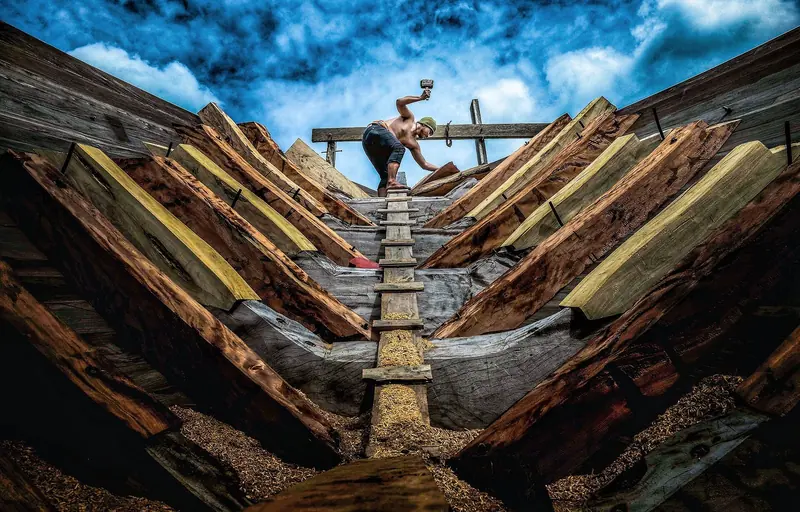
Bulukumba Regency, on the southeastern tip of South Sulawesi, calls itself Butta Panrita Lopi, the land of the boat-building experts, and the claim is not marketing. Tana Beru, a coastal village in Bontobahari district about 24 km from Bulukumba town, and the neighbouring village of Ara are the two places where the Konjo, a shipbuilding subgroup of the Bugis-Makassar people, still lay down phinisi hulls the way their ancestors did: without a written plan, from knowledge passed down through apprenticeship rather than a naval architecture course.
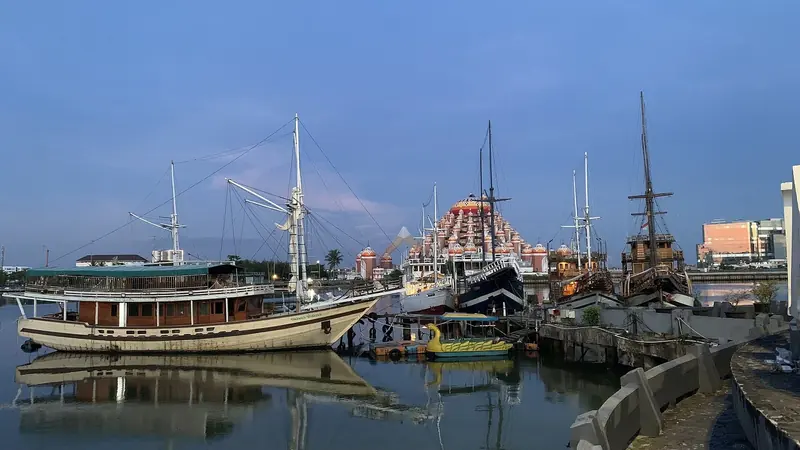
The visible result along the Tana Beru shoreline is dozens of dry docks worked in the open air, hulls at every stage from bare keel to rigged and painted, bows pointing out to a beach of pale sand. UNESCO inscribed Indonesian phinisi boatbuilding art on its Representative List of the Intangible Cultural Heritage of Humanity in 2017, formal recognition of a craft that, by the builders' own account in the Bugis manuscript I La Galigo, dates back to the fourteenth century.
How a hull is actually built here
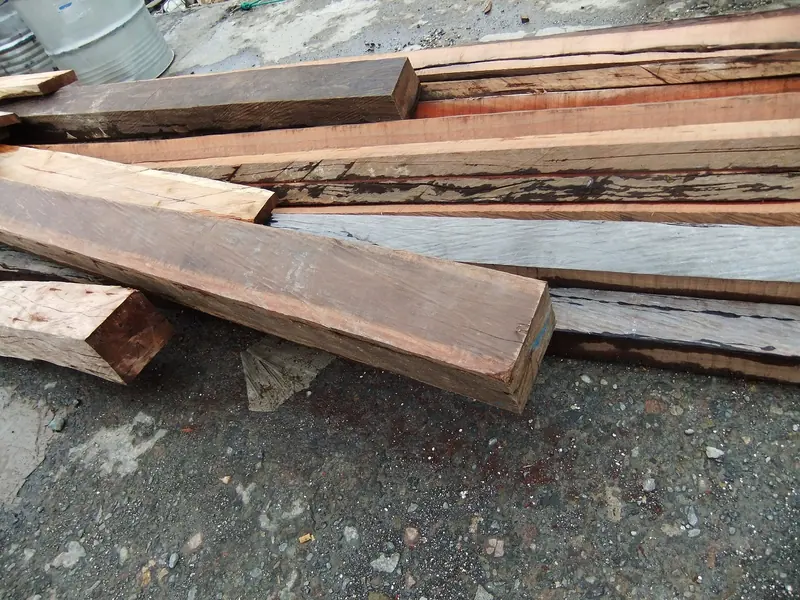
Construction uses ironwood and ulin, two related but distinct heavy tropical hardwoods, for the keel and the main structural frame, and teak for the outer planking, all three chosen because they resist rot and shipworm in tropical water for decades with only ordinary maintenance. A single vessel takes six months to a year and a half from keel-laying to launch, depending on length and how elaborate the interior fit-out is, and every stage still runs on measurement by eye and hand tools rather than machine templates.
The build is bracketed by ceremony rather than a contract milestone chart. A maccera lopi blessing ritual is performed before construction begins, and the launch itself is a village-wide event, the hull dragged down the beach on logs to the water while the community turns out to see it off. Patti Seery, who commissioned the well documented phinisi Silolona from Konjo builders in Ara in the early 2000s, described the effect of watching the process as builders who "built a boat inside their body" rather than off a drawing.
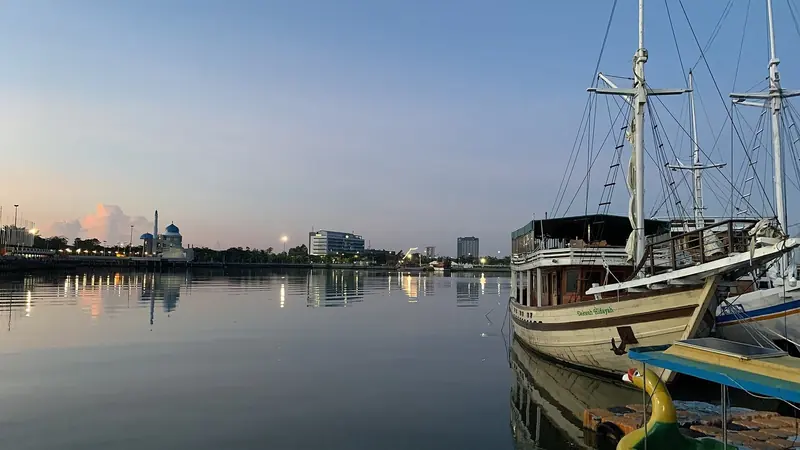
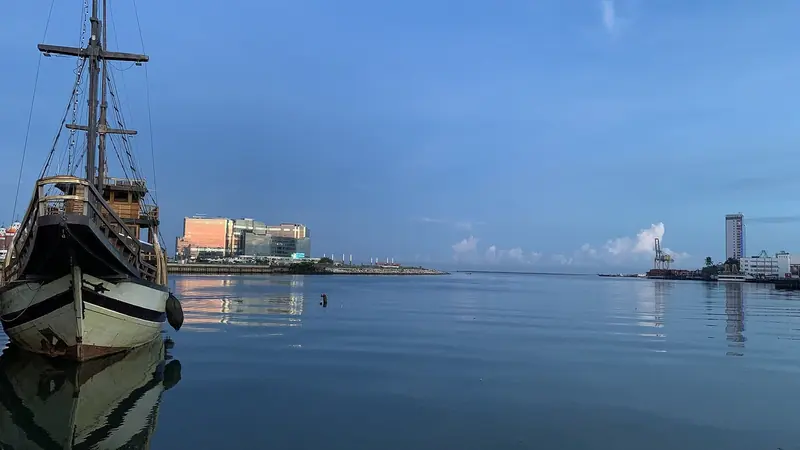
There is no marina and no berth tariff here, because Bulukumba is not a place a phinisi cruises to. It is the beach it was built on.
What a phinisi built here actually costs to charter
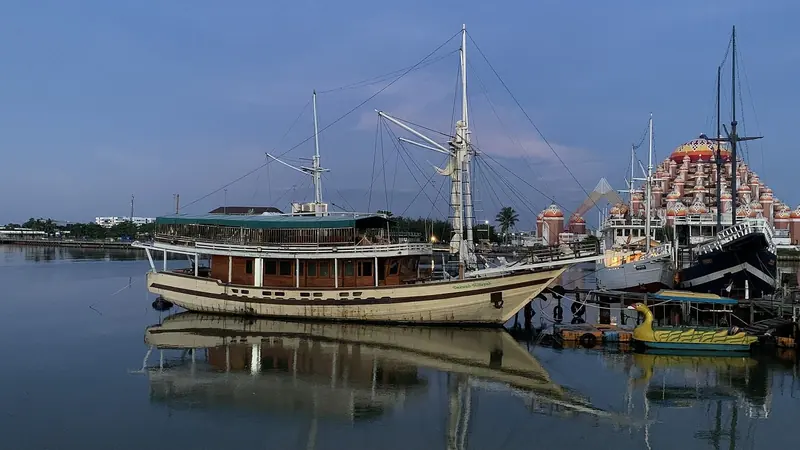
The vessels built at Tana Beru and Ara now form the backbone of Indonesia's liveaboard diving and island-hopping fleet, based mainly out of Bali, Labuan Bajo and Sorong rather than Bulukumba itself once they are commissioned and delivered. A modern 21 metre phinisi built in ironwood and teak at Bulukumba, fitted with five air-conditioned cabins for up to 17 guests, is advertised for Komodo National Park charters from around USD 3,500 a night on a full-boat, all-inclusive basis.
Raja Ampat charters, sailed October to April out of Sorong or Waisai, start from around USD 5,500 a night on the same full-boat basis, and a full week's charter on a larger, higher-specification phinisi in Raja Ampat is quoted anywhere from roughly USD 77,000 to more than USD 200,000, depending on the vessel's size, cabin count and finish level. None of that day rate reflects the build cost at Bulukumba itself, which is not publicly quoted by any yard and is negotiated per commission.
Commissioning one: what actually goes right and wrong
Prospective owners researching a custom phinisi consistently run into the same caution, echoed across boat-design forums and the builders' own marketing: a hand-built wooden hull without formal blueprints depends entirely on the individual yard's supervision, and quality has historically varied enough that outside observers describe real headaches in getting the finished vessel to match what was promised. Timber quality control is named specifically, since deforestation and scarcer old-growth ironwood have made some yards more careful about sourcing, and some less so.
The response from the more established operators has been to put a dedicated on-site project manager on every build, someone who checks adherence to the agreed plans at each stage and files regular progress reports rather than leaving an overseas owner to discover problems at delivery. That is a genuinely useful filter for anyone commissioning here: ask specifically who supervises the build day to day and what they report, rather than taking a yard's finished-boat photographs as evidence of process.
Getting to Bulukumba, and what there actually is when you arrive
There is no airport at Bulukumba. The gateway is Sultan Hasanuddin International Airport at Makassar, then a drive of roughly 94 miles, about two hours, southeast down the coast to Bulukumba town, with Tana Beru a further short run along the shore. Nothing about the approach is set up for a yacht crew: this is a shipbuilding village and a market town, reached by road, not a marina with a berth waiting.
The nearby beach resort of Tanjung Bira, a short drive from Tana Beru, is the area's actual tourist infrastructure, with white sand, small hotels and dive operators, and it doubles as the departure point for the car ferry to Selayar Island, a crossing of roughly one and a half to two hours to Pamatata on Selayar's northern tip. Beyond Selayar lies Taka Bonerate National Park, one of the largest coral atolls in the world, with more than 50 recorded dive sites around Tinabo and the Kahabia and Belang-Belang islands, best visited in the east monsoon season from April to November.
What is not here, and why that is the point
There is no marina, no fuel dock, no berth tariff and no VHF channel to call ahead on, because Bulukumba is not a place a yacht cruises to and stays. It is a place a yacht, in the specific form of a phinisi, comes from. Owners and charter operators visit to commission a build, to inspect one in progress, or simply to see where the boat they already own or charter was actually made, and the whole experience is organised around a shipyard beach rather than a waterfront.
That absence of conventional yachting infrastructure is exactly what makes the place worth naming rather than folding into a generic 'Indonesia' destination entry. Raja Ampat and Komodo are where phinisi charters are sailed; Bulukumba is where they are born, and the two are roughly a thousand nautical miles apart by sea. A buyer evaluating a phinisi's provenance, or an owner curious about the hands that built theirs, has exactly one place in the world to go and look, and this is it.
Who actually builds here, and where the wood now comes from
Despite Bulukumba's reputation, the industry sits on a small number of operators. Trade and academic coverage of the sector names only two large-scale phinisi builders working at commercial volume, Muslim Baso in Bira and Abdullah in Tana Beru, alongside a handful of smaller yards. That concentration matters for anyone commissioning a build: due diligence on a Bulukumba phinisi is realistically due diligence on one of a very few named operators, not a large competitive market.
The timber supply has also stopped being fully local. Ironwood and ulin are related but distinct timbers, and neither is reliably available in South Sulawesi any more in the quantities a hull needs: ironwood is now largely brought in from Southeast Sulawesi and ulin from as far as Kalimantan, on the other side of the country. A buyer who assumes the wood in a Bulukumba-built hull was cut nearby is wrong, and a serious commissioning conversation should ask a yard directly where its timber for this build actually came from. That longer supply chain is also a lead-time and cost variable few charter brokers mention: a build quoted against wood already on the yard's own timber lot can start faster than one that first has to wait on a shipment from Kalimantan, and neither timeline is something an owner sees from the finished vessel's marketing photos.
На берегу, подъезд и бронирование
| Getting there | Fly into Sultan Hasanuddin International Airport at Makassar, then drive roughly 94 miles (about 2 hours) southeast to Bulukumba town, with Tana Beru and Ara a further short distance along the coast. There is no airport at Bulukumba and no scheduled sea transport aimed at yacht crews; every visit is arranged by road. |
|---|---|
| Arriving by sea | There is no marina, harbour master's channel or published VHF frequency at Bulukumba. Boats under construction are launched directly off the beach at Tana Beru on logs, not from a slipway or a lift, and are typically sailed to Bali, Labuan Bajo or another operating base rather than kept on site. |
| How you actually commission a build | There is no central booking system; a phinisi is commissioned directly with an individual yard or boatbuilder network in Tana Beru or Ara, several of which now operate through agencies (Boat Builder Indonesia and similar networks) that supervise the process on an owner's behalf. Given the reported variance in quality control between yards, ask specifically who provides day-to-day, on-site supervision and what reporting the owner receives during the 6 to 18 month build. |
| What it costs | Build cost at Bulukumba itself is negotiated per commission and not publicly quoted by any yard. What is public is the charter economics of the finished product: a 21 m, 5-cabin phinisi runs from about USD 3,500 a night in Komodo, Raja Ampat charters from about USD 5,500 a night, and a full week on a larger vessel is quoted at roughly USD 77,000 to over USD 200,000. |
| Materials and timeline | Ironwood and ulin, two distinct heavy hardwoods now largely sourced from outside South Sulawesi (ironwood from Southeast Sulawesi, ulin from as far as Kalimantan), for the keel and structural frame, and teak for the outer planking, all chosen for natural rot and shipworm resistance. A hull takes 6 months to 1.5 years from keel-laying to launch depending on size and interior detail, using hand tools and eye-measurement rather than machine templates or a written plan. |
| Nearby, if you extend the trip | Tanjung Bira, a short drive from Tana Beru, has beach hotels, dive operators and the car ferry to Selayar Island (roughly 1.5 to 2 hours to Pamatata). Beyond Selayar, Taka Bonerate National Park holds one of the world's largest coral atolls and more than 50 recorded dive sites, best visited in the east monsoon, April to November. |
| What is NOT published | No yard at Bulukumba publishes a standard price list for a commissioned phinisi; every quote is negotiated. No independent, third-party quality certification scheme covers the build the way the Yacht Harbour Association covers a marina. There is also no consolidated, English-language record of which specific yard built which specific charter phinisi now operating in Komodo or Raja Ampat, so provenance claims made by charter brokers are difficult to verify independently. |
Что сообщают владельцы и экипажи
The build process is described by the person who commissioned it as unlike any Western yard experience
Patti Seery, who commissioned Silolona from Konjo builders in Ara in the early 2000s, described watching builders work from embodied knowledge rather than a drawing, saying they "built a boat inside their body" - a first-hand account of the no-blueprint method other sources describe only in the abstract.
Silolona SojournsCommissioning a hand-built wooden hull here carries real, reported quality-control risk
Discussion among builders and prospective owners of Indonesian wooden vessels describes genuine difficulty getting a finished boat to match what was promised, attributed to variable timber sourcing and inconsistent on-site supervision between yards.
Boat Design Net forum discussionMore established operators now answer that risk with a named, on-site role rather than trusting the yard alone
Boat Builder Indonesia's own account of the commissioning process describes assigning a dedicated project manager to a build specifically to check progress against the agreed plan and to file regular reports back to the owner, framed as the direct response to the industry's known variance in outcomes.
Boat Builder Indonesia NetworkThe finished product's charter economics are reported consistently across multiple operators
Independent charter brokers for Komodo and Raja Ampat both quote Bulukumba-built phinisis in the same bands, from roughly USD 3,500 a night for a mid-size vessel to over USD 200,000 for a week on a larger one, which is a rare case of pricing consistency across an otherwise opaque supply chain.
Komodo Touristic and Indonesia Phinisi (Nusantara Schooners) charter listings
Сильные стороны и что учесть
Сильные стороны
- The genuine, UNESCO-recognised source of every phinisi afloatIndonesian phinisi boatbuilding art was inscribed on UNESCO's Representative List of the Intangible Cultural Heritage of Humanity in 2017, and Tana Beru and Ara are the specific villages where that craft is still practised.
- Materials chosen for genuine longevity, not costIronwood and teak both resist rot and shipworm in tropical water for decades, which is a real, measurable reason the phinisi hull form has lasted commercially rather than being replaced by fibreglass.
- A real, well documented delivered example to point toSilolona, commissioned by Patti Seery from Konjo builders in Ara in the early 2000s, is a publicly documented case of the process working, still operating as a charter vessel years later.
- A clear, honest answer on price for the finished productCharter rates for Bulukumba-built phinisis in Komodo and Raja Ampat are openly advertised, from about USD 3,500 a night to over USD 200,000 for a full week on a larger vessel, giving a buyer real market comparables even where the build cost itself is not quoted.
- A genuinely rare kind of destination for this site to coverNowhere else in the yachting world does the hull itself, rather than a marina or a cruising ground, define the destination - which is precisely the story a buyer or owner curious about provenance cannot get anywhere else.
На что обратить внимание
- No yachting infrastructure exists here at allNo marina, no fuel dock, no VHF channel, no berth tariff. This is not a place to cruise to; it is only relevant to someone commissioning, inspecting or researching a build.
- Quality control varies by yard and is not independently certifiedForum accounts and builders' own commentary both describe real variance in outcomes depending on individual yard supervision, with no equivalent of a marina's Gold Anchor inspection to rate one yard against another.
- Build cost is opaqueNo yard publishes a standard price list; every commission is negotiated individually, which makes it hard for a first-time buyer to judge whether a quote is reasonable.
- Access is entirely by roadA two-hour drive from Makassar's airport, with no scheduled transport aimed at visiting owners or crew, makes even a supervisory site visit a deliberate, multi-day trip rather than a quick stopover.
- Provenance is hard to verify after the factThere is no consolidated record linking specific charter phinisis now operating in Komodo or Raja Ampat back to the individual yard that built them, so a charter broker's claim about a vessel's Bulukumba origin is difficult for an outside buyer to independently confirm.
Для кого: A phinisi owner or charter operator commissioning a new hull, inspecting one in build, or simply tracing where their vessel was actually made - not an owner looking for a place to berth or cruise to.