Tasmania & the D'Entrecasteaux Channel
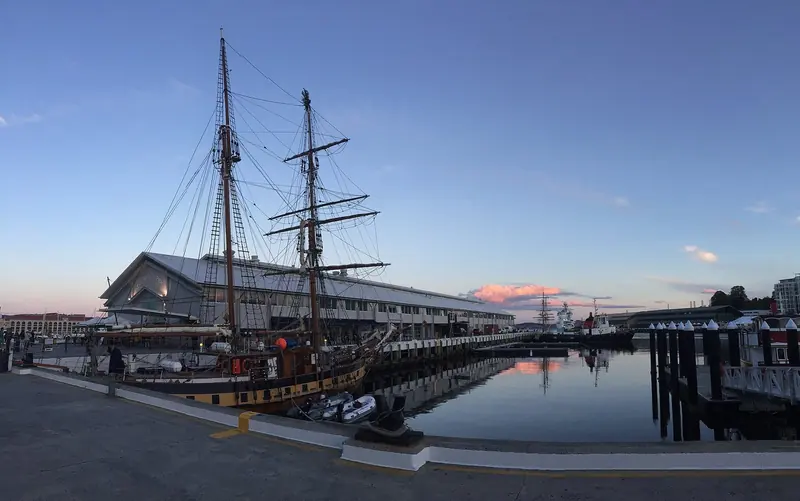
| Location | D'Entrecasteaux Channel, between Bruny Island and south-east Tasmania, Australia, latitude about 42 to 43 S |
|---|---|
| Channel length | roughly 50 km from the Derwent River mouth south to Recherche Bay |
| Only dedicated large-yacht marina | Margate Marina, individual berths to 40 m, AUD 45 per metre per month long-term (6-month minimum), 15 percent liveaboard surcharge, on the Channel about 20 minutes from Hobart |
| Derwent Sailing Squadron, Hobart | up to 280 boats, including 30 m superyachts and powerboats, 130 fixed-pile and 140 floating berths |
| Constitution Dock, Hobart city centre | TasPorts-led 24-berth floating marina in development; visitor berths available by prior arrangement |
| Rolex Sydney Hobart Yacht Race | 628 nm, starts Boxing Day (26 December) Sydney Harbour, finishes at Constitution Dock, Hobart |
| Australian Wooden Boat Festival | biennial, next edition 5 to 8 February 2027, theme Working Boats |
| Biosecurity/customs | Maritime Arrivals Reporting System (MARS) notice commonly required at least 96 hours before arrival; Australian Border Force (immigration/entry) and DAFF (quarantine/biosecurity) clear together at a designated port |
| Tasmania layers its own additional biosecurity rules (Biosecurity Tasmania) on top of federal clearance, even for a vessel already cleared into mainland Australia | |
| Climate, Hobart | summer highs 17 to 23 C, winter lows 4 to 12 C, annual rainfall about 569 mm, Australia's second-driest capital |
| Nearest airport | Hobart International (HBA/YMHB), about 17 km NE of the city, 7,300 ft runway, no dedicated FBO; private charter via the Rotor-Lift base (operators include Blade); light aircraft alternative Cambridge Aerodrome (YCBG) |
| MONA (Museum of Old and New Art) | reached by dedicated ferry from Brooke Street Pier, Hobart, 25 minutes to Berriedale |
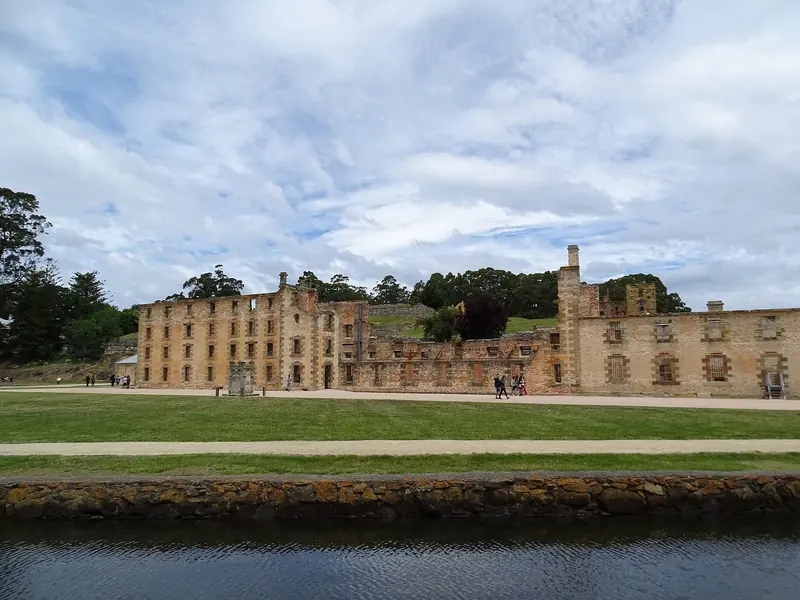
| Port Arthur Historic Site, Tasman Peninsula: former convict penal settlement, UNESCO World Heritage listed | |
Why the Channel is sheltered when the ocean outside is not
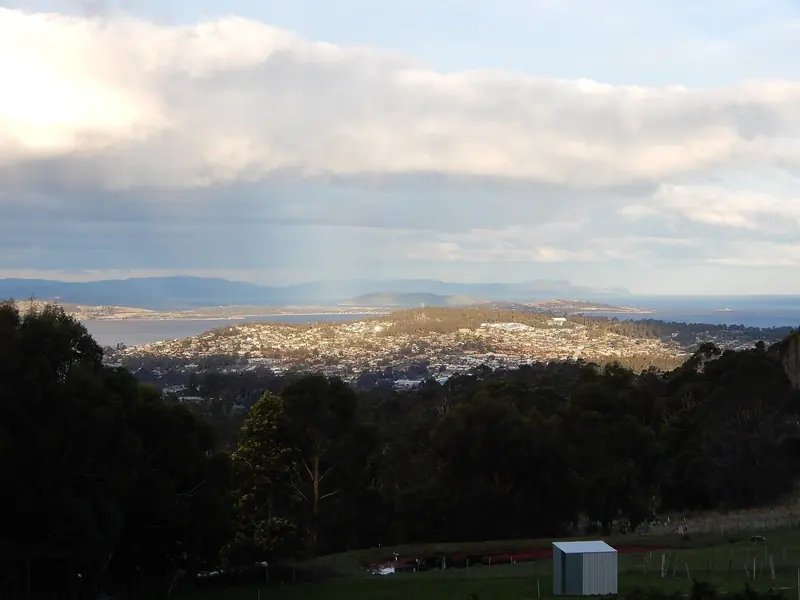
Hobart lies at latitude 42 to 43 degrees south, squarely inside the Roaring Forties, the belt of strong, nearly unbroken westerly wind that circles the globe between 40 and 50 degrees south with almost no land to slow it down. That wind and the swell it builds are why Tasmania's open west and south coasts have a serious offshore reputation. The D'Entrecasteaux Channel, the passage between Bruny Island and the Tasmanian mainland that carries the Derwent and Huon Rivers out to the Tasman Sea, is a different proposition entirely: Bruny stands broadside to the ocean and the Channel behind it is consistently flat water, which is why local sailors treat it as one of the best-protected cruising grounds in the country.
The Channel runs roughly 50 kilometres from the mouth of the Derwent south to Recherche Bay, with the small towns of Margate, Snug, Kettering, Woodbridge, Flowerpot and Gordon strung along the mainland shore and Barnes Bay, Quarantine Bay, Great Bay and Cloudy Bay giving shelter on the Bruny side depending on the wind. A boat can genuinely reposition for the forecast here, something the open coasts either side do not allow.
Hobart: the base, not the destination
Hobart itself is where a season starts and provisions, not where it is spent. Constitution Dock, the 1850s harbourside basin in the city centre and the finish line of the Rolex Sydney Hobart Yacht Race every Boxing Day fleet, is being developed by TasPorts into a 24-berth floating marina, with visitor berths already available there by prior arrangement for boats that fit. For a genuinely large yacht the practical choices are the Royal Yacht Club of Tasmania, which offers temporary berthing for larger visiting vessels, and the Derwent Sailing Squadron, which accommodates up to 280 boats including 30 metre superyachts and powerboats across 130 fixed-pile and 140 floating berths.
The one facility actually built around superyacht scale is Margate Marina, about 20 minutes south of the city on the Channel itself, the only marina in Tasmania offering dedicated individual berths at 30, 35 and 40 metres alongside the smaller sizes, every berth with power and water. Its published long-term rate is AUD 45 per metre per month on a minimum six-month stay, with a 15 percent surcharge for liveaboards and an additional charge for multihulls; short-stay and transient pricing is arranged directly through the marina office.
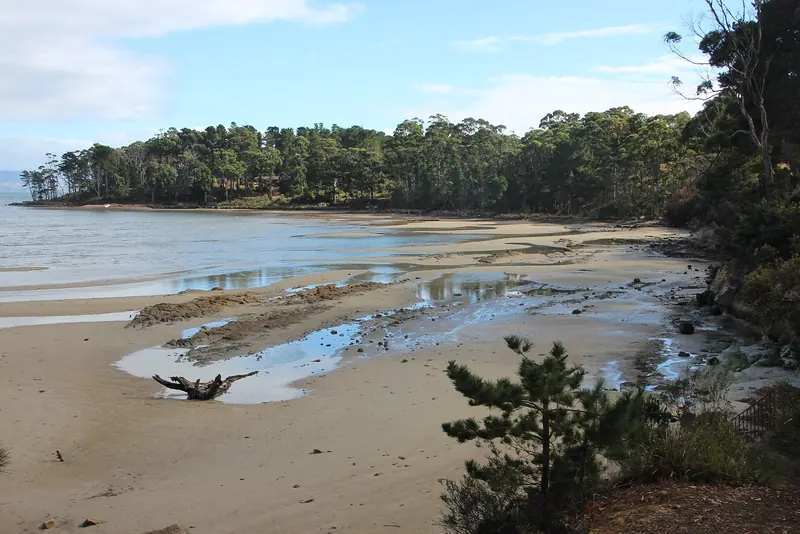
Bruny Island takes the Roaring Forties so the Channel behind it does not have to, and almost nobody else's superyacht is there to see it.
What fills the harbour: two very different events
The Sydney to Hobart, a 628 nautical mile ocean race that starts in Sydney Harbour on Boxing Day, finishes into the Derwent and Constitution Dock over the following days, and the city fills with the race fleet, their crews and support teams for a week either side of the finish. It is the single most crowded window of the Hobart year and berths should be arranged well ahead of it. The Australian Wooden Boat Festival, held biennially and returning 5 to 8 February 2027 with a theme of working boats, is the other major draw: it turns the whole Hobart waterfront, Constitution Dock included, into the largest wooden-boat gathering in the Southern Hemisphere.
Outside those two windows, the Channel and the wider south-east coast run on a quieter rhythm entirely, with the Wooden Boat Festival's odd-numbered-year cadence meaning there is no event of that scale most seasons at all.
Clearing in: Australia's biosecurity comes first
Every vessel entering Australian waters must give advance notice, commonly cited at a minimum of 96 hours, through the Maritime Arrivals Reporting System (MARS) before arrival, with every person aboard holding a valid visa and passport. Clearance happens at an official port of entry, where the Australian Border Force handles immigration, vessel entry and legal compliance while the Department of Agriculture, Fisheries and Forestry manages quarantine, food inspection and biosecurity; the two normally board together. Hobart is a standard clearance port for a yacht arriving from New Zealand or crossing from the Australian mainland.
Tasmania layers its own biosecurity rules on top of the federal process, run by Biosecurity Tasmania, precisely because the island has stayed free of pests and diseases that are established on the mainland. A captain who has cleared into an Australian mainland port before should not assume Tasmania's rules are identical on arrival; fresh produce, honey, and untreated timber or plant material carried since the mainland clearance can all be restricted again on entry to the island.
The season, in practice
Hobart runs a genuinely temperate climate: summer (December to February) highs typically sit between 17 and 23 degrees Celsius, winter lows between 4 and 12, and the city is Australia's second-driest capital after Adelaide, with rain that mostly falls as light showers rather than heavy fronts. November is a strong shoulder month, warming up ahead of the December to February peak with clearer days and none of the summer crowding around Salamanca Place and Battery Point. The genuine constraint on the season is the same Roaring Forties wind that makes the Channel worth visiting in the first place: it does not stop, and a passage plan for the open coasts north or south of the Channel has to be built around it rather than around a calendar date.
Water temperature stays cool by Mediterranean or Caribbean standards even at the height of summer, and this is not swimming-pool cruising; the appeal is the coastline, the wildlife, the food and the near-total absence of other large yachts, not warm water off the swim platform.
What the Channel actually offers a guest
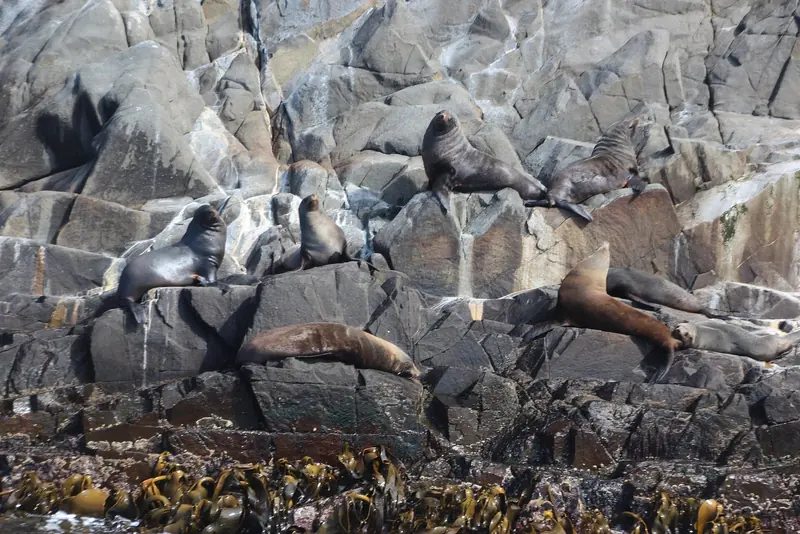
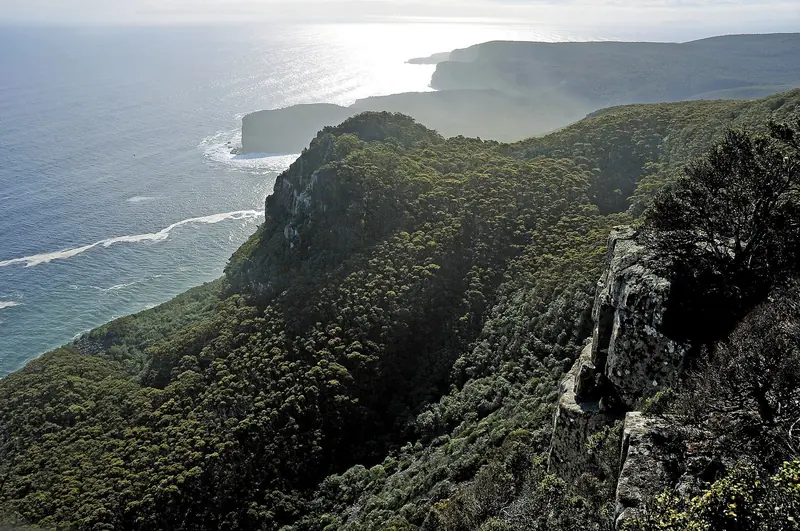
Bruny Island itself carries the wildlife draw: fur seal colonies at The Friars off the island's southern tip, dolerite sea cliffs at the Tasman Peninsula's Cape Raoul and Shipstern Bluff a short run further out, and oyster and cheese producers along the Channel shore that supply Hobart's own restaurants directly. Port Arthur, the former convict penal settlement on the Tasman Peninsula and now a UNESCO World Heritage site, is a realistic day trip from a Channel anchorage and gives the itinerary a serious cultural stop most Pacific cruising grounds cannot match.
In Hobart itself, MONA, the Museum of Old and New Art, is reached by its own dedicated ferry, a 25 minute run from Brooke Street Pier on the city waterfront to a purpose-built dock at Berriedale, and is one of the more unusual cultural draws anywhere on a yacht itinerary: an internationally significant private museum a tender ride from the marina. Hobart International Airport, about 17 kilometres northeast of the city with a 7,300 foot runway, has no dedicated superyacht-style FBO, but charter operators including Blade run private jet, helicopter and seaplane services through the airport's Rotor-Lift base, and regional turboprop connections reach King Island, Flinders Island, Devonport and Launceston for a multi-stop Tasmanian itinerary.
Who this is actually for
Tasmania is not a stop on the way to somewhere else; the Roaring Forties and the distance from anywhere else in the Pacific cruising world see to that. It suits an owner who has already done the South Pacific islands or the east coast of Australia and wants a genuinely different kind of remoteness: cool water, dramatic coastal geology, world-class food and wine, a real cultural destination in MONA, and a cruising ground with almost no other large yachts in it, set against a real, named wind system that dictates the passage planning rather than a marketing season.
The infrastructure is honest about its own scale. Margate Marina is the one facility built for a 40 metre yacht; everything else in Hobart, from Constitution Dock to the Royal Yacht Club of Tasmania and the Derwent Sailing Squadron, is sized for the local fleet and the odd larger visitor by arrangement, not for a resident superyacht population. An owner coming here is choosing the Channel for what it is, not for what it can service at scale.
На берегу, подъезд и бронирование
| Getting there by air | Hobart International (HBA), about 17 km from the city, 7,300 ft runway, no dedicated superyacht FBO; private jet, helicopter and seaplane charter runs through the airport's Rotor-Lift base (operator Blade among others). Regional turboprop links reach King Island, Flinders Island, Devonport and Launceston. |
|---|---|
| Clearing in | Notify via the Maritime Arrivals Reporting System (MARS) commonly at least 96 hours ahead; Australian Border Force and the Department of Agriculture, Fisheries and Forestry board together at a designated port. Tasmania applies its own additional biosecurity rules (Biosecurity Tasmania) even for a vessel already cleared into the Australian mainland. |
| Berthing a large yacht | Margate Marina, on the Channel about 20 minutes from Hobart, is the only Tasmanian marina with dedicated individual berths to 40 m; AUD 45/m/month long-term (6-month minimum), 15 percent liveaboard surcharge, extra for multihulls. In Hobart itself, the Derwent Sailing Squadron takes vessels to about 30 m; Constitution Dock's new floating marina and the Royal Yacht Club of Tasmania offer visitor berths by arrangement. |
| Anchoring in the Channel | Barnes Bay and Quarantine Bay off northern Bruny Island give all-weather shelter; Cloudy Bay, further south on Bruny, suits easterly to southerly winds and is large enough for a bigger yacht. Bull, Trumpeter and Variety Bays on Bruny's eastern shore work in SW to NW conditions. |
| What it costs | Margate Marina's long-term rate is published at AUD 45 per metre per month (6-month minimum, plus surcharges). Constitution Dock, the Royal Yacht Club of Tasmania and the Derwent Sailing Squadron quote transient berths directly; none of these publish a public transient tariff for a large yacht. |
| Best season | December to February for warmth and the daylight, but November is a strong, quieter shoulder month. The Roaring Forties dictate passage planning on the exposed coasts either side of the Channel year-round, more than any calendar date does. |
| What is not published | Transient superyacht berth pricing at Constitution Dock, the Royal Yacht Club of Tasmania and the Derwent Sailing Squadron; current Constitution Dock marina completion timeline; and Margate Marina's short-stay rate for a vessel over 30 m, all confirmed directly with the operator. |
Что сообщают владельцы и экипажи
Tasmania's biosecurity clearance is a genuinely separate step from the mainland Australian one
Biosecurity Tasmania enforces its own additional rules on top of the federal Australian Border Force and DAFF process specifically because the island has stayed free of pests and diseases established on the mainland, so produce and material cleared once on the mainland can still be restricted again arriving in Tasmania.
Biosecurity Tasmania, Department of Natural Resources and Environment TasmaniaThe Roaring Forties are the defining fact of Tasmanian sailing, not a seasonal footnote
The wind belt runs virtually unimpeded between 40 and 50 degrees south with almost no land to slow it, and Hobart sits directly inside it, which is why the open west and south coasts carry a serious offshore reputation while the Channel behind Bruny Island does not.
Royal Yacht Club of Tasmania, Tasmanian Anchorage GuideConstitution Dock's marina upgrade is still a development application, not a finished facility
TasPorts has lodged a plan with Hobart City Council for a 24-berth floating marina within the 1850s dock; visitor berths are available there today only by prior arrangement while the longer-term project proceeds.
TasPortsThe Sydney to Hobart fleet is what actually fills Hobart's harbour, not general tourism
The race finishes into the Derwent and Constitution Dock through the days following the Boxing Day start, and the crowding around the docks in that week is the busiest the city's marinas get all year.
Rolex Sydney Hobart Yacht Race
Сильные стороны и что учесть
Сильные стороны
- Genuinely sheltered water inside a genuinely wild wind systemBruny Island sits broadside to the Roaring Forties and the D'Entrecasteaux Channel behind it stays flat water as a result, giving 50 km of protected cruising a short run from an exposed ocean coast.
- Almost no other large yachtsMargate Marina is the only facility built for a 40 m yacht in the whole state; an owner here is not competing for a berth or an anchorage the way they would in the Mediterranean or the Caribbean.
- A genuine cultural anchor in MONAThe Museum of Old and New Art is an internationally significant private museum reached by its own 25 minute ferry from the Hobart waterfront, an itinerary stop most Pacific cruising grounds simply do not have.
- Food and wine that supply the anchorage directlyOyster and cheese producers line the Channel shore and supply Hobart's restaurants; the produce an owner eats ashore is coming from the water the boat is anchored in.
На что обратить внимание
- Cold water even in the Tasmanian summerThis is not warm-water cruising by Mediterranean or Caribbean standards; the appeal is the coastline, wildlife and culture, not swimming off the platform.
- No dedicated large-yacht FBO at the airportHobart International has no superyacht-style private terminal; charter access runs through the general Rotor-Lift base, a real step down from a Nice or a Fort Lauderdale for guest logistics.
- The Roaring Forties are not a seasonal inconvenience, they are a standing factThe wind belt that keeps the Channel sheltered also makes the open coasts either side of it genuinely demanding year-round, so a passage plan has to respect it rather than wait it out.
- Thin, unpublished pricing for a genuinely large yachtOnly Margate Marina publishes a rate at all, and even that is a long-term, six-month-minimum tariff; a short-stay superyacht budget has to be built from direct calls to three or four operators rather than a website comparison.
Для кого: An owner who has already cruised the South Pacific or Australia's east coast and wants a colder, wilder, near-empty cruising ground with world-class food and a genuine cultural stop in MONA, and who will plan a passage in and out around the Roaring Forties rather than a fixed date.