The British Virgin Islands
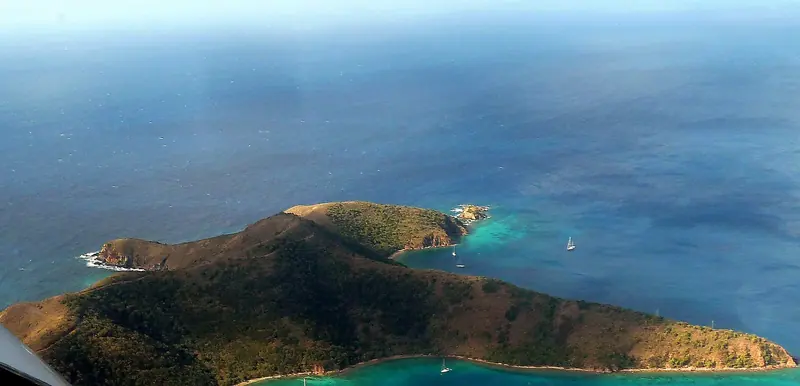
| Region | British Overseas Territory, northern Lesser Antilles, about 60 islands and cays east of Puerto Rico |
|---|---|
| Scale | the whole cruising ground is about 25 nautical miles end to end, with Anegada 15 miles north of the main group |
| Sailing | Sir Francis Drake Channel is deep, sheltered and line of sight, with easterly trades of roughly 15 to 20 knots in winter |
| Season | December to April, peak between Christmas and the first week of January, best value in February, May and June |
| Hurricane season | 1 June to 30 November, with the peak risk in August to October and most hull policies excluding the box |
| Irma | the category five of 6 September 2017 destroyed much of the marine infrastructure, some of which reopened only in 2026 |
| New in 2026 | Biras Marina opened 5 February 2026 in North Sound, for megayachts over 150 ft in up to 20 ft of draft, plus 20 buoys to 60 ft |
| North Sound | the Yacht Club Costa Smeralda marina is listed at 38 berths for yachts to 100 m in up to 9.1 m draft |
| Tortola | Nanny Cay runs about 300 berths with two fuel docks and a boatyard, but a single 150 ft slip |
| Road Town | Village Cay has 106 slips and takes hulls to 180 ft in up to 11 ft of draft |
| Licensing | the Commercial Recreational Vessels Licensing Act, Act No 13 of 2025, took effect 1 June 2025 |
| Foreign based term charter | USD 24,000 a year unrestricted, or USD 7,500 for seven charters plus USD 2,100 each thereafter |
| Restricted framework | USD 7,500 for up to seven entries, or USD 1,200 per entry to a maximum of seven |
| Large yachts | 115 to 150 ft pay USD 7,500 a year plus USD 2,000 a cruise, 150 to 250 ft USD 8,500 plus USD 2,500, above 250 ft USD 10,000 plus USD 3,500 |
| BVI based boats | USD 800 to USD 4,000 a year, conditional on 70 per cent of charters originating locally and 15 days a month present from December to April |
| Cruising permit | USD 6 per person per day home based, USD 16 per person per day foreign based, under the amended Cruising Permit Ordinance Cap. 203 |
| Levies | USD 10 environmental and tourism per person, USD 2 VISAR per person |
| Parks | USD 4 a person a day for national park entry, overnight park moorings about USD 35 to USD 45, reservable BoatyBall moorings about USD 55 |
| Ports of entry | Road Town, West End at Soper's Hole, Great Harbour on Jost Van Dyke, Gun Creek and Spanish Town on Virgin Gorda, Trellis Bay |
| Air | Terrance B. Lettsome International on Beef Island, single runway of 4,646 ft or 1,416 m, open 05:30 to 22:30, light and midsize jets only |
| Practical gateways | San Juan in Puerto Rico or St Thomas in the US Virgin Islands, then regional flight, ferry or helicopter |
| Yard work | anything structural goes to Sint Maarten or Antigua, 85 to 100 miles away across the Anegada Passage |
| Currency | the United States dollar, in a British Overseas Territory, with English the working language |
Twenty miles of line of sight
The whole cruising ground fits inside a rectangle about 25 nautical miles long. Tortola runs along the north side of the Sir Francis Drake Channel, a chain of smaller islands runs along the south, and Virgin Gorda closes the eastern end. The channel between them is deep, clear of hazards and almost always in the lee, so the water stays flat while the trade wind blows across it. An owner can see the next anchorage from the one he is leaving, and the longest hop inside the group is under two hours at cruising speed.
That geometry is the reason the BVI became the charter capital of the world rather than a place people merely visit. Nothing here needs a night passage, a weather window or pilotage. The trades hold from the east at roughly 15 to 20 knots through the winter, the tidal range is under a foot, and the reefs that matter are marked and few. The exception is Anegada, 15 miles north of the main group across open water, which is a low coral atoll fringed by the reef that has wrecked several hundred ships and is the one leg on the chart that deserves a briefing.
The anchorages an owner actually comes for
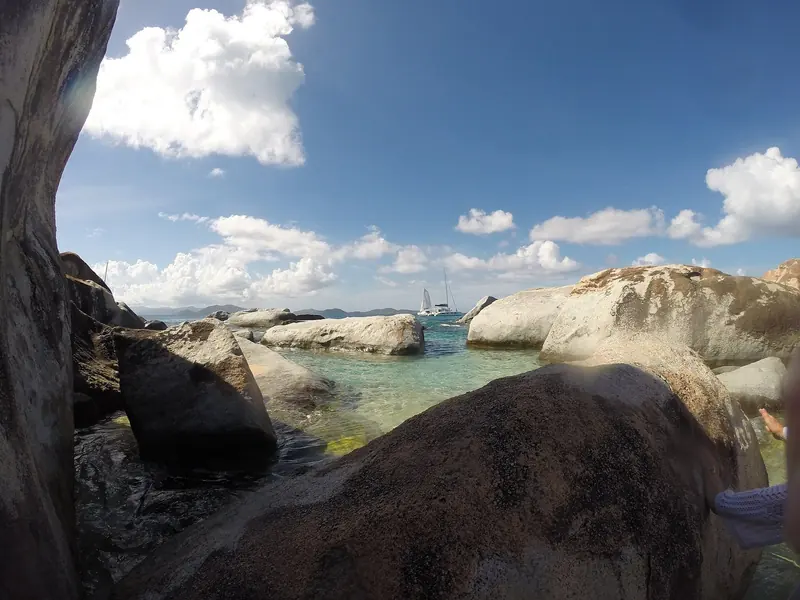
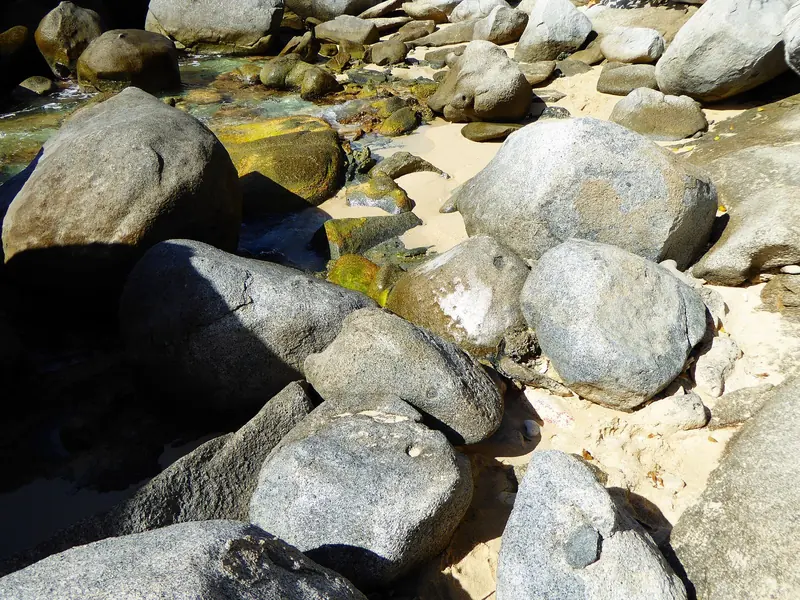
The Baths on the south western corner of Virgin Gorda are the landmark, a field of granite boulders the size of houses with grottos and pale sand between them. It is a day stop with a mooring field and no overnight, and it is best taken before nine in the morning. Norman Island, at the western end of the southern chain, gives the Bight for a night at anchor and the caves at Treasure Point for the snorkelling. Cooper Island has a beach club with its own small brewery. Salt Island holds the wreck of the RMS Rhone, lost in the hurricane of 1867 and lying in 20 to 80 feet of water, which is the finest dive in the territory.
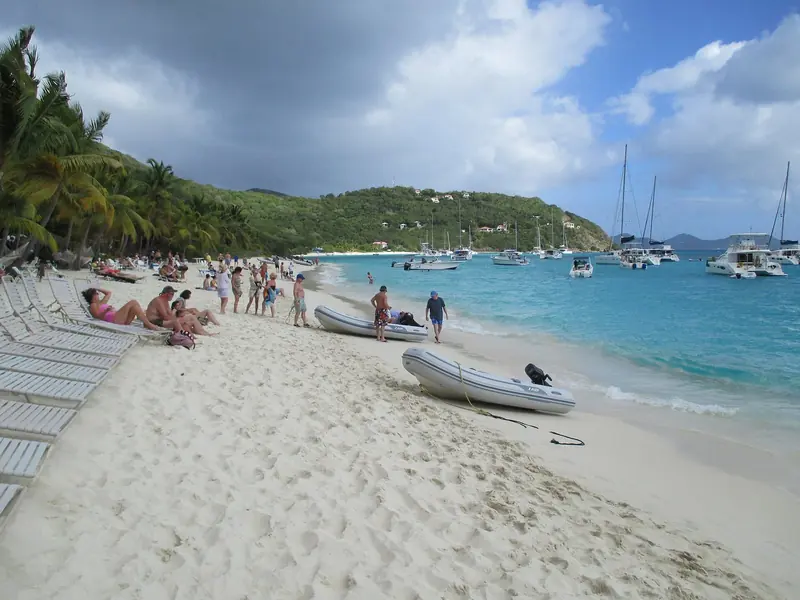
Jost Van Dyke is the social island. White Bay is a quarter mile of sand with beach bars behind it, and Great Harbour next door is the port of entry and the home of Foxy's. Trellis Bay on Beef Island runs its full moon party a walk from the airport. Anegada is the outlier and the reward, flat, empty, ringed by 18 miles of reef, and known for lobster grilled on the beach at Setting Point. North Sound at the top of Virgin Gorda is the deep protected basin the large yachts use, sheltered on every side and now carrying more berthing than the rest of the territory put together.
Twenty five miles of protected water, a mooring ball at every stop, and a licence that can cost a visiting charter yacht USD 24,000 a year.
North Sound became a superyacht address in 2026
Biras Marina opened on 5 February 2026 on the peninsula that was Biras Creek Resort until Hurricane Irma closed it in 2017. It is reachable only by yacht or helicopter, takes megayachts over 150 feet in drafts to 20 feet, and adds 20 mooring buoys for boats to 60 feet, with power, water, internet, a bakery at the dock and a free hourly shuttle to the port of entry at Gun Creek. The owner, Guillermo Houwer, describes it as the only marina in the region designed specifically for superyachts, which overstates the case slightly but not by much.
It joins the Yacht Club Costa Smeralda marina on the other side of the same sound, which industry listings put at 38 berths for yachts to 100 metres in up to 9.1 metres of draft, with customs on site. Add Bitter End Yacht Club, Saba Rock and Leverick Bay and North Sound now holds a concentration of large yacht berthing that did not exist here a decade ago. The rest of the territory is smaller. Nanny Cay on Tortola runs about 300 berths but tops out at a single 150 foot slip, and Village Cay in Road Town takes hulls to 180 feet in up to 11 feet of draft across 106 slips.
What the 2025 licensing act did to the arithmetic
The Commercial Recreational Vessels Licensing Act, Act No 13 of 2025, took effect on 1 June 2025 and rewrote what a foreign based charter yacht pays to work these waters. A term charter yacht can buy unrestricted access for USD 24,000 a year, or USD 7,500 for seven charters with USD 2,100 for each one after that. The restricted framework is USD 7,500 for up to seven entries or USD 1,200 per entry to a maximum of seven. Large yachts are banded by length: 115 to 150 feet pay USD 7,500 a year plus USD 2,000 a cruise, 150 to 250 feet pay USD 8,500 plus USD 2,500, and above 250 feet the figures are USD 10,000 and USD 3,500.
A BVI based boat pays between USD 800 and USD 4,000 a year depending on size, and to qualify it has to originate 70 per cent of its charters in the Virgin Islands and be present at least 15 days a month from December to April. Day operators pay USD 8,500 a year for a dive or day boat and USD 2,500 for a water taxi. The effect on the US Virgin Islands day charter trade was immediate, and the dispute has since drawn in the office of the United States Trade Representative and produced a federal report on the damage to St Thomas jobs. An owner reading the numbers should read them as a policy in motion rather than a settled tariff.
Cruising permits, park fees and the mooring balls
Underneath the licence sits the older cruising permit, charged under the amended Cruising Permit Ordinance, Cap. 203, at USD 6 per person per day for a home based charter boat and USD 16 per person per day for a foreign based one. On top of that the territory collects an environmental and tourism levy of USD 10 a person and a VISAR search and rescue contribution of USD 2 a person. Clearance is at Road Town, West End at Soper's Hole, Great Harbour on Jost Van Dyke, Gun Creek and Spanish Town on Virgin Gorda, and Trellis Bay, in office hours, with overtime charged outside them.
The National Parks Trust charges separately. Day entry to a national park is quoted at USD 4 a person a day, and the overnight moorings in the park anchorages run about USD 35 to USD 45 a night, collected in the evening from a dinghy. Reservable BoatyBall moorings, booked in the app, are around USD 55. One caution worth carrying: published guidance disagrees about the basis of the cruising permit itself, with charter operators quoting a per foot per day scale of USD 2.00 in the peak and USD 0.75 off peak against the ordinance's per person per day figures. Ask Customs which applies to your case at clearance rather than budgeting from a website.
The season, and the six months insurance does not like
The season runs from December to April and is at its most crowded between Christmas and the first week of January, when the mooring fields fill by early afternoon and the popular ones are gone by noon. February and March are the best combination of settled trade wind and available space. April closes the season with the regattas. May and June are quiet, warm and still perfectly good sailing, and they are the value months for an owner who does not need the social calendar.
Hurricane season runs from 1 June to 30 November, with the risk concentrated in August, September and October. This is not a theoretical constraint here. Hurricane Irma crossed the territory on 6 September 2017 as a category five and destroyed a large part of the marine infrastructure, including the resort that has only now reopened as Biras Marina. Most hull policies either exclude the box or require the boat to be south of it for those months, which is why the fleet migrates to Grenada, Trinidad or the yards in Sint Maarten and Antigua, and why a summer berth here is easy to find.
Getting guests in is the real constraint
Terrance B. Lettsome International on Beef Island, eight miles east of Road Town, has one asphalt runway of 4,646 feet, which is 1,416 metres, and it is open from 05:30 to 22:30. That length rules out most long range aircraft. Charter operators quote the airport for light and midsize jets such as the Citation CJ2 and CJ3, the Learjet 60XR and the Challenger 300, so a Gulfstream arriving from Europe does not land here. The practical route for guests is San Juan in Puerto Rico or St Thomas in the US Virgin Islands, then a short hop, a ferry or a helicopter.
That second leg is the part that goes wrong. St Thomas to Tortola means clearing out of the United States and into a British Overseas Territory, and the current friction between the two administrations has made the crossing slower rather than faster. Guests routed through San Juan avoid the double clearance and connect on a regional turboprop. For North Sound, helicopter from either gateway is the sensible answer for a large yacht, and Biras is built around the assumption that some guests will arrive that way.
Where the boat gets fixed, and where it does not
The BVI is a cruising ground with yard capacity attached rather than a refit centre. Nanny Cay on Tortola is the working end of the territory, with two fuel docks, a pump out, a reverse osmosis water plant, its own boatyard and the largest concentration of trade in the islands. Village Cay in Road Town sits in the middle of the capital and is the convenient berth for provisioning, banking and crew changes. Virgin Gorda Yacht Harbour serves the eastern end.
Anything structural on a large hull still goes to Sint Maarten or Antigua, both about 85 to 100 miles away, where the lifts, the paint sheds and the technical trades are. That is not a criticism of the BVI so much as a description of how the northern Caribbean divides the work: Sint Maarten fixes, Antigua races and refits, the BVI sails. Budget the delivery leg and the clearances at both ends if a job comes up mid season, and remember the Anegada Passage between here and St Martin has a reputation for being uncomfortable that it has earned.
Ashore, and the honest limits of it
The shore side is beach bars and small resorts rather than towns. Foxy's on Jost Van Dyke and the Soggy Dollar in White Bay are institutions, the Willy T is a floating bar in the Bight at Norman Island, Saba Rock and the Bitter End sit in North Sound, and Cooper Island Beach Club brews its own beer and runs on solar. The food is good in a small number of places and unremarkable in most. Road Town is a working capital with the banks, the chandleries and the supermarkets, and it is not a destination in itself.
Guests who want a city, a museum or serious restaurants should be told before they book. There is no equivalent of Gustavia or Porto Cervo here, and the culture is a maritime one rather than a resort one. What the territory does have is the most reliable week of sailing in the Caribbean and an anchorage for every wind direction inside a day. Charter crews describe the same trip repeatedly and it works: two nights around Norman and Cooper, the Baths early, three nights in North Sound, Anegada for the lobster, Jost Van Dyke last.
What is not published, and what it costs to be wrong
Village Cay publishes a full card at USD 1.80 to USD 2.85 a foot a day depending on size, USD 4.00 a foot on the T dock, with a minimum of USD 60 a day for a boat of 35 feet or less and small security and administration charges on contracts. That is the exception. Checked in August 2026, neither Nanny Cay, the Yacht Club Costa Smeralda marina, Biras Marina nor Virgin Gorda Yacht Harbour publishes a superyacht rate card, so anything above about 60 feet in North Sound is a quote through an agent. No BVI marina publishes a fuel price.
The expensive mistakes are administrative rather than nautical. Carrying paying guests on a foreign flagged yacht without the right licence under Act No 13 of 2025 is the one that now bites, and the categories are narrow enough that a boat which merely repositions with owners aboard needs to know which side of the line it sits. The park moorings are not optional in the marine parks and anchoring is prohibited in several of them to protect coral. And the Anegada reef is unforgiving, which is why most charter contracts still restrict the boat from going there at all without a guide.
На берегу, подъезд и бронирование
| Getting there | Terrance B. Lettsome International on Beef Island is eight miles east of Road Town, has a single 4,646 ft runway and operates 05:30 to 22:30. The length limits it to light and midsize jets, with operators quoting the Citation CJ2 and CJ3, the Learjet 60XR and the Challenger 300, so a long range aircraft lands at San Juan or St Thomas instead. San Juan is the cleaner routing for guests because it avoids clearing out of the United States, and it connects on regional turboprops. For a yacht in North Sound, helicopter from either gateway is the practical transfer and Biras Marina is built on that assumption. |
|---|---|
| Arriving by sea | Clear in at Road Town, West End at Soper's Hole, Great Harbour on Jost Van Dyke, Gun Creek or Spanish Town on Virgin Gorda, or Trellis Bay. Offices keep roughly 08:30 to 16:30 on weekdays and charge overtime outside those hours, at weekends and on public holidays. The captain clears with crew and guest lists, the vessel registration and the licence documents before anyone else lands. Biras Marina runs a free hourly shuttle to the Gun Creek office, which is the easiest clearance in the territory for a large yacht. |
| What the licence costs | Under Act No 13 of 2025, in force since 1 June 2025, a foreign based term charter yacht pays USD 24,000 a year for unrestricted access, or USD 7,500 for seven charters with USD 2,100 for each additional one, or under the restricted framework USD 7,500 for seven entries or USD 1,200 per entry. Above 115 feet the bands are USD 7,500 plus USD 2,000 a cruise to 150 ft, USD 8,500 plus USD 2,500 to 250 ft, and USD 10,000 plus USD 3,500 above that. A BVI based boat pays USD 800 to USD 4,000 a year but has to meet the 70 per cent local origination and presence tests. |
| What everyone pays on top | The cruising permit runs at USD 6 per person per day for a home based charter boat and USD 16 for a foreign based one under the amended Cruising Permit Ordinance Cap. 203. Add USD 10 a person environmental and tourism levy and USD 2 a person for VISAR, the volunteer search and rescue service. Published guidance disagrees on whether some categories are charged per foot per day instead, at around USD 2.00 in peak season and USD 0.75 off peak, so confirm the basis with Customs at clearance rather than budgeting from a broker's website. |
| Moorings and park fees | The National Parks Trust charges about USD 4 a person a day for park entry. First come first served park moorings cost roughly USD 35 to USD 45 a night and are collected in the evening from a dinghy, and reservable BoatyBall moorings booked through the app are about USD 55. In the marine parks the mooring is not optional, because anchoring is prohibited over the coral. In the peak weeks the fields at the Baths, Norman Island and Cooper fill by early afternoon and the reservable balls go in the morning. |
| What a berth costs | Village Cay in Road Town publishes the only full card in the territory: USD 1.80 to USD 2.85 a foot a day by size, USD 4.00 a foot on the T dock, a minimum of USD 60 a day at 35 feet or less, and USD 5 security plus USD 2 administration on weekly, monthly and seasonal contracts. It holds 106 slips and takes 180 ft in 11 ft of draft. Everything larger is quoted privately. Nanny Cay runs about 300 berths with one 150 ft slip, and North Sound berthing at the Yacht Club Costa Smeralda marina and Biras is by enquiry. |
| The route that works | A standard week runs west to east and back: Norman Island for the Bight and the caves, Cooper Island for the beach club, the Baths before nine in the morning, then North Sound for two or three nights with the boat berthed and the guests ashore. Anegada is the day that needs planning because of the reef, and most charter contracts still require a guide or forbid it outright. Jost Van Dyke is the last night before a west end clearance. Nothing on that circuit is more than two hours from the previous stop. |
| Eating, and after dark | Foxy's in Great Harbour and the Soggy Dollar in White Bay on Jost Van Dyke are the two institutions, the Willy T is the floating bar in the Bight at Norman Island, and Saba Rock and the Bitter End Yacht Club are the North Sound options. Cooper Island Beach Club runs on solar and brews its own beer. Biras added two restaurants, Ikigai and The Mangrove, when it opened in February 2026. Anegada means lobster on the beach at Setting Point, ordered in the morning for the evening. Road Town has the supermarkets and the chandleries and very little else. |
| What is NOT published | Checked in August 2026, no BVI marina above Village Cay's size band publishes a superyacht tariff: Nanny Cay, the Yacht Club Costa Smeralda marina, Biras Marina and Virgin Gorda Yacht Harbour are all quote only. No marina publishes a fuel price. Biras did not disclose berth rates at opening. The government has published the licence bands but not a public register of which vessels hold which category, so an owner cannot check a charter operator's status from outside. And nothing published tells you how many park moorings are free on any given afternoon, which is the number that decides the day. |
Что сообщают владельцы и экипажи
The annual licence is the number that changed the trip, not the daily fees
Andrea King, who owns Island Yacht Charters in the US Virgin Islands, put the effect of Act No 13 of 2025 plainly: unfettered access to BVI waters would cost USD 24,000 a year for each boat in the fleet, and without it half the cruising ground is off limits. Operators on the American side have responded by relocating boats, by restricting itineraries to US waters, or by buying the restricted framework and rationing entries across the season.
Andrea King, Island Yacht Charters, reported by Cruising CompassThe dispute has gone above the territory
The fee increases prompted formal engagement between the two administrations and a federal trade report finding that the BVI charter fees are damaging employment and revenue in the US Virgin Islands, with the matter reaching the office of the United States Trade Representative. Three US Virgin Islands charter companies had already relocated to the BVI by mid 2025. An owner should read the licence bands as current policy rather than a stable long term cost.
Virgin Islands Consortium and the Government of the United States Virgin IslandsThe wording of the cruising permit categories matters more than the rate
When the ordinance was amended, the Commissioner of Customs, Wade Smith, explained that the term charter boats based in the Territory had been replaced with home based charter boats, which is the distinction that separates the USD 6 per person per day rate from the USD 16 one. The definition, not the number, is what a foreign flagged boat has to satisfy, and it is assessed at clearance.
Wade Smith, Commissioner of Customs, Government of the Virgin IslandsThe first purpose built superyacht berthing in the territory opened in February 2026
Biras Marina began operating on 5 February 2026 on the North Sound peninsula that had been closed since Hurricane Irma in 2017, taking yachts over 150 feet in drafts to 20 feet with 20 mooring buoys for smaller boats, power, water, internet, a dock bakery, two restaurants and an hourly shuttle to the Gun Creek port of entry. Berth rates were not disclosed at opening.
Megayacht NewsPublished fee guidance contradicts itself, and the counter is the arbiter
Charter guides published in 2026 quote the cruising permit as a per foot per day charge of about USD 2.00 in the December to April peak and USD 0.75 off peak, while the amended ordinance and government releases state per person per day figures of USD 6 and USD 16. Both are in circulation and they are not reconcilable. Checked in August 2026, no single official schedule covering every vessel category could be found online, so the basis has to be confirmed with Customs at clearance.
Yotters desk, checked August 2026
Сильные стороны и что учесть
Сильные стороны
- The easiest week of sailing in the CaribbeanTwenty five miles end to end, line of sight the whole way, deep water in the middle and a sheltered anchorage every two hours. No night passages, no pilotage, and a tidal range under a foot.
- North Sound now takes large yachts properlyBiras Marina opened on 5 February 2026 for hulls over 150 ft in up to 20 ft of draft, alongside the Yacht Club Costa Smeralda marina listed at 38 berths to 100 m, in a basin sheltered on every side.
- The moorings remove the hardest part of a charter weekPark and commercial mooring fields at almost every stop, with reservable BoatyBall balls at about USD 55, so an inexperienced guest crew never has to set an anchor over coral.
- One marina publishes a real cardVillage Cay posts USD 1.80 to USD 2.85 a foot a day with a USD 4.00 T dock rate, 106 slips, 180 ft and 11 ft of draft, which is more than any of its neighbours will tell you before you ask.
- English law, US dollars and no language barrierA British Overseas Territory running on the United States dollar, with clearance in English at six ports of entry and a legal system an owner and his advisers already understand.
На что обратить внимание
- The 2025 act made a foreign flag expensive to charter hereUSD 24,000 a year for unrestricted term charter access, or USD 1,200 an entry under the restricted framework, against USD 800 to USD 4,000 for a locally based boat that meets the presence tests.
- The fee position is a live political dispute, not a settled tariffThe increases have drawn in the United States Trade Representative and produced a federal report on the damage to US Virgin Islands employment. An owner planning two seasons ahead is planning against a moving number.
- The airport does not take the aircraft the guests arrive inA single 4,646 ft runway limited to light and midsize jets means almost every long haul guest lands at San Juan or St Thomas and transfers, and the St Thomas route adds a double clearance.
- Six months of the year the insurance does not want the boat hereHurricane season runs 1 June to 30 November with the peak in August to October. Irma flattened the territory on 6 September 2017 and one of its casualties reopened only in February 2026.
- Nothing ashore competes with the waterBeach bars and small resorts rather than towns, no Gustavia and no Porto Cervo, and any structural yard work is 85 to 100 miles away in Sint Maarten or Antigua across the Anegada Passage.
Для кого: An owner who wants a week of guaranteed easy sailing with guests aboard, values a protected anchorage every two hours over a social address ashore, and either keeps the boat private or has already priced the 2025 charter licence into the season.