The Canary Islands
| Region | seven main islands running about 250 nautical miles, between 60 and 250 miles off the Moroccan and Saharan coast |
|---|---|
| Distances | Lanzarote to Gran Canaria about 90 nautical miles, Gran Canaria to Tenerife about 55, Tenerife to La Gomera about 25 |
| Teide on Tenerife is 3,715 m, the highest point in Spain | |
| Tax | the Canaries are inside the EU but outside its VAT territory, and run the Impuesto General Indirecto Canario instead |
| The standard IGIC rate is 7 per cent, with reduced rates of 3 and 0 per cent and an increased rate of 15 per cent applying in 2026 | |
| Spanish VAT at 21 per cent does not apply in the islands | |
| Legislative Decree 1/2025 of 20 October consolidated the rules governing IGIC and the AIEM import levy | |
| AIEM is a duty on goods entering the islands, which raises the cost of imported parts and provisions | |
| Puerto Calero, Lanzarote | 438 berths taking vessels up to 80 m, with fuel docks, 24 hour security and crew facilities |
| Marina Rubicon, Lanzarote | 550 berths for boats up to 50 m, with a boatyard, fuel, antifouling and welding |
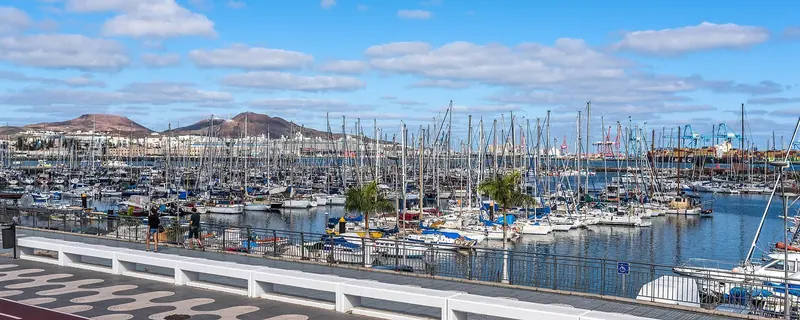
| Las Palmas de Gran Canaria | 1,363 pontoon berths for vessels to 50 m in up to 5 m of draft |
| Above about 45 m at Las Palmas the marina's own guidance is to arrange berthing and bunkering through an agent | |
| Las Palmas is the gathering point for the Atlantic crossing fleets, which fill the port from late October and leave in November | |
| The trade wind crossing to the eastern Caribbean is roughly 2,700 nautical miles | |
| Sea temperature runs about 19 to 20 degrees in February and 23 to 24 in September, so the season does not close | |
| The north east trades blow 15 to 25 knots through the summer and ease in winter | |
| Acceleration zones between the high islands routinely add 10 to 15 knots to the gradient wind and are predictable | |
| The calima, a hot dust laden easterly off the Sahara, arrives several times a year, raising temperatures and coating the boat in sand | |
| La Graciosa and the Chinijo archipelago off northern Lanzarote sit inside the largest marine reserve in Europe | |
| The Teno-Rasca waters off south west Tenerife hold a resident pilot whale population and are protected | |
| Four airports take long haul or heavy scheduled traffic: Gran Canaria, Tenerife South, Tenerife North and Lanzarote | |
| Lanzarote airport is about twenty minutes from Puerto Calero and Gran Canaria about thirty from Las Palmas | |
| The islands are Spanish and inside Schengen, and the currency is the euro | |
| Distances home | about 700 nautical miles to the Algarve and 800 to Gibraltar |
An archipelago with real distances in it
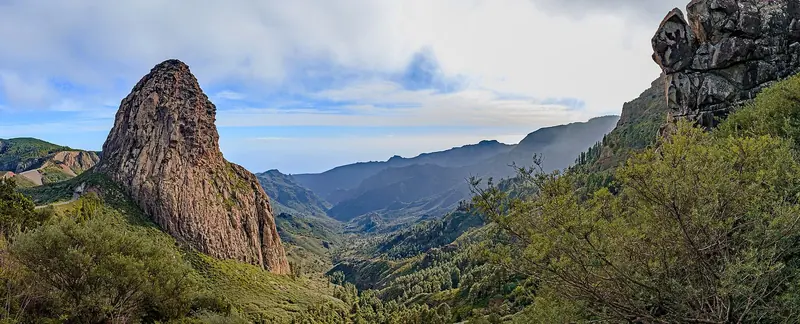
The seven main islands run about 250 nautical miles from Lanzarote in the north east to El Hierro in the south west, sitting between 60 and 250 miles off the Moroccan and Saharan coast. The eastern group, Lanzarote and Fuerteventura, is low, dry and lunar. The centre, Gran Canaria and Tenerife, holds the cities, the airports and the mountains, with Teide at 3,715 metres the highest point in Spain. The western islands, La Gomera, La Palma and El Hierro, are steep, green and empty.
The legs between them are real passages rather than hops. Lanzarote to Gran Canaria is about 90 miles, Gran Canaria to Tenerife around 55, Tenerife to La Gomera 25. Each channel has an acceleration zone where the trade wind funnels between two high islands and gains ten or fifteen knots, and the swell is Atlantic. This is a cruising ground for a boat that can make a passage, and it rewards a schedule with slack in it.
The tax position is the headline
The Canaries are part of Spain and part of the European Union, but they are outside the EU VAT territory and run their own indirect tax, the Impuesto General Indirecto Canario. The standard IGIC rate is 7 per cent, with reduced rates of 3 and 0 per cent and an increased rate of 15 per cent applying in 2026 depending on the supply. Spanish VAT at 21 per cent does not apply here. For a charter starting in the islands that difference is the single largest line on the invoice.
The regime was consolidated rather than reformed by Legislative Decree 1/2025 of 20 October, which unified and simplified the rules governing IGIC and the AIEM import levy. AIEM is worth knowing about separately, because it is a duty on goods brought into the islands designed to protect local production, and it is the reason some imported parts and provisions cost more here than on the mainland. The tax picture is favourable overall and it is not uniformly favourable, which is a distinction an agent should make before an owner commits to a refit here.
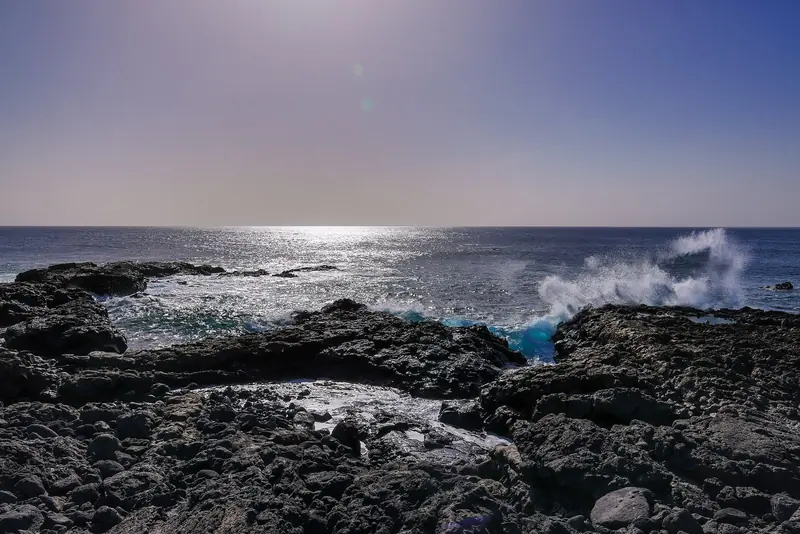
Seven per cent instead of twenty one, water at twenty degrees in February, and the last yard before two thousand seven hundred miles of ocean.
Where a large yacht berths
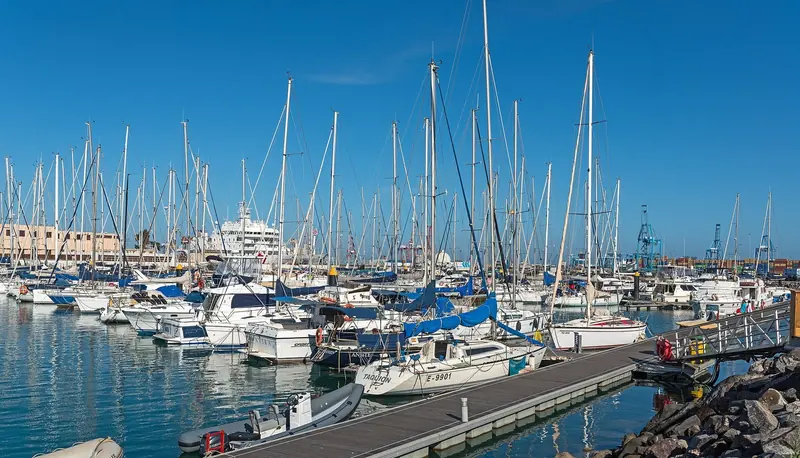
Puerto Calero on Lanzarote is the superyacht address, with 438 berths taking vessels up to 80 metres, fuel docks, 24 hour security and crew facilities, positioned deliberately for transatlantic traffic and year round berthing. Marina Rubicon at the southern end of the same island runs 550 berths for boats to 50 metres with a boatyard, fuel, antifouling and welding on site. Between them Lanzarote carries most of the large yacht capacity in the archipelago.
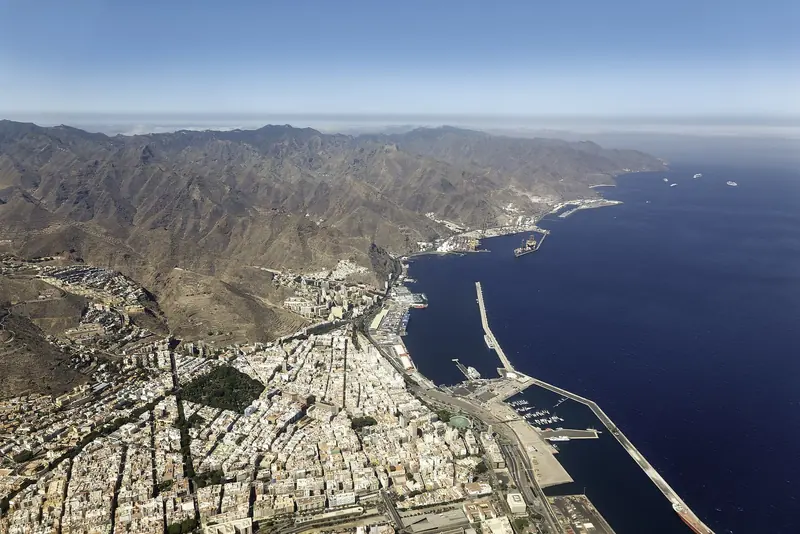
Las Palmas de Gran Canaria is the other pole, with 1,363 pontoon berths for vessels to 50 metres in up to 5 metres of draft, inside one of the busiest commercial ports in the Atlantic. Above about 45 metres the marina's own guidance is to work through an agent for berthing and bunkering, because the answer is often commercial quay rather than pontoon. Tenerife adds Santa Cruz and the southern marinas, and the western islands have small harbours rather than marinas.
The start line of the Atlantic crossing
Las Palmas is where the Atlantic crossing fleets gather. The rally season fills the marina from late October, the boats leave in November for the Caribbean, and the whole support trade of the port, riggers, sailmakers, electronics, provisioning, is built around that six week window. For a yacht crossing under its own arrangements the same infrastructure is available and the same congestion applies, which is why a berth in November is booked in spring.
The crossing itself is roughly 2,700 nautical miles to the eastern Caribbean on the trade wind route, and the Canaries are the last place to fix anything before it. That gives the islands a technical trade out of proportion to their size, and it means an owner arriving in October is competing with several hundred boats for the same contractors. Arrive in September or in the new year and the same yards are available and unhurried.
A season that does not stop
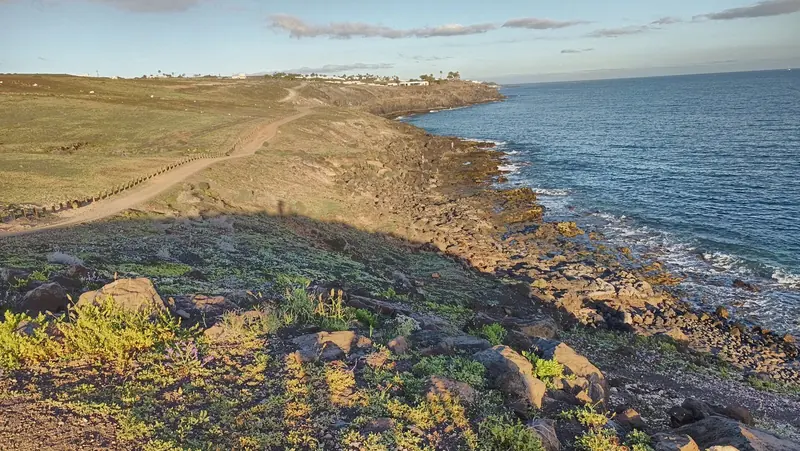
The islands sit in the north east trades and the water and air temperature barely move. Sea temperature runs roughly 19 to 20 degrees in February and 23 to 24 in September, and the air follows it, so a boat can cruise here in January in a way that is simply not possible anywhere in the Mediterranean. The trade wind blows through the summer at 15 to 25 knots and eases in winter, with the occasional winter Atlantic low bringing rain and a big swell.
Two local effects matter. The acceleration zones between the islands routinely add ten to fifteen knots to the gradient wind, and they are predictable, which makes them a planning input rather than a hazard. And the calima, a hot dust laden easterly off the Sahara, arrives several times a year, raising temperatures sharply, coating the boat in fine sand and cutting visibility. Neither stops a season, and both are worth telling guests about before they arrive.
What there is to look at
Lanzarote is the most distinctive island in the group, shaped by the eighteenth century eruptions that created the Timanfaya lava fields and by Cesar Manrique, the artist who spent a career keeping the island low rise and building houses into volcanic bubbles. La Graciosa and the Chinijo archipelago off its northern tip sit inside the largest marine reserve in Europe and are a genuine wilderness a few miles from a marina. Fuerteventura next door has the beaches.
In the centre, Tenerife has Teide and its national park above the cloud, and the water between Teno and Rasca on its south west coast holds a resident pilot whale population and is protected accordingly. La Gomera, 25 miles away, has laurel forest, a whistled language and a harbour at San Sebastian that Columbus used. La Palma is the steepest and greenest and its 2021 eruption added new coastline. El Hierro is the end of the world and was believed for centuries to be exactly that.
Getting guests in
There are eight airports in the archipelago and four of them take long haul or heavy scheduled traffic: Gran Canaria, Tenerife South, Tenerife North and Lanzarote. Between them they run year round schedules to the whole of northern Europe, which is the practical difference between the Canaries and any Mediterranean island group in winter. Lanzarote's airport is about twenty minutes from Puerto Calero and Gran Canaria's around thirty from Las Palmas.
The islands are Spanish and Schengen, so a guest arriving from Europe has no formality, and the currency is the euro. What an owner should plan for is the inter island logistics: the ferries are frequent and fast but the islands are far enough apart that guests joining on a different island than the boat is expensive in time. Match the airport to the island the yacht is actually on.
The honest downside, and what is not published
The cruising is a series of passages between islands with limited sheltered anchorage at either end. The trade wind and the Atlantic swell mean many bays are rolly and few are places to spend a settled night. Above 50 metres the berthing options narrow to Puerto Calero and to negotiated commercial space in Las Palmas or Santa Cruz. And the archipelago is a long way from anywhere: 700 miles to the Algarve, 800 to Gibraltar, and any part or specialist not on the islands arrives by air freight with AIEM on top.
Checked in August 2026, neither Puerto Calero, Marina Rubicon nor Las Palmas publishes a superyacht rate card, and none publishes a fuel price, so a season here is priced by quotation through an agent. The IGIC rates are published and their application to a specific charter structure is not. And nothing published tells an owner how much of Las Palmas is committed in the six weeks before the November crossing, which is the number that decides an autumn here.
На берегу, подъезд и бронирование
| Getting there | Gran Canaria, Tenerife South, Tenerife North and Lanzarote all carry long haul or heavy year round scheduled traffic from northern Europe, which is the practical difference between the Canaries and any Mediterranean island group in January. Lanzarote's airport is about twenty minutes from Puerto Calero and Gran Canaria's about thirty from Las Palmas. The islands are Spanish and inside Schengen with the euro as currency, so a European guest has no formality. Match the airport to the island the boat is on, because inter island transfers cost hours. |
|---|---|
| Where the boat berths | Puerto Calero on Lanzarote takes vessels up to 80 metres across 438 berths with fuel docks, 24 hour security and crew facilities, and is the superyacht address of the archipelago. Marina Rubicon at the south of the same island has 550 berths to 50 metres with a working boatyard. Las Palmas de Gran Canaria offers 1,363 pontoon berths to 50 metres in up to 5 metres of draft inside a major commercial port, and advises anything over about 45 metres to work through an agent for berthing and bunkering. |
| The tax that brings owners here | The islands are inside the European Union but outside its VAT territory, so Spanish VAT at 21 per cent does not apply and the local Impuesto General Indirecto Canario does. The standard IGIC rate is 7 per cent, with reduced rates of 3 and 0 per cent and an increased rate of 15 per cent in 2026 depending on the supply. Legislative Decree 1/2025 of 20 October consolidated the IGIC and AIEM rules. Take the structure to a Canarian adviser rather than assuming the headline rate applies to a particular charter. |
| What AIEM costs you | AIEM is a levy on goods imported into or delivered within the islands, designed to protect local production, and it is the reason imported parts, equipment and some provisions are dearer here than on the Spanish mainland. It sits alongside IGIC rather than instead of it. For a refit or a major equipment order the difference is worth pricing before the work is committed, and it partly offsets the advantage the 7 per cent rate gives on the charter side. |
| Staging for the Atlantic | Las Palmas is where the crossing fleets gather, filling the port from late October and departing in November for the roughly 2,700 nautical mile trade wind route to the eastern Caribbean. The riggers, sailmakers, electronics specialists and provisioners are geared to that window, which makes them excellent and, for six weeks, entirely committed. A boat arriving in September or in January gets the same trade unhurried. A boat arriving in late October is joining a queue several hundred long. |
| Sailing between the islands | The legs are passages rather than hops: about 90 nautical miles from Lanzarote to Gran Canaria, 55 on to Tenerife and 25 to La Gomera. Every channel between two high islands has an acceleration zone that adds ten to fifteen knots to the gradient wind, predictably enough to plan around. Atlantic swell runs regardless of local wind, so many bays roll and few are settled overnight anchorages. Build the itinerary around harbours, and treat the passages as the day rather than as the transit. |
| What guests do ashore | Lanzarote is the most distinctive island, with the Timanfaya lava fields from the eighteenth century eruptions and the low rise architecture Cesar Manrique fought for, plus La Graciosa and the Chinijo archipelago inside the largest marine reserve in Europe. Tenerife has Teide and its national park above the cloud line, and the Teno-Rasca waters with their resident pilot whales. La Gomera has laurel forest and a whistled language, La Palma is green and steep with new coastline from its 2021 eruption, and El Hierro is the end of the map. |
| The weather to expect | Sea temperature runs about 19 to 20 degrees in February and 23 to 24 in September, with air temperatures that vary little, so a January cruise is realistic. The north east trades blow 15 to 25 knots through summer and ease in winter, when occasional Atlantic lows bring rain and heavy swell. The calima, a hot dusty easterly off the Sahara, arrives several times a year, spikes the temperature, cuts visibility and coats everything in fine sand. Warn guests about the calima before they arrive rather than after. |
| What is NOT published | Checked in August 2026, neither Puerto Calero, Marina Rubicon nor Las Palmas publishes a superyacht rate card, and none publishes a fuel price, so the season is quoted through an agent. The IGIC and AIEM rates are published but their application to a given charter or refit structure is not. No independent published owner or captain account of superyacht service standards at any Canarian marina could be found. And nothing published shows how much of Las Palmas is committed in the six weeks before the November departures. |
Что сообщают владельцы и экипажи
The islands run a different indirect tax, not a discounted Spanish one
The Canary Islands sit inside the European Union but outside its VAT territory and apply the Impuesto General Indirecto Canario in place of Spanish VAT, at a standard rate of 7 per cent with reduced rates of 3 and 0 per cent and an increased rate of 15 per cent applying in 2026. The Government of the Canary Islands consolidated the rules for IGIC and the AIEM import levy through Legislative Decree 1/2025 of 20 October, a simplification rather than a reform.
Gobierno de Canarias, reported by EBF Consulting and VATitPuerto Calero is the only berth in the archipelago built for 80 metres
The marina describes 438 berths taking vessels up to 80 metres, with fuel docks, 24 hour security and crew amenities, positioned deliberately for transatlantic rallies, winter cruising and secure year round berthing. Marina Rubicon at the southern end of Lanzarote adds 550 berths for boats to 50 metres with fuel, boatyard repairs, antifouling and welding on site.
Calero Marinas and Marina RubiconLas Palmas tells yachts over 45 metres to go through an agent
The marina at Las Palmas de Gran Canaria offers 1,363 pontoon berths for vessels up to 50 metres with a maximum draft of 5 metres, and its own published guidance is that yachts larger than about 45 metres LOA should contact an agent to arrange berthing and bunkering, because the practical answer inside a working commercial port is often quay space rather than a pontoon berth.
Marina Las Palmas guidance, reported by Yachting PagesThe technical trade is built around six weeks in the autumn
Las Palmas is the assembly point for the Atlantic crossing fleets, which fill the port from late October and depart in November on the roughly 2,700 nautical mile trade wind route to the eastern Caribbean. The consequence for an owner is that the riggers, sailmakers, electronics specialists and provisioners who make the islands technically strong are entirely committed for that window, and readily available on either side of it.
Yotters desk, from the Las Palmas rally and marina schedulesNothing here publishes a price
Checked in August 2026, neither Puerto Calero, Marina Rubicon nor Las Palmas publishes a superyacht rate card, and no Canarian marina publishes a fuel price, so a season is priced by quotation through an agent. No independent published owner or captain account of superyacht service standards at any marina in the archipelago could be found, and no source shows how much berthing is committed ahead of the November departures.
Yotters desk, checked August 2026
Сильные стороны и что учесть
Сильные стороны
- Seven per cent instead of twenty oneInside the EU but outside its VAT territory, the islands charge IGIC at a standard 7 per cent where mainland Spain charges 21 on a charter, which is the largest single line on the invoice.
- A season that does not closeSea temperature around 19 to 20 degrees in February and 23 to 24 in September, with four airports carrying year round northern European traffic. No Mediterranean island group can offer January.
- Eighty metres of berth and a working yardPuerto Calero takes 80 metres across 438 berths with fuel and crew facilities, Marina Rubicon adds 550 berths to 50 metres with a boatyard, and Las Palmas holds 1,363 berths in a major commercial port.
- The last competent stop before the oceanLas Palmas sits at the head of a 2,700 mile trade wind route to the Caribbean, with a technical trade far larger than the islands themselves would justify.
- Genuine wilderness a few miles from a marinaLa Graciosa and the Chinijo archipelago inside the largest marine reserve in Europe, Teide above the cloud on Tenerife, and the empty western islands beyond.
На что обратить внимание
- The anchorages rollAtlantic swell arrives regardless of local wind and the trades blow across most bays, so settled overnight anchorages are few and the cruise runs harbour to harbour.
- Above 50 metres the choice is smallPuerto Calero, or negotiated commercial space at Las Palmas or Santa Cruz through an agent. There is no second 80 metre marina in the archipelago.
- AIEM claws some of the tax advantage backAn import levy on goods entering the islands raises the cost of parts, equipment and some provisions, which matters most on exactly the refit an owner came here to save money on.
- Everything is a passageNinety miles between the first two islands, acceleration zones adding fifteen knots in every channel, and 700 miles back to mainland Europe. This is not a hop between lunch anchorages.
- November belongs to the crossing fleetLas Palmas fills from late October and the best contractors are committed for six weeks, so an owner wanting work done should arrive well before or well after.
Для кого: An owner who wants a winter season in 20 degree water without crossing an ocean, who charters and cares that the rate is 7 per cent rather than 21, or who is staging a boat for the Atlantic and wants the last competent yard before it.