The Cayman Islands
| Three islands | Grand Cayman, Cayman Brac and Little Cayman, a British Overseas Territory in the western Caribbean |
|---|---|
| Owen Roberts International Airport (GCM): record 1,420,354 passengers in 2025, beating the 2019 high (Cayman Compass) | |
| International general aviation movements: 6,106 in 2025 versus 3,437 in 2014, the highest on record (Cayman Compass) | |
| Cayman Brac's Charles Kirkconnell International and Little Cayman's Edward Bodden Airfield: inter-island only; Edward Bodden's longest runway is 3,058 ft with about 6 flights a day via Cayman Airways | |
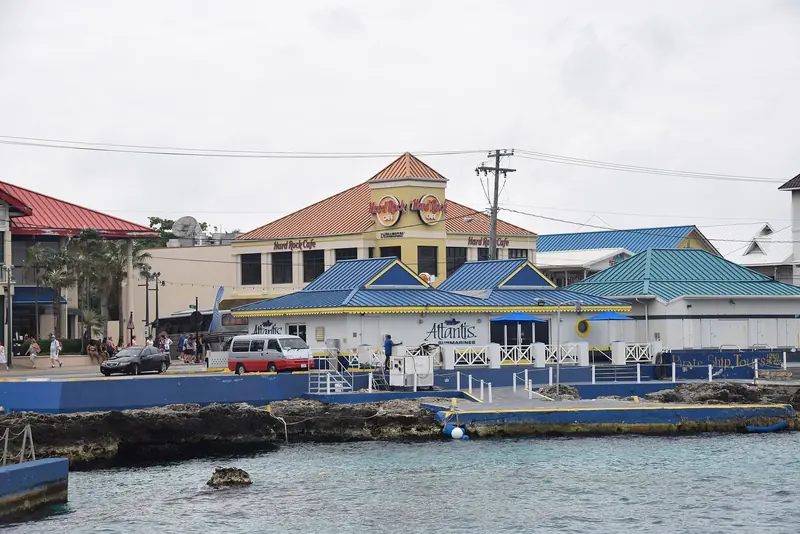
| George Town has no deepwater cruise pier; ships anchor and tender ashore to 3 terminals (South, North, Royal Watler) | |
| Cayman Islands Yacht Club, Governor's Creek, North Sound: up to 166 boats, 30-150 ft, 6.6 ft draft limit | |
| Barcadere Marina, George Town | docks to 150 ft, published rates CI$1.50/ft/day sliding to CI$12/ft/month on an annual contract, plus a 110 ton Marine Travelift boatyard run by Scotts Marine |
| Camana Bay Marina | 40 slips for vessels to 100 ft |
| North Sound's reef entrance | about 10 ft maximum draft; George Town Yacht Club's own manager puts 90% of island boating inside the Sound |
| Stingray City and the Sandbar | capped at 1,500 visitors, 20 boats and 100 people per boat; no paying passengers after 2pm weekends or 3pm public holidays |
| USS Kittiwake wreck | sunk January 2011, about 800 yards off Seven Mile Beach, sits in roughly 60-65 ft with its highest point 15-20 ft under the surface |
| Bloody Bay Wall, Little Cayman | wall begins around 20 ft and drops past 1,000 meters |
| Marine Conservation Law | fines to CI$500,000 and up to a year's imprisonment for breaches |
| Public moorings | 18 in single-pin buoys to 60 ft, 30 in two-pin buoys to 100 ft; 3 hour use limit; not for use above 25 knots wind |
| South Hole Sound, Little Cayman | entered via a 6 ft deep channel, most boats anchor in 3-6 ft over sand, no marina of scale |
| Little Cayman lies about 60 nautical miles east of Grand Cayman, Cayman Brac about 90, roughly 5 miles further on than Little Cayman | |
| Hurricane Ivan (2004) | an estimated 95% of Grand Cayman's buildings damaged, about 3.5 billion US dollars in damage, near 200% of GDP |
| Hurricane Paloma (2008) | direct Category 4 hit on Cayman Brac, about 90% of homes damaged per the island's District Commissioner |
| Hurricane Rafael (2024) | power outages on Little Cayman and Cayman Brac, multiple dive boats sunk off Little Cayman |
| Cayman Islands Shipping Registry | 1 of only 3 Category 1 Red Ensign registries (with the UK and Bermuda), able to register any tonnage |
| Yacht Engaged in Trade (YET) program | lets a private Cayman-flagged yacht of 24 m or more charter up to 84 days a year without converting to commercial registration |
| Import duty | 0% on vessels used exclusively on international voyages; boats to 18 ft duty free; vessels over 18 ft otherwise dutiable at a flat 12% of CIF value; an 18 month temporary importation option exists |
| No personal income tax, corporate tax, capital gains tax or VAT anywhere in the territory (PwC; Cayman Enterprise City) | |
| Clearance | free of charge weekdays 08:30-16:00 and Saturdays 08:30-12:30, overtime fee outside those hours (Noonsite) |
Owen Roberts Carries Real Traffic; the Sister Islands Do Not
Owen Roberts International Airport (ORIA, IATA code GCM) sits at George Town on Grand Cayman with a runway near 7,900 feet, long enough for long-haul widebody traffic, and the Cayman Islands Airports Authority counts more than 25,000 aircraft movements a year across the field. 2025 was a record year: Cayman Compass reported 1,420,354 total passengers through the airport, finally clearing the pre-pandemic 2019 high, with the 2025-26 winter season and the following spring both setting further highs of their own. Airlines flying in year round or seasonally include Cayman Airways, American, Delta, United, JetBlue, British Airways, Air Canada and WestJet, real and resilient scheduled capacity by Caribbean standards rather than a seasonal skeleton service.
The same Cayman Compass reporting flags a second, yacht-relevant trend: international general aviation movements, the private jet and charter traffic an owner's guests actually use, hit 6,106 in 2025, the highest on record and nearly double the 3,437 logged in 2014, straining a general aviation ramp that was not built for that volume. Cayman Brac's Charles Kirkconnell International and Little Cayman's Edward Bodden Airfield are a different order of facility entirely: Edward Bodden's longest runway is 3,058 feet and, per flight-tracking data from AeroCorner and FlightAware, the field runs around six flights a day, every one of them a short Cayman Airways hop to Grand Cayman or Cayman Brac rather than an international arrival. A guest change on the sister islands means routing everyone through Grand Cayman first.
No Deepwater Cruise Pier, and It Shapes Yachts Too
Grand Cayman is one of the Caribbean's few remaining pure tender ports: cruise ships anchor in the open bay in front of George Town and shuttle passengers ashore via double-decked local tenders to the South Terminal, North Terminal or Royal Watler Pier, an arrangement cruise-industry guides including Cruise Hive confirm has been the case for decades and remains so through the 2026 season. A cruise berthing project involving Royal Caribbean and the Verdant Isle Group, reported at roughly 240 million US dollars, has been discussed for several years and, as of this research, had not broken ground.
None of that limits a private yacht the way it limits a 4,000 passenger liner. Yachts do not use the cruise anchorage at all: they clear customs and immigration at George Town or Cayman Brac port and then move to one of Grand Cayman's dedicated marinas, Barcadere, the Cayman Islands Yacht Club or Camana Bay, all built with real pilings, power and depth for vessels up to 100 to 150 feet. The absence of a cruise pier is a passenger-ferry problem, not a yacht-berthing one, though it does mean George Town's own waterfront anchorage sees heavy tender traffic on multi-ship days, which a captain planning to anchor off the town itself should expect and route around.
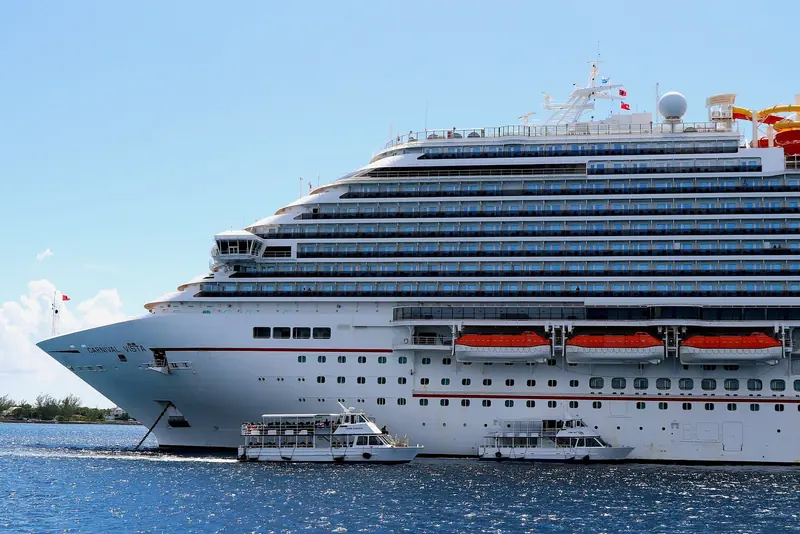
Owen Roberts International Airport carried a record 1,420,354 passengers in 2025, yet the cruise ships that also land there still anchor in the open roadstead and tender ashore, because George Town has never built a deepwater pier.
Grand Cayman's Marinas: Three Real Options, One Size Ceiling
The Cayman Islands Yacht Club, in Governor's Creek on North Sound's west side, holds up to 166 boats from 30 to 150 feet with a 6.6 foot draft limit, 24 hour manned security and a fuel dock, and remains Grand Cayman's best protected all-weather berthing. The Barcadere Marina, beside Owen Roberts airport in George Town, runs fixed concrete and hardwood docks to 150 feet with published rates from CI$1.50 a foot per day sliding down to CI$12 a foot per month on an annual contract, plus an on-site 110 ton Marine Travelift boatyard operated by Scotts Marine, a duty-free fuel dock for outbound vessels and its own on-site customs and immigration clearance. Camana Bay Marina, in the island's stylish mixed-use waterfront district, adds 40 further slips for vessels to 100 feet.
What none of the three publishes is any berth built past 150 feet. Harbour House Marina, a fourth working yard on North Sound's west side, focuses on maintenance and repair rather than transient superyacht berthing. Jonathan Cuff, general manager at Harbour House Marina, told Southern Boating and Yachting that Grand Cayman sits off the main Caribbean cruising track and draws long-range cruisers heading to or from Florida rather than boats island-hopping the Eastern Caribbean chain, a fair description of a destination built for a specific kind of visit rather than a milk-run stop.
North Sound Is Where the Boating Actually Happens
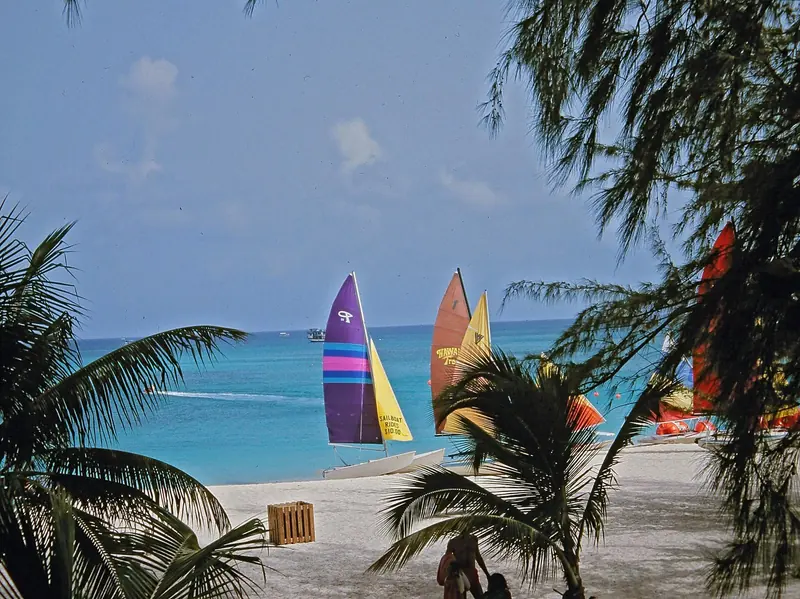
North Sound is the biggest protected body of water on Grand Cayman, ringed by a barrier reef with a shallow cut for access, home to the Cayman Islands Yacht Club at Governor's Creek, the Stingray City and Sandbar wildlife zones, and the beach clubs at Rum Point and Kaibo. Rob Grisdale, manager of the George Town Yacht Club, is quoted by Southern Boating and Yachting putting ninety percent of all boating activity on the island inside the Sound, covering everything from the stingray encounters to the Kittiwake wreck dive and the casual sandbar stops at Starfish Point.
The limitation is the reef cut itself: cruising references and local operators consistently put the maximum safe draft through North Sound's entrance at around ten feet, which rules the entrance out for the deepest-draft superyachts even though the Sound's interior water is plenty deep once inside. A yacht drawing more than that works Seven Mile Beach or the East End as its overnight anchorage instead, both cited by Cayman Resident and yacht charter guides as the island's other two recognized overnight options, though operators caution that anchoring off Seven Mile Beach overnight, while common, is not the advisable choice given the exposed roadstead.
The Marine Park Rules Are Real, and the Fines Follow
The Department of Environment's marine parks rules, expanded in recent years to add new no-dive zones on Little Cayman and Cayman Brac where none previously existed, prohibit anchoring in protected zones outright; only fixed moorings are permitted, with a narrow exception letting boats of 60 feet or less anchor directly in clean sand, without a grapnel hook, so long as neither the anchor nor its chain touches coral. Public moorings, the white 18 inch single-pin buoys rated to 60 feet and the larger 30 inch two-pin buoys rated to 100 feet, are free to use but limited to three hours and are not to be used once wind exceeds 25 knots, per the Department of Environment's own published rules.
Enforcement carries real teeth: the Marine Conservation Law treats a breach as a serious offense, with a maximum fine of CI$500,000, a year's imprisonment, or both, a figure both the Department of Environment's rules documents and Cayman Resident's own boating guide confirm. The zones themselves, including no-dive areas and marine reserves, are marked on land with signs and range markers and at sea with marker buoys, and are also mapped in the Department's SiREN phone app, so a visiting crew has little excuse for not knowing which patch of water it is in before the anchor goes down.
Stingray City, the Kittiwake and Bloody Bay Wall Are the Reason People Come
Stingray City and the shallower Sandbar, both inside North Sound, are capped by regulation at 1,500 visitors, 20 boats and 100 people per boat at any one time; commercial boats must display their name on both sides plus a valid permit decal, and licensed vessels may not bring paying passengers into the Sandbar zone after 2pm on weekends or after 3pm on public holidays, rules the Department of Environment and Cayman Compass have both reported on since they were tightened. The USS Kittiwake, a former US Navy submarine rescue vessel deliberately sunk in January 2011 about 800 yards off Seven Mile Beach, sits upright in roughly 60 to 65 feet of water with its highest point around 15 to 20 feet under the surface, making it accessible to snorkelers as well as divers and one of the most photographed wrecks in the Caribbean.
Bloody Bay Wall, on Little Cayman's north shore, is the destination dive: a near-vertical drop-off beginning in around 20 feet of water and running past 1,000 meters, with dozens of permanently moored dive sites strung along it and Jackson Bight next door, described by Divers Alert Network and multiple dive-industry guides as among the best wall dives on earth. Getting a yacht's tenders there means being based, or at least provisioned, on Little Cayman itself, since Bloody Bay sits on the far side of the island from Grand Cayman by a genuine open-water crossing rather than a day trip from a North Sound berth.
Little Cayman and Cayman Brac Are Genuinely Underbuilt
South Hole Sound, on Little Cayman's southwest corner, is the island's main yachting harbor, entered through a narrow six foot deep channel and protected from every direction but the south, where a local reef still takes the edge off the swell. Cruising references consistently note that most boats anchor offshore of the sparse local docks in three to six feet of water over sand rather than tying up at any real marina, because none of scale exists there. Cayman Brac's own small port handles inter-island freight and customs clearance for arriving yachts but likewise has no dedicated yacht marina to speak of.
The two islands sit roughly 60 and 90 nautical miles east of Grand Cayman by standard geographic references, close enough together that Cayman Brac lies only about 5 miles further on than Little Cayman, and both share Grand Cayman's hurricane exposure without its infrastructure to absorb a direct hit. Hurricane Rafael in November 2024 knocked out power across both islands, downed docks and power lines on Cayman Brac and, per Cayman Compass's on-the-ground reporting, sank multiple dive boats off Little Cayman, a reminder that the two sister islands trade Grand Cayman's Barcadere-grade facilities for genuine, lightly developed cruising ground that a storm can still knock flat.
The Cayman Islands Shipping Registry Is a Genuine Yacht Flag
The Cayman Islands Shipping Registry, a division of the Maritime Authority of the Cayman Islands, is a Category 1 member of the Red Ensign Group alongside only the UK and Bermuda, meaning it is authorized to register ships and yachts of any tonnage or length rather than being capped at a smaller vessel class the way most Category 2 and 3 Red Ensign registries are. Full registration flies the Red Ensign, requires an approved surveyor's tonnage certificate for anything over 24 meters, draws on class societies including Lloyd's Register, ABS, Bureau Veritas, RINA and DNV GL, and is held through a Cayman exempted company, with the beneficial owner disclosed to the registry but never made public.
The registry's Yacht Engaged in Trade, or YET, program, updated in guidance dated mid-2026, lets an owner of a Cayman-flagged private yacht of 24 meters or more charter it commercially for up to 84 days a year while keeping its pleasure classification the rest of the time, swapping in a temporary Certificate of British Registry for the charter window rather than converting to permanent commercial status. It sits inside a jurisdiction with no income tax, no corporate tax and no capital gains tax, which is the genuinely useful reason a registration agent or tax adviser raises Cayman in the first place, separate from the marina infrastructure the flag itself has nothing to do with.
The Season Runs the Full Caribbean Calendar, With a Real Hurricane History
The Cayman Islands run the same hurricane season as the rest of the western Caribbean, 1 June through 30 November, confirmed both by the National Weather Service Cayman Islands and by the US National Hurricane Center's standard Atlantic basin dates. A direct hit on any one of the three islands in a given year is genuinely uncommon, but when one lands the numbers on record are severe rather than moderate.
Hurricane Ivan passed close enough to Grand Cayman in September 2004 to damage an estimated 95 percent of the island's buildings, 10 to 15 percent of them beyond repair, according to both a Cayman government technical impact review and independent contemporary reporting, at an estimated cost near 3.5 billion US dollars, nearly 200 percent of the island's GDP. Hurricane Paloma made a direct hit on Cayman Brac in November 2008 as a Category 4 storm, and District Commissioner Ernie Scott's own count, reported by Cayman Compass, put building damage at 90 percent of the island's homes. Hurricane Rafael repeated the pattern at a smaller scale on Little Cayman in November 2024. An owner planning a season here is planning around a real, well-documented storm risk, not a marketing footnote.
Provisioning Covers the Basics; a Real Refit Still Means Florida
Fuel and routine provisioning are genuinely covered: Barcadere, the Cayman Islands Yacht Club and Harbour House Marina all run fuelling stations, Barcadere's Valvtect station sells duty-free diesel to outbound vessels, and Scotts Marine's on-site boatyard at Barcadere runs a 110 ton capacity Marine Travelift with a 27 foot beam and a 22,000 pound forklift, enough to haul, paint and do real mechanical work on anything up to a serious sportfisher or a mid-size motoryacht. Diesel itself runs around 1.30 US dollars a liter island-wide per GlobalPetrolPrices' most recently published figure, with marina fuel docks separately quoted around CI$5.45 an imperial gallon, a price point Cayman Resident's own marina guide confirms independently.
What none of that adds up to is a superyacht-grade refit yard. Searches for a Cayman-based haul-out or refit facility at the scale of a 150 foot-plus yacht consistently return Florida and mainland US yards rather than anything on the islands themselves, and Barcadere's own 110 ton lift, while genuinely useful, is built for the boats that actually berth there rather than a project yacht needing a paint shed and a full trades yard. A structural fault or a major refit on a large yacht based here still means the same open-water passage to South Florida that has always defined the western Caribbean's technical ceiling.
What It Costs, and What Nobody Publishes
Clearing in is straightforward and, per Noonsite's own cruiser-sourced clearance notes, free of charge between 08:30 and 16:00 on weekdays and 08:30 to 12:30 on Saturdays, with an overtime fee only outside those hours, after calling Port Security on VHF channel 16 and raising the Q flag on approach. Cayman's Customs and Border Control confirms ships, yachts and aircraft used exclusively on international voyages pay no import duty at all, while any other vessel over 18 feet is dutiable at a flat 12 percent of its CIF value, and a foreign-flagged yacht can instead run under an 18 month temporary importation structure, renewable on reapplication, to defer that duty while it stays and cruises.
The wider tax picture matches the reputation: no personal income tax, no corporate tax, no capital gains tax and no VAT anywhere in the territory, funded instead by import duty and licensing fees, a structure PwC's own tax summary and Cayman Enterprise City both confirm independently. What is not published: neither Barcadere Marina nor the Cayman Islands Yacht Club lists a superyacht-specific berthing tariff for anything over 60 to 70 feet online, Camana Bay's slip rates require a direct call rather than a public rate card, and no source found for this page states a fixed port or tonnage fee specific to a visiting superyacht separate from the general commercial tariff the Port Authority publishes for cargo and cruise traffic.
На берегу, подъезд и бронирование
| Getting there | Owen Roberts International Airport (GCM) at George Town, Grand Cayman carried a record 1,420,354 passengers in 2025 with year-round service from Cayman Airways, American, Delta, United, JetBlue, British Airways, Air Canada and WestJet. Cayman Brac's Charles Kirkconnell International and Little Cayman's Edward Bodden Airfield are inter-island-only fields reached via Cayman Airways from Grand Cayman. |
|---|---|
| Berthing on Grand Cayman | Cayman Islands Yacht Club (Governor's Creek, North Sound): up to 166 boats, 30-150 ft, 6.6 ft draft limit. Barcadere Marina (George Town): docks to 150 ft, published rates from CI$1.50/ft/day down to CI$12/ft/month on an annual contract, plus a 110 ton haul-out yard. Camana Bay Marina: 40 slips to 100 ft. |
| Little Cayman and Cayman Brac | South Hole Sound on Little Cayman is a 6 ft deep natural anchorage with no marina of scale; most boats anchor in 3-6 ft over sand. Cayman Brac's small port handles clearance and freight but has no dedicated yacht marina. |
| Anchoring and marine park rules | Anchoring on coral is banned throughout the marine park system; only fixed moorings (free, 3 hour limit, not for use above 25 knots) or anchoring in clean sand on boats under 60 ft is permitted. Breaches of the Marine Conservation Law carry fines to CI$500,000 and up to a year in prison. |
| Diving highlights | Stingray City and the Sandbar are capped at 1,500 visitors, 20 boats and 100 people per boat, with a 2pm weekend / 3pm holiday cutoff for paying passengers. The USS Kittiwake wreck sits in 60-65 ft off Seven Mile Beach. Bloody Bay Wall off Little Cayman drops from about 20 ft past 1,000 meters. |
| The flag: Cayman Islands Shipping Registry | A Category 1 Red Ensign registry, one of only three alongside the UK and Bermuda, able to register any tonnage. The Yacht Engaged in Trade (YET) program lets a private Cayman-flagged yacht of 24 m or more charter up to 84 days a year without converting to full commercial registration. |
| Season and hurricane risk | Standard Caribbean season, 1 June to 30 November. Hurricane Ivan (2004) damaged an estimated 95% of Grand Cayman's buildings; Hurricane Paloma (2008) damaged about 90% of homes on Cayman Brac; Hurricane Rafael (2024) knocked out power and sank dive boats on Little Cayman. |
| Provisioning and technical support | Fuel, chandlery and routine repair are covered on Grand Cayman, including a 110 ton Marine Travelift at Barcadere run by Scotts Marine. No yard on the islands approaches a superyacht-scale refit facility; a major repair still means a passage to South Florida. |
| What it costs | Clearance is free within normal office hours (weekdays 08:30-16:00, Saturdays 08:30-12:30). Import duty on a vessel over 18 ft is a flat 12% of CIF value unless it is on an international-voyage or an 18 month temporary-importation basis. No income tax, corporate tax, capital gains tax or VAT applies anywhere in the territory. |
| What is NOT published | No marina on Grand Cayman publishes a superyacht-specific berthing tariff for a vessel over 60 to 70 feet online. Camana Bay's slip rates require a direct call rather than a rate card. No source found for this page states a fixed port or tonnage fee specific to a visiting yacht, separate from the Port Authority's general commercial tariff. |
Что сообщают владельцы и экипажи
Cayman draws long range cruisers passing through, not island hoppers
Jonathan Cuff, general manager of Harbour House Marina, describes Grand Cayman as sitting off the main Caribbean cruising track: crewed yachts headed to the Eastern Caribbean tend to skip it, while long range cruisers running to or from Florida stop here for provisions and repairs before continuing on.
Jonathan Cuff, general manager, Harbour House Marina, quoted in Southern Boating and YachtingAlmost all of the island's boating happens inside one lagoon
Rob Grisdale, manager of the George Town Yacht Club, puts ninety percent of all boating activity on Grand Cayman inside North Sound, from the Stingray City encounters to the Kittiwake wreck dive and the sandbar stops at Starfish Point.
Rob Grisdale, manager, George Town Yacht Club, quoted in Southern Boating and YachtingA large motoryacht captain found dockage genuinely scarce and moved on
A captain running a 145 foot motoryacht through the Caymans reported that dockage is extremely limited, that mooring buoys have held vessels of 60 to 70 feet without trouble, but ultimately chose not to berth at the proposed North Sound marina complex known as the Barcadere and moved the boat on to another destination instead.
Captain's account, YachtForums cruising threadCayman Brac's own district leadership called Hurricane Paloma's damage close to total
District Commissioner Ernie Scott said 90 percent of the buildings on Cayman Brac were damaged after Hurricane Paloma's direct hit in November 2008, with roughly a fifth of homes totally destroyed.
Ernie Scott, District Commissioner, Cayman Brac, reported by Cayman Compass
Сильные стороны и что учесть
Сильные стороны
- A genuine, protected North Sound baseThe Cayman Islands Yacht Club and Barcadere Marina put real, purpose-built infrastructure to 150 feet inside or beside a reef-protected lagoon that, per the George Town Yacht Club's own manager, hosts ninety percent of the island's boating activity.
- World class diving with three distinct anchorsStingray City, the USS Kittiwake wreck and Little Cayman's Bloody Bay Wall are three genuinely different dives, a wildlife encounter, a wreck and a wall, rather than one attraction repeated three times.
- A serious offshore yacht flag in the same territoryThe Cayman Islands Shipping Registry is a Category 1 Red Ensign registry with a working 84 day Yacht Engaged in Trade charter program, sitting inside a jurisdiction with no income or corporate tax.
- Real technical capability for routine workScotts Marine's 110 ton Marine Travelift at Barcadere, plus duty-free fuel for outbound vessels, covers genuine haul-out and mechanical work rather than just a fuel stop.
На что обратить внимание
- Nothing exceeds 150 feet of real berthNo marina on Grand Cayman is built past 150 feet, and North Sound's own reef entrance caps safe access at around a 10 foot draft, so a true superyacht anchors off rather than ties up.
- No refit yard for a serious jobEvery search for a Cayman-based haul-out or refit facility at superyacht scale returns Florida or mainland US yards; a structural fault still means an open-water passage off the islands.
- The sister islands are genuinely underbuilt and exposedSouth Hole Sound on Little Cayman has no marina of scale, and Hurricane Rafael in 2024 sank multiple dive boats there, a fair measure of how lightly developed the sister islands remain.
- A documented, severe hurricane historyHurricane Ivan damaged an estimated 95 percent of Grand Cayman's buildings in 2004 and Hurricane Paloma damaged about 90 percent of homes on Cayman Brac in 2008; this is a real risk with a real track record, not a theoretical one.
- Nothing is publishedNo Grand Cayman marina quotes a superyacht-specific berthing tariff online, and no source found for this page confirms a fixed port or tonnage fee schedule specific to a visiting yacht.
Для кого: An owner who wants world class wall and wreck diving on the doorstep, a genuinely protected North Sound base, and a serious offshore flag and tax registration in the same territory, and who accepts that nothing here exceeds 150 feet of real berth, that a big refit still means Florida, and that the June to November calendar carries a documented hurricane history rather than a theoretical one.