The US Virgin Islands
| The US Virgin Islands comprise St Thomas, St John, St Croix and Water Island, an unincorporated US territory of about 133 square miles and, per the 2020 census, roughly 87,000 people | |
| St Thomas | 32 square miles, population about 42,261 (2020 census); St John: 20 square miles, population about 3,881; St Croix: the largest at 84 square miles, population about 41,004 |
|---|---|
| Peak trade-wind sailing season runs December to April, with 12 to 20 knot winds and, in February-March, 20 to 25 knots and the year's clearest water | |
| The official Atlantic hurricane season is 1 June to 30 November, set by NOAA, with most risk concentrated in September and early October | |
| Distance to the British Virgin Islands is about eleven miles by the Red Hook, St Thomas to West End, Tortola ferry route, crossing into a foreign customs territory | |
| A yacht clears into the United States, not a foreign country, typically via the CBP ROAM app that replaced the Small Vessel Reporting System | |
| Foreign-flagged yachts need a US cruising license under 19 CFR 4.94, issued only to vessels of countries granting reciprocal privileges, including the UK and its dependencies, the Bahamas, Cayman Islands, Jamaica and the Marshall Islands | |
| Virgin Islands National Park was dedicated 1 December 1956 after Laurance Rockefeller donated more than 5,000 acres; it now covers 14,737 acres, about 60 percent of St John's land, plus more than 5,500 acres of adjacent water | |
| The park's overnight mooring and anchoring fee is USD 26 a night, published on the park's own fee page, with a USD 13 senior-pass rate; a proposed rise to USD 40 (vessels to 60 feet) and USD 60 (over 60 feet) was still being phased in, not yet in effect, as of this research | |
| Buck Island Reef National Monument, a national monument since 1961, sits under two miles off Christiansted, St Croix | |
| Yacht Haven Grande in Charlotte Amalie has 46 megayacht berths, up to 656 feet with no beam restriction and 25 feet of draft, and has been named Superyacht Marina of the Year four times | |
| American Yacht Harbor at Red Hook, St Thomas has 128 slips for boats to 110 feet; Crown Bay Marina has 99 slips to 200 feet with customs and immigration clearance on site | |
| The US returning-resident duty-free exemption from the USVI is USD 1,600, double the USD 800 allowed from most other destinations, plus up to five liters or bottles of alcohol duty-free | |
| There is no general sales tax in the USVI; businesses instead pay a 5 percent gross receipts tax | |
| The USVI charter industry contributes about USD 166 million to the territory annually and supports more than 5,000 jobs, per VIPCA and the US Small Business Administration | |
| Since 1 June 2025, BVI fees on USVI-based charter boats have risen sharply: an annual multi-night charter license from USD 800 to USD 24,000, and a day-trip license from USD 200 to USD 8,500, confirmed by VIPCA and by the VI Consortium | |
| At least 90 USVI-based charter vessels had relocated to the BVI as of late 2025, with about USD 14 million in spending already lost from the USVI economy and a projected USD 100 million a year at risk, per the VI Consortium's reporting on the federal response | |
| Hurricane Irma hit St Thomas, St John and Water Island as a category 5 storm on 6 September 2017; Hurricane Maria hit St Croix on 19-20 September 2017 | |
One Territory, Three Cruising Grounds
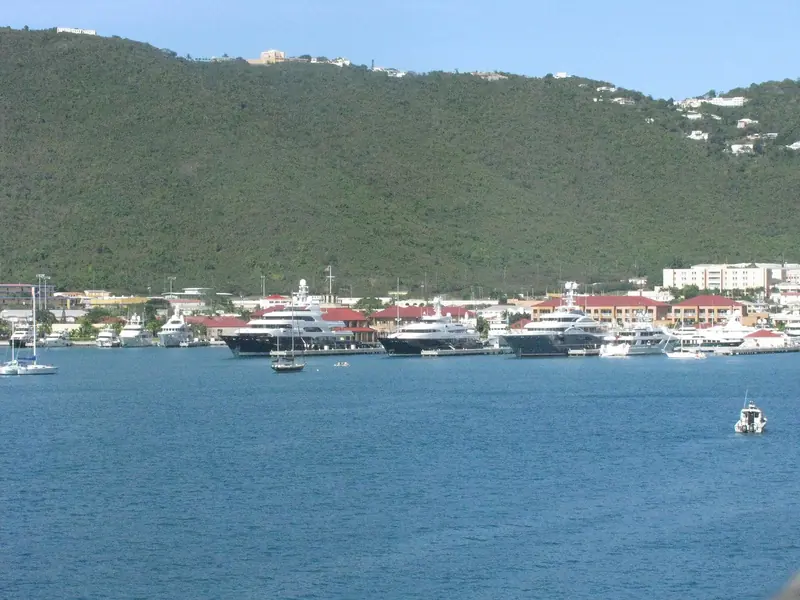
St Thomas carries almost all the marine infrastructure: Charlotte Amalie's cruise piers and duty-free shopping district, the megayacht berths at Yacht Haven Grande, and the charter bases at Red Hook and Crown Bay. St John lies four miles east across Pillsbury Sound, smaller and mostly protected land rather than marina frontage. St Croix sits 40 miles south across open water, big enough at 84 square miles to be its own destination rather than a day sail from the other two.
The three main islands total about 133 square miles and, per the 2020 census, roughly 87,000 people: about 42,261 on St Thomas, 41,004 on St Croix and 3,881 on St John. Water Island, a fifth-square-mile islet reached by a five-minute ferry from Crown Bay, adds a fourth name to the group but almost no yachting infrastructure of its own. The British Virgin Islands sit eleven miles away by the Red Hook to West End ferry route, close enough that many charter itineraries have long treated the whole area as one cruising ground; the events of 2025, covered later in this piece, have made that assumption considerably less safe.
The Season: Trade Winds, Then Hurricanes
December through April is peak season, and February and March are the peak of the peak: trade winds strengthen to 20 to 25 knots, rainfall drops to its annual low, and water visibility is reported at 80 feet or more, which is also when the charter fleet and the marina berths are hardest to book. May through August is a genuine shoulder season, lighter winds, warmer water, occasional showers and lower rates, and it is the window SAIL Magazine's Sarah Skeie Adams recommended after chartering a Lagoon 45 out of Red Hook with young children, for exactly the easier conditions and thinner crowds it brings.
What almost no operator advises is chartering here in September or the first half of October. The hurricane season itself runs the full six months from 1 June to 30 November, but the marketing calendars, and the insurance terms behind them, go quiet specifically for those ten autumn weeks, and the two storms covered later in this piece are the reason why.
An American customs stamp, a national park covering two thirds of St John, and a neighbor eleven miles away that just multiplied the cost of visiting it by sixty.
Clearing In: US Customs, Not a Foreign Port
CBP ROAM, which replaced the older Small Vessel Reporting System, lets an operator submit crew and vessel details from a smartphone or a tablet at a local marina business, and a CBP officer reviews the submission, sometimes over a video call, to satisfy the legal requirement to report arrival without a face-to-face inspection at a customs facility. Anyone who needs an I-94, a cruising license, or who owes duty still has to report in person at the nearest CBP office, and Crown Bay Marina is one of the few St Thomas locations with customs and immigration on site for exactly that reason.
Foreign-flagged yachts carry a real extra step US boats do not: a cruising license under 19 CFR 4.94, which the United States issues only to vessels of countries that grant the same courtesy to US yachts in return. The list includes the United Kingdom and its dependencies, which covers a BVI-flagged boat, along with the Bahamas, Cayman Islands, Jamaica and the Marshall Islands among others. Without a cruising license, a foreign yacht must formally enter and clear at a customs port at every single stop, an obligation a US-flagged boat cruising the same water simply does not have.
Virgin Islands National Park: Most of One Island, and a Mooring Fee
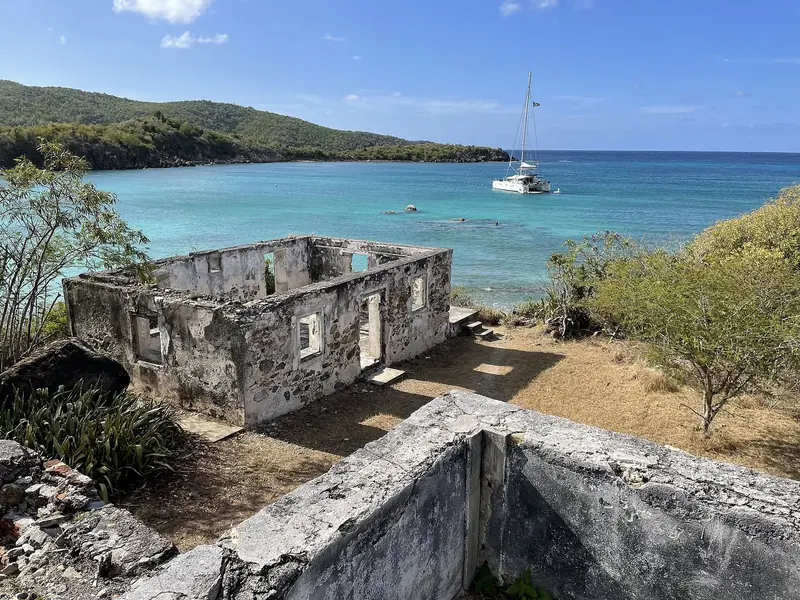
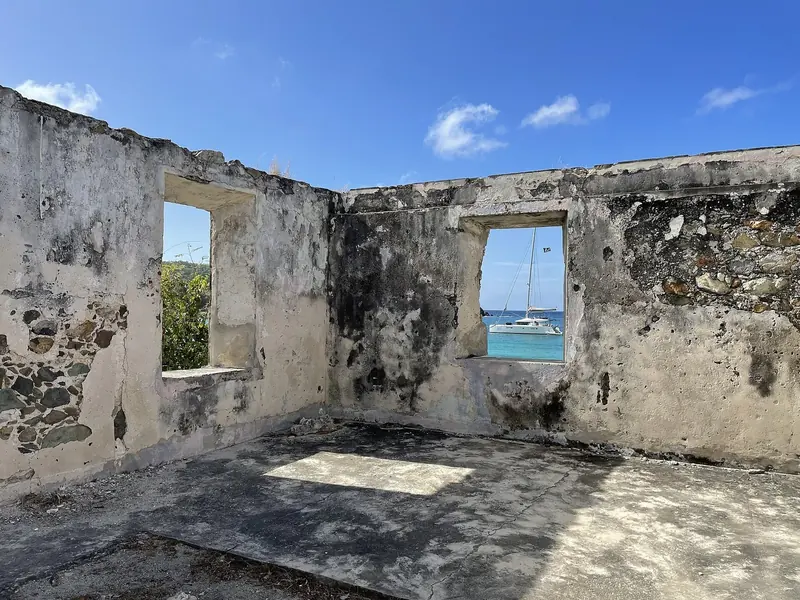
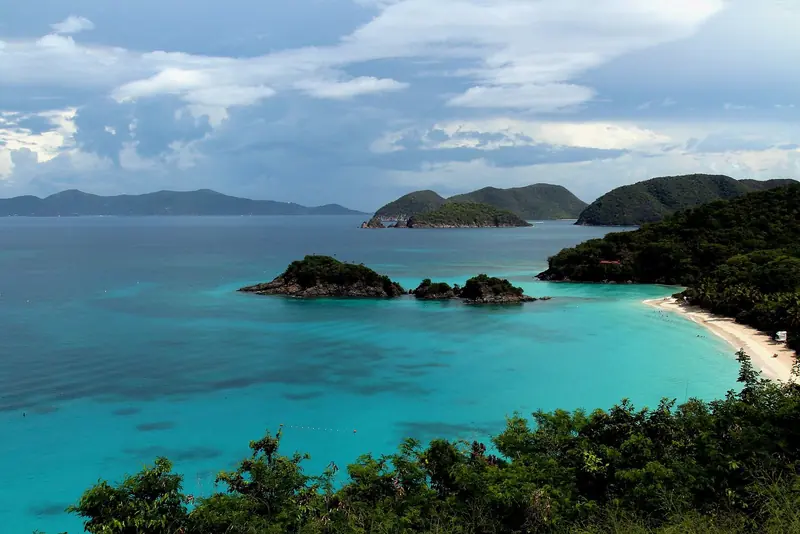
Rockefeller began buying St John land in the 1950s with two goals, a resort at Caneel Bay and land to donate for a park, and the park opened on 1 December 1956, the 29th unit in the national park system. What that means for a cruising yacht is direct: most of the coastline anchored off from Trunk Bay, whose underwater snorkel trail is one of the most photographed reefs in the Caribbean, to Cinnamon Bay's beach and campground to the Reef Bay trail's sugar-mill ruins and petroglyphs, sits inside federal park boundary, not a resort's private mooring field.
The current overnight mooring and anchoring fee, USD 26, is confirmed on the park's own fee page and again in SAIL Magazine's 2026 account of a family charter through Francis, Maho, Trunk and Salt Pond bays; a 50 percent senior-pass discount applies. The park proposed raising that to USD 40 for vessels to 60 feet and USD 60 above that, but after public pushback at an October 2024 hearing, over a rise the park had already increased 25 percent the year before, superintendent Penny Del Bene said the park was looking at phasing the increase in rather than imposing it all on 1 January 2025 as first planned. As of this research the higher rate had not appeared on the park's own published schedule.
St Croix: the Island Most Charter Guests Never See
Christiansted, the old Danish colonial capital on St Croix's north shore, has a working harbour overlooked by Fort Christiansvaern, a mid-18th-century fort of yellow ballast brick, and the town anchors the Christiansted National Historic Site. Salt River, just west of the harbour, holds the 40-slip Salt River Marina near the point where Christopher Columbus anchored in 1493, the only documented Columbus landfall on ground that is now part of the United States.
Buck Island Reef National Monument, a monument since 1961, lies under two miles off Christiansted, a mile-long island with a snorkel trail that can only be visited ashore through an approved tour operator, though a yacht can anchor nearby. St Croix Yacht Club, based at Teague Bay, runs the St Croix International Regatta every November plus a run of smaller races through the year, and the island's comparative emptiness against St Thomas and St John's charter traffic is itself part of the appeal for owners who go looking for it.
Marinas and What a Berth Actually Costs
IGY's Yacht Haven Grande has been named Superyacht Marina of the Year four times by the trade press and pairs its 46 berths with in-slip fuelling, waste and oil removal and a 40-plus shop retail galleria on the promenade behind it. What it does not do, and this research could not find published anywhere, is post a nightly or weekly berth rate; an owner gets a quote through the marina directly, which is standard practice at this end of the market but worth stating plainly rather than guessing at a figure.
American Yacht Harbor at Red Hook holds 128 slips for vessels to 110 feet, with fuel, provisioning and a chandlery on site. Crown Bay Marina, on the harbour's west side, has 99 slips to 200 feet and, usefully given the customs process above, immigration and customs clearance in the same complex. Neither publishes a current nightly rate either; the closest this research found to a public number was a boater-relocation forum thread putting a monthly slip near USD 1,000, which should be read as exactly that, a secondhand estimate rather than a tariff.
Duty-Free, No Sales Tax, and What That Buys a Charter Guest
The duty-free allowance, and the six-bottle version of it when one bottle is Cruzan Rum, distilled on St Croix, is what fills Charlotte Amalie's jewellery district, where cruise-port guides count more than 100 stores on Main Street alone selling gemstones and watches at prices set against that higher exemption. It is a genuine, quantifiable reason American owners and charter guests provision and shop here rather than elsewhere in the Caribbean, not marketing colour.
There is no general sales tax anywhere in the territory; businesses instead pay a 5 percent gross receipts tax that, unlike VAT elsewhere in the Caribbean, does not appear as a separate line on a customer's bill. For the charter side of the economy specifically, VIPCA and Small Business Administration figures, which agree with each other, put the industry's annual contribution to the territory at around USD 166 million and more than 5,000 jobs, a scale of local economic weight that explains why the dispute in the next section has drawn in the US federal government.
The Charter Industry's Fight With Its Neighbor
VIPCA's own account of the increase puts an annual multi-night charter license at USD 24,000, up from about USD 800, a rise of roughly 2,900 percent, and a day-trip license at USD 8,500, up from USD 200, a rise of about 6,150 percent, figures the VI Consortium's reporting on the subsequent federal response independently confirmed. SBA Atlantic regional administrator Matt Coleman told the same effort, which also involves the State Department, Commerce and Homeland Security, that it was 'a whopping 6,000% increase, and it's absolutely numbing.'
Andrea King, who owns Island Yacht Charters at Red Hook, called the new fees 'a business killer' and has redirected her fleet toward the USVI and Spanish Virgin Islands rather than the BVI; Kosei Ohno, president of Crown Bay Marina, told the same Washington meetings that operators had come during the holidays 'because our season is starting right now.' The VI Consortium reported at least 90 USVI-based charter vessels had already relocated to the BVI by late 2025, with close to USD 14 million in spending already lost from the USVI economy and a projected USD 100 million a year at risk once provisioning, maintenance and hospitality are counted; VIPCA executive director Staci Smith has said the territory's ability to remain a premier charter destination is at stake. As of this research, no resolution had been reached.
Hurricanes Are Not Hypothetical Here
Marinas took real damage in both storms; Yacht Haven Grande restricted itself to Coast Guard, naval and rescue vessels only in Irma's immediate aftermath, and the territory's reputation, not just its docks, took considerably longer than the physical rebuild to recover. Two category 5 storms making direct hits on the same small territory inside a two-week span is the specific, documented reason the marketing calendars and insurance terms clear out for September and early October every year.
The recovery was still faster than the damage suggested it might be: the VIPCA-run USVI Charter Yacht Show returned to Yacht Haven Grande that same November, only weeks after Maria made landfall. That speed is now part of the industry's own case for the territory's resilience, but it does not change the underlying exposure. A yacht based here through a full season sits in the same hurricane belt that produced two category 5 storms twelve days apart within living memory, not a hypothetical one.
The Honest Downside
Coral Bay's mooring field on St John, the practical alternative to open anchoring on the island's quieter east end, is showing its age. NOAA's Marine Debris Program has run repeated clean-ups removing derelict, storm-wrecked vessels from the harbour, and the Coral Bay Yacht Club's own navigation guidance warns boaters against anchoring between the moorings, because unmarked old ground tackle and hurricane wreckage still litter the gaps between them. It is a working solution, not a finished one.
None of that erases what the territory does well: a national park protecting most of one island's coastline, an unusually simple customs process for a US-flagged boat, and a duty-free allowance and tax structure that undercuts most of the rest of the Caribbean on landed cost. But an owner who has only heard 'US Virgin Islands, the easy version of the BVI' should hear the rest of it too: a National Park Service still deciding how much mooring will cost next year, three of the biggest marinas in the territory declining to publish a rate at all, and a charter industry that spent 2025 fighting for the right to cross an eleven-mile stretch of water it used to cross for free.
На берегу, подъезд и бронирование
| Season | Peak trade-wind season is December to April, with February-March the strongest winds (20-25 knots) and clearest water; May-August is a genuine, cheaper shoulder season; the official Atlantic hurricane season is 1 June to 30 November, with real risk concentrated in September and early October |
|---|---|
| Getting there | Cyril E. King Airport (STT), St Thomas, has direct US mainland flights on American (JFK, Boston, Miami, via San Juan), Delta (Atlanta, JFK), JetBlue (Boston, San Juan) and United (Dulles, Chicago, Houston, Newark), plus seasonal Sun Country service from Minneapolis. Henry E. Rohlsen Airport (STX), St Croix, is mostly reached via San Juan connections |
| Clearing in | US-flagged and most pleasure vessels report arrival via the free CBP ROAM app; foreign-flagged yachts need a US cruising license under 19 CFR 4.94, issued only to vessels of reciprocal-privilege countries (UK and dependencies, Bahamas, Cayman Islands, Jamaica, Marshall Islands among others), or must formally clear at a customs port on every stop |
| Berthing | Yacht Haven Grande, Charlotte Amalie: 46 megayacht berths to 656 feet, 25 feet draft, no beam limit, quote-only rates. American Yacht Harbor, Red Hook: 128 slips to 110 feet. Crown Bay Marina: 99 slips to 200 feet, with on-site customs and immigration |
| National Park mooring | USD 26 a night to moor or anchor inside Virgin Islands National Park (St John), USD 13 with a senior pass; a proposed rise to USD 40/USD 60 by vessel length was under public review and phased implementation, not yet in force, as of this research |
| Duty and tax | USD 1,600 duty-free exemption for returning US residents (double the mainland USD 800), up to five bottles of alcohol duty-free (six if one is Cruzan Rum); no general sales tax territory-wide, businesses instead pay a 5 percent gross receipts tax |
| The BVI question | Since 1 June 2025, BVI licensing fees on USVI-based charter boats have risen roughly 2,900-6,150 percent by license type; check current status directly with VIPCA or a broker before assuming a BVI add-on to a USVI charter is still affordable or straightforward |
| What is not published | None of Yacht Haven Grande, American Yacht Harbor or Crown Bay Marina publish a current nightly or weekly berth rate online; the final, in-force Virgin Islands National Park mooring fee for 2026 onward was also not settled as of this research |
Что сообщают владельцы и экипажи
The BVI's 2025 fee increase is, in the plainest terms available, killing business
Andrea King, who owns and manages Island Yacht Charters at Red Hook, St Thomas, called the new BVI licensing fees 'a business killer' and has redirected her company's fleet-building and charter offerings toward the USVI and the Spanish Virgin Islands rather than expanding BVI operations.
Andrea King, owner/manager, Island Yacht ChartersA federal official's blunt read on the scale of the increase
Describing the BVI fee hikes to the coordinated federal response effort, the SBA's Atlantic regional administrator called it 'a whopping 6,000% increase, and it's absolutely numbing.'
Matt Coleman, Atlantic Regional Administrator, US Small Business AdministrationWhy the industry took its case to Washington in the middle of the season
Explaining the urgency behind lobbying trips to Washington DC over the winter holidays, the Crown Bay Marina president said operators went because 'our season is starting right now,' underscoring how little slack the charter calendar leaves for a slow-moving dispute.
Kosei Ohno, President, Crown Bay MarinaThe industry association's own read on what is at stake locally
VIPCA's executive director has said the USVI's ability to remain a premier charter destination is at stake, and that the ripple effects of losing charter business would extend to grocery stores, hotels, fuel suppliers and marine service businesses across the territory.
Staci Smith, Executive Director, VIPCA (Virgin Islands Professional Charter Association)The park's own superintendent, on why a fee increase that had already drawn public anger might be phased in instead
After public comment against a proposed near-doubling of mooring fees, following a 25 percent increase the year before, the park superintendent told an October 2024 hearing that rather than imposing the new rate on 1 January 2025 as planned, the park was 'looking at reducing it and phasing it over time.'
Penny Del Bene, Superintendent, Virgin Islands National ParkA family charter captain's account of what actually makes the USVI easy to sail
Chartering a Lagoon 45 out of Red Hook with young children aboard, the writer found navigation genuinely straightforward, noting that it is 'line-of-sight, rocks, reefs and other obstructions are well marked,' and recommended the June-July shoulder season specifically for families wanting calmer conditions and lower costs than the December-April peak.
Sarah Skeie Adams, SAIL Magazine
Сильные стороны и что учесть
Сильные стороны
- A US customs process instead of a foreign oneA yacht arriving here clears into the United States, typically through the CBP ROAM app rather than a dock visit, a materially simpler process than the formal foreign clearance a US-flagged boat faces on almost every other Caribbean cruising ground, the BVI included.
- A national park protecting most of the best cruising coastlineVirgin Islands National Park covers about 60 percent of St John's land and over 5,500 acres of adjacent water, which means Trunk Bay, Cinnamon Bay and most of the island's anchorages sit inside a managed, federally protected park rather than unregulated private shoreline.
- A duty-free allowance and tax structure that is measurably better than the mainland'sThe USD 1,600 duty-free exemption is double the mainland US rate, and the absence of any general sales tax, replaced by a 5 percent business-side gross receipts tax, keeps landed costs down for both owners and charter guests.
- A charter industry large enough to matter, and organized enough to fight for itselfVIPCA and SBA figures put the industry's annual contribution to the territory at about USD 166 million and more than 5,000 jobs, and the 2025 BVI fee dispute shows an industry able to mobilize its own trade association and the US federal government in response to a real threat.
- A genuine second cruising ground in St Croix for owners who want itForty miles south of the main St Thomas-St John traffic, St Croix offers Christiansted's Danish colonial harbour, the Buck Island Reef National Monument, and a noticeably quieter pace that most charter guests never see.
На что обратить внимание
- The BVI relationship this cruising ground was built around is now genuinely brokenSince 1 June 2025, BVI fees on USVI-based charter boats have risen by roughly 2,900 to 6,150 percent depending on license type, at least 90 vessels have relocated, and a federal mediation effort remains unresolved as of this research.
- Two category 5 hurricanes in twelve days, within living memoryHurricane Irma struck St Thomas, St John and Water Island on 6 September 2017 and Hurricane Maria struck St Croix on 19-20 September 2017; both are still listed among FEMA's historic Virgin Islands disasters, and the marketing calendar clears out every September and early October because of them.
- The main alternative to open anchoring on St John is visibly agingNOAA's Marine Debris Program has repeatedly had to clear derelict, storm-wrecked vessels from Coral Bay, and the local yacht club's own guidance warns against anchoring between the moorings because of unmarked old ground tackle and hurricane debris still on the bottom.
- The one fee that is public is about to change, and nobody will say to what yetVirgin Islands National Park's mooring fee, currently USD 26 a night, has a proposed rise to USD 40 or USD 60 sitting unresolved since 2024, with the park itself saying only that it is looking at a phased approach rather than a firm new number.
- Three of the territory's biggest marinas do not publish a rateYacht Haven Grande, American Yacht Harbor and Crown Bay Marina all decline to post nightly or weekly berth rates online; an owner has to request a quote, and the only public figure this research located, a forum estimate of about USD 1,000 a month for a Red Hook slip, is secondhand rather than official.
Для кого: An owner or captain who wants US-flagged simplicity, a national park's worth of protected anchorages and a real duty-free allowance, and who is willing to plan a season around a hurricane belt and an unresolved fee war with the British Virgin Islands next door.