The Whitsundays & the Great Barrier Reef
| Region | 74 continental islands about 20 nautical miles off Airlie Beach in Queensland, inside the Great Barrier Reef Marine Park |
|---|---|
| The islands are drowned mountain tops rather than coral cays, so the anchorages are steep sided bays with real holding | |
| Almost all of the island land is national park and the surrounding water is inside the Marine Park | |
| Distances | 15 to 25 nautical miles from the marinas to the northern islands, and 35 to 40 miles further to the outer reef |
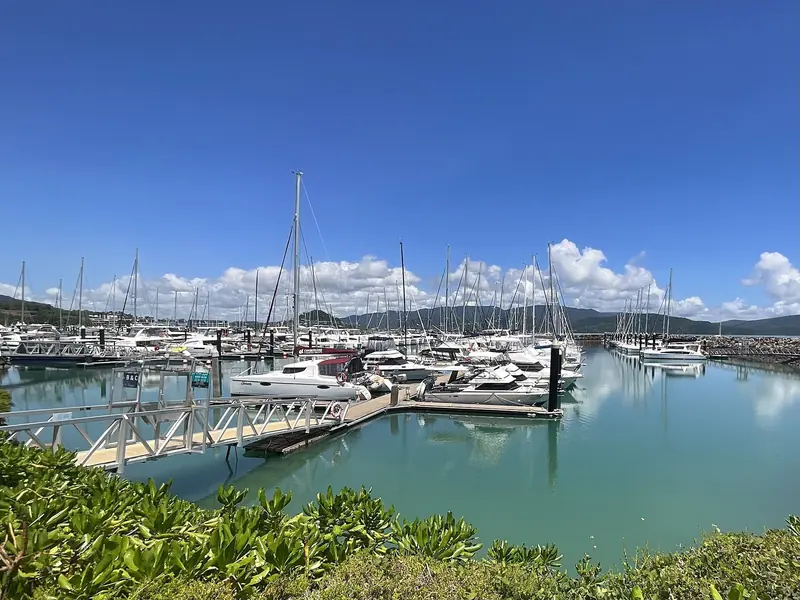
| Coral Sea Marina at Airlie Beach | more than 500 berths for vessels of 12 to 70 m, with the technical trade and provisioning around it |
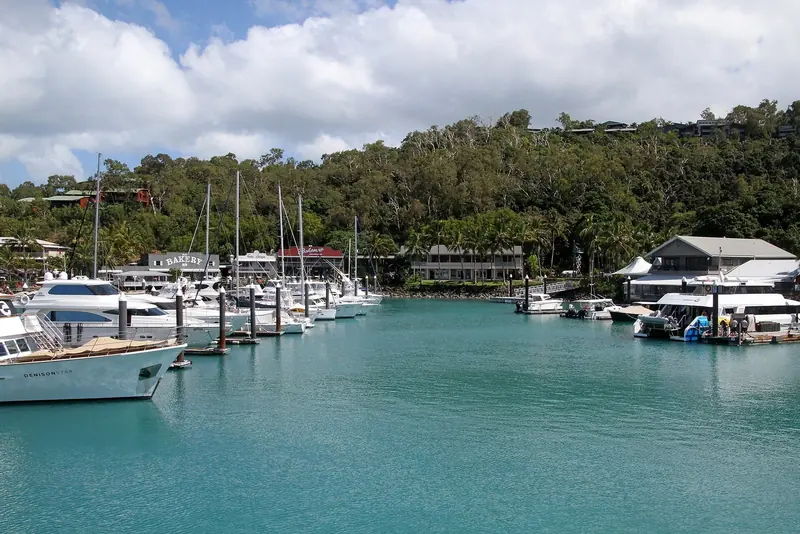
| Hamilton Island Marina | 301 berths, superyachts to 60 m, full service to about 43 m, deep water berths to 4.5 m below chart datum |
| Hamilton Island has its own jet capable airport a short walk from the marina | |
| The Special Recreational Vessels Act 2019 allows a foreign flagged yacht to apply for a temporary licence of up to 12 months to charter commercially in Australian waters | |
| The licence application fee is AUD 400 and the licence runs for 12 months | |
| The Act carries a sunset clause. The last extension found in published material moved it from 30 June 2021 to 30 June 2023 | |
| No public confirmation of a further extension could be located when this page was checked in August 2026 | |
| The Reef Authority's environmental management charge was adjusted to AUD 7.50 per adult per day across commercial reef tours in early 2026 | |
| Some operators quote a slightly higher figure, so the published rate and the invoiced rate are not always identical | |
| The Marine Park is zoned, with green zones closed to taking, no anchoring areas, reef protection markers and public moorings in sensitive places | |
| The Reef Authority publishes permit guidance specifically for superyacht operations | |
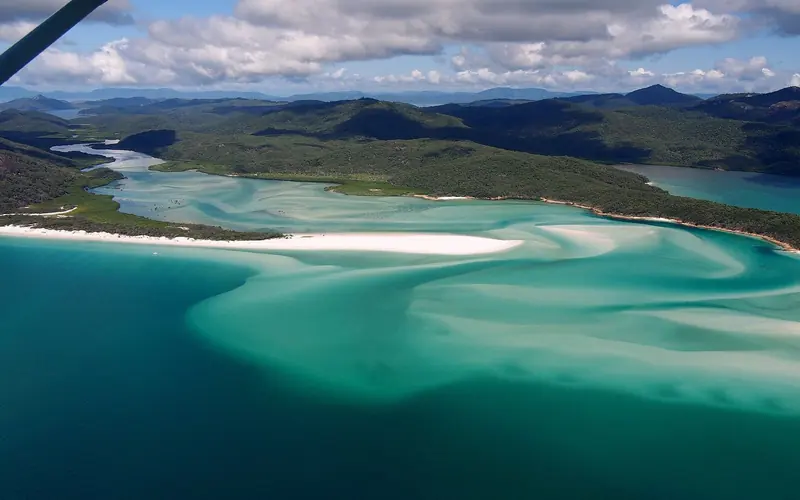
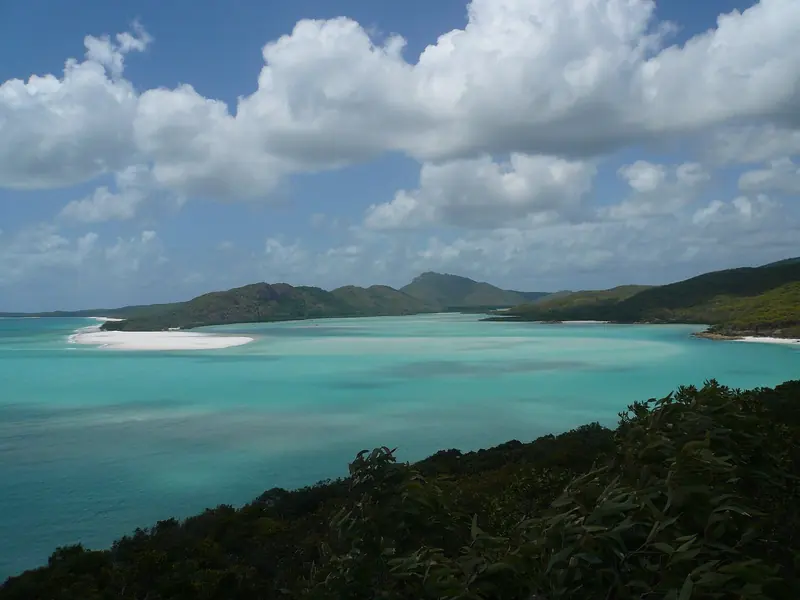
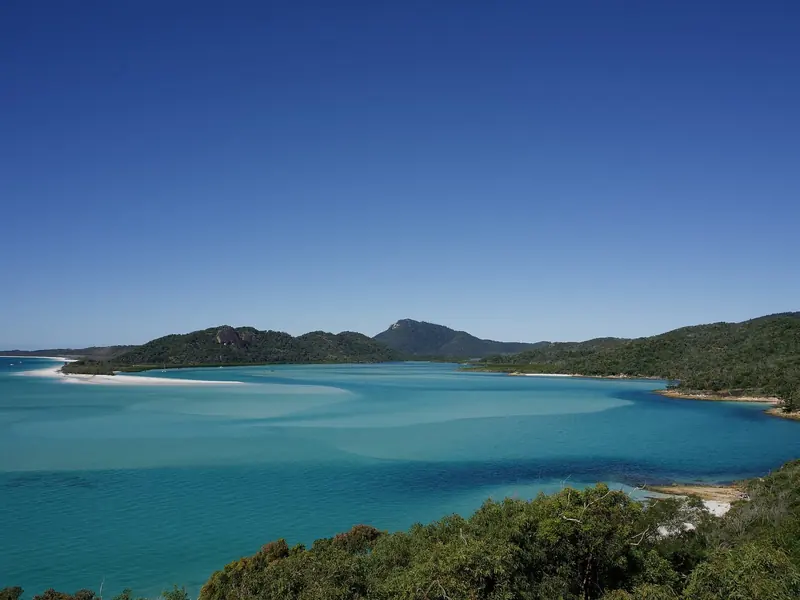
| Whitehaven Beach is seven kilometres of silica sand, with the tidal channel at Hill Inlet at its northern end | |
| Butterfly Bay and Manta Ray Bay on Hook Island hold the best fringing coral in the inner group | |
| Nara Inlet is the deepest and most sheltered anchorage, with Ngaro rock art in a cave above it | |
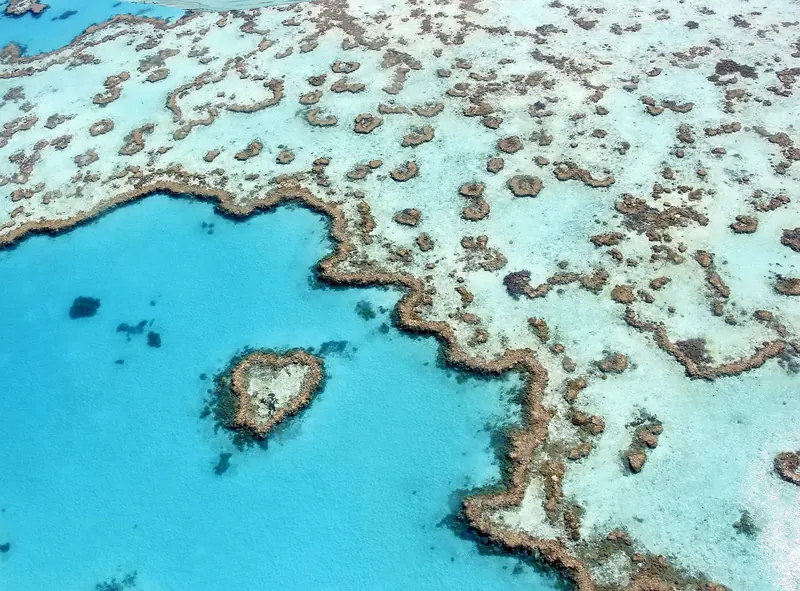
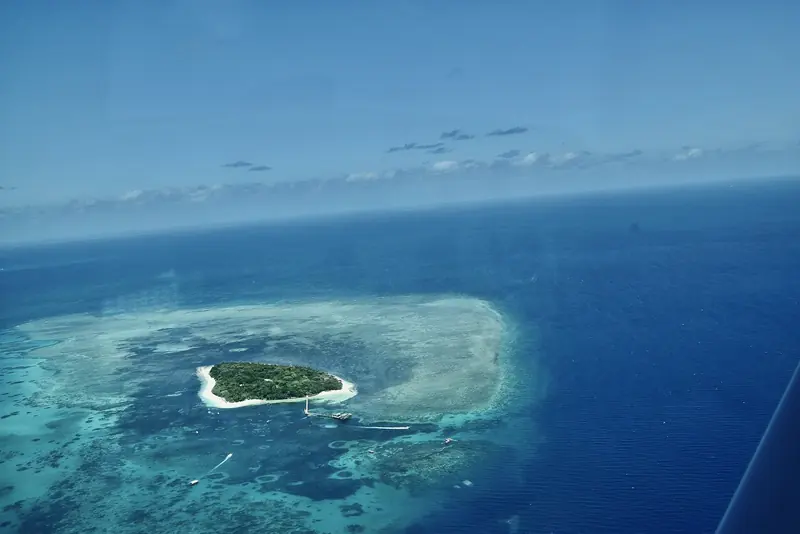
| Heart Reef on Hardy Reef is the aerial photograph, and on water access is through permitted operators only | |
| Season | the dry season from about April to November, with south east trades at 15 to 25 knots and water at 22 to 25 degrees |
| The wet season from December to March brings heat, rain and the cyclone risk that governs regional insurance | |
| Marine stingers, box jellyfish and irukandji, are present in coastal waters from roughly October to May | |
| Spring tidal ranges in the Whitsunday Passage run three to four metres, with hard streams between the islands | |
| Australian biosecurity on arrival is among the strictest anywhere, and a clean hull is a requirement rather than a courtesy | |
An island group inside a reef
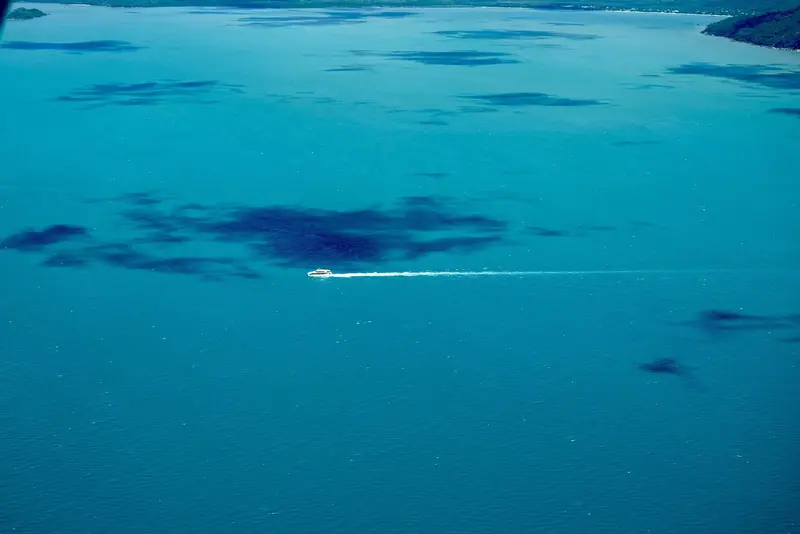
The Whitsundays are 74 islands lying about 20 nautical miles off the Queensland coast at Airlie Beach, inside the outer barrier and therefore in water that is protected from ocean swell before it starts. They are continental islands, the drowned tops of a coastal range, so they are steep, forested and granite rather than coral cays, and the anchorages are proper bays with holding rather than lagoons. Almost all of the land is national park and the surrounding water is inside the Great Barrier Reef Marine Park.
The scale suits a week. The passage from Airlie Beach or Hamilton Island to the northern islands is 15 to 25 miles, most of the anchorages are within an hour of each other, and the outer reef, where the coral actually is, lies 35 to 40 miles further out. That last leg is the one to plan around, because the outer reef is a day trip in settled weather rather than a casual detour, and it is what most guests came to see.
The two marinas carry the whole region
Coral Sea Marina at Airlie Beach is the mainland base, with more than 500 berths for vessels of 12 to 70 metres and a resort around it, and it is where the technical trade, the provisioning and the crew logistics are. Hamilton Island Marina, inside the island group, has 301 berths, caters for superyachts up to 60 metres and offers full service to about 43 metres, with deep water berths to 4.5 metres below chart datum. It has an airport on the same island, which is unusual and useful.
Between them they cover the region, and the choice is a real one. Airlie Beach puts the boat next to the shore side infrastructure and a town. Hamilton Island puts it inside the cruising ground with a runway that takes jets, which for a charter operation solves the guest transfer problem entirely. Both take the size of boat that comes to Australia, and neither is a Mediterranean scale superyacht marina.
Seventy four islands, a trade wind that blows all season, and a charter regime whose expiry date is not clearly published.
What a foreign flag may do here
Australia's coastal trading regime governs the movement of passengers between Australian ports, and a foreign flagged yacht that wants to charter commercially works inside it. The Special Recreational Vessels Act 2019 created a specific route: an owner or charterer applies for a temporary licence, valid for up to 12 months, permitting a foreign flagged yacht to operate commercially in Australian territorial waters, with an application fee of AUD 400.
The Act was passed with a sunset clause, and it has been extended more than once. The last extension found in published material moved the sunset from 30 June 2021 to 30 June 2023, and no public confirmation of a further extension could be located when this page was checked in August 2026. That is not a suggestion the regime has lapsed, it is a statement that the published record is unclear, and it is exactly the question an owner should put to an Australian maritime lawyer before committing a season to Queensland.
The Marine Park charges per head
The Great Barrier Reef Marine Park Authority levies an environmental management charge on tourism operations, calculated per person per day or part day, and the Authority adjusted it to AUD 7.50 per adult per day across commercial reef tours in early 2026, with some operators quoting a slightly higher figure. It is collected by the permitted operator and passed on, which means a charter yacht operating commercially inside the park is inside the system rather than outside it.
The Authority also runs a permit system for superyacht operations in the Marine Park and publishes guidance specifically for them, which is more than most reef jurisdictions do. Zoning is the other half of it: the park is mapped into zones with different rules on anchoring, fishing and access, green zones are no take, and there are no anchoring areas and reef protection markers in the most sensitive places, with public moorings provided instead. The zoning maps are published and they are enforced from the air.
The anchorages, and the one beach everyone wants
Whitehaven Beach on Whitsunday Island is seven kilometres of silica sand so pure it squeaks, and at its northern end Hill Inlet runs a tidal channel that swirls sand and water into the pattern every photograph of Queensland uses. It is the fixture of any itinerary and it is best early, before the day boats from Airlie Beach arrive. Anchoring off it is straightforward in the prevailing south easterly and untenable in a northerly.
Beyond it, Butterfly Bay and Manta Ray Bay on Hook Island have the best fringing coral in the inner group, Nara Inlet is the deepest and most sheltered anchorage in the islands with Ngaro rock art in a cave above it, Cid Harbour is the standard all weather refuge, and Border Island and Blue Pearl Bay on Hayman give the clearest inner water. Heart Reef, out on Hardy Reef, is the aerial shot, and access to it on the water is through permitted operators only.
The trade wind, and the two seasons
The dry season, from about April to November, is the cruising season. The south east trades blow steadily at 15 to 25 knots, the sky is clear, the humidity is low and the water is 22 to 25 degrees. It is reliable enough to plan around, which makes the Whitsundays one of the easiest places in this directory to sail. It also means the wind is almost always from the same quarter, so the anchorages that work are the ones on the western and northern sides of the islands.
The wet season, from December to March, brings heat, humidity, rain and the cyclone risk that governs insurance in the region. Boats leave, go south or shelter. That season also carries the marine stingers, box jellyfish and irukandji, present in coastal waters from roughly October to May, which is a genuine guest safety matter rather than a caution. Stinger suits are standard and swimming outside them, in the season, close inshore, is not a good idea.
The tide is bigger than people expect
The Whitsunday Passage runs tidal ranges of three to four metres on springs, which is a serious number for a group of islands people think of as tropical and benign. The streams through the passages between the islands run hard, the anchorages need scope calculated on the range rather than on the depth at arrival, and the tender landings that are easy at high water are a mud walk at low.
That range also drives the scenery. Hill Inlet's sand patterns exist because of it, and the timing of the classic photograph is a tidal question. For a large yacht the practical implications are ordinary: read the tables, plan the passages on the fair stream, and treat any inner reef approach as a tidal exercise. None of this is difficult and all of it surprises crews arriving from the Mediterranean.
Getting there, and arriving in Australia
Hamilton Island has its own airport taking jet services from the Australian capitals, and it is a short walk from the marina, which makes it the simplest guest transfer in this part of the world. Whitsunday Coast Airport at Proserpine serves Airlie Beach, 40 minutes away by road. Brisbane and Cairns are the long haul connections. For an owner this means guests can be flown into the cruising ground itself rather than into a city several hundred miles from the boat.
Arriving in Australia by sea is a formal process and biosecurity is the part that catches people. Australia's quarantine rules on food, timber, hull fouling and waste are among the strictest anywhere and are enforced on arrival, with a clean hull an actual requirement rather than a courtesy. First port clearance, customs, immigration and biosecurity are handled together at designated ports, and an agent is the sensible way to do it for a yacht of any size.
The honest downside, and what is not published
The Whitsundays are a long way from anywhere: 1,000 miles north of Sydney, and the delivery to or from Asia, New Zealand or the Pacific is a real passage. The season is April to November, and the wet season is not a shoulder but a closure. The coral in the inner islands is fringing and patchy, so the outer reef is a committed day out rather than an anchorage. And the two marinas, good as they are, are the only two.
Checked in August 2026, neither Coral Sea Marina nor Hamilton Island Marina publishes a superyacht rate card, and neither publishes a fuel price. The Marine Park Authority publishes the environmental management charge and its superyacht guidance clearly, and operators are quoting rates slightly above the AUD 7.50 adjustment, which suggests the published figure and the invoiced figure are not always the same. And no public source confirms the current sunset position of the Special Recreational Vessels Act, which is the single most important legal question for a foreign flag planning to charter here.
На берегу, подъезд и бронирование
| Getting there | Hamilton Island has its own airport taking jet services from the Australian capitals, a short walk from the marina, which makes it the simplest guest transfer in this region. Whitsunday Coast Airport at Proserpine serves Airlie Beach, about 40 minutes by road. Brisbane and Cairns carry the long haul connections. Guests can therefore be flown into the cruising ground itself rather than into a city several hundred miles away, which is rare and is a large part of the region's appeal for charter. |
|---|---|
| Arriving by sea | First port clearance covers customs, immigration and biosecurity together at designated ports, and an agent is the sensible route for a yacht of any size. Australian biosecurity is the part that catches crews: the rules on food, timber, waste and hull fouling are among the strictest anywhere, they are enforced on arrival, and a clean hull is a requirement rather than a courtesy. Plan a haul or a clean before the passage rather than discovering the standard at the quarantine inspection. |
| Where the boat berths | Coral Sea Marina at Airlie Beach has more than 500 berths for vessels of 12 to 70 metres, with the technical trade, provisioning and crew logistics around it and a resort attached. Hamilton Island Marina has 301 berths, caters for superyachts to 60 metres, offers full service to about 43 metres and has deep water berths to 4.5 metres below chart datum, inside the island group and beside a jet capable airport. Those two are the region's berthing. There is no third option of comparable size. |
| The charter licence question | A foreign flagged yacht chartering commercially in Australia works inside the coastal trading regime. The Special Recreational Vessels Act 2019 allows an owner or charterer to apply for a temporary licence valid for up to 12 months, with an application fee of AUD 400. The Act carries a sunset clause that has been extended more than once, and the last extension in published material ran to 30 June 2023 with no public confirmation of a later one found in August 2026. Take Australian maritime legal advice before booking a season. |
| What the Marine Park charges | The Reef Authority levies an environmental management charge per person per day or part day on tourism operations, adjusted to AUD 7.50 per adult per day across commercial reef tours in early 2026, collected by the permitted operator. Some operators quote slightly more. The Authority also operates a permit system for superyacht operations and publishes guidance written specifically for them, which is worth reading in full because it sets out what a yacht may and may not do inside the park. |
| Where you may anchor | The Marine Park is zoned and the maps are published and enforced, including from the air. Green zones are no take, and the most sensitive reef areas carry no anchoring designations and reef protection markers, with public moorings provided instead. In the islands themselves the anchorages are ordinary bays with good holding, and the prevailing south easterly means the usable ones are on the western and northern sides. Whitehaven is straightforward in the trade wind and untenable in a northerly. |
| Working the tide | Spring ranges in the Whitsunday Passage run three to four metres, which surprises crews arriving from the Mediterranean, and the streams between the islands run hard. Calculate scope on the range rather than on the depth at arrival, plan passages on the fair stream, and treat any inner reef approach as a tidal exercise. The tide is also what creates the sand patterns at Hill Inlet, so the timing of the classic photograph is a tidal question rather than a light one. |
| The season, and the stingers | April to November is the season: south east trades at 15 to 25 knots, clear skies, low humidity and water at 22 to 25 degrees. December to March is the wet season, with heat, rain and the cyclone risk that governs insurance, and boats leave or shelter. Marine stingers, box jellyfish and irukandji, are present in coastal waters from roughly October to May. Stinger suits are standard in that window and swimming close inshore without one is a genuine risk rather than a caution. |
| What is NOT published | Checked in August 2026, neither Coral Sea Marina nor Hamilton Island Marina publishes a superyacht rate card, and neither publishes a fuel price. The Reef Authority publishes the environmental management charge and its superyacht guidance clearly, while operators quote figures slightly above the AUD 7.50 adjustment, so the published and invoiced rates are not always the same. And no public source confirms the current sunset position of the Special Recreational Vessels Act, which is the most important legal question a foreign flag has here. |
Что сообщают владельцы и экипажи
The foreign flag charter route exists, and its expiry is the open question
The Special Recreational Vessels Act 2019 created a licensing regime under which the owner or charterer of a foreign flagged yacht may apply for a temporary licence of up to 12 months to operate commercially in Australian territorial waters, at an application fee of AUD 400. The Act was passed with a sunset clause which has been extended more than once, and the last extension identified in published material moved it from 30 June 2021 to 30 June 2023.
Special Recreational Vessels Act 2019 and the Australian Department of InfrastructureThe reef charge is published, and the invoiced figure varies
The Great Barrier Reef Marine Park Authority calculates its environmental management charge per person per day or part day for most tourism operations, and adjusted it to AUD 7.50 per adult per day across commercial reef tours in early 2026. Operators have been quoting figures around AUD 8.50, which indicates that what a guest is invoiced and what the Authority publishes are not always the same number, and that the difference is the operator's rather than the Authority's.
Great Barrier Reef Marine Park Authority, with operator quotationsThe two marinas are sized differently and the difference matters
Coral Sea Marina at Airlie Beach offers more than 500 berths for vessels of 12 to 70 metres with a resort, marine services and the region's technical trade around it. Hamilton Island Marina holds 301 berths, caters for superyachts up to 60 metres and provides full service to about 43 metres, with deep water berths to 4.5 metres below chart datum and a jet capable airport on the same island.
Coral Sea Marina and Hamilton Island MarinaThe Authority writes guidance specifically for superyachts
The Reef Authority publishes permit guidance for superyacht operations in the Marine Park alongside its zoning maps, no anchoring designations, reef protection markers and public mooring provisions. That is more than most reef jurisdictions provide, and it means the compliance position for a yacht here is documented rather than improvised, provided the crew reads it before arrival rather than after an aerial patrol.
Great Barrier Reef Marine Park AuthorityThe commercial questions are unanswerable from public sources
Checked in August 2026, neither Coral Sea Marina nor Hamilton Island Marina publishes a superyacht rate card or a fuel price, and no independent published owner or captain account of superyacht service standards at either could be found. Nor could any public confirmation of the current sunset position of the Special Recreational Vessels Act be located, which leaves the most consequential question for a visiting foreign flag to be answered by an Australian lawyer rather than by a website.
Yotters desk, checked August 2026
Сильные стороны и что учесть
Сильные стороны
- An airport in the middle of the cruising groundHamilton Island takes jet services from the Australian capitals a short walk from its 301 berth marina, which solves the guest transfer problem that most remote grounds cannot.
- Reliable, easy sailing for seven monthsSouth east trades at 15 to 25 knots from April to November inside the outer barrier, so there is no ocean swell and the anchorages are an hour apart.
- Real berthing for the regionMore than 500 berths for 12 to 70 metres at Coral Sea Marina and 301 at Hamilton Island with deep water to 4.5 metres below datum.
- The park publishes its rules and its chargesZoning maps, no anchoring areas, public moorings, superyacht specific permit guidance and an environmental management charge stated at AUD 7.50 per adult per day.
- Whitehaven and Hill InletSeven kilometres of silica sand and a tidal channel that produces the photograph every visitor has already seen, an hour from either marina.
На что обратить внимание
- The legal position for a foreign flag is not clearly publishedThe Special Recreational Vessels Act carries a sunset clause whose last published extension ran to 30 June 2023, with no public confirmation of a further extension found in August 2026.
- It is a long way from anywhereA thousand miles north of Sydney, with a real ocean passage from Asia, New Zealand or the Pacific at either end of a season.
- Five months of the year are closedThe wet season from December to March brings cyclone risk that governs insurance, and stingers are in coastal water from roughly October to May.
- The coral is not where the anchorages areThe inner islands have patchy fringing reef. The outer barrier is 35 to 40 miles further out and is a committed day trip in settled weather.
- Two marinas, and no thirdCoral Sea and Hamilton Island carry the whole region, neither publishes a rate card and neither publishes a fuel price.
Для кого: An owner cruising the Pacific or Asia who wants a fortnight of easy trade wind sailing inside a reef, with an airport in the middle of the cruising ground, and who will take Australian legal advice on the charter position before committing.