Seakeeper
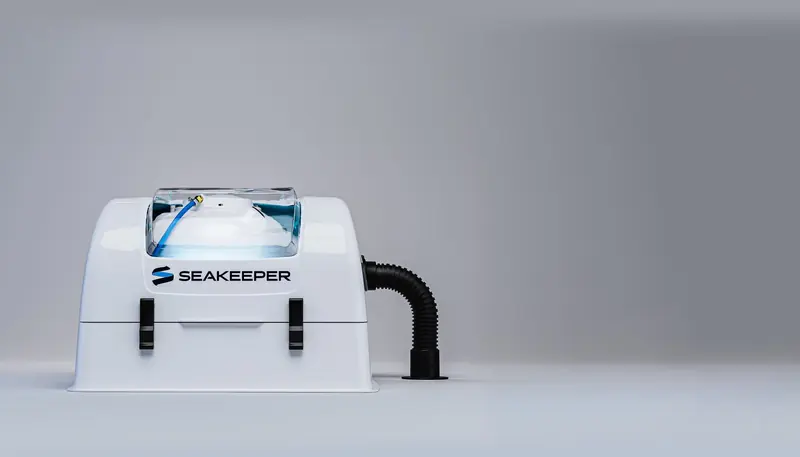
| Категория | гироскопические успокоители бортовой качки и управление положением судна |
|---|---|
| Основана | в 2001 году Shep McKenney и John Adams, первая мастерская на Solomons Island в Мэриленде в 2002 году |
| Собственник | Madison Industries, купившая компанию в 2018 году |
| Производство | Leesport, Пенсильвания, площадка открыта в 2022 году |
| Вехи | первый прототип на 43-футовой Viking в 2006 году, первый серийный контракт с Azimut в 2008 году, десятитысячный агрегат в 2020 году |
| Ряд | четырнадцать моделей от Seakeeper 1 до Seakeeper 40 |
| Seakeeper 1 | лодки примерно от 7 до 9 м и до 5,5 тонны, USD 17 400 |
| Seakeeper 26 | лодки примерно от 21 до 26 м и до 75 тонн, 1 431 кг, USD 268 600 |
| Seakeeper 40 | лодки от 26 м и до примерно 115 тонн, 1 848 кг, USD 365 400 |
| Снижение качки | до 95 процентов, по собственным данным компании |
| Раскрутка | около 40-43 минут до полной стабилизации на Seakeeper 26 или 40, по данным производителя |
| Питание | 3 000 Вт на раскрутку Seakeeper 26 и от 1 375 до 3 000 Вт в работе, при 208-230 вольт |
| Average installed cost, from a United States Seakeeper installer's published guide compiled from more than 900 installations and read in July 2026: Seakeeper 1 USD 14,600 install for USD 32,000 all in, Seakeeper 2 USD 16,900 for USD 43,000, Seakeeper 3 USD 21,700 for USD 62,000, Seakeeper 4 USD 23,600 for USD 71,000, Seakeeper 4.5 USD 19,400 for USD 75,000, Seakeeper 6 USD 20,400 for USD 90,000, Seakeeper 9 USD 25,300 for USD 140,000, Seakeeper 10 USD 23,200 for USD 150,000, Seakeeper 18 USD 26,300 for USD 210,000 | |
| Installation averages exclude taxes, shipping, travel, yard fees and any vessel-specific work | |
| Seakeeper 26 and Seakeeper 40 are quoted individually. No published installation figure exists for either, which is the whole 21 m to 33 m band | |
Двадцать пять лет одной идеи
Shep McKenney и John Adams договорились в 2001 году разработать практичный современный гироскопический успокоитель и на следующий год взялись за работу в гараже на Solomons Island в Мэриленде. Первый прототип встал на 43-футовую Viking в 2006 году. Модель M7000 вышла в коммерческую продажу в 2008 году, и в том же году пришёл первый серийный контракт от Azimut Yachts, а это и перевело технологию из эксперимента в штатное оборудование.
Тысячный агрегат компания продала в 2011 году, десятитысячный - в 2020-м. В 2008 году она купила своего производственного партнёра, Joma Machine Company, переехала в Mohnton в Пенсильвании и в 2022 году открыла специально построенный завод в Leesport. Madison Industries приобрела бизнес в 2018 году. Учебный центр открылся в Тампе в 2021 году, и это важно, потому что качество монтажа решает, будет ли оборудование работать.
Как гироскоп работает на самом деле
Маховик вращается внутри вакуумного корпуса. Когда лодка кренится, гироскоп наклоняется в нос и в корму, и эта прецессия создаёт момент на левый и правый борт, который противодействует качке. Вакуум - и есть инженерный фокус. Он позволяет маховику вращаться примерно втрое быстрее обычной конструкции, что сокращает его вес на две трети и вдвое уменьшает потребляемую мощность.
Компания приводит скорость маховика до 9 750 об/мин на меньших агрегатах и окружную скорость обода около 557 миль в час. Крупные агрегаты крутятся медленнее, 5 000 об/мин на Seakeeper 26 и 5 150 об/мин на Seakeeper 40, и несут гораздо больший момент импульса. Тепло снимает запатентованная схема охлаждения гликолем и забортной водой. Управление автоматическое и непрерывно считывает состояние моря.
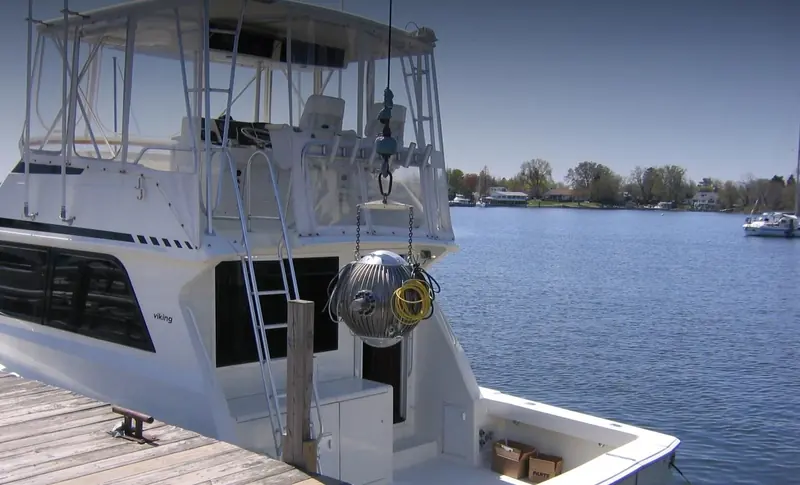
Сорок минут раскрутки - плата за бухту, из которой никому не хочется уходить.
Линейка и её цена
Четырнадцать моделей покрывают лодки примерно от 7 до более чем 33 метров. Seakeeper 1 подходит лодкам примерно от 7 до 9 метров и до 5,5 тонны и стоит USD 17 400. Seakeeper 6 закрывает примерно от 13 до 16 метров и до 24 тонн за USD 69 600. Seakeeper 18 закрывает примерно от 18 до 23 метров и до 56 тонн за USD 183 700.
На вершине Seakeeper 26 берёт лодки примерно от 21 до 26 метров и до 75 тонн за USD 268 600, а Seakeeper 40 берёт от 26 метров и до примерно 115 тонн за USD 365 400. Каждая из этих цифр не включает монтаж, а он при установке на существующую лодку может стоить заметную долю от цены самого агрегата.

Что это делает с жизнью на борту
Заявлено снижение качки до 95 процентов, и владельцу важен не процент. Важно, останутся ли гости за столом. Яхта, лежащая лагом к зыби в остальном идеальной бухте, пустеет к девяти вечера, и обычное лекарство - сняться и уйти, а это стоит самой бухты. Гироскоп убирает повод уходить.
Второй эффект проявляется на малом ходу и на стоянке, где плавниковые успокоители исторически не давали ничего. Seakeeper по замыслу работает на нулевом ходу, и поэтому он сначала появился на лодках для спортивной рыбалки, которые часами стоят на месте. На яхте это меняет работу с тендером, купание с платформы и то, укачает ли кого-то в салоне.
Раскрутка, питание и генератор
Тем, как пользуются этим оборудованием, управляют два эксплуатационных факта. Первый - время раскрутки. И Seakeeper 26, и Seakeeper 40 выходят на полную стабилизацию примерно за 40-43 минуты, причём максимальные обороты на более крупном агрегате набираются 70 минут. Гироскоп нельзя включить в момент отдачи якоря. Экипажи запускают его задолго до прихода.
Второй - питание. Seakeeper 26 берёт до 3 000 Вт на раскрутку и от 1 375 до 3 000 Вт в работе в зависимости от состояния моря, при 208-230 вольт однофазного тока и 20 амперах. Seakeeper 40 требует 5 000 Вт на раскрутку и от 1 900 до 4 400 Вт в работе при 30 амперах. Генератор должен быть в работе всё время, пока агрегат вращается, а ещё нужно от 4 до 8 галлонов забортной воды в минуту на охлаждение.

Вес, место и установка на существующую лодку
Seakeeper 26 весит 1 431 кг, Seakeeper 40 - 1 848 кг, в габаритах чуть больше 1,4 метра в плане и около метра в высоту. Эту массу надо ставить на как следует рассчитанный фундамент, низко и близко к центру судна, и конструкцию часто приходится усиливать. Ни плавников, ни валов, ни отверстий в корпусе, кроме забора охлаждающей воды.
Отсутствие выступающих частей - самый сильный довод при установке на существующую лодку. Плавниковые успокоители требуют отверстий в корпусе, добавляют сопротивление на ходу и могут пострадать у причала или на мелководье. Гироскоп стоит внутри лодки и может быть смонтирован почти где угодно, где позволяет конструкция. Переменной остаётся стоимость монтажа, и она не публикуется.
Где это заканчивается
Потолок реален. Самый крупный агрегат рассчитан примерно на 115 тонн, а это лодка примерно от 26 до 33 метров. Выше владелец либо ставит несколько агрегатов, либо смотрит на плавниковые успокоители с работой на нулевом ходу, а именно их несёт большинство яхт крупнее 40 метров. Тому, у кого крупная водоизмещающая яхта, стоит относиться к Seakeeper как к одному из вариантов, а не как к решению по умолчанию.
Второе ограничение - состояние моря. Гироскоп уменьшает бортовую качку и ничего не делает с килевой, поэтому встречное волнение остаётся как было. Ответ Seakeeper на это - Seakeeper Ride, выпущенный в 2023 году, система управления положением судна для глиссирующих лодок на ходу. Это отдельный продукт, решающий отдельную задачу.
Сервис, гарантия и подшипники
На агрегаты идёт многолетняя заводская гарантия, а подшипники заменяются на месте, и это самое важное конструктивное решение с точки зрения владельца. Герметичный агрегат, который при износе подшипника пришлось бы отправлять обратно в Пенсильванию, означал бы конец сезона. Замена на месте означает, что техник приезжает к лодке.
Seakeeper обучает монтажников и сервисных техников напрямую, и сеть идёт следом за американской и европейской индустрией серийных лодок, а это значит покрытие во Флориде, на Багамах, на Балеарах, на итальянской и французской Ривьере и на восточных Карибах. Уровень шума составляет около 74 дБ на метре у Seakeeper 26, поэтому место установки и звукоизоляция вокруг него входят в спецификацию, а не додумываются потом.
Против плавниковых успокоителей и кому это ставить
Плавниковые успокоители от известных европейских производителей остаются стандартом на крупных водоизмещающих яхтах, и современные плавники работают на нулевом ходу. Они дороже, добавляют сопротивление и выносят подвижные поверхности за пределы корпуса. Гироскоп стоит дешевле, добавляет вес вместо сопротивления и снаружи невидим. На лодках примерно до 115 тонн гироскоп обычно выигрывает по стоимости установки и по простоте.
Ставить его стоит тем владельцам, которые почти каждую ночь стоят на якоре, едят на борту и возят гостей без морских ног. Смотреть в другую сторону стоит тем, у кого яхта выходит за размерный диапазон, у кого нет запаса мощности генератора и чьи лодки используются только на ходу и по ровной воде.
Практическая информация
| Equipment prices, published in full | Seakeeper is one of the very few marine makers that publishes every list price. Its own cost page, read August 2026, gives Seakeeper 1 at USD 17,400, 2 at USD 26,100, 3 at USD 40,300, 4 at USD 47,400, 4.5 at USD 55,600, 5 at USD 60,500, 6 at USD 69,600, 7.5 at USD 78,700, 10 at USD 126,800, 10.5 at USD 133,900, 14 at USD 155,900, 18 at USD 183,700, 26 at USD 268,600 and 40 at USD 365,400. Those are equipment only, exclude taxes, storage, docking and haul-out, and the company states they are subject to passthrough on any levied tariff. |
|---|---|
| Installation is the bigger half of the bill | An Elite Seakeeper dealer publishes averages compiled from more than 900 installations as of 2025: Seakeeper 1 at USD 14,600 to fit for USD 32,000 all in, 3 at USD 21,700 for USD 62,000, 4.5 at USD 19,400 for USD 75,000, 6 at USD 20,400 for USD 90,000, 9 at USD 25,300 for USD 140,000, 10 at USD 23,200 for USD 150,000, 14 at USD 24,100 for USD 180,000 and 18 at USD 26,300 for USD 210,000. Averages exclude taxes, shipping, yard fees and any vessel-specific structural work. Access is what moves the number: a unit that has to go in through a cut hatch is a different job from one dropped into an open lazarette. |
| Annual service, with real numbers behind it | Two Elite Seakeeper dealers in Orange Beach, Alabama publish identical annual service tables: USD 750 for a Seakeeper 1, USD 850 for a 4 or 4.5, USD 1,150 for a 2, USD 1,200 for a 3, USD 1,350 for a 10, USD 1,500 for a 5, 6 or 14, USD 1,650 for a 9, USD 1,800 for a 16 or 18, USD 1,900 for a 26 and USD 2,250 for a 35 or 40. An independent Californian yard, Ventura Boat Services, puts a typical annual service at USD 1,500 to USD 3,000 in November 2025, so treat the dealer table as a floor rather than a ceiling. |
| The service schedule the warranty depends on | Remove the covers and inspect visually after every use, with a freshwater rinse and a strainer check. Every three months or 150 hours, inspect, rinse, check the strainer and replace the zinc on Seakeeper 5 and above. Annually or at 1,000 running hours, whichever comes first, a professional inspection checks seawater flow and cooling hoses, flushes the cooling system with glycol and inspects the electronics. Units must also be registered with Seakeeper to access after-sales programmes, and a technician has to verify sea hours for a warranty claim. |
| The long-run item nobody quotes up front | The spherical bearings that carry the spinning flywheel are rated at roughly 10,000 to 20,000 hours on many models. Ventura Boat Services puts bearing service or replacement past 10,000 hours at USD 20,000 to USD 60,000 or more, and hydraulic bushing replacement past 2,000 hours at USD 1,000 or more. Those are one yard's figures, published November 2025, and Seakeeper publishes nothing against which to check them. On a heavily used charter boat this is the number that decides whether the unit is worth keeping at ten years. |
| Power, weight and the generator question | The small units are DC and the rest are not, which changes life at anchor. A Seakeeper 1 weighs 166 kg and runs on 12 VDC at up to 50 amps, about 225 to 600 watts depending on sea state. A Seakeeper 6 weighs 395 kg and needs 220 VAC at 20 amps or 110 VAC at 30 amps, drawing up to 2,300 watts to spool and 1,100 to 2,300 watts running, plus 125 watts of 12 VDC control power. Above the small DC models the gyro is an AC load, so at anchor the generator runs while the gyro does, and that fuel is part of the cost of a quiet dinner. |
| Spool-up: switch it on leaving the berth | A gyro is not a switch you flick on arrival. A Seakeeper 1 reaches stabilising speed at 7,310 rpm in 18 minutes and full 9,750 rpm in 35 minutes. A Seakeeper 6 reaches stabilising speed at 7,275 rpm in 21 minutes and 9,700 rpm in 42 minutes. The large units carry far more angular momentum and take longer still, which the maker puts at about 40 to 43 minutes to full stabilisation on a Seakeeper 26 or 40. |
| Seakeeper Ride is a different product, not a cheap gyro | Ride is a vessel attitude control system that works underway rather than at rest, for boats up to about 55 ft with a cruising speed above 20 mph and a compatible multifunction display. The same dealer guide gives Ride 450 at USD 4,900 with installation from USD 4,500, about USD 9,400 fitted, up to the Ride 750 QUAD at USD 21,500 with USD 8,500 to USD 13,000 to fit, and the Ride 900 to 1500 from USD 24,500 with custom installation. It does not stop a boat rolling at anchor and it is not a substitute for a gyro. |
| What is NOT published | There is no published installation figure for the Seakeeper 26 or the Seakeeper 40. Both are quoted individually, and that is the entire 21 m to 33 m band, exactly where the equipment alone runs USD 268,600 to USD 365,400. Seakeeper publishes no bearing overhaul price, no out-of-warranty parts list and no independent roll-reduction test; the up to 95 percent figure is the company's own. One United States installer's table also lists the Seakeeper 40 at USD 348,000 against the maker's USD 365,400, so take the factory number and get the delivered price in writing. |
Запросить предложение на Seakeeper.
Укажите модель и куда её доставить. Редакция получает письменное предложение от производителя или авторизованного дилера, сверяет его с ценами, опубликованными на этой странице, и отвечает вам по электронной почте. Без обязательств и без комиссии.
- 01Письменное предложениеВ вашей валюте, с НДС, доставкой и сроком поставки, а не цифра из каталога.
- 02Доставка туда, где стоит яхтаВ марину, на верфь или по вашему адресу, с документами, которые требуют литиевая батарея или подъём краном.
- 03НезависимоYotters не связан ни с одним дилером, поэтому предложение сравнивается прежде, чем попасть к вам.
Что сообщают владельцы и экипажи
Owner opinion splits, and both sides are worth reading
Forum threads run from an owner with two Seakeeper 5 units reporting problems on every trip and summarising two years of problems and headaches, to an owner running a Seakeeper 2 on a Pursuit 28 for two years who calls it absolutely the best experience, with no roll sitting still or trolling and much less slamming underway because the boat is kept level. Several long-standing posters note that early units were not as reliable, nor as well supported, as they are now.
The Hull Truth (owner forum)What actually breaks, and what the back half of ownership costs
A service yard's published breakdown ranks cooling system problems first, from clogged heat exchangers and raw-water pump failures to overheat alarms triggering automatic shutdowns, then hydraulic and brake faults with accumulators needing replacement every few years, then electrical faults more common on the Seakeeper 1 to 5, then bearing and flywheel wear at roughly 10,000 to 20,000 hours, then corrosion and zinc depletion. It also states most owners see trouble-free operation for the first five to ten years if the unit is serviced annually.
Ventura Boat Services (November 2025)The competition is measurably faster to stabilise
Comparing the Yanmar-owned Smartgyro SG40 against the Seakeeper 9, the magazine reported both reaching maximum rpm in about 55 minutes but the SG40 reaching stabilisation in 25 minutes against 38 for the Seakeeper, with the SG40 heavier at 650 kg against 550 kg and drawing more power, and Smartgyro's modular sphere serviceable in the field without a factory return. The reviewer was explicit that he had not yet tested a Smartgyro at sea.
Motor Boat and Yachting (Hugo Andreae, July 2021)Ride is a real effect underway, and a separate purchase
In the first published test of Seakeeper Ride the reviewer reported bow rise on climbing onto plane significantly reduced, describing a boat that had previously laboured out of the hole lifting smoothly instead. Motor Boat and Yachting's own trial on a Nimbus T9 in typical lumpy Solent conditions found pitching reduced in size and severity and side to side roll almost entirely gone at 35 knots.
Power and Motoryacht (Dan Harding)The rest of the market is chasing on price and installation
A trade survey of the gyro market recorded Quick's air-cooled MC2 needing no water intake, with managing director Paolo Berni of Quick USA making the point that not needing a water-cooling system means not putting another hole in the boat, and some models retrofitting on eight bolts. Quick had sold about 600 units worldwide by 2021 against Seakeeper's ten thousand. Smartgyro's marketing director Sander Gesink summarised the demand simply: people want comfort and are willing to pay for it.
Soundings Trade Only
Сильные стороны и что учесть
Сильные стороны
- It does the one thing that changes an evening aboardA gyro stops the roll at anchor, which is where a yacht spends most of its life and where fin stabilisers do least. Seakeeper claims up to 95 percent roll reduction, and owners describe no roll at rest or at trolling speed. It is the single piece of equipment most likely to decide whether guests stay aboard after dinner.
- The prices are published, all fourteen of themEquipment list prices for every model, dealer installation averages drawn from more than 900 jobs, published annual service tables and a stated exclusions list. Almost nothing else in yachting is priced this openly, and it lets an owner build a real budget before a salesman is involved.
- Scale, and the support that comes with itMore than ten thousand units sold since the first prototype went onto a 43 foot Viking in 2006, a purpose-built plant at Leesport opened in 2022, and a training facility at Tampa since 2021. Installation quality decides whether the equipment performs, so a trained network matters more here than the specification sheet does.
- The vacuum enclosure is genuine engineering, not marketingSpinning the flywheel in a vacuum lets it turn roughly three times faster than a conventional design, which cuts its weight by about two thirds and halves the power it needs. That is why a 24 ton boat can carry a 395 kg Seakeeper 6 rather than something twice the size.
- Two years and 2,000 hours of full-system warrantyThe whole line carries the same 2 year, 2,000 hour factory warranty, with an extended programme available while the unit is still inside the factory period. Cover has to be activated by registering the unit, and a technician verifies sea hours on a claim.
На что обратить внимание
- The equipment price is not the priceA Seakeeper 6 lands at about USD 90,000 fitted against USD 69,600 of hardware, and a Seakeeper 1 at about USD 32,000 against USD 17,400. Above the Seakeeper 18 there is no published installation figure at all, so the 21 m to 33 m owner has the least information and the largest bill.
- It takes 18 to 42 minutes to come up to speedStabilisation arrives in 18 minutes on a Seakeeper 1 and 21 on a Seakeeper 6, with full rpm at 35 and 42 minutes, and the maker puts full stabilisation on a Seakeeper 26 or 40 at about 40 to 43 minutes. Forget to switch it on leaving the berth and the first half hour of the anchorage is exactly as rolly as it would have been.
- Above the small DC units it is an AC loadA Seakeeper 6 wants 220 VAC at 20 amps and draws up to 2,300 watts. At anchor that means the generator runs while the gyro runs, so a quiet night is a running genset, and the fuel and the generator hours belong in the running cost.
- The ten-year cost is opaqueBearings are rated at roughly 10,000 to 20,000 hours and an independent yard puts the overhaul at USD 20,000 to USD 60,000 or more, with hydraulic bushings adding USD 1,000 or more past 2,000 hours. Seakeeper publishes no figure for either, so a buyer cannot price the back half of the ownership.
- The failure modes are recurrent and unglamorousClogged heat exchangers, raw-water pump failures and overheat shutdowns lead the list, with hydraulic and brake faults and voltage drops more common on the smaller units and zinc depletion throughout. Owner opinion splits accordingly, between owners who call it the best money they ever spent and owners reporting years of intermittent faults.
Для кого: Владельцам лодок примерно до 115 тонн, которые стоят на якоре, едят на борту и устали сниматься в девять вечера из-за зыби.