Bonaire & Curacao, the ABC Islands
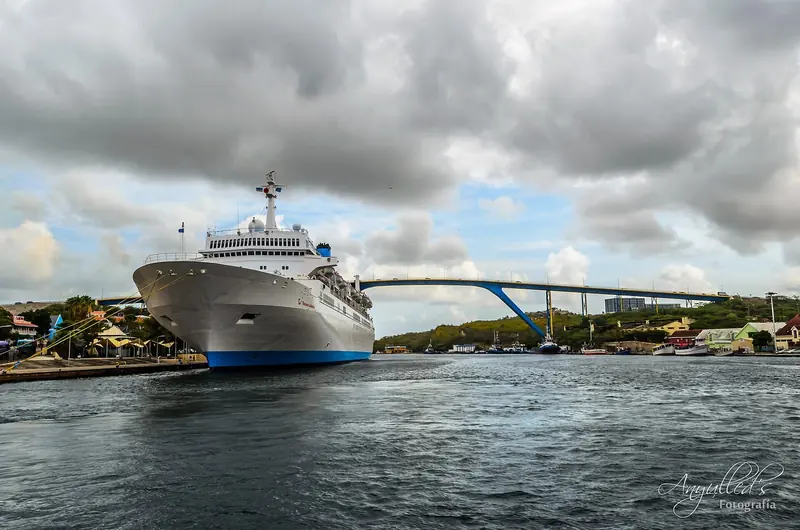
| Bonaire lies about 50 nautical miles off Venezuela; Curacao lies about 30 nautical miles northwest of Bonaire. | |
| Klein Bonaire, the uninhabited islet off Kralendijk, breaks the swell that protects Bonaire's mooring field. | |
| Bonaire National Marine Park covers the entire coastline of Bonaire and Klein Bonaire out to 60 metres depth, run by STINAPA. | |
| Anchoring is banned everywhere around Bonaire except for traditional fishing boats under 4 metres using coral-stone anchors; illegal anchoring fines start at 500 dollars. | |
| STINAPA overnight mooring buoys for visiting yachts are capped at 18 metres LOA and require registration at the Customs Office and Harbour Village Marina. | |
| STINAPA Nature Fee is 40 dollars per person per calendar year as of 2023, up from a split 25/45 dollar rate and before that a 10/25 dollar rate. | |
| Scuba Diving Magazine's Readers Choice Awards have ranked Bonaire the Caribbean/Atlantic region's number one shore-diving destination for 29 consecutive years. | |
| About 80-plus marked dive sites ring Bonaire, with 88 percent reachable directly from shore. | |
| Curacao has close to 70 dive sites, per Boat International's profile of the local charter fleet. | |
| Harbour Village Marina, Bonaire | 60 slips to about 45 metres plus one megayacht berth to 73 metres LOA, 4.5 metre max draft. |
|---|---|
| Curacao Marine, Willemstad | 25,000 square metre yard, 140-plus dry berths, 40-plus wet berths, largest listed haul-out 35 metres. |
| Barbara Beach Marina, Santa Barbara Plantation: 15 berths up to 200 feet, about 61 metres, in 6 metres of water. | |
| Seru Boca Marina, Spanish Water | berths to about 100 feet, 3 metre depth. |
| Spanish Water lagoon holds roughly 100 boats at anchor across five zones and is a recognized hurricane hole. | |
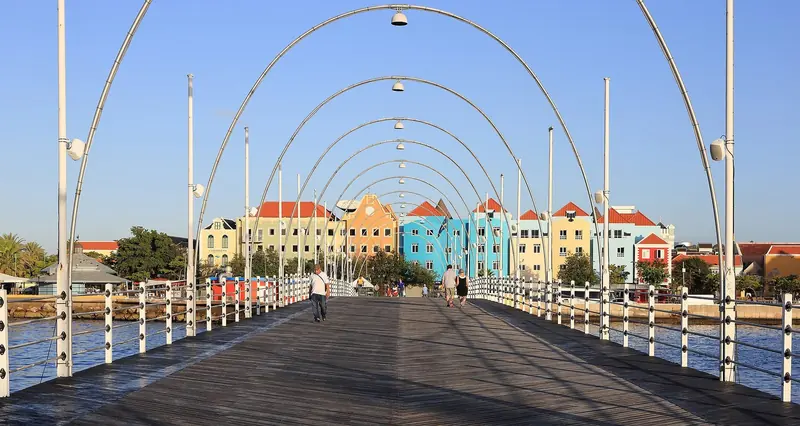
| The Queen Emma pontoon bridge across St Anna Bay in Willemstad is 167 metres long, built in 1888, and swings open on 16 pontoons for ship traffic. | |
| Bonaire became a special municipality of the Netherlands in October 2010 and adopted the US dollar in 2011. | |
| Curacao became an autonomous country within the Kingdom of the Netherlands in October 2010, with its own currency and customs regime. | |
| A visiting yacht in Curacao gets 3 months on arrival, extendable to 6 months total, unless locally registered. | |
| Curacao import duty on a yacht is 11.5 percent of CIF value plus 2 percent sales tax. | |
| Bonaire has recorded only 4 direct hurricane strikes since 1871, about one every 38.5 years. | |
| Curacao's last major direct hurricane hit was in 1877, known locally as Orkan Grandi; none recorded in the modern tracking era. | |
| Trade winds run about 10 to 20 knots in the calmer months and 15 to 25-plus knots from February into August. | |
| Flamingo International Airport, Bonaire, and Hato/Curacao International Airport are linked by inter-island flights of roughly 20 to 40 minutes. | |
| The charter fleet serving both islands numbers around 10 yachts, from 55-foot catamarans to superyachts above 100 feet, per Boat International. | |
Two Small Islands, One Very Different Shape
Bonaire sits about 50 nautical miles off the Venezuelan coast and is shaped like a boot standing on its heel, with the town of Kralendijk on the sheltered leeward west side and the uninhabited islet of Klein Bonaire lying just offshore, breaking the swell and creating the calm water that the island's whole yachting and diving economy depends on. Curacao lies roughly 30 nautical miles northwest of Bonaire and is considerably larger, its coastline folded around St Anna Bay, the narrow cut that opens into Schottegat, a deep natural harbour that has handled oil tankers and cruise ships for a century and that also holds most of the island's yacht infrastructure.
Where Bonaire is essentially one long lee shore with a single town anchorage, Curacao has real geographic variety for an owner: the historic capital Willemstad at the harbour mouth, the sheltered lagoon of Spanish Water on the south coast and a scattering of quieter bays and reefs along the west end near Westpunt. Neither island has the drowned-volcano peaks or deep bays of the Windwards; both are flat, dry, cactus-and-limestone terrain, which is part of why they sit outside the rain and wind patterns that build the worst Caribbean storms.
Where a Large Yacht Can Actually Tie Up
Harbour Village Marina on Bonaire's northern edge is the one facility on the island built for real size: it lists 60 slips for yachts up to around 45 metres plus a dedicated megayacht berth rated to 73 metres LOA, with a maximum draft of 4.5 metres, dual-voltage shore power and high-volume fuel bunkering. Everywhere else around Bonaire, a large yacht is on a public or private mooring, not a berth, because there is effectively no other deep-water quay built for yachts.
Curacao spreads the load. Curacao Marine, inside the Schottegat at Willemstad, is a 25,000 square metre yard with 140-plus dry berths and 40-plus wet berths, but its own listing caps the largest vessel it hauls at 35 metres, so it is better read as a serious refit and haul-out yard than a superyacht marina. At Santa Barbara Plantation on the south coast, Barbara Beach Marina takes 15 berths up to 200 feet, about 61 metres, in 6 metres of water, while the plantation's other marina, Seru Boca, handles boats to around 100 feet in 3 metres, and the adjoining Spanish Water lagoon holds roughly 100 boats at anchor across five zones and is one of the most highly regarded hurricane holes in the southern Caribbean.
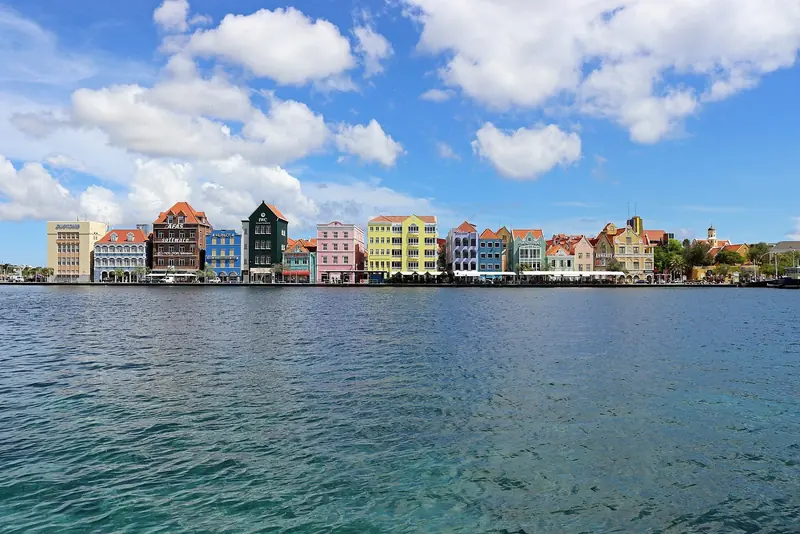
Around most of Bonaire dropping an anchor is not an option, only STINAPA's marked mooring buoys are, and the fine for getting it wrong starts at 500 dollars.
Bonaire's No-Anchor Rule
The whole coastline of Bonaire and Klein Bonaire, out to 60 metres depth, is protected as Bonaire National Marine Park and run by STINAPA, the Stichting Nationale Parken Bonaire, and the park's central rule is that anchoring is prohibited everywhere except for small traditional fishing boats under 4 metres using coral stones as anchors. Every other vessel uses one of STINAPA's public mooring buoys: yellow or blue day buoys capped at a two-hour stay for divers and day boats, and bi-colored overnight buoys set aside for visiting cruising yachts, which must be registered in advance at the Customs Office and Harbour Village Marina and are limited to 18 metres LOA for the length of the boat's visa.
Access to the park itself requires the STINAPA Nature Fee, a flat 40 dollars per person for a calendar year as of 2023, up from a split 25/45 dollar diver/non-diver rate before that and a 10/25 dollar rate before that, which funds the mooring network and ranger patrols. The payoff for the restriction is real: Scuba Diving Magazine's Readers Choice Awards have named Bonaire the Caribbean and Atlantic region's number one shore-diving destination for 29 consecutive years, with roughly 80-plus marked sites and 88 percent of them reachable straight off the beach, which is a genuinely unusual thing to be able to offer guests directly from a tender.
One Kingdom, Two Different Rulebooks
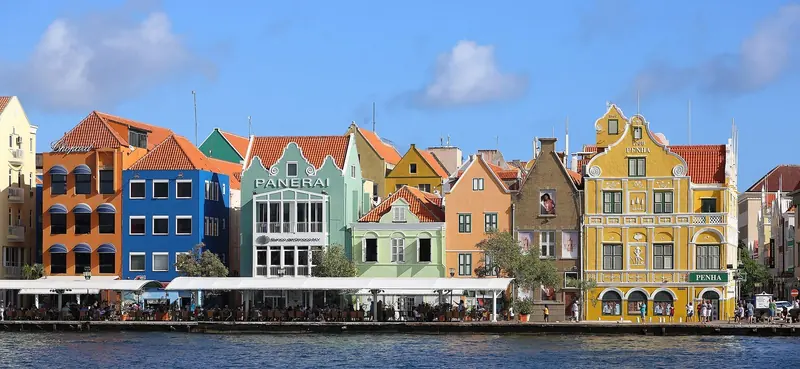
When the old Netherlands Antilles dissolved in October 2010, Bonaire, along with Saba and Sint Eustatius, became a special municipality of the Netherlands proper, similar in structure to an overseas territory rather than an independent state, and in 2011 it dropped the Netherlands Antillean guilder in favor of the US dollar, which is now its only currency. Curacao went the other way and became a fully autonomous country within the Kingdom, with its own parliament, tax system and border and customs control separate from both the Netherlands and from Bonaire.
For an owner this means two separate clearance processes about 30 nautical miles apart. Curacao issues an initial three-month stay to a visiting yacht on arrival, extendable to six months total through Customs unless the vessel is locally registered, and charges import duty of 11.5 percent of the CIF value plus 2 percent sales tax if a boat is actually being imported rather than just visiting. Bonaire's clearance runs through its own Customs Office, tied directly to the marine park's mooring registration described above, and because it is Dutch territory rather than a separate country, an EU-flagged or Dutch-linked vessel may find its paperwork simpler there than in autonomous Curacao.
South of the Hurricane Belt
Bonaire has recorded only four direct hurricane strikes since formal tracking began in 1871, a frequency Bonaire's tourism authority puts at roughly one direct hit every 38.5 years, compared with an average direct hit every 7 to 10 years for Puerto Rico or every 10 to 15 years for Jamaica, and near-annual threats for the Bahamas. Curacao's last major direct hit was in 1877, a storm still referred to locally as Orkan Grandi, and no hurricane has made direct landfall there since modern tracking began in the 20th century.
That does not mean nothing ever passes nearby. Hurricane Lenny in 1999 caused coral and beach erosion on Bonaire despite not making landfall, Hurricane Matthew passed roughly 50 miles north in 2016 with 110 mph winds and Hurricane Beryl went by about 75 miles north in 2024, so the islands are not entirely outside the wider Atlantic hurricane system, just well below the belt where storms most often make landfall. It is also why Curacao Marine markets its own yard explicitly on this point, positioning the island's position south of the hurricane belt as the reason to store an expensive yacht there.
Wind That Almost Never Stops
Wind on Bonaire runs from around 10 to 20 knots in the quieter months and 15 to 25-plus knots during the windier stretch from roughly February into August, and it is famously constant: the trade winds blow onshore essentially every day of the year, which is why Bonaire's Lac Bay is considered one of the best windsurfing and kitesurfing waters in the world and why sailing charter itineraries there rarely lose a day to calms.
Boat International's profile of a Curacao-based charter season describes trade winds of 12 to 20 knots and air temperatures around 29 Celsius through the December to April peak season, broadly consistent with the wider eastern Caribbean pattern of 15 to 20 knot northeast trades from November through April. For an owner the upside is dependable sailing wind almost year round with no risk of drifting into a windless afternoon, the downside is that anchorages exposed to the prevailing easterly, mostly the open west-facing roadsteads found on both islands, get a steady chop rather than dead calm water.
Getting Owners and Guests On and Off the Boat
Bonaire is served by Flamingo International Airport, BON, and Curacao by Hato, Curacao International Airport, CUR, both with direct scheduled service from Amsterdam, Miami and other US and regional gateways on carriers including KLM, TUI and various charter and regional lines. The two airports sit close enough together that inter-island flights, run by small carriers such as Divi Divi Air and EZ Air / Z Air alongside larger operators, take on the order of 20 to 40 minutes in the air, with total transfer time, including checking in and clearing arrivals, closer to an hour or more door to door.
That short hop matters for a two-island itinerary: guests can be flown into Curacao for a Willemstad start and depart from Bonaire's Flamingo Airport at the end of a charter, or vice versa, without a long repositioning flight. It is a meaningfully shorter and simpler logistics chain than islands where the nearest airport is a multi-hour ferry or flight away from the actual anchorage.
What This Actually Costs
The one firm, current, published figure is STINAPA's Nature Fee of 40 dollars per person per calendar year, unified in 2023 after years of a split diver/non-diver rate, 45/25 dollars before that and 25/10 dollars before that, which covers access to the entire marine park plus Washington Slagbaai National Park. One cruising-yacht account, published by Cruising World, reported paying around 10 dollars a night for a town mooring off Kralendijk, though that figure is dated and current overnight buoy fees for visiting yachts are not clearly published online, so it should be checked with the Customs Office or Harbour Village Marina before arrival.
On the Curacao side the one hard number available is regulatory rather than commercial: import duty of 11.5 percent of a vessel's CIF value plus 2 percent sales tax if a yacht is actually being imported into Curacao rather than just clearing in and out. Berth rates at Harbour Village Marina, Curacao Marine and Barbara Beach Marina, along with fuel bunkering prices, are supplied on request by the marina or a local yacht agent and are not listed publicly, which is normal for the region but worth flagging plainly rather than guessing at a number.
The Honest Downside
Bonaire's blanket anchoring ban is a genuine constraint, not a footnote: an owner cannot simply drop the hook in a pretty bay for lunch, everything runs through a registered mooring buoy system capped at 18 metres LOA for overnight stays, with only one true megayacht berth on the whole island, at Harbour Village Marina. That single mooring field off Kralendijk, while protected from most wind directions by Klein Bonaire, is still an open roadstead rather than an enclosed harbour, and boats are advised to move to a marina if the wind swings unusually.
Curacao spreads capacity better but each individual facility is modest by the standards of a Fort Lauderdale or an Antibes: Curacao Marine's own haul-out capacity tops out at 35 metres, Barbara Beach Marina has only 15 berths and Spanish Water, for all its virtues as a hurricane hole, is an anchorage rather than a marina. Both islands also sit somewhat apart from the rest of the charter Caribbean, a genuine multi-day passage from the Leewards or Venezuela's other cruising grounds, so an owner is choosing a self-contained two-island season rather than one stop on a longer island-hopping run.
What Is Not Published
None of Harbour Village Marina, Curacao Marine or Barbara Beach Marina publish a standing berth rate card for yachts in the size range this piece is aimed at; pricing is quoted per request based on length, season and power needs, which is standard for the region but does mean an owner cannot budget precisely without contacting the marina or an agent directly. Fuel prices at Bonaire and Curacao bunkering points are likewise not published and fluctuate with the same shipped-fuel economics that affect the wider southern Caribbean.
On the regulatory side, STINAPA's current overnight mooring fee for visiting cruising yachts, as opposed to the well-documented 40 dollar annual Nature Fee, is not clearly stated on the STINAPA website at the time of writing. The one figure available in the record, 10 dollars a night, comes from a single cruiser account rather than an official tariff and should be treated as indicative only, not current pricing.
على البر والوصول والحجز
| Getting there | Flamingo International Airport (Bonaire, BON) and Hato/Curacao International Airport (CUR), both with direct flights from Amsterdam, Miami and regional hubs; inter-island hop about 20 to 40 minutes. |
|---|---|
| Arriving by sea | Curacao: initial 3-month clearance via Customs and Ports Authority, extendable to 6 months. Bonaire: clearance through the Customs Office, linked to marine park mooring registration. |
| Where to moor or anchor | Bonaire: no anchoring almost anywhere, registered mooring buoys only, overnight visitor buoys capped at 18 metres LOA. Curacao: anchoring permitted at Spanish Water (about 100 boats, 5 zones) and other bays, plus marina berths. |
| Marinas for larger yachts | Harbour Village Marina, Bonaire (60 slips to 45m plus one 73m berth, 4.5m draft); Curacao Marine (largest haul-out 35m); Barbara Beach Marina (15 berths to 61m/200ft, 6m depth). |
| What it costs | STINAPA Nature Fee: 40 dollars per person per year. Curacao import duty if importing a vessel: 11.5 percent CIF plus 2 percent sales tax. Marina berth and fuel rates not published. |
| Hurricane-free season | Effectively low risk year round: Bonaire has had only 4 direct hurricane hits since 1871; Curacao's last major direct hit was in 1877. |
| Diving | Bonaire National Marine Park, ranked the world's number one shore-diving destination for 29 straight years by Scuba Diving Magazine, roughly 80-plus sites; Curacao has close to 70 sites. |
| Eating and ashore | Willemstad's UNESCO-listed Punda and Otrobanda districts, linked by the 1888 Queen Emma pontoon bridge; Kralendijk's compact waterfront on Bonaire. |
| What is not published | Superyacht berth rate cards, fuel prices and current overnight mooring fees for visiting yachts; all quoted directly by the marina, STINAPA or a local agent. |
ما يذكره الملاك والأطقم
A near-empty anchorage at the height of season
Captain Hans Robben of the Perini Navi sailing yacht Domicil, extended to about 30 metres in a rebuild, told Boat International it is rare and wonderful to be alone in an anchorage at the height of the Caribbean charter season, and pointed to Curacao's nearly 70 dive sites as the draw for guests who want more than the usual see-and-be-seen circuit.
Boat InternationalTown moorings cost about 10 dollars a night
A cruiser aboard the 39-foot steel cutter Moose, on a 10-year circumnavigation, described Kralendijk's mooring field as two or three dozen buoys along the waterfront using an unusual two-line configuration, paid at around 10 dollars a night, and noted flatly that anchoring is forbidden everywhere on the island.
Cruising World29 straight years as the world's top shore-diving destination
Bonaire has held the number one ranking in the Caribbean/Atlantic Shore Diving category of the Readers Choice Awards for 29 consecutive years, with 88 percent of its roughly 80-plus dive sites accessible directly from the beach.
Scuba Diving MagazineOnly four direct hurricane hits since 1871
Bonaire's tourism authority states the island has taken only 4 direct hurricane strikes since formal record-keeping began in 1871, a rate of roughly one every 38.5 years, far below Puerto Rico, Jamaica or the Bahamas over the same span.
Bonaire.com (Tourism Corporation Bonaire)Its position south of the hurricane belt is the whole business case
Curacao Marine, the 25,000 square metre yard in Willemstad's Schottegat harbour, markets itself explicitly on the island's location south of the hurricane belt as the reason it is a safe place to store an expensive yacht year round.
Superyacht Services Guide
نقاط القوة وما يستدعي الانتباه
نقاط القوة
- Genuinely hurricane-free cruisingBonaire has recorded only 4 direct hurricane strikes since 1871 and Curacao's last major hit was in 1877, both far below the frequency of the northern Caribbean.
- World-class diving off the transomScuba Diving Magazine has ranked Bonaire the Caribbean and Atlantic's top shore-diving destination for 29 consecutive years, with about 80-plus marked sites.
- A genuinely uncrowded charter groundBoat International describes the fleet serving Curacao and Bonaire as only around 10 yachts, a fraction of the traffic in the BVI or Bahamas at the same time of year.
- Real megayacht infrastructure existsHarbour Village Marina in Bonaire has a dedicated berth for yachts up to 73 metres LOA with a 4.5 metre draft, a genuine anchor point for a large vessel.
- A simple currency for US ownersBonaire has used the US dollar as its sole currency since 2011, removing exchange-rate friction that exists almost everywhere else in the Caribbean.
ما يستدعي الانتباه
- No freedom to anchor around BonaireAnchoring is banned almost everywhere on the island, funnelling every yacht onto a registered mooring buoy, with fines starting at 500 dollars for non-compliance.
- One open roadstead, not a harbourBonaire's Kralendijk mooring field is protected from most wind angles by Klein Bonaire but is still exposed water, not an enclosed anchorage, so boats must relocate in unusual winds.
- Limited big-yacht yard capacityCuracao Marine's own listing caps its largest haul-out at 35 metres, so major refit work above that size has to go elsewhere in the region.
- Two separate regulatory systemsBonaire (Dutch special municipality, US dollar) and Curacao (autonomous country, own currency and customs regime) require two different clearance processes only 30 nautical miles apart.
- No published pricingBerth rates, fuel prices and current visiting-yacht mooring fees are not published by any of the marinas or STINAPA, so budgeting requires a direct enquiry every time.
لمين هو: An owner who wants a hurricane-free, diving-led season with genuinely uncrowded anchorages, and who is prepared to work within Bonaire's strict no-anchor mooring system and Curacao's separate customs regime rather than expecting Antibes-style marina infrastructure.