Costa Brava & Barcelona
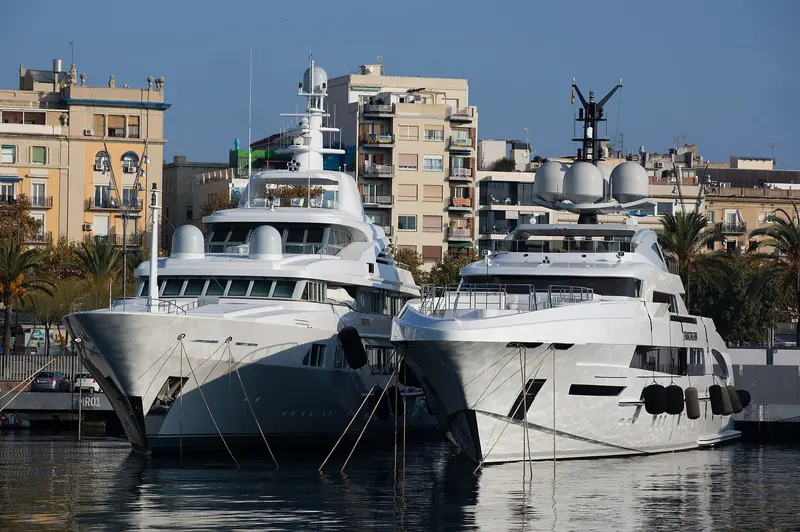
| Region | the Catalan coast from Barcelona north to the French border, about 100 nautical miles of Costa Brava plus the city |
|---|---|
| Distances | Barcelona to Palamos about 55 nautical miles, to Cadaques about 90, and Mallorca about 110 miles east |
| OneOcean Port Vell | moorings for more than 150 yachts with a maximum LOA of 190 m, at the foot of the Ramblas |
| Its dedicated superyacht quay is 440 m long, the longest in the world | |
| The marina has sold a 160 m berth on a lease running to 2036, which is how the largest places actually trade | |
| MB92 Barcelona | 126,500 sq m, refit capacity for vessels up to 200 m |
| Its 4,800 tonne shiplift is the largest dedicated to superyachts worldwide and takes up to nine yachts of up to 115 m on 30,000 sq m of hardstanding | |
| The yard also runs a 2,000 tonne syncrolift, a 220 m dry dock, berthing for 14 yachts to 220 m and a 150 tonne travel lift | |
| MB92 is investing more than EUR 40 million between 2026 and 2028, including a 680 tonne telescopic travel lift for yachts to 55 m | |
| Royal Decree 191/2026, published 11 March 2026, set a general ban on anchoring over seagrass meadows in Spanish Mediterranean waters | |
| The ban covers Posidonia oceanica and Cymodocea nodosa, and the Generalitat de Catalunya publishes a marine habitats map to check against | |
| Buoy fields on this coast include El Cargol de l'Escala and Cala Montgo, with a basket booking allowing several buoys on one payment | |
| Cap de Creus Natural Park | management plan renewed by Order TER/130/2025, published 30 July 2025, regulating navigation, anchoring and diving |
| Medes Islands | a mooring system rather than free anchoring, with controlled diver numbers, a mile off L'Estartit |
| Matriculation tax | 12 per cent of yacht value on vessels over 8 m used by residents of Spain, with the flag not decisive |
| Exemption applies to yachts used exclusively for professional commercial charter, registered with the Direccion General de la Marina Mercante and the tax authority | |
| Charter VAT in Spain is 21 per cent with the appropriate Spanish charter licence, the highest headline rate in the western Mediterranean | |
| A non EU flagged yacht must also evidence that import and VAT obligations have been met | |
| Wind | the tramuntana, a hard dry northerly out of the Pyrenees, can blow 40 knots and more for three or four days, worst around Cap de Creus, Roses and Cadaques |
| Season | June to October, with June and September the best months for water, space and weather |
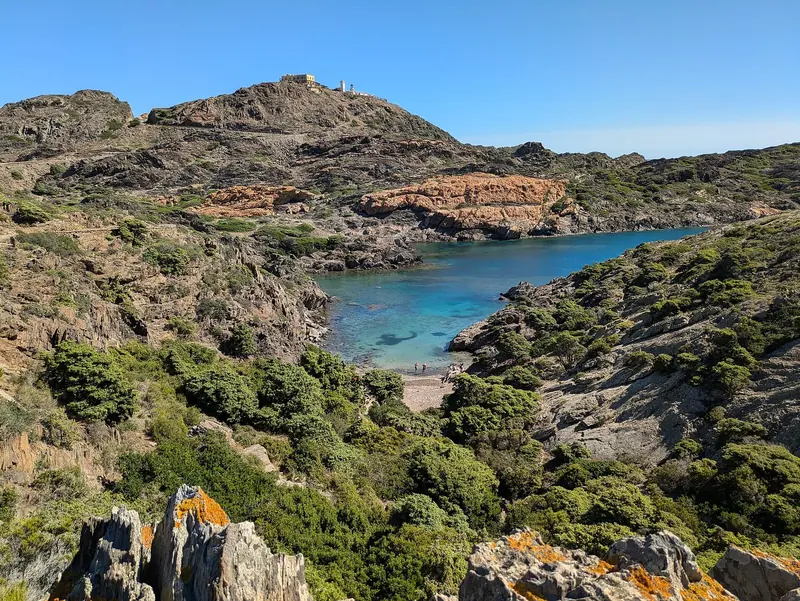
| The coves | Aiguablava, Tamariu, Sa Riera, Sa Tuna and the Formigues islands are the best of the coast, and none of the ports takes real size |
| Empuriabrava behind Roses is a canal development with about 25 km of navigable waterway | |
| Air | Barcelona El Prat is 15 to 20 minutes from Port Vell with long haul and year round European traffic, Girona is an hour from the middle of the coast |
A city at one end and a hundred miles of coves at the other
The Costa Brava runs from Blanes, about 35 nautical miles north east of Barcelona, to the French border at Portbou, roughly a hundred miles of coast that alternates between pine covered headlands, granite coves and a handful of towns. Cap de Creus at the northern end is the last spur of the Pyrenees running into the sea and the most dramatic part of it. South of Blanes the coast flattens into the beaches of the Maresme and then into Barcelona itself.
The distances work well for a fortnight. Barcelona to Palamos is about 55 miles, to Cadaques about 90, and Mallorca is roughly 110 miles east across open water, which makes a Balearic leg a comfortable overnight. Most owners use the city as the base and the coast as the cruising, which is the right way round, because the Costa Brava has anchorages and small ports but nothing that takes real size, and Barcelona has everything.
OneOcean Port Vell is the reason a big boat comes
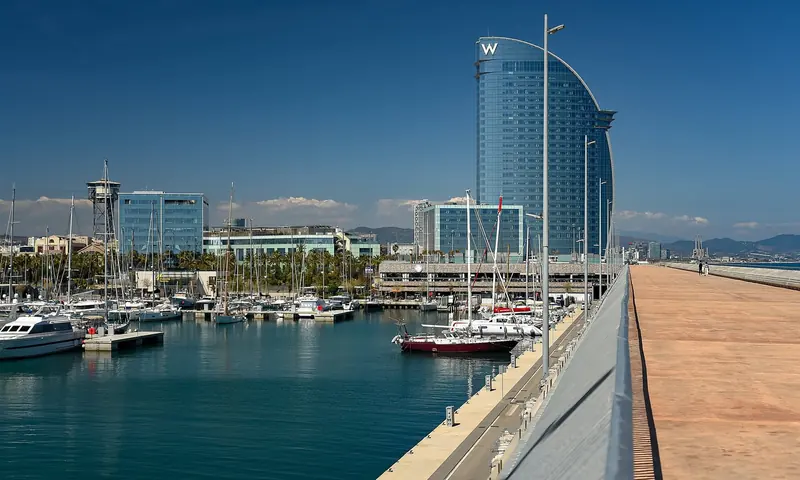
Port Vell sits at the foot of the Ramblas, inside the city rather than beside it. The marina holds moorings for more than 150 yachts with a maximum length of 190 metres, and its dedicated superyacht quay, at 440 metres, is the longest in the world. Berths here trade as long leases rather than nightly bookings at the top end, and the marina announced the sale of a 160 metre berth on a lease running to 2036, which is the clearest signal of how the largest places actually change hands.
Around it the city has filled in the rest of the range. Marina Vela sits on the other side of the harbour by the Barceloneta beach, and Port Olimpic was rebuilt for smaller craft and public use. What none of them offer is quiet. A berth at Port Vell puts the boat inside a working city of 1.6 million people with a cruise terminal, a commercial port and a beach a walk away, which is exactly what some owners want and exactly what others do not.
A 190 metre berth in the middle of a city, the largest superyacht refit yard in the world a mile away, and a national anchoring ban over seagrass since March 2026.
MB92 is the other half of the argument
A mile across the harbour, MB92 Barcelona is the largest superyacht refit operation in the world and the real reason a fleet winters here. The yard covers 126,500 square metres, works vessels up to 200 metres, and runs a 4,800 tonne shiplift, the largest dedicated to superyachts anywhere, which takes up to nine yachts of up to 115 metres onto 30,000 square metres of hardstanding with full shore services. Alongside it sit a 2,000 tonne syncrolift, a 220 metre dry dock, berthing for 14 yachts to 220 metres and a 150 tonne travel lift.
It is still growing. MB92 has committed more than EUR 40 million between 2026 and 2028, including a new 680 tonne telescopic travel lift serving five hardstanding spaces for yachts up to 55 metres, which is the size band the yard has historically been weakest in. For an owner the practical consequence is that Barcelona is the one place on this coast where a berth, a shipyard, an international airport and a city are inside the same three miles.
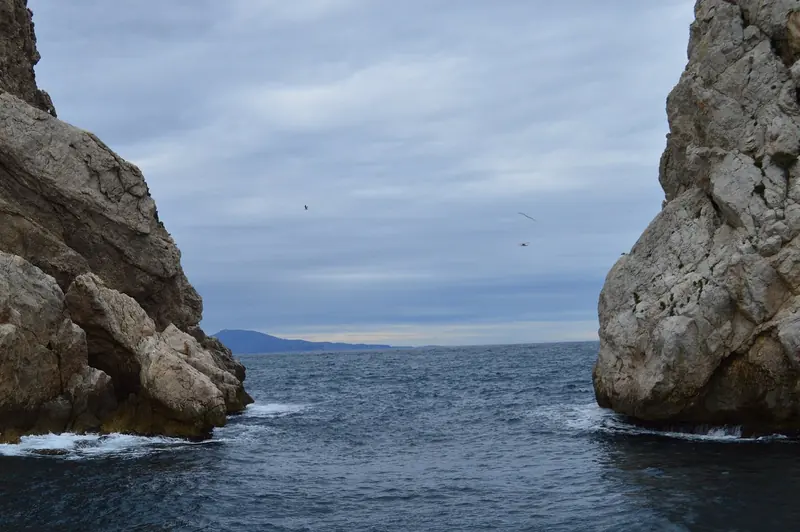
Royal Decree 191/2026 rewrote anchoring in Spain
On 11 March 2026 Spain published Royal Decree 191/2026, establishing the legal framework for the protection, conservation and restoration of seagrass meadows in Spanish Mediterranean waters. Its central measure is a general prohibition on anchoring vessels over those meadows, covering Posidonia oceanica and Cymodocea nodosa. This is not a Balearic rule extended, it is a national one, and it applies along the whole Catalan coast including the coves the Costa Brava is famous for.
In practice it means the crew reads the seabed before the anchor goes down. The Generalitat de Catalunya publishes a marine habitats viewer that maps the meadows, and that map is now part of passage planning rather than a curiosity. Where a bay is grassed, the answer is a buoy: fields are laid at El Cargol de l'Escala and Cala Montgo among others, and the operators have introduced a basket booking so several buoys can be reserved on a single payment. An owner who plans a Costa Brava fortnight on the assumption that a sandy looking cove can be anchored in is planning against the law.
The parks at the northern end have their own rules
Cap de Creus is a natural park covering land and sea, and its management plan was renewed by Order TER/130/2025, published in the official gazette of the Catalan government on 30 July 2025, which sets the guidelines for conservation, public use and permitted activity across the park including its waters. Navigation, anchoring and diving are all regulated inside it, and anchoring over seagrass is prohibited. The park is also the most exposed water on the coast, which limits when a boat can enjoy it.
The Medes Islands, a mile off L'Estartit and inside the Montgri, Medes Islands and Baix Ter park, are the other regulated spot and the best diving in Catalonia, with a mooring system rather than free anchoring and controlled diver numbers. Between the two parks the coast is open, but the seagrass rule follows the boat everywhere. The workable pattern is buoys and short stops in the protected water, and anchoring on clean sand outside it.
The coves, and what the coast actually looks like
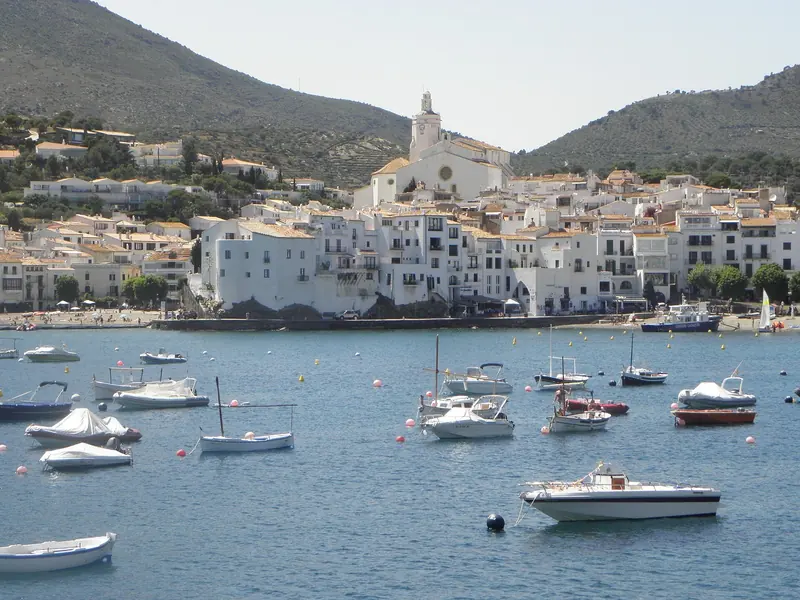
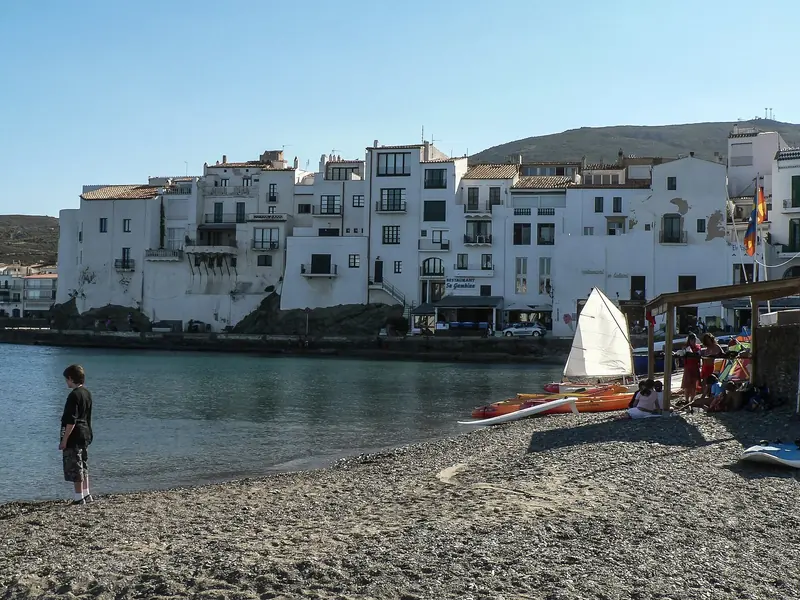
Cadaques at the northern end is the one town everybody remembers, whitewashed and slate paved on a bay under Cap de Creus, with Dali's house at Portlligat around the headland. South of it Roses has the largest bay on the coast and Empuriabrava behind it is a grid of canals with 25 kilometres of navigable waterway and houses on both sides. L'Escala sits on Greek and Roman ruins at Empuries. Then comes the best of the coast: Aiguablava, Tamariu, Sa Riera, Sa Tuna and the Formigues islands, a run of small coves between headlands of pine and red rock.
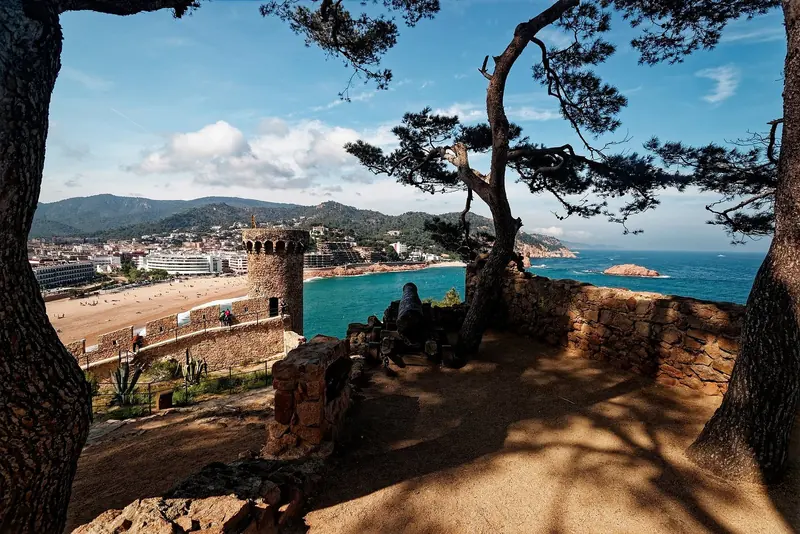
The working ports are Palamos, which lands the prawns the region is known for, Port d'Aro, Blanes and Sant Feliu de Guixols. None of them takes a large yacht, and that is the honest shape of a Costa Brava cruise: a big boat lies off or stays at Port Vell and Port Ginesta, and the coves are a tender operation. Boats up to about 30 metres have the run of the coast. Above that it narrows quickly.
The tramuntana is the wind that plans your week
The Emporda plain funnels a hard, dry northerly out of the Pyrenees called the tramuntana, and it is the defining weather of the northern Costa Brava. It can blow 40 knots and more for three or four days at a time, it is at its worst around Cap de Creus, Roses and Cadaques, and it arrives in a clear sky with no warning weather to precede it. It is most frequent from autumn through spring but it appears in summer too, and it is why the northern anchorages are day stops rather than places to sit out a blow.
The rest of the season is gentler. Summer runs a light thermal sea breeze in the afternoon, the water is swimmable from June to October, and July and August bring both the Spanish and the French holidays onto a coast with limited berthing. June and September are the right months, and September in particular has warm water, empty coves and a city that has stopped being a tourist camp for a few weeks.
The Spanish tax position, which is the local trap
Spain charges an impuesto de matriculacion, a matriculation tax of 12 per cent of the value of the yacht, on vessels over eight metres used by individuals or companies resident in Spain. The flag is not decisive. What matters is who uses the boat and where. A yacht used exclusively for professional commercial charter is exempt, provided the owner is properly registered as a charter operator with the Direccion General de la Marina Mercante and with the tax authority, and that registration is a process rather than a formality.
On top of it, a charter starting in Spain carries VAT at 21 per cent where the yacht holds the appropriate Spanish charter licence, which is the highest headline charter rate in the western Mediterranean and materially above Malta's 12 or Greece's 13. A non EU flagged yacht additionally has to be able to show that its import and VAT obligations have been met. None of this is difficult with a Spanish fiscal adviser in place before arrival, and all of it is expensive to discover afterwards.
Getting guests in, and the city they land in
Barcelona El Prat is one of the busiest airports in Europe, with long haul and full year European traffic and a private aviation terminal, and it is fifteen to twenty minutes from Port Vell outside the rush. Girona is an hour from the middle of the Costa Brava and handles low cost European traffic, and Perpignan across the French border serves the far north. For guests joining on the coast rather than in the city, Girona is the shorter transfer even though Barcelona has the better flights.
What guests get is the strongest city on any Mediterranean cruising ground. Gaudi's Sagrada Familia and Park Guell, the Gothic Quarter, the Boqueria market, a restaurant scene at every level and a beach at the end of the marina. Inland, Girona is an hour away and El Celler de Can Roca is in it. At the northern end the Dali house at Portlligat and the museum at Figueres make an afternoon. Very little of this is available from a yacht anywhere else in the Mediterranean.
The honest downside, and what is not published
Barcelona is a city berth, with the noise, the traffic and the visibility that implies, and the Costa Brava behind it cannot berth a large yacht at all. The tramuntana takes days out of a fortnight at the northern end. The Spanish tax and licensing position is the most demanding in the western Mediterranean and it catches owners who assumed a foreign flag settled the question. And since March 2026 the anchoring that used to make the coast easy now depends on a seagrass map.
Checked in August 2026, neither OneOcean Port Vell nor Marina Vela publishes a superyacht rate card, and the largest berths change hands as leases rather than nightly rates, so a season cannot be priced from public information. MB92 publishes its capacity in detail and its day rates not at all. The Costa Brava buoy fields publish their existence but not a consolidated fee table. And nothing published tells an owner how much of the 440 metre superyacht quay is free in a given month, which is the only number that matters when the boat is 100 metres long.
على البر والوصول والحجز
| Getting there | Barcelona El Prat is one of Europe's busiest airports, carries long haul and year round European schedules and has a private aviation terminal, fifteen to twenty minutes from Port Vell outside the rush hour. Girona handles low cost European traffic and is about an hour from the middle of the Costa Brava, which makes it the shorter transfer for guests joining on the coast. Perpignan across the French border serves the far north. Fast trains connect Barcelona to Madrid, Paris and the rest of Spain, and the coastal road is slow in August. |
|---|---|
| Where the boat berths | OneOcean Port Vell takes yachts to 190 metres across moorings for more than 150 boats, on a 440 metre dedicated superyacht quay, in the middle of the city at the foot of the Ramblas. Marina Vela sits across the harbour by Barceloneta and Port Olimpic was rebuilt for smaller craft. On the Costa Brava itself the ports at Palamos, Port d'Aro, Blanes, Sant Feliu de Guixols and Roses take boats rather than superyachts, and Port Ginesta south of the city is the practical overflow. Above about 30 metres the coast is a tender operation. |
| Refit and technical support | MB92 Barcelona works vessels to 200 metres on a 126,500 square metre site with a 4,800 tonne shiplift, the largest dedicated to superyachts in the world, taking up to nine yachts of up to 115 metres onto 30,000 square metres of hardstanding. It also runs a 2,000 tonne syncrolift, a 220 metre dry dock, berthing for 14 yachts to 220 metres and a 150 tonne travel lift, with more than EUR 40 million of investment committed between 2026 and 2028 including a 680 tonne telescopic travel lift for hulls to 55 metres. |
| Where you may anchor now | Royal Decree 191/2026 of 11 March 2026 imposes a general ban on anchoring over seagrass meadows in Spanish Mediterranean waters, covering Posidonia oceanica and Cymodocea nodosa. Check the Generalitat de Catalunya marine habitats viewer before planning a cove, use the buoy fields where they exist, including El Cargol de l'Escala and Cala Montgo, and note that the operators now allow several buoys to be reserved on a single payment. Inside Cap de Creus and the Medes Islands parks, navigation, anchoring and diving are separately regulated. |
| The tax questions to settle before arrival | Spain charges a 12 per cent matriculation tax on the value of a vessel over eight metres used by an individual or company resident in Spain, and the flag of the yacht is not decisive. The exemption for professional commercial charter requires registration as a charter operator with the Direccion General de la Marina Mercante and the tax authority. Charter VAT is 21 per cent where the yacht holds a Spanish charter licence. A non EU flagged yacht must also evidence that import and VAT obligations have been met. Appoint a Spanish fiscal adviser before the boat arrives, not after. |
| The coast worth cruising | Cadaques under Cap de Creus with Dali's house at Portlligat, Roses and the canals of Empuriabrava, L'Escala on the Greek and Roman ruins at Empuries, then the run of coves between Begur and Palamos: Aiguablava, Tamariu, Sa Riera, Sa Tuna and the Formigues islands. The Medes Islands off L'Estartit are the diving. Palamos lands the prawns the region trades on. It is a coast of short hops and small coves rather than of long passages, and it suits a boat that can lie off and run a tender. |
| The wind that decides the week | The tramuntana funnels out of the Pyrenees across the Emporda plain and blows hard, dry and northerly, reaching 40 knots and more for three or four days at a time. It is worst at Cap de Creus, Roses and Cadaques, arrives under a clear sky, and is most frequent from autumn to spring though it appears in summer. Treat the northern anchorages as day stops rather than places to sit out weather, and build an itinerary that can retreat south to Palamos or Barcelona. |
| Ashore | Barcelona is the strongest city on any Mediterranean cruising ground: Gaudi at the Sagrada Familia and Park Guell, the Gothic Quarter, the Boqueria market, a full restaurant range and a beach at the end of the marina. Girona is an hour inland with El Celler de Can Roca in it. At the northern end the Dali house at Portlligat and the museum at Figueres fill an afternoon, and Empuries has Greek and Roman ruins on the beach. Provisioning and technical supply in Barcelona are as good as anywhere in the Mediterranean. |
| What is NOT published | Checked in August 2026, neither OneOcean Port Vell nor Marina Vela publishes a superyacht rate card, and the largest berths trade as long leases rather than nightly rates, so a Barcelona season cannot be priced from public sources. MB92 publishes its capacity in unusual detail and its day rates not at all. The Costa Brava buoy fields publish their existence but no consolidated fee table by length. No marina here publishes a fuel price. And nothing tells an owner how much of the 440 metre superyacht quay is free in any given month. |
ما يذكره الملاك والأطقم
The top berths here are leases, not nightly bookings
OneOcean Port Vell announced the sale of a 160 metre superyacht berth in a direct deal with a lease running until 2036, which is how the largest places in the marina change hands. The marina holds moorings for more than 150 yachts with a maximum length of 190 metres and its dedicated superyacht quay, at 440 metres, is the longest in the world. An owner looking for a 100 metre berth for a fortnight in August is competing for whatever the leaseholders have not taken.
OneOcean Port Vell, reported by Boat InternationalThe refit capacity here is a different order from the rest of the Mediterranean
MB92 Barcelona works vessels up to 200 metres across 126,500 square metres, with a 4,800 tonne shiplift that is the largest dedicated to superyachts in the world and takes up to nine yachts of up to 115 metres onto 30,000 square metres of hardstanding, alongside a 2,000 tonne syncrolift, a 220 metre dry dock, berthing for 14 yachts to 220 metres and a 150 tonne travel lift. A further EUR 40 million is committed between 2026 and 2028, including a 680 tonne telescopic travel lift for hulls to 55 metres.
MB92, reported by SuperyachtNews and Marine Industry NewsSpain banned seagrass anchoring nationally in March 2026
Royal Decree 191/2026, published on 11 March 2026, established the legal framework for protecting, conserving and restoring seagrass meadows in Spanish Mediterranean waters, with a general prohibition on anchoring over them covering Posidonia oceanica and Cymodocea nodosa. Catalan operators direct crews to the Generalitat de Catalunya marine habitats viewer to check a cove before arrival, and buoy fields such as El Cargol de l'Escala and Cala Montgo now take the traffic, with a basket booking allowing several buoys on one payment.
Boletin Oficial del Estado, reported by Port Roses and Nautic EscalaThe matriculation tax turns on use, not on flag
Spanish practitioners are consistent that the 12 per cent impuesto de matriculacion attaches to vessels over eight metres used by individuals or companies resident in Spain, that the flag of the vessel is not decisive, and that the exemption for professional commercial charter requires the owner to be properly registered as a charter operator with the Direccion General de la Marina Mercante and with the tax authority. A non EU flagged yacht must additionally evidence that its import and VAT obligations have been met.
Almar Lawyers and Nautica LegalNothing on this coast publishes what a large yacht pays
Checked in August 2026, neither OneOcean Port Vell nor Marina Vela publishes a superyacht rate card, no marina on the Costa Brava publishes a fuel price, and MB92 publishes its capacity in detail while publishing no day rates. No independent published owner or captain account of superyacht service standards at Port Vell could be found. An owner pricing a Barcelona season is working from a quotation and a lease negotiation rather than from anything public.
Yotters desk, checked August 2026
نقاط القوة وما يستدعي الانتباه
نقاط القوة
- A 190 metre berth in the middle of a major cityOneOcean Port Vell holds moorings for more than 150 yachts at the foot of the Ramblas, with the longest dedicated superyacht quay in the world at 440 metres.
- The largest superyacht refit yard on earth is a mile awayMB92 works hulls to 200 metres with a 4,800 tonne shiplift, a 2,000 tonne syncrolift, a 220 metre dry dock and berthing for 14 yachts to 220 metres, and is spending EUR 40 million more by 2028.
- Berth, yard, airport and city inside three milesEl Prat carries long haul and year round European traffic fifteen minutes from the pontoon, which makes Barcelona a genuine winter base rather than a summer stop.
- A hundred miles of coves behind the cityAiguablava, Tamariu, Sa Riera, the Formigues islands and Cadaques under Cap de Creus, all within a comfortable day of the base.
- The strongest shore side of any Mediterranean cruising groundGaudi, the Gothic Quarter, the Boqueria, Girona an hour inland with El Celler de Can Roca in it, and the Dali house at Portlligat at the northern end.
ما يستدعي الانتباه
- Anchoring is now a legal question everywhere in SpainRoyal Decree 191/2026 banned anchoring over seagrass in Spanish Mediterranean waters from 11 March 2026, so a cove is checked against a habitat map before the hook goes down.
- The Costa Brava cannot berth a large yachtPalamos, Roses, Blanes, Sant Feliu and Port d'Aro take boats rather than superyachts. Above about 30 metres the coast is a tender cruise off a Barcelona base.
- The Spanish tax position is the most demanding in the western MediterraneanA 12 per cent matriculation tax on vessels over eight metres used by Spanish residents, with the flag not decisive, and 21 per cent charter VAT, the highest headline rate in the region.
- The tramuntana removes days at a timeForty knots and more for three or four days out of a clear sky, worst exactly where the best scenery is, around Cap de Creus, Roses and Cadaques.
- A city berth is a city berthTraffic, noise, a cruise terminal, a commercial port and complete public visibility. Port Vell is spectacular and it is the opposite of an anchorage.
لمين هو: An owner who wants a city rather than a bay, needs the refit yard and the airport in the same place as the berth, and treats the Costa Brava as a tender cruise off a Barcelona base rather than as a berthing ground in its own right.