Dominica, the Nature Island
| Location | between Martinique (about 32 nm south) and Guadeloupe (about 17 nm north via the Iles des Saintes), in the Windward Islands |
|---|---|
| Island size | 751 square kilometres, the most mountainous island in the Eastern Caribbean, highest peak Morne Diablotins at 1,447 m |
| Rainfall | about 1,800 mm a year on the leeward west coast against over 5,000 mm on the windward east, and up to 9,000 mm on the wettest interior mountainsides |
| Prince Rupert Bay (Portsmouth) | 10 to 20 m over sand and mud in the main anchorage, with the roughly 40-strong PAYS mooring field in a shallower 4.5 to 12 m patch nearer shore |
| Roseau anchorage | 15 to 25 m over sand and coral, steep-to and more exposed than Portsmouth, with long-period swell that can make for an uncomfortable night |
| PAYS (Portsmouth Association of Yacht Security): a cooperative of local guides formed in the mid-2000s, running nightly security patrols funded largely by its own Sunday and Wednesday beach barbecues | |
| PAYS mooring fee | reported between about USD 10 and 12 a night; contact is by VHF channel 16 |
| No marina, haul-out or rigging facility exists anywhere on the island; the closest thing is a small dock at the Dominica Marine Center in Roseau, capacity around 40 ft LOA | |
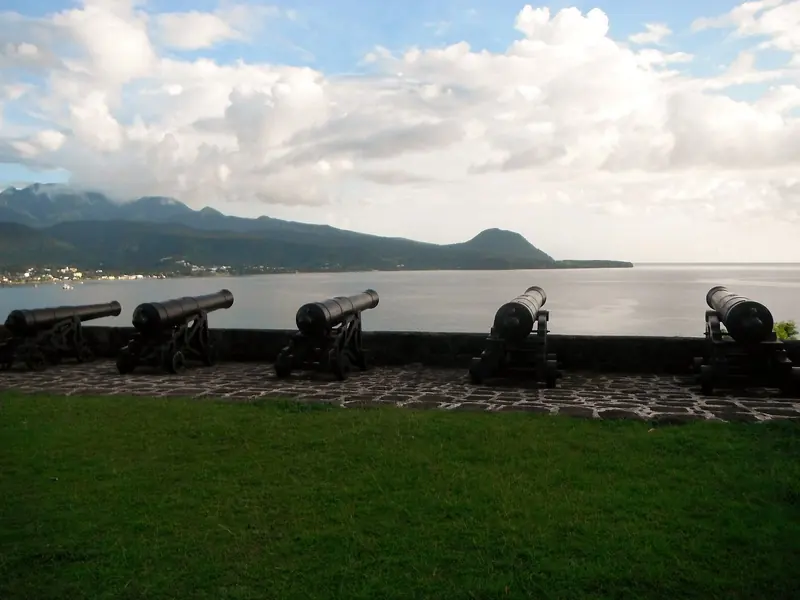
| Cabrits National Park and Fort Shirley | a British garrison built 1770 to 1815, restored from the 1980s by historian Lennox Honychurch; Forestry Site Pass USD 5 a day, USD 12 a week, USD 40 a year |
| Sperm whales are resident year-round off the west coast, with the closest and most reliable sightings November to March; a 788 sq km sperm-whale marine reserve, the first of its kind anywhere, was announced in November 2023 | |
| Soufriere-Scotts Head Marine Reserve dive and snorkel fee: USD 2 per person per site, covering Champagne Reef and Scott's Head | |
| Kalinago Territory | a 3,700-acre reserve on the east coast, home to about 3,000 Kalinago people, renamed from Carib Territory in 2015 |
| Boiling Lake | the world's second-largest boiling lake, reached by a demanding 6 to 8 hour, 3,000 ft round trip through the Valley of Desolation |
| Hurricane Maria, 18 September 2017 | Category 5 landfall, about 98 percent of buildings damaged, an estimated USD 1.3 billion in damage and losses; visitor arrivals had rebounded 95 percent year on year by the final quarter of 2018 |
| SailClear pre-arrival notification carries a USD 25 annual subscription fee since 1 May 2024, separate from the in-person clearance fee | |
The Nature Island, Between Two Bigger Names
The island is small, 751 square kilometres, but its interior rises to Morne Diablotins at 1,447 m, and the rainfall gradient across that spine is genuinely extreme: about 1,800 mm a year on the drier leeward west coast, where Portsmouth and Roseau both sit, against more than 5,000 mm on the windward east and as much as 9,000 mm on the wettest interior mountainsides, among the highest rainfall totals recorded anywhere on earth. That terrain is also why the island's name in the yachting world is not really about a marina at all: there is almost nowhere flat enough, or shallow enough close to shore, to build one.
Dominica sits about 32 nm south of Martinique and roughly 17 nm south of Guadeloupe's Iles des Saintes, squarely inside the standard route between the two French islands rather than a detour from it. Its steep-to volcanic profile shows up immediately in the anchorages: Roseau's water goes from great depth to a workable 15 to 25 m only close inshore, and even Prince Rupert Bay, the calmer of the island's two ports of entry, still runs 10 to 20 m over most of its width.
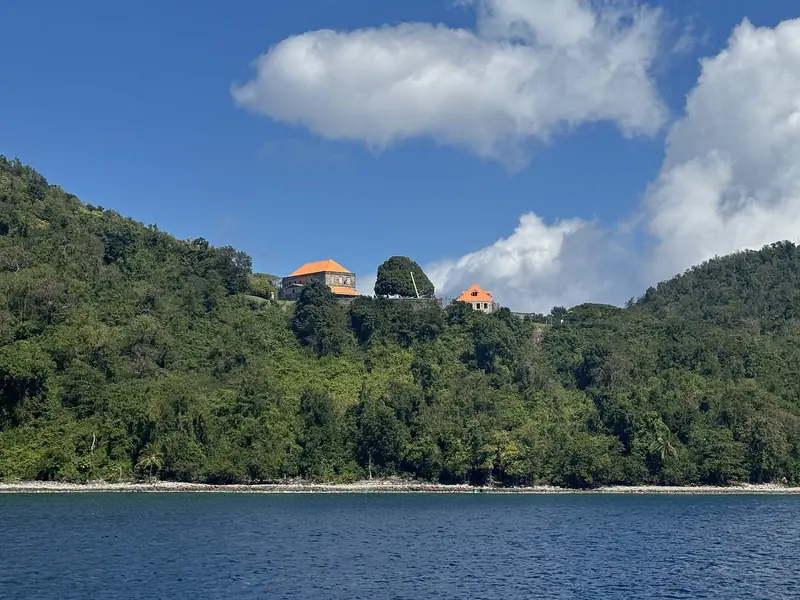
PAYS: the Cooperative That Rebuilt Portsmouth's Reputation
The Portsmouth Association of Yacht Security formed out of a real, documented problem. A Caribbean Compass report from October 2006 logged 24 reported incidents against yachts over a three-and-a-half-year period, including seven officially reported dinghy thefts in 2006 alone, word-of-mouth estimates closer to twenty, and at least one armed robbery that put a skipper in hospital. Sources differ on the exact founding year, 2005 or 2007, but the response was the same either way: local Indian River tour guides organised into a cooperative running a nightly radio net and boat patrol, funded substantially by Sunday and Wednesday West Indian barbecues open to every cruiser in the bay.
Today PAYS manages roughly 40 moorings off its own pavilion and dinghy dock on Purple Turtle Beach, monitors VHF channel 16 around the clock, and offers customs escort, garbage collection, ice, laundry, fuel and water arrangement and tour bookings on top of the security patrol itself, at a reported USD 10 to 12 a night per mooring. The reputation it has built is close to universal in current cruiser reporting, though a January 2025 Cruisers Forum thread flagged a run of mooring failures and advised visually checking the assigned mooring rather than trusting it blind, a useful, current caveat rather than a reason for concern.
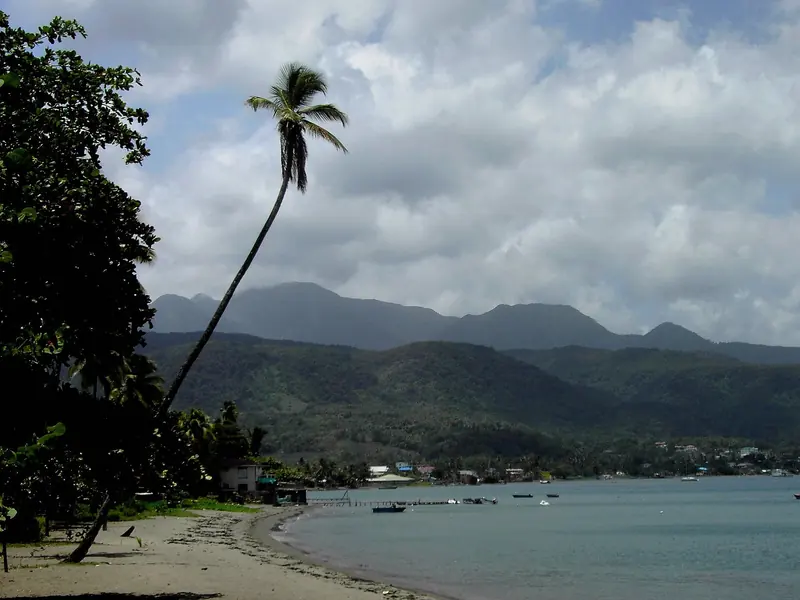
PAYS was not built to add a service. It was built to fix a documented run of dinghy thefts and at least one armed robbery that put a skipper in hospital, and every current cruiser account treats it as one of the best-run anchorages anywhere in the Caribbean.
What There Is Instead of a Marina
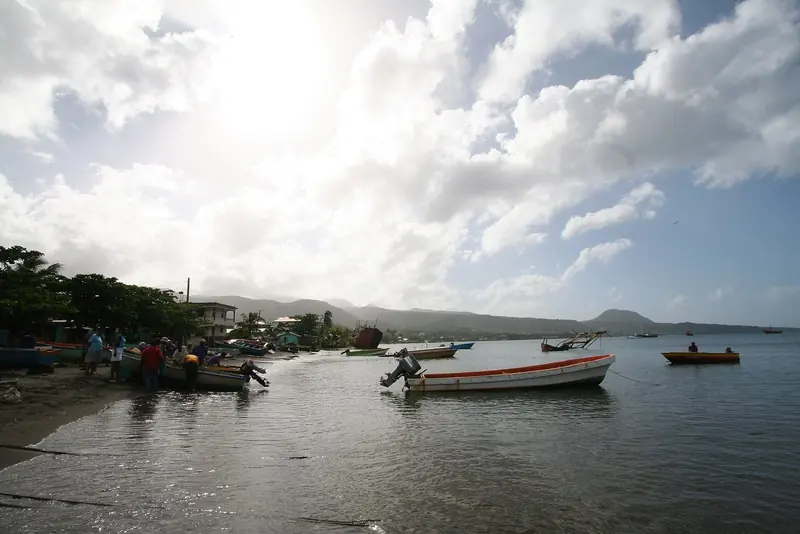
Prince Rupert Bay is the primary anchorage and a port of entry, with the PAYS mooring field sitting in a shallower 4.5 to 12 m patch near shore inside a wider bay running 10 to 20 m over sand and mud with good holding once dug in. Roseau, the capital and the island's other port of entry, is deeper and steeper-to at 15 to 25 m over sand and coral, more exposed, with long-period swell that more than one source describes as making for an uncomfortable night. The closest thing to a marina anywhere on Dominica is the small Dominica Marine Center dock in Roseau, with water depth of 14 to 17 ft alongside and a reported practical capacity around 40 ft LOA and 7 ft draft.
There is no haul-out facility, no rigging or sail loft, and no authorised major-engine dealer presence on the island; mechanical and electrical work is limited to small local workshops, and specialised parts have to be imported. None of this makes Dominica a bad stop. It makes it, honestly, a place to visit rather than to base a large yacht: the infrastructure simply was not built for anything beyond a moderate-size cruising boat, and every independent source checked for this page agrees on that without qualification.
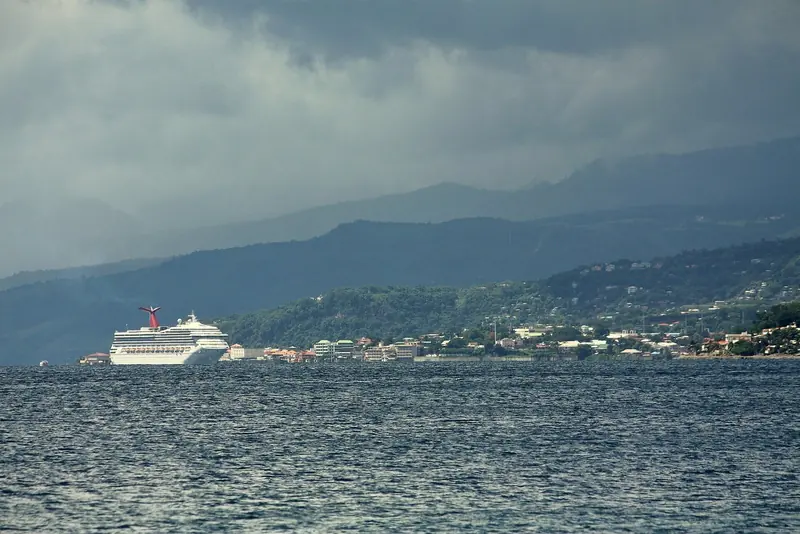
Sperm Whales, Year-Round, Close Enough to See From a Tender
Matrilineal family pods of sperm whales, mothers, calves and related females, live off Soufriere and Scott's Head year-round rather than migrating through, a genuine rarity anywhere in the world, and the closest, most reliable sightings run November through March, before transient breeding males arrive from late December and can pull resident females further offshore. In November 2023 Dominica announced a 788 square kilometre marine reserve on the west coast, the first in the world built around sperm whales specifically, protecting habitat for an estimated 200 whales in about 35 family groups and restricting vessel corridors to cut noise and strike risk.
The same southwest coast carries the island's other marine draw, the Soufriere-Scotts Head Marine Reserve, home to Champagne Reef, named for volcanic gas bubbling up through the sand, an easy site for snorkellers as well as divers. Reserve fees are USD 2 per person per site, paid to wardens or bundled into a dive operator's package, and moorings are maintained by the reserve and local dive operators specifically so boats do not anchor on the reef itself.
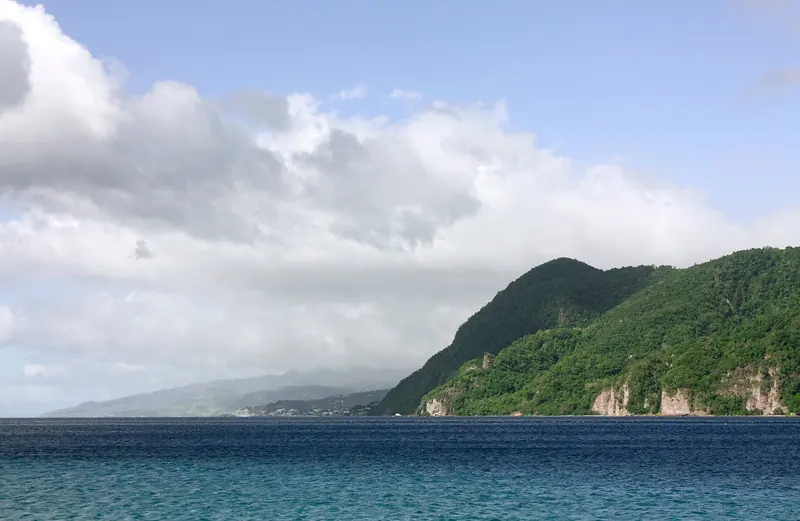
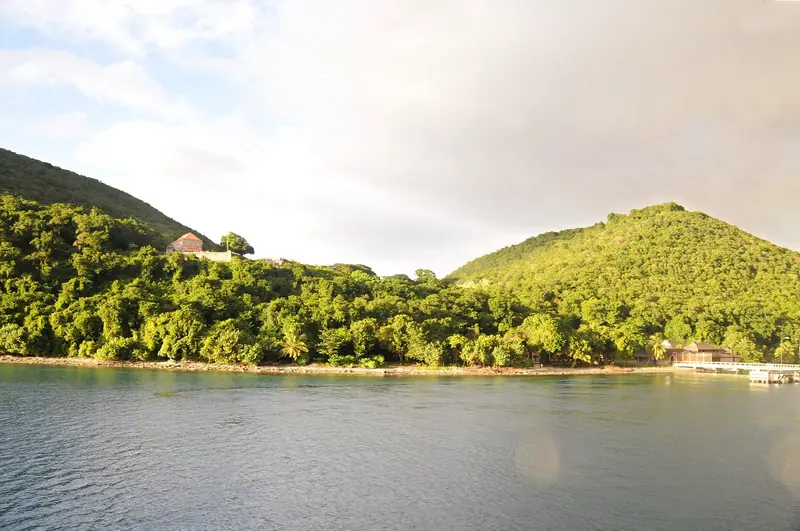
Ashore: Fort Shirley, the Kalinago Territory and a Six-Hour Hike to a Boiling Lake
Fort Shirley, a British garrison built between 1770 and 1815 and abandoned in 1854, sits within Cabrits National Park a short walk or taxi ride from Portsmouth, progressively restored since the 1980s by the Dominican historian Lennox Honychurch. A Forestry Site Pass covers entry, USD 5 for a single day, USD 12 for a week across multiple sites or USD 40 a year, set and published directly by Dominica's own Forestry, Wildlife and Parks Division. Guided rowboat tours up the nearby Indian River, motors prohibited by rule, are run by the same community of licensed guides that founded PAYS.
The Kalinago Territory, a 3,700-acre reserve on the east coast home to roughly 3,000 Kalinago people, is the last community in the Caribbean claiming unbroken descent from the pre-Columbian population, officially renamed from Carib Territory in 2015 to reflect the people's own name for themselves. For anyone willing to commit a full day, the Boiling Lake, the world's second-largest after New Zealand's Frying Pan Lake, sits inside the UNESCO-listed Morne Trois Pitons National Park at the end of a demanding 6 to 8 hour, roughly 3,000 ft round trip through the sulphurous Valley of Desolation, and a licensed guide is effectively required.
Clearing In, and What Hurricane Maria Actually Cost the Island
Portsmouth and Roseau are Dominica's two ports of entry, and pre-arrival notification runs through SailClear, the regional e-clearance system used across the Eastern Caribbean, which added a USD 25 annual subscription fee from 1 May 2024, separate from the clearance fee itself paid in person. That in-person fee is the single messiest figure found in this research, reported anywhere from about EC$5 to EC$80 depending on source, date and port, and should be confirmed directly before an owner budgets against it. PAYS in Portsmouth offers a customs escort service that walks a crew through the process rather than leaving them to navigate it alone.
Hurricane Maria made landfall on 18 September 2017 as a Category 5 storm, damaging an estimated 98 percent of the island's buildings and causing about USD 1.3 billion in combined damage and losses, with visitor arrivals down 88 percent in the first half of 2018. The recovery was real and reasonably fast on the numbers available: by the final quarter of 2018, arrivals had climbed 95 percent year on year. What this research could not confirm is a fresh, present-day statement of full recovery. All the sourced data dates to 2017 through 2019, and an owner planning around Dominica's tourism infrastructure today should treat that as the last confirmed data point rather than assume it automatically extends to 2026.
The Honest Downside
The infrastructure gap is the plainest limitation: no marina, no haul-out, no rigging loft, and a single 40-ft-capacity dock in Roseau stand in for what a Martinique or a St Lucia would offer a large yacht as a matter of course. Roseau itself adds a second, separate limitation, an exposed, steep-to anchorage with long-period swell that multiple sources describe as genuinely uncomfortable overnight, a real contrast with the shelter Portsmouth offers.
PAYS's own history is worth stating plainly rather than glossing over, because the reassurance only means something if the problem it solved was real: a documented run of dinghy thefts and at least one armed robbery serious enough to hospitalise a skipper sat behind its formation in the mid-2000s, and while every current account treats the anchorage as well managed today, a January 2025 report of mooring failures is a reminder that well managed is not the same as risk-free. An owner coming for the whales, the rainforest and a genuinely different Caribbean island should come with realistic expectations of the infrastructure, not the marketing version of it.
على البر والوصول والحجز
| Getting there by sea | Dominica sits about 32 nm south of Martinique and roughly 17 nm south of Guadeloupe's Iles des Saintes, on the direct route between the two French islands. Ports of entry are Portsmouth (Prince Rupert Bay) and Roseau. |
|---|---|
| Clearing in | Pre-arrival notification through SailClear, which carries a USD 25 annual subscription fee since 1 May 2024. In-person clearance fees are inconsistently reported, from about EC$5 to EC$80 depending on source and port; confirm directly before budgeting. PAYS offers a customs escort service at Portsmouth. |
| Mooring and anchoring | Prince Rupert Bay: 10 to 20 m over sand and mud, with about 40 PAYS moorings in a shallower 4.5 to 12 m patch near shore, reported at USD 10 to 12 a night, arranged by VHF channel 16. Roseau: 15 to 25 m over sand and coral, steep-to and exposed to long-period swell. |
| What there is instead of a marina | No haul-out, rigging loft or major-engine dealer exists on the island. The Dominica Marine Center dock in Roseau offers 14 to 17 ft alongside depth and a practical capacity around 40 ft LOA. |
| Whale watching | Sperm whales are resident year-round off the southwest coast; the closest, most reliable sightings run November to March. A 788 sq km sperm-whale marine reserve, the first of its kind, was announced in November 2023. |
| National park and reef fees | Forestry Site Pass (Cabrits, Fort Shirley and other sites): USD 5 a day, USD 12 a week, USD 40 a year. Soufriere-Scotts Head Marine Reserve dive/snorkel fee: USD 2 per person per site. |
| Ashore | Fort Shirley and Cabrits National Park, a short walk from Portsmouth. Guided Indian River rowboat tours, motors prohibited. The Kalinago Territory on the east coast. The Boiling Lake, a demanding guided 6 to 8 hour round trip. |
| Hurricane season | June to November, the standard Atlantic window; Hurricane Maria's 2017 landfall caused an estimated USD 1.3 billion in damage and losses, with arrivals recovering 95 percent year on year by late 2018. |
| What is NOT published | A single, current, authoritative in-person clearance fee. PAYS's exact founding year (2005 or 2007, disputed across sources). A present-day, dated confirmation of full tourism recovery from Hurricane Maria. |
ما يذكره الملاك والأطقم
PAYS's community barbecues are the anchorage's social centre as much as its funding model
Cruiser reporting describes the Sunday and Wednesday West Indian barbecues, rum punch, mahi-mahi, chicken, salad and rice for about USD 20 a head, as a genuine highlight of a Portsmouth stop and the direct source of the funds that pay for the nightly security patrol.
Cruisers Forum, Dominica PAYS discussionPAYS moorings should be checked, not simply trusted
A January 2025 discussion among cruisers reported a series of PAYS mooring failures and advised visitors to visually or physically check their assigned mooring before relying on it fully, a live and current caveat rather than historical criticism.
Cruisers Forum, January 2025 PAYS mooring reportsRoseau customs keeps its own hours, and it pays to know them
Cruiser guide contributors note that Roseau customs staff take a lunch break until roughly 2:30pm, a practical, first-hand operational detail that saves an arriving crew an unplanned wait.
NoForeignLand, Complete Cruiser's Guide to DominicaThe trade press names PAYS's own leadership and tracks its expansion
Reporting identifies PAYS president Andrew Cobra O'Brien and treasurer Eddison Lavelle by name, and describes plans to extend moorings to other west-coast anchorages between Toucari and Mero, evidence of an organisation still actively growing rather than resting on an old reputation.
Caribbean Compass, Why Sailors Should Visit Dominica
نقاط القوة وما يستدعي الانتباه
نقاط القوة
- A year-round resident whale population, genuinely rare anywhereSperm whale family pods live off the southwest coast all year rather than migrating through, protected since November 2023 by the world's first marine reserve built specifically around them.
- PAYS turned a real security problem into one of the best-run anchorages in the CaribbeanA cooperative of local guides runs nightly patrols funded by their own community barbecues, and current cruiser reporting treats Portsmouth as a genuinely trusted stop.
- The most dramatic landscape in the Eastern CaribbeanMorne Diablotins at 1,447 m, rainfall up to 9,000 mm on the wettest interior slopes, and the world's second-largest boiling lake, all on an island of 751 square kilometres.
- National park and reef fees are actually publishedThe Forestry, Wildlife and Parks Division sets and publishes its own site-pass pricing directly, a rarity next to the inconsistent clearance fees found elsewhere on the island.
- A genuinely different island to put next to Martinique and GuadeloupeNo French bureaucracy, no marina culture, and a Kalinago community with unbroken pre-Columbian descent found nowhere else in the Caribbean.
ما يستدعي الانتباه
- Essentially no berth infrastructure for anything beyond a small yachtNo haul-out, no rigging loft, and a single Roseau dock with a practical capacity around 40 ft LOA stand in for what a comparable island offers as standard.
- Roseau is exposed and uncomfortable at anchorSteep-to at 15 to 25 m with long-period swell that multiple sources independently describe as making for a rough night.
- A documented history of dinghy theft and at least one armed robbery sits behind the reassuring PAYS storyThe cooperative was founded to fix a real, reported problem in the mid-2000s, and a January 2025 report of mooring failures shows the anchorage still needs active management, not blind trust.
- Clearance fees are inconsistently reportedFigures for the in-person fee range from about EC$5 to EC$80 across sources, with no single current authoritative number found in this research.
- No dated, present-day confirmation of full recovery from Hurricane MariaThe most recent sourced recovery data is from 2018 and 2019; an owner should not assume it automatically extends to today without a fresh check.
لمين هو: An owner who wants rainforest, a resident whale population and one of the best-protected anchorages in the Eastern Caribbean, and who has accepted in advance that nothing here will take a yacht much larger than a mid-size cruiser onto an actual berth.