Gibraltar & the Costa del Sol
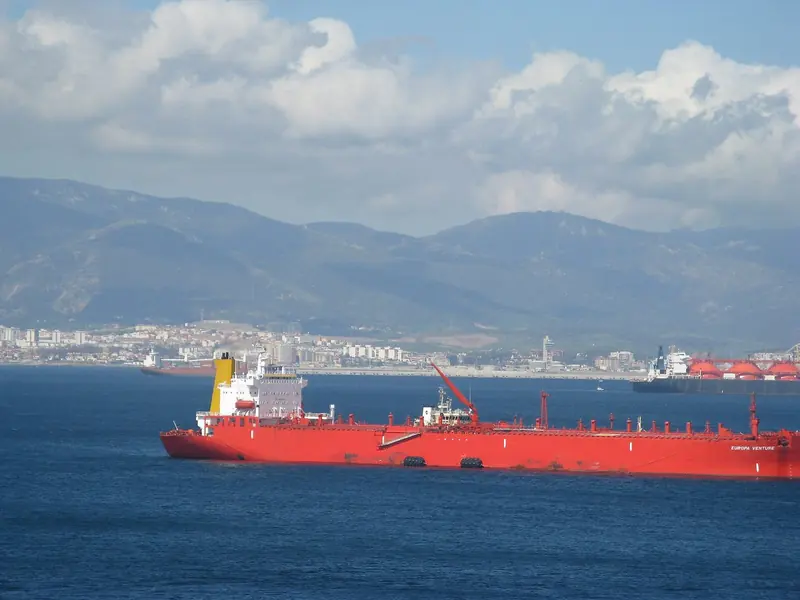
| Region | the Strait of Gibraltar and about 80 nautical miles of Spanish coast from Sotogrande to Malaga |
|---|---|
| The strait is 8 nautical miles wide at its narrowest, with Africa visible from every berth | |
| The UK and EU signed the treaty on Gibraltar on 14 July 2026, with provisional application from 15 July 2026 | |
| The 118 year old frontier fence began to be dismantled at midnight on 15 July 2026 | |
| Routine immigration controls at the land frontier are removed and the external Schengen check moves to Gibraltar's airport and port | |
| Final ratification by the European Parliament is expected in autumn 2026, so the arrangements are provisional until then | |
| Gibraltar marinas | Ocean Village, Marina Bay and Queensway Quay, plus 500 m of superyacht berthing at the Mid-Harbour Marina completed in 2016 |
| Ocean Village published daily rates | GBP 17 summer and GBP 12 winter up to 12 m, GBP 30 and GBP 20 from 15 to 18 m |
| Above 21 m the card is per metre | GBP 2.75 to 25 m, GBP 3.25 to 30 m, GBP 3.75 to 50 m and GBP 4.50 above 50 m |
| At GBP 4.50 a metre a 60 m yacht pays GBP 270 a day. The same hull is EUR 4,200 a day at Portofino's peak | |
| Electricity at Ocean Village is 16 pence a kWh and water 1.25 pence a litre, both with minimum charges, and multihulls carry a 50 per cent surcharge | |
| Annual berths paid in advance take 20 per cent off, six month bookings 15 per cent | |
| Gibraltar is the largest bunkering port in the Mediterranean, with vessels over 18 m eligible for duty free fuel and marine fuel supplied free of VAT | |
| IGY Malaga Marina | 33 superyacht slips for yachts from 20 to 180 m in up to 9 m of draft, a five minute walk from the historic centre |
| Evolution Yacht Agents opened at IGY Malaga in March 2025, the first agency with a permanent presence there | |
| Malaga San Andres Marina, on a 50 year concession, is due to open in 2027 with about 600 berths for craft up to about 60 m | |
| Puerto Banus | 915 berths taking up to 50 m, with anchorage outside for larger yachts, a 50 tonne travel lift and a published 2026 tariff document |
| Puerto Sotogrande | 1,382 berths from 8 to 70 m. Marina de Estepona: 447 berths to 35 m |
| Royal Decree 191/2026 of 11 March 2026 bans anchoring over seagrass in Spanish Mediterranean waters | |
| Spain charges a 12 per cent matriculation tax on vessels over 8 m used by residents, and 21 per cent charter VAT with a Spanish licence | |
| Winds | the levante compresses easterly through the strait and blows hard for days, the poniente is its gentler westerly opposite |
| A permanent surface current sets east into the Mediterranean through the narrows at a couple of knots and more | |
| Since 2020 Iberian killer whales have repeatedly interacted with sailing yachts in the strait and the Gulf of Cadiz, tracked by the Atlantic Orca Working Group | |
| Air | Malaga Costa del Sol closed 2025 with 26,760,549 passengers on 186,990 flights, up 7.4 per cent, about 40 minutes from Marbella |
The corner where two seas meet
This is the hinge of the Mediterranean. The Strait of Gibraltar is eight nautical miles wide at its narrowest, Africa is visible from every berth, and every yacht moving between the Mediterranean and the Atlantic passes through it. Gibraltar sits on the eastern side of the strait under a 426 metre limestone rock. East of it the Costa del Sol runs about 80 nautical miles from Sotogrande through Estepona, Marbella and Fuengirola to Malaga, with the Sierra behind it and the Alboran Sea in front.
It has historically been a place yachts passed through rather than cruised. There is no archipelago, the anchorages are open roadsteads, and the coast is developed. What it has instead is infrastructure and position: fuel, berths, an international airport handling 26.8 million passengers, Seville and Granada within a morning, and the last stop before the Atlantic. In 2026 it also acquired something it has never had, which is a legal status that makes crossing the frontier trivial.
The frontier came down in July 2026
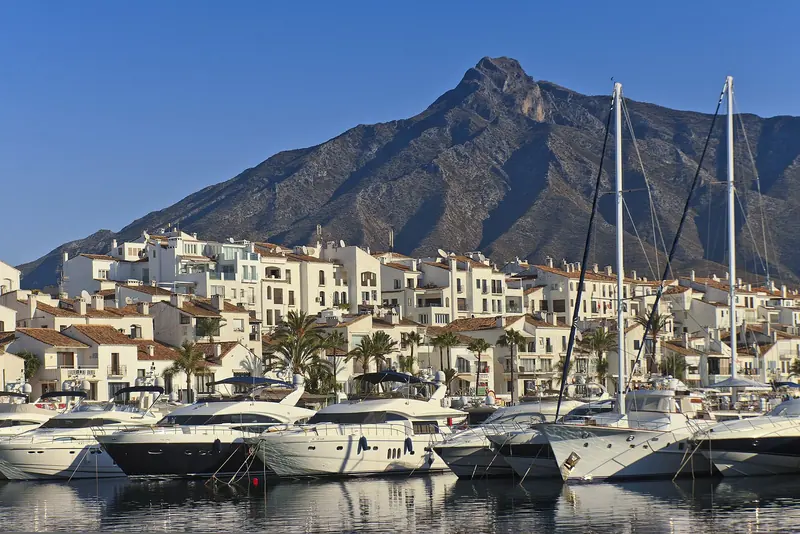
The United Kingdom and the European Union signed the treaty on Gibraltar on 14 July 2026, and it entered provisional application on 15 July. At midnight the fence that had stood at the frontier for 118 years began to come down. The agreement removes routine immigration controls at the land frontier with Spain and folds Gibraltar into the Schengen area, with the external Schengen check moved to Gibraltar's airport and port, where UK and Spanish officers work alongside each other on arrivals from outside the zone. Final ratification by the European Parliament is expected in the autumn of 2026.
For an owner the practical effects are immediate and mostly good. Crew changes across the frontier stop being an exercise in queueing, a guest can land at Malaga and be aboard in Gibraltar without a second border, and the two sides of the bay start to behave like one port. What is not yet clear from anything published is how the new customs arrangements interact with Gibraltar's tax status on marine fuel, which is the reason a great many yachts stop here at all. That is a question to put to the agent before a bunkering plan is built on last year's price.
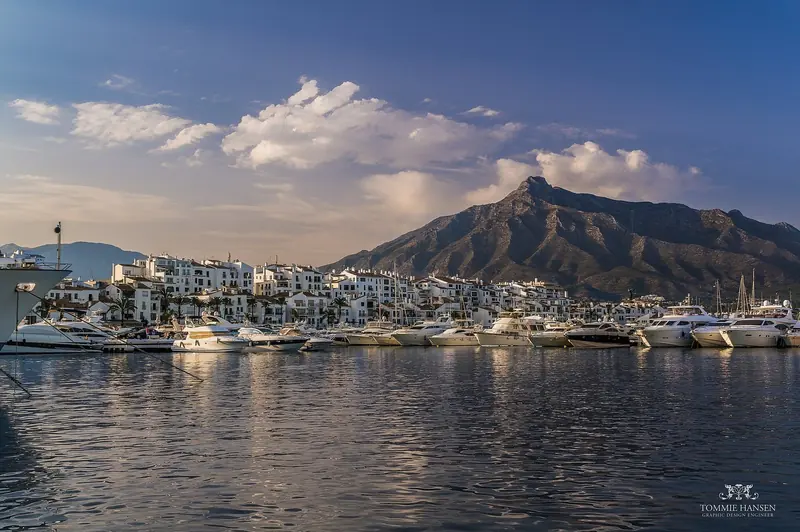
GBP 4.50 a metre a day above fifty metres at Ocean Village, against EUR 4,200 a day for the same hull at Portofino.
Ocean Village publishes, and the number is startling
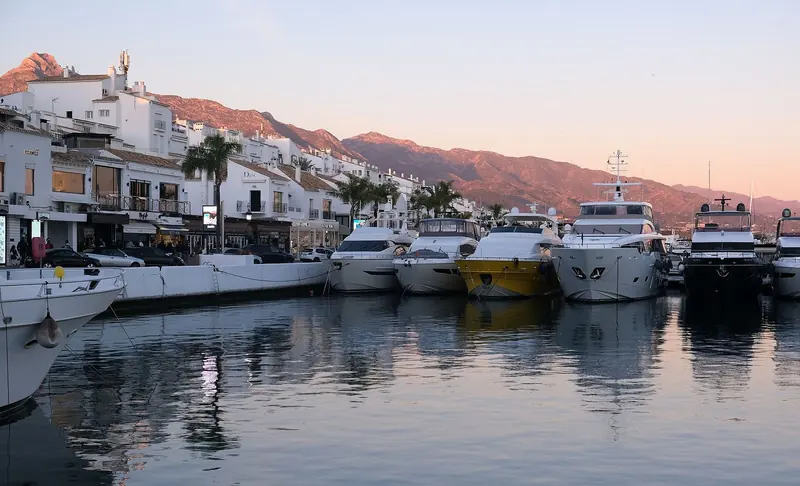
Gibraltar has three private marinas, Ocean Village, Marina Bay and Queensway Quay, plus 500 metres of superyacht berthing at the Mid-Harbour Marina completed in 2016. Ocean Village publishes a full daily card in sterling. A monohull up to 12 metres pays GBP 17 a day in summer and GBP 12 in winter. From 15 to 18 metres it is GBP 30 and GBP 20. Above 21 metres the card switches to a per metre basis: GBP 2.75 a metre from 21 to 25 metres, GBP 3.25 from 25 to 30, GBP 3.75 from 30 to 50, and GBP 4.50 a metre above 50 metres.
That last figure deserves reading twice. At GBP 4.50 a metre a day, a 60 metre yacht pays GBP 270. On Portofino's card the same hull pays EUR 4,200 at the peak. Electricity is 16 pence a kilowatt hour and water 1.25 pence a litre, both with a minimum charge, multihulls carry a 50 per cent surcharge on the corresponding category, and a berth booked and paid annually in advance takes 20 per cent off, or 15 per cent for six months. Nowhere else in the western Mediterranean publishes a superyacht rate this low, or publishes one at all.

The largest bunkering port in the Mediterranean
Gibraltar's other business is fuel. It is the largest bunkering port in the Mediterranean, supplying commercial shipping around the clock in the bay, and the same infrastructure serves yachts. Vessels over 18 metres have been eligible for duty free fuel, and marine fuel has been supplied free of VAT, which is the structural reason a yacht crossing between the Atlantic and the Mediterranean fills here rather than in Spain or Portugal. Waste oil disposal, spares and crew support run off the same quays.
This is the part of the Gibraltar proposition most exposed to the 2026 treaty, and the honest position is that nothing published yet sets out what changes. Customs arrangements and excise duties are different questions, and Gibraltar has historically kept its own tax system, but an owner planning a season around the bunker price should have his agent confirm the current position rather than assume continuity. It is also worth remembering that a fuel price here is a same day quote and has never been published in the first place.
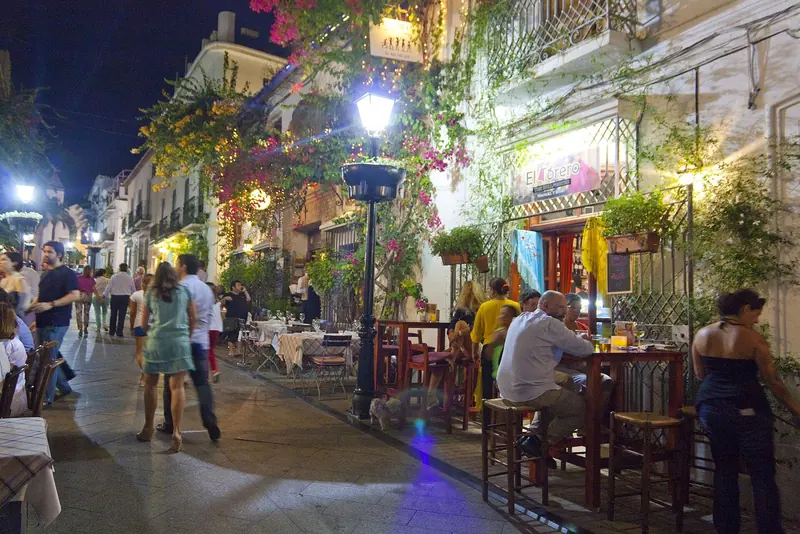
Malaga now takes 180 metres
The single biggest change on the Spanish side is IGY Malaga Marina at Paseo de la Farola, inside the Port of Malaga and about a five minute walk from the historic centre. It carries 33 superyacht slips for yachts from 20 to 180 metres in up to nine metres of draft, with 24 hour dock staffing, fibre internet, grey and black water pump out, cranes and forklifts, CCTV and ISPS compliance. Evolution Yacht Agents opened an office on site in March 2025, the first agency with a permanent presence there.
A second project is behind it. Malaga San Andres Marina, awarded on a 50 year concession and due to open in 2027, is planned at around 600 berths for craft from small boats up to about 60 metres, with an 8,000 square metre landside development of restaurants, retail, event space and a sailing school designed by Jose Segui. Between the two, Malaga is turning itself from an airport with a harbour attached into the principal large yacht port of southern Spain.

The Costa del Sol marinas, and their ceilings
Puerto Banus at Marbella is still the address. It holds 915 berths, takes vessels up to 50 metres with anchorage for larger yachts outside, and runs its own boatyard with a 50 tonne travel lift, a six tonne mobile crane, welding, carpentry, mechanical and electronic trades, power from 16 to 250 amps and a refuelling station. It publishes a 2026 mooring tariff as a downloadable document, which is more than most Spanish marinas do. Its ceiling of 50 metres is the constraint, and the reason larger boats now go to Malaga.
West of it, Puerto Sotogrande is the largest by berth count, with 1,382 berths from 8 to 70 metres, and it is the quiet, residential, polo playing end of the coast. Estepona has 447 berths to 35 metres. Benalmadena and Fuengirola cover the middle in smaller sizes. The pattern along this coast is a marina every few miles, all of them full of local boats, most of them capped between 35 and 50 metres, and almost none of them publishing a card.
The Spanish rules that apply the moment you cross the bay
Spain published Royal Decree 191/2026 on 11 March 2026, imposing a general ban on anchoring over seagrass meadows in Spanish Mediterranean waters, covering Posidonia oceanica and Cymodocea nodosa. The Alboran coast is less grassed than the Balearics but the rule is national and the check is the same: read the habitat mapping before the anchor goes down, and use a buoy field where one exists. Gibraltar's own waters are outside that decree and inside its own regime, which is one more reason the bay is administratively two places.
The tax position is the same as everywhere in Spain and it is the strictest in the western Mediterranean. A 12 per cent matriculation tax attaches to vessels over eight metres used by individuals or companies resident in Spain, with the flag not decisive, and the exemption for professional commercial charter requires registration with the Direccion General de la Marina Mercante and the tax authority. Charter VAT is 21 per cent with a Spanish charter licence. A non EU flagged yacht must also evidence that its import and VAT obligations have been met.
The strait itself, and the two winds
The Strait of Gibraltar has weather of its own. The levante, an easterly, compresses through the gap and blows hard, sometimes for days, piling a short steep sea against the west going current and putting the famous banner cloud over the Rock. The poniente is its westerly opposite, generally kinder. Underneath both there is a permanent surface current setting east into the Mediterranean, because the sea evaporates faster than the rivers fill it, and it runs at a couple of knots and more in the narrows.
There is also the orcas. Since 2020 a subpopulation of Iberian killer whales has repeatedly interacted with sailing yachts in the Strait and the Gulf of Cadiz, striking and in a number of cases disabling rudders, and the Atlantic Orca Working Group has tracked and published the encounters. It is a sailing yacht problem rather than a motor yacht one and it is seasonal and geographic in pattern. Any sailing boat routing through the strait should check the current advisory position before it plans a passage rather than after.
Getting guests in
Malaga Costa del Sol closed 2025 with 26,760,549 passengers across 186,990 flights, a record and a rise of 7.4 per cent on the year, and it is the practical gateway for the entire coast, about 40 minutes from Marbella and an hour and a half from Sotogrande or the Gibraltar frontier. It carries long haul, full year European scheduled traffic and a substantial private aviation operation, and it is ten minutes from the IGY berths.
Gibraltar's own airport is a curiosity with a real advantage: it is a short walk from the marinas, and since July 2026 it functions as the external Schengen entry point rather than as a border to be crossed twice. Its runway crosses the main road into town and its schedules are limited, mostly to the United Kingdom. Jerez and Seville are the alternatives to the west. For most owners the answer is Malaga for the guests and Gibraltar for the fuel.
Ashore, and the honest downside
The Rock itself is a genuine day out, with the Upper Rock nature reserve, the Barbary macaques, St Michael's Cave and the siege tunnels, and it is British in a way that surprises people who have only seen it from the sea. Marbella and Puerto Banus are the social end of the coast, Ronda is an hour inland above its gorge, and Seville and Granada are both reachable in a morning, which makes the Alhambra a day trip from a berth. That hinterland is stronger than anything the Balearics or Sardinia can offer.
The downside is the cruising, or the lack of it. The Costa del Sol is a developed coast with open roadsteads rather than anchorages, the swimming is off beaches rather than off the transom in a cove, and there is no island group within a day. The levante can shut the strait. And the whole area is a working seaway, with commercial traffic through the narrows around the clock. Nobody comes here for a fortnight at anchor. They come for fuel, for berths, for the airport and now for a frontier that no longer exists.
What is not published
Ocean Village's card is the exception rather than the rule. Checked in August 2026, Marina Bay's published price page could not be retrieved, Puerto Sotogrande's berthing page returned an error to an ordinary fetch, and IGY Malaga references rate documents without displaying figures. Puerto Banus publishes a 2026 tariff as a scanned document rather than as readable text. No marina on either side of the frontier publishes a fuel price, which is the number most yachts come here for.
The larger gap is the treaty. The published material on the 2026 UK and EU agreement covers people, goods and frontier procedure in detail and says nothing an owner can rely on about marine fuel duty, yacht clearance procedure at the port, or the treatment of a non EU flagged yacht arriving from Morocco. Ratification is expected in the autumn of 2026 and the arrangements are provisional until then, so the honest advice is to confirm every procedural assumption with an agent on the day rather than to plan on last season's practice.
على البر والوصول والحجز
| Getting there | Malaga Costa del Sol is the gateway, closing 2025 with 26,760,549 passengers across 186,990 flights, with long haul, year round European schedules and a substantial private aviation operation. It is about ten minutes from the IGY berths in Malaga, forty from Marbella and an hour and a half from Sotogrande or the Gibraltar frontier. Gibraltar's own airport is a walk from the marinas but has limited, mostly United Kingdom, schedules, and since July 2026 it acts as the external Schengen entry point. Jerez and Seville are the western alternatives. |
|---|---|
| The frontier, since 15 July 2026 | The UK and EU treaty on Gibraltar was signed on 14 July 2026 and provisionally applied from 15 July, removing routine immigration controls at the land frontier and placing Gibraltar inside the Schengen area, with external checks carried out at its airport and port by UK and Spanish officers working side by side. European Parliament ratification is expected in autumn 2026. A guest can now land at Malaga and reach a berth in Gibraltar without a second border, and crew changes across the bay are no longer a queueing exercise. |
| What a berth costs, published | Ocean Village Gibraltar posts a full daily card in sterling: GBP 17 in summer and GBP 12 in winter up to 12 m, GBP 24 and GBP 15 from 12 to 15 m, GBP 30 and GBP 20 from 15 to 18 m, GBP 36.50 and GBP 25 from 18 to 21 m, then per metre at GBP 2.75 to 25 m, GBP 3.25 to 30 m, GBP 3.75 to 50 m and GBP 4.50 above 50 m. Electricity is 16p a kWh and water 1.25p a litre with minimum charges, multihulls pay a 50 per cent surcharge, and paying annually in advance takes 20 per cent off. |
| Fuel, and the open question | Gibraltar is the largest bunkering port in the Mediterranean, with vessels over 18 metres eligible for duty free fuel and marine fuel supplied free of VAT, which is why yachts crossing between the Atlantic and the Mediterranean fill here. Nothing published as at August 2026 sets out how the new treaty arrangements affect that position, so confirm it with an agent before building a bunkering plan on last season's price. A fuel price here is a same day quote in any case and has never been published. |
| Where a large yacht berths | IGY Malaga Marina takes 20 to 180 metres in up to nine metres of draft across 33 superyacht slips, five minutes from the historic centre, with 24 hour dock staffing, fibre internet, pump out, cranes and ISPS compliance. Gibraltar's Mid-Harbour Marina adds 500 metres of superyacht berthing. Puerto Banus tops out at 50 metres across 915 berths with anchorage outside for larger boats, Puerto Sotogrande runs 1,382 berths from 8 to 70 metres, and Estepona has 447 berths to 35 metres. Malaga San Andres, about 600 berths to roughly 60 metres, is due in 2027. |
| Spanish rules the moment you cross the bay | Royal Decree 191/2026 of 11 March 2026 bans anchoring over seagrass meadows across Spanish Mediterranean waters. Spain also charges a 12 per cent matriculation tax on vessels over eight metres used by individuals or companies resident in Spain, with the flag not decisive and the commercial charter exemption requiring registration with the Direccion General de la Marina Mercante and the tax authority, plus 21 per cent charter VAT with a Spanish licence. Gibraltar sits outside all of that under its own regime, which is why the bay is administratively two places. |
| The strait, and the passage | A permanent surface current sets east into the Mediterranean through the narrows at a couple of knots and more, so a westbound passage is planned around it. The levante compresses easterly through the gap and can blow hard for days, raising a short steep sea against that current and putting the banner cloud over the Rock. The poniente is the gentler westerly. Sailing yachts should also check the current advisory on Iberian killer whales, which have interacted repeatedly with sailing boats in the strait and the Gulf of Cadiz since 2020 and are tracked by the Atlantic Orca Working Group. |
| Ashore | The Upper Rock nature reserve, the Barbary macaques, St Michael's Cave and the siege tunnels make Gibraltar a real day rather than a fuel stop. Marbella and Puerto Banus are the social end of the Spanish coast, Ronda is an hour inland above its gorge, and Seville and Granada are both a morning away, which puts the Alhambra within a day trip of the boat. Malaga itself has the Picasso museum, a serious restaurant scene and a historic centre five minutes from the IGY pontoons. |
| What is NOT published | Checked in August 2026, Ocean Village is the only marina in the area publishing a readable full card. Marina Bay's price page could not be retrieved, Puerto Sotogrande's berth page returned an error, IGY Malaga references rate documents without showing figures, and Puerto Banus publishes its 2026 tariff as a scanned document rather than readable text. Nobody on either side of the frontier publishes a fuel price. And the treaty material published so far says nothing an owner can rely on about marine fuel duty or yacht clearance procedure at the port. |
ما يذكره الملاك والأطقم
The frontier came down in July 2026 and the checks moved to the port
The United Kingdom and the European Union signed the treaty on Gibraltar on 14 July 2026, with provisional application from 15 July. Routine immigration controls at the land frontier with Spain were removed, the 118 year old fence began to be dismantled at midnight, and the external Schengen check moved to Gibraltar's airport and port, where UK and Spanish officers work side by side on arrivals from outside the zone. European Parliament ratification is expected in autumn 2026.
House of Commons Library and the European Parliament briefing on the EU and UK agreement on GibraltarOcean Village's published card is the cheapest large yacht rate in the region
The marina posts daily rates in sterling by category, from GBP 17 in summer for a monohull up to 12 metres to a per metre basis above 21 metres, ending at GBP 4.50 a metre a day for anything over 50 metres. Electricity is charged at 16 pence a kilowatt hour and water at 1.25 pence a litre, both with minimum charges, multihulls pay a 50 per cent surcharge on the corresponding category, and berths paid annually in advance take 20 per cent off with 15 per cent for six months.
Ocean Village Gibraltar published berth pricesGibraltar's fuel position is the reason boats stop, and it is the least documented part of the treaty
Gibraltar is described consistently by the bunkering trade as the largest bunkering port in the Mediterranean, supplying commercial shipping in the bay around the clock, with marine fuel supplied free of VAT and vessels over 18 metres eligible for duty free fuel. Checked in August 2026, none of the published treaty material addresses marine fuel duty, and no supplier in Gibraltar publishes a price, so the position has to be confirmed with an agent on the day.
World Kinect Marine and Peninsula Yacht ServicesMalaga has become the large yacht port of southern Spain
IGY Malaga Marina operates 33 superyacht slips for yachts from 20 to 180 metres in up to nine metres of draft inside the Port of Malaga, a five minute walk from the historic centre, with 24 hour dock staffing, fibre internet, grey and black water pump out and ISPS compliance. Evolution Yacht Agents opened an office on site in March 2025, the first yachting agency with a permanent presence there. Malaga San Andres Marina, on a 50 year concession, is scheduled to open in 2027 with about 600 berths for craft up to about 60 metres.
IGY Marinas, reported by Boat International and Superyacht TimesEverything else here is quoted rather than published
Checked in August 2026, Marina Bay's published price page could not be retrieved, Puerto Sotogrande's berthing page returned an error to an ordinary request, IGY Malaga references rate documents without displaying figures, and Puerto Banus publishes its 2026 tariff only as a scanned document. No marina on either side of the frontier publishes a fuel price, and no independent published owner or captain account of superyacht service standards at any of them could be found.
Yotters desk, checked August 2026
نقاط القوة وما يستدعي الانتباه
نقاط القوة
- The cheapest published superyacht berth in the western MediterraneanGBP 4.50 a metre a day above 50 metres at Ocean Village, which puts a 60 metre yacht at GBP 270 against EUR 4,200 for the same hull at Portofino's peak.
- The frontier problem has goneThe UK and EU treaty applied provisionally from 15 July 2026 removed routine controls at the land frontier and put Gibraltar inside Schengen, with checks moved to its airport and port.
- Fuel at the scale of a commercial portThe largest bunkering port in the Mediterranean, with vessels over 18 metres eligible for duty free fuel and marine fuel supplied free of VAT.
- Malaga finally takes real sizeIGY Malaga Marina holds 33 superyacht slips for 20 to 180 metres in 9 metres of draft, five minutes from the old town, with a 600 berth second marina due in 2027.
- The best hinterland of any Mediterranean berthSeville and Granada within a morning, Ronda an hour inland, the Alhambra as a day trip, and an airport carrying 26.8 million passengers forty minutes from Marbella.
ما يستدعي الانتباه
- There is almost nothing to cruiseA developed coast of open roadsteads, no island group within a day, and swimming off beaches rather than off the transom in a cove. Nobody spends a fortnight here at anchor.
- The fuel advantage is the one thing the treaty might touchNothing published as at August 2026 explains how the new customs arrangements affect duty free marine fuel, which is the single reason many yachts stop here.
- The Spanish side has a 50 metre ceiling outside MalagaPuerto Banus stops at 50 metres, Sotogrande at 70, Estepona at 35. Anything larger is Malaga or the Gibraltar side of the bay.
- The strait makes its own weatherThe levante blows hard for days against a permanent east going current, and sailing yachts additionally have to plan around orca interactions that have continued since 2020.
- Spain's tax regime is the strictest in the regionA 12 per cent matriculation tax on vessels over eight metres used by Spanish residents, 21 per cent charter VAT, and a seagrass anchoring ban in force since March 2026.
لمين هو: An owner repositioning between the Atlantic and the Mediterranean who wants fuel, a cheap published berth and an airport in the same 20 miles, or one who wants Seville, Granada and Ronda within a morning of the passerelle. Not an owner looking for anchorages.