Hawaii & the Hawaiian Islands
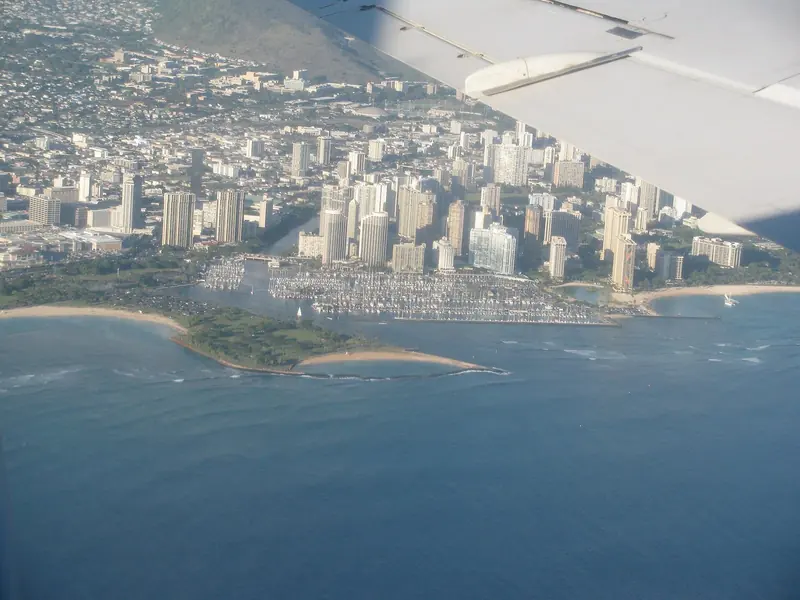
| Ala Wai Harbor | 699 berths, 85 moorings and 22 dry-storage spaces, the largest small-boat harbor in Hawaii, built mainly for vessels under about 85 feet |
|---|---|
| Permanent moorage waitlist | commonly 2 to several years for a mid-size slip, reportedly 20 years or more for a catamaran or multihull berth |
| Liveaboard permits at Ala Wai | about 40 active as of 2025, down from a cap of 125 after DOBOR froze new permits in 2019 |
| Ala Wai has no fuel dock; boaters refuel at Kewalo Basin or at Keehi Marine Center, about 5 miles away | |
| Distance | the Transpac course runs 2,225 nautical miles from Los Angeles to Honolulu, sailed every two years since 1906 by the Transpacific Yacht Club |
| 2025 Transpac fleet | 53 starters across three staggered starts; finishers were escorted into Ala Wai Small Boat Harbor, Kewalo Basin or Honolulu Harbor |
| Clearance | vessels must report to CBP immediately on arrival and complete formal clearance, in person or via the CBP ROAM app, within 48 hours |
| Agriculture | Hawaii's own Department of Agriculture inspects every arriving vessel using a Plants and Animals Declaration form; fresh produce and eggs are commonly confiscated |
| Charter law | the Passenger Vessel Services Act, not the Jones Act, stops a foreign-built or foreign-flagged yacht carrying paying passengers between two Hawaiian ports without a foreign port call; the penalty is USD 996 per passenger as of 2025 |
| NCL America's Pride of America is the one large exception: a US-flagged, US-built ship operating under a one-off 2003 congressional exemption so it could run round-Hawaii cruises with no foreign port call | |
| Lahaina Small Boat Harbor | 99 moorings before the 8 August 2023 wildfire, all but 13 vessels destroyed or sunk; 80 fire-damaged vessels had been removed by March 2024 |
| Lahaina Harbor reopening | as of mid-December 2025, only daytime loading and unloading for permitted commercial tour boats, still no shore power and no overnight mooring |
| Cost of living | Hawaii's overall cost-of-living index is about 182, the highest of any US state, with 85 to 90 percent of food shipped in |
| Big Island | no deep-water yacht harbor; Kailua-Kona is an open roadstead anchorage, Honokohau Harbor is the standard heavy-weather refuge, and Hilo's Radio Bay is now closed to recreational vessels |
Ala Wai Harbor Is Hawaii's Biggest Marina, and It Was Not Built for Superyachts
No purpose-built superyacht marina exists anywhere in the Hawaiian Islands. Ala Wai Harbor in Honolulu, the largest small-boat harbor in the state, tops out at 699 berths, 85 moorings and 22 dry-storage spaces sized for sport-fishing boats and racing sailboats, almost all of them under 85 feet. It was dredged out of a reef and opened in 1935, and the state has been running it as a fixed asset ever since rather than building anything larger.
The condition of the harbor itself has become as much of a story as its size. Honolulu Civil Beat's 2025 investigation into Ala Wai found a USD 300 million deferred-maintenance backlog inherited by the Division of Boating and Ocean Recreation (DOBOR) in 1991, a sunken wreck from 2022 still not salvaged, and only about 40 legal liveaboard permits still active out of a cap of 125, after DOBOR froze new liveaboard permits in 2019. A USD 6.2 million pier-repair contract posted in April 2025 was described by the same reporting as the largest single investment in the harbor in eight years, itself a measure of how little routine maintenance had been happening.
Getting a Yacht to Hawaii Means Committing to the Middle of the Pacific
The nearest continental shoreline is California, and that is still roughly 2,400 miles across open water, which makes Hawaii the most isolated population center of its size on Earth. Commercial flights land at Daniel K. Inouye International Airport (HNL) in Honolulu from the US mainland, Japan, Australia and elsewhere, so getting people to a waiting yacht is straightforward. Getting the yacht itself there is not: it either makes the crossing under its own power and sail, or goes on a ship, and there is no shortcut route through smaller islands the way there is crossing the Caribbean.
The Transpacific Yacht Race, first sailed in 1906 and organised since by the Transpacific Yacht Club, runs the standard sailing route: 2,225 nautical miles from Los Angeles to Honolulu, contested every two years with a staggered multi-class start. The 2025 edition started 53 boats across three starts on 1, 3 and 5 July, and Alli Bell's Cal 40 Restless took the King Kalakaua Trophy for overall ORR monohull honors, the first time a female skipper has won it, arriving to more than 100 family and friends waiting at her slip in Ala Wai Harbor. That result is a fair proxy for the passage itself: 11 to 14 days for a well-sailed 40 footer, longer for a boat cruising rather than racing it.
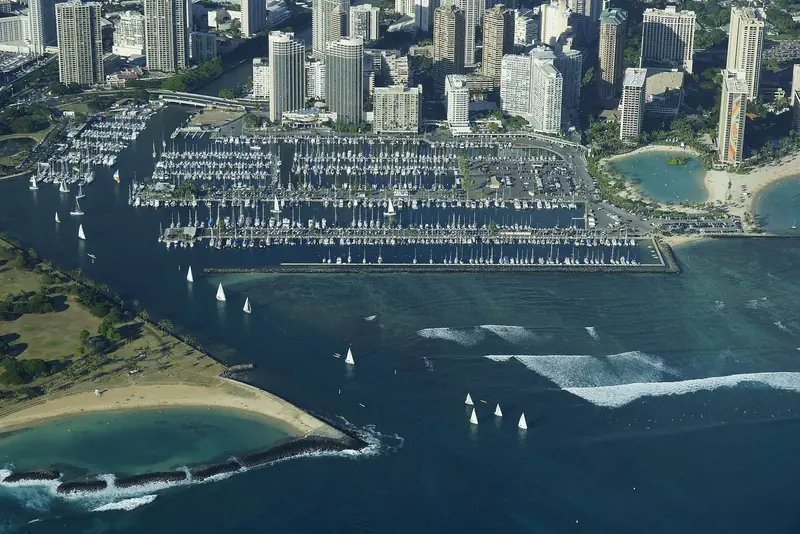
Of Lahaina Harbor's 99 pre-fire moorings, all but 13 boats were destroyed or sunk in the August 2023 wildfire, and more than two years later the harbor still has no shore power and no overnight mooring.
Clearing Into Hawaii Runs on Federal Rules, Not Local Custom
Clearing US Customs and Border Protection in Hawaii follows the national rulebook rather than any island-specific process: report immediately on arrival, then complete formal entry within 48 hours, either in person at Honolulu during CBP's Monday to Friday working hours or remotely through the CBP ROAM mobile app, which lets a vessel submit biographic and trip details and, if needed, take a video interview with an officer before receiving a push notification with clearance status. A yacht that misses an official port of entry risks a heavy fine under CBP's standing small-vessel reporting rules.
What Hawaii adds on top of the federal process is agricultural inspection through the State of Hawaii Department of Agriculture, which boards or is contacted by CBP to check for banned plants, produce and animals using its own Plants and Animals Declaration form. Fresh fruit, vegetables and eggs on board are routinely confiscated. Pets are the sharpest edge of this: Hawaii's rabies-free status means dogs and cats need pre-arranged quarantine paperwork through the state's Animal Industry Division, and Honolulu is effectively the only practical port for a vessel arriving with an animal aboard, since that is where the quarantine holding facility and the APHIS port office both sit.
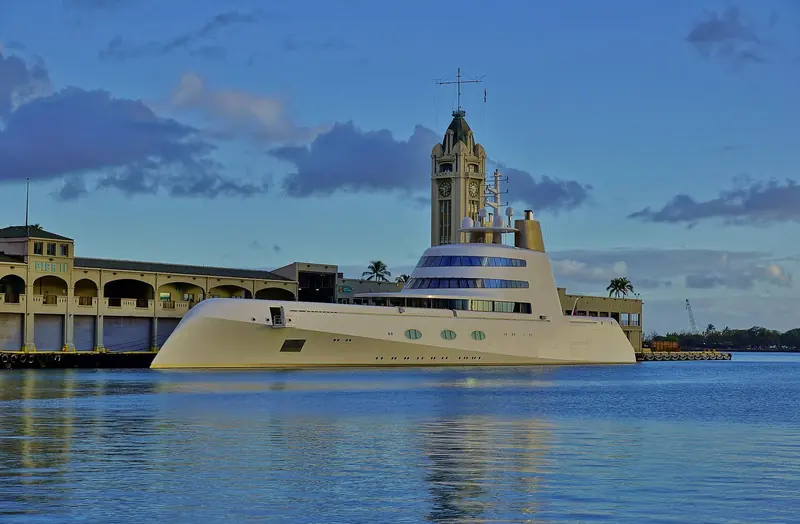
The Law That Actually Blocks a Foreign Yacht's Hawaii Charter Is Not the Jones Act
The Jones Act governs the coastwise carriage of cargo and is frequently invoked in Hawaii conversations, but it is not the statute that constrains a charter yacht there. The relevant law is the Passenger Vessel Services Act of 1886 (PVSA), enforced by CBP, which prohibits any vessel that is not both US-built and US-flagged from transporting passengers for hire between two points in the United States, Hawaii included, unless the itinerary also touches a foreign port. A businessman who charters a foreign-built yacht to entertain clients on a point-to-point Hawaii trip is in violation of the same law that governs a cruise ship, regardless of the yacht's size.
CBP's own penalty schedule makes the exposure concrete: the statutory fine, originally USD 300 per passenger, is inflation-adjusted and stood at USD 996 per passenger as of 2025. The one large-scale workaround anyone points to is Norwegian Cruise Line's Pride of America, built and flagged in the United States under a one-off congressional exemption secured in 2003 specifically so NCL America could run round-trip Hawaii cruises with no foreign port call. There is no equivalent private exemption for a foreign-flagged charter yacht, which is why brokers structuring a Hawaii charter either use a US-built, US-flagged vessel or build a foreign port call into the itinerary.
A Permanent Slip at Ala Wai Is a Multi-Year Wait, Visiting Is Not
Permanent state moorage in Hawaii runs on a waitlist measured in years, not months, and it applies across the whole state harbor system, not just Ala Wai. Boat-life reporting on Oahu puts a mid-size slip wait at two to several years and a catamaran or wide-beam multihull berth at 20 years or more in some cases, with the state offering a 120-day temporary permit as a stopgap while an owner waits. DOBOR does not publish a live per-harbor queue count, so an owner has to ask the harbor agent directly for where they would land on the list.
None of that describes the experience of a boat just passing through. Latitude 38's own reporting on cruising options in Hawaii found Ala Wai carrying, in the magazine's words, a ton of slips for a visiting boat, Haleiwa Harbor on Oahu's north shore almost always having space, and Ko Olina Marina running less than half full. The distinction that matters for an owner is permanent versus transient: the years-long list is for a boat that wants to live there, and it coexists with genuinely easy short-stay dockage for a boat that does not.
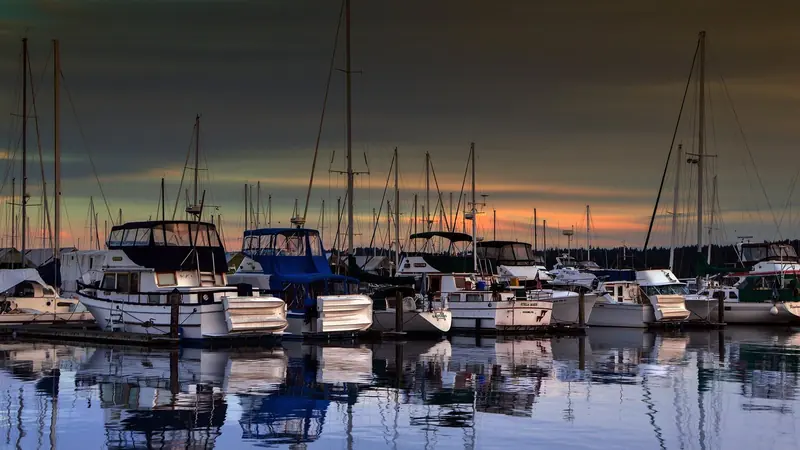
Lahaina Harbor Has Not Recovered From the 2023 Fire
Lahaina Small Boat Harbor is still not a usable cruising stop, and any photograph or account of it from before 8 August 2023 should be treated as historical rather than current. The wildfire that destroyed most of the town also destroyed the harbor: of 99 pre-fire moorings, all but 13 vessels were burned or sunk, and the water was left choked with hulls and debris obstructing passage, according to Maui Now's reporting from the weeks after the fire and DLNR's own public update at the time. Removal was slow and heavy: DLNR-contracted crews had removed 80 fire-damaged vessels by March 2024, using float bags to raise sunken hulls and, in places, an 80-ton crane to cut apart wrecks too damaged to lift whole.
Recovery has been measured in small, incremental steps rather than a reopening date. Maui Now reported in late November 2025 that limited commercial marine operations were returning to Lahaina Harbor for the first time since the fire, and the Honolulu Star-Advertiser and Hawaii News Now both confirmed in mid-December 2025 that the harbor was allowing loading and unloading during daytime hours only, for permitted operators, with electricity and overnight mooring still not restored. For a private cruising yacht that means Lahaina remains off the itinerary for now, and any current plan for Maui should route through Maalaea or another working harbor instead.
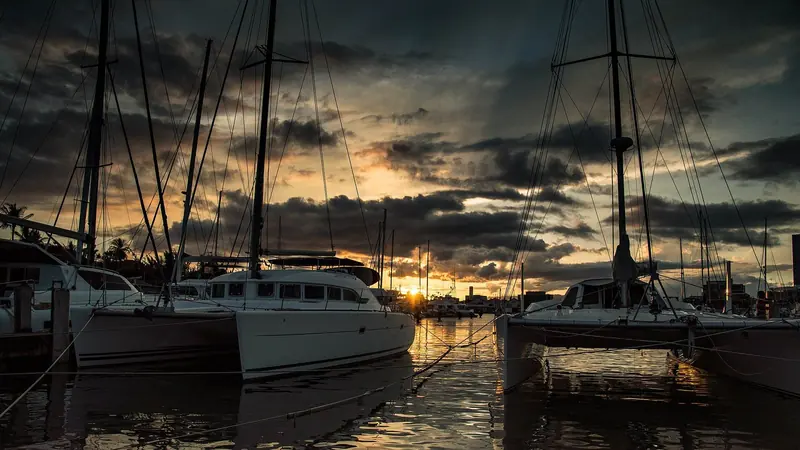
The Big Island and Kauai Offer Anchorages, Not Marinas
Neither the Big Island nor Kauai has anything resembling a yacht marina, and a cruising plan for either island has to be built around anchoring rather than berthing. Kailua-Kona has no deep-water harbor at all, so vessels, cruise ships included, anchor out in Kailua Bay and tender passengers to Kailua Pier. Honokohau Harbor, a short distance north of Kona and blasted out of solid rock, is the real refuge and is generally regarded locally as the safest place on the island to keep a boat in heavy weather, though space for a transient yacht there is not guaranteed.
Hilo, on the island's wet side, has lost its best-known free anchorage. Radio Bay was a longstanding stop for arriving cruisers, but Latitude 38's own cruising report on Hawaii confirms recreational vessels are no longer permitted to anchor, moor or come alongside there, leaving Hilo Bay itself, with good holding nearby, and a small state harbor as the remaining options. Kauai offers slightly more structure, with Nawiliwili and Port Allen both taking transient boats, but neither approaches Oahu's harbor capacity.
Fuel and Provisioning Cost What Shipping to an Island Costs
There is no fuel dock at Ala Wai Harbor itself, a striking gap for the state's largest small-boat harbor. A boat berthed there has to run to Kewalo Basin or to Keehi Marine Center, about 5 miles away, where a dedicated self-service dock sells diesel and non-ethanol unleaded around the clock to fuel-card holders, or on a walk-in basis on weekday mornings with a 10-gallon minimum.
Provisioning carries the same island premium as everything else in Hawaii. The Missouri Economic Research and Information Center's cost-of-living index puts Hawaii at roughly 182, the highest of any US state, and multiple cost trackers attribute that largely to the 85 to 90 percent of food that arrives by ship, with a gallon of milk commonly running USD 7 to 8 against USD 3 to 4 on the mainland. None of that is exotic for a visiting yacht crew, but it is real money on a stopover, and provisioning a boat for a multi-week Pacific crossing out of Honolulu should be budgeted at a meaningful premium over a similar shop in California.
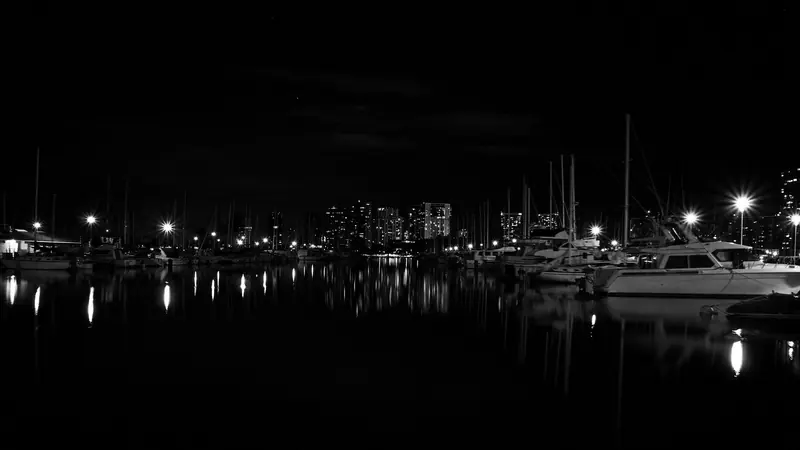
A Race Finish Shows What Oahu's Harbor Capacity Can and Cannot Absorb
Oahu's three working basins, Ala Wai, Kewalo Basin and Honolulu Harbor, can absorb a race fleet's worth of arrivals over a compressed window, but only because the Transpac fleet finishes once every two years, not because the harbors have spare standing capacity the rest of the time. Scuttlebutt Sailing News reported that finishers in the 2025 Transpac were instructed to follow escort vessels to assigned mooring areas in whichever of the three basins had room, a manual, race-day allocation rather than a standing berth plan.
The race itself is a genuine Hawaii institution: the Transpacific Yacht Club has run it since 1906, and the 2025 fleet of roughly 53 starters produced a result worth noting on its own terms, Alli Bell's Cal 40 Restless taking the King Kalakaua Trophy for overall ORR monohull honors as the first female skipper to do so, finishing 12 days and 12 hours after a Los Angeles start. That kind of arrival, escorted in past midnight to a slip crowded with well-wishers, is the version of Hawaii a lot of owners picture. The everyday version, one boat looking for a slip on an ordinary Tuesday, is closer to the waitlist story above.
The Honest Trade a Hawaii Cruise Makes
Hawaii rewards an owner who wants a genuinely remote, mid-Pacific passage and volcanic and reef scenery unlike any other US cruising ground, but it does not reward an owner expecting a berth to be waiting, a superyacht marina at the end of the passage, or an easy charter structure for a foreign-flagged boat. The state's own harbor system, by Honolulu Civil Beat's account, has been run as a depreciating asset for decades, and the Passenger Vessel Services Act and Jones Act era rules that govern US-flag chartering apply here with none of the informality an owner might expect from a Pacific island stop.
What is not published anywhere makes the honest planning harder than it should be: DOBOR does not publish live per-harbor waitlist counts or a current, consolidated slip-fee schedule since the 2019 increase, so an owner has to call the harbor agent directly for both numbers, and no state or federal source publishes a simple one-page charter-compliance checklist for a foreign-flagged yacht considering Hawaii. An owner willing to do that legwork, sail the 2,225-mile passage or ship the boat in, and accept anchoring over berthing on the Big Island and Kauai, gets a destination most of the charter fleet never bothers to reach.
على البر والوصول والحجز
| Getting there by air | Daniel K. Inouye International Airport (HNL) in Honolulu is Oahu's international gateway, with direct flights from the US mainland, Japan and Australia. |
|---|---|
| Getting there by sea | The standard yacht route is the Transpac course, 2,225 nautical miles from Los Angeles to Honolulu, roughly 11 to 14 days for a fast 40-footer and longer for a cruising boat; no islands lie along the way. |
| Clearance | Report to CBP immediately on arrival and complete formal clearance in person or via the CBP ROAM app within 48 hours; missing an official port of entry risks a heavy fine. |
| Agriculture inspection | Hawaii's Department of Agriculture requires a Plants and Animals Declaration form on arrival; fresh produce and eggs are commonly confiscated, and pets need pre-arranged quarantine paperwork through Honolulu. |
| Charter law | The Passenger Vessel Services Act, not the Jones Act, blocks a foreign-built or foreign-flagged yacht from carrying paying passengers between two Hawaiian ports without a foreign port call; the penalty is USD 996 per passenger as of 2025. |
| Berthing at Ala Wai | 699 berths, the largest harbor in the state, but no fuel dock; a permanent slip commonly waits 2 to several years, reportedly 20 years or more for a multihull, while transient dockage is usually available the same day. |
| Lahaina Harbor status | As of mid-December 2025, daytime loading and unloading only for permitted tour operators, more than two years after the 2023 fire; no shore power, no overnight mooring. |
| Big Island berthing | No deep-water harbor; Kailua-Kona is anchor-and-tender, Honokohau Harbor is the heavy-weather refuge, and Hilo's Radio Bay is closed to recreational vessels. |
| Fuel | The nearest fuel dock to Ala Wai is Keehi Marine Center, about 5 miles away, or Kewalo Basin; Ala Wai itself has none. |
| Provisioning cost | Hawaii's cost-of-living index runs around 182, the highest in the US, with 85 to 90 percent of food shipped in and milk commonly USD 7 to 8 a gallon. |
| What is not published | DOBOR does not publish live per-harbor waitlist counts or a consolidated slip-fee schedule since the 2019 increase, and no agency publishes a charter-compliance checklist for a foreign-flagged yacht. |
ما يذكره الملاك والأطقم
Transient dockage is easier to find than the waitlist suggests
Cruising through Oahu, Latitude 38 found Ala Wai carrying what the magazine called a ton of slips for a visiting boat, Haleiwa Harbor on the north shore almost always having space, and Ko Olina Marina running less than half full, a sharp contrast with the permanent waitlist.
Latitude 38Radio Bay in Hilo is no longer an option
The same Latitude 38 cruising report notes that Radio Bay, long a popular free anchorage for arriving cruisers on the Big Island, is no longer open for business to recreational vessels.
Latitude 38The harbor's condition is its own complaint, separate from the wait
Investigating Ala Wai in 2025, Honolulu Civil Beat documented a sunken 2022 wreck still not salvaged, a USD 300 million deferred-maintenance backlog and only about 40 active liveaboard permits left from a cap of 125 frozen since 2019.
Honolulu Civil BeatFinishing Transpac still means an escorted marshal into whichever basin has room
Reporting on the 2025 fleet, Scuttlebutt Sailing News described finishers being directed by escort vessels to Ala Wai Small Boat Harbor, Kewalo Basin or Honolulu Harbor depending on space, a manual allocation rather than a reserved berth.
Scuttlebutt Sailing NewsLahaina Harbor's reopening is real but still very limited
Maui Now reported in late November 2025 that Lahaina Small Boat Harbor was accepting limited commercial marine operations for the first time since the 2023 fire, with the Honolulu Star-Advertiser confirming in December that only daytime loading and unloading was permitted and shore power had not been restored.
Maui Now
نقاط القوة وما يستدعي الانتباه
نقاط القوة
- Unmatched mid-ocean remotenessAt roughly 2,400 miles from the California coast, Hawaii is a genuine open-ocean destination in US waters, reachable by the same 2,225-nautical-mile route the Transpacific Yacht Club has raced since 1906, not a coastal hop dressed up as an adventure.
- A real, living racing and yacht-club sceneAla Wai Harbor hosts the Hawaii Yacht Club and the Waikiki Yacht Club, weekly Friday racing, and the biennial Transpac finish, giving a visiting owner an active community rather than an empty marina.
- US legal and regulatory clarity, even where it is restrictiveCBP clearance, agriculture inspection and PVSA charter rules are all federally documented and consistent with the rest of the US, so an owner can plan around them precisely rather than guessing at local practice.
- Transient dockage is easier than the waitlist headlines suggestLatitude 38's own reporting found Ala Wai, Haleiwa and Ko Olina all carrying real spare transient capacity for a visiting boat, even while the permanent waitlist runs years.
ما يستدعي الانتباه
- No superyacht marina anywhere in the stateAla Wai Harbor's 699 berths are built for sport-fishing boats and racing sailboats up to about 85 feet; nothing in Hawaii resembles a Mediterranean or Caribbean megayacht marina.
- A multi-year wait for any permanent slipReported waits for a mid-size Ala Wai slip run 2 to several years and reportedly 20 years or more for a multihull berth, and the harbor's own deferred maintenance runs into the hundreds of millions of dollars.
- Lahaina, the historic Maui anchorage, is still not usableMore than two years after the August 2023 fire destroyed all but 13 of Lahaina Harbor's 99 moored vessels, the harbor allows only daytime loading for permitted tour boats, with no shore power or overnight mooring.
- The PVSA blocks the obvious foreign-yacht charter modelA foreign-built or foreign-flagged yacht cannot legally carry paying passengers between two Hawaiian ports without a foreign port call, a USD 996-per-passenger penalty that rules out the casual multi-island charter many owners assume is possible.
- No fuel dock at the state's own flagship harborA boat at Ala Wai has to travel to Kewalo Basin or Keehi Marine Center, about 5 miles away, just to fuel up, and grocery and provisioning costs run well above mainland US prices.
لمين هو: Owners with a genuinely long-range boat and a delivery crew willing to sail or ship 2,400 miles of open Pacific, not owners expecting a superyacht marina, a fast charter permit, or a slip waiting for them at the other end.