Mauritius
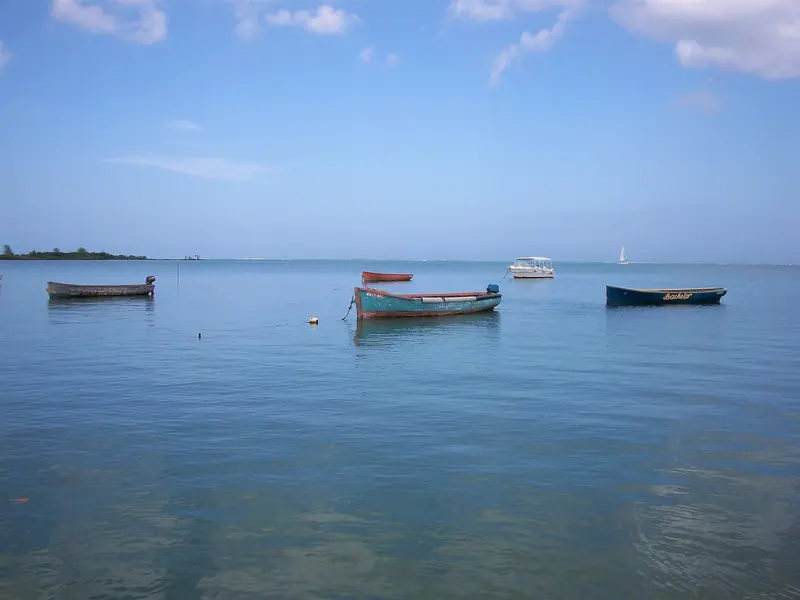
| Location | volcanic island, Indian Ocean, about 900 km east of Madagascar, about 200 km northeast of Reunion |
|---|---|
| Port of entry | Port Louis only, VHF 16 then 12 or 14, port hours 06:00 to 18:00 |
| Clearance order | Health and Quarantine, Immigration, Customs, at the Customs Landing Steps, about 13 forms, roughly 45 minutes with an agent |
| Le Caudan Waterfront Marina | 20 berths, 2 to 4 m depth at low tide, Rs 650 to Rs 1,900 a day by length |
| Grand Baie Yacht Club | free two month membership for visiting yachts, fuel dock, wifi |
| La Balise Marina, Black River | residential marina in the Grande Riviere Noire estuary, operating since 2012, about 143 waterfront properties |
| Cyclone watch | 15 November to 15 May for Mauritius and the Seychelles, versus 30 April for the rest of the basin; peak risk January to March |
| Best cruising months | May to October or November, the dry season |
| Flights | Johannesburg nonstop about 4 hours, roughly 3,064 km, about 18 flights a week across three airlines |
| Flights | Emirates Dubai to Mauritius twice daily, 6 hours 35 minutes |
| Flights | Air Mauritius year round to London Gatwick and Paris, seasonal Geneva |
| Rodrigues | about 560 km east of the main island, organised diving since 1996, courtesy clearance at Port Mathurin |
| Trade base | Chantier Naval de l'Ocean Indien (shipyard), Taylor Smith Group (repairs), Yacht Management Mauritius and SEAL Superyachts (agents) |
| Running costs | USD 40 to 80 a night berthing, USD 100 to 150 a person provisioning, USD 350 to 600 for a fuel stop |
Getting there: the flight map behind the island
Sir Seewoosagur Ramgoolam International Airport at Plaisance is Mauritius's only international gateway, and it is built for a market centred on South Africa and Europe rather than the Gulf. Air Mauritius flies year round to London Gatwick and Paris and seasonally to Geneva, and European carriers add their own routes on top: Edelweiss to Zurich, Condor to Frankfurt, British Airways to London Gatwick, Air France to Paris and Corsair to Paris Orly. Emirates covers the Gulf connection twice a day from Dubai, a flight of 6 hours 35 minutes that opens up onward links to Cairo, Jeddah, Riyadh, Dammam, Karachi and Colombo through the same hub.
The South Africa route is the busiest on the board and the one that matters most for this owner base. Air Mauritius, South African Airways and Safair fly Johannesburg to Mauritius nonstop, around 18 flights a week between them, covering roughly 3,064 km in about 4 hours; Cape Town is also served nonstop by South African Airways. What the island does not offer is a dedicated business aviation terminal or FBO on the Nice or Geneva model. Private and charter traffic still routes through the main terminal at Plaisance, and an owner flying in on a managed aircraft should expect to work through a local handling agent rather than a purpose built bizjet facility.
Arriving by sea: Port Louis is the only door
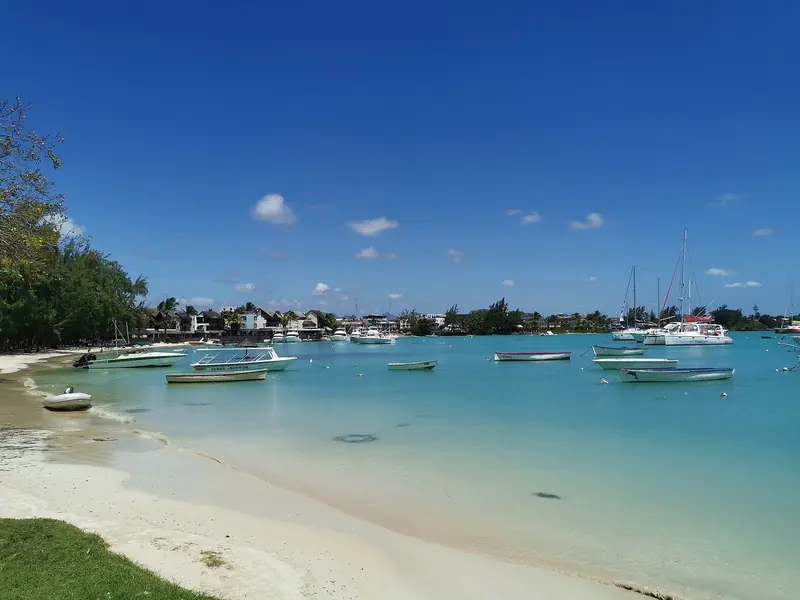
Port Louis is the sole official port of entry for Mauritius, and every yacht clears there before doing anything else, including a boat that only wants to reach Grand Baie ten miles up the coast. Call Port Louis Radio on VHF 16, switching to 12 or 14 as instructed, for free pratique before entering. The port itself is closed from 18:00 to 06:00, and arriving as close to 06:00 as possible avoids both the closed window and the overtime charge that comes with an out of hours clearance.
The sequence ashore is fixed and does not move for anyone: Health and Quarantine, then Immigration, then Customs, worked from the Customs Landing Steps, and the crew stays there until every stamp is done before the boat may move on to Caudan Waterfront Marina or anywhere else. The Customs Anti-Narcotics Section of the Mauritius Revenue Authority searches the boat as a matter of course, expect around 13 forms, and every crew member needs a valid passport in hand. An agent brings the process down to roughly 45 minutes; without one, budget half a day. Clearing out costs nothing unless the crew asks for an early or out of hours slot, which reopens the overtime tariff.
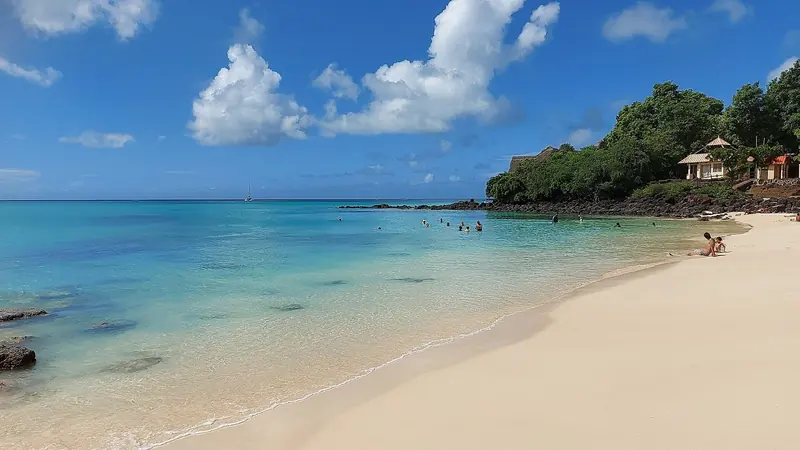
Mauritius clears through one door at Port Louis and then hands the boat three different marinas that each do a different job.
Three hubs, not one: Caudan, Grand Baie and Black River
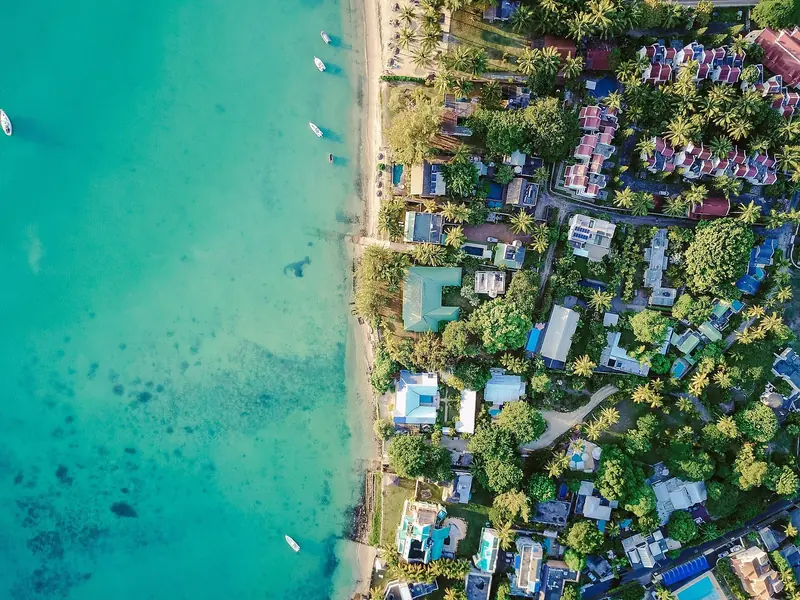
Where the Seychelles concentrates its yacht scene into a handful of marinas built for scale, Mauritius spreads it across three places that do different jobs. Le Caudan Waterfront Marina sits inside Port Louis harbour itself, walking distance from the clearance steps, with 20 berths, a basin running 2 to 4 metres at low tide, and a published tariff scaled by length, from about Rs 650 a day for a boat under 12 m up to Rs 1,900 a day for 25 to 30 m, anything larger by arrangement. It is the practical first stop: showers, laundry, parking and an address cruisers use for DHL spares.
Grand Baie, ten miles north, is the anchorage of choice once clearance is done, a large reef protected bay with a resident charter and dive fleet and the Grand Baie Yacht Club at its centre, which extends visiting yachts a free two month membership covering showers, bar, fuel dock and wifi. Black River, on the west coast near Le Morne, is different again: La Balise Marina is a residential marina built into the Grande Riviere Noire estuary, operating since 2012 around some 143 waterfront properties each with its own mooring, plus a public basin, fuel and minor repairs, sheltered from both sea and wind by the mountains behind it. None of the three approaches Eden Island's scale in the Seychelles; what they add up to instead is a working island with facilities scattered across it rather than one showcase marina.
The cyclone season is not a formality
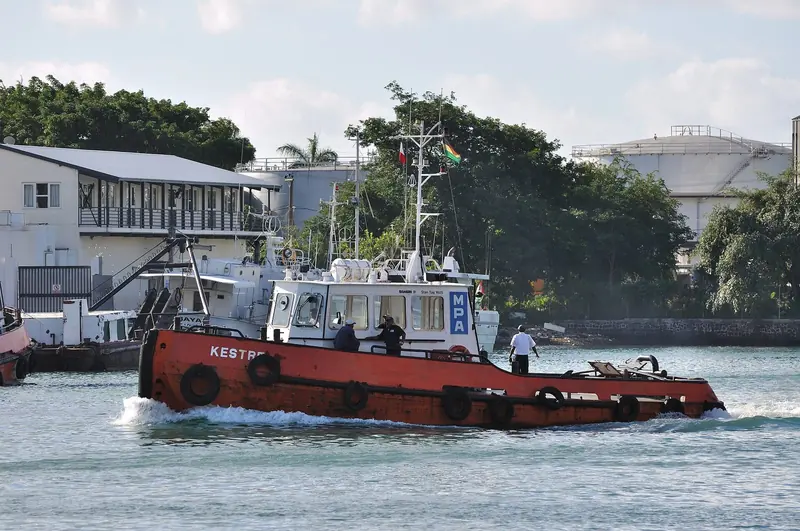
The Mauritius and Seychelles cyclone watch runs from 15 November to 15 May, later than the rest of the South West Indian Ocean basin, which stands down on 30 April, and the risk itself peaks between January and March when sea temperatures and humidity are highest. Mauritius runs its own four class warning system rather than a single alert: Class I is issued 36 to 48 hours out, Class II gives roughly 12 daylight hours for final preparation, Class III signals about six hours to impact, and Class IV means dangerous gusts have already arrived and the island is under lockdown until the Meteorological Services issues a safety bulletin.
The practical cruising season is the mirror of that calendar: May to October or November, the island's cooler dry season, with June to September the calmest water and best visibility, and the shoulder months of May and October combining decent weather with the thinnest crowds. Charter brokers and the boatbuilding trade both plan around the same window, which means crew, weather routing and marina space book out early for it, and an owner arriving between December and March is choosing a boat that either moves on to South Africa or Reunion or accepts real storm risk at the mooring.
What it costs, and what nobody publishes
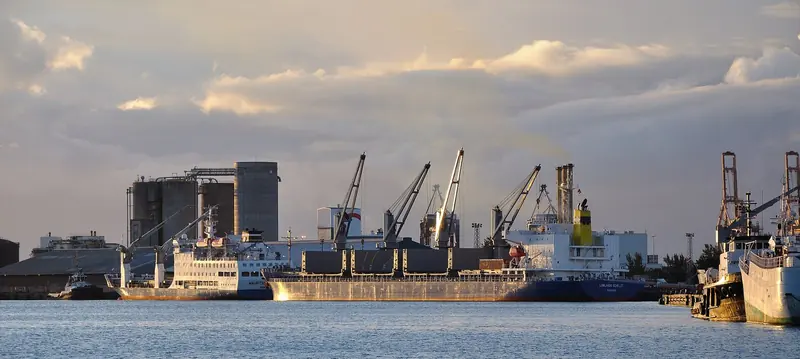
Costs here are workable rather than showy. Marina berthing across the island's three hubs runs in the region of USD 40 to 80 a night depending on length and season, provisioning for a crew averages USD 100 to 150 a person, and fuel is a same day quote rather than a posted pump price, generally budgeted at USD 350 to 600 for a stop depending on tankage. Le Caudan is the one marina on the island that actually prints a tariff card; Grand Baie Yacht Club and La Balise Marina both work on application, the same pattern the French Riviera's biggest quays follow, and just as inconvenient for comparison shopping before a visit.
What is not published is the duty position for a transiting yacht. Mauritius does run duty concessions and an established provisioning and spares trade through agents, the same channel cruisers use to route DHL packages into Caudan, but no consolidated public schedule of what a transit yacht owes or is relieved of on fuel, stores or a haul out appears on any official or brokerage site checked for this entry. An owner planning a season here should get that answer in writing from a Port Louis agent before committing rather than budget against a guess.
Rodrigues, the reef and the trade base
Rodrigues, Mauritius's outer island dependency, lies roughly 560 km east, a full day's passage away and a different pace of life again. Divers rate its reef system for how little of it has been worked, since organised diving only started there in 1996, and its lagoon supports windsurfing, kitesurfing and sport fishing on a scale the main island's beaches do not attempt. Clearing in at Port Mathurin is genuinely possible and reported as friendly, but it is a courtesy stop rather than a substitute for Port Louis; the yacht still has to present there before the cruise is legally complete.
Back on the main island, the trade base is real if compact: Chantier Naval de l'Ocean Indien operates as the shipyard for hull and mechanical work, Taylor Smith Group handles repairs, and agencies including Yacht Management Mauritius and SEAL Superyachts work the clearance and logistics side for visiting crews. Mahebourg, in the southeast, keeps a rowed and sailed pirogue regatta that locals trace back generations, a genuine local tradition rather than a superyacht fixture, and it remains the closest thing the island has to an organised yacht racing calendar.
Who the island actually suits
Mauritius reads best against the owner base it was built for: South African families running a short flight rather than a long one, and European owners who want a genuine reef lagoon without the Gulf's heat or the Caribbean's hurricane belt overlapping their own summer. The reef that rings most of the coastline does the job an outer breakwater does elsewhere, so a boat sitting off Grand Baie or Flic en Flac is in flat water even when the open ocean outside the lagoon is not.
The tradeoff is candour rather than concealment. This is not a no cyclone destination, the marina scene is real but modest next to the Mediterranean or the Seychelles' showcase developments, and an owner who wants one number to plan a season against will not get it from most of the island's operators. What Mauritius offers instead is a working island: a functioning port authority, a real shipyard, agents who route spare parts through the same door the boat cleared through, and a reef system that has been cruised, dived and fished long enough that the reports on it are genuine rather than promotional.
على البر والوصول والحجز
| Getting there | Sir Seewoosagur Ramgoolam International Airport (Plaisance) is the only gateway. Nonstop from Johannesburg, about 4 hours and 3,064 km on Air Mauritius, South African Airways or Safair, around 18 flights a week between them; Cape Town also direct on South African Airways. From Europe, Air Mauritius flies London Gatwick and Paris year round and Geneva seasonally, with Edelweiss, Condor, British Airways, Air France and Corsair adding their own routes. Emirates connects Dubai twice daily in 6 hours 35 minutes, opening onward links to Cairo, Jeddah, Riyadh, Dammam, Karachi and Colombo. There is no dedicated business aviation terminal; private traffic uses the main terminal through a local handling agent. |
|---|---|
| Arriving by sea | Port Louis is the only port of entry, whatever the final anchorage. Call Port Louis Radio on VHF 16, then 12 or 14, for pratique before entering; the port is closed 18:00 to 06:00, and an early morning arrival avoids the overtime tariff. Clear at the Customs Landing Steps in the fixed order of Health and Quarantine, Immigration and Customs, with the CANS unit of the Mauritius Revenue Authority searching the boat, about 13 forms, and roughly 45 minutes with an agent against half a day without one. Only after full clearance may the yacht move to Caudan Waterfront Marina, Grand Baie or Black River. |
| Marina and berth costs | Le Caudan Waterfront Marina publishes a tariff: Rs 650 a day up to 12 m, rising in bands to Rs 1,900 a day for 25 to 30 m, over 30.1 m on application, for a basin running 2 to 4 m at low tide. Grand Baie Yacht Club gives visiting yachts a free two month membership covering showers, bar, fuel dock and wifi rather than a nightly rate. La Balise Marina in Black River, a residential marina of about 143 waterfront properties operating since 2012, quotes moorings on application. Across the island, expect USD 40 to 80 a night as a working range. |
| Provisioning and fuel | Provisioning runs about USD 100 to 150 a person, available through Port Louis and Caudan, with Grand Baie's shops and restaurants covering day to day top ups. Fuel is a same day quote rather than a posted pump price; a stop typically budgets USD 350 to 600 depending on tankage. Spares and equipment commonly arrive by international courier addressed to an agent or to Caudan Waterfront itself, a route cruisers use routinely for parts not stocked on the island. |
| What is NOT published | No consolidated public schedule of duty treatment for a transiting yacht, on fuel, stores or a haul out, appears on any official Mauritius Ports Authority, Mauritius Revenue Authority or brokerage page checked for this entry. Grand Baie Yacht Club and La Balise Marina both quote berthing on application rather than a rate card. Mauritius does not publish a dedicated business aviation or FBO tariff the way Nice or Geneva does. Get all three answers in writing from a Port Louis agent before committing a season here. |
ما يذكره الملاك والأطقم
Grand Baie Yacht Club is a genuinely useful stop, and Caudan doubles as a parts address
Sailing the yacht Zen Again from Grand Baie back to Port Louis in September 2015, the crew rafted up at Caudan Waterfront within hours of arrival to collect a DHL parcel containing a replacement autopilot ram, diagnosed a loose connection on the primary autopilot's course computer while testing it, and left a club burgee with the Grand Baie Yacht Club manager, calling the club itself a very nice spot.
Mike Reynolds, yacht Zen AgainRodrigues is a real landfall, and the paperwork is real too
Crossing from Australia toward Rodrigues and on to Mauritius, this account describes officialdom and paperwork awaiting at landfall rather than a formality, consistent with Mauritius requiring full clearance at Port Louis even after a courtesy stop at Port Mathurin.
Brent Crack and Mary Bevan, NoonsiteMauritius sits on the standard route to South Africa, not a detour off it
Taking the southern Indian Ocean route to South Africa via Christmas Island, Cocos Keeling, Rodrigues, Mauritius and Reunion, this crew's track confirms Mauritius and Rodrigues as an established landfall pair on the way down the African coast rather than an isolated stop.
Anna and Arthur Eriksson, Noonsite
نقاط القوة وما يستدعي الانتباه
نقاط القوة
- A reef that does the work of a breakwaterMauritius is almost entirely ringed by coral reef, so a boat anchored off Grand Baie or Flic en Flac sits in flat lagoon water even when the open sea beyond the reef is not calm.
- Three working hubs instead of one showcase marinaCaudan inside Port Louis, Grand Baie's yacht club anchorage and La Balise in the Black River estuary each do a different job, giving an owner options a single marina destination does not.
- A genuine refit and agent tradeChantier Naval de l'Ocean Indien as a working shipyard, Taylor Smith Group for repairs, and agencies including Yacht Management Mauritius and SEAL Superyachts handling clearance and logistics, not just charter brokers wearing an agent's hat.
- Direct air access built for this owner baseA four hour nonstop from Johannesburg on three airlines and year round service to London and Paris put South African and European owners within a single flight, with Emirates covering the Gulf in 6 hours 35 minutes.
- Rodrigues gives the itinerary a genuine second actA full day's passage east, with reef diving that only began in earnest in 1996 and a lagoon still light on traffic, inside the same clearance jurisdiction as the main island.
ما يستدعي الانتباه
- A real cyclone season, not a marketing footnoteThe 15 November to 15 May watch, peaking January to March, closes roughly half the year to comfortable cruising and is the opposite of the no cyclone pitch neighbouring Indian Ocean destinations can make.
- One door for the whole islandEvery yacht clears at Port Louis regardless of where it ultimately anchors, on fixed 06:00 to 18:00 hours, with no ability to check in first at Grand Baie or Rodrigues and skip the trip back.
- Marina scale tops out well short of a large yachtCaudan is capped at 30 m on a published tariff and La Balise is built around resident moorings rather than superyacht berths; nothing on the island matches a facility built for scale.
- Pricing is mostly on applicationOnly Le Caudan actually publishes a rate card. Grand Baie Yacht Club and La Balise Marina both require a direct enquiry, which makes budgeting a season here harder than it should be.
- The duty position for a transit yacht is not written down anywhere publicNo official schedule of concessions on fuel, stores or a haul out for a transiting yacht was found on any Mauritius Ports Authority, Mauritius Revenue Authority or brokerage source checked for this entry.
لمين هو: An owner running the South African or European charter circuit who wants a genuine reef lagoon and a working trade base, and who plans the season around a real cyclone watch rather than a marketing one.