The Kimberley Coast (Western Australia)
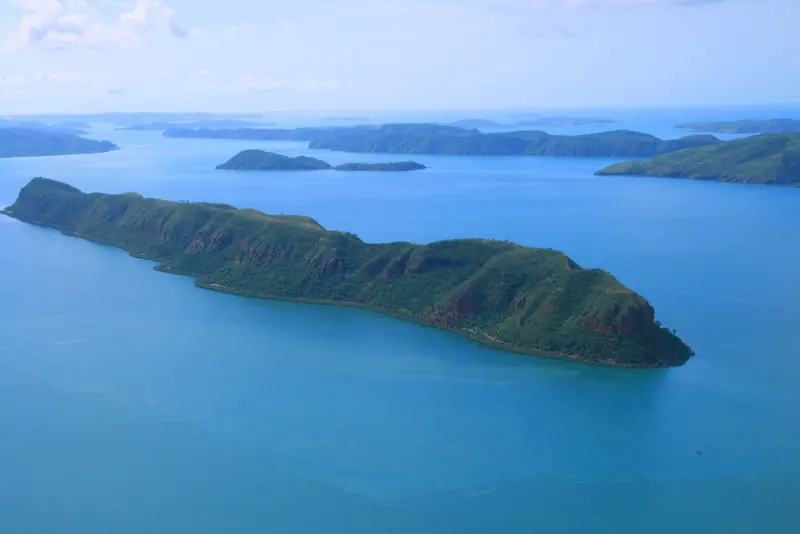
| Scale | the Kimberley coastline runs over 12,000 km including islands and inlets, per Wikipedia, with more than 2,500 adjacent islands; the direct sea route from Broome to Darwin is 889 nautical miles, roughly 3.7 days' steaming |
|---|---|
| Only Broome, One Arm Point, Derby and Wyndham offer any real access along the entire coast; the rest is essentially unbroken wilderness with no marine infrastructure | |
| Tides | among the largest in the world, reported up to 11 to 12 metres at Derby in King Sound, amplified by a broad continental shelf and funnel-shaped bays; Canada's Bay of Fundy remains the single largest range worldwide, so among the largest, not the largest, is the accurate claim |
| Horizontal Falls, Talbot Bay | seawater forced through two sandstone gorges about 300 metres apart produces a sideways waterfall up to 4 metres high and flows up to 30 knots, reversing direction with each tide; David Attenborough called it one of the greatest natural wonders |
| Montgomery Reef | a 400 sq km reef platform that appears to rise from the sea as the tide falls, standing up to 4 metres above sea level at full exposure, with hundreds of cascading waterfalls draining off its surface |
| Season | dry season, roughly May to September or October, is the only realistic cruising window; the wet season brings monsoon weather and genuine cyclone risk, with January and February the peak, in a region described as among the most cyclone-prone in the world |
| Biosecurity | since December 2023, every non-commercial vessel must submit a Pre-Arrival Report and give at least 12 hours' notice before entering Australian waters; Broome and Wyndham hold First Point of Entry status alongside Darwin |
| No marinas exist along most of the route; a private 42.8 metre expedition documented by Boat International expanded its fuel capacity from 58,000 to 70,000 litres before departure specifically because of the lack of fuel stops | |
| Saltwater crocodiles are a structural safety constraint: the same expedition's owners fitted a purpose-built, crocodile-resistant tender and confined all swimming to spots reached by bushwalking above the croc line | |
| Helicopter use is routine rather than exotic; the dedicated expedition ship True North has carried a full-time helicopter since 1987, and private superyacht owners have chartered helicopters for a week at a time to reach otherwise inaccessible gorges | |
| Rock art | Wandjina and Gwion Gwion (formerly Bradshaw) traditions are both present, with age estimates genuinely disputed across sources from roughly 17,000 to over 50,000 years; visiting requires Traditional Owner permission, with the Worrorra, Ngarinyin and Wunambal peoples recognised as custodians |
A Coastline With Almost No Coastline Infrastructure
This is scale on a different order to almost anywhere else superyachts cruise. The Kimberley coastline runs over 12,000 kilometres including its islands and inlets, more than 2,500 of them, and the direct sea route from Broome to Darwin alone is 889 nautical miles, roughly three and a half to four days' steaming. Along the whole of it, only four places, Broome, One Arm Point, Derby and Wyndham, offer any real port access at all. Everywhere else is genuinely unbroken wilderness coastline, which is precisely what draws expedition-minded owners to it and precisely what makes it demanding.
There are no marinas anywhere along the route. Boat International's own case study of a private 42.8 metre Sanlorenzo's six-week Kimberley leg describes the coastline in the owners' own preparation as uncharted, with zero infrastructure, which drove them to fit an extra watermaker, backup refrigeration, and to expand fuel capacity from 58,000 to 70,000 litres before departure rather than plan around refuelling en route. A cruising ground this size, with this little support, is an itinerary that has to be self-sufficient by design, not one that can improvise support along the way the way a Mediterranean season can. Named superyacht agents such as Superyachts 153 degrees exist specifically to plan logistics for a coastline this unsupported, and using one rather than improvising is standard practice, not an extravagance.
Tides That Turn a Crossing Impassable in Twenty Minutes
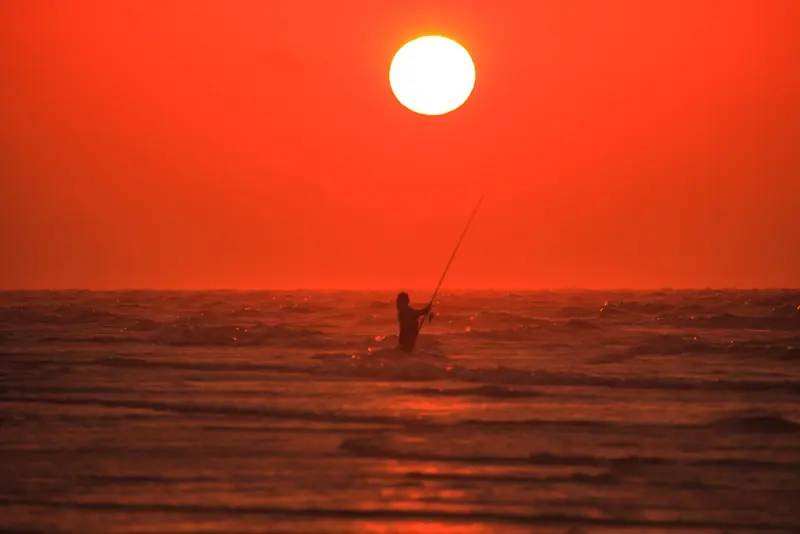
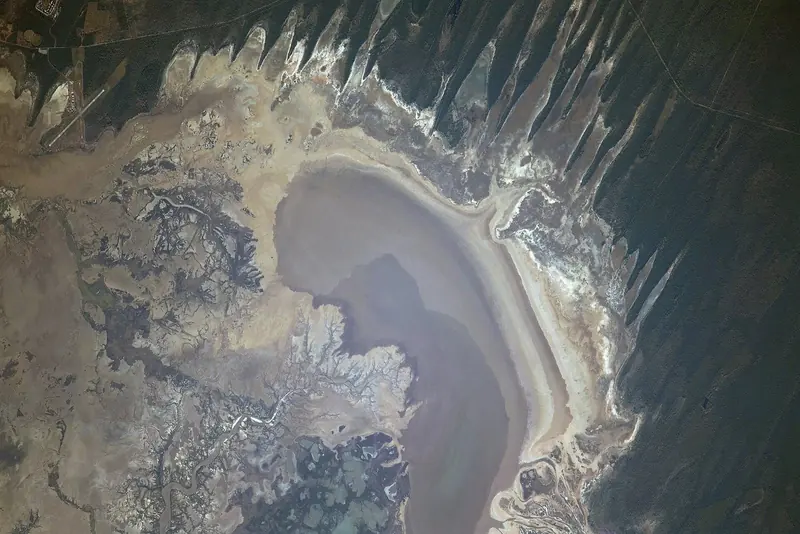
Derby, in King Sound on the west Kimberley coast, sees tides described by ABC News, citing an oceanographer, as the third biggest in the world after Nova Scotia's Bay of Fundy and a site in France, with extreme tides reaching up to 12 metres. A separate first-hand account from Boat International's Kimberley case study cites a 12 metre range with 10 knot tidal flows through narrow passages during that particular cruise. Canada's Bay of Fundy remains the single largest tidal range anywhere, so the defensible claim for the Kimberley is among the largest in the world, not the largest outright, but the practical effect is the same either way: two-thirds lunar, one-third solar tidal pull is amplified here by an unusually broad, gently sloping continental shelf, then amplified again by the funnel shape of embayments like King Sound, which resonates, in the same report's words, like a tuning fork.
The best-known consequence of that tidal power is the Horizontal Falls in Talbot Bay, where water forced through two narrow sandstone gorges about 300 metres apart produces a sideways waterfall up to 4 metres high with flows reaching 30 knots, reversing direction twice a day as the tide turns, a phenomenon David Attenborough called one of the greatest wonders of the natural world. Montgomery Reef, a 400 sq km platform of 1.8-billion-year-old rock rather than coral, appears to rise from the sea as the same tides fall, exposed up to 4 metres above the waterline with hundreds of cascading waterfalls draining off it. Both are spectacular precisely because the tide that creates them is also the reason the Boat International case study describes river crossings elsewhere on the same cruise becoming impassable within roughly twenty minutes as the tide turned, a genuine navigation hazard rather than a scenic curiosity.
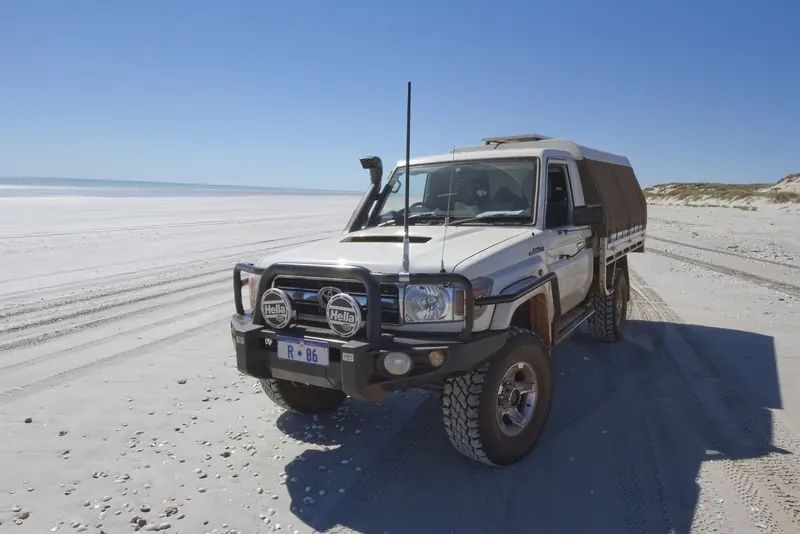
On one recent private superyacht expedition here, crew reported seeing at least six saltwater crocodiles a night. The owners replaced their tender with a purpose-built, crocodile-resistant model before departure.
Crocodiles Are a Design Requirement, Not a Footnote
On the Boat International-documented expedition, crew reported observing at least six saltwater crocodiles most nights. The response was not a warning sign but a design decision: the owners replaced their standard RIB tender with a purpose-built amphibious model, wheeled and cab-protected, specifically to prevent a crocodile puncturing it, and used satellite imagery in advance to identify freshwater pools above waterfalls crocodiles cannot climb before allowing anyone to swim there at all. Swimming or diving directly off the yacht, or in known estuaries such as the Prince Regent River, was avoided entirely, a protocol corroborated independently by Kimberley charter operators' own published safety guidance.
This should be read as a structural planning point rather than a dramatic aside: any owner or captain planning a Kimberley itinerary needs to budget for tender selection and swim-safety protocol as part of the trip's specification, the same way they would budget for fuel range or a helicopter, rather than treat it as a risk to manage informally once aboard.
A Helicopter Is Standard Kit Here, Not a Luxury
True North, the dedicated Kimberley expedition ship that has run the coast since 1987, has carried a full-time helicopter for that entire period specifically for heli-hiking and access to remote waterholes; its own published material treats this as core to the itinerary, not an add-on. On the private superyacht case study, the owners chartered a helicopter for a full week to reach sites otherwise inaccessible from the water, including the Charnley, Isdell and Sale Rivers and Ruby Falls. King George Falls, Western Australia's highest twin waterfall at about 100 metres and of deep cultural significance to the Balanggarra people, is reachable by tender roughly seven nautical miles up its river, but runs fullest only in the early dry season, April to June, while King George River is still fed by the tail of the wet season's rain.
Rock art is the other major draw a tender alone often cannot properly reach or interpret. Two major traditions survive along the coast: Wandjina figures, round-faced cloud and rain spirits, and Gwion Gwion art, formerly called Bradshaw paintings, of slender, sash-adorned human figures. Age estimates are genuinely disputed in the archaeological literature, cited anywhere from roughly 17,000 to over 50,000 years depending on the source, and should be presented as an open question rather than a fixed number. The Worrorra, Ngarinyin and Wunambal peoples are the recognised Traditional Owner custodians, the Ngarinyin specifically of the Gwion Gwion sites, and visiting any of it requires their permission; no single published, standardised permit process for a private yacht visit could be confirmed, which makes contacting a Traditional Owner corporation or a Kimberley-based operator directly, well before arrival, the only reliable way to visit respectfully and legally.
A Short, Strict Season, and a Real Border to Cross
Outside the dry season, this coast is not a marginal cruising ground, it is largely not a cruising ground at all: the wet season brings genuine monsoon weather and cyclone risk, with January and February the peak of what one industry source describes as among the most cyclone-prone regions anywhere in the world. Within the dry season, later months, roughly July to September, are repeatedly cited as the most settled, once the trade winds establish, while April to June is specifically better for King George Falls, still running from the tail of the wet season, a genuine trade-off between calm weather and a fuller waterfall that a single blanket answer would misrepresent.
Getting in is not informal. Under Australia's Biosecurity Act, every international vessel, including private and charter yachts, must submit a Pre-Arrival Report and give at least 12 hours' notice before entering Australian territorial waters, and may only enter at a designated First Point of Entry, which Broome and Wyndham now hold alongside the long-established Darwin, unless permission for another port is sought at least 10 days in advance. Officers board at a designated station on arrival, and fresh produce and frozen or canned meat are commonly confiscated on inspection. This is unusually strict compared to most cruising grounds a superyacht owner is likely to have experienced, and it is worth briefing crew on before arrival rather than discovering at the boarding station.
على البر والوصول والحجز
| Getting there | Broome (principal western gateway) and Darwin (international connections) bookend most itineraries; Wyndham and Kununurra serve the east Kimberley end. Both Broome and Wyndham hold First Point of Entry status alongside Darwin. |
|---|---|
| Season | Dry season only, roughly May to September or October. Later months (July to September) are most settled; April to June suits King George Falls, still fed by the wet season's tail. Wet season (November to April) brings monsoon weather and real cyclone risk. |
| Fuel and provisioning | No marinas and sparse fuel infrastructure along the route; a documented private expedition expanded fuel capacity from 58,000 to 70,000 litres before departure rather than count on refuelling en route. |
| Biosecurity and entry | A Pre-Arrival Report is mandatory for every vessel, with at least 12 hours' notice before entering Australian waters, and entry only at a First Point of Entry (Broome, Wyndham or Darwin) unless permission for another port is sought 10 days ahead. |
| Safety | Saltwater crocodiles are common; swimming should be confined to sites identified in advance above the croc line. A crocodile-resistant tender is a genuine, documented precaution taken on at least one recent expedition. |
| What is not published | No single authoritative superyacht day-rate for the region, no standardised rock-art visiting permit process for a private yacht, and no published medevac response-time data for the region were found. |
ما يذكره الملاك والأطقم
The coastline was explicitly built and provisioned as if nothing would be available along the way
The owners of a 42.8 metre Sanlorenzo expanded fuel capacity from 58,000 to 70,000 litres and added a spare watermaker and backup refrigeration specifically because the coastline offered zero infrastructure.
Boat InternationalCrocodiles were an every-night presence, not an occasional sighting
Crew on the same expedition reported observing at least six saltwater crocodiles on a typical night, prompting a purpose-built, crocodile-resistant tender for the trip.
Boat InternationalA helicopter was treated as essential rather than a luxury add-on
The expedition chartered a helicopter for a full week specifically to reach the Charnley, Isdell and Sale Rivers and Ruby Falls, sites judged inaccessible from the water alone.
Boat InternationalThe dedicated expedition operator has run the same playbook for decades
True North has carried a full-time helicopter for heli-hiking and remote waterhole access on its Kimberley itineraries continuously since 1987.
True NorthThe region's tides are ranked among the largest on Earth by an independent oceanographer
An oceanographer's on-record explanation ranks Derby's tides as the third biggest in the world after the Bay of Fundy and a site in France, driven by continental shelf geometry.
ABC News
نقاط القوة وما يستدعي الانتباه
نقاط القوة
- A genuinely unspoiled expedition coastlineOver 12,000 km of coastline with only four real access points offers a scale of wilderness cruising very few destinations anywhere can still match.
- Natural phenomena found nowhere else at this scaleThe Horizontal Falls and the tidally exposed Montgomery Reef are both produced by tides among the largest in the world, spectacles a calmer cruising ground simply cannot offer.
- Rock art tens of thousands of years old, in its original settingWandjina and Gwion Gwion rock art sites, among the oldest human art anywhere, survive in place along the coast, with living Traditional Owner custodianship rather than museum removal.
- A well-established operational playbook existsTrue North has run helicopter-supported Kimberley expeditions since 1987, and documented private superyacht itineraries give a real, replicable model for how to do this safely.
- Genuinely wild wildlife encountersSaltwater crocodiles, humpback whale migration and remote gorge wildlife are everyday features of a Kimberley itinerary, not staged encounters.
ما يستدعي الانتباه
- Crocodiles are a real, structural safety constraintA documented expedition reported six or more crocodiles most nights and specified a crocodile-resistant tender and strict swim protocols as necessary precautions, not optional caution.
- The tide can strand you, not just delay youRiver crossings have been documented becoming impassable within about twenty minutes as the tide turns, meaning anchoring and tender timing must be planned around slack water, not convenience.
- Almost no infrastructure means almost no margin for errorWith no marinas and sparse fuel along the whole route, a mechanical or medical problem has to be solved from the boat's own resources or by helicopter, not by diverting to a nearby port.
- The season is short and strictly weather-boundThe cruising window is effectively May to September or October only; the rest of the year carries genuine monsoon and cyclone risk in one of the most cyclone-prone regions in the world.
- Entry paperwork is stricter than most cruising groundsMandatory advance biosecurity reporting, a 12-hour notice requirement and entry restricted to designated ports are more demanding than the clearance process at most yacht destinations.
لمين هو: An owner who wants a genuine, largely unphotographed wilderness coastline, ancient rock art and a coastline that still surprises expedition operators, and who is prepared to self-provision fuel and stores for the whole transit, fit a helicopter or accept its absence, and build the whole itinerary around a tide that can strand a tender in twenty minutes.