The Seychelles
| Region | 115 islands about 1,000 nautical miles east of Africa, with a granite inner group and coral outer islands |
|---|---|
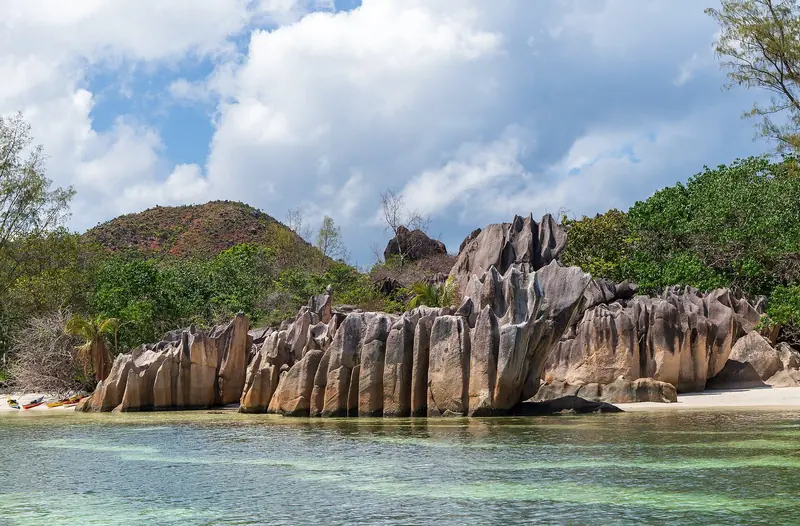
| The inner islands are the exposed peaks of continental crust, which is why Mahe rises 900 m and the beaches are sand between granite boulders | |
| Distances | Mahe to Praslin about 25 nautical miles, La Digue three miles beyond it |
| The outer islands, the Amirantes, Alphonse, Farquhar and Aldabra, spread across 700 miles to the south west | |
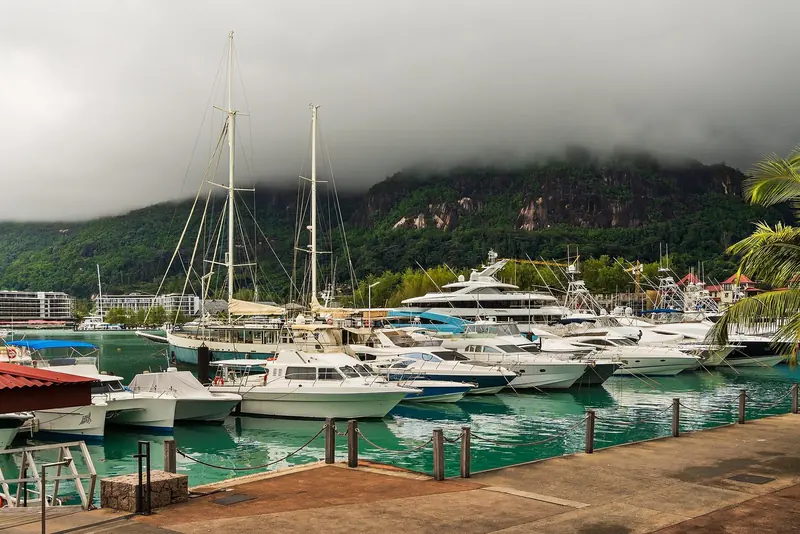
| Eden Island Marina on Mahe offers berthing for yachts up to 120 m, with over 1,000 m of piled pontoon berths | |
| Of that, 180 m is dedicated superyacht berthing with stern on berthing available both sides | |
| The marina basin has 11 m of water but the approach channel is restricted to 5.1 m | |
| Eden Island is about twenty minutes from Seychelles International Airport and a short drive from Victoria | |
| Cruising permits are quoted in the region of USD 100 to 200 | |
| Marine park entry is charged per park per person, quoted at USD 10 to 30 | |
| A mooring inside the marine parks costs SCR 250 per night per boat | |
| Charter operators quote landing and visitor fees of about USD 117 per person for a week and mooring at USD 14 to 39 a night | |
| The port authority requires skippers to submit sailing qualifications no later than seven days before departure | |
| Aldabra is the world's second largest coral atoll, a UNESCO World Heritage site, and holds roughly 100,000 giant tortoises | |
| Aldabra is 700 nautical miles south west of Mahe and admits a maximum of twelve visitors a day | |
| An Aldabra permit costs upwards of USD 1,000 and takes three months or more to process | |
| Every Aldabra visitor pays a daily impact fee, quoted at USD 240 a day for each passenger and each crew member | |
| The inner islands lie between four and five degrees south, outside the cyclone belt, so there is no season when the boat must leave | |
| Sea temperature runs 27 to 29 degrees all year and air temperature between about 24 and 32 | |
| The south east monsoon runs May to September at 15 to 25 knots, and the north west monsoon November to March is lighter and wetter | |
| April and October are the transition months, flat calm, best for diving and for reaching the outer islands | |
| The Vallee de Mai on Praslin is a World Heritage site and the only place the coco de mer grows wild | |
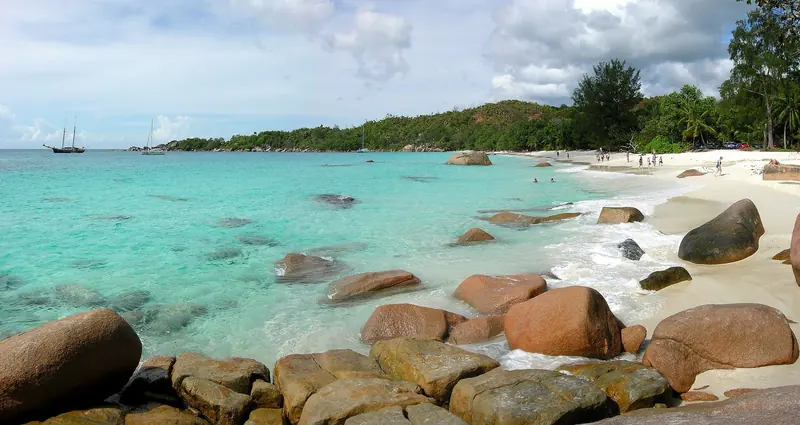
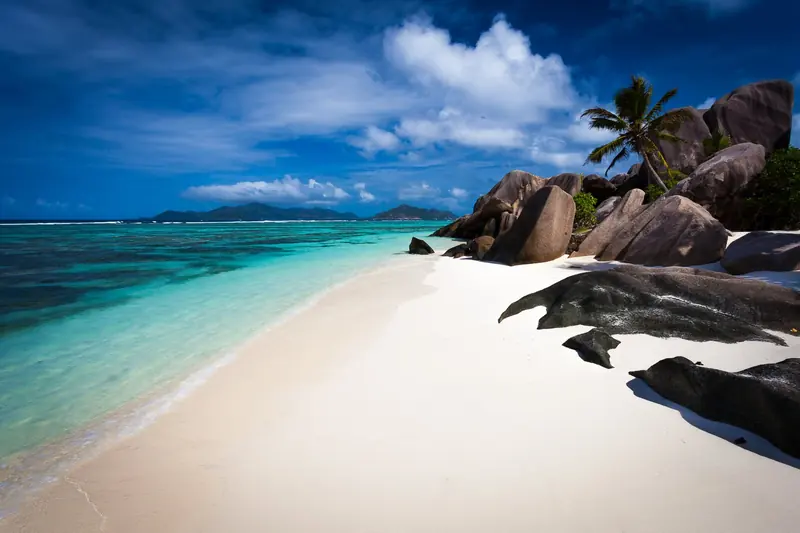
| La Digue has almost no cars and its Anse Source d'Argent is the granite boulder beach in the photographs | |
| There is no refit yard, chandlery of depth or specialist engineering in the country, and most food is imported | |
Granite in the middle of an ocean
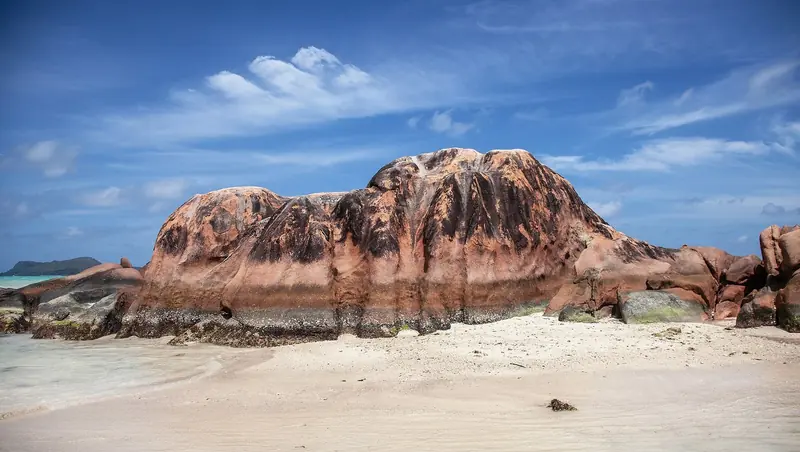
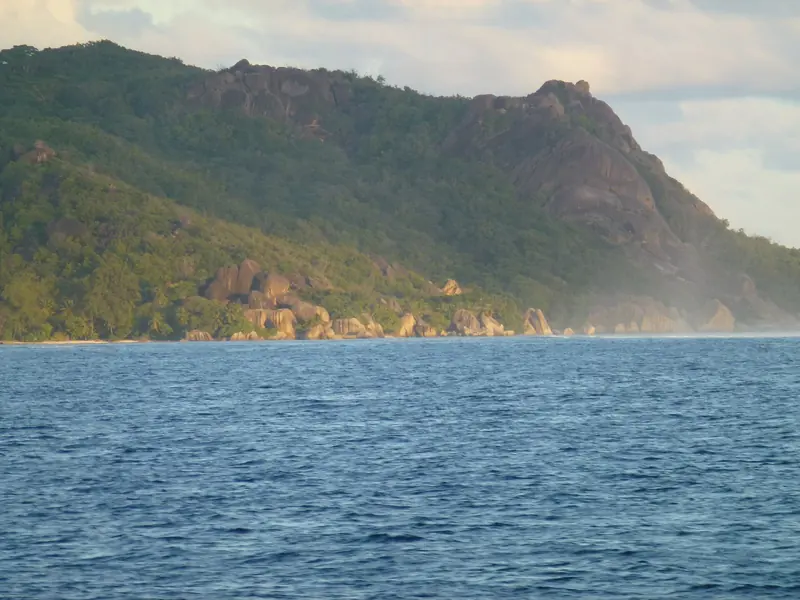
The Seychelles are unique in one specific way: the inner islands are granite, the exposed peaks of a fragment of continental crust left behind when India separated from Africa, rather than volcanic cones or coral atolls. That is why Mahe rises 900 metres, why the boulders on La Digue look like sculpture, and why the beaches are pale sand between grey rock rather than a reef flat. Nowhere else in any ocean looks like this.
The inner group, Mahe, Praslin, La Digue, Silhouette, Curieuse and their neighbours, sits inside a shallow bank and is compact: Mahe to Praslin is about 25 nautical miles and La Digue is three miles beyond it. That is the cruising ground. The outer islands, the Amirantes, Alphonse, Farquhar and Aldabra, are coral and spread across 700 miles of ocean to the south west, and they are an expedition rather than a week.
Eden Island, and the number that catches owners out
Eden Island Marina on Mahe is the only marina of consequence in the country and it is a good one. It offers berthing for yachts up to 120 metres, with over 1,000 metres of piled pontoon berths of which 180 metres is dedicated to superyachts, stern on berthing on both sides, and 11 metres of water in the basin. It sits on a development a short drive from Victoria, the capital, and about twenty minutes from the international airport.
The constraint is the approach. The channel into the marina is restricted to 5.1 metres, which means a yacht advertised as fitting the berth may not fit the way in. That single number decides whether a large motor yacht can use the Seychelles' only marina or has to lie at anchor and work from the tender, and it is the sort of figure that appears in the marina's own detail and in nobody's itinerary planning. Confirm the boat's draft against it before anything else.
Aldabra admits twelve visitors a day at USD 240 each, and the permit takes three months. That is why it is still worth seeing.
The fees, which are numerous and small
The Seychelles charges for access rather than for berthing, and the charges accumulate. Cruising permits run in the region of USD 100 to 200. Marine park entry is charged per park per person, quoted between USD 10 and 30, and the parks are the good bits: Sainte Anne, Baie Ternay and Port Launay on Mahe, Curieuse, Cousin, Aride, Silhouette, Cocos and St Pierre. Inside those parks a mooring costs SCR 250 per night per boat, which is a modest number in a strong currency.
Charter operators quote landing and visitor fees of about USD 117 per person for a week's cruise and mooring costs of USD 14 to 39 a night depending on whether the boat takes a buoy, a berth or an anchorage. None of these are large individually. Together, for a boat with twelve guests and eight crew moving between parks every day, they are a line worth budgeting rather than absorbing. The port authority has also tightened the paperwork, requiring skippers to submit their qualifications no later than seven days before departure.
Aldabra, and what it costs to get there
Aldabra is the reason a serious owner comes to the Seychelles rather than to the Maldives. It is the world's second largest coral atoll, a UNESCO World Heritage site, home to roughly 100,000 giant tortoises, more than on the Galapagos, and it is 700 nautical miles south west of Mahe with nothing in between. It is also rationed. Access requires an advance permit costing upwards of USD 1,000 with a processing time of three months or more, and the atoll admits a maximum of twelve visitors a day.
On top of that every visitor pays a daily impact fee, currently quoted at USD 240 a day for each passenger and each crew member. For a yacht with twenty people aboard that is USD 4,800 a day before anything else. The result is a place that almost nobody sees, and that is the point: the atoll's ecology survives because the access is priced and capped. An owner who wants Aldabra should start the permit application before he books the boat, not after.
There are no cyclones, which changes everything
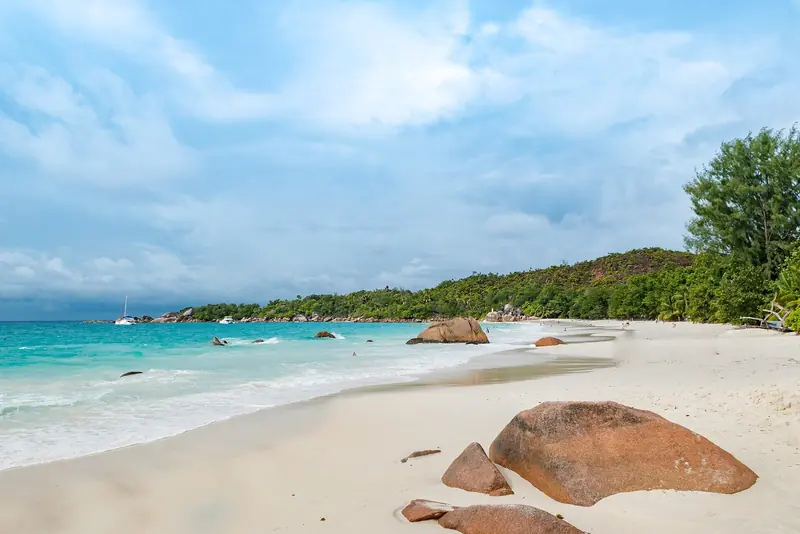
The inner Seychelles sit close enough to the equator, between four and five degrees south, to be outside the cyclone belt, which is the single most important practical fact about the country. There is no season during which the boat must leave, no insurance exclusion box, and no annual migration. Sea temperature runs 27 to 29 degrees all year and air temperature barely moves between 24 and 32. In a directory full of destinations that close for half the year, this one does not close at all.
What changes is the wind. The south east monsoon runs from May to September, bringing 15 to 25 knots, cooler air, choppier water and seaweed on the south east facing beaches. The north west monsoon from November to March is lighter, hotter and wetter, with more humidity and short heavy rain. April and October are the transitions and they are the flat calm months, which is when the diving is best and the outer islands are most easily reached.
The islands worth the days
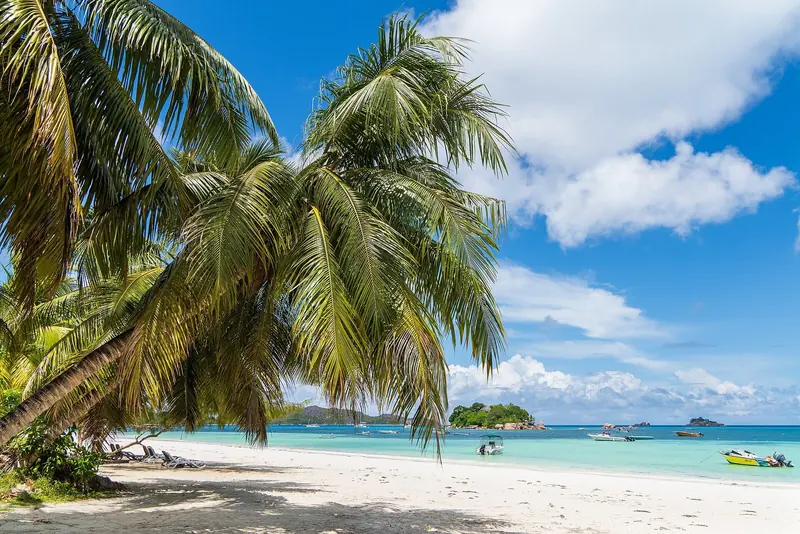
Praslin holds the Vallee de Mai, a palm forest that is a World Heritage site in its own right and the only place the coco de mer grows wild, and Anse Lazio at its northern end is one of the beaches that appears on every list. La Digue, three miles further, has almost no cars, is crossed by bicycle and ox cart, and its Anse Source d'Argent is the granite boulder beach that most people picture when they picture the Seychelles.
Curieuse has a free ranging giant tortoise population and a mangrove boardwalk. Cousin and Aride are seabird reserves with landing controlled by the wardens. Silhouette rises steeply out of deep water and holds one of the least disturbed forests in the group. Sainte Anne, ten minutes from Eden Island, is the convenient park for a first afternoon. And in the outer islands the diving at the Amirantes and the fishing at Alphonse and Farquhar are world class and largely unvisited.
Getting guests in
Seychelles International on Mahe carries long haul services from Europe, the Gulf and East Africa and sits about twenty minutes from Eden Island, which makes the country far easier to reach than its position suggests. Domestic connections to Praslin run frequently, and there are helicopters and light aircraft to the inner islands and to some of the outer ones. Visa free entry applies to most nationalities on arrival, which removes the usual friction.
The practical difficulty is the outer islands. Alphonse and Desroches have airstrips and scheduled or charter flights, but a guest change at the Amirantes or Aldabra is not a routine exercise and needs planning that a Mediterranean itinerary never requires. Build the guest programme around the inner islands and treat the outer group as a leg the boat does with the same people aboard throughout.
The support position, honestly
Everything technical happens on Mahe and there is not much of it. Eden Island has the services a marina of that size carries, Victoria has the commercial port with fuel and stores, and the local trade can handle routine maintenance. There is no refit yard, no significant chandlery, no paint shed and no specialist engineering, so a serious fault means flying a technician and a part 4,000 miles or moving the boat to South Africa, the Gulf or Asia.
Provisioning is the other adjustment. The Seychelles imports most of what it eats, prices are high, and the range in the supermarkets is limited by European standards, so a yacht with guest expectations provisions in from the Gulf or Europe and buys fish, fruit and vegetables locally. Fuel is available at Victoria, and an agent arranges it. None of this is a reason not to come, and all of it argues for arriving self sufficient.
The honest downside, and what is not published
The inner islands are small and a fortnight is more than they need, so a two week charter either repeats itself or commits to the outer islands, which is a different sort of trip. Everything ashore is expensive and the range is limited. There is no marina other than Eden Island and its approach channel is 5.1 metres. The park fees are per person per park and they add up. And the country is 1,000 miles from Africa and 1,500 from India, so getting there is a passage and getting help is a flight.
Checked in August 2026, Eden Island Marina publishes its dimensions in useful detail and its berthing rates not at all, and no Seychelles marina publishes a fuel price. The park and landing fees are quoted by charter operators in ranges rather than published as a consolidated official table, and the figures in circulation differ. The Aldabra permit cost is described as upwards of USD 1,000 without a published schedule. Every one of those numbers should be confirmed with an agent before a season is priced.
على البر والوصول والحجز
| Getting there | Seychelles International on Mahe carries long haul services from Europe, the Gulf and East Africa and is about twenty minutes from Eden Island, which makes the country much easier to reach than its position on a chart suggests. Domestic flights to Praslin run frequently and helicopters and light aircraft serve the inner islands and some of the outer ones. Visa free entry applies to most nationalities on arrival. Guest changes at the Amirantes or Aldabra are not routine and need planning that an inner islands itinerary does not. |
|---|---|
| The marina, and its draft limit | Eden Island Marina is the only marina of consequence in the country, offering berths for yachts up to 120 metres across more than 1,000 metres of piled pontoons, of which 180 metres is dedicated superyacht berthing with stern on berthing both sides, in a basin with 11 metres of water. The approach channel is restricted to 5.1 metres. Check the boat's draft against that number before anything else, because a yacht that fits the berth may not fit the entrance, and the alternative is anchoring off and working from the tender. |
| What the country charges | Cruising permits are quoted at around USD 100 to 200. Marine park entry is charged per park per person at roughly USD 10 to 30, covering Sainte Anne, Baie Ternay, Port Launay, Curieuse, Cousin, Aride, Silhouette, Cocos and St Pierre. A mooring inside a park costs SCR 250 per night per boat. Charter operators quote landing and visitor fees of about USD 117 per person for a week and mooring at USD 14 to 39 a night. For twelve guests and eight crew moving between parks daily, budget it rather than absorb it. |
| Aldabra, if you want it | The atoll is 700 nautical miles south west of Mahe with nothing in between, admits a maximum of twelve visitors a day, and requires an advance permit costing upwards of USD 1,000 with a processing time of three months or more. Every visitor, passenger and crew alike, pays a daily impact fee quoted at USD 240. For twenty people aboard that is USD 4,800 a day. Start the application before the trip is booked, and treat the passage as an expedition leg rather than an excursion. |
| The paperwork before departure | The port authority requires skippers to submit their sailing qualifications no later than seven days before the departure date, which is a recent tightening and is the kind of requirement that strands a boat on the morning it intended to leave. Clearance is at Victoria on Mahe. An agent is the sensible way to handle the permits, the park fees and the qualification submissions together, particularly for a yacht moving between parks daily. |
| When to come | There is no season when the boat must leave, because the inner islands sit outside the cyclone belt at four to five degrees south, with sea temperature at 27 to 29 degrees all year. The south east monsoon from May to September brings 15 to 25 knots, cooler air, choppier water and seaweed on the south east facing beaches. The north west monsoon from November to March is lighter, hotter and wetter. April and October are flat calm transition months and are the best time for diving and for the outer islands. |
| The islands to plan around | Praslin for the Vallee de Mai, a World Heritage site and the only place the coco de mer grows wild, and Anse Lazio at its northern end. La Digue, three miles on, with almost no cars and Anse Source d'Argent's granite boulders. Curieuse for the free ranging giant tortoises and the mangrove boardwalk. Cousin and Aride as seabird reserves with warden controlled landings. Silhouette for the forest. Sainte Anne, ten minutes from Eden Island, for the first afternoon. |
| Support and provisioning | Everything technical is on Mahe and there is not much of it: Eden Island's own services, the commercial port at Victoria for fuel and stores, and a local trade that handles routine maintenance. There is no refit yard, no chandlery of depth, no paint shed and no specialist engineering, so a serious fault means flying in a technician and a part or moving the boat to South Africa, the Gulf or Asia. Most food is imported and expensive, so provision in from the Gulf or Europe and buy fish, fruit and vegetables locally. |
| What is NOT published | Checked in August 2026, Eden Island Marina publishes its dimensions in useful detail and its berthing rates not at all, and no Seychelles marina publishes a fuel price. The park, landing and cruising permit fees circulate as operator quoted ranges rather than as a consolidated official table, and the figures in circulation differ from each other. The Aldabra permit is described as upwards of USD 1,000 without a published schedule. Confirm every one of those numbers with an agent before pricing a season. |
ما يذكره الملاك والأطقم
The berth length is not the constraint. The channel is
Eden Island Marina offers berthing for yachts up to 120 metres across more than 1,000 metres of piled pontoons, of which 180 metres is dedicated superyacht berthing with stern on berthing available on both sides, and the basin carries 11 metres of water. The approach channel to the marina, however, is restricted to 5.1 metres. That single figure determines whether a large motor yacht can use the only marina in the country at all.
Eden Island Marina, reported by Yachting Pages and Marine ProjectAldabra is rationed by design and priced accordingly
Access to the atoll requires an advance permit costing upwards of USD 1,000 with a processing time of three months or more, the atoll admits a maximum of twelve visitors a day, and every visitor including crew pays a daily impact fee quoted at USD 240. For a yacht with twenty people aboard that is USD 4,800 a day before fuel or provisions, on a passage 700 nautical miles from Mahe.
Seychelles Islands Foundation, as reported by Seychelles charter operatorsThe park fees are small individually and constant in aggregate
Marine park entry in the Seychelles is charged per park per person, quoted between USD 10 and 30, across Sainte Anne, Baie Ternay, Port Launay, Curieuse, Cousin, Aride, Silhouette, Cocos and St Pierre, with a mooring inside those parks at SCR 250 per night per boat. Operators separately quote landing and visitor fees of about USD 117 per person for a week's cruise and mooring at USD 14 to 39 a night depending on buoy, berth or anchorage.
Seychelles Parks and Gardens Authority fee schedules, as quoted by charter operatorsThe qualification rule is new enough to catch a crew out
Seychelles port authorities have updated their sailing certification requirements to require skippers to submit all necessary qualifications no later than seven days before the departure date. It is a small administrative change with a large practical consequence, because it cannot be fixed on the morning of departure, and it is the kind of requirement a returning captain assumes has not changed since his last season.
Seychelles Maritime Safety Authority, as reported by charter operatorsThe numbers in circulation do not agree with each other
Checked in August 2026, Eden Island Marina publishes its dimensions in detail and no berthing rates, and no Seychelles marina publishes a fuel price. Cruising permit, park and landing fees circulate as operator quoted ranges rather than as a consolidated official table, and the ranges differ between sources. No independent published owner or captain account of superyacht service standards in the Seychelles could be found.
Yotters desk, checked August 2026
نقاط القوة وما يستدعي الانتباه
نقاط القوة
- No cyclone season at allThe inner islands sit at four to five degrees south, outside the belt, so there is no month when the boat must leave, no insurance exclusion box and sea temperature of 27 to 29 degrees all year.
- Scenery that exists nowhere elseGranite islands in the middle of an ocean, the exposed crust left behind when India separated from Africa, with beaches of pale sand between grey boulders.
- A marina that takes 120 metresEden Island offers more than 1,000 metres of piled pontoon berths, 180 metres of dedicated superyacht berthing with stern on both sides, and 11 metres in the basin.
- Aldabra, if you plan for itThe world's second largest coral atoll, a World Heritage site with about 100,000 giant tortoises, admitting twelve visitors a day, which is why it is still intact.
- Twenty minutes from a long haul airportSeychelles International carries services from Europe, the Gulf and East Africa, with visa free entry for most nationalities and the marina a short drive away.
ما يستدعي الانتباه
- The marina entrance is 5.1 metresA yacht that fits the 120 metre berth may not fit the approach channel, and the alternative in the only marina in the country is to anchor off and run tenders.
- The inner group is smallMahe to La Digue is under 30 miles. A fortnight either repeats itself or commits to the outer islands, which is an expedition rather than an extension.
- The fees are per person and per parkCruising permits, park entry at USD 10 to 30 a head, moorings at SCR 250 a night and landing fees around USD 117 a person a week, for everyone aboard.
- No technical support of any depthNo refit yard, no chandlery, no paint shed. A serious fault means flying a specialist 4,000 miles or moving the boat to South Africa, the Gulf or Asia.
- Everything ashore is importedProvisioning is expensive and limited in range, which means storing in from the Gulf or Europe and buying only fish, fruit and vegetables locally.
لمين هو: An owner who wants an ocean cruising ground with no cyclone season and no crowds, whose boat draws under 5.1 metres if he wants the only marina, and who is prepared to start an Aldabra permit application three months before he books the trip.