Ponta Delgada Marina (Azores)
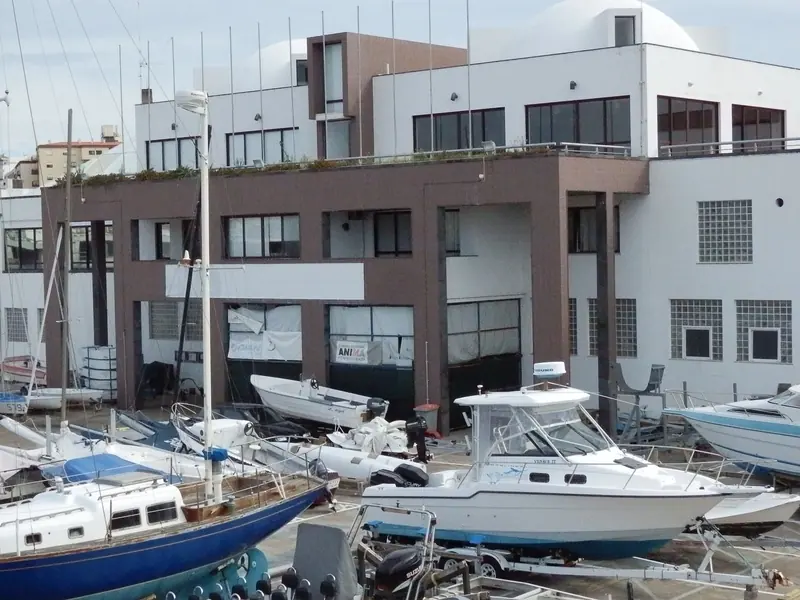
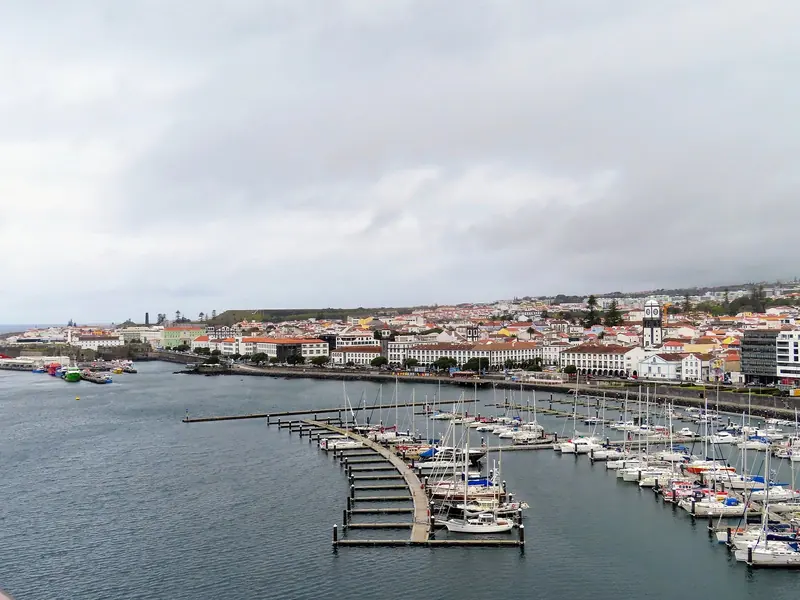
| Location | Ponta Delgada, Sao Miguel Island, Azores, Portugal, on the south coast inside the commercial port |
|---|---|
| Address | Av. Infante D. Henrique, Apartado 113, 9500-770 Ponta Delgada |
| Operator | Portos dos Acores (the regional ports authority), phone +351 296 281 510, email [email protected] |
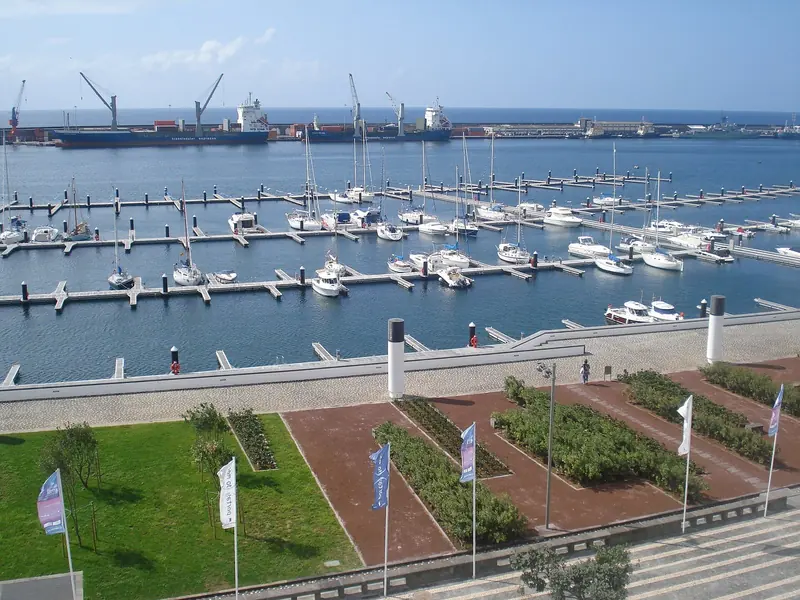
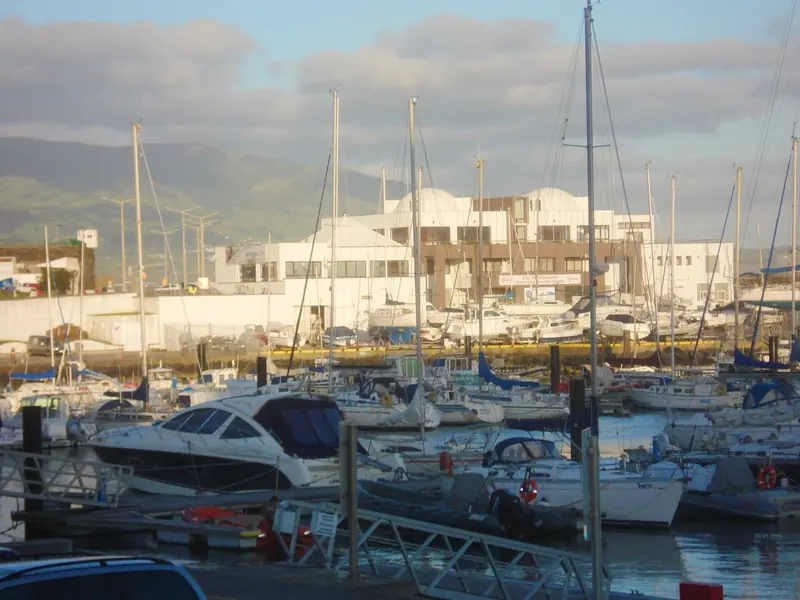
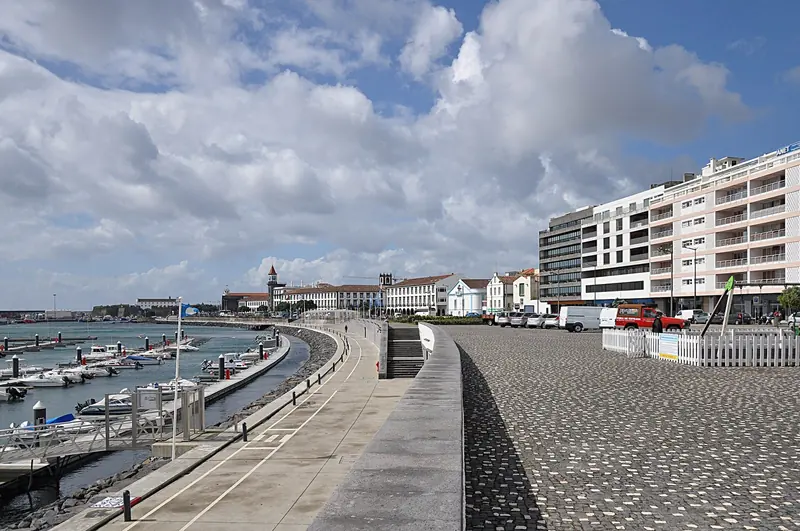
| Berths | 640, expanded under the Portas do Mar redevelopment into two basins - Nascente (the former Marina de Pero de Teive) and West (Marina das Portas do Mar) |
| Recreational marina pontoons | maximum LOA 40 m, maximum draught 3.5 m, per Dockwalk's technical listing |
| The adjacent commercial and cruise quay within the same port takes vessels of 75 m or more with up to 9 m draught, per Superyacht Services Guide - a materially different, and larger, figure from the marina pontoons themselves | |
| VHF | Channel 16 for hailing (confirmed by two sources); working channel given as 72 by one source and 62 by another |
| Blue Flag certified since 1999 | |
| On-site | reception quay, showers, laundry, bar, restaurant, shops, a yacht club, a travellift, dry docks, technical repair, pump-out, fuel, electricity and fresh water |
| Office hours | high season 09:00-18:30 (17:30 weekends); low season 09:00-17:30, closed Sundays |
| No official 2026 EUR tariff was published by the operator in sources available to this desk; the only figure found, roughly USD 60 a night for a 40-foot yacht from a third-party budgeting guide, is single-sourced and should be confirmed directly before planning a budget | |
| Portugal is inside the EU and Schengen area, so an EU-flagged yacht arriving from within Europe clears in with minimal formality; a yacht arriving from outside Schengen, including most Atlantic crossings from the Caribbean, Bermuda or the US East Coast, must still complete Portuguese immigration and customs formalities on first arrival | |
| The AZAB (Azores and Back) race, a roughly 2,400 mile round trip from Falmouth organised by the Royal Cornwall Yacht Club since 1975, finishes and restarts at Ponta Delgada - but only once every four years, not annually | |
| The advisable local sailing season runs late March to October, with June and September rated the best combination of settled weather and fewer crowds | |
A stop, not a destination
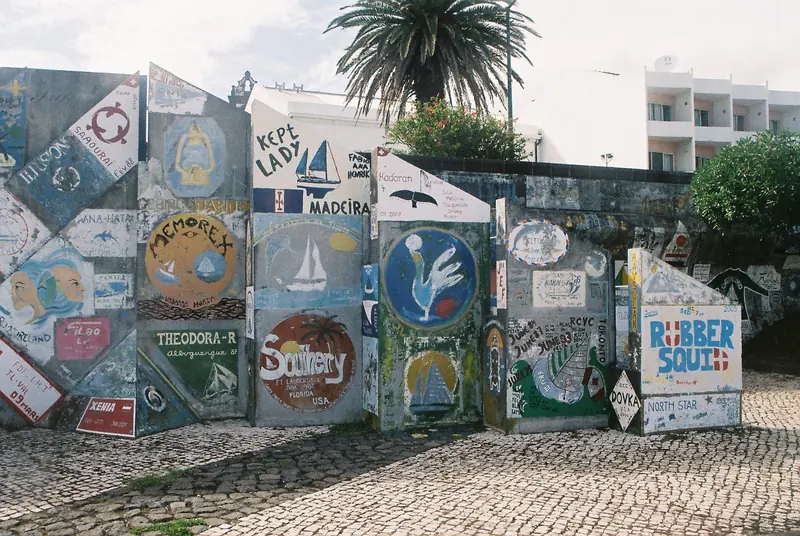
That geography shapes everything else on this page. The marina's own painted harbour wall, where crews who have just crossed an ocean leave their boat's name, pennant or flag behind, is not a manufactured tourist attraction; it is the accumulated evidence of decades of exactly the traffic this entry is describing. A yacht tied up here for a week is far more likely to be mid-passage than on a planned season in the islands.
That does not make Ponta Delgada a poor stop - the opposite, in fact. A marina built around transatlantic traffic tends to carry exactly the services a boat needs after two or three weeks at sea: a travellift and dry dock for anything that broke on the way, fuel and provisioning, and a yacht club used to dealing with tired crews rather than day-sailors. The town itself, the capital of Sao Miguel, is a genuine working Portuguese city rather than a resort built around the marina, which is a different proposition from most of the Mediterranean and Caribbean entries in this directory. Sao Miguel's own waters add a reason to linger beyond the repair list: whale and dolphin watching operators run directly out of Ponta Delgada, and the island's volcanic crater lakes and hot springs are a short drive rather than a flight away, which is more than most mid-ocean stopovers can offer a crew that suddenly has a few unplanned days ashore.
Two very different sets of numbers for the same port
That distinction matters more here than at most marinas in this directory, because the port itself is described in some sources as serving mega-yachts and cruise ships, which is true only of the commercial quay, not the leisure pontoons a private yacht would normally be assigned to. A captain arriving on a genuine superyacht should confirm directly with Portos dos Acores which berth is actually on offer, rather than assume the port's largest published figure applies to a recreational booking.
The 640-berth count itself reflects a real, recent expansion: the Portas do Mar redevelopment split the marina into two basins, Nascente (the former Marina de Pero de Teive) and a newer West basin also called Marina das Portas do Mar, which is why capacity here is described in some sources as having quadrupled from what existed before the project. That kind of purpose-built expansion, rather than organic growth, is worth knowing when comparing Ponta Delgada's berth count against an older Mediterranean marina that has simply been added to over decades.
The wall along the marina is covered in painted boat names and flags left by crews who crossed an ocean to get here. Nobody commissions that; it accumulates one boat at a time.
What it actually costs, and the one number nobody publishes
That is a genuine gap rather than an oversight in the research: Portos dos Acores publishes contact details, opening hours and facility lists for the marina, but this desk found no rate card, per-metre pricing table or seasonal tariff anywhere in its own materials or in the regional ports directory. A captain planning a transatlantic stopover should treat the berthing cost as an unknown to be confirmed by phone or email ahead of arrival, not as a budgeted line item.
What is confirmed is what the fee, whatever it turns out to be, buys: electricity, fresh water, fuel, showers and laundry are all listed as on-site services, alongside a travellift and dry dock for anything that needs hauling after an ocean crossing. For a crew arriving with real repair needs rather than simply topping up, that combination is worth more than a cheap headline rate at a marina with no technical support at all.
Clearing in is the easy part here
That is a meaningfully simpler proposition than several other stops in this directory, and it is part of why Ponta Delgada functions so well as a transatlantic waypoint: a crew that has just spent two or three weeks at sea wants a straightforward clearance, not another bureaucratic ordeal, and an EU port of entry inside Portuguese territory is exactly that for most flags.
None of this removes the basic requirement to report to the relevant Portuguese authorities on first arrival from outside Schengen, and a captain unfamiliar with Portuguese procedure should confirm current requirements directly with the marina office or a local agent rather than assume EU membership alone removes every formality.
The wall, the club, and what a crew actually finds ashore
That is a genuinely different experience from most of this directory's Mediterranean and Caribbean entries, which are built primarily around chartering and repeat seasonal visits. A crew arriving here is more often celebrating the end of an ocean passage than starting a booked holiday, and the marina's facilities - showers, laundry, a bar and restaurant on site - read as built for that kind of arrival rather than for a week of resort hospitality.
The natural swimming pools and recreational options near the marina, including golf and horseback riding cited by the regional tourism board, are a genuine amenity for a crew staying longer than a quick turnaround, but they are incidental to the marina's real function rather than the reason most yachts are here in the first place.
The AZAB, and the calendar this port actually runs on
The race is genuinely open to a wide range of boats and crews, from high-performance racers to cruisers taking on their first serious ocean passage, single or double-handed, and its choice of Ponta Delgada as the turning point is itself evidence of the port's role as the natural stopping point on this stretch of the Atlantic rather than an arbitrary destination.
Outside AZAB years, the port's real calendar is the broader transatlantic sailing season rather than any single fixed event: the advisable local sailing window runs late March to October, and June and September are consistently rated as the best combination of settled weather and fewer boats, both for local sailing around Sao Miguel and for a crew timing a longer ocean leg either side of a Ponta Delgada stop.
The weather that actually decides when a yacht is here
That routing reality is precisely why Ponta Delgada functions as a stopover rather than a destination for most of the yachts that use it: a crew crossing westbound in late spring or eastbound in summer is following the same broad weather logic that keeps the Azores High relatively settled, and a stop here lets a captain reassess the next leg's forecast rather than committing to the whole ocean in one push.
None of this is a Ponta Delgada-specific rule - it applies to the Azores as a whole and to Atlantic crossing practice generally - but it is the context that explains why the marina's own busiest weeks have little to do with any local event and everything to do with when boats are actually crossing the ocean on either side of the islands.
Ponta Delgada is not the only Azores stopover, and it is worth knowing why some crews choose the other one
The two ports serve slightly different traffic patterns in practice: Horta sits further west and is often the first landfall for a yacht crossing from the Caribbean or Bermuda, while Ponta Delgada, as the Azores' capital and largest city, offers more in the way of scheduled flights, provisioning and technical services once a crew is ready to move on toward mainland Europe. Neither this desk's research nor the sources it drew on found a reason to call one port definitively better than the other - they function as complementary stops on the same crossing rather than true competitors.
For an owner weighing the two, the practical distinction is size of place rather than quality of shelter: Ponta Delgada is a genuine city with an airport carrying scheduled connections to mainland Portugal, while Horta is a smaller, more purely nautical town built even more tightly around its marina and yacht traffic. A crew wanting to fly crew changes in and out easily has a real reason to prefer Ponta Delgada; one wanting the more concentrated, sailor-focused atmosphere Horta is known for has an equally real reason to choose the other.
على البر والوصول والحجز
| Getting there | Ponta Delgada Joao Paulo II Airport is a short distance from the marina in the same city, with scheduled connections to mainland Portugal and seasonal routes to other European and North American points. |
|---|---|
| Arriving by sea | VHF Channel 16 for hailing; working channel given as either 72 or 62 depending on the source. The marina sits inside the commercial port on the south coast of Sao Miguel. |
| Reserving a berth | By phone (+351 296 281 510) or email ([email protected]); office hours 09:00-18:30 high season (17:30 weekends), 09:00-17:30 low season, closed Sundays. |
| Berths and size | 640 berths across two basins; recreational pontoons take vessels to 40 m LOA and 3.5 m draught. The adjacent commercial/cruise quay separately handles vessels of 75 m or more. |
| What a berth costs | No official tariff is published by the operator in sources found; a third-party guide cites roughly USD 60/night for a 40-foot yacht, unconfirmed and single-sourced. |
| Services on the quay | Electricity, fresh water, fuel, showers, laundry, a bar and restaurant, a yacht club, a travellift, dry docks, technical repair and pump-out. |
| Clearing in | Straightforward for EU/Schengen arrivals; a vessel arriving from outside Schengen, including most transatlantic crossings, must still complete Portuguese immigration and customs on first landfall. |
| The fixed date | The AZAB (Azores and Back) race from Falmouth finishes and restarts here every four years, not annually; otherwise the port's calendar follows the May-September transatlantic crossing season. |
| What is not published | A current EUR tariff, a reconciled maximum LOA for the recreational pontoons versus the commercial quay, and the marina's exact working VHF channel (both 72 and 62 are cited). |
ما يذكره الملاك والأطقم
The painted wall is the clearest evidence of what this port is actually for
Crews who have completed a transatlantic crossing or an ocean race traditionally paint their yacht's name, flag or pennant on the harbour wall at the marina, a tradition documented in photographs going back at least to 2009 and still visibly maintained.
Wikimedia Commons photograph description, Sudzie, 2009The port's own published figures for vessel size do not describe one single facility
A technical marina directory gives the recreational pontoons a 40 m maximum LOA and 3.5 m draught, while a separate superyacht-industry directory describes the same port accommodating vessels of 75 m or more - readable only as two different berthing areas within one port, not a single reconciled number.
Dockwalk and Superyacht Services GuideThe AZAB race treats Ponta Delgada as the natural turning point of a serious ocean passage
The Royal Cornwall Yacht Club has run this roughly 2,400 mile round-trip race from Falmouth to Ponta Delgada and back since 1975, open to boats from high-performance racers to first-time ocean cruisers.
Royal Cornwall Yacht Club (AZAB)No berthing tariff is published anywhere this desk could find
Portos dos Acores publishes contact details, hours and facilities for the marina but no rate card; the only cost figure located came from a third-party yachting-cost guide rather than the operator itself.
The desk, cross-referenced against Portos dos Acores and regional marina directories
نقاط القوة وما يستدعي الانتباه
نقاط القوة
- Genuinely well positioned for the one thing that matters hereAlmost exactly a third of the way across a classic transatlantic crossing, with real technical support - a travellift, dry docks and repair - for a boat that needs it after an ocean passage.
- Straightforward EU clearanceA Schengen port of entry, materially simpler than the multi-day clearance processes documented elsewhere in this directory.
- A real, recently expanded facility, not a tired old harbour640 berths across two basins built under the Portas do Mar redevelopment, Blue Flag certified since 1999.
- A genuine piece of sailing history on the harbour wallDecades of transatlantic crews have left their boat's name behind, a real and ongoing tradition rather than a manufactured attraction.
ما يستدعي الانتباه
- No published tariff at allAn owner cannot budget a stop here from any public source; the berthing cost has to be confirmed directly with the operator.
- The port's own size claims do not describe one consistent facilityA 40 m recreational pontoon limit sits alongside a separate claim of 75 m-plus vessels using the same port, and it is not clear from public sources which berth a given booking actually gets.
- It is a stopover, not a destinationAlmost everything about the marina's own character - the painted wall, the AZAB race, the travellift - points to transient ocean traffic rather than a season-long base.
- The AZAB is quadrennial, not annualThe one named sailing event tied to this port runs once every four years, so it cannot anchor a normal season's planning.
لمين هو: An owner or captain routing a yacht across the Atlantic who needs a genuine, well-equipped stop roughly a third of the way in either direction, rather than a season-long home port