Amalfi Coast & Capri
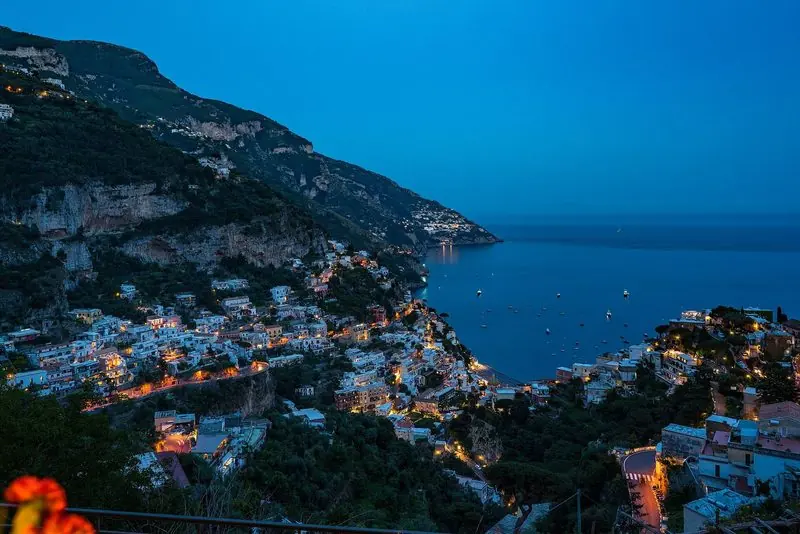
| Región | mar Tirreno, golfo de Nápoles y golfo de Salerno, Campania |
|---|---|
| Escala | de Nápoles a Capri unas 17 millas náuticas, de Capri a Positano unas 9, de Amalfi a Salerno unas 13 |
| Temporada | de mayo a octubre, con la punta italiana concentrada en las dos semanas en torno al Ferragosto del 15 de agosto |
| Amarre en Capri | Marina Grande admite barcos de hasta 60 m, profundidades de 2 a 8 m, unos 30 amarres de tránsito |
| Base continental | Marina d'Arechi en Salerno, 1.000 amarres, muelle de superyates para barcos de 32 m a 100 m, hasta 7 m de calado |
| Fondeo | el área marina protegida de Punta Campanella rige Nerano y la bahía de Ieranto, con acceso zonificado y sin fondeo libre en las zonas B y C |
| Ventana de fondeo en el área protegida | de 08:00 a 20:00, fuera de la posidonia y a distancia de las líneas de playa |
| Asistencia en Capri | la marina pone un buzo gratis para los barcos de más de 30 m que fondean fuera, avisando con 12 horas |
| Acceso aéreo | Nápoles Capodichino tiene restricciones de slots, Salerno Costa d'Amalfi reabrió a los jets privados el 11 de julio de 2024 con una pista de 2.000 m |
| Riesgo meteorológico determinante | mar de fondo del sur y del suroeste, que cierra los fondeaderos abiertos en cuestión de horas |
| Jurisdicción | Italia, UE, IVA y papeleo italianos de charter |
| Acceso a la Gruta Azul | solo en barcas de remos pequeñas, y cerrada con cualquier mar de fondo de verdad |
| Capri berth 2026 | EUR 3,580 a day for a 55 m by 10 m hull from 16 May to 15 September, EUR 3,185 in the shoulder windows, VAT included at 10 per cent |
| A full month on the Capri counter rate at that band is EUR 110,980, which is more than the published Saint-Tropez August | |
| Capri extras | EUR 100 to EUR 200 for a pair of daily passenger calls alongside, EUR 150 to EUR 500 for a diver |
| Salerno and Naples publish no berthing rate card, and none was obtainable in July 2026 | |
| Temporary admission | 18 months for a non-EU flagged yacht in private use, starting automatically on entering EU territorial waters (ADM Circular 11/2026, 15 May 2026) |
| Commercial temporary admission | from Circular 11/2026 a charter yacht may operate under the regime by entering privately, exiting EU waters and re-entering commercially with form 71-01, the charter contract and log entries |
| Commercial operation requires formal authorisation from the Italian maritime authority, and a non-EU flag requires an Italian fiscal representative | |
| Charter VAT | 22 per cent on the hire, with the length-based flat reduction to 6.6 per cent for yachts over 24 m withdrawn on 1 November 2020 |
| Cabotage with paying guests between two Italian ports is reserved to EU flags under Regulation 3577/92 | |
| Nearest lift | Palumbo at Naples, a 520 tonne travel lift and floating docks to 100 m and 6,000 tonnes |
Un arco de treinta millas, trabajado de día
Esta es una zona pequeña muy exprimida. De Nápoles a Capri hay unas 17 millas náuticas, de Capri a Positano unas nueve, de Positano a Amalfi cinco, y de Amalfi a Salerno trece. Ischia y Procida quedan 16 millas al noroeste de Capri. Un yate puede recorrer toda la costa en un día y aun así parar tres veces.
Una semana realista sale de Salerno o de Nápoles hacia Capri para dos noches en boya, un día frente a Nerano y la bahía de Ieranto, una noche bajo Positano, una parada para comer en Conca dei Marini y la ensenada de Furore, y vuelta a la base. Dos semanas necesitan más terreno. Las prolongaciones habituales son al norte, a Ischia y Procida, para tres días más tranquilos, o al sur, a la costa del Cilento y de ahí a las islas Eolias, que son unas 130 millas de travesía nocturna desde Salerno. Los armadores que intentan llenar una quincena solo con la costa de Amalfi se repiten al sexto día.
Los fondeaderos, y para qué sirve cada uno
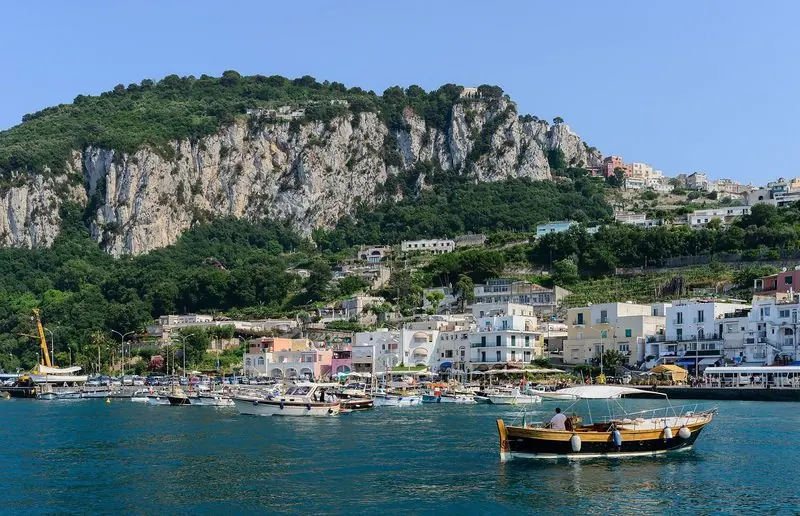
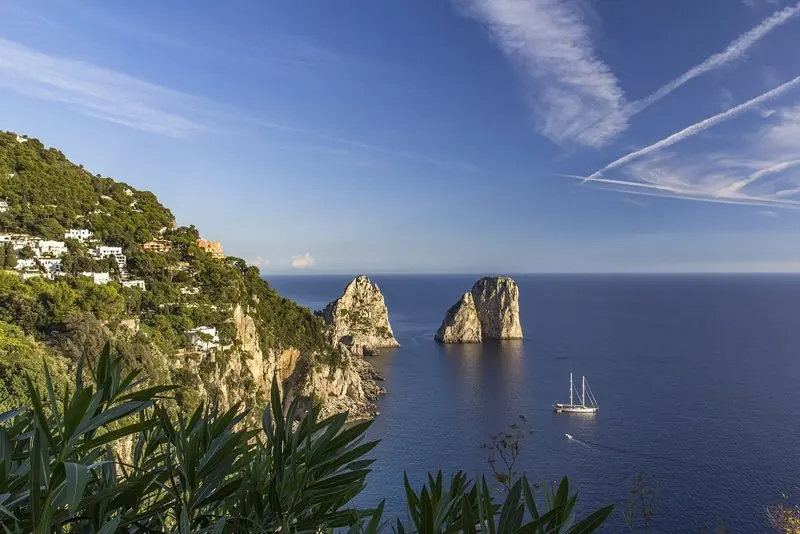
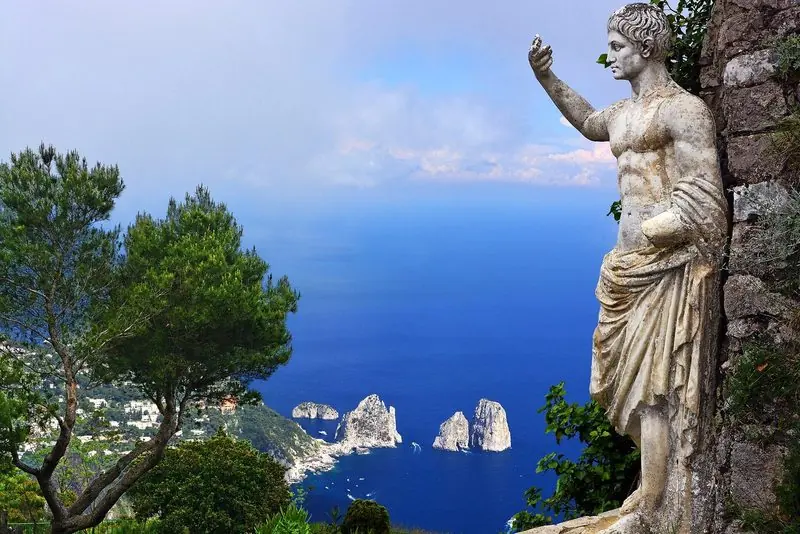
Frente a Capri la elección la dicta el viento. La orilla norte, frente a Marina Grande, funciona con cualquier componente sur, y el lado sur, bajo los Faraglioni, funciona con el viento al norte. El agua es profunda muy cerca de tierra, así que un yate grande da fondo en 25 o 40 metros con mucha cadena fuera. Nerano, en la punta de la península sorrentina, es el rincón mejor abrigado de toda la zona y la razón por la que muchas tripulaciones planifican a partir de él.
En el lado continental, el fondeadero bajo Positano es la postal por la que viene todo el mundo y uno de los sitios menos cómodos para pasar la noche. Las islas Li Galli, dos millas al oeste, son privadas, están más tranquilas y dan agua limpia para bañarse. Conca dei Marini y el fiordo de Furore son paradas de tender, no fondeaderos. La bahía de Ieranto está dentro del área protegida de Punta Campanella y solo se puede entrar con acuerdo previo, desembarcando a pie desde el sendero. El propio pueblo de Amalfi tiene una rada utilizable con tiempo estable.
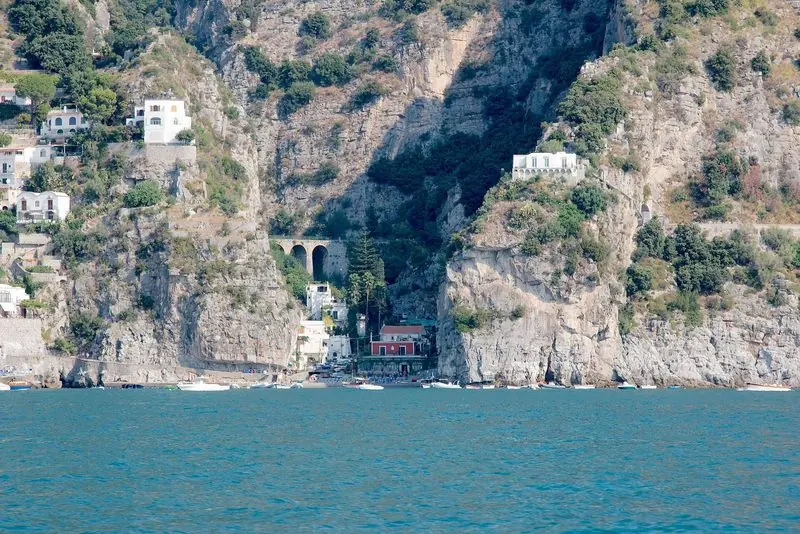
En la costa de Amalfi casi no hay dónde amarrar un yate grande, y por eso todos los buenos planes empiezan en el continente.
Amarres en Capri, Salerno y Nápoles
En esta costa apenas existe sitio de costado para un yate de 50 metros. Marina Grande, en Capri, se queda en 60 metros con profundidades de 2 a 8 metros y unos 30 amarres de tránsito, y esos van a un círculo pequeño de barcos que repiten, a tarifas que en agosto están cerca de lo más alto de la tabla mundial. Todo lo mayor se queda fuera, y la marina manda gratis un buzo para supervisar el ancla de los barcos de más de 30 metros avisando con doce horas. Amalfi y Positano no tienen ningún amarre para yates grandes.
La respuesta práctica es un contrato en el continente. Marina d'Arechi, en Salerno, tiene unos 1.000 amarres, un muelle específico de superyates que admite de 32 a 100 metros y hasta 7 metros de calado, y está a 13 millas de Amalfi. Nápoles ofrece Molo Luise y las dársenas de Borgo Marinari, con todo el puerto comercial para combustible y trabajo pesado. Marina di Stabia, en Castellammare, es la tercera opción y la más cercana a Sorrento. Desde cualquiera de las tres, la costa es una excursión de día y el barco duerme en un sitio con corriente, agua y carretera.
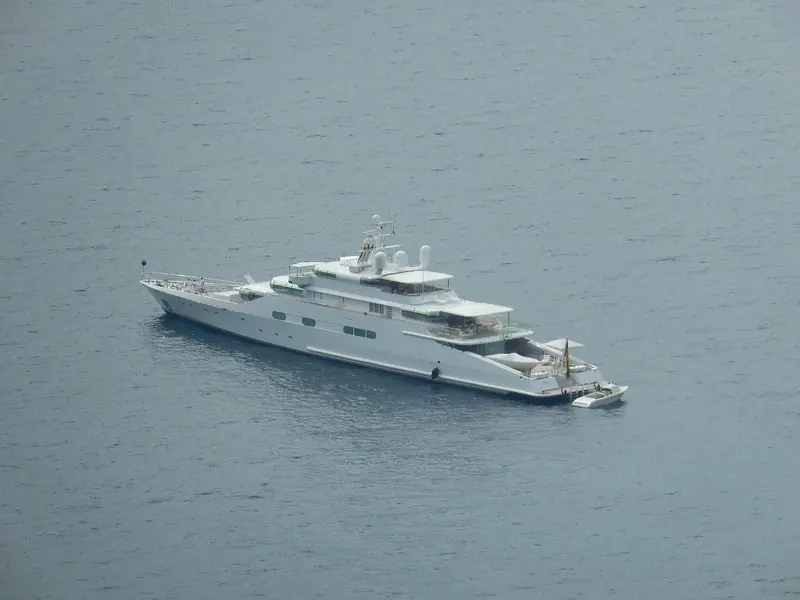
La mar de fondo del sur decide el día
La curva de temperaturas es fácil y el estado de la mar no. Mayo y principios de junio son suaves con el agua todavía fresca para bañarse. Julio y agosto son calurosos, con brisas térmicas ligeras y mañanas largas en calma. Septiembre es el mes favorito de las tripulaciones, con agua templada y menos gente, y octubre es agradable en tierra con una probabilidad creciente de frente.
El sur decide el día. La costa de Amalfi mira al sur y al suroeste sin ninguna protección, así que un lebeche o un siroco meten mar de fondo directamente en Positano, en Amalfi y en los Faraglioni en cuestión de horas. Fondeaderos que a las nueve de la mañana eran un espejo resultan insostenibles a las dos de la tarde. La Gruta Azul cierra con cualquier mar de fondo de verdad, y eso decepciona a más invitados que ninguna otra cosa de esta costa. Las tripulaciones de aquí llevan en la cabeza una lista de qué bahía funciona con qué viento y se mueven sin que se lo pidan.
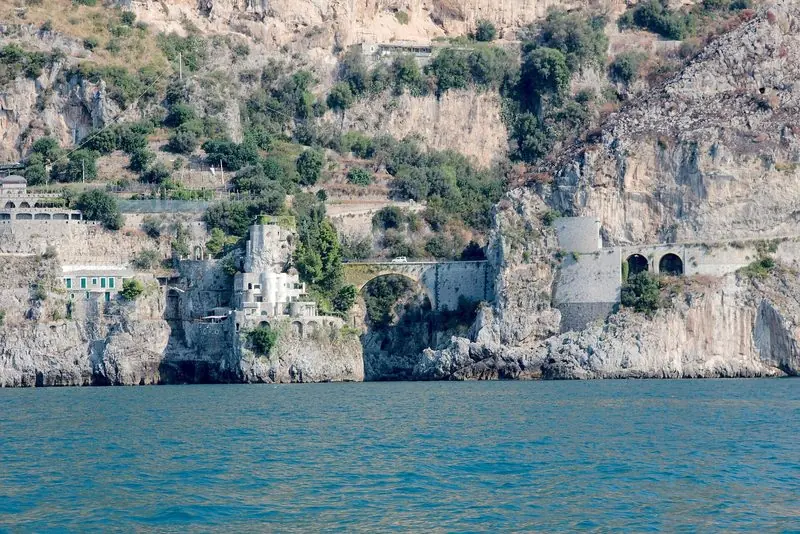
El Ferragosto y la economía del excursionista
La flota va creciendo durante junio, está a pleno rendimiento desde la primera semana de julio y hace una punta brutal en la quincena en torno al Ferragosto del 15 de agosto, cuando Italia se coge vacaciones y la flota nacional llega toda a la vez. Capri en esa quincena está a tope en el agua y en tierra. El Festival de Ravello se celebra durante todo el verano en los jardines de la Villa Rufolo y saca a los invitados de los barcos para pasar la tarde tierra adentro. Septiembre va vaciando la costa sin pausa y las dos últimas semanas son la mejor relación del año.
Dos presiones estructurales dan forma a la temporada. La primera es la economía del excursionista, con ferris rápidos y barcos de excursión saliendo sin parar desde Nápoles, Sorrento y Salerno hacia Capri, Positano y Amalfi desde alrededor de las ocho de la mañana. La segunda es la propia capacidad de Capri, que la isla lleva varias temporadas debatiendo abiertamente a medida que se han tensado tanto el número de visitantes como el suministro de agua. Las dos significan que la experiencia en tierra entre las diez y las cinco en pleno verano está llena de una manera que las fotos nunca enseñan.
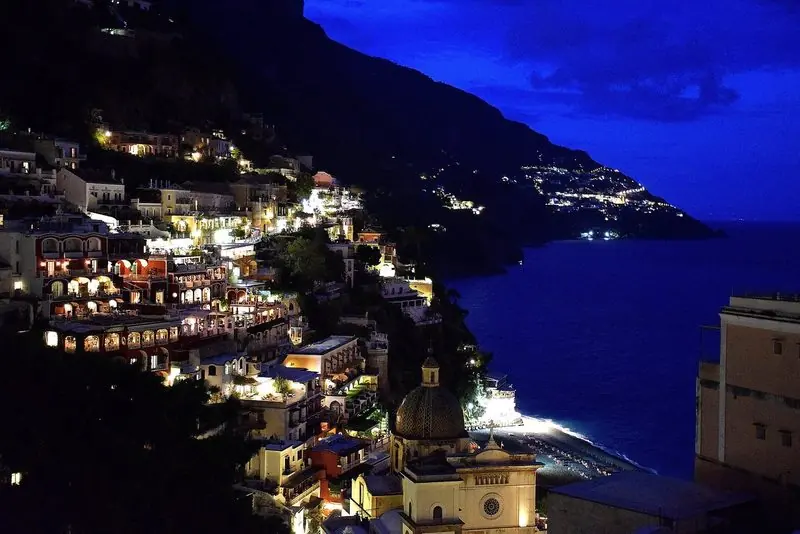
El aeropuerto de Salerno cambió la logística
Nápoles Capodichino es la puerta principal y tiene fuertes restricciones de slots, de las que la aviación privada lleva años quejándose. Salerno Costa d'Amalfi reabrió a los jets privados el 11 de julio de 2024 tras casi ocho años cerrado, con una pista ampliada a 2.000 metros que admite desde jets muy ligeros hasta aviones de ultra largo alcance, y está a minutos de Marina d'Arechi. Ese solo cambio ha convertido el golfo de Salerno en un sitio mucho más fácil para hacer rotaciones de invitados de lo que era.
El problema son las carreteras. La SS163, la carretera de costa entre Sorrento, Positano y Amalfi, es una calzada única tallada en el acantilado, y en agosto un traslado que sobre el mapa son cuarenta minutos se va con regularidad a dos horas, con restricciones horarias para autocares y coches. Los traslados en helicóptero a Capri, a Ischia y a los helipuertos de la costa son habituales y caros. Para cualquier cosa que esté en el agua, el tender gana siempre al coche, y los barcos bien llevados sencillamente no meten a los invitados en un vehículo en esa carretera en pleno verano.
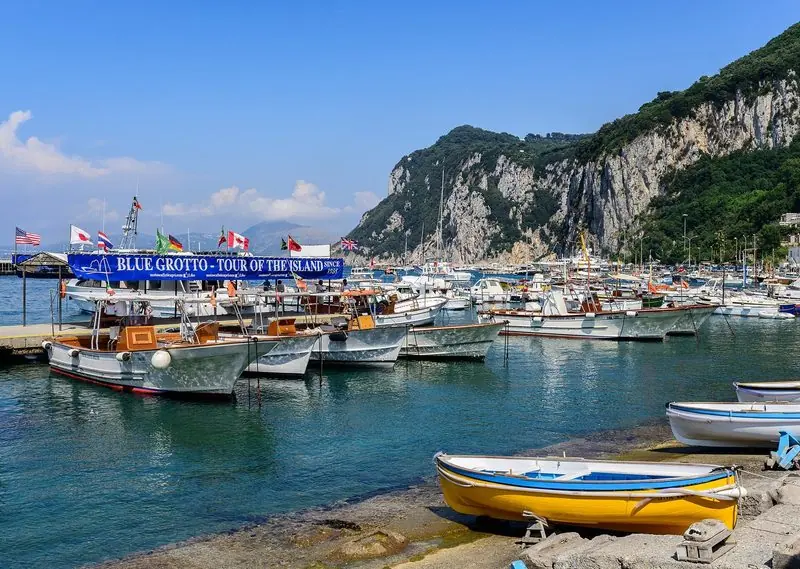
Nerano, Capri y la comida
Comer aquí es el mejor argumento del destino. Nerano es la peregrinación, con Lo Scoglio y Maria Grazia, los dos accesibles en tender y los dos construidos alrededor de los spaghetti alla Nerano y del calabacín local. En Capri, Il Riccio, sobre la Gruta Azul, tiene una estrella Michelin, Da Paolino sirve bajo un limonar, y La Fontelina y Da Luigi ai Faraglioni son beach clubs a los que se llega en tender o por una senda empinada. Da Adolfo, al oeste de Positano, es un chiringuito al que solo se llega en barco y que se llena con semanas de antelación.
Tierra adentro, Ravello es la única excursión que merece el coche, con la Villa Rufolo y la Villa Cimbrone y sus jardines en lo alto del acantilado, y su festival de verano. La vida nocturna es escasa para lo que se estila en la Riviera. Capri tiene la piazzetta, un puñado de bares que cierran tarde y la taberna Anema e Core, y Positano cierra pronto. Los invitados que busquen discotecas están en el sitio equivocado.
Punta Campanella y el papeleo
El agua regulada es el área marina protegida de Punta Campanella, que cubre la punta de la península sorrentina, incluidos Nerano y Ieranto. Está zonificada, el fondeo libre está prohibido en las zonas B y C, el acceso a la zona B necesita autorización del ente gestor, y donde se permite fondear el horario va de las 08:00 a las 20:00 y hay que hacerlo fuera de la posidonia y a distancias fijadas de las playas. Un conjunto de restricciones adicionales que el ente intentó imponer a los yates de charter, con permisos, tasas y AIS activo obligatorio, fue anulado por el tribunal administrativo regional de Campania en una resolución publicada a principios de 2025. La ordenanza vigente conviene confirmarla antes de cada temporada.
Italia está en la UE, y las operaciones de charter llevan IVA italiano y una cadena de papeleo que ningún armador debería intentar sin un agente local. El apoyo está concentrado en el continente. Nápoles tiene los astilleros, el suministro de combustible y los mecánicos, Salerno tiene la infraestructura de marina, y Capri no tiene ninguna de las dos cosas en ningún sentido serio. El aprovisionamiento se hace desde Nápoles o desde Salerno y se lleva en tender o en camión hasta la marina. En la isla no se arregla nada técnico.
El inconveniente sincero
Esta es una costa exigente de disfrutar desde un barco grande. No hay amarre, ni abrigo del sur, ni apoyo, ni intimidad, y en agosto el fondeadero bajo Positano es un aparcamiento de yates, tenders, barcos de excursión y motos de agua con la ola de los ferris cruzándolo todo. Las operaciones de tender son la parte más difícil, porque los desembarcos son muelles públicos pequeños compartidos con tráfico comercial y los beach clubs manejan franjas de llegada muy ajustadas.
El otro apunte sincero es la repetición. Los sitios famosos son pocos y están muy juntos, y en cuanto un invitado ha visto Capri, Positano, los Faraglioni y Ravello, la costa ha enseñado casi todas sus cartas. Los armadores que vuelven suelen hacerlo por la comida y por un fondeadero concreto, no por terreno nuevo. Quien planee más de una semana debería meter Ischia, las islas Pontinas o las Eolias desde el principio.
What Capri charges, and what the mainland will not publish
Capri publishes and the number belongs near the top of the European table. Porto Turistico di Capri prices by hull box rather than by length alone, and for a cabined vessel in the 55 m by 10 m band the 2026 tariff is EUR 3,580 a day from 16 May to 15 September, EUR 3,185 in the shoulder windows of 1 to 15 May and 16 September to 15 October, and EUR 1,955 from mid October to the end of April. The 40 m by 7 m band is EUR 2,405 at the same peak and the band above 55 m is EUR 3,855. VAT is included at 10 per cent for cabined vessels. Two extras are worth budgeting because they are charged per event rather than per day: embarking and disembarking passengers runs EUR 100 to EUR 200 for a pair of daily alongside calls, and a diver is EUR 150 to EUR 500 depending on the job (Porto Turistico di Capri, tariffe 2026, retrieved 28 July 2026).
The mainland, which is where a large yacht actually sleeps, publishes nothing. Marina d'Arechi at Salerno and the Naples basins quote on application, and no rate card for either was obtainable in July 2026, so any season figure here would be a guess dressed as a fact. What can be stated is the shape of the trade. Thirty-one days on the Capri counter rate at the 55 m by 10 m band is EUR 110,980, for a harbour with around 30 transit berths, no yard, no bunkering at scale and no provisioning worth the name. That is more than the whole of August costs on the published Saint-Tropez tariff and roughly four times Monaco's published month for a comparable hull. Only Porto Cervo publishes a higher peak, at EUR 5,437 a day from 1 to 20 August 2026. The conclusion most owners reach is the arithmetic one, which is a contract at Salerno and Capri paid for by the night rather than by the month.
Whether a foreign flag may charter in Italian waters
The Italian answer changed in May 2026 and it is now among the clearer ones in the Mediterranean. A non-EU flagged yacht in private use enters temporary admission automatically on crossing into EU territorial waters, and the discharge period is 18 months under Article 217(e) of Commission Delegated Regulation (EU) 2015/2446, with eligibility under Article 212 turning on registration outside the EU customs territory in the name of a person established outside it and use by a person established outside it. Italian Customs restated the mechanics in ADM Circular 11/2026 of 15 May 2026: entry starts the clock, form 71-01 documents the arrival if the owner wants it documented, and satellite track, port papers or the log close the procedure on departure. The circular's substantive move is on the commercial side. A charter yacht may now operate under temporary admission during a charter, provided she enters privately, leaves EU waters and re-enters under commercial temporary admission with form 71-01, the charter contract and the log attached, which brings Italy close to the position France has long allowed for Cayman and Marshall Islands tonnage.
The rest is unchanged and it is where the cost sits. Commercial operation in Italy requires the yacht to be formally authorised for commercial use by the maritime authority, and a non-EU flagged vessel needs an Italian fiscal representative. Charter VAT is 22 per cent on the hire. The flat reductions keyed to hull length, which once cut a yacht over 24 m to an effective 6.6 per cent, were withdrawn on 1 November 2020, and any reduction now has to be evidenced as actual navigation outside EU waters under the Agenzia delle Entrate provision of 29 October 2020. Cabotage with paying guests between two Italian ports remains reserved to EU flags under Regulation 3577/92. Enforcement is by the Guardia di Finanza and it is real rather than notional, with the emphasis on undeclared ownership and on charters run without the authorisation. Above all of it sits the Punta Campanella marine protected area, where free anchoring is prohibited in zones B and C and zone B needs authorisation, and the nearest yard that can lift a hull of this size is Palumbo at Naples, which runs a 520 tonne travel lift and floating docks to 100 m and 6,000 tonnes.
En tierra, accesos y reservas
| Getting there | Naples Capodichino is the gateway for the whole gulf and it is close in: the helicopter run to Capri is under 30 minutes, and operators publish transfer pricing from roughly EUR 1,900 a leg, with a six-seat Naples to Capri charter quoted from about EUR 2,400. From Rome the same flight is about an hour. By road and boat, agencies run car-plus-speedboat transfers out of Naples and Castellammare di Stabia across the gulf. Salerno serves the eastern end of the coast and Marina d'Arechi. |
|---|---|
| Arriving by sea at Capri | Porto Turistico di Capri, in Marina Grande, answers on VHF 71 and the channel is monitored around the clock. The office works 08:00 to 20:00 daily from 1 May to 15 October, and 08:00 to 14:00 from 16 October to 30 April with weekends closed. The office number is +39 081 8377602. Note the draft limit before you commit: the Darsena wet dock takes a maximum of 2.1 metres. |
| What a berth costs at Capri | This is one of the few marinas on the coast that publishes, and the figures explain its reputation. On the floating docks and the Calata di Riva Sud, with cabin and 10 per cent VAT, peak season runs 16 May to 15 September: a 12 m by 4 m berth is EUR 200 a day, 15 m by 4.5 m is EUR 305, 18 m by 5.2 m is EUR 435, 25 m by 5.5 m is EUR 740, 30 m by 6 m is EUR 1,210, 40 m by 7 m is EUR 2,405, 55 m by 10 m is EUR 3,580 and anything over 55 m is EUR 3,855. The shoulder discount is not evenly spread, and it favours the middle of the range rather than the top: 1 to 15 May and 16 September to 15 October take about 30 per cent off the 15 m and 18 m bands, about 24 per cent off 25 m, but only 9 to 11 per cent off 30 m and above, and 7 per cent over 55 m. Low season, 1 January to 30 April and 16 October to 29 December, runs 45 to 51 per cent below peak at the top of the range and 61 to 64 per cent below it in the 15 m to 25 m bands. Berths taken without cabin carry 22 per cent VAT and are published higher, but only up to 15 m by 4.5 m, above which no without-cabin rate is published at all. The Darsena wet dock is a separate schedule and a dearer one, so do not price a Darsena berth off the figures above. Water and electricity are metered on top rather than included. |
| How you actually reserve, and the extras nobody quotes you | From 1 May to 15 September a weekend booking carries a two-night minimum, so a Saturday night alone is not on offer in the season. Budget for the extras, which are real: embarking and disembarking guests requires vouchers at EUR 100 to EUR 200, and the RFID gate reader carries a EUR 100 deposit. One genuine concession at the top end, a yacht over 30 metres gets diver-assisted anchoring at no charge, but it has to be booked ahead at the office rather than asked for on arrival. Published notice periods for it vary between the marina's own pages, so confirm the lead time when you book. |
| Where you may and may not anchor | The single most expensive mistake on this coast. The Punta Campanella Marine Protected Area covers the waters off the Sorrentine peninsula and round to Positano, taking in Sorrento, Sant'Agnello, Vico Equense, Massa Lubrense, Piano di Sorrento and Positano, and it is zoned. Zone A, which takes in the Vervece and Vetara rocks, is closed to navigation, swimming and fishing outright. Outside Zone A the working rule is simpler than the zoning suggests: free anchoring is prohibited across the reserve, not merely in Zone B, and you take a designated mooring instead, with motorboat access in the stricter zones needing prior authorisation from the managing body. Anchoring on posidonia is banned throughout and buoy fields have been laid where anchoring used to happen; a buoy runs about EUR 40 to EUR 55 a day for a 42 ft catamaran, a single rental-platform figure we could not corroborate, so treat it as an order of magnitude rather than a quote. Rangers patrol daily through the season, so this is enforced rather than advisory. Ischia and Procida sit under a second protected area, Regno di Nettuno, with its own zoning. Read both zoning maps before you plan a night at anchor, not after. |
| What is not published | Amalfi and Positano do not post a tariff. Figures circulate on charter sites quoting per-metre rates for both harbours, but we could not corroborate them against a second independent source and are not repeating them. Both are quote-on-application through the harbour or an agent, and in Positano much of what looks like a harbour is a roadstead rather than a berth. We have checked Amalfi and Positano and no others, so read this as two harbours that do not publish rather than a claim about the whole coast. Assume Capri's published table is the best available proxy for what this water charges in August, and get a written quote before you arrive. |
| The shape of the season | Peak pricing at Capri starts on 16 May and ends on 15 September, and the shoulder bands on either side, 1 to 15 May and 16 September to 15 October, are where the value is, most of all if you are in the 15 m to 25 m range where the discount is around a quarter to a third rather than the single figures the largest berths get. The marina also keeps a peak rate over 30 December to 1 January, which tells you something about who is there at New Year, and note that its own table shows 1 January inside both the peak and the low band, so confirm which applies before you book that night. |
Lo que cuentan armadores y tripulaciones
Berths inside the protected area mean buoys, not anchors, and the rules are enforced
Anchoring within the Punta Campanella reserve is restricted to designated mooring buoys, reported at about EUR 40 to EUR 55 a day for a 42 ft catamaran, with rangers patrolling daily through the season. Single-sourced from a rental platform, so the rule is solid but the price is indicative.
SeaRadarA European marina cost survey places Capri among the most expensive
Marina Grande is listed in a European most-expensive-marinas survey, with roughly 300 berths and a recommendation to book well ahead rather than arrive on spec. This is a single trade title rather than a consensus of surveys.
BootePer-metre rates quoted for Amalfi and Positano could not be verified
Figures for both harbours appear on charter and booking sites but neither harbour publishes a tariff and no second independent source corroborated them, so no price is stated here. Confirm in writing with the harbour or your agent before arrival.
Yotters deskNo owner or crew testimony was found for this coast, and none is invented here
Everything above is trade or platform reporting rather than a named owner, captain or crew speaking. We are recording that gap rather than dressing operator copy up as owner experience. Berth pricing at Capri comes from the marina's own rate card, which is quoted in the practical block where it belongs.
Yotters desk
Lo bueno y lo que conviene vigilar
Puntos fuertes
- Nowhere else packs this much into so few milesCapri, Ischia, Procida, the Sorrentine peninsula and the Amalfi shore all sit inside one gulf. Passages are an hour or two at most, so the boat is a way of moving between places worth being rather than a means of covering distance.
- Capri's tariff is unusually legible once you have itA full length-banded table with season dates, VAT treatment and the extras named, so a 40 m berth in August can be budgeted at EUR 2,405 a day before you commit, and the shoulder and low bands can be compared band by band rather than guessed at.
- It is genuinely well connected for a place that feels remoteUnder 30 minutes by helicopter from Naples Capodichino, about an hour from Rome, with car-and-speedboat transfers as the fallback. Guests can join and leave mid-charter without losing a day to travel.
- The buoy fields make a busy coast workableBecause the reserve laid moorings where anchoring used to happen, there is a defined place to spend the night in water that would otherwise be first-come-first-served, and the posidonia and the water clarity inside Punta Campanella are still what people come for.
A tener en cuenta
- It is among the most expensive water in EuropeEUR 3,855 a day for a berth over 55 metres at Capri in peak season, before metered water and power, before the EUR 100 to EUR 200 guest vouchers. The shoulder seasons are materially cheaper but the peak is the peak.
- Anchoring is restricted, zoned and actively policedFree anchoring is prohibited in Zone B of Punta Campanella, posidonia is off limits throughout, Zone A is closed altogether, and rangers patrol daily in season. The flexible anchor-out week that works in Croatia or Greece does not work here.
- Draft rules some yachts out of the obvious berthThe Darsena wet dock at Capri takes 2.1 metres maximum. That is not a large number for a displacement yacht, and it needs checking against your own figure before the marina is treated as an option.
- Most of the coast will not tell you the price in advanceAmalfi and Positano publish nothing. You are negotiating through an agent against demand you cannot see, in the one month when demand is highest, and the numbers circulating online for both harbours could not be independently verified.
- The weekend minimum removes a useful optionFrom 1 May to 15 September a weekend at Capri means two nights or none. For a boat working a tight itinerary that is a real constraint rather than a formality.
Para quién es: El armador que va a mantener un amarre en Salerno o en Nápoles, navegar de día la costa famosa y tratar un pronóstico de sur estable como lo que decide la semana.