French Riviera
| Región | Costa Azul, de Saint-Tropez al este hasta Menton, sur de Francia |
|---|---|
| Escala | unos 110 km de costa, aproximadamente 55 millas náuticas por mar de Saint-Tropez a Mónaco |
| Temporada central | de junio a septiembre, con mayo ya cargado por el Gran Premio y el festival de cine |
| Puertos principales | Port Hercule (Mónaco), Port Vauban (Antibes), Vieux Port y Port Canto (Cannes), Port de Saint-Tropez |
| Amarres mayores | el muelle del IYCA en Port Vauban, con amarres anunciados de hasta 150 m y 165 m |
| Port Hercule | unos 760 amarres, con profundidades en la dársena de 2,5 m a más de 50 m |
| Límites de Saint-Tropez | 90 m como máximo en el Mole Estienne d'Orves, 50 m en el puerto viejo, 4 m de calado máximo |
| Fondeo | prohibido sobre praderas de posidonia para todos los barcos de más de 24 m en todo el Mediterráneo francés |
| Obligación adicional por encima de 45 m: hay que declarar un plan de fondeo al semáforo de la zona antes de dar fondo | |
| Exposición a sanción | multas de hasta EUR 150.000 y exclusión de aguas francesas (decreto 157/2024, de 23 de mayo de 2024) |
| Acceso aéreo | Nice Cote d'Azur, unos 30.000 movimientos de aviación de negocios al año, 7 minutos en helicóptero a Mónaco |
| Semanas de salón de 2026 | Cannes Yachting Festival del 8 al 13 de septiembre, Monaco Yacht Show del 23 al 26 de septiembre |
| Berth, Monaco 2026 | EUR 1,258.80 a day or EUR 25,207.20 a month for 50.00 to 54.99 m, high season 1 May to 1 October, VAT included |
| Berth, Saint-Tropez 2026 | EUR 7.29 per square metre a day on the Mole Estienne d'Orves from 10 July to 20 August, about EUR 3,280 a day for a 50 m by 9 m hull |
| Antibes and Cannes publish no berthing rate card, and the IYCA quay at Port Vauban is quoted on application | |
| Temporary admission | 18 months for a non-EU flagged yacht in private use, under Articles 212 and 217(e) of Delegated Regulation (EU) 2015/2446, running across the whole EU customs territory |
| Charter | a non-EU flagged yacht under temporary admission may not charter in France, and cabotage between French ports is reserved to EU flags under Regulation 3577/92 |
| French Commercial Exemption | over 15 m, commercially registered, permanent crew, exclusive commercial use, and 70 per cent of trips in the previous calendar year outside French territorial waters |
| Charter VAT | 20 per cent on the hire, with the 50 per cent flat abatement withdrawn for contracts signed from 30 March 2020 and reduction now based on evidenced time outside EU waters |
| Nearest lift | MB92 La Ciotat, a day's run west, with a 4,300 tonne shiplift for yachts to 115 m and a 300 tonne travel lift for the 30 m to 50 m range |
La forma de la costa
La Riviera utilizable es corta. De Saint-Tropez a Menton, en la frontera italiana, hay unos 110 kilómetros de litoral, y aproximadamente 55 millas náuticas por mar de Saint-Tropez a Mónaco. A 20 nudos de crucero eso son menos de tres horas de punta a punta. De Cannes a Antibes hay unas 11 millas, de Antibes a Mónaco menos de 20, y de Niza a Mónaco nueve millas. En esta costa nada es una travesía.
Una semana realista: base en Antibes o en Golfe-Juan, comida fondeado frente a las islas de Lerins, una noche frente a Villefranche, una tarde de popa en Mónaco y no más, y después al oeste para Pampelonne y una noche en la Baie des Canoubiers. Dos semanas son difíciles de llenar solo con la costa francesa, y la mayoría de los armadores se escapan. Calvi, en Córcega, está a unas 100 millas náuticas de Niza, y Portofino queda a unas 85 millas al este de Mónaco. Cualquiera de los dos le da al barco un sitio donde estar la segunda semana sin la pelea por el amarre de agosto.
Los puertos que merecen una noche
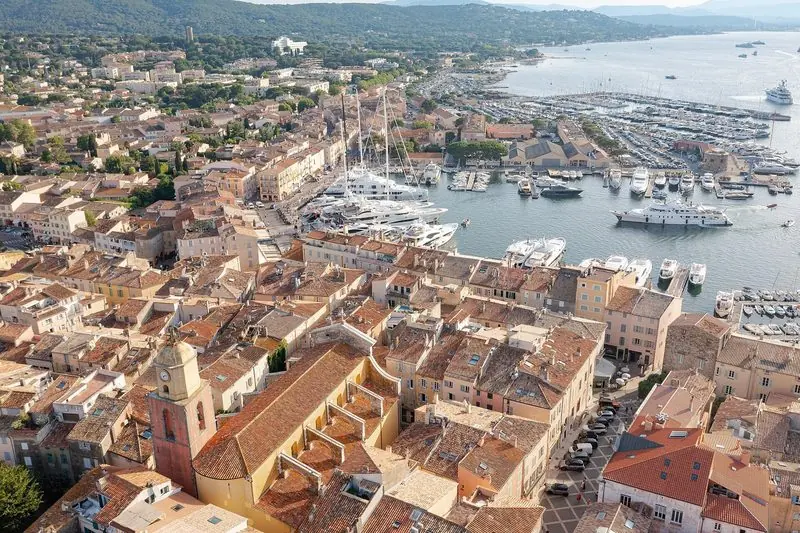
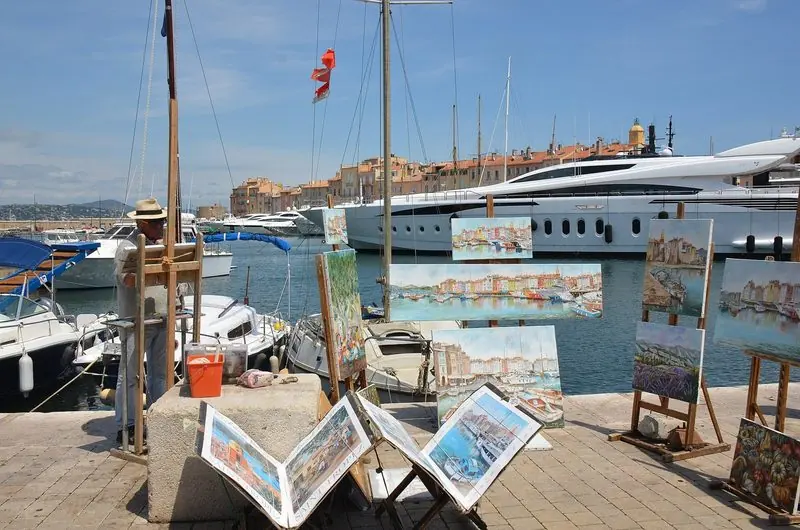
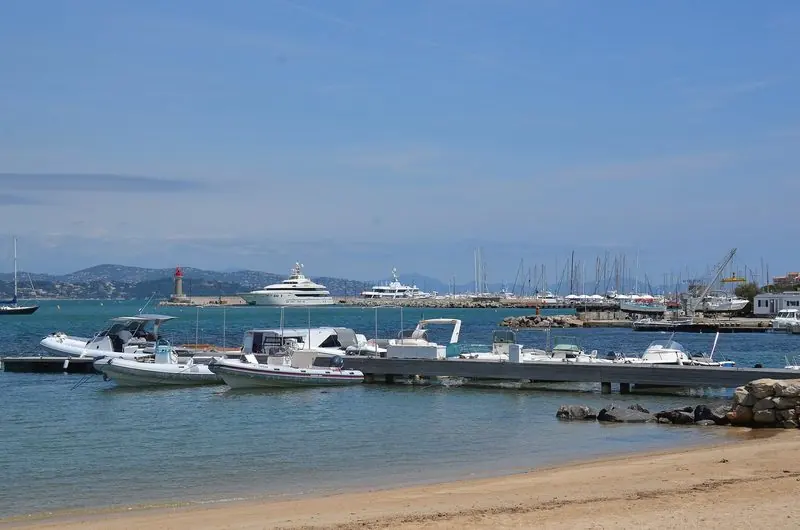
Port Hercule, en Mónaco, es la dirección, con unos 760 amarres y profundidades dentro de la dársena que van de 2,5 metros a más de 50. Ahí pasan todo el verano yates de bastante más de 100 metros y durante la semana del salón el puerto está macizo. Port Vauban, en Antibes, tiene la mayor capacidad de la costa, y su muelle del IYCA, que todo el mundo conoce como el muelle de los milmillonarios, tiene amarres anunciados de hasta 150 y 165 metros. Cannes ofrece el Vieux Port, junto a la Croisette, y Port Canto en el extremo este de la bahía.
Saint-Tropez es más pequeño de lo que sugiere su fama. El Mole Estienne d'Orves admite barcos de hasta 90 metros, el puerto viejo se queda en 50, y todo el puerto está limitado a 4 metros de calado, lo que deja fuera en silencio a muchos cascos modernos de desplazamiento. La reserva por encima de 18 metros pasa por el sistema Magelan e-resa del puerto, y el capitán del puerto muchas veces solo confirma la mañana de la llegada. Golfe-Juan y Niza dan un desahogo útil a poca distancia de Cannes y de Mónaco.
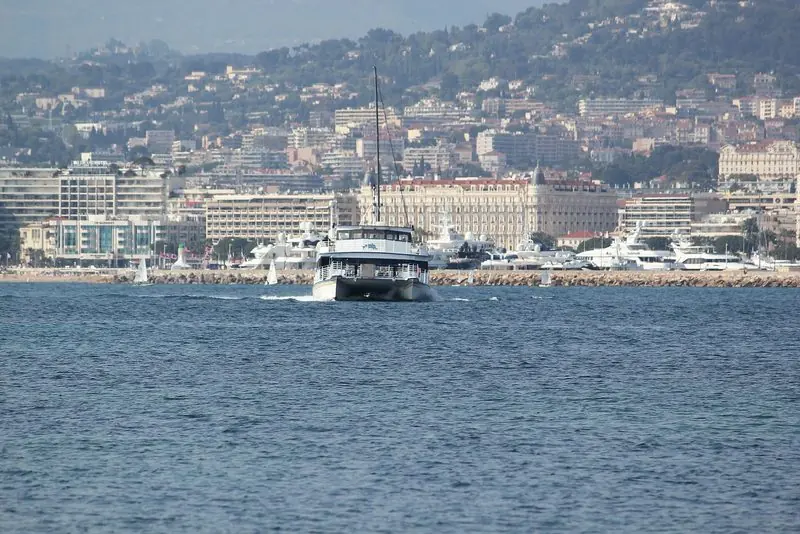
En esta costa la distancia nunca es el problema, y un amarre en agosto lo es siempre.
Los fondeaderos que merecen un día
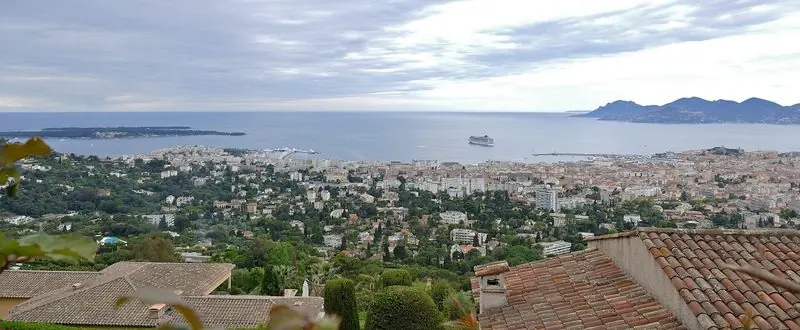
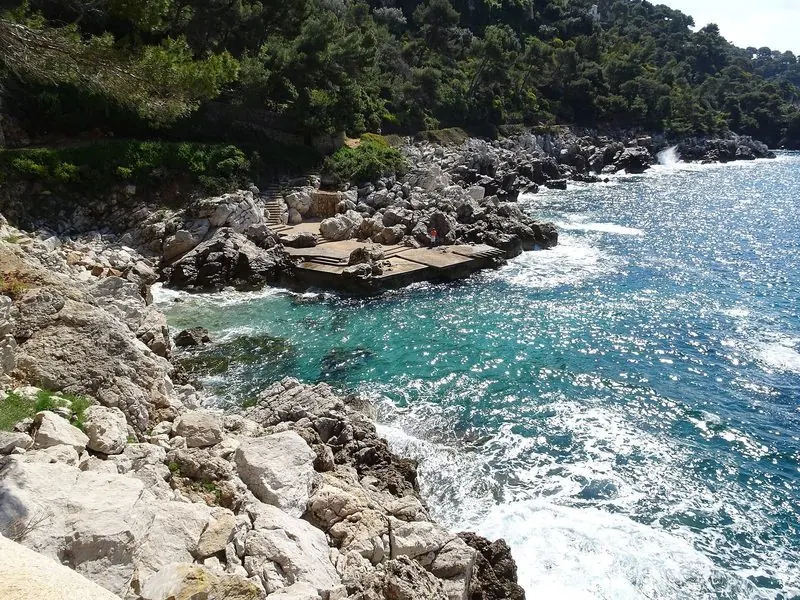
La rada de Villefranche es el mejor fondeadero natural de la costa, una bahía profunda entre Niza y Mónaco con abrigo del oeste y un trayecto en tender de minutos hasta un pueblo con vida. Frente a Cannes, el canal entre Sainte-Marguerite y Saint-Honorat da agua plana y sombra de pinos en tierra, con un monasterio en la isla pequeña que sigue haciendo y vendiendo su propio vino. Frente a Saint-Tropez, Pampelonne es el fondeadero de día de siempre, abierto al este y respaldado por los beach clubs. La Baie des Canoubiers, justo al norte del pueblo, es la mejor opción para pasar la noche cuando el viento rola al sur.
Al oeste de Saint-Tropez la costa cambia de carácter. Cap Taillat y Cap Camarat dan agua limpia y casi nada construido, y la Baie de Cavalaire tiene sitio para que bornee un yate grande. Con levante, toda esta costa se pone incómoda y la alternativa es el socaire de las Lerins o un amarre. Un barco fondeado aquí se cambia de sitio al menos una vez en un día normal.
Lo que puede y lo que no puede hacer aquí un yate de 50 metros
Aquí la limitación rara vez es la profundidad. Es la disponibilidad. Solo unas pocas decenas de amarres de toda la costa admiten un barco de 50 metros en agosto, y la mayoría están en contratos anuales de armadores que los aseguraron hace años. El armador sin amarre base depende de un agente que trabaje las cancelaciones, y las tarifas de la semana punta en Mónaco están entre las más altas del mundo. Muchos barcos de este tamaño mantienen un contrato en Antibes o en un puerto italiano cercano y hacen excursiones de día a los sitios de moda.
Fondeado, las normas aprietan de verdad por encima de 24 metros. Fondear sobre praderas de posidonia está prohibido para todos los barcos de más de esa eslora en todo el Mediterráneo francés, y las praderas cubren buena parte de la plataforma arenosa entre la superficie y unos 35 metros. Los yates de más de 45 metros tienen además la obligación de contactar por adelantado con el semáforo de la zona y declarar dónde piensan dar fondo. Las multas llegan a EUR 150.000 conforme al decreto 157/2024 y a un barco se le puede excluir de aguas francesas. Las tripulaciones trabajan con las aplicaciones Donia y Nav&Co, que cartografían las praderas y las zonas restringidas.
El mistral y el panorama mes a mes
El verano aquí es estable para lo que se estila en el Mediterráneo. Junio trae aire cálido con el mar todavía por detrás, julio y agosto son calurosos y muchas veces sin viento de día, con una brisa térmica ligera por la tarde, y septiembre mantiene el agua templada hasta que llegan los primeros frentes de otoño a finales de mes. Mayo es agradable en tierra y frío en el agua, cosa que importa si los invitados esperan bañarse.
El viento que define la costa es el mistral, un noroeste frío que se encañona por el valle del Ródano y sale al golfo de León. Golpea con más fuerza el extremo oeste, así que el golfo de Saint-Tropez lo nota mucho más que Mónaco, y puede soplar tres días seguidos. También deja detrás la mejor visibilidad del año. El levante de verano es menos frecuente y deja insostenibles los fondeaderos abiertos de Cannes y de Saint-Tropez.
Las semanas que ya están comprometidas
Varias semanas están de hecho cerradas para una llegada informal. El Gran Premio de Mónaco, a finales de mayo, llena Port Hercule de yates abarloados a lo largo de los muelles para ver el circuito como desde una grada, con tarifas fijadas para ese fin de semana y reservas hechas con un año de antelación. El Festival de Cannes, en mayo, hace lo mismo con Cannes a menor escala. En 2026, el Cannes Yachting Festival se celebra del 8 al 13 de septiembre entre el Vieux Port y Port Canto, y el Monaco Yacht Show va después, del 23 al 26 de septiembre, en Port Hercule.
Las semanas de salón cortan por los dos lados para un armador. Si el barco está en venta o en charter, septiembre es la razón misma para estar aquí, porque el mundo del brokerage viene al yate. Si no lo está, esas son las semanas para pasarlas en Italia o en Córcega, porque los dos puertos de Cannes y todo Port Hercule se entregan a las exposiciones y los amarres de alrededor absorben a la flota desplazada. Les Voiles de Saint-Tropez, a finales de septiembre, tiene el mismo efecto más al oeste.
El aeropuerto de Niza, y la carretera que arruina los traslados
Nice Cote d'Azur es la razón por la que esta costa funciona para armadores con poca paciencia. Mueve unos 30.000 movimientos de aviación de negocios al año por una terminal específica, y está a nueve millas náuticas de Mónaco y a unos minutos en coche de Antibes. El traslado en helicóptero del aeropuerto a Mónaco lleva siete minutos frente a cuarenta y cinco en coche en un día despejado. Cannes Mandelieu recibe jets pequeños y turbohélices y está más cerca de los puertos de Cannes.
En tierra, el eslabón débil es la carretera de la costa. La Basse Corniche entre Niza y Mónaco puede llevar una hora en pleno verano para una distancia que un tender cubre en veinte minutos, y la entrada a Saint-Tropez desde Sainte-Maxime se colapsa con regularidad en agosto. Los barcos bien llevados mueven a los invitados en tender siempre que el destino esté en el agua y guardan los coches para las excursiones de interior a Eze, Saint-Paul-de-Vence y Grasse.
Restaurantes, beach clubs y la tarde
Comer es el centro de un verano en la Riviera y el nivel es de verdad alto. Montecarlo tiene el Louis XV en el Hotel de Paris, Le Grill en la azotea y el Yacht Club de Monaco para socios e invitados. Antibes tiene un mercado serio en el Cours Massena y una hilera de restaurantes pequeños en el casco antiguo que el sector usa todo el año. En Pampelonne, los beach clubs, el Club 55 entre ellos, funcionan con un sistema de reserva que espera el nombre del barco y una llegada en tender a una hora fijada.
La vida nocturna está concentrada y es cara. Montecarlo funciona en torno a la plaza del Casino, Jimmy'z y las terrazas de verano, y Saint-Tropez en torno a Les Caves du Roy y a los beach clubs que se convierten en locales de noche. Cannes está tranquila fuera de las semanas de festival. El ambiente compensa a los armadores que disfrutan de que los vean y quieren una agenda llena, y se desaprovecha bastante con quien ha venido a bañarse. A los invitados que quieran una semana tranquila se les atiende mejor al otro lado de la frontera, en Liguria.
Fiscalidad, apoyo y el inconveniente sincero
Francia está en la unión aduanera de la UE y en el espacio Schengen, lo que condiciona el movimiento de tripulación, el tratamiento del IVA y la estructura de cualquier operación comercial. El charter desde un puerto francés lleva IVA francés sobre el alquiler, y las normas sobre dónde puede empezar y terminar un charter se han endurecido, así que esto es terreno de agente y de abogado. Antibes concentra la mayor densidad de oficios de superyate del mundo, La Ciotat y Marsella están a un día de navegación para refit e izado, y casi cualquier pieza se encuentra el mismo día.
El inconveniente sincero son la aglomeración y el coste. En agosto, el agua entre Cannes y Mónaco está de verdad llena de ferris, barcos de excursión, motos de agua y tenders, y los buenos fondeaderos están ocupados a media mañana. Los precios de amarre de las mejores marinas son los más altos del Mediterráneo y se cotizan por metro con un multiplicador de temporada que los armadores subestiman una y otra vez. Las normas de la posidonia han recortado el número de sitios legales para fondear justo en el momento en que subía la demanda. Quien quiera naturaleza salvaje no la va a encontrar aquí.
What a berth here actually costs
Two of the four harbours publish, and the published numbers are not the ones the coast's reputation predicts. Monaco's port operator posts a 2026 transit tariff for Port Hercule outside the Rainier III dike: a yacht of 50.00 m to 54.99 m pays EUR 1,258.80 a day or EUR 25,207.20 a month in high season, which runs 1 May to 1 October 2026, against EUR 500.40 a day and EUR 13,749.60 a month either side of it, all figures inclusive of 20 per cent VAT (Societe d'Exploitation des Ports de Monaco, 2026 tariff sheet, retrieved 28 July 2026). Saint-Tropez prices by area rather than by length, multiplying LOA by beam. The Mole Estienne d'Orves is EUR 7.29 per square metre a day from 10 July to 20 August 2026 and EUR 5.37 from 30 April to 10 July, and the Vieux Port, the basin that takes 25 m to 50 m, is EUR 9.24 and EUR 7.03 across the same two windows, again TTC (Port de Saint-Tropez, Tarifs 2026, retrieved 28 July 2026).
Run a 50 m hull with a 9 m beam through those tables and the ranking inverts. Saint-Tropez on the Mole comes to about EUR 3,280 a day at the July and August peak, and the whole of August on the published rates is about EUR 92,200. Monaco's published month over the same dates is EUR 25,207.20, a little over a quarter of it. That is not because Monaco is cheap. It is because the pool is let on long contracts and the transit tariff only ever applies to what those holders have not taken, so the rate card describes a berth most arriving yachts cannot get. Port Vauban in Antibes, the Vieux Port at Cannes and Port Canto publish no rate card at all, and the IYCA quay is quoted on application. For scale at the other end of the Mediterranean, ACI Split in Croatia charges EUR 1,670 a day for the same 50 m boat in July and August 2026, so a Saint-Tropez August is roughly double an Adriatic one at a marina that is itself the busiest on that coast.
Whether a foreign flag may charter in French waters
A yacht on a non-EU flag may cruise the French Mediterranean privately under temporary admission, which is the EU customs relief set out in Article 212 of Commission Delegated Regulation (EU) 2015/2446. The conditions are that she is registered outside the EU customs territory in the name of a person established outside it, and used by a person established outside it, and Article 217(e) fixes the discharge period for a means of transport for private use by sea at 18 months. That clock covers the whole EU customs territory rather than France alone, and crossing to Italy or Spain does not restart it. Temporary admission is a private-use relief and nothing else. It does not permit commercial charter, so a yacht intending to earn in French waters must leave the regime and enter free circulation with import VAT accounted for, which is the practical meaning of the phrase EU-imported. Cabotage, meaning carrying paying guests between two French ports, is reserved to EU-flagged vessels under Regulation 3577/92 on maritime cabotage.
Once she is imported, the French Commercial Exemption is what makes commercial operation worth the trouble. It removes French VAT from fuel, stores, supplies and yard work, and its conditions are cumulative rather than alternative: LOA over 15 m, commercial registration, permanent crew employed by the owning company, exclusive commercial use under charter contracts at market rates, and at least 70 per cent of trips in the previous calendar year carried out beyond French territorial waters, counted from 1 January to 31 December. Sea trials, repositioning to a yard and static charters are not trips. Fall below 70 per cent in one year and the exemption is unavailable for the next, which is why the test is monitored trip by trip rather than reconciled in December. VAT on the charter fee is a separate matter at 20 per cent. The flat 50 per cent abatement of the taxable base was withdrawn for contracts signed from 30 March 2020, and the only reduction now available is for time genuinely spent outside EU waters, evidenced from the yacht's own track. The exposure for getting it wrong is assessed VAT plus interest and penalty on every invoice in the year, not a fixed fine.
En tierra, accesos y reservas
| Getting there | Nice Cote d'Azur serves the whole coast through a dedicated business aviation terminal. Blade and Monacair fly the airport to the Monaco heliport at Fontvieille in about seven minutes from around EUR 195 a seat, and run a Nice to Cannes rotation of about ten minutes at a similar seat price from May to October. On the road, fixed-price transfer operators quote roughly EUR 60 to EUR 75 to Antibes, EUR 75 to EUR 85 to Cannes and EUR 90 to EUR 95 to Monaco, and the train from Nice-Ville to Monaco-Monte-Carlo takes about 22 minutes for under EUR 10 to a station a short walk from Port Hercule. Cannes Mandelieu takes smaller jets and turboprops and is closer to the Cannes basins. |
|---|---|
| Arriving by sea | There is no single channel for the coast. Port Hercule in Monaco answers on VHF 12 on +377 97 77 30 00, holds 3 knots inside the pool and takes a compulsory pilot for movements at 80 m and over. Port Vauban in Antibes and the IYCA quay work on VHF 9 on +33 4 92 91 60 00, with the office running 08:00 to 18:00 in winter and out to 21:00 at the height of the season. IGY Vieux-Port de Cannes is VHF 12 on +33 4 92 98 70 21, open 08:00 to 18:00 seven days, check-in and check-out both at midday. Port Canto answers on VHF 9. Port de Saint-Tropez is VHF 9, and the harbour is capped at 4 m of draft whatever the quay. |
| How you actually reserve | Four ports, four procedures. Saint-Tropez splits by length: under 18 m goes through Navily, 18 m and over through Magelan eResa, where you open an account, upload the ship's papers and insurance, and the booking is confirmed only against a deposit of 50 per cent of the stay excluding tourist tax and options, with cheques refused and the balance due on arrival. Monaco takes a call on channel 12 with 24 hours notice for a large yacht in the ordinary season, but Grand Prix week is an application to an allocation committee with a booking fee, not a reservation, and late or incomplete dossiers are not read. Antibes and the IYCA go through the operator at [email protected] and [email protected], or the Riviera Ports customer account. Cannes goes through the IGY office, which states plainly that berthing is not guaranteed without a confirmed reservation. |
| What a berth costs | Two of the four publish. Monaco posts EUR 1,258.80 a day, or EUR 25,207.20 a month, for a yacht of 50.00 m to 54.99 m in high season, 1 May to 1 October 2026, VAT included at 20 per cent. Saint-Tropez prices by area rather than length, at EUR 7.29 per square metre a day on the Mole Estienne d'Orves from 10 July to 20 August 2026, which is about EUR 3,280 a day for a 50 m by 9 m hull, and water and electricity sit inside that fee rather than being metered on top. Antibes, the IYCA quay, the Vieux Port at Cannes and Port Canto all quote on application. |
| Buying a berth rather than renting one | The IYCA quay at Port Vauban is sold as long leases and the asking prices are public, which is unusual on this coast. Burgess listed a 70 m berth at EUR 2,800,000, an 80 m at EUR 3,500,000, an 85 m at EUR 4,100,000, a 90 m at EUR 4,300,000 and a 95 m at EUR 4,500,000, while Edmiston listed a 110 m by 17 m berth from EUR 13,300,000. Inside Port Vauban itself the only published annual-contract tariff covers hulls under 12.99 m by 4.30 m, and those berths are allocated strictly off a waiting list on production of identity documents at the harbour office. |
| Power, water and fuel | Saint-Tropez supplies 240 V and 400 V to 250 A on the Mole and in the Vieux Port, and 240 V at 32 A and 63 A in the Jean Lescudier basin, with water and electricity inside the harbour fee. Monaco has 220 V and 380 V on the quays and pontoons, a BP station at the landing stage, 12 showers and 20 WCs, and prohibits discharging grey or black water overboard. Cannes offers shore power to 400 A, a fuelling station and a clean point for hazardous waste. No French Riviera port publishes a diesel pump price: fuel is a same-day quote from a bunker supplier such as Fioul 83, and duty relief follows commercial registration and the French Commercial Exemption, not the berth. |
| Eating and after dark within walking distance | Antibes is the practical base. The Cours Massena covered market is inside the old town walls, Cafe Brun sits between the market and Port Vauban with a mix of locals and crew, and the Blue Lady and the Hop Store are the crew rooms a few steps from the quay; Les Pecheurs at the Cap d'Antibes Beach Hotel is the Michelin-starred option a short ride out. In Monaco, Quai des Artistes and La Rascasse are on Port Hercule itself, the Marche de la Condamine food hall at the head of the port serves 18:00 to 21:30 Tuesday to Sunday, and Le Louis XV is up the hill, with Jimmy'z, Sass Cafe and Twiga as the late rooms. Cannes is quiet outside festival weeks; Saint-Tropez runs on Les Caves du Roy and the Pampelonne beach clubs, which expect the yacht's name and a set tender time. |
| Fixed dates to plan around | The Grand Prix moved in 2026. The Formula 1 Grand Prix de Monaco ran 5 to 7 June 2026 rather than its usual late-May slot, with Port Hercule rafted for it, and the 79th Cannes Film Festival ran 12 to 23 May 2026. Still ahead in 2026 are the Cannes Yachting Festival, 8 to 13 September across the Vieux Port and Port Canto, the Monaco Yacht Show, 23 to 26 September in Port Hercule, and Les Voiles de Saint-Tropez, 26 September to 4 October. Those weeks are the reason to be here if the boat is for sale or charter, and the reason to be in Italy or Corsica if it is not. |
| What is NOT published | No rate card exists for Port Vauban's superyacht quays, the IYCA quay, the Vieux Port at Cannes or Port Canto: all four are quoted on application, and the only public Port Vauban tariff covers hulls under 12.99 m. Grand Prix week is not tariffed at all, only allocated. No French port publishes a diesel pump price. And the one headline number that is published, Monaco's transit rate, describes a berth most arriving yachts cannot get, because the pool is let on long contracts and the tariff only ever applies to what the contract holders have not taken. |
Lo que cuentan armadores y tripulaciones
The anchoring law is enforced in court, and the liability lands on the captain
The Marseille maritime court fined the captain of the 51 m Benetti Falcon EUR 15,000 for illegal anchoring near Cannes in 2023, with EUR 22,423 for ecological damage and EUR 4,000 in moral damages paid to the Rhone Mediterranee Corse water agency and two environmental associations. A separate case against the captain of a 26 m yacht for repeated anchoring off Cannes and Saint-Tropez in 2021 and 2022 drew a EUR 20,000 fine, EUR 86,537 in compensation and a one-year ban from French territorial waters.
SuperyachtNews (November 2024)A home berth is a multi-year acquisition, not a booking
The French marina federation reports more than 40,000 unsatisfied berth applications across its 301 member ports, with waits on the Mediterranean coast running from about two years to nine. Port Vauban allocates annual contracts strictly by position on the waiting list and subject to availability, which is why owners routinely secure a position before taking delivery of the yacht that will use it.
Federation Francaise des Ports de Plaisance, reported by CharterWorldThe clearest published price on the coast is for tenure, not for a summer
Burgess and Edmiston are co-exclusive on the IYCA long leases at Port Vauban and list them openly, from EUR 2,800,000 for a 70 m berth to EUR 13,300,000 for a 110 m by 17 m. An owner comparing a lease against a decade of August transit rates has real numbers on one side of that sum and none at all on the other.
Burgess and Edmiston berth listingsCrew go to the old town, guests do not
Crew guides name Cafe Brun, between the Cours Massena market and Port Vauban, and the Blue Lady and the Hop Store within a few steps of the quay, as the rooms the industry actually uses in Antibes rather than guest destinations. La Rascasse plays the same role on the Grand Prix bend in Monaco. Knowing which is which cuts both ways when an owner is choosing where to take a party.
YPI Crew, Superyacht Services GuideNo independent price exists for the two largest quays on the coast
Checked in August 2026, neither Port Vauban's superyacht berths nor the IYCA quay, nor the Vieux Port at Cannes or Port Canto, publishes a rate card, and the only public Port Vauban tariff covers hulls under 12.99 m. Any figure circulating for those berths is a negotiated deal reported second-hand, not a tariff, and should not be planned against.
Yotters desk, checked August 2026
Lo bueno y lo que conviene vigilar
Puntos fuertes
- Nothing on this coast is a passageAbout 55 nautical miles from Saint-Tropez to Monaco, 11 from Cannes to Antibes and nine from Nice to Monaco. At a 20 knot cruise the boat can be anywhere on the Riviera inside three hours.
- The best air access in the MediterraneanNice handles around 30,000 business aviation movements a year and is seven minutes from Monaco by helicopter against forty-five by car, so a guest change costs hours rather than a day.
- The deepest trade base in yachtingAntibes holds the densest concentration of superyacht trades anywhere, most parts can be found the same day, and MB92 La Ciotat is a day's run west with a 4,300 tonne shiplift for hulls to 115 m.
- Two September fixtures bring the market to the yachtCannes Yachting Festival 8 to 13 September 2026 and the Monaco Yacht Show 23 to 26 September 2026. For a boat on the market that is the whole argument for being here.
- Monaco's published berth is the cheapest headline on the coastEUR 1,258.80 a day for the 50 m to 55 m band against roughly EUR 3,280 a day at Saint-Tropez's July and August peak. The address costs less than its reputation, when you can get it.
A tener en cuenta
- The berth is the constraint, not the moneyOnly a few dozen berths on the whole coast take a 50 m boat in August and most are held on annual contracts secured years earlier. An owner without one depends on an agent working cancellations.
- Half the market publishes nothingPort Vauban's superyacht quays, the IYCA, Cannes Vieux Port and Port Canto all quote on application, so a buyer cannot compare the coast before committing to it.
- The anchoring law has shrunk the usable coastPosidonia is closed to everything over 24 m across the French Mediterranean, with a further duty over 45 m to declare an anchoring plan to the local semaphore, and the meadows cover much of the sandy shelf.
- August crowding is real and it is on the waterThe good anchorages are taken by mid-morning and the Basse Corniche can take an hour for a run a tender covers in twenty minutes.
- No wilderness, and thin varietyTwo weeks is hard to fill on the French coast alone. Most owners break out to Corsica or Liguria, which means budgeting the passage and a second set of berths.
Para quién es: El armador que quiere el sector, los restaurantes y los salones de septiembre a un trayecto de tender, y que o ha asegurado un amarre por contrato o ha asumido que el barco va a salir cada día desde Antibes.