D-Marin Mandalina (Sibenik)
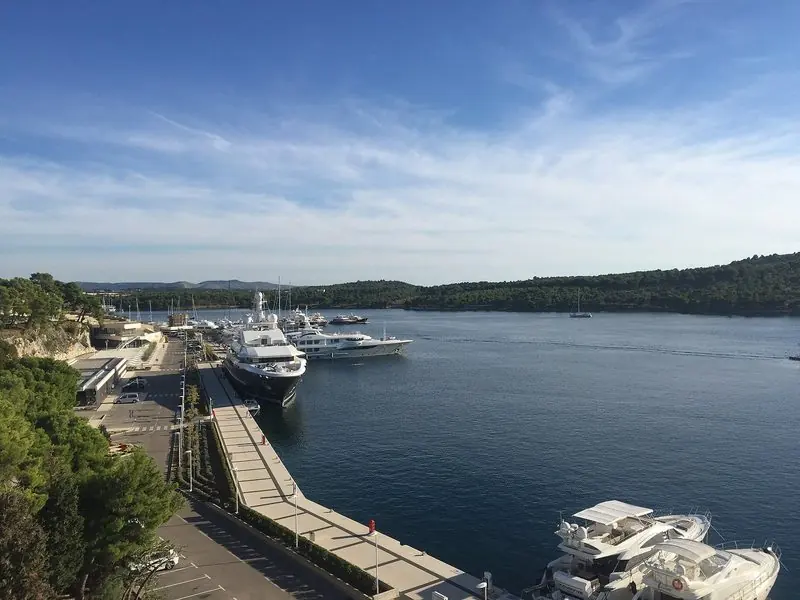
| Ubicación | Sibenik, Dalmacia central, Croacia, a 43 43,8 N, 15 53,59 E |
|---|---|
| Operador | D-Marin, desarrollada por el NCP Group y el Dogus Group |
| Amarres | 462 en total, unos 440 de ellos en el agua |
| Eslora máxima | 140 m, según el operador y la Yacht Harbour Association |
| Acceso | sin restricciones de gálibo aéreo ni de calado, y a 5 millas náuticas del mar abierto |
| Aproximación | el canal de San Antonio, de más de 2.000 m de largo y entre 140 y 220 m de ancho, con límite de 6 nudos |
| Corriente en el canal | salida constante de 0,5 a 1,5 nudos, que llega a 3 nudos tras lluvias fuertes |
| Calificación | Five Gold Anchors de la Yacht Harbour Association, más Bandera Azul |
| Varadero de la marina | travel lift de 50 toneladas, grúa de 1,5 toneladas y unos 30 amarres en seco |
| Astillero contiguo | NCP Refit Shipyard, con izado de yates de 900 toneladas, dique flotante de 1.500 toneladas y naves para yates de hasta 70 m |
| Aeropuertos | Split a unos 58 km, Zadar a unos 84 km |
| En el recinto | hotel D-Resort Sibenik, torre de control, canal 17 de VHF, seguridad 24/7 y circuito cerrado de televisión |
| Berth figures, from the operator's own marina page checked 28 July 2026: 452 berths for yachts to 70 m, and Mandalina described as Croatia's only marina designed for superyachts to 60 m. Higher counts and a 140 m maximum still circulate in third-party listings and are not what D-Marin publishes today | |
| Note on the 140 m figure | 140 m is also the narrowest published width of the St Anthony Channel, and the two numbers are easily conflated. Any yacht above 70 m should have the berth confirmed in writing |
| Travel lift on the marina's own page | 50 tonnes, with 30 dry dock places and hull pressure washing. Anything heavier goes next door to NCP Refit |
| Documents the operator requires on arrival: boat registration and a Croatian sailing permit | |
| Shore power | the operator describes smart pedestals and publishes no amperage, no voltage and no frequency, checked 28 July 2026. Croatia runs 50 Hz at 230 V and 400 V |
| Depth alongside is not published by the operator, checked 28 July 2026. The claim of no draft restriction is an operator statement and not a sounding | |
| No berthing rate of any kind is published by the operator, checked 28 July 2026 | |
Cinco millas tierra adentro, y por qué eso importa
Mandalina está en el lado sur de la bahía de Sibenik, en Dalmacia central, una masa de agua que se abre detrás de un largo cuello de tierra y a la que alimenta el río Krka. La marina queda a cinco millas náuticas del Adriático abierto, lo que suena a incomodidad y es en realidad toda la propuesta. Nada de lo que pasa en el Adriático llega a este agua. El operador la describe como uno de los amarres más seguros del Adriático, y los capitanes que han invernado aquí usan las mismas palabras.
Se construyó como la primera marina croata diseñada específicamente para superyates, obra del NCP Group con el turco Dogus Group, y hoy forma parte de la red D-Marin, que explota marinas desde España hasta los Emiratos. Eso importa a un armador porque los estándares, la gestión de amarres por aplicación y los acuerdos recíprocos de amarre dentro del grupo son homogéneos. Hay 462 amarres en total, unos 440 de ellos a flote. La eslora máxima total figura en 140 metros tanto en el operador como en la Yacht Harbour Association, que concede a la marina su calificación Five Gold Anchors.
El canal de San Antonio
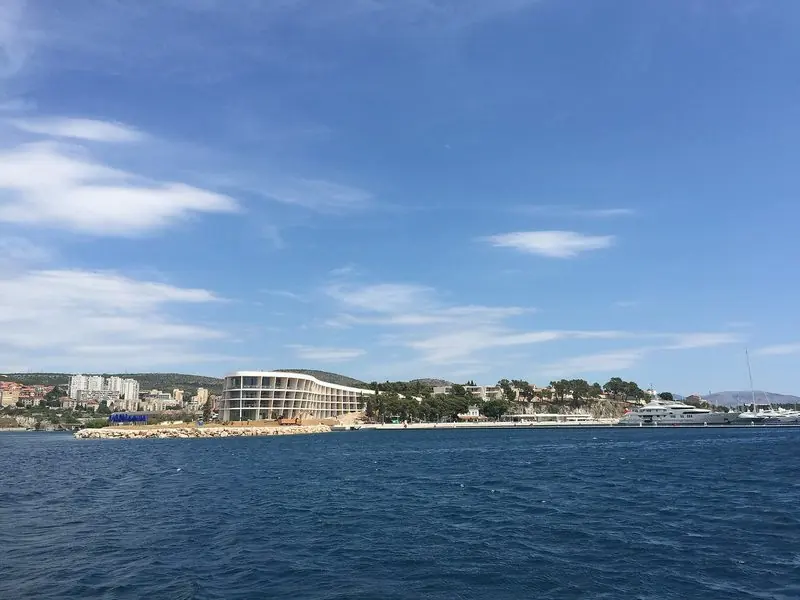
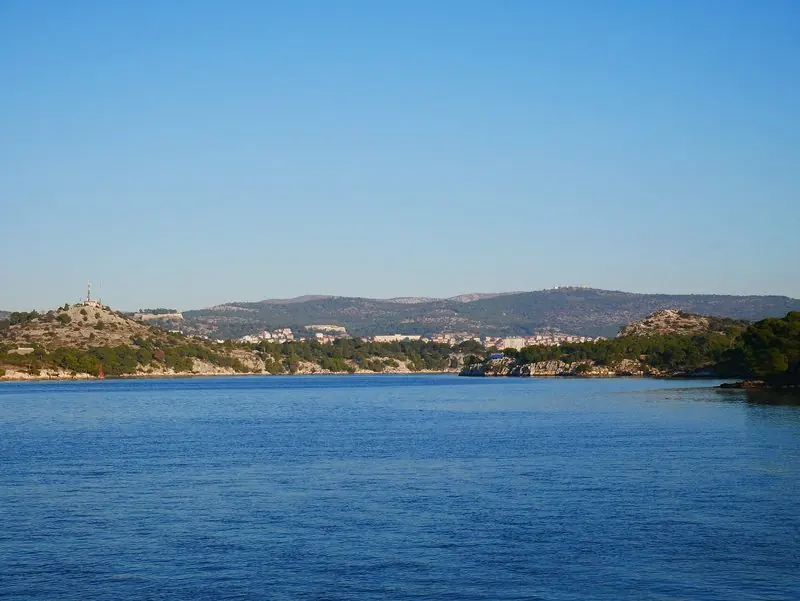
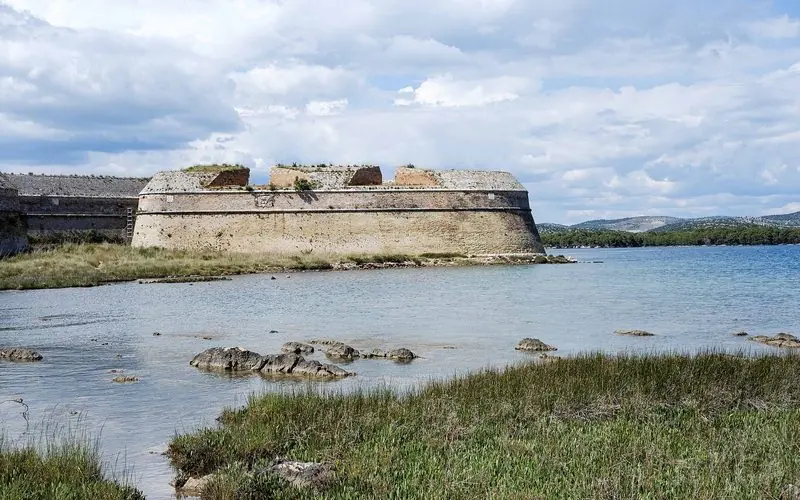
A Sibenik se entra por el canal de San Antonio, una garganta natural de más de dos kilómetros de largo y entre 140 y 220 metros de ancho, tallada en acantilados de caliza y con unos 40 metros de profundidad. Es una maniobra de verdad espectacular, guardada en su extremo de mar por la fortaleza de San Nicolás, del siglo XVI, declarada por la UNESCO y asentada en su propio islote. El canal está balizado para entrada nocturna con rojo a babor y verde a estribor, y el límite de velocidad es de seis nudos. No hay restricción de gálibo aéreo, así que un palo alto o un arco de radar pesado dan igual aquí.
Lo único que hay que planificar es la corriente. Por el canal sale un flujo constante de 0,5 a 1,5 nudos y, tras lluvias fuertes en la cuenca del Krka, puede llegar a tres nudos y montar corrientes revueltas. Eso es una consideración real para un casco grande de una sola hélice que entre contra ella con viento de través. Una vez pasado, la bahía se abre a un agua tranquila con la marina en la orilla sur. El tránsito a seis nudos lleva unos veinte minutos y los invitados suelen acordarse de él.
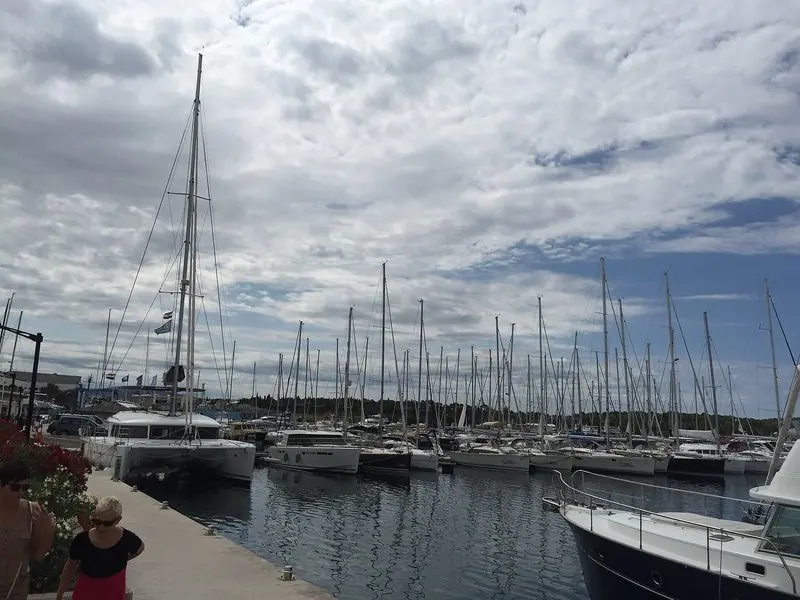
Dos kilómetros de garganta de caliza separan esta marina del Adriático, y eso es exactamente lo que paga un armador.
Los amarres y lo que admiten
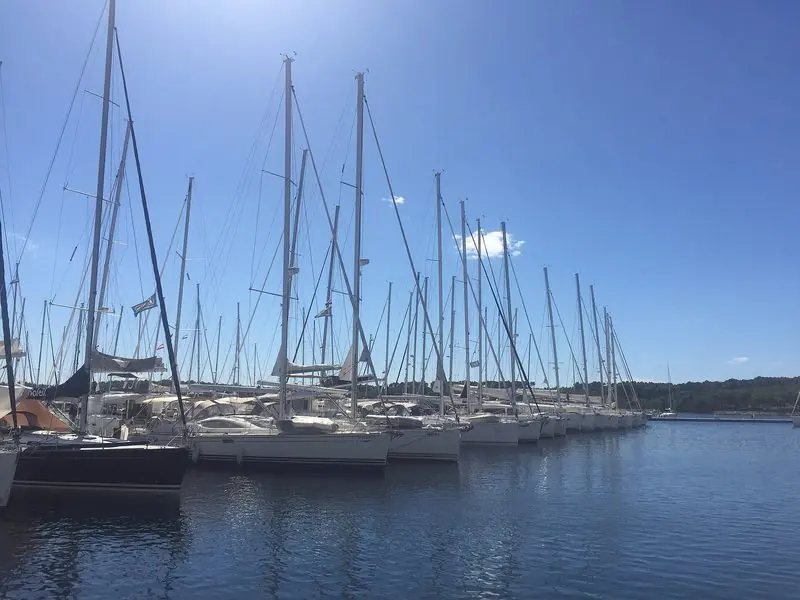
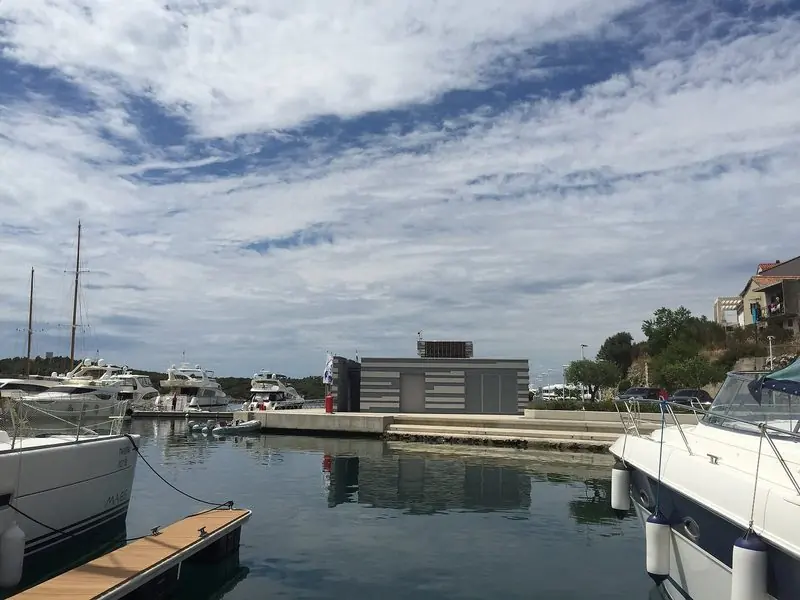
La marina no publica restricciones de gálibo ni de calado, y sus amarres de aguas profundas del muelle de superyates son la parte de la instalación que le importa a un armador de 60 a 140 metros. Los pantalanes estándar se ocupan de la franja de 15 a 70 metros que forma el grueso de la flota adriática, y las posiciones mayores están en el muro exterior. El amarre es de popa para casi todos los yates y de costado para los mayores. Una torre de control gestiona los movimientos y hay marineros de muelle de servicio a cualquier hora.
En Croacia la disponibilidad es un problema de verano y una oportunidad de invierno. Julio y agosto son duros en toda esta costa, y Mandalina es la opción por defecto de los yates grandes que vienen, así que los mejores amarres se comprometen pronto. A partir de octubre el panorama se invierte por completo y la marina se convierte en base de invernaje, en parte por el abrigo y en parte por el astillero de al lado. Los contratos anuales son lo habitual y llevan ventajas en el conjunto de la red D-Marin, incluidas estancias cortas gratuitas en las demás marinas del grupo.
El astillero de la parcela de al lado
La marina tiene su propio varadero con travel lift de 50 toneladas, grúa de 1,5 toneladas, lavado del casco a presión y unos treinta amarres en seco, lo que cubre tenders, lanchas de apoyo y embarcaciones pequeñas. La capacidad seria está al lado. NCP Refit Shipyard ocupa 110.000 metros cuadrados en la misma bahía, con 45.000 metros cuadrados de talleres, un izado de yates de 900 toneladas, un dique flotante de 1.500 toneladas, naves cubiertas para yates de hasta 70 metros y una explanada de shiplift con capacidad para trece yates a la vez.
Para un armador, esa combinación es poco habitual en cualquier punto del Mediterráneo y única en el Adriático. Un yate puede invernar a flote en su amarre, subir al izado para antifouling e inspecciones, volver a bajar y estar listo para salir en mayo sin ninguna travesía de traslado. Los costes de mano de obra croatas están por debajo de los italianos y franceses, y esa es buena parte de la razón por la que el astillero se llena. Las propias normas de la marina prohíben los trabajos de mantenimiento de envergadura en los amarres, así que todo lo que pase de la atención de rutina tiene que moverse al astillero.
Energía, agua y cómo se lleva el sitio
La corriente se suministra por pedestales inteligentes con potencia ajustada al yate, y la marina insiste en un suministro estable y sin fluctuaciones para barcos grandes, cosa que no está garantizada en el muelle de una isla croata. El agua funciona 24 horas. Los residuos se recogen y el vertido al agua está terminantemente prohibido. Hay combustible, y dentro de la marina funcionan una tienda de efectos navales, un supermercado y agencias náuticas. El hotel D-Resort Sibenik está en el propio recinto de la marina, lo que resuelve la cuestión de dónde duermen los invitados de más.
En la marina no se permite usar generadores, así que un yate aquí funciona con corriente de tierra y el pedestal tiene que estar bien dimensionado antes de llegar. Ese es un detalle que conviene comprobar pronto en un barco con carga hotelera pesada y con el armador a bordo en agosto. Hay asistencia al amarre y el servicio de marinero de muelle es continuo. La llegada se anuncia por el canal 17 de VHF, con la matrícula del barco y el permiso de navegación croata a la entrada.
Intimidad, y papeleo croata
La marina está cerrada, vallada, cubierta por seguridad 24 horas y circuito cerrado de televisión, y apartada de la ciudad en la península de Mandalina, así que un yate aquí no está en exposición pública. Bañarse, bucear y pescar en la dársena está prohibido, lo que mantiene limpia el agua alrededor de los barcos. Comparado con estar de popa en el muelle del pueblo en Hvar o en Split, la diferencia de exposición es abismal. Los invitados que llegan en coche entran por un acceso controlado.
Croacia está en la Unión Europea y en Schengen y usa el euro, lo que ha simplificado mucho las cosas desde 2013. Hace falta una viñeta, el permiso de navegación croata, que vale hasta el final del año natural. Quien piense hacer charter debería mirar con lupa las normas antes de comprometerse, porque los yates de pabellón extracomunitario de más de 40 metros de eslora registrada necesitan licencia de charter para trabajar en aguas croatas, y el país pasó a la facturación electrónica obligatoria para el charter desde el 1 de enero de 2026. La situación del crucero privado es sencilla y la comercial no.

Sibenik en tierra y la navegación de más allá
Sibenik es una ciudad dálmata de unos 34.000 habitantes levantada en una ladera alrededor de la catedral de Santiago, Patrimonio de la Humanidad de la UNESCO, construida en piedra sin mortero ni madera a lo largo de un siglo de obra. Tres fortalezas vigilan el casco antiguo, y la de San Miguel se ha convertido en un escenario de conciertos al aire libre con un programa de verano serio. No hay ambiente náutico ni dinero a la vista, cosa que a algunos armadores les parece justamente el punto. Los restaurantes del frente marítimo son buenos y sin pretensiones.
La navegación es la razón para estar aquí. El parque nacional de Krka y sus cascadas quedan río arriba detrás de la marina, el archipiélago de las Kornati, con más de ochenta islas, está a un rato de navegación hacia fuera y al norte, y Hvar, Vis y Korcula quedan todas a menos de un día. El aeropuerto de Split está a unos 58 kilómetros por carretera y el de Zadar a unos 84, los dos conectados con la autopista A1. Ninguno es un hub de largo radio, así que los invitados suelen enlazar por Fráncfort, Múnich, Viena o Zagreb.
Temporada, tiempo y el inconveniente sincero
La temporada croata es corta e intensa, más o menos de mediados de mayo a finales de septiembre, con una punta dura en las tres últimas semanas de julio y las dos primeras de agosto. Fuera de esa ventana la costa se vacía deprisa y en noviembre las islas están cerradas. El viento que define el Adriático es la bora, el noreste frío que cae de las montañas en rachas violentas y que da lo peor de sí del otoño a la primavera, y el jugo de verano trae el tiempo húmedo del sureste con lluvia. La posición de Mandalina, en el fondo de la bahía, hace que un armador lea sobre esos vientos en lugar de sentirlos.
Los inconvenientes son reales. Sibenik es una ciudad de provincias tranquila, sin enlace aéreo internacional propio y sin la profundidad de restaurantes y hoteles de Split o Dubrovnik, así que los invitados necesitan traslado. El pleno verano en esta costa está lleno hasta resultar desagradable en los puertos famosos. Y el recorrido de cinco millas por el canal, por magnífico que sea, añade casi una hora a cada salida y a cada regreso a seis nudos. El armador que quiera largar amarras y estar fondeado en veinte minutos está en el sitio equivocado.
What the operator actually publishes, and what it does not
The headline figures for Mandalina need correcting against the operator's own page. D-Marin states 452 berths for yachts up to 70 m and describes the marina as Croatia's only one designed for superyachts up to 60 m, checked 28 July 2026. It also gives its travel lift as 50 tonnes with 30 dry places. The 462 berths and 140 m maximum length overall that circulate in listings are not the operator's current numbers, and it is worth noting that 140 m is also the narrow end of the published width of the St Anthony Channel, which is exactly the kind of figure that migrates from one column of a specification sheet to another. A yacht above 70 m should have the berth confirmed in writing before committing to the passage up the channel.
Three numbers a captain needs are simply not published. There is no amperage on the pedestals, no depth alongside, and no price. The absence of the amperage is the sharpest of the three because the marina prohibits generator use, which turns the shore supply from a convenience into a go or no-go condition. A yacht that cannot draw its hotel load from the pedestal and cannot run its own set has nowhere to go. Croatia runs 50 Hz at 230 V and 400 V, in common with the rest of the continent, so the frequency is not the problem. The rating is. Ask for the amperage on the specific superyacht berth, ask whether the connection above a given rating is made by the marina or the crew, and get both in the booking confirmation.
The depth question, and the yard on the next plot
Depth is the other unresolved item. The operator's claim is that there are no air draft or draft restrictions and that the marina lies five nautical miles from open sea, which is a statement about the approach rather than a sounding at the berth. On a marina quoting 70 m capability that gap matters, because the binding constraint in a bay this far inside is almost always the water and not the length of the pontoon. The St Anthony Channel itself is over 2,000 m long and between 140 m and 220 m wide with a constant outflow of 0.5 to 1.5 knots, reaching 3 knots after heavy rain, and it is the current rather than the depth that a captain plans for on the way in.
On lifting, the split is clean and it is the reason the place works. The marina's own yard takes 50 tonnes, which covers tenders, chase boats and small craft and nothing else. Everything serious happens on the adjacent plot, now trading as Iskra Shipyard after a sale, which runs a 900-tonne ship lift, a 75-tonne travel lift and covered capability for yachts to 80 m, with a new 110 m, 4,000-tonne floating dock contracted in 2024. That is a genuine large-yacht capability within a walk of the berth, and it is unusual in the Adriatic. No day rate is published for either yard, checked 5 August 2026, and the general observation that Croatian labour sits below Italian and French rates is worth nothing to a budget without a figure attached.
En tierra, accesos y reservas
| Getting there | Split Airport is about 57 km away, roughly 49 to 60 minutes' drive, with a private transfer priced around EUR 81 for up to three passengers. Zadar Airport is further, roughly 75 km depending on the route, about 50 minutes by taxi but with no direct bus connection, which favours Split for a guest without a car. |
|---|---|
| Arriving by sea | Work VHF channel 17. The St Anthony Channel entrance is marked by a lighthouse on Cape Jadrija to the north and the sixteenth-century St Nicholas Fortress, built to guard the channel from Ottoman naval attack, to the south. Keep to starboard through the channel, hold the 6-knot limit, and expect a current of 0.5 to 1.5 knots against you on the way in, reaching 3 knots after heavy rain. |
| Reserving a berth | D-Marin takes bookings directly ([email protected], +385 22 460 800, a two-business-day response by its own stated standard) and is also listed on third-party platforms including MarinaReservation.com, Seasy, Metarina and Direct Berth. No forum or broker account gave a specific figure for how far ahead a peak-season berth needs to be secured, so ask the marina directly for current lead times rather than assuming. |
| What a berth costs | No current D-Marin Mandalina rate card is published anywhere Yotters could reach, checked 5 August 2026. One Croatian pricing index states private marinas of this type generally charge 20 to 40 per cent above standard Croatian marina rates, but gives no Mandalina-specific figure. Get a written quote before budgeting a season. |
| The yard next door | Iskra Shipyard (Ship Refit Department, +385 22 312 971, [email protected]) runs the 900-tonne ship lift, a 75-tonne travel lift and a 350 m quay across 45,000 square metres of workshops, with repair capacity to 80 m LOA and new-build supervision to 60 m. No haul-out cost signal or booking lead time is published; ask the yard directly. |
| Eating within walking distance, and after dark | Pelegrini, a Michelin star in the 2025 Guide Croatia, sits by the Cathedral of St James in the old town. The on-quay marina bar and restaurant does handmade pizzas, praised by name in reviews. Sibenik itself is quiet after dark; the area's actual nightclub scene, at Hacienda in Vodice and Aurora in Primosten, is a drive away. |
| What is NOT published, and the fixed dates | No rate card, no haul-out cost signal from Iskra, and no independently confirmed maximum LOA: the operator says 70 m, Dockwalk says 90 m, and 140 m still circulates in older directories. D-Marin runs an annual superyacht showcase, Adriatic Wave Weekend, at Mandalina with a gala dinner at Fortress Barone, though a fixed 2026 date could not be confirmed. Sibenik hosts an International Children's Festival every June; confirm the exact dates directly with the festival organisers before planning around it, since sources checked disagreed on the edition number. |
Lo que cuentan armadores y tripulaciones
Reviewers consistently praise the cleanliness of the facilities
Named Google reviewers describe "clean and spacey showers and rest room" and a supermarket open till 10pm, and call the marina "modern, super super good on service."
Noam R and A C, Google reviews via WanderlogBut shade and shower capacity draw genuine complaints for a marina this size
The same reviewer who praised the amenities also flagged that "it needs trees and shade, it very much sun exposed," and a second reviewer, while enjoying the quayside pizza bar, separately called it a "busy marina, clean facilities but few showers."
A C and Rory H, Google reviews via WanderlogWeaker, unverified reports describe slow management and berth-availability friction
Tripadvisor-indexed comments describe the marina as having gone into decline with unresponsive management and one visitor being told to look elsewhere for a berth. Yotters could not confirm the reviewers' identities or dates behind these comments, so they are reported here as a pattern worth asking the marina about directly, not as a settled fact.
Tripadvisor (reviewer identities not verifiable)D-Marin's own account of its customer satisfaction
D-Marin reports its own Net Promoter Score rising from 51 to 54 across its marina network and cites an iF Design Service Design Award. This is the operator's own account of its own service, not an independent measurement.
D-Marin, via Boat International
Lo bueno y lo que conviene vigilar
Puntos fuertes
- The only Croatian marina purpose-built for superyachtsMandalina has held Five Gold Anchors continuously since 2011, a rating no other Croatian marina carries at this level.
- A naturally sheltered, land-locked berthReaching the marina means five nautical miles up the St Anthony Channel, which multiple cruising sources describe as one of the most protected superyacht berths in the Adriatic.
- A serious haul-out yard genuinely next doorIskra Shipyard's 900-tonne ship lift and repair capacity to 80 m LOA sit a walk from the pontoon, so a winter refit does not mean a delivery passage.
- A Michelin-starred restaurant and the old town within ten minutesPelegrini holds a Michelin star in the 2025 Guide Croatia and sits by the Cathedral of St James in Sibenik's UNESCO-listed old town, a short walk from the berth.
- An on-site hotel and spaThe D-Resort Sibenik occupies the same plot, so guests and owners have a hotel to fall back on without leaving the marina.
A tener en cuenta
- No published rate card at allBudgeting a season here means calling the marina and waiting, by its own stated service standard, up to two business days for a quote.
- Public capacity figures genuinely disagreeD-Marin's own site states 452 berths to 70 m; Dockwalk states 90 m and 440 berths; other directories still circulate a 140 m maximum. A yacht above 70 m should get the specific berth confirmed in writing rather than relying on any of these.
- Shower capacity and shade are named, repeated complaintsMore than one named reviewer flags too few showers for the marina's size and a lack of tree cover on the pontoons.
- Weaker but recurring reports of slow managementUnverified Tripadvisor-indexed comments describe unresponsive staff and berth-availability friction; treat as a question to ask the marina directly rather than a settled fact, but do not ignore it.
- The yard next door has changed hands and the listings have not caught upWhat this page long called NCP Refit Shipyard is now Iskra Shipyard, and directories including SuperyachtNews' own still carry the old name and the old, smaller floating-dock figure. A booking made from a stale listing goes to the wrong contact.
Para quién es: El armador que navega el Adriático y quiere abrigo absoluto, un astillero de refit de gran izado al lado y una base de invierno que cuesta menos que Italia.