Marina de Cascais
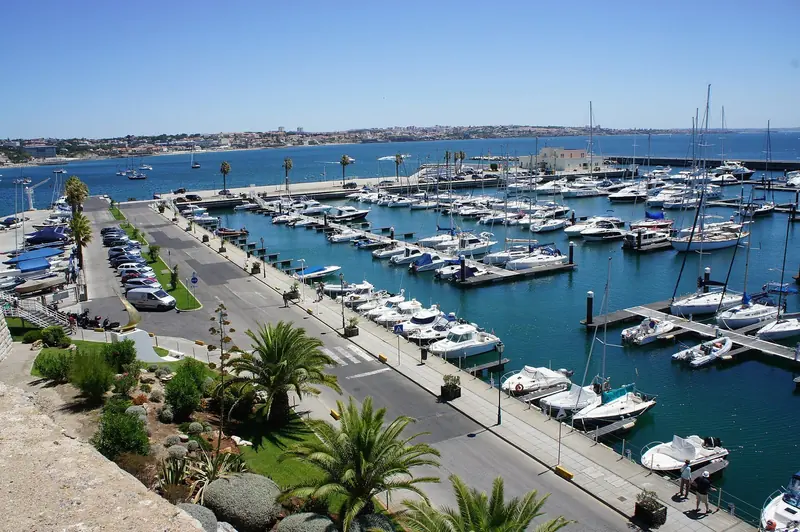
| Ubicación | bahía de Cascais, Portugal, en 38 41.5 N 009 25.1 W, nueve millas al sureste del Cabo da Roca y cuatro millas al oeste de la entrada del puerto de Lisboa |
|---|---|
| Operador | Marcascais, Sociedade Concessionaria da Marina de Cascais, S.A., capital social de EUR 20 millones, domiciliada en la Casa de Sao Bernardo, dentro de la marina |
| Concesión | otorgada por contrato con ENATUR en nombre del Estado portugués, firmado el 21 de septiembre de 1995 al amparo del Decreto-Lei 335/91 en la redacción del Decreto-Lei 14/94; el plazo no está publicado |
| Amarres | 650 según la asociación portuguesa de puertos deportivos, Wikipedia y el World Cruising and Sailing Wiki, y 668 según la Yacht Harbour Association; la marina no publica recuento propio |
| Apertura | 1999 |
| Esloras admitidas | clases de tarifa hasta 45 m de eslora total en los pantalanes, con la asociación dando un máximo de 36 m y TYHA un tamaño máximo de amarre de 100,00 m; un muelle de megayates aparte está cotizado hasta 65 m y por metro por encima, y dos guías de crucero describen embarcaciones de 50 m en un pantalán exterior |
| Mangas límite por clase | 5,00 m de 12 a 15 m, 6,50 m de 20 a 25 m, 7,20 m de 25 a 36 m y 10,00 m de 36 a 45 m |
| Calado | Noonsite indica una dársena dragada a 8,5 m con acceso en cualquier estado de marea; el World Cruising and Sailing Wiki da un mínimo de 6,0 m en los amarres y un calado máximo de 8,0 m; la marina no publica cifra de calado propia |
| Aproximación | entrada de nordeste a suroeste bajo la Cidadela, con Guia y Santa Marta como faros de referencia, tres boyas cardinales y una boya roja en el dique y una boya roja sin luz que se deja por babor |
| VHF | canal 9 con el 16 para llamada según Noonsite y la asociación portuguesa de puertos deportivos; la ficha de Sea-Seek da 62 con 16 |
| Límite de velocidad | tres nudos dentro de la dársena y en la bocana, según el reglamento de la marina |
| Varadero | travelift de 70 toneladas y grúa de 3 toneladas, con la tarifa del travelift cotizada solo hasta la clase de 20 a 25 m |
| Muelle de megayates | reserva previa obligatoria, con helipuerto al lado para tomas de tierra de corta duración |
| Acreditación | Five Gold Anchors de la Yacht Harbour Association, acreditada en octubre de 2023 |
| Regatas | sede del Clube Naval de Cascais, anfitriona del ISAF Sailing World Championships de 2007 y, en 2025, del Rolex TP52 World Championship y de la Finn Gold Cup |
| Aeropuertos | Lisboa Humberto Delgado a 35 km por la A5, unos 25 minutos; aeropuerto municipal de Cascais a 14 km |
Dónde está y para qué sirve
La bahía de Cascais es la última entrante aprovechable de la costa occidental antes de que se abra el Tajo. La marina publica su posición en 38 41.5 N 009 25.1 W, nueve millas al sureste del Cabo da Roca, el punto más occidental de la Europa continental, y cuatro millas al oeste de la entrada del puerto de Lisboa, con el Cabo Espichel al otro lado del estuario, al sur. Esa geografía es la razón de ser del sitio. Un barco que baja del norte de Europa dobla Roca, que es una esquina de verdad y tiene su propio tiempo, y Cascais es el primer lugar donde parar y hacer balance; un barco que va hacia Madeira, Canarias y la travesía del Atlántico sale de aquí o del río que queda detrás.
El segundo uso es Lisboa. La ciudad está a 30 km por carretera, 24 minutos en coche y unos EUR 35 a 50 en taxi, y la línea de cercanías de Cascais va desde la estación contigua a la marina, siguiendo la orilla del Tajo, hasta Cais do Sodre, en el centro de Lisboa, en 40 minutos, cada 15 minutos, por EUR 2 a 5. Es una solución materialmente mejor que amarrar en el propio río, donde las dársenas deportivas de Belem, Santo Amaro y Alcantara están dentro de un puerto comercial en activo, con 4 a 5 nudos de corriente de marea viva en las bocanas. Cascais da Lisboa sin el río. El tercer uso, y el que la marina pone por delante, es la vela de competición.
La aproximación, las boyas y la entrada
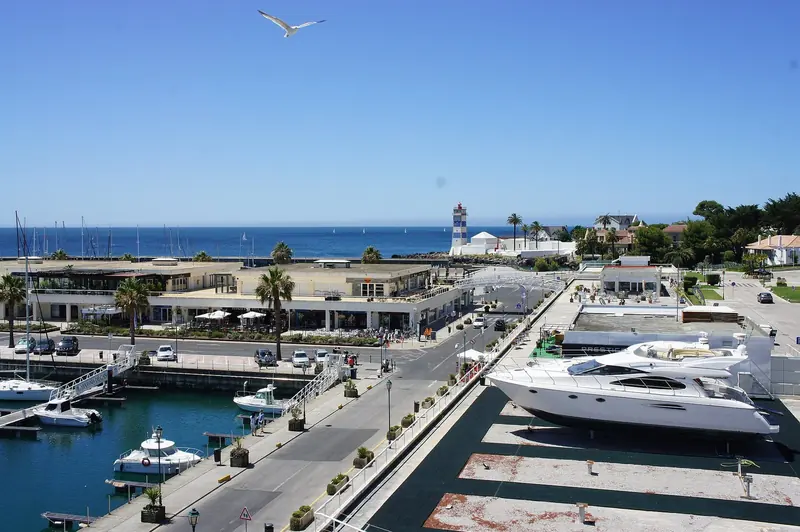
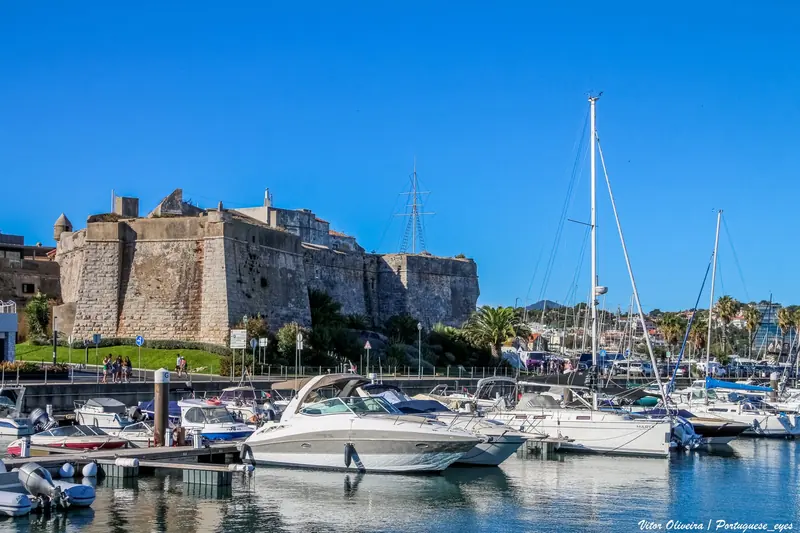
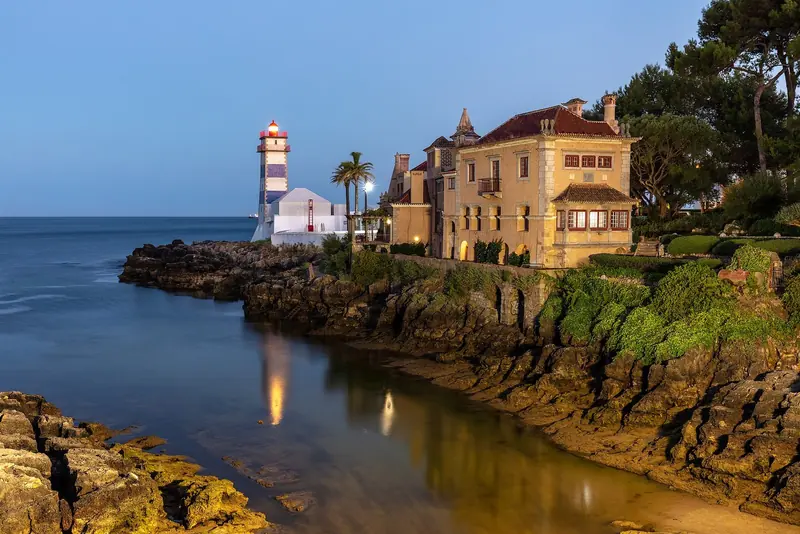
Se entra con rumbo de nordeste a suroeste, pegado a la fortaleza de la Cidadela, en el lado oeste de la bahía. Los dos faros con los que se trabaja son Guia al oeste y Santa Marta, prácticamente encima de la marina. La instrucción de la propia marina es mantenerse bien libre del dique, balizado en sus inmediaciones con tres boyas cardinales y una boya roja, y dejar por babor al entrar la pequeña boya roja sin luz frente al morro del espigón. El pantalán de recepción está en el lado norte de la bocana. Dentro de la dársena, y en la propia bocana, tres nudos son el límite legal según el reglamento de la marina, y también lo es cualquier velocidad cuya ola moleste a los demás usuarios.
Las dos cosas que un patrón quiere saber antes de comprometerse son el calado y la marea, y las respuestas publicadas son escasas. Noonsite indica una dársena dragada a 8,5 metros y acceso posible en cualquier estado de marea por una bocana bien protegida. Existe una segunda cifra publicada y está describiendo otra cosa: el World Cruising and Sailing Wiki da 650 amarres para yates de hasta 25 metros con profundidades mínimas de 6,0 metros y un calado máximo de 8,0 metros en su ficha de datos. Leídas juntas, 8,5 metros son una profundidad dragada de la dársena y 6,0 metros un mínimo en los amarres, que es la cifra que importa si se calan más de 5. La marina, por su parte, no publica calado alguno. El canal de VHF tampoco está resuelto: Noonsite y la asociación portuguesa de puertos deportivos dan ambos el canal 9 con el 16 para llamada, mientras que la ficha del portal de crucero Sea-Seek da el canal 62 con el 16. Se llama por el 9 y se prueba el 62 si no contesta nadie. El despacho de un barco que llega de fuera de la UE se hace en el muelle: el reglamento exige al armador regularizar su estancia ante los servicios de la marina, completar las formalidades legales ante las autoridades marítimas y de aduanas y depositar una fianza.
Cascais publica una tarifa para un yate de 65 metros y no publica cuántos amarres tiene, qué calado tienen ni cuándo termina la concesión de la que dependen.
Seiscientos cincuenta amarres, y adónde van de verdad los barcos grandes
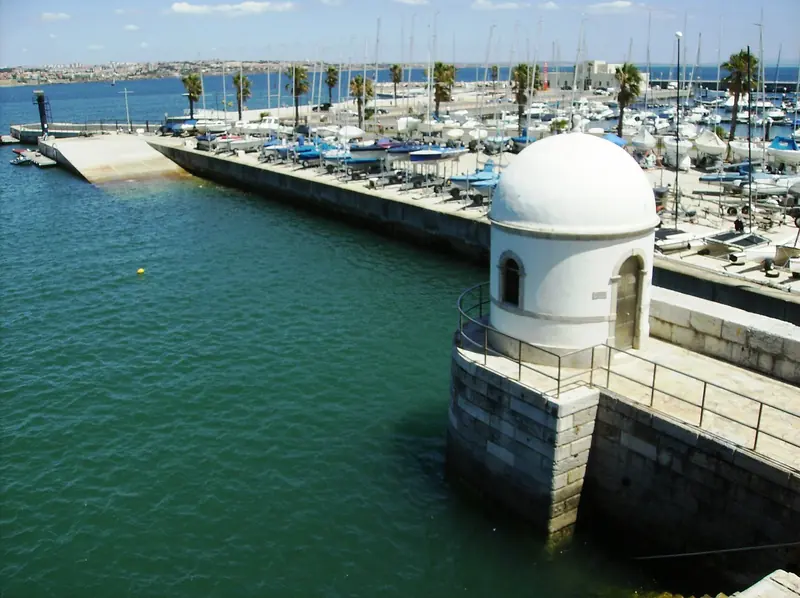
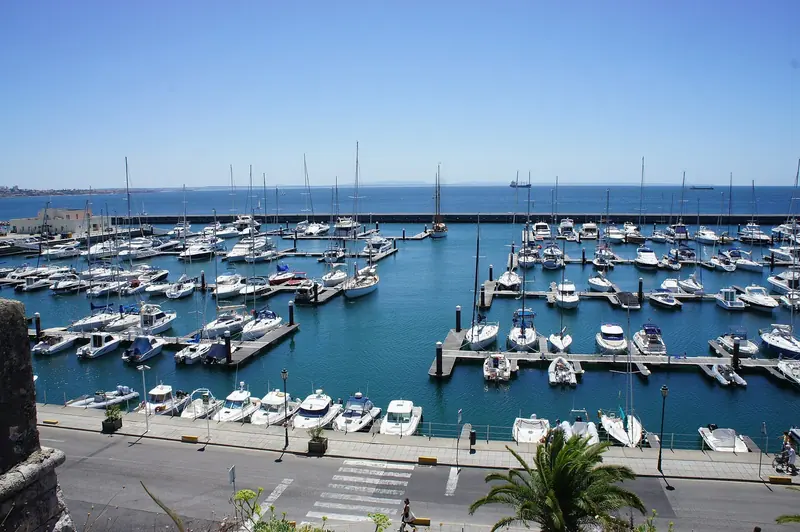
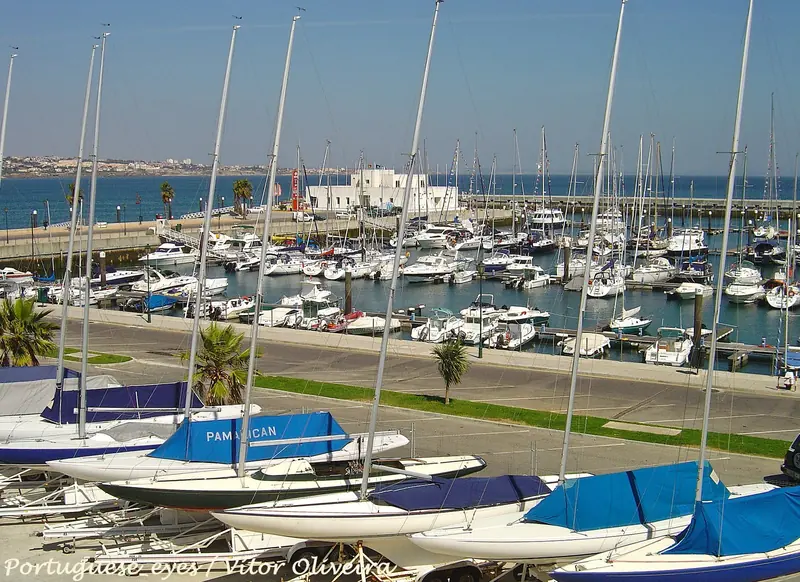
Tanto la asociación portuguesa de puertos deportivos como Wikipedia sitúan la marina en 650 amarres, abierta en 1999, y la asociación da un máximo de 36 metros en los pantalanes. La Yacht Harbour Association, que acreditó la marina con Five Gold Anchors en octubre de 2023 y a la que la propia marina cita por esa calificación, la recoge de otra manera todavía: 668 amarres y un tamaño máximo de amarre de 100,00 m. Circulan varios recuentos de amarres y tres esloras máximas, y ni uno solo procede del operador. El plano de la marina muestra pantalanes rotulados de la A a la P alrededor de una única dársena, con muelles independientes para recepción, combustible, trabajos técnicos, eventos, operadores de turismo marítimo y megayates, además del edificio administrativo de la Casa de Sao Bernardo y del Clube Naval de Cascais en el mismo recinto. Las clases de tarifa se fijan por eslora y manga a la vez: la clase V va de 12,01 a 15 metros con manga hasta 5,00 metros, la clase VII de 20,01 a 25 metros hasta 6,50 metros, la clase VIII de 25,01 a 36 metros hasta 7,20 metros y la clase IX de 36,01 a 45 metros con manga hasta 10,00 metros. Los catamaranes pagan el doble de su clase.
Por encima de 36 metros la marina solo dice que está preparada para recibir embarcaciones de mayor eslora, en un muelle de megayates que exige reserva previa y tiene al lado un helipuerto para tomas de tierra breves. No dice cuántos amarres hay, y eso importa, porque los dos relatos independientes que Yotters pudo encontrar describen la capacidad para barcos grandes como una cara exterior. Una nota de un navegante en Sea-Seek habla de 70 amarres de tránsito para barcos de menos de 30 metros, con embarcaciones de 50 metros aceptadas en el pantalán exterior, y el World Cruising and Sailing Wiki, de forma independiente, dice que las embarcaciones mayores atracan en un pantalán situado fuera del dique norte, capaz de admitir barcos de hasta 50 metros de eslora. Que dos guías de crucero mantenidas por colaboradores coincidan en 50 metros no es un dato del operador, pero es una corroboración. Leído junto a la tarifa, que cotiza el muelle de megayates hasta 65 metros y después suma EUR 16,50 por metro, el cuadro es el de una marina capaz de tomar un yate muy grande en una cara exterior expuesta, y no el de una marina con dársena de superyates. Si se está en 45 metros o más, conviene confirmar por escrito el amarre concreto y su calado antes de planificar una escala.
Lo que cuesta, y las formas de contrato que nadie anuncia
El tarifario en vigor desde el 1 de enero de 2026 es uno de los más detallados de Portugal. La temporada alta va aquí del 1 de abril al 30 de septiembre, es decir seis meses, y la baja cubre de enero a marzo y de octubre a diciembre. Por noche en temporada alta: EUR 71,70 para un barco de clase V de 12 a 15 metros, EUR 96,60 de 15 a 18 metros, EUR 146,15 de 20 a 25 metros, EUR 198,45 de 25 a 36 metros y EUR 253,55 de 36 a 45 metros. En temporada baja las mismas bandas quedan en EUR 46,90, EUR 54,00, EUR 66,15, EUR 90,95 y EUR 115,75. Hay una tarifa de estancia corta de hasta seis horas, EUR 31,50 de 12 a 20 metros y EUR 105,00 de 20 a 36 metros, una línea de verdad útil para una parada de mediodía. Todo se cotiza sin IVA, que se añade al 23 por ciento.
Es en los contratos largos donde la marina se separa de sus vecinas. Hay una columna de 270 días, fechada explícitamente de octubre a junio o de julio a marzo, esto es, el contrato de invernada disfrazado de plazo de nueve meses, y frente a la tarifa diaria sale barato: EUR 16.195 para un barco de 20 a 25 metros y EUR 28.045 de 36 a 45 metros. Un año completo de 360 días son EUR 22.490 y EUR 38.940 para esas dos mismas bandas. El tarifario aparte de residentes añade un precio a tres años, EUR 47.240 para un barco de 20 a 25 metros, alrededor de EUR 15.750 al año, pero con cuotas trimestrales de mantenimiento encima, mientras que la tarifa de 360 días las incluye. Esas cuotas están publicadas, aunque en la hoja más antigua: la tabla de residentes en vigor desde el 1 de enero de 2024 da EUR 2.241,32 al año antes de IVA de 20 a 25 metros y EUR 3.200,00 de 25 a 36 metros, y la marina no la ha reeditado junto al tarifario de 2026. Un contrato a tres años lleva además 720 horas de aparcamiento al año, siete días al año de varada en la zona técnica y un 15 por ciento de descuento en los servicios de la marina. Todo lo que pase de 365 días no está tarifado en absoluto y se lleva en la oficina.
La concesión, y lo que no cuenta
La marina la explota Marcascais, Sociedade Concessionaria da Marina de Cascais, S.A., una sociedad con EUR 20 millones de capital social, domiciliada en la Casa de Sao Bernardo, dentro de la propia marina. Su título es una concesión para construir y explotar la marina como servicio público regular y continuo, otorgada por contrato con ENATUR, la empresa pública de turismo, actuando por el Estado portugués, firmado el 21 de septiembre de 1995 al amparo del Decreto-Lei 335/91, de 7 de septiembre, en la redacción dada por el Decreto-Lei 14/94. Cada hoja de tarifas publicada lleva la línea de que se emite conforme a la Cláusula 21 de esa concesión, buena señal de lo atado que está el precio al contrato.
Lo que no aparece publicado en ningún sitio al que Yotters haya podido llegar es la fecha de finalización. La web de la marina, el reglamento y la tarifa remiten todos a la concesión sin decir su plazo, y el texto del Decreto-Lei no se pudo recuperar. Para un comprador eso es un hueco real, porque un amarre aquí no es propiedad: el reglamento define el atraque permanente como cesión temporal de un derecho de uso exclusivo por periodos superiores a 365 días consecutivos, y traspasar ese derecho a un tercero a cambio de dinero exige autorización previa por escrito del concesionario. La tarifa hasta pone precio al papeleo: un alquiler de amarre cuesta EUR 150 hasta 90 días, EUR 300 hasta 180 y EUR 500 hasta 359. Quien trate un amarre de Cascais como un activo debería pedir por escrito el vencimiento de la concesión antes de firmar un contrato a tres años, y no digamos antes de pagar por un derecho más largo.
La nortada, el mar de fondo y el cuadrante que queda abierto
Aquí el viento tiene nombre y temporada. La nortada es el viento de verano de la costa occidental ibérica; sopla sobre todo de junio a septiembre del nornoroeste, generada por una baja térmica sobre la península frente al anticiclón de las Azores mar adentro y reforzada por el afloramiento costero de agua fría que mantiene vivo el gradiente de presión. El relieve la amplifica en lo local, y uno de los sitios clásicos donde eso ocurre es la Praia do Guincho, la playa siguiente al doblar la esquina de Cascais. Los datos de estación de largo plazo para Cascais dan dirección dominante del nornoroeste, una media de 10 nudos y rachas medias de 29 nudos en el periodo de 2015 a 2026. Por eso se regatea aquí: un noroeste fiable, en aumento, reforzado por la brisa marina casi todas las tardes de verano, con agua plana al abrigo de la tierra y Atlántico abierto a una milla.
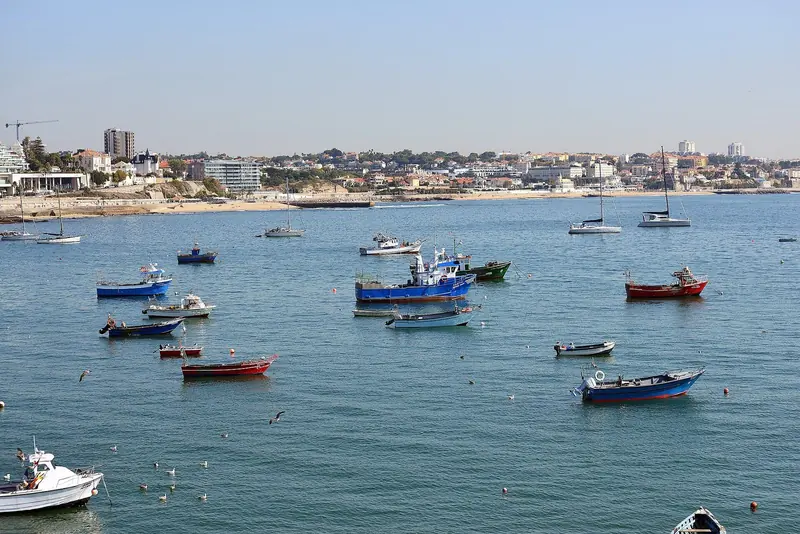
Para un barco parado en su amarre y no en regata, la nortada es sobre todo ruido y superficie expuesta en la jarcia. La debilidad es el cuadrante sur. La bahía de Cascais se abre al sur y al sureste, y la ficha de Sea-Seek dice llanamente que la marina está protegida de todos los vientos salvo de un sur o sureste fuerte, que puede dificultar el acceso al puerto, y recomienda fondear al este de la marina, donde el abrigo es mejor. Ese es el problema de invierno: una borrasca atlántica de paso mete viento y una mar de fondo oceánica larga directamente en la bahía desde el sur y el suroeste, y no hay ni segunda bocana ni esclusa. El propio reglamento da al capitán de puerto la facultad de ordenar el cambio de un barco de un amarre a otro cuando el mal tiempo lo hace necesario, lo que dice algo sobre cómo se comporta la dársena en un temporal.
La regata, y lo que le hace a tu amarre
Cascais es un campo de regatas con una marina al lado, y un armador que planifique temporada debería leer el calendario antes de reservar. La localidad acogió el ISAF Sailing World Championships de 2007 para vela ligera y barcos de regata, y el Clube Naval de Cascais ha mantenido el nivel desde entonces. Solo en 2025 el club organizó el Rolex TP52 World Championship, ganado en julio por American Magic Quantum Racing, y la Finn Gold Cup en septiembre. Las citas fijas son la regata Cascais Vela de finales de agosto, la Clube Naval de Cascais Invitational Cup de septiembre, las Cascais J/70 Winter Series, que valen además como campeonato nacional portugués, el SailCascais J/70 Grand Slam de octubre, el Trofeo Maria Guedes Queiroz, el Trofeu de S.M. Rey Juan Carlos, el Mirpuri Foundation Sailing Trophy y una regata de Navidad. El club presentó su J/70 Summer Cup de julio de 2025 como primera clasificatoria para el Mundial de 2026.
De ahí se siguen dos consecuencias prácticas. La primera: una regata de flota grande llena los pantalanes, la explanada y la grúa, y la marina tarifa un muelle de eventos aparte precisamente por eso, así que un armador de crucero que quiera una semana tranquila en septiembre hará mejor en mirar el calendario del club que la página de disponibilidad de la marina. Conviene tener en cuenta que las pruebas citadas arriba son la temporada 2025: los calendarios del club para 2026 y 2027 no estaban publicados al cierre de esta edición, así que hay que ir a mirar en vez de dar esta lista por vigente. La segunda: los oficios técnicos y auxiliares de aquí están calibrados para barcos de regata, reparación de velas, trabajo de jarcia, tiempo de grúa y vueltas rápidas entre pruebas, que es una competencia distinta del refit de superyate. Si el barco es de regatas o un crucero rápido, esta es una de las marinas mejor servidas de la península Ibérica. Si es un motoryate de desplazamiento de 40 metros, el varadero no está pensado para él.
Combustible, el varadero y el techo del travelift
En el plano de la marina hay un muelle de combustible, a la entrada, cerca del pantalán de recepción, y no se publica precio de surtidor. Portugal está dentro del territorio de impuestos especiales de la UE y su régimen de gasóleo marino exento está escrito para buques pesqueros autorizados, así que un yate privado reposta con impuestos completos. La ficha de Noonsite, que es de 2010 y hay que tratar como antigua, añade que el surtidor no aceptaba tarjetas de crédito, algo que conviene confirmar antes de presentarse con un pedido grande. El varadero tiene un travelift de 70 toneladas y una grúa de 3 toneladas, con almacenaje en tierra, reparaciones generales y velería, y detrás quedan el muelle técnico y la explanada de la marina.
La tarifa enseña dónde se acaba el varadero. La tabla del travelift está cotizada por clases solo hasta la clase VII, de 20 a 25 metros, a EUR 342,30 por operación de 30 minutos en temporada baja y EUR 488,10 en alta, con medias horas adicionales a EUR 242,55; para las clases VIII y IX no hay precio de izada. Así que el travelift atiende de verdad a barcos hasta la mitad de los veinte metros y nada por encima. El resto del tarifario de servicios está publicado con el mismo detalle y merece leerse antes de comprometerse: limpieza de obra viva a EUR 202,10 para un barco de 20 a 25 metros más EUR 52,00 de cargo de agua; calzado a EUR 176,00 los siete primeros días; vaciado de aguas negras a EUR 25,00 por operación; recogida de residuos a EUR 8,90 hasta 50 litros, EUR 11,00 hasta 100 litros y EUR 16,50 por encima, con la nota de que se aplica a terceros países; remolque a EUR 70,00 dentro de la zona concesionada y EUR 160,00 fuera hasta 5 millas; servicios de tripulación a EUR 28,50 la hora; y en la lavandería un lavado a EUR 5,00 y un secado a EUR 6,50.
Lisboa, el río que trabaja y lo que hay en el muelle
El puerto comercial de al lado no es un telón de fondo, es una operación viva. El Puerto de Lisboa movió 11,5 millones de toneladas de carga y 481.396 TEU en 2025 y, en la parte de cruceros, gestionó 206.226 pasajeros de inicio y fin de trayecto en 121 escalas de ese tipo, de los cuales 105.900 embarcaron, más otros 499.211 pasajeros en tránsito; sus terminales de contenedores y de cruceros están en la orilla norte del Tajo y el canal de navegación pasa cuatro millas al este de la bahía de Cascais. En la práctica eso significa tráfico mercante cruzando tu derrota en cada llegada y en cada salida, un dispositivo de separación de tráfico en funcionamiento en vez de una costa vacía y, a favor del navegante, un puerto comercial de servicio completo con capacidad de ingeniería real a pocas millas cuando se rompe algo que el varadero de la marina no puede arreglar.
En tierra, la marina es más un paseo que trabaja que una fachada de resort: una veintena de restaurantes, bares y cafés en el muelle, entre ellos La Brasserie para parrilla francesa, Marisco para marisco, Nikoletta y Gordinni para italiano, Yam para asiático, Valerio para tapas, Trium para brasileño y portugués, Pateo do Guincho como bar de copas, y una serie de cafeterías de especialidad y salas de brunch que mantienen vivo el sitio fuera de temporada. El casco antiguo de Cascais queda a un paseo corto por el acceso peatonal que bordea la Cidadela, y Estoril con su casino es la parada siguiente de la línea. Para los invitados, el aeropuerto Humberto Delgado de Lisboa está a 35 km por la A5, unos 25 minutos y EUR 40 a 55 en taxi, y el aeropuerto municipal de Cascais está a 14 km y admite aviación privada. En el recinto hay un aparcamiento subterráneo de 600 plazas.
En tierra, accesos y reservas
| Getting there | Lisbon Humberto Delgado airport is 35 km away, about 25 minutes by the A5, and a taxi runs roughly EUR 40 to 55 for the trip. Cascais municipal airport is 14 km away and takes private aircraft. There is no direct public transport from the airport: the workable route is the metro red line from Aeroporto to Alameda, then across to Cais do Sodre and the Cascais train, about an hour and a quarter in total for EUR 5 to 20, or bus 1620 for EUR 5 to 8 in about the same time. For a guest arriving without luggage, or for crew, the Cascais railway line into Cais do Sodre in central Lisbon takes 40 minutes, runs every 15 minutes and costs EUR 2 to 5, which is the single best transport asset any marina near a European capital has. The marina has a 600 space underground car park. |
|---|---|
| Arriving by sea and clearing in | Come in on a northeast to southwest heading under the Cidadela. Guia is the light to the west, Santa Marta is almost on the marina. Keep clear of the breakwater, which carries three cardinal buoys and a red one, and leave the small unlit red buoy off the pier head to port. The reception pontoon is on the north side of the entrance. Call on VHF 9, with 16 for calling, and try 62 if nobody answers, because the published channel is not consistent between sources. There is no lock, no bridge and, per Noonsite, access at all states of tide. Three knots is the limit inside the harbour and at the entrance. A boat arriving from outside the EU regularises with the marina office and then completes the formalities with the Maritime and Customs authorities; the regulation also requires a deposit to be lodged on arrival. |
| Reserving a berth | Nautical reservations go to [email protected], with [email protected] for support and +351 214 824 800 for the office. Anything up to 365 days is priced on the published tariff and can be booked directly; anything longer than 365 days is not priced at all and the marina asks you to contact it through the site form or by email. Over 36 metres the megayacht pier is by prior arrangement only. Because the marina is a race venue, availability is driven by the Clube Naval de Cascais calendar rather than by the holiday season, so check the club's schedule before you assume a September week is quiet. Selling on or subletting a berth right requires prior written authorisation from the concessionaire and the tariff charges for the paperwork: EUR 150 for a let up to 90 days, EUR 300 up to 180 days and EUR 500 up to 359. |
| What a berth costs, 2026 tariff | In force from 1 January 2026, all figures before VAT, which is added at 23 per cent. High season is 1 April to 30 September and low season is January to March plus October to December, which is a much longer high season than the Algarve marinas run. High season nightly: EUR 71.70 at 12 to 15 m, EUR 96.60 at 15 to 18 m, EUR 115.80 at 18 to 20 m, EUR 146.15 at 20 to 25 m, EUR 198.45 at 25 to 36 m and EUR 253.55 at 36 to 45 m. Low season nightly for the same bands: EUR 46.90, EUR 54.00, EUR 60.60, EUR 66.15, EUR 90.95 and EUR 115.75. Thirty days in high season is EUR 1,845.00 at 12 to 15 m, EUR 3,895.00 at 20 to 25 m and EUR 6,825.00 at 36 to 45 m. The 270 day contract, dated October to June or July to March, is EUR 16,195 at 20 to 25 m and EUR 28,045 at 36 to 45 m; 360 days is EUR 22,490 and EUR 38,940. Catamarans pay 100 per cent more than the class. There is a short visit rate of up to six hours: EUR 31.50 at 12 to 20 m, EUR 105.00 at 20 to 36 m and EUR 157.50 at 36 to 45 m. |
| What a megayacht berth costs | This is the row that separates Cascais from most of Iberia, because the number exists. On the megayacht pier the daily rate is EUR 200.00 in low season and EUR 350.00 in high season up to 45 metres; EUR 295.00 and EUR 625.00 from 45 to 55 metres; EUR 510.00 and EUR 1,100.00 from 55 to 65 metres; and over 65 metres the tariff adds EUR 16.50 a metre. All before VAT at 23 per cent, 2026 rates. Note two things. First, a 40 metre yacht on the megayacht pier at EUR 350.00 a night in high season pays more than the same yacht in a class IX finger berth at EUR 253.55, so ask which you are being quoted. Second, no weekly, monthly, seasonal or annual rate is published for the megayacht pier at any length, so a superyacht owner can price a night here and cannot price a season. |
| Fuel, power, water and the service tariff | There is a fuel pier near the reception pontoon and no published pump price. Portugal's tax-free marine diesel is written for licensed fishing vessels, so a private yacht pays fully taxed fuel. Noonsite's entry, dated 2010, notes the fuel dock did not accept credit cards; confirm before you order. Water and electricity are not included in the berth rate: the tariff states plainly that supply may be added to the price shown, and no per-unit rate is published, which is the single biggest gap in an otherwise very complete price list. The rest of the services are priced to the euro: pump-out EUR 25.00 an operation; waste collection EUR 8.90 up to 50 litres, EUR 11.00 to 100 litres and EUR 16.50 above, marked as applicable to third countries; hull cleaning EUR 202.10 at 20 to 25 m plus a EUR 52.00 water charge; shoring EUR 176.00 for the first seven days; mast lifting or stepping EUR 49.50 for a mast up to 10 m; forklift EUR 27.50 for 15 minutes and EUR 70.00 for an hour; towing EUR 70.00 inside the licensed area, EUR 160.00 outside up to 5 miles; access card EUR 20.32; crew services EUR 28.50 an hour; laundry wash EUR 5.00 and dry EUR 6.50. |
| Haul-out and what the yard can take | The yard runs a 70 tonne travel hoist and a 3 tonne crane, with a technical pier, hardstanding, general repairs and sail repair on site. The published travel lift tariff runs only to class VII, 20 to 25 metres, at EUR 342.30 per 30 minute operation in low season and EUR 488.10 in high season, with additional 30 minute periods at EUR 242.55, so the practical lift ceiling is the mid-twenties in metres and there is no priced haul-out for anything above it. Hardstanding in the technical area is charged per day by class, from about EUR 5.80 for a boat under 6.15 m to about EUR 92.40 at 20 to 25 m in 2026, with residents, annual tenants and installed operators taking 15 per cent off. Heavy work on a large motor yacht leaves Cascais, and the obvious alternative is the commercial capacity in the Port of Lisbon four miles east. |
| Eating and drinking on the quay | Around twenty places sit on the marina promenade and they are open through the year rather than seasonally, which is not true of most Portuguese marinas. La Brasserie does French grills, Marisco is the shellfish room, Nikoletta and Gordinni cover Italian, Mercearia and Beach Pizza run Italian and Brazilian, Yam is the Asian bar-restaurant, Valerio is tapas, Trium is a Brazilian and Portuguese fusion room, KBueno does grilled meats, SPI and Omonni are the remaining restaurant-bars, and Pateo do Guincho is the lounge bar. Daytime there is a strong run of coffee and brunch rooms, among them Kafeine, KropCafe, The Coffee and Ar Mar, plus Amor aos Pedacos for pastry and Mioo for gelato. The old town of Cascais is a short walk through the pedestrian access past the Cidadela fortress, and Estoril and its casino are the next stop up the railway line. |
| What is NOT published | A great deal, and it is the structural end that is missing rather than the pricing. The marina publishes no berth count, no maximum LOA, no depth at the entrance or alongside, and no tidal information on its own site. Everything structural on this page therefore comes from third parties who disagree: 650 berths from the Portuguese marina association, Wikipedia and the World Cruising and Sailing Wiki against 668 from the Yacht Harbour Association; a 36 metre pontoon maximum from the association against TYHA's 100.00 metre maximum berth size; and 8.5 metres dredged from a single dated Noonsite entry against the cruising wiki's 6.0 metre minimum at the berths, which are probably measuring different things. No end date for the concession is published anywhere Yotters could reach, despite the tariff citing Clause 21 of it on every page. No water or electricity unit rate is published, only the statement that supply may be added to the berth price. No fuel price. No shore power amperage. No rate of any kind above 365 days, and no weekly, monthly or annual rate for the megayacht pier at any length. And the number of megayacht berths is never stated: the only accounts anywhere are two cruising guides that agree on 50 metre vessels taken on an outer pontoon. |
Lo que cuentan armadores y tripulaciones
Sheltered from everything except the south, and the entrance suffers for it
A cruising contributor's entry states that Marina de Cascais is protected from all winds except a strong southerly or southeasterly, which can make access to the harbour difficult, and recommends anchoring east of the marina where the protection is best. The same note describes 70 visitor berths for boats under 30 metres, with 50 metre vessels taken on the outer pontoon, and gives the working channel as 62 rather than the 9 published elsewhere. It also carries an earlier note that the anchorage beside the harbour holds well on sand but is littered with old moorings that can foul an anchor.
Sea-SeekAll states of tide, dredged deep, and a fuel dock that did not take cards
Noonsite describes a modern marina with laundry, ATM, free wifi, chandlery, mail pickup, bars, restaurants, provisions and fuel, a boatyard with a 70 tonne hoist and a 3 tonne crane, shore storage and repairs including sails, and pontoon access controlled by electronic security cards. It puts the harbour as dredged to 8.5 metres with access at all states of tide through a well protected entrance, and notes that the fuel dock does not accept credit cards. The entry is dated 2010, so the card detail in particular should be confirmed rather than relied on.
NoonsiteThe berth is a licence, not an asset, and the paperwork is priced
The marina's own regulation defines permanent berthing as a temporary transfer of an exclusive right to use a berth for periods over 365 consecutive days, and requires prior written authorisation from the concessionaire before that right can be passed to a third party for money. The 2026 tariff prices the transaction directly: EUR 150 for a mooring let up to 90 days, EUR 300 up to 180 days and EUR 500 up to 359. The regulation also allows the marina director to order a boat moved between berths for reasons of service or bad weather, and prohibits noise audible outside the boat after 20:00.
Marcascais marina regulationThe racing standard is real and it is set by the club, not the marina
The Clube Naval de Cascais, on the same water, ran the Rolex TP52 World Championship in July 2025, won by American Magic Quantum Racing, and the Finn Gold Cup in September 2025, and billed its July 2025 J/70 Summer Cup as the first qualifier for the 2026 World Championship. Its standing calendar includes the Cascais Vela regatta, the Invitational Cup, the J/70 Winter Series doubling as the Portuguese National Championship, the SailCascais J/70 Grand Slam and the Maria Guedes Queiroz Trophy. Cascais also hosted the 2007 ISAF Sailing World Championships. For an owner, that fixes when the marina is full and when the crane is busy.
Clube Naval de CascaisNo owner, captain or crew report of the megayacht pier could be found
Yotters could find no published owner, captain or crew report of actually using the megayacht pier at Cascais, no occupancy figure, and no berth-brokerage listing for the marina, which is unusual for a facility that publishes a rate to 65 metres and beyond. What does exist is second-hand: two cruising guides, Sea-Seek and the World Cruising and Sailing Wiki, independently describe vessels up to 50 metres taken on a pontoon outside the breakwater. Anyone above 36 metres should treat the published tariff as an invitation to enquire rather than as evidence that a suitable berth exists on the date they want it.
Yotters desk
Lo bueno y lo que conviene vigilar
Puntos fuertes
- The position is the productNine miles from Cabo da Roca, four from the entrance to the Port of Lisbon, and 40 minutes by train from central Lisbon on a service running every 15 minutes for EUR 2 to 5. Nothing on the Portuguese coast combines an ocean staging berth with a capital city that cleanly.
- It publishes a superyacht price, which almost nobody doesThe megayacht pier is quoted at EUR 350.00 a night to 45 m, EUR 625.00 to 55 m and EUR 1,100.00 to 65 m in 2026 high season, with EUR 16.50 a metre above that. Most marinas at this level say on application.
- A nine month winter contract, priced and datedThe 270 day column, explicitly October to June or July to March, is EUR 16,195 for a 20 to 25 m boat before VAT, which is one of the clearest winter offers on the Atlantic coast and neatly matches the season a northern owner actually wants.
- Race-grade support and a reliable summer breezeThe nortada gives a building north-northwesterly most summer afternoons from June to September, with flat water under the land, and the Clube Naval de Cascais brings a world championship most years. Rig, sail and crane support are calibrated to that.
- A published service tariff down to the euroPump-out, waste, hull cleaning, shoring, towing, forklift, mast work, crew services and laundry are all priced in the same document as the berth, so the bill is predictable before you arrive.
A tener en cuenta
- The bay is open to the southCruising notes state the marina is protected from every direction except a strong southerly or southeasterly, which can make the entrance difficult. A winter Atlantic depression puts wind and ocean swell straight into the bay from the southern quadrant and there is no second entrance.
- The superyacht capacity is a pier, not a basinThe marina says only that it is prepared to take vessels over 36 m and never states how many such berths exist. Two independent cruising guides, Sea-Seek and the World Cruising and Sailing Wiki, both describe 50 m vessels on a pontoon outside the breakwater rather than in a basin, and no weekly, monthly or annual megayacht rate is published at any length.
- The concession term is not publishedEvery tariff sheet cites Clause 21 of a concession signed with ENATUR on 21 September 1995, and no source Yotters could reach states when it ends. A berth here is an exclusive right of use that cannot outlive the concession, so the missing date is the most important number on the page.
- No depths, no berth count and no LOA from the operatorEvery structural number comes from somebody else and they disagree: 650 berths from the Portuguese marina association and the World Cruising and Sailing Wiki, 668 from TYHA; a 36 m pontoon maximum from the association against TYHA's 100.00 m maximum berth size; 8.5 m dredged from Noonsite against the wiki's 6.0 m minimum at the berths. A deep-draught yacht has nothing from the operator to plan against.
- The hoist stops in the mid-twentiesThe 70 tonne travel lift is priced by class only as far as 20 to 25 m and there is no haul-out price above it, so heavy work on anything larger leaves Cascais for the commercial port up the Tagus.
- Water and electricity are unpriced add-onsThe tariff states supply may be added to the price shown and gives no unit rate, which in an otherwise exhaustively itemised price list is a conspicuous hole and makes a long contract impossible to cost exactly.
- A working commercial port is the neighbourThe Port of Lisbon moved 11.5 million tonnes and 481,396 TEU in 2025 and processed 206,226 turnaround cruise passengers across 121 turnaround calls plus 499,211 in transit, and its shipping channel runs past the bay four miles east, so every arrival and departure crosses live commercial traffic.
Para quién es: Para un armador que hace la bajada hacia el sur, o que regatea un barco rápido, y quiere una base bien tarifada y de nivel de competición a cuatro millas del Tajo y a cuarenta minutos del centro de Lisboa; y no para un armador que necesita un amarre de superyate garantizado a largo plazo, con calado publicado, plazo de concesión conocido y un travelift capaz de izarlo.