Marina Port de Mallorca / STP Palma
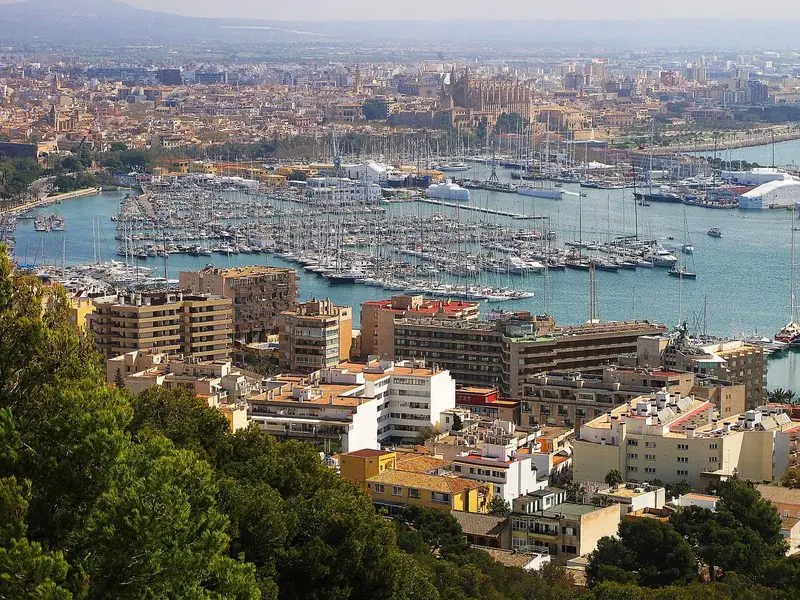
| Ubicación | puerto comercial de Palma de Mallorca, a unos 39 33,8 N 2 38,4 E |
|---|---|
| Operador | IPM Group, que además tiene Marina Port de Mallorca, Marina Ibiza, Marina Port Ibiza y Varadero Valencia |
| Marina Port de Mallorca | 200 amarres con un máximo de 50 m, instalaciones reformadas en 2017 |
| Capacidad del astillero STP | yates de hasta 120 m y 1.000 toneladas |
| Travel lifts | seis, de 30, 100, 150, 200, 700 y 1.000 toneladas, con la máquina de 1.000 toneladas declarada como la única de Europa |
| Superficie del astillero | unos 130.000 metros cuadrados de área técnica, 86.000 de tierra, 44.000 de agua, 5.000 de talleres y siete fosos de dique seco |
| Volumen | unos 1.500 yates al año, hasta 140 en reparación a la vez, más de 1.800 movimientos de travel lift anuales |
| Astillero abierto | los armadores nombran a sus propios contratistas entre más de 500 empresas especializadas del recinto, con una plantilla diaria por encima de 1.500 personas |
| Febrero de 2026 | STP puso en marcha capacidad de refit grande para barcos de hasta 115 m de eslora total en instalaciones nuevas |
| Para yates de más de 50 m a flote | la zona de amarre de la propia STP, o el Club de Mar Mallorca, con más de 500 amarres, más de 40 posiciones de superyate y un máximo de 170 m |
| Certificación | STP tiene ISO 9001, ISO 14001 y OHSAS 45001, y la marina tiene Bandera Azul, EMAS e ISO 9001 |
| Próxima fecha fija | Palma International Boat Show, del 28 de abril al 1 de mayo de 2027 |
| Haul and launch, 2025 published maximum tariff, charged as one operation: EUR 6,964.34 high season and EUR 5,878.98 low season at 40 m, EUR 3,869.08 and EUR 3,265.87 at 30 m, EUR 1,061.24 and EUR 1,029.08 at 20 m | |
| Above 40 m the 40 m rate applies plus 10 per cent for every metre over 40 m, so a 60 m yacht is three times the 40 m figure | |
| Movement within the storage area 40 per cent of the tariff, suspension from the water 60 per cent | |
| Hardstanding | EUR 0.930 per square metre a day for days 1 to 15 and EUR 1.080 from day 16 in high season, EUR 0.720 and EUR 0.790 in low, liquid waste removal included |
| Dry dock pit occupation | hardstanding rate plus 20 per cent |
| Berth for a yacht under repair | EUR 0.710 per square metre a day high season, EUR 0.570 low |
| Low season at STP is January, July, August and December. Everything else is high season | |
| Water and electricity are the Balearic Port Authority's Palma tariffs plus 15 per cent handling. Refuse EUR 7.13 per 100 litre bag plus EUR 0.10 per square metre of boat per day, plus 50 per cent if hazardous. Telephone and data are supplier rates plus 10 per cent | |
| Ancillaries | hull cleaning EUR 4.30 per square metre, compressed air EUR 31.51 a day, ladder to 2 m EUR 14.29 a day, parking EUR 1.430 an hour, covered premises EUR 42.99 per square metre a month |
| Worked example | a 45 m yacht on a 9 m beam, hauled in October for thirty days, pays EUR 10,446.51 for haul and launch and EUR 12,210.75 for the hardstanding, EUR 22,657.26 of yard tariff before contractors |
| Formalities | entry and exit declarations are made in person at the maritime border post in the Port of Palma with all crew passports, seaman's books or on-board contracts, current crew list and ship's registration certificate |
| Border post public hours 08:00 to 14:00 Monday to Friday, with out-of-hours cases by telephone appointment only | |
Dónde está y cómo es la aproximación
El astillero está dentro del puerto comercial de Palma de Mallorca, a 39 grados 33,83 minutos norte y 2 grados 38,38 minutos este, en el lado oeste del frente marítimo de la ciudad. La bahía de Palma es ancha, profunda y fácil de embocar en casi cualquier condición, sin barra, sin angosturas y sin condicionante de marea. El tráfico comercial y de ferris es intenso y el puerto funciona con normas comerciales, así que las llegadas se coordinan.
La única costumbre de la bahía que conviene tener en cuenta es la brisa de la tarde, que entra con puntualidad durante el verano y puede complicar una maniobra de mediodía en un amarre justo mucho más que ese mismo trabajo a las ocho de la mañana. Los astilleros y las marinas de aquí programan los izados en consecuencia. En invierno el suroeste mete mar de fondo en la bahía, y esa es la dirección que hay que vigilar si un yate está a flote durante la temporada de refit.
Qué admite la marina, y adónde va un yate mayor
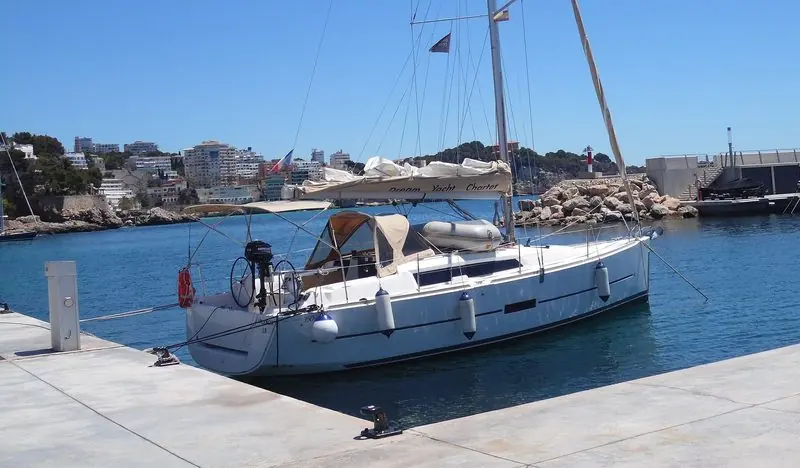
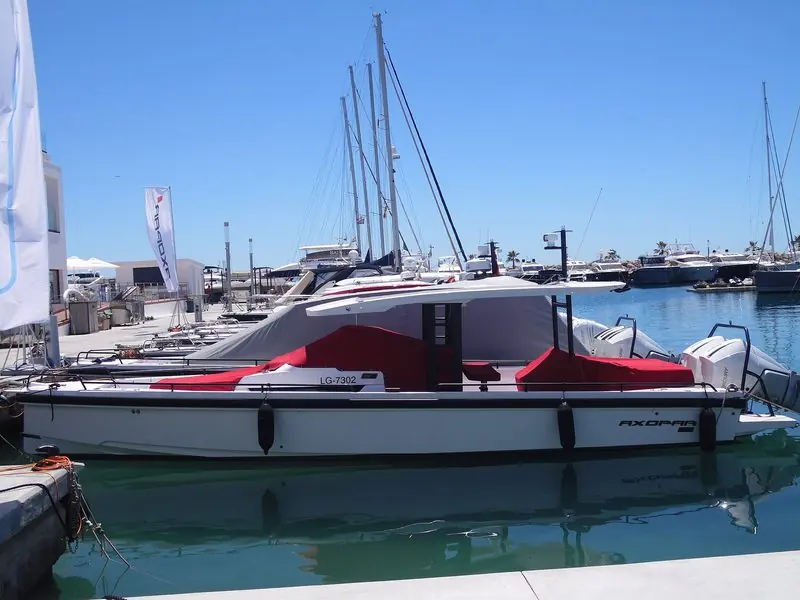
Marina Port de Mallorca tiene 200 amarres y se queda en 50 metros. Sus instalaciones se reformaron en 2017 y funciona como puerto ecológico, con recogida de aguas oleosas, grises y negras, seguridad 24 horas con cámaras, mostrador de conserjería y asistencia al amarre. Está bajo el IPM Group, la misma propiedad que STP, Marina Ibiza y Marina Port Ibiza.
Por encima de 50 metros, un armador mira a la zona de amarre de la propia STP, que ocupa unos 44.000 metros cuadrados de agua dentro del astillero, o al Club de Mar Mallorca, al otro lado. El Club de Mar tiene más de 500 amarres con más de 40 posiciones dimensionadas para superyates y megayates y admite barcos de hasta 170 metros, y está en plena ampliación. La capacidad de Palma para yates muy grandes es por tanto real, pero está repartida entre tres operadores y no concentrada en una sola marina.
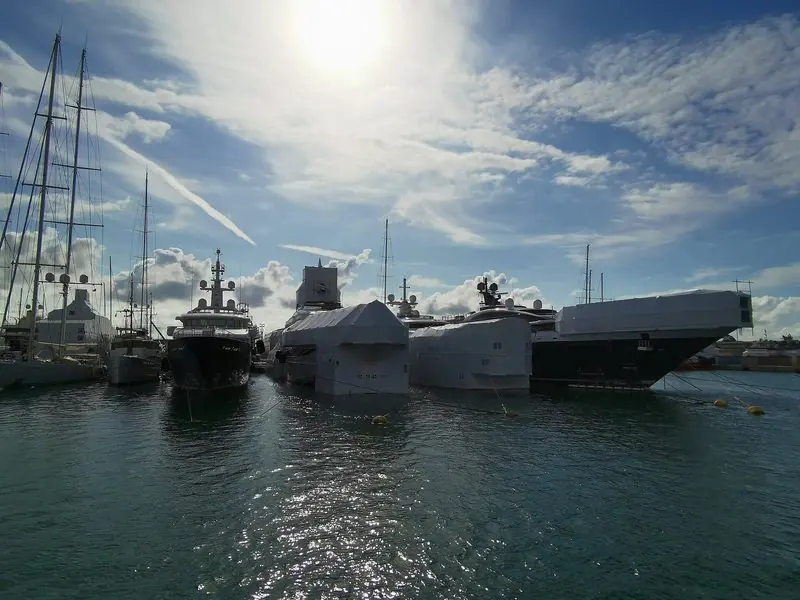
El único travel lift de mil toneladas de Europa, y un astillero abierto que devuelve el riesgo del proyecto al armador.
Qué puede izar el astillero de verdad
STP ocupa una superficie técnica de unos 130.000 metros cuadrados, formada por unos 86.000 metros cuadrados de tierra y 44.000 de agua, con 5.000 metros cuadrados de talleres y siete fosos de dique seco. Atiende yates de hasta 120 metros y 1.000 toneladas.
La capacidad de izado es la razón por la que viene la flota. Hay seis travel lifts de 30, 100, 150, 200, 700 y 1.000 toneladas, y el astillero afirma que su máquina de 1.000 toneladas es la única de ese tamaño en Europa. En febrero de 2026, STP puso en marcha una capacidad de refit grande para barcos de hasta 115 metros de eslora total en instalaciones nuevas, lo que amplía lo que puede tener al costado en proyectos importantes. En junio de 2026 puso en servicio una instalación solar de 12,6 kilovatios pico para su propio consumo.
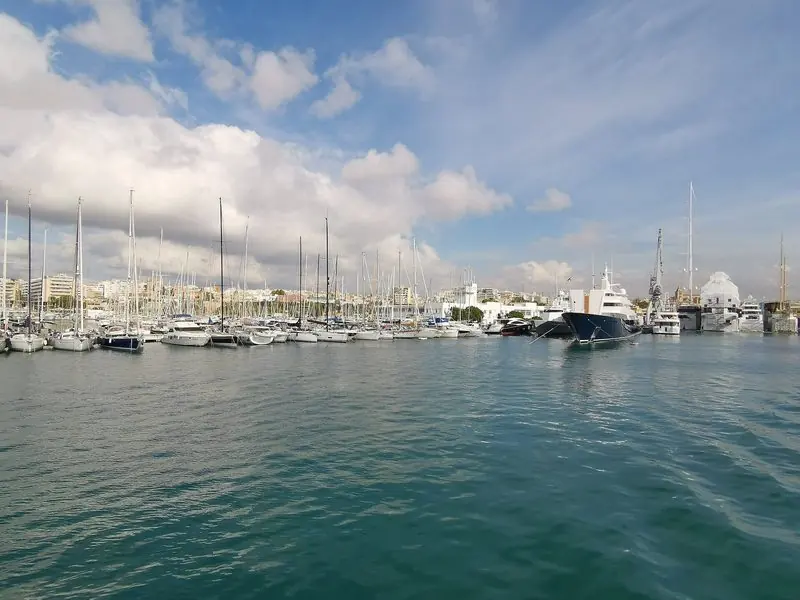
El modelo de astillero abierto, y qué le traslada al armador
STP funciona con un modelo de astillero abierto. El astillero pone el espacio, el izado y la infraestructura, y el armador o el capitán nombran a los contratistas. En el recinto operan más de 500 empresas especializadas, la plantilla diaria supera las 1.500 personas, y por el astillero pasan unos 1.500 yates al año, con hasta 140 en reparación a la vez y más de 1.800 movimientos de travel lift anuales.
Para un armador la ventaja es el control y el precio. Los contratistas compiten por el trabajo, nada lleva el margen de un contratista principal, y un capitán con un pintor o un mecánico de confianza puede traérselo. El coste de eso es el riesgo de coordinación. No hay un único astillero que asuma la responsabilidad de todo el proyecto, ni una sola garantía que cubra el trabajo terminado, ni un contratista principal al que perseguir cuando dos oficios chocan en el calendario. Los armadores que hacen aquí refits grandes nombran un jefe de proyecto y lo tratan como una obra.
Cómo se consiguen plaza y amarre, y lo que cuestan
Los amarres a flote de Marina Port de Mallorca se reservan por internet o en recepción, con tarifas de larga duración a consulta. Las plazas de astillero se reservan con STP y las grandes se van pronto, porque solo un puñado de astilleros europeos puede izar en la parte alta de este rango y la ventana de invierno es limitada. Un yate que necesite varada de 700 o 1.000 toneladas debería estar hablando con el astillero una temporada antes.
Aquí no se vende nada como concesión, así que un armador es un cliente y no el titular de un activo de amarre. El precio va por eslora para el amarre y por una combinación de izado, días en seco y facturas de contratistas para el astillero. La factura del refit la dominan los oficios, así que la tarifa del astillero es la parte pequeña de un proyecto y la elección de contratistas es la grande.
Estándares, residuos y seguridad
STP tiene ISO 9001, ISO 14001 y OHSAS 45001, certificación de huella de carbono y adhesión al Pacto Mundial de la ONU. Marina Port de Mallorca tiene Bandera Azul, registro EMAS e ISO 9001. Para un armador eso importa porque el manejo de pintura, disolvente y aguas de lavado en un astillero de este tamaño es justamente donde un problema ambiental se convierte en un problema del yate.
La seguridad es de 24 horas con cobertura de cámaras en el lado de la marina, y el perímetro del puerto comercial añade otra capa. La intimidad durante un refit es limitada, en el sentido de que cientos de contratistas se mueven a diario por el recinto, cosa a tener en cuenta para los armadores a los que les importa qué se fotografía dentro de su barco. Los armadores serios meten la confidencialidad en las condiciones de los contratistas.
La ciudad, la tripulación y el aeropuerto
Palma es la razón por la que el sector se instaló aquí y no en un sitio más barato. Es una ciudad de verdad, con catedral, casco antiguo, restaurantes que siguen abiertos en enero y vivienda en la que la tripulación puede vivir de verdad, así que la mano de obra cualificada se queda durante el invierno. Esa es la diferencia entre un astillero al que puedes dotar de personal y uno al que no.
El aeropuerto de Palma es de los mejor conectados del Mediterráneo, a minutos del puerto, con vuelos directos desde toda Europa todo el año y un programa de verano casi saturado. Para un refit eso importa más de lo que parece, porque un especialista o una pieza pueden llegar al yate el mismo día. Para un armador significa que subir al barco es fácil en cualquier mes del año.
La temporada, que va al revés
El periodo fuerte de Palma es el contrario que en cualquier otro sitio de esta guía. Los astilleros van a tope de octubre a la primavera, mientras los puertos de veraneo están cerrados, y la ciudad se llena de tripulación con proyectos de invierno. El sitio en el astillero y en las marinas está más ajustado justo en los meses en que Porto Cervo está vacío.
El giro llega con el Palma International Boat Show, que marca el arranque de la temporada y está previsto del 28 de abril al 1 de mayo en 2027. A partir de ahí la flota sale a Baleares, y las calas de la costa norte de Mallorca, la escapada a Ibiza y Formentera y las regatas de la bahía sostienen el verano. Un armador puede terminar un refit y estar navegando esa misma semana sin travesía de traslado.
El inconveniente sincero
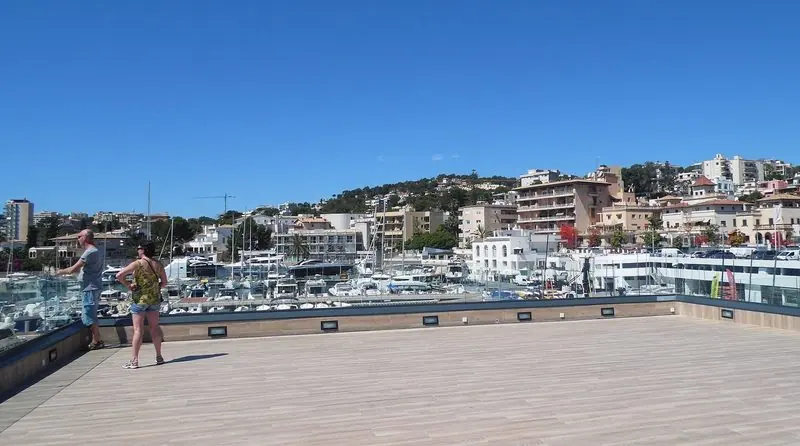
Es un recinto industrial y lo parece. Carpas de pintura, polvo, ruido, carretillas elevadoras y un puerto comercial en activo son las vistas, y ningún armador debería planear recibir invitados a bordo mientras el yate está en el astillero. La marina a flote se queda en 50 metros, así que un yate grande se reparte entre operadores y el montaje limpio de una sola dirección que ofrecen Porto Montenegro o Barcelona aquí no existe.
Hay otras dos cosas que cerrar antes de basar un yate en Baleares. España grava un impuesto de matriculación del 12 por ciento, y la exención por uso exclusivo en charter se ha limitado históricamente a los barcos de menos de 15 metros, con una reforma propuesta para quitar ese umbral que sigue sin resolverse, así que asesórese antes en España. Y las normas de fondeo sobre posidonia que hoy rigen en Baleares limitan dónde puede ponerse el yate cuando termine el refit.
What a lift actually costs, from the published tariff
STP works under a concession from the Balearic Port Authority, which means its maximum tariffs are a matter of public record rather than a quotation. On the 2025 schedule a haul and launch, charged as a single operation, costs EUR 6,964.34 in high season for a yacht of 40 m and EUR 5,878.98 in low season. A 30 m yacht is EUR 3,869.08 and EUR 3,265.87, and a 20 m yacht is EUR 1,061.24 and EUR 1,029.08. Above 40 m the published table stops and a rule takes over: the 40 m rate applies with an increase of 10 per cent for every metre of length above 40 m. Moving a yacht within the storage area is charged at 40 per cent of the tariff and suspending her from the water at 60 per cent.
The rule above 40 m is steep enough to be worth working out before a slot is booked. A 50 m yacht is the 40 m rate plus 100 per cent, or EUR 13,928.68 in high season. A 60 m yacht is the 40 m rate plus 200 per cent, EUR 20,893.02. Hardstanding is separate and charged by area, at EUR 0.930 per square metre a day in high season for the first fifteen days and EUR 1.080 from day sixteen, against EUR 0.720 and EUR 0.790 in low season, with liquid waste removal included and no additional charge permitted for it. A yacht in one of the dry dock pits pays the hardstanding rate plus 20 per cent. Water and electricity are the Port Authority's own Palma tariffs with 15 per cent added as a handling charge, refuse is EUR 7.13 for a 100 litre bag plus EUR 0.10 per square metre of boat per day and half as much again if it is hazardous, and telephone and data are the supplier's rates plus 10 per cent. The schedule is silent on VAT.
The season that runs backwards, written into the tariff
The clearest proof that Palma works against the Mediterranean calendar is in the yard's own definition of its seasons. Low season at STP is January, July, August and December. Those are the four months when the fleet is either laid up over Christmas or out cruising, and the yard discounts them. High season is everything else, which is to say the spring and autumn refit windows when every yacht in the western Mediterranean wants a slot at the same time. A berth held alongside for a yacht under repair costs EUR 0.710 per square metre a day in high season and EUR 0.570 in low, again with liquid waste removal included.
Worked through, a 45 m motor yacht on a 9 m beam hauled in October for a month of work pays EUR 10,446.51 for the haul and launch, which is the 40 m rate plus 50 per cent, then EUR 5,649.75 for the first fifteen days on the hard and EUR 6,561.00 for the next fifteen on a 405 square metre footprint. That is EUR 22,657.26 of yard tariff before a single contractor invoice. The identical job in August, in the yard's low season, is EUR 8,818.47 for the lift and EUR 9,173.25 for the thirty days ashore. Ancillaries are published on the same schedule and add up quietly: hull cleaning at EUR 4.30 per square metre, compressed air at EUR 31.51 a day, a ladder up to 2 m at EUR 14.29 a day, parking at EUR 1.430 an hour and covered premises for a contractor at EUR 42.99 per square metre a month.
Who clears the yacht, and the six-hour window
Palma is where a yacht crossing into or out of the Schengen area does its paperwork, and the procedure is published. If Mallorca is the first Schengen port, the captain presents in person at the maritime border post in the Port of Palma to make the entry declaration, carrying the passports of every crew member, each seaman's book or, in its absence, the on-board employment contract, a copy of the current crew list and a copy of the ship's registration certificate. The exit declaration on leaving the Schengen area takes the same documents. Embarking or disembarking a crew member of non-European nationality is a further separate visit, with that person's passport presented for stamping alongside the same set of papers.
The constraint is the clock. The border post is open to the public from 08:00 to 14:00, Monday to Friday. Outside those hours an urgent case is handled by telephoning the post's mobile number and arranging an appointment, which is a concession rather than a service. A yacht arriving on a Friday evening from a non-Schengen port with a crew change booked for Saturday morning has a problem no amount of money solves cleanly. Nothing in the published procedure requires an agent. What it requires is somebody standing at the border post inside a six-hour weekday window with the right documents in the right order, which is why almost every large yacht uses one.
En tierra, accesos y reservas
| Getting there | Palma de Mallorca's airport sits about 8 km from the port, among the busiest in the Mediterranean for direct European connections, which is part of why crew actually stay through a winter refit rather than rotating out. |
|---|---|
| Arriving by sea | The Bay of Palma is wide, deep and enters easily in almost any conditions, no bar, no narrows, no tidal constraint, inside the commercial port of Palma on the western waterfront. |
| Booking a slot or a berth | Afloat berths at Marina Port de Mallorca are booked online or through reception with long-term rates on request. Yard slots are booked directly with STP, and the large ones go early because only a handful of European yards can lift at the top of this range and the winter window is finite. Hill Robinson, which manages refits here, describes calling in January for a February start as not advisable. |
| What the yard actually costs | STP's tariffs are public record under its Balearic Port Authority concession rather than quoted privately. The 2025 schedule prices a haul and launch, as a single operation, at EUR 6,964.34 in high season for a 40 m yacht and EUR 5,878.98 in low season. |
| The open-yard model in practice | The yard supplies space, the lift and infrastructure; the owner or captain appoints from more than 500 to 600 specialist companies on site. Hill Robinson's own assessment is that this freedom is valuable only if someone coordinates the moving parts, since the binding constraint is not yard capacity but the specialist workshops, which book out early. |
| Eating and crew life | The yard sits inside a real city with a cathedral and an old town rather than a resort strip, and restaurants and shops stay open through January, which is the reason skilled crew and contractors stay through winter instead of leaving with the season. |
Lo que cuentan armadores y tripulaciones
The industry here is treated as an identity, not just a trade
Tomi Salom, President of the Balearic Marine Cluster, frames the refit industry as part of the islands' economy and culture rather than a service the island happens to host, which shows up on the ground as a workforce with generational boatbuilding knowledge and a city built around the yards rather than tolerating them.
Tomi Salom, Balearic Marine ClusterBerth demand at the top of the range keeps outrunning supply
STP's own leadership points to repeated requests for berths at the largest end of the range as the reason behind its capacity expansion, which is a direct signal that the 120 m, 1,000-tonne ceiling was already the binding constraint before it was raised.
Joan Rossello, CEO, STP Shipyard PalmaThe open-yard freedom only pays off with a coordinator
Hill Robinson, which manages refit projects at STP, is explicit that choosing the best rigger, paint team and electronics contractor from the site's hundreds of companies is genuinely valuable only if someone is managing those moving parts, and that the specialist workshops rather than the yard itself are what books out first.
Hill Robinson
Lo bueno y lo que conviene vigilar
Puntos fuertes
- The only 1,000-tonne travel lift in EuropeAlongside 100, 150, 200 and 700-tonne lifts and seven keel pits across roughly 130,000 square metres, putting through around 1,500 yachts a year.
- Open-yard choice of contractorMore than 500 specialist companies operate on site, so an owner or captain picks the rigger, the paint team and the electronics contractor rather than being tied to one yard's in-house crew.
- Crew infrastructure that survives the winterPalma is a real city with housing, restaurants and an airport that stays busy in January, which is why the skilled labour base does not leave with the season the way it does at resort yards.
- Its season runs opposite the rest of the MediterraneanLow season at STP is January, July, August and December, the exact months the cruising fleet is either laid up over Christmas or out on charter, so refit slots and pricing work against the crowd rather than with it.
A tener en cuenta
- It is an industrial site and it looks like onePaint tents, dust, noise, forklifts and a working commercial port are the view; no owner should plan to entertain guests aboard while the yacht is in the yard.
- Freedom of contractor choice is also the owner's problem to manageHill Robinson's own account is that the open-yard model creates opportunity and complexity together, and the value of choosing the best specialist for each trade only holds if someone is coordinating them.
- The specialist workshops, not the lifts, are what runs out firstHill Robinson names the talleres as the binding constraint over the yard itself, and describes booking a February start in January as not advisable.
- The afloat marina caps at 50 metresMarina Port de Mallorca itself tops out well below the yard's 120 m lifting capacity, so a large yacht afloat and a large yacht in for a lift are two different arrangements on two different waiting lists.
Para quién es: El armador que exprime el barco, lo pasa por refit como es debido y quiere el astillero, los oficios y la zona de navegación de verano en el mismo sitio.