Ocean Village Marina (Gibraltar)
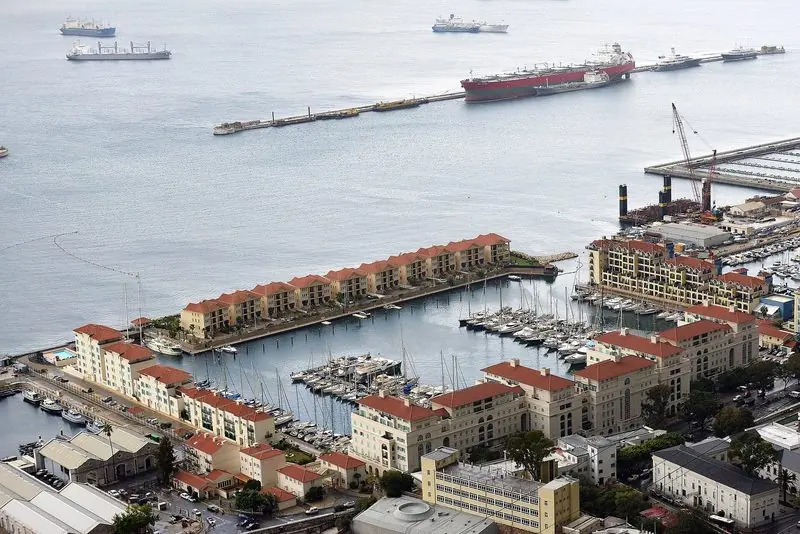
| Ubicación | Gibraltar, en el lado oeste del Peñón, a 36 08,5 N, 5 22,5 W |
|---|---|
| Amarres | 95 en Ocean Village, más otros 209 en la contigua Marina Bay bajo la misma oficina de muelle |
| Eslora máxima | 90 m según publica la Gibraltar Port Authority |
| Profundidad | 4,5 m, que es la limitación real para un yate de calado profundo |
| Amarres de superyate | amarres mejorados en el perímetro del desarrollo, diseñados para yates de hasta 80 m |
| Control de puerto | canal 71 de VHF, con el despacho de los barcos que llegan a cargo de la propia marina desde que cerró en 2005 el muelle de presentación específico |
| Servicios en el amarre | seguridad 24 horas con acceso por código, corriente trifásica, televisión por satélite, wifi, recogida de lavandería y conserjería |
| Combustible | Gibraltar es el mayor puerto de suministro de combustible del Mediterráneo, con unos 60.000 barcos cruzando el Estrecho cada año |
| Fiscalidad | el combustible de suministro y los pertrechos de barco están exentos tanto del nuevo impuesto sobre transacciones de Gibraltar como de los impuestos especiales |
| Nuevo régimen fiscal | un impuesto sobre transacciones del 15 por ciento sustituyó a los derechos de importación el 10 de abril de 2026, con subidas anuales hacia el tipo de IVA más bajo de la UE |
| Tratado | el acuerdo entre el Reino Unido y la UE sobre Gibraltar se firmó el 14 de julio de 2026 y se aplica provisionalmente desde el 15 de julio de 2026 |
| Reparación naval | Gibdock, con tres diques secos de 154 m a 272 m y un kilómetro de muelle de aguas profundas |
| The operator publishes no berth rate of any kind. Ocean Village and Marina Bay describe 250-plus berths between them and carry no tariff, checked 28 July 2026 | |
| Shore power is described only as three-phase, with no amperage published, checked 28 July 2026. Gibraltar runs the British standard of 240 V single phase and 415 V three phase at 50 Hz | |
| The depth question is unresolved by the operator. The Gibraltar Port Authority publishes 90 m maximum length and 4.5 m depth, and the marina separately markets upgraded perimeter berths for yachts to 80 m without stating whether those berths were dredged deeper | |
| 4.5 m alongside is the binding constraint until the operator says otherwise. Most 80 m motor yachts draw more than that | |
| No per-tonne bunker differential against Palma, Barcelona or Las Palmas is published by anyone, checked 28 July 2026. The saving is real and its size has to come from a firm quote on the day | |
| There is no travel lift at Ocean Village. Gibdock is a commercial ship repair yard with dry docks from 154 m to 272 m, not a yacht hoist, so a routine haul-out means leaving Gibraltar | |
| Marina reception works VHF channel 71 and is reached on +350 200 73300 | |
La parada que hace todo el mundo
Unos 60.000 barcos cruzan cada año el estrecho de Gibraltar y muchísimos de ellos paran, y por eso el Peñón se convirtió en el mayor puerto de suministro de combustible del Mediterráneo. Para los yates la lógica es idéntica. Un barco que sale del Mediterráneo hacia el Caribe, o que llega en sentido contrario en primavera, pasa a la vista de Gibraltar y puede cargar combustible, pertrechos y tripulación sin desviarse.
Ocean Village está en el lado oeste del Peñón, mirando a la bahía hacia Algeciras, y se construyó como un pueblo de marina con apartamentos, restaurantes, un casino y un Marina Club alrededor del agua. La Gibraltar Port Authority le atribuye 95 amarres, con la contigua Marina Bay en 209, las dos bajo la misma oficina de muelle y las dos con una eslora máxima declarada de 90 metros. Queensway Quay, la tercera marina privada, suma otros 156. Entre las tres pueden absorber una llegada grande con poco aviso.
La aproximación, y los dos vientos
La aproximación a la bahía de Gibraltar es profunda, ancha y comercial, con fondeaderos llenos de buques esperando combustible. No hay barra ni canal. La carrera de marea es de alrededor de un metro, despreciable para lo que se estila en el Atlántico, y la marina tiene 4,5 metros al costado. Esa cifra de profundidad es el techo real de este sitio, porque un yate de 90 metros que cale más de cuatro metros y medio no puede usar un amarre de 90 metros.
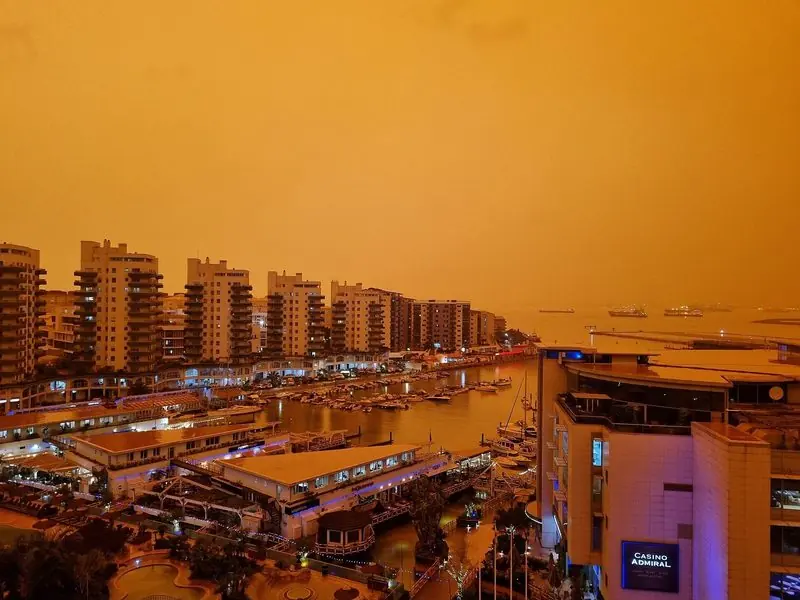
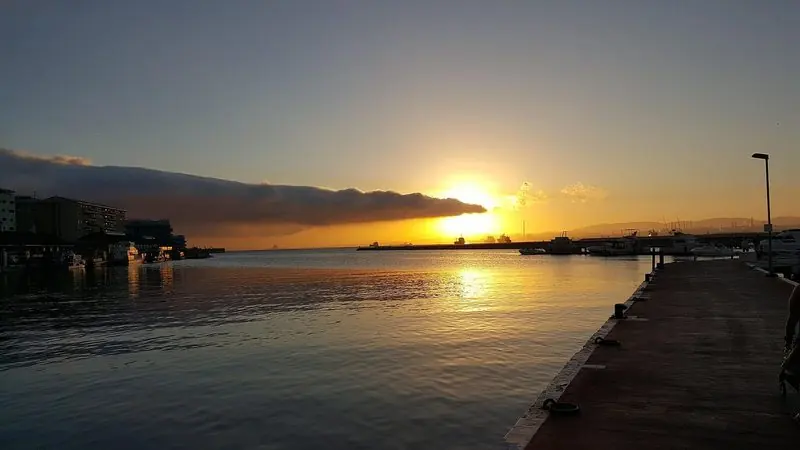
Dos vientos definen el tiempo local. El levante es el este que se encañona por el Estrecho y cuelga un penacho de nube sobre el Peñón, con condiciones húmedas y grises y un aumento brusco de la aceleración del viento al desprenderse del acantilado. El poniente es el oeste, normalmente más claro. Ninguno molesta a un yate dentro de la marina, y los dos importan muchísimo a quien calcule una travesía por el Estrecho, donde la corriente superficial tira hacia el este, hacia el Mediterráneo, a un ritmo capaz de derrotar a un casco lento de desplazamiento que vaya con la marea en contra.
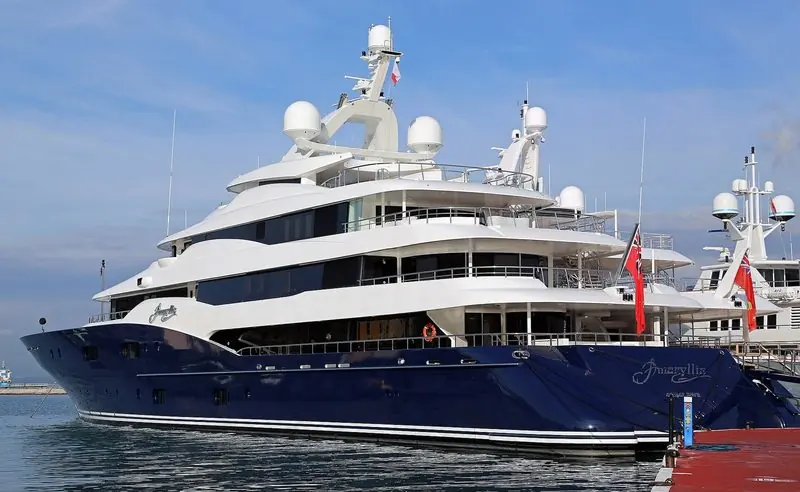
Un cruce de caminos y no un destino, y el repostaje legítimo más barato entre el Caribe y el Egeo.
Los amarres y cómo se cogen
Los amarres se alquilan y no se vende nada en propiedad. Ocean Village pasó de 225 a 323 amarres con la incorporación de sus Premier Berths, la mayoría de entre 18 y 25 metros y el mayor de 35 metros, y aparte se construyó a lo largo del perímetro del desarrollo un conjunto de amarres de superyate mejorados, diseñados por Marina Projects para yates de hasta 80 metros. Los contratos de doce meses o más llevan una tarjeta de privilegios de tripulación con descuentos en las tiendas y en el club deportivo.
La disponibilidad es mejor que en casi cualquier otro sitio de esta lista porque Gibraltar es un puerto de trabajo y no un destino que se llena para una temporada. Los puntos de presión son las ventanas transatlánticas, finales de octubre y noviembre, cuando la flota se va al oeste, y abril y mayo, cuando vuelve. Fuera de esas semanas, a un yate se le suele poder acomodar. Los trámites de despacho los lleva la propia marina desde que cerró en 2005 el muelle específico de presentación de yates.
El combustible, y por qué a los armadores les importa el tratado
El argumento comercial de Gibraltar siempre se ha apoyado en el combustible comprado sin impuestos. Eso parecía vulnerable cuando el territorio aceptó entrar en un régimen aduanero con la Unión Europea, y el detalle importa. Desde el 10 de abril de 2026, un impuesto sobre transacciones del 15 por ciento sustituyó al viejo régimen de derechos de importación de Gibraltar, con subidas anuales hacia el tipo más bajo de impuesto sobre el valor añadido de la Unión, y con impuestos especiales aparte sobre tabaco, alcohol y combustible.
El combustible de suministro está exento tanto del impuesto sobre transacciones como de los impuestos especiales, y también lo están los pertrechos de barco y las mercancías que pasan por Gibraltar sin venderse allí. Para un yate que carga varios cientos de toneladas, esa exención vale mucho dinero, y es la razón por la que el Peñón sigue siendo el repostaje legítimo más barato de esta parte del mundo. Los armadores deberían pedir asesoramiento actualizado igualmente, porque el marco es nuevo y los tipos especiales sobre otros productos van a converger con los españoles desde abril de 2029.
Una frontera que acaba de desaparecer
El Reino Unido y la Unión Europea firmaron el tratado sobre Gibraltar en Bruselas el 14 de julio de 2026, cuatro años después de que empezaran las negociaciones, con aplicación provisional desde el 15 de julio. Integra a Gibraltar en el espacio de viaje de Schengen y establece una unión aduanera a medida sin meter al territorio dentro del territorio aduanero de la UE. Se suprimen los controles rutinarios en el paso terrestre con España y se introducen controles fronterizos duales en el puerto y en el aeropuerto de Gibraltar.
Para un armador el efecto práctico es que los invitados y la tripulación pueden moverse entre Gibraltar, España y el resto del espacio Schengen sin la cola de La Línea, que en un mal día llegaba a horas. Los vuelos directos entre Gibraltar y aeropuertos de la UE pasan a ser posibles. También significa que la tripulación que llega se encuentra un control de entrada Schengen en la marina, lo que cambia el ritmo de papeleo de un cambio de tripulación. El marco lleva menos de quince días en vigor, así que los procedimientos todavía se están asentando.
Servicios, astilleros y la ciudad
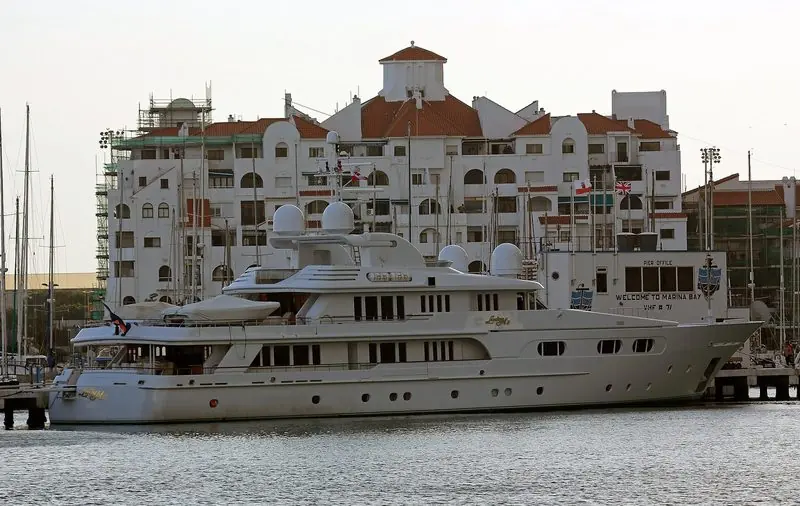
Los amarres llevan corriente trifásica, agua, televisión por satélite y wifi, con seguridad 24 horas y acceso a los pantalanes por código, recogida de lavandería, bloques de duchas modernos y conserjería para catering y coches. Efectos navales, aprovisionamiento, banca offshore, una clínica médica y dental y un gimnasio están a pocos minutos del muelle. Los agentes y los oficios técnicos de Gibraltar tienen experiencia con yates porque el puerto atiende cambios de tripulación y trabajos de atención al barco sin parar.
Para el trabajo estructural, Gibdock ocupa el antiguo arsenal naval con tres diques secos de 154 a 272 metros, diez grúas, un muelle principal de 300 metros, un dique de 435 metros y alrededor de un kilómetro de muelle de aguas profundas con hasta 11 metros al costado en bajamar. Esa es capacidad de reparación naval comercial, así que no es una nave de pintura de superyates, y admite un casco que no puede izar ningún astillero de yates del Mediterráneo. Los astilleros de Sotogrande y de la Costa del Sol quedan a un rato costa arriba.
En tierra, y adónde va después un yate
El aeropuerto internacional de Gibraltar está a distancia de paseo de las marinas, con servicios regulares a Londres y, con el nuevo tratado, la perspectiva de conexiones directas con la UE. Málaga queda a unos 130 kilómetros costa arriba para el largo radio. El territorio es pequeño, de habla inglesa, usa la libra y tiene una densa concentración de abogados, auditores y especialistas en registro de buques, que es la razón por la que bastantes yates enarbolan pabellón gibraltareño.
Aquí no hay zona de navegación, y esa es la posición sincera. Gibraltar es un cruce de caminos. Marruecos está a menos de 20 millas náuticas al otro lado del Estrecho, la Costa del Sol se estira hacia el noreste, Cádiz y el Algarve portugués quedan al oeste doblando el cabo de Trafalgar, y Canarias está a cinco días al suroeste por la ruta atlántica habitual. Una semana en familia con base en Ocean Village se pasaría mirando el Peñón, sus monos y sus túneles, que dan para día y medio de material.
Temporada, calendario y el inconveniente sincero
Gibraltar funciona todo el año y sus semanas de más movimiento las marcan los cruces oceánicos y no el verano. Finales de octubre y noviembre se llenan de yates camino de Canarias y del Caribe, y abril y mayo los traen de vuelta. El verano es cálido y seco y la marina es un sitio cómodo para dejar un barco. El levante puede plantarse sobre el Peñón durante días en cualquier estación y es el único fenómeno meteorológico que fastidia con puntualidad a los visitantes.
Las reservas son la profundidad, la escala y el entorno. Cuatro metros y medio al costado dejan fuera a una parte de la flota a la que la eslora de 90 metros del amarre le vendría bien. El territorio ocupa menos de siete kilómetros cuadrados y la marina mira al otro lado de una bahía de trabajo, hacia la refinería y la terminal de contenedores de Algeciras. Nadie tiene un yate en Gibraltar por las vistas. Lo tiene aquí porque el combustible es barato, el papeleo está en inglés y el aeropuerto está al final del pantalán.

The levanter as a manoeuvre, not as weather
The levanter is described on most accounts as damp grey air and a cloud banner over the Rock, which is what it looks like from ashore and not what it is from a flybridge. It is an easterly, and Ocean Village sits on the west side of the Rock. A 400 m ridge directly upwind of a marina does not produce a steady breeze on its lee side. It produces a descending, gusting, direction-shifting flow that arrives in slugs, and that is a materially harder thing to hold a high-sided yacht against than a clean 25 knots on open water. The berths on the outer perimeter, which are the superyacht positions, are the ones most exposed to it.
The practical rule is that arrival and departure timing in a levanter is worth deferring rather than pushing, and that a yacht with a lot of freeboard and a short keel wants the tugs or the line handlers arranged rather than improvised. The levanter can sit over the Rock for days in any season and it is the one weather feature that reliably frustrates a schedule here. None of this troubles a yacht already secured. It is entirely a question of the ten minutes at each end. The poniente, the westerly, is usually clearer and comes off the water rather than off the hill, and is the easier of the two to work in.
Four and a half metres, and the price nobody prints
The unresolved item on this page is water. The Gibraltar Port Authority publishes a 90 m maximum length and 4.5 m of depth, and the marina separately markets upgraded perimeter berths designed for yachts to 80 m. Whether those perimeter berths carry more than 4.5 m is the single question an 80 m owner would ask and, checked on 28 July 2026, neither the port authority nor the operator answers it. Until they do, 4.5 m is the binding number, and most 80 m motor yachts draw more than that. The honest position is that Gibraltar sells a length it may not be able to float, and the sounding for the specific berth has to be obtained in writing before a passage is planned around it.
Price is the other blank. Ocean Village and Marina Bay publish no berth rate at all, for any length, on any of their pages, checked 28 July 2026, and the shore power is given as three-phase with no amperage on berths sold as taking 80 m yachts. Gibraltar runs 240 V single phase and 415 V three phase at 50 Hz, so a European yacht plugs in and an American one does not, but nobody publishes what it can draw. The bunkering argument is in the same condition. Duty-free fuel is genuinely the reason many yachts stop here, and no per-tonne differential against Palma, Barcelona or Las Palmas is published by anyone, so the saving is sized by asking three brokers for a firm quote on the same day and comparing them. That is a five-minute exercise and it is the only number that makes the case real.
En tierra, accesos y reservas
| Hailing & phone | VHF Channel 71 is the working channel for both Ocean Village and Marina Bay (the two marinas share one Pier Office and radio watch) - confirmed independently by the marina's own site and by the Gibraltar Port Authority's official private-marinas listing. Landline is +350 200 73300, and the reception also runs a WhatsApp number, +350 58009812, which in practice gets answered faster than the phone during a levanter when everyone's on the radio. If you're bringing anything over about 24m, Gibraltar Port VTS wants you on Channel 12 separately for clearance into the restricted zone before you even call the marina - that's a different desk, easy to miss on a first visit. |
|---|---|
| Booking a berth | There's no instant-book system for anything of size. The marina wants an ETA update by phone or email 24 hours out, a confirmation call or VHF check-in an hour before arrival, and a final call at the entrance for a berth number - three separate touchpoints, not one. Turning up unannounced works for small boats if space allows, but multiple independent accounts (a longtime YBW Forum poster who's berthed there for years, and marina-industry coverage of the post-redevelopment squeeze) agree that spare capacity is thin now that the west side has been rebuilt for superyachts, so a same-day walk-in for anything large is a real gamble, not a fallback. |
| What a big yacht pays | The marina's own posted rate card (their top length band, 50m and over) charges GBP 4.50 per metre per night - so a 50-metre yacht at that band's floor runs roughly GBP 225 a night before anything else. The next band down, 30-50m, is GBP 3.75/metre. Prepay and it drops hard: 20% off for an annual booking, 15% off for six months. Nobody advertises what a negotiated season rate for an 80m+ superyacht actually looks like - that's set case by case, and it's the number that never makes it onto the tariff sheet. |
| Power and water | Electricity is metered at 16p/kWh, water at 1.25p per litre, each with a GBP 1 minimum charge per connection - figures taken from the marina's own tariff page, which is the only place they're published, so treat them as marina-stated rather than independently cross-checked. Power-adapter deposits run GBP 10-40 depending on what you need. No amp/voltage spec or shore-power-pedestal detail is published anywhere findable, which for a marina rated to 90m LOA is a genuine gap - you'll be asking reception directly what a given berth can actually deliver rather than reading it off a spec sheet. |
| Fuel and the 2026 treaty | This is the good news buried in the treaty text: bunkering fuel - fuel taken aboard as ship's stores rather than for resale - is permanently exempted from both Gibraltar's new 15% Transaction Tax and from excise duty under the UK-EU agreement that took provisional effect 15 July 2026. That's stated plainly in the Government of Gibraltar's own technical notice on the customs union and echoed in EY's tax-alert coverage of the same treaty. So the duty-free bunkering that's made Ocean Village and Marina Bay a Mediterranean refuelling stop isn't a casualty of the new border arrangement - it was carved out on purpose. On the quay itself there are Cepsa, Shell and BP pumps plus a dedicated GibOil terminal right at the marina entrance, so there's actual competition on price rather than one operator setting it. |
| Depth and where the big ones go | 4.5 metres alongside is the figure the Gibraltar Port Authority itself publishes for both marinas, matching the marina's own material - a genuinely consistent number, not a rounded-up brochure figure. Official max LOA is quoted at 90 metres, though the superyacht-specific pontoons built in the recent Marina Projects redevelopment (covered by Boat International and Marine Industry News) are sized for up to 80 metres. Anything that exceeds the LOA or draft limit here gets redirected to a berth at the Western Arm, North Mole - a different part of the port entirely, worth knowing before committing to Ocean Village as the destination. |
| Getting there | No source publishes an exact metre figure, which is itself telling for a marina that markets 'airport on your doorstep' - but Visit Gibraltar's own copy says the airport is within easy reach on foot, and independent travel-routing sites put it under a 10-minute walk. That's plausible on the ground: Gibraltar's runway and the old border crossing sit right at the isthmus, a few minutes from the marina gate. Since the July 2026 treaty removed routine checks at the land frontier, a crew change that used to mean a passport queue at the fence is now much closer to just walking through. |
| On the promenade | Ocean Village's dining strip is a mix of international chains and marina-facing independents, not a curated foodie destination - Las Iguanas (Unit 21b on the Promenade, Latin/Brazilian, waterfront tables) and Wagamama are both confirmed by Gibraltar's own tourism listings as well as third-party guides, and Bianca's is locally described as a Gibraltar favourite for the same reason regulars go back: reliable, unpretentious, good for watching the boats rather than for the food itself. It's a stop-off crowd, not a destination-dining crowd, and that's honestly fine given what else is going on right there. |
Lo que cuentan armadores y tripulaciones
New superyacht pontoons are landing with captains
On the record about the completed Marina Projects redevelopment: 'The superyacht berths were seamlessly integrated into our design and, once operational, have proven to be popular with superyacht captains.' Worth reading as marina management talking its own book, but it's a named, dated claim rather than an anonymous one.
William Bowman, Marina Director, Ocean Village and Marina Bay (Marine Industry News, January 2025)Gibraltar's bunkering pitch predates the current redevelopment by a decade
Speaking as technical consultant when the superyacht marina project was first proposed, he argued Gibraltar had the lowest bunkering costs in the Mediterranean and that a full service shipyard is ten minutes from Marina Bay - a claim from 2015, before the current pontoons existed, but it's the same fuel-price and shipyard-proximity logic that still draws boats there now.
Captain E.S. Geary (SuperyachtNews, 2015)
Lo bueno y lo que conviene vigilar
Puntos fuertes
- Duty-free bunkering survived the treaty on purposeThe 15 July 2026 UK-EU Gibraltar treaty could easily have swept fuel into the new 15% Transaction Tax regime. It didn't - the Government of Gibraltar's own technical notice carves bunkering fuel out permanently, and EY's tax analysis of the same treaty confirms it. For a marina whose whole draw is cheap diesel, that's the headline risk that didn't materialise.
- Real competition on the fuel dockCepsa, Shell and BP pumps on the quay plus a separate GibOil terminal at the marina entrance mean there's no captive dependence on one supplier's posted price the way a lot of single-operator Mediterranean marinas run.
- The border basically isn't there anymoreWith routine checks gone at the land frontier since the treaty, and the airport within a short walk of the pontoons per Visit Gibraltar's own description, crew changes and provisioning runs into Spain lost a friction point that used to eat a genuine chunk of a turnaround day.
- The office never closes24 hours a day, 365 days a year, per the marina's own site - and in practice a WhatsApp line that gets answered faster than the phone. For a working marina rather than a lifestyle-branded one, that responsiveness matters more than the casino next door.
- The redevelopment was built around superyachts, not against themMarina Director William Bowman, quoted in Marine Industry News' January 2025 coverage of the Marina Projects-designed upgrade, said the new superyacht berths 'have proven to be popular with superyacht captains' - a claim from the person running the place, but corroborated by the fact the redevelopment happened at all: someone paid for pontoons rated to 80m because the demand was already showing up at the gate.
A tener en cuenta
- Surge in a blow is a known problem, not a rumourA longtime poster on the YBW Forum who has kept boats at both marinas over the years describes the surge as 'really wicked' at times and says they've seen a lot of damage to boats there - the fix is standard (good snubbers, doubled-up lines) but it's not a hypothetical risk, it's a maintenance habit needed before arrival, not after.
- There is no current public rate cardThe marina's own pricing page is still headed 'Berth Prices 2025', and the underlying tariff PDF on their site is dated from a 2021 upload - there's no confirmed 2026 sheet live anywhere findable. For anything above about 50m, the number being negotiated was never printed, which is exactly the gap this page's prose already points at.
- Space is genuinely tight nowIndustry coverage of the post-redevelopment marina describes berthing in Gibraltar as now quite difficult, since other local marinas lost capacity to the cruise-ship/hotel/casino build-out, and a separate longtime user on the same forum thread independently confirms shrinking availability. A same-day arrival without a booking is a real gamble for anything large.
- 4.5 metres is a hard ceiling, and it routes elsewhereIt's a consistent number across the Gibraltar Port Authority and the marina's own material, so it's not in dispute - but any vessel that exceeds the LOA or draft limit gets sent to a berth at the Western Arm, North Mole instead, a materially different part of the port. Worth confirming before planning around Ocean Village specifically.
Para quién es: El armador que cruza océanos con calendario y quiere combustible libre de impuestos, papeleo en inglés y un aeropuerto al que pueda ir andando.