Pier Sixty-Six Marina (Fort Lauderdale)
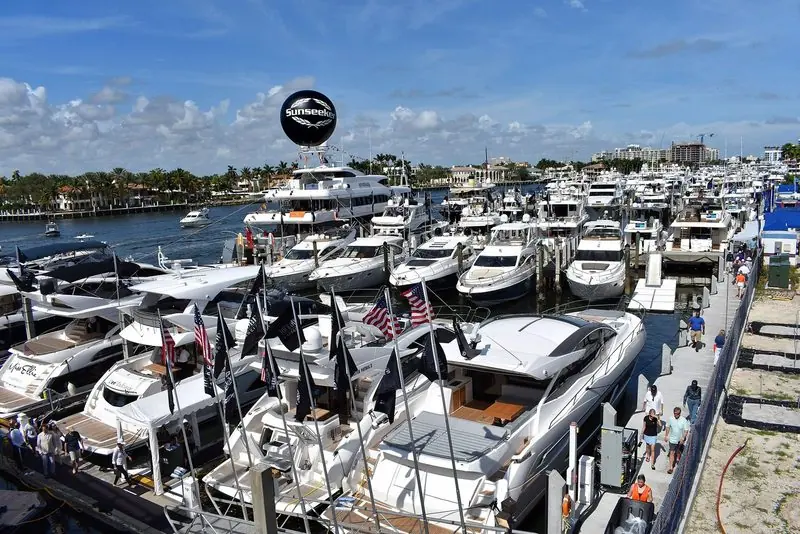
| Ubicación | 2301 SE 17th Street, Fort Lauderdale, Florida, la primera marina nada más entrar en Port Everglades |
|---|---|
| Amarres | 164 amarres de aguas profundas para barcos de 40 a 400 pies (unos 12 m a 122 m) |
| Atraque | 5.000 pies lineales, o 1.525 metros, repartidos entre Pier North con 127 amarres y Pier South con 37 |
| Calado máximo | 30 pies, o 9,1 metros |
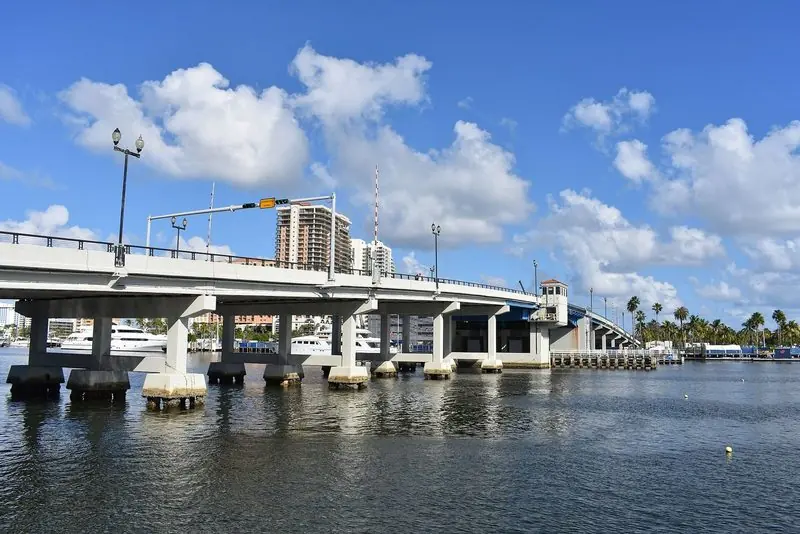
| Puente | Pier South no tiene ningún puente entre él y el mar, Pier North queda por dentro del puente basculante de SE 17th Street, con 55 pies de gálibo cerrado |
| Corriente en tierra | de 30 amperios a 1.000 amperios |
| Combustible | repostaje rápido y suministro en el propio amarre, vendido libre de impuestos |
| Canal de entrada de Port Everglades | 500 pies de ancho y 45 pies de profundidad |
| Remodelación | reconstrucción de USD 1.000 millones del resort, la marina y las residencias a cargo de Tavistock, con el hotel reabierto en 2024 |
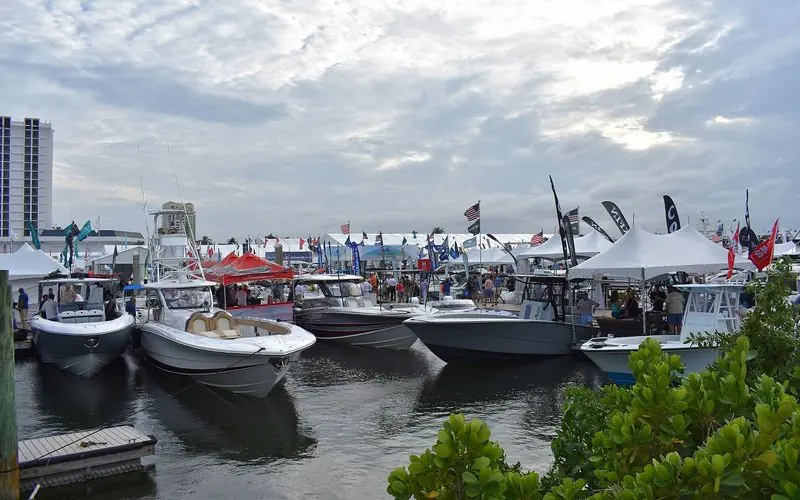
| Eventos | sede del Fort Lauderdale International Boat Show, del 28 de octubre al 1 de noviembre de 2026 en su 67ª edición |
| Refit cerca | Safe Harbor Lauderdale Marine Center, 65 acres en el New River con un izado de 485 toneladas |
| Fiscalidad de Florida | el impuesto estatal sobre ventas y uso en la compra de un barco es del 6 por ciento, con tope de USD 18.000 conforme al Statute 212.05 |
| Shore power, from the marina's own site checked 28 July 2026: up to 1,200 A per pedestal | |
| Frequency | Florida runs 60 Hz at 120 V, 208 V and 480 V. Pier Sixty-Six publishes neither voltage nor frequency, checked 28 July 2026, on the dock where the Mediterranean fleet arrives after crossing west |
| A 50 Hz yacht therefore needs a frequency converter aboard or stays on generators. Converter availability at the pedestal is a question for the slip booking and is not answered on the marina's site | |
| Customs cannot be cleared at the marina. The marina runs a shuttle to the US Customs office, and US and Canadian nationals may report through the Mobile Passport app | |
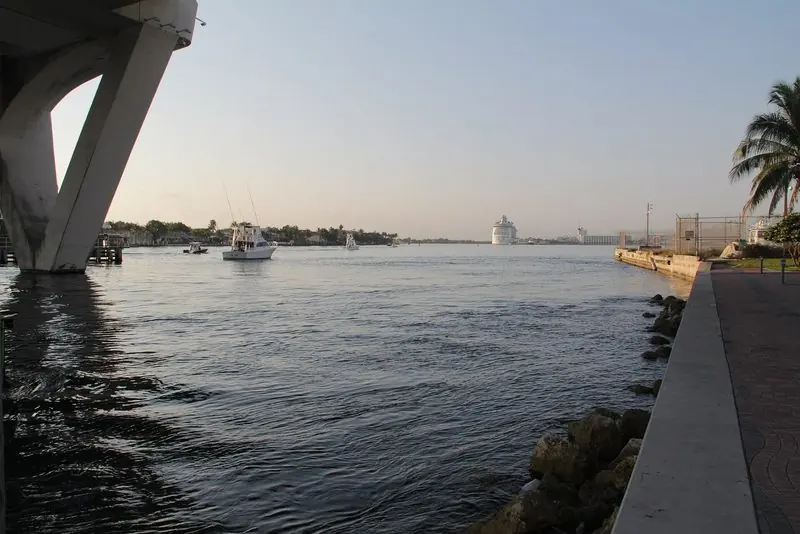
| The 17th Street bascule bridge opens on the hour and the half hour on demand and is hailed on VHF channel 19. Pier South needs no bridge, Pier North does | |
| The property is a designated Foreign Trade Zone | |
| Dock detail | floating docks with 3 feet of freeboard, 2 inch pump-out and water connections, 30 feet of water alongside |
| Tidal range | about 2.5 feet on a normal tide and 3.5 feet on a king tide |
| Fort Lauderdale International Airport | 4.8 miles by road |
El primer amarre nada más entrar
Port Everglades es un puerto artificial abierto directamente desde el Atlántico, y su canal de entrada tiene 500 pies de ancho y 45 pies de profundidad antes de estrecharse a 450 pies y 42 pies en la dársena de maniobra. Eso es agua de tráfico comercial, dragada para petroleros y cruceros, y un yate de cualquier tamaño sencillamente entra y sale. Pier Sixty-Six está en el 17th Street Causeway, justo por dentro, lo que la convierte en la primera marina a la que llega un yate después de la boya de mar.
El valor práctico de esa posición es el tiempo. Un yate en Pier South puede soltar amarras y estar en la corriente del Golfo en veinte minutos, sin esperar ningún puente y sin ningún canal somero que ir tanteando. Bimini y el banco de Bahamas quedan a unas cincuenta millas náuticas al este cruzando la corriente, que es una mañana de navegación. Fort Lauderdale no tiene marea digna de planificar ni cierre estacional.
Dos muelles y un puente
La marina la parte en dos el 17th Street Causeway. Pier South tiene 37 amarres en 2.000 pies lineales y no tiene ningún puente entre él y la bocana del puerto, y por eso van ahí los yates mayores y más altos. Pier North tiene 127 amarres en 3.000 pies lineales y queda por dentro del puente. En total la marina publica 5.000 pies lineales de atraque, 164 amarres de aguas profundas y un calado máximo de 30 pies.
El puente en sí es basculante, con 55 pies de gálibo vertical en pleamar media estando cerrado, y abre en punto y a y media de 7 a 19 horas. Desde febrero de 2026 permanece cerrado en las horas punta de los días laborables, a las 7.30, las 8.30, las 16.30 y las 17.30, salvo festivos federales. Un yate con un arco alto o con palo amarrado al norte del puente está por tanto sujeto a un horario que marcan los que van a trabajar en el condado de Broward. Los armadores a los que eso les importa reservan al sur.
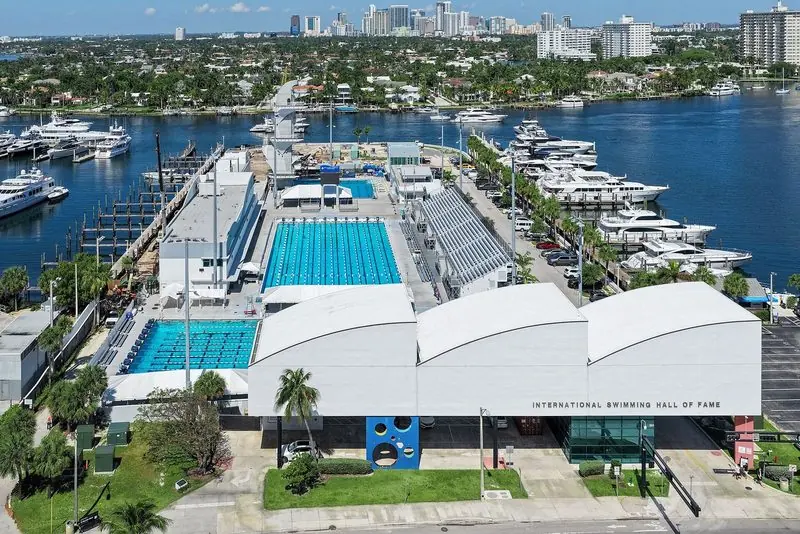
Veinte minutos del muelle a la corriente del Golfo, y todos los oficios que un yate pueda necesitar en un radio de cinco millas.
Conseguir amarre, y sobre qué se fija el precio
En Pier Sixty-Six todo se alquila. Los amarres se cotizan por pie y día, con acuerdos mensuales y anuales disponibles y tarifas que suben con fuerza durante el invierno y en torno al salón náutico. Aquí no se vende ni se arrienda nada a perpetuidad como puede ocurrir con un amarre mediterráneo, aunque la remodelación incluye residencias privadas cuyos propietarios tienen sus propios acuerdos de atraque. Un armador coge un amarre como coge una suite de hotel.
La disponibilidad sigue a la temporada. Desde finales de octubre, cuando el salón náutico llena todas las marinas del condado, y hasta abril, el atraque en el sur de Florida está de verdad ajustado y los buenos amarres van a los clientes que repiten y a los yates que se comprometieron pronto. El verano es tranquilo, barato y caluroso. La semana más difícil para encontrar nada es la del salón náutico, cuando buena parte de la flota mundial está en la ciudad.
Energía, combustible y el ángulo fiscal
La corriente en tierra va desde el servicio doméstico de 30 amperios hasta 1.000 amperios, lo que cubre toda la flota que admite la marina. El agua potable, el bombeo de residuos en el amarre, el wifi gratuito y el aparcamiento junto al barco son de serie. El repostaje se hace en el propio amarre con bombas rápidas, así que un yate de 60 metros carga combustible sin moverse, y ese combustible se vende libre de impuestos.
El tratamiento fiscal de Florida es buena parte de la razón por la que hay tantos yates basados aquí. El impuesto estatal sobre ventas y uso en la compra de un barco es del 6 por ciento pero tiene un tope de USD 18.000 conforme al Florida Statute 212.05, así que el impuesto de un yate de USD 40 millones es el mismo que el de uno de USD 300.000. Florida no cobra impuesto estatal sobre la renta. Aun así, los armadores necesitan buen asesoramiento sobre el impuesto de uso, la entrega y cuánto tiempo se queda el barco en el estado, porque las exenciones llevan condiciones y las trampas están bien documentadas.
Los oficios en la puerta
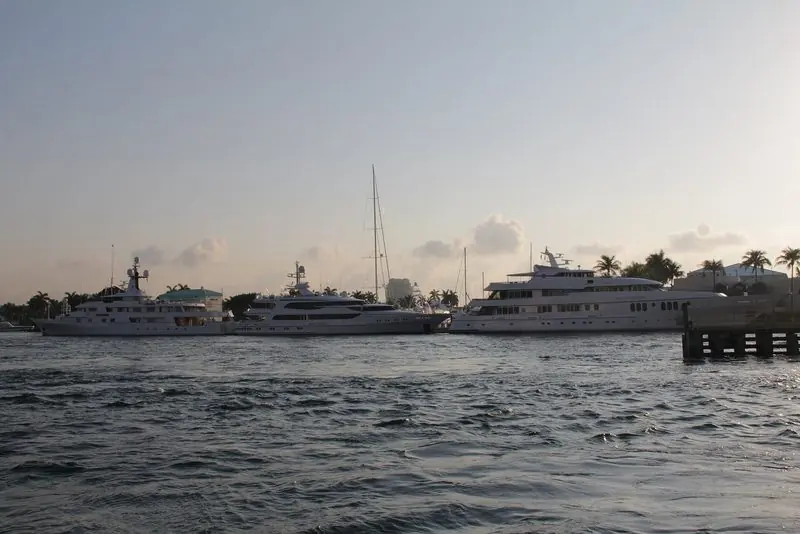
Fort Lauderdale se llama a sí misma la capital mundial del yate y la afirmación aguanta el examen. Todos los grandes brokers, empresas de gestión, agencias de tripulación, tiendas de efectos navales y contratistas especializados tienen oficina a pocas millas de este muelle, y una pieza que tardaría una semana en llegar a una marina mediterránea aparece esa misma tarde. Para un armador eso se traduce en periodos de astillero más cortos y en menos excusas.
Para el trabajo estructural, los astilleros están tierra adentro, en el New River. Safe Harbor Lauderdale Marine Center ocupa 65 acres y se describe como la mayor instalación de reparación de yates de Estados Unidos, con cinco izados, uno de ellos de 485 toneladas, naves cubiertas y una base de contratistas residentes. Derecktor y Bradford operan también en la zona. La ruta del New River implica varios puentes y un práctico, así que el tránsito hay que planificarlo.
Seguridad, intimidad y el resort de encima
La marina tiene vigilancia 24 horas con acceso controlado a los muelles, servicio de conserjería y aparcamiento junto al barco. Lo que no es es privada. Pier Sixty-Six está en una avenida con mucho tráfico entre una carretera pública y un puerto comercial en activo, los muelles se ven desde el puente y desde los restaurantes, y Port Everglades es uno de los puertos de cruceros con más movimiento del mundo, así que un sábado de invierno pasan cerca varios barcos muy grandes.
La remodelación ha cambiado el carácter del sitio. Tavistock se ha gastado alrededor de USD 1.000 millones en reconstruir el resort, la marina y un conjunto de residencias, con el hotel y su icónica azotea giratoria reabiertos en 2024 y un paseo de la marina con tiendas y restaurantes añadido. Eso trae gente. Los armadores que quieren anonimato en el sur de Florida tienen el yate en un muelle residencial privado río arriba en el New River o en Las Olas Isles.
En tierra, vuelos y una semana en familia
Fort Lauderdale-Hollywood International está a unos diez minutos del muelle y mueve tanto largo radio regular como una de las mayores cargas de aviación privada de Estados Unidos, con Miami International a 40 minutos al sur como alternativa. Ese es el traslado al aeropuerto más corto de cualquier centro náutico del mundo. Los invitados llegan y están a bordo antes de que la tripulación haya terminado el papeleo.
La ciudad en sí es una ciudad de trabajo con buenos restaurantes, playas al otro lado de la calle y los Everglades a una hora al oeste. Para una familia el yate es lo importante, porque el destino son las Bahamas. Los Abacos, las Exumas y Eleuthera dan quince días de agua clara y travesías cortas, y despachar entrada en Bahamas es sencillo. El tiempo invernal del sur de Florida es seco y cálido, con frentes fríos cada una o dos semanas que traen un día de viento del norte y una corriente del Golfo revuelta.
Temporada, tormentas y el inconveniente sincero
La temporada de Florida va del salón náutico de finales de octubre a Semana Santa. El Fort Lauderdale International Boat Show es el mayor salón a flote del mundo y se reparte entre siete sedes, incluidas Pier Sixty-Six Marina y el Superyacht Village de Pier Sixty-Six South, con la 67ª edición prevista del 28 de octubre al 1 de noviembre de 2026. De junio a noviembre, la temporada de huracanes del Atlántico deja al sur de Florida de lleno dentro de la zona acotada, y la mayoría de las pólizas imponen planes de tormenta con nombre a los yates que se quedan.
Los inconvenientes son el calor, la exposición y el tráfico. Agosto en Fort Lauderdale es brutal y húmedo, la avenida es ruidosa, y el horario del puente irrita a cualquiera que esté amarrado al norte. Este es un sitio desde el que operar un yate y no un sitio para sentarse a mirar unas vistas. Los armadores lo eligen porque todo lo que puedan necesitar está en un radio de cinco millas.
Sixty hertz, and what a European yacht does about it
This is the dock where a Mediterranean yacht arrives after crossing west, and it is one of two pages in this set where the frequency of the shore supply decides whether the boat plugs in at all. Florida runs 60 Hz, at 120 V, 208 V and 480 V depending on the service. A yacht wired for the European 50 Hz standard cannot simply connect. It needs a frequency converter aboard, or a converter supplied at the pedestal, or it runs its generators and pays for the fuel and the hours. Checked on 28 July 2026, Pier Sixty-Six publishes 1,200 A per pedestal and states neither the voltage nor the frequency, which is a strange omission on a marina that markets itself to owners who have never been able to plug in since leaving the shipyard.
The practical sequence is to settle it at the booking and not on the quay. A captain should ask what voltage and frequency the specific pedestal delivers, whether the marina has converters and at what rating, whether the connection above a given amperage is made by the dock team or by the crew, and what the changeover costs. The same question travels the whole American east coast and the Caribbean, so an owner basing a European hull in Florida for a winter usually solves it once, aboard, rather than negotiating it at every marina. On a yacht that arrives without a converter, generator hours become a real line in the winter budget and the maintenance schedule shifts with them.
The federal paperwork, which is not done here
The single most useful thing the marina says about formalities is that they do not happen on its dock. Customs cannot be cleared at Pier Sixty-Six. Arriving vessels take a shuttle the marina arranges to the US Customs office, and US and Canadian nationals have the option of reporting through the Mobile Passport app. That is a materially different arrival from Yacht Haven Grande, where Customs and Border Protection sit on the property, and it needs planning into the first day rather than discovering at the fuel dock. The property itself is a designated Foreign Trade Zone, which is a customs status attaching to goods on the site and not a clearance point for the yacht.
Three federal points shape a European yacht's first Florida winter and none of them are marina matters. Customs and Border Protection issues a cruising licence to recreational vessels of certain flags, which relieves the yacht of formal entry and clearance at each subsequent US port, and eligibility turns on a reciprocity list that CBP maintains and revises, so the flag is checked against the current list rather than assumed. Crew need the correct visa class before arrival, and a B1 or B2 is not automatically the right answer for a paid crew member on a foreign-flagged yacht. Above all, the Passenger Vessel Services Act prohibits a foreign-flagged vessel from carrying passengers for hire between two United States points, which means the Riviera charter model does not transfer to Florida and an owner who assumes it does is exposed. Formally importing a foreign-built hull into the United States attracts duty under the tariff schedule and is a decision taken with an American maritime attorney, not a broker.
En tierra, accesos y reservas
| Contact and VHF | VHF 16/71 for hailing; marina office (954) 728-3578 or [email protected]. Confirmed on the marina's own site and matched by Dockwalk's marina database. |
|---|---|
| Operator | CoralTree Hospitality Group runs the reopened resort and marina day to day, under owner/redeveloper Tavistock Development Company. Marina Director is Megan Lagasse - 20 years in the trade, including a stint at IGY's Yacht Haven Grande in St. Thomas and four years as Bahia Mar's general manager, per the marina's own site and the Marine Industries Association of South Florida. |
| Booking a slip | Reservations go through an online slip-rental form or a direct call/email to the marina office, giving vessel specs and arrival/departure dates. The marina's public FAQ does not publish an advance-notice window or a deposit figure, and draws no public distinction between transient and annual terms - that is negotiated directly with the dockmaster. |
| Pricing | No official rate card is published anywhere findable. The only per-foot figure that turned up - roughly USD 7 to 9 per foot per night for transient dockage, from a Fort Lauderdale yacht brokerage's marina guide - has no second source to confirm it, so treat it as indicative only, not a quote. |
| Fuel | Tax-free, in-slip diesel bunkering at up to 200 gallons per minute. The mechanism behind the tax-free claim is real, not just marketing copy: the marina sits inside a CBP-designated Foreign Trade Zone tied to Port Everglades. |
| Shore power | The marina's own site cites pedestals up to 1,200 amps; a 2025 trade piece aimed at captains (The Triton) cites 30-amp to 1,000-amp service. The two do not agree at the top end, so read the ceiling as roughly 1,000 to 1,200A rather than a hard number until confirmed dockside. |
| Getting there | FLL airport is about 5 miles away, roughly 10 to 15 minutes by road. Signature Aviation is the FBO at FLL itself. Banyan Air Service, often mentioned in the same breath, is actually based at Fort Lauderdale Executive Airport (FXE) - a separate general-aviation field a short drive away, not at FLL. |
| Customs | No CBP office on site. Per the marina's own FAQ, crew either take a marina shuttle to the U.S. Customs office or use the Mobile Passport app - consistent with clearance itself not happening dockside. |
Lo que cuentan armadores y tripulaciones
Depth through the whole approach is the standout, not just at the dock
A 50ft sailboat drawing 8ft found 10ft of water the entire way from the canal to the berth, which the reviewer called the single most important feature for his boat - and it held. The same reviewer warned the marina basin entrance, off a canal off the New River, is hard to pick out after dark, and vanishes entirely behind a docked megayacht if one happens to be blocking the sightline.
William Mcnutt, S/V Vacatio (Waterway Guide review, Jun 2025)Floating docks with dockside trash pickup, but no showers or laundry on site
The same reviewer praised the floating docks and a feature he said he had not seen anywhere else - a trash bin at the end of each finger dock that staff empty for you - plus a free filtered-water kiosk for drinking (the tap water in Fort Lauderdale runs high in sulfur and there is no equivalent filtering for tank fills). His complaint: no showers, no laundry on site, and the nearest laundromat is coin-operated, expensive and 'sketchy'.
William Mcnutt, S/V Vacatio (Waterway Guide review, Jun 2025)Staff and location draw praise across different ownership eras of the docks
A second reviewer, docked here in a 55ft sailboat before the most recent redevelopment phase, called the harbor location and access great and singled out then-marina manager Megan and her staff by name as 'a great amazing team', noting the docks had recently been rebuilt while the original 1957 hotel tower was still under reconstruction.
Richard Alcott, S/V Sea Cloud (Waterway Guide review, Jan 2021)
Lo bueno y lo que conviene vigilar
Puntos fuertes
- A real Foreign Trade Zone, not just a pricing gimmickThe tax-free fuel rests on the marina sitting inside a CBP-designated Foreign Trade Zone linked to Port Everglades - a legal status, not a discount policy the marina could revoke.
- Genuine marina-industry leadership installed for the reopeningCoralTree Hospitality brought in Megan Lagasse as Marina Director - prior stops at IGY's Yacht Haven Grande and four years running Bahia Mar - ahead of the 2025 relaunch. That is a marina professional, not a hotel generalist covering the waterfront.
- The trade is voting with its feetThe reopening was timed to the 66th Fort Lauderdale International Boat Show in October 2025, and Azimut and Benetti opened their Americas headquarters on site - a concrete signal from manufacturers, not just PR.
- Crew welfare beyond the dockA 13,000 sq ft Zenova Spa with nine treatment rooms, a 24-hour Technogym fitness center, and up to 12 planned food-and-beverage concepts on property give crew stuck aboard for a season somewhere to actually go.
A tener en cuenta
- No published rate cardPricing is opaque. The one per-foot figure found (roughly USD 7 to 9/ft/night, from a brokerage's marina guide) is uncorroborated - the real number comes from calling, not from browsing.
- Still finishing as of the 2025 reopeningRestaurants such as Garni and Pelican Landing were still opening through spring 2025 after the headline relaunch, and reporting on the project does not describe the full 12-concept dining rollout as complete until around October 2026 - book early in the cycle and part of what is advertised may not be open yet.
- Two piers split by a working causeway bridgePier North and Pier South sit on opposite sides of the 17th Street Causeway Bridge, so which side a yacht is assigned changes the walk - or tender - to the resort core. Worth asking at booking; the marina does not volunteer it.
- Published specs are not fully reconciled since the rebuildEven basic numbers disagree between the marina's own site and trade coverage - shore power cited at both 1,200A and 1,000A is the clearest example - which suggests the post-renovation spec sheet has not been fully cleaned up yet.
Para quién es: El armador que reparte el año entre Florida y Bahamas y valora la profundidad de oficios, la certidumbre fiscal y un traslado de diez minutos al aeropuerto.