Cantiere Nautico Cranchi
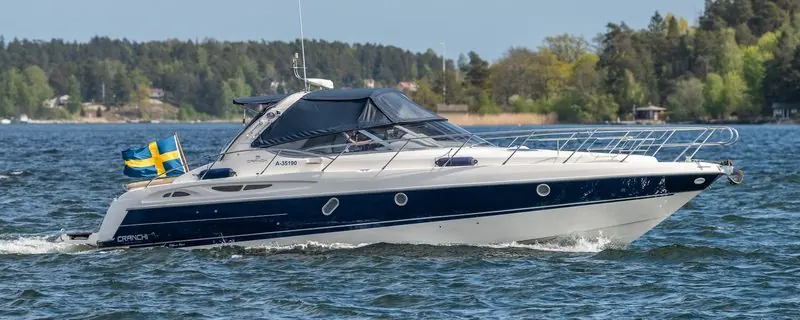
| Categoría | yates a motor, chase boats y tenders grandes |
|---|---|
| Fundada | registrada en 1870, lago de Como, Italia |
| Sede | Lombardía, Italia |
| Propiedad | independiente, compartida por las familias Cranchi y Monzino |
| Gama | yates a motor de unos ocho a más de veinte metros |
| Uso en superyates | modelos como el A46 empleados como chase boats y como tenders |
| Socios de diseño | entre ellos Christian Grande en los modelos recientes |
| A46 Luxury Tender | 14.25 m, about 4.3 m beam, twin Volvo Penta IPS650 packages on 480 hp D6 engines, 26 knots cruising and 35 knots top, 1,500 litres of fuel, one cabin and four berths, CE category B |
| A46 price | about EUR 1.3 million as a base boat, with a hydraulic deck package quoted at EUR 90,000 and a hardtop at EUR 48,000 in a 2021 review |
| Settantotto 78 | 25.15 m, 5.76 m beam, three Volvo Penta IPS1350 packages, 24 knots cruising and 28 knots top |
| Sessantasette 67 | 20.8 m, 5.4 m beam, 1.5 m draft |
| Design | Christian Grande on the E26 and on the T36 Crossover, which took European Powerboat of the Year 2019 in the 35 to 45 ft class |
Un astillero con raíz en 1870
La historia de Cranchi empieza a orillas del lago de Como, donde Giovanni Cranchi abrió un taller de barcos de madera en la segunda mitad del siglo diecinueve. El negocio se registró en 1870, fecha que la empresa sigue considerando su fundación. Generaciones de la familia llevaron el astillero adelante, trasladándolo y ampliándolo sin salir del lago. En el siglo veinte la familia Monzino se unió a la familia Cranchi, y las dos siguen compartiendo la propiedad hoy. Esa continuidad hace de Cranchi uno de los nombres más longevos de la construcción naval italiana.
La larga historia del astillero está detrás de una operación muy moderna. Cranchi construye hoy en grandes plantas de Lombardía que usan procesos automatizados para moldear y acabar los cascos. La empresa ha mantenido su independencia durante todo el camino, evitando ser absorbida por un grupo mayor. Esa mezcla de herencia profunda y fabricación actual es central en cómo se presenta. Un barco que lleva el nombre de Cranchi lleva más de siglo y medio de construcción continuada.
Yates a motor que sirven de chase boat
El negocio central de Cranchi es una gama de yates a motor de unos ocho a más de veinte metros. Varias de estas embarcaciones han encontrado un segundo papel como chase boats y tenders grandes de superyates. Un chase boat sigue al yate para llevar invitados de más, juguetes náuticos y suministros cuando el garaje se queda sin sitio. Modelos como el A46 ofrecen la eslora, la velocidad y el espacio de cubierta que pide ese trabajo. El astillero ha construido además barcos configurados específicamente como tenders para superyates de vela.
El atractivo de un Cranchi en ese papel es que es un barco completo y bien acabado, y no una embarcación de apoyo pelada. El armador consigue un yate que puede funcionar como day boat autónomo y también seguir a un barco mayor. Los diseños mezclan el estilismo italiano con la practicidad de un barco de apoyo de trabajo. Esa flexibilidad ha despertado interés en el mundo del superyate sin que Cranchi sea un constructor dedicado de tenders. El uso como chase boat nace de la fuerza de la gama en general.
Un astillero del lago de Como cuyos yates a motor escoltan superyates como chase boats rápidos.
Barcos de serie construidos con métodos modernos
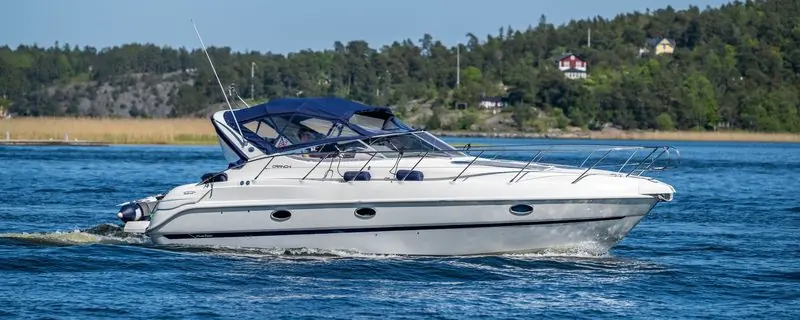
Cranchi construye en volumen para lo que es un astillero italiano de calidad, con áreas robotizadas de laminado y de pintura. Esa capacidad industrial le permite mantener un nivel constante en una gama amplia de modelos. Los cascos están calculados para la velocidad y para el comportamiento en la mar, cualidades que importan cuando a un barco se le pide seguir el ritmo de un superyate en travesía. Diseñadores como Christian Grande han dado forma a los modelos recientes, con una imagen limpia y contemporánea. El resultado es una gama que compite tanto en calidad de construcción como en diseño.
La escala de la empresa es una fortaleza cuando un barco tiene que ganarse el sueldo como embarcación de apoyo. Los recambios, el servicio y una especificación conocida hacen sencilla la propiedad para la tripulación de un yate. Un chase boat tiene que ser fiable por encima de todo, porque trabaja duro y hace muchas millas. La larga experiencia de producción de Cranchi alimenta directamente esa fiabilidad. La herencia del astillero va acompañada de la disciplina de ingeniería de un constructor moderno.
Cómo encaja en la vida del yate
Como chase boat, un Cranchi amplía lo que un superyate puede ofrecer a sus invitados. Lleva los juguetes náuticos que no caben en el garaje y transporta pasajeros de más cuando el grupo se hace demasiado grande para el propio tender del barco nodriza. Le da además a la tripulación una embarcación rápida para recados en tierra o para adelantarse a asegurar un amarre. Ese papel de apoyo se ha vuelto más habitual a medida que los yates llevan cada vez más equipo y más invitados. El barco se gana el sueldo a lo largo de un día largo sobre el agua.
Usado por su cuenta, ese mismo barco es un crucero de día capaz para la familia. Ese doble propósito es parte de su valor para un armador que ya tiene un yate mayor. El estilismo italiano hace que el chase boat esté a la altura junto a su barco nodriza en vez de parecer una ocurrencia tardía. Los diseños de Cranchi son lo bastante cómodos para los invitados y lo bastante recios para el uso diario. El barco encaja con naturalidad en el ritmo de la vida en un superyate.
Un nombre independiente con herencia
Cranchi ocupa una posición inusual como astillero familiar veterano e independiente en un mercado lleno de grandes grupos. Su herencia hasta 1870 le da una historia que pocos competidores pueden igualar. Entre los armadores se le conoce por yates a motor sólidos y bien de precio, con un carácter italiano claro. El uso como chase boat y como tender ha añadido una dimensión de superyate a esa reputación. La empresa opera tanto sobre la continuidad como sobre cualquier modelo concreto.
Para el armador de un superyate, un Cranchi ofrece un barco de serie probado que puede doblar como embarcación de apoyo. Es una elección pragmática y no una declaración a medida, y ahí está buena parte de su atractivo. La independencia y la historia del astillero dan al comprador la confianza de que seguirá ahí para dar servicio al barco durante años. Cranchi ha llevado el nombre de su familia fundadora a lo largo de tres siglos de construcción. Esa resistencia es rara en el sector.
As a chase boat, honestly
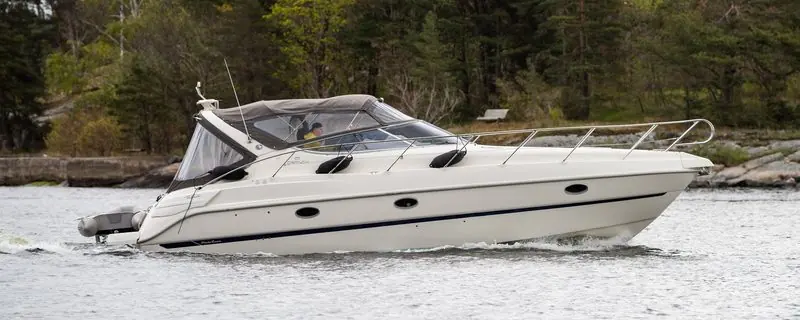
A chase boat carries what the garage cannot: the extra toys, the extra guests, the shopping, the crew running ahead to take a berth. The A46 does all of that and looks like a yacht doing it, which matters when it is tied alongside a 60 m in Porto Cervo. Two IPS drives and joystick control also mean one crew member can berth it single-handed in a crosswind.
What it is not is a purpose-built support vessel. CE category B limits it to 200 miles offshore, there is one cabin and four berths so crew cannot live aboard for a season, and 1,500 litres of fuel at a 26-knot cruise is a day out and no more. A yacht crossing to the Caribbean puts its chase boat on a ship or leaves it behind.
Licences, crew and who drives it
This is a 14 m boat with 960 hp, and the Mediterranean states that issue recreational licences require one for a craft of this size and power, with the exact threshold varying by country and by the flag the boat carries. Most owners with a mothership simply have a deckhand or the bosun drive it, which is the sensible answer.
The joystick makes low-speed handling easy and hides how much boat is moving. At 35 knots with guests on an open bow this is a fast planing hull in a Mediterranean chop, and the difference between a comfortable trip and a frightening one is entirely the driver. Anyone letting a guest take the wheel should do it at 15 knots in open water.
Service, parts and the dealer question
Cranchi sells through a dealer network with long-established agents on the Cote d'Azur and in the United Kingdom, and the density follows the market. Italy, France, Spain, Germany and the Adriatic are well covered. Coverage in the Caribbean and the eastern United States is thinner, and an owner planning to winter there should confirm who will actually turn up before he signs.
The mechanical side is easier than the boat. Volvo Penta IPS is one of the most widely serviced drivetrains in the world, and any competent yard in the Mediterranean can work on it. What needs the dealer is gelcoat, hydraulics, glass and the electronics package, and those are the items that fail in a boat used hard off a swim platform all summer.
Against the specialists, and who should buy elsewhere
The A46 sits between two worlds. Against Wajer it loses on finish and on the feel of the helm and wins on price and on interior volume. Against Pascoe or Compass it loses everything to do with fit and gains a boat that exists. Against a Williams or a Novurania it is a different animal entirely, because it is a yacht in its own right and needs its own berth.
The owner who should buy one has a yacht of 40 m to 70 m, keeps a summer base in the Mediterranean, and wants a second boat the family can use on days the mothership stays put. The owner who should look elsewhere needs a craft that stows in a garage, or is buying full custom where the tender is drawn into the yacht from the first line.
Información práctica
| Base price | About EUR 1.3 million for the A46 Luxury Tender as a standard boat, per a 2021 review; hydraulic deck package about EUR 90,000, hardtop about EUR 48,000, teak deck about EUR 22,000 and paint options EUR 20,000 to EUR 60,000, so a fully optioned boat can add roughly EUR 250,000 to the base. |
|---|---|
| Used market | Asking prices on the brokerage market run from about EUR 725,000 to EUR 1,190,000 as of August 2026, reflecting age, hours and options rather than a single resale figure. |
| Fuel burn by speed | Per a rpm-by-rpm test: about 3.2 l/h at 4 knots, 61 l/h at 11 knots (2,000 rpm), under 90 l/h at 22 knots (2,600 rpm, the efficient cruise point), 112 l/h at 26 knots cruise, and 190 l/h at the 36.7-knot top end on 3,800 rpm. |
| Tankage and range | 1,500 litres (396 US gallons) of fuel; at the 22-knot economical cruise burn of under 90 l/h that is a still-water range in the region of 350 to 380 nautical miles before reserve. |
| Engines and drives | Twin Volvo Penta IPS650 packages on 480 hp D6 diesels with joystick docking, which is the same IPS pod-drive control an owner is likely to already know from the mothership's tenders and toys. |
| Servicing | Cranchi remains independent and family-owned with its own four-plant production and test-centre infrastructure at Piantedo, Colico, Rogolo and San Giorgio di Nogaro, which supports continuity of parts and factory service history compared with a yard that has changed hands. |
Solicitar presupuesto para Cantiere Nautico Cranchi.
Dinos el modelo y adónde debe llegar. La redacción obtiene una oferta por escrito del fabricante o de un distribuidor autorizado, la contrasta con los precios publicados en esta página y te responde por email. Sin compromiso y sin coste.
- 01Una oferta por escritoEn tu moneda, con IVA, entrega y plazo indicados, no una cifra de catálogo.
- 02Entregado donde está el yateEn el puerto, el astillero o tu dirección, con la documentación que exige una batería de litio o una maniobra de grúa.
- 03IndependienteYotters no depende de ningún distribuidor, así que la oferta se compara antes de llegarte.
Lo que cuentan armadores y tripulaciones
Reviewers who actually ran the A46 call it more than a tender
Testing the A46 for Boat Life, Dan Jones reported it worked as well as an overnighter and a twenty-guest party boat as it did as a chase boat, which is the range of duty a superyacht owner actually asks a mega tender to cover.
Boat Life (Dan Jones)The ride is soft rather than sporty, and reviewers rate that a plus
Gregorio Ferrari ran the A46 through its rpm range for Barche a Motore and described the handling as responsive and agile with a soft, forgiving character at the helm, not the harder ride some 14 m walkarounds give up for outright speed.
Barche a Motore (Gregorio Ferrari, December 2022)The interior quality tests well against the mega-tender competition
Carl Richardson rated the A46's interior finish and deck space highly, giving the sunbathing and entertaining areas a full five stars, but flagged that the hydraulic deck package and hardtop are extras rather than standard fit at this price point.
YachtBuyer (Carl Richardson, February 2025)
Lo bueno y lo que conviene vigilar
Puntos fuertes
- Genuine offshore manners, not just a marina queenIndependent tests put the A46 at 26 knots cruising and 35 knots flat out on twin Volvo Penta IPS650 pod drives with joystick docking, and reviewers who ran it in open water describe agile, controlled handling rather than a boat that only performs on a brochure.
- A true four-berth interior at 14.25 mOne cabin sleeping four with a proper galley and heads is unusual at this length in the mega-tender class, and it is what lets an owner use the A46 as an overnighter or a standalone weekend boat, not only as a chase boat tied to the mothership.
A tener en cuenta
- The headline extras are optional, and they are not cheapThe hydraulic deck package runs about EUR 90,000 and the hardtop about EUR 48,000 on top of a roughly EUR 1.3 million base, and YachtBuyer's Carl Richardson made the point directly: at this price, features like these would sit better as standard than as a la carte.
- It is a production boat, and that cuts both waysThe A46 is built on robot-assisted lines across four Cranchi plants rather than hand-built to one owner's brief, which keeps quality consistent and parts available but means it carries none of the exclusivity or bespoke pedigree that superyacht buyers sometimes pay a premium for in a custom tender.
Para quién es: Armadores de superyate que quieren un yate a motor italiano completo capaz de doblar como chase boat rápido.