Pascoe International
| Categoría | tenders de superyate custom y semipersonalizados |
|---|---|
| Fundada | 2004, Reino Unido |
| Sede | río Hamble, cerca de Southampton, Inglaterra |
| Primer encargo | los tenders del velero Maltese Falcon |
| Producto estrella | tenders limusina cerrados |
| Gama | limusina, tender abierto de invitados, chase tender, beachlander y embarcaciones de rescate |
| Historial | varios cientos de tenders dedicados entregados |
| Desarrollo | trabajando hacia tenders totalmente eléctricos |
| Prices at SL launch, SuperyachtNews, August 2013: open Landau from EUR 780,000 on a twelve-month build, Limousine from EUR 1,070,000 on a fifteen-month build | |
| Price, Boat International, August 2015 | about GBP 1 million excluding VAT for a 9.6 m SL Limousine |
| e-Limousine | announced January 2022 after six years of development, oil-cooled electric motors on the SL platform, 40 knots top speed and a stated maximum range of 60 miles, first delivery in 2023 |
| Awards | Superyacht Design Awards 2015 and Boat International Design and Innovation Awards 2019 |
Desde el Maltese Falcon en adelante
Pascoe International se fundó en 2004 y se hizo un nombre casi de inmediato. Su primer encargo fue un par de tenders custom para Maltese Falcon, en aquel momento uno de los veleros de los que más se hablaba en el mundo, desarrollados con el diseñador Ken Freivokh. Empezar a ese nivel marcó el tono de todo lo que vino después. La empresa se estableció en el río Hamble, cerca de Southampton, un tramo de agua con raíces profundas en la construcción naval británica. Desde esa base creció hasta ser uno de los principales constructores dedicados de tenders del sector.
El foco inicial estaba en tenders que estuvieran a la altura de la ambición de los yates a los que servían. En vez de adaptar un barco de catálogo, Pascoe diseñaba cada embarcación alrededor del garaje, de los invitados y del estilismo del barco nodriza. Ese enfoque a medida la separó de los constructores de volumen desde el principio. En las dos décadas siguientes la empresa entregó varios cientos de tenders a yates de muchos tamaños. El encargo del Maltese Falcon sigue siendo una buena señal de dónde empezó la historia.
El tender limusina
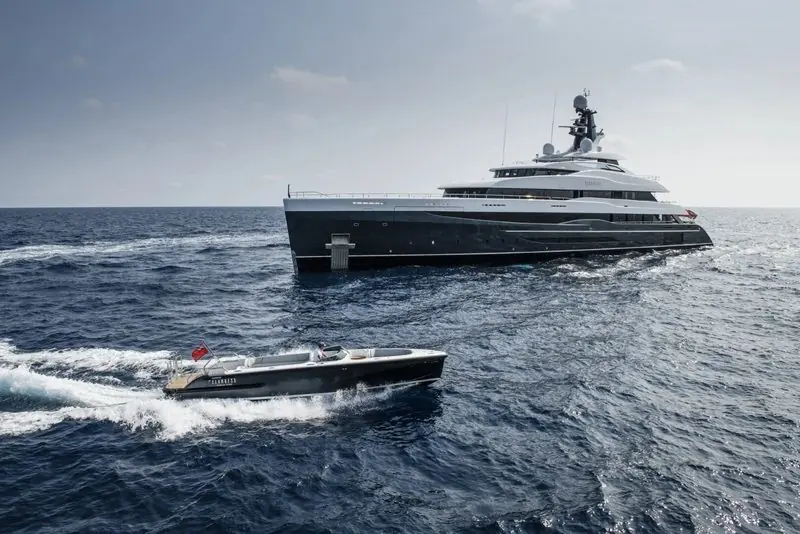
A Pascoe se le asocia sobre todo con el tender limusina cerrado, una embarcación pequeña con cabina acristalada que protege a los invitados del viento y de los rociones. Este es el barco que lleva al armador del yate a una marina o a un restaurante en tierra con algo parecido a la comodidad de un coche. Las cabinas se tapizan a un nivel alto y se pueden estilizar para hacer eco del propio interior del yate. El aire acondicionado, la tapicería fina y el poco ruido forman parte del pliego. El tender limusina convierte un traslado mojado en un viaje civilizado.
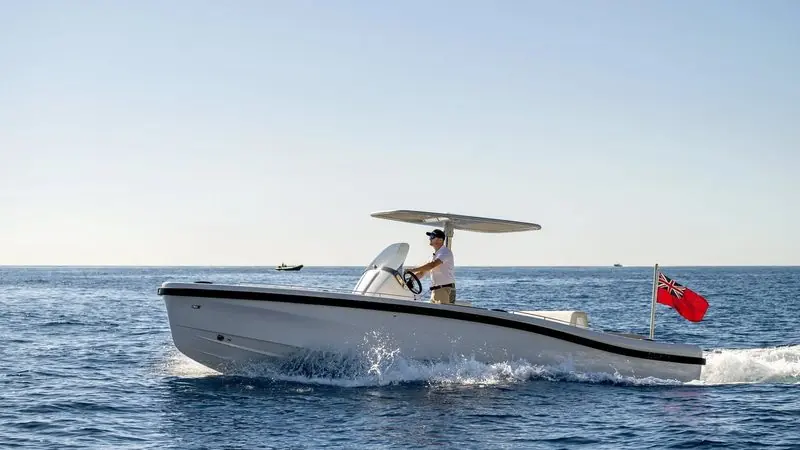
Junto a las limusinas, la empresa construye tenders abiertos de invitados, chase tenders, beachlanders y embarcaciones de rescate que cumplen la normativa de seguridad. Esa amplitud permite que un solo astillero suministre toda una flota de barcos de apoyo emparejados con un mismo yate. Cada tipo responde a una parte distinta de la vida a bordo, desde una carrera rápida a tierra hasta un barco de trabajo para la tripulación. Pascoe ha ganado premios de diseño tanto por el aspecto como por la ingeniería de estas embarcaciones. La limusina, eso sí, es el producto que define la marca.
La limusina cerrada que convierte un traslado mojado a tierra en una llegada compuesta.
Ingeniería a medida para encajar en el garaje
Un tender de superyate tiene que caber en un espacio exacto y arriarse por una puerta concreta, lo que convierte cada construcción en un ejercicio nuevo de ingeniería. Pascoe diseña sus embarcaciones para ajustarse a las dimensiones y a los sistemas de izado del yate que las va a llevar. La empresa lleva el estilismo, la estructura y la instalación mecánica dentro de casa. Ese control sobre todo el proceso es una de las razones por las que se le ha reconocido la calidad de sus sistemas además de su aspecto. En un tender dedicado no hay nada de catálogo.
La construcción combina un casco de composite con un interior y una propulsión cuidadosamente empaquetados. Meter una cabina con aire acondicionado, asientos y maquinaria en una embarcación ligera que además rinda es una tarea exigente. Pascoe lo ha afinado a lo largo de cientos de entregas. Más recientemente, la empresa ha invertido años de investigación en propulsión eléctrica, con el objetivo de llegar a limusinas y tenders de invitados totalmente eléctricos. Ese desarrollo apunta hacia dónde va el mercado del tender a medida.
Cómo los usan los armadores
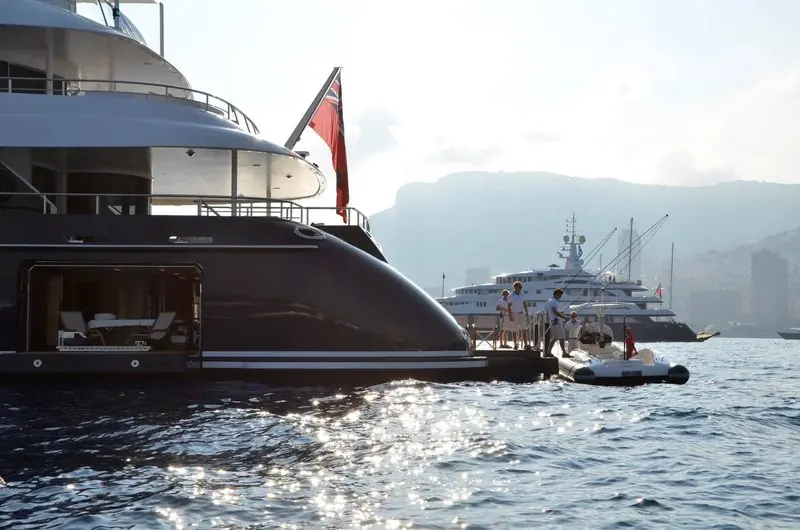
El tender es la parte del yate que los invitados usan de forma más directa, y a menudo lo primero en lo que embarcan. Un tender limusina permite al armador llegar a tierra seco y compuesto después de cruzar un fondeadero abierto. Devuelve además a los invitados al yate a última hora de la noche con comodidad y seguridad. Tanto en charter como en uso privado, la calidad del tender condiciona la impresión que deja el barco entero. Pascoe construye específicamente para ese papel.
Como las embarcaciones son a medida, se pueden ajustar a cómo vive un armador concreto. Un yate puede necesitar un barco abierto y rápido para deportes acuáticos, y otro una limusina cerrada y formal para las llegadas a puerto. Los chase tenders y los beachlanders amplían el alcance para las tripulaciones que trasladan suministros o montan un picnic en la playa. Cada barco se ajusta a un patrón de uso real y no a un catálogo. Ese ajuste es el valor que añade un constructor a medida.
Posición entre los armadores
Pascoe está en la punta a medida del mercado del tender, donde el cliente quiere una embarcación hecha para su yate y no un modelo de serie. Entregar varios cientos de tenders dedicados en dos décadas le ha dado un historial sólido con armadores y capitanes. Los premios repetidos en los galardones de diseño de superyates han reforzado esa reputación. La empresa aparece con regularidad entre los principales especialistas en tenders de la prensa del sector. Para un armador exigente es un nombre natural que considerar.
El atractivo de la marca descansa en el oficio y en resolver problemas difíciles dentro de límites estrechos. Un tender de Pascoe está diseñado para quedar bien junto a su barco nodriza y para funcionar con fiabilidad en servicio diario. El empujón hacia la propulsión eléctrica señala la intención de seguir en la primera línea. Para el armador que trata el tender como parte de la identidad del yate, Pascoe ofrece una respuesta pensada. Ha construido su posición un barco a medida cada vez.
The electric limousine, and the figure Pascoe does not publish
In January 2022 Pascoe announced what it called the first fully electric superyacht limousine tender, built on the SL platform after six years of development with propulsion and battery specialists. It uses oil-cooled electric motors, charges from the mothership's own power generation, and the company claims 40 knots top speed with a maximum range of 60 miles. The first boat was contracted for delivery in 2023 to a new build from a major northern European yard.
Two things are missing from the public specification and both are the owner's problem. Pascoe does not publish the battery capacity or the boat's weight, and a battery pack capable of 40 knots is heavy enough to change the crane calculation entirely. It also does not say whether the 60 miles are nautical or statute, and at 40 knots that range is a little over an hour of hard running. Ask for both numbers in writing, along with the charge time and the load the yacht's generators will see.
Who draws it and who builds it
The styling comes from Ken Freivokh Design, whose studio is on the same river and is credited with close to 200 Pascoe tenders, with hull naval architecture by Patrick Banfield. That continuity is why a Pascoe from 2014 and one from 2024 look like relatives. The company took a Superyacht Design Award in 2015 and a Boat International Design and Innovation Award in 2019.
The engineering problem is packaging. An air-conditioned cabin, sixteen seats, sound insulation, a generator, twin diesels and sterndrives all have to fit inside a hull light enough to lift and slim enough to pass a garage door. Pascoe uses composite construction and, on the 9.6 m SL, twin 260 hp diesels on Yanmar sterndrives with joystick control, a combination it described as the only one of its kind.
Aftersales, warranty and the retube
Pascoe runs aftersales, warranty care and refit from the Hamble yard, which is the right model for a boat with no two examples alike. It also means the reference point for a serious repair is the south coast of England. For a yacht in the eastern Mediterranean in August, the practical question is what the yard can talk a local composite shop through by telephone, and that is worth testing before the boat is ordered.
Pascoe publishes no warranty term on its website, so the length and the exclusions are contract items to negotiate, and there is no published standard to look up. On the inflatable-collar models the tubes are a consumable and third-party retubing specialists in the United Kingdom advertise Pascoe work, which is useful evidence that the boat can be maintained outside the factory.
Against the alternatives, and who should buy elsewhere
Against Williams Jet Tenders the comparison is not close on either side. Williams delivers a proven boat from stock at a fraction of the price with a global parts network, and it does not build an enclosed air-conditioned cabin. Compass Tenders competes directly at the custom end. Castoldi in Italy, Cobra and Whitmarsh in England and Reliant Yachts in Rhode Island cover adjacent parts of the market.
The owner who should buy a Pascoe has a yacht of about 50 m or more, a garage still on the drawing board, guests who go ashore for dinner and a crane that will lift four tonnes. The owner who should not is refitting an existing yacht with a fixed transom crane, needs a boat this season, or wants a tender his guests can drive themselves off a beach.
Información práctica
| SL Landau | From EUR 780,000, roughly a 12-month build |
|---|---|
| SL Limousine | From EUR 1,070,000, roughly a 15-month build |
| When to order | At the same time as the yacht itself - a 12 to 15 month tender build has to run in parallel with the yard's own schedule, not after delivery |
| Where it's built | Eastlands Boatyard, Swanwick, on the River Hamble - composite construction, joinery, engineering and sea trials all on one site; only the carbon hulls and decks are subcontracted |
| What's not published | Pascoe does not publish list pricing for every model in the range or a standard warranty term; both come with the quote |
Solicitar presupuesto para Pascoe International.
Dinos el modelo y adónde debe llegar. La redacción obtiene una oferta por escrito del fabricante o de un distribuidor autorizado, la contrasta con los precios publicados en esta página y te responde por email. Sin compromiso y sin coste.
- 01Una oferta por escritoEn tu moneda, con IVA, entrega y plazo indicados, no una cifra de catálogo.
- 02Entregado donde está el yateEn el puerto, el astillero o tu dirección, con la documentación que exige una batería de litio o una maniobra de grúa.
- 03IndependienteYotters no depende de ningún distribuidor, así que la oferta se compara antes de llegarte.
Lo que cuentan armadores y tripulaciones
A captain who had zero-touch integration on a demo tender
Captain Guy Booth of the 37 m Heesen Aurelia said the SY9 demo model had been carefully thought through and presented extremely well, and was completely fitted out with leading technology, with little required from the crew.
Captain Guy Booth, Aurelia (37 m Heesen)Pascoe's own read on why the new range exists
General manager Richard Watson said the new tender range is trying to offer something better than other offerings on the market in terms of usability and reliability - the company's own framing of what it's competing against.
Richard Watson, General Manager, Pascoe International (the maker's own account)Even Pascoe admits its electric tenders aren't there yet
Vice president Tom Southern said current-generation e-tenders are limited by battery technology and are, in their present form, toys rather than genuine diesel replacements.
Tom Southern, Vice President, Pascoe International
Lo bueno y lo que conviene vigilar
Puntos fuertes
- A single site handles the whole buildComposite construction, timber joinery, fabrication, engineering, pattern making, sea trials and warranty work are all done at Eastlands Boatyard, Swanwick, so there is one point of accountability rather than several subcontractors.
- The platform is genuinely researched, not just styledDesigner Ken Freivokh notes the tenders are built on a highly researched platform, the way cars and planes are engineered, which most limo-style tenders skip in favour of styling alone.
- Real scale and a real track recordMore than 260 tenders in service and roughly 200 percent growth in five years, so parts, warranty support and a resale market for used Pascoe tenders all actually exist.
A tener en cuenta
- The build has to be ordered on the yacht's own timeline, not afterA 12 to 15 month build (SL Landau, SL Limousine) means the tender has to be commissioned at roughly the same time as the mothership, which catches owners who leave tenders as an afterthought.
- The e-tender line is behind the diesel rangeBy Pascoe's own vice president's description, current electric tenders are limited by battery technology and don't yet match a diesel tender's range.
- Semi-custom means the base boat still gets adapted to each garageEvery hull is drawn around a different tender garage, so pricing and lead time both move with how much customisation a given yacht's garage demands.
Para quién es: Armadores que quieren un tender diseñado y construido específicamente para su yate en lugar de una embarcación de serie.