Williams Jet Tenders
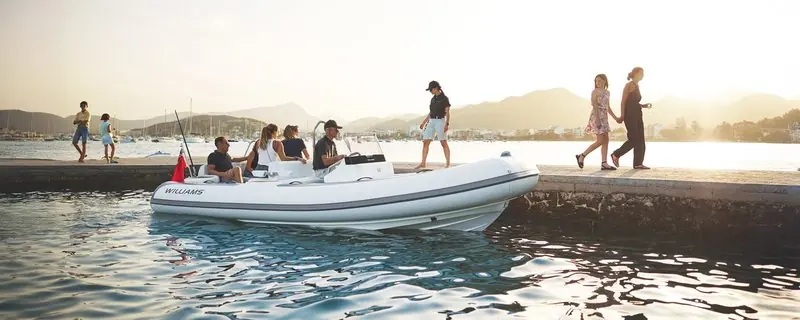
| Categoría | tenders de yate con propulsión a chorro |
|---|---|
| Fundada | principios de los años dos mil, Reino Unido |
| Sede | Oxfordshire, Inglaterra |
| Productos estrella | las gamas Turbojet, Sportjet y Dieseljet |
| Primer salto | un pequeño tender a chorro de cuatro tiempos lanzado en 2004 |
| Propulsión | chorro de gasolina, diésel y eléctrico |
| Posición | ampliamente especificada de serie por astilleros de serie y custom |
| DieselJet 415 | 4.16 m, 1.96 m beam, 828 kg dry, Yanmar 4JH of 110 hp, six seats, 68 litres, about 31 knots |
| DieselJet 625 | 6.32 m, Yanmar 4LV of 195 hp, eleven seats, about 38 knots |
| EvoJet 70 | 7.10 m, 2.65 m beam, 2,000 kg dry, Yanmar 4LV of 250 hp, thirteen seats, 200 litres, aimed at yachts of 40 m and above |
| EvoJet 70e | 58.5 kWh lithium-ion pack with control electronics from Evoa, presented by the company's commercial director as a technology demonstrator, with no catalogue listing |
| Warranty | two years from delivery, conditional on the owner returning the warranty document within ten days |
Un arranque de ingeniería británica
Williams Jet Tenders nació de un taller de ingeniería naval del sur de Inglaterra, donde los fundadores pasaron años reparando y personalizando barcos antes de construir los suyos. La empresa se creó a principios de los años dos mil y se propuso resolver un problema concreto: cómo meter un tender capaz en el garaje apretado de un yate moderno. Su salto llegó en 2004 con un pequeño tender de lujo movido por un motor a chorro de cuatro tiempos, un formato que pronto se convirtió en referencia. De aquel único modelo la firma se expandió a toda una familia de embarcaciones. Hoy trabaja desde una gran instalación construida a propósito en Oxfordshire.
La elección de la propulsión a chorro estaba en el corazón del diseño. Un jet elimina la hélice expuesta que hace incómodo a un tender fueraborda convencional cerca de bañistas y de playas. Permite además un casco más plano y de menos calado, que se desliza con más facilidad dentro de un garaje. Williams construyó su reputación acertando con este paquete a tamaño pequeño, que es donde la ingeniería es más difícil. Aquel foco temprano en los tenders a chorro compactos ha marcado todo lo que la empresa ha hecho desde entonces.
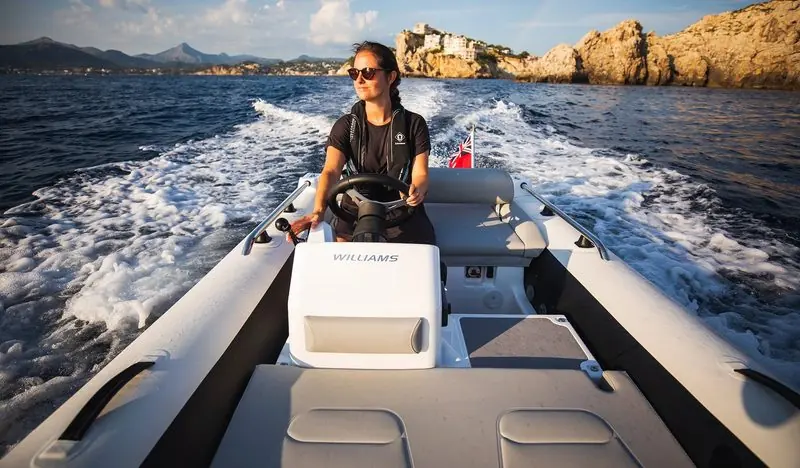
La gama, del Minijet al Dieseljet
La gama de Williams se organiza por tamaño y por uso más que alrededor de un único buque insignia. Los modelos Turbojet fueron los tenders a chorro de gasolina originales y siguen siendo el núcleo de la gama, diseñados para sentar a un puñado de invitados y para caber en una gran variedad de garajes de yate. La gama Sportjet añade prestaciones y espacio para el armador que quiere un day boat más rápido. En el extremo grande, los modelos Dieseljet llevan más invitados y usan motorización diésel, lo que va bien a los yates que ya llevan diésel a bordo y prefieren evitar la gasolina. Hay además un Minijet más pequeño para embarcaciones compactas.
Junto a las gamas de gasolina y diésel hay una línea eléctrica que refleja hacia dónde va el mercado en general. El paso a la batería responde a una demanda real de los armadores que quieren funcionamiento silencioso y ningún manejo de combustible en la plataforma de baño. Cada gama se ofrece en varias esloras para poder ajustar el tender a las dimensiones exactas de un garaje. Ese enfoque modular explica en buena parte por qué tantos astilleros especifican Williams de serie. El tender se elige a menudo antes incluso de que el yate esté terminado.
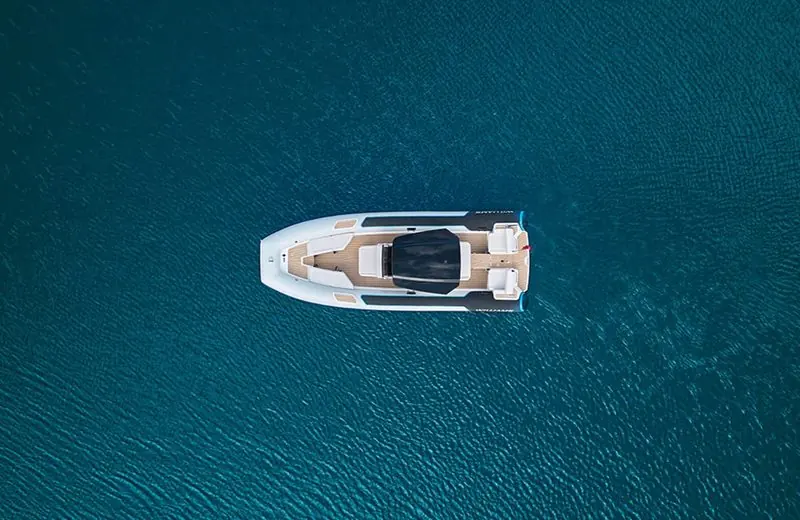
El tender a chorro que se convirtió en la puerta de entrada al mar por defecto del sector.
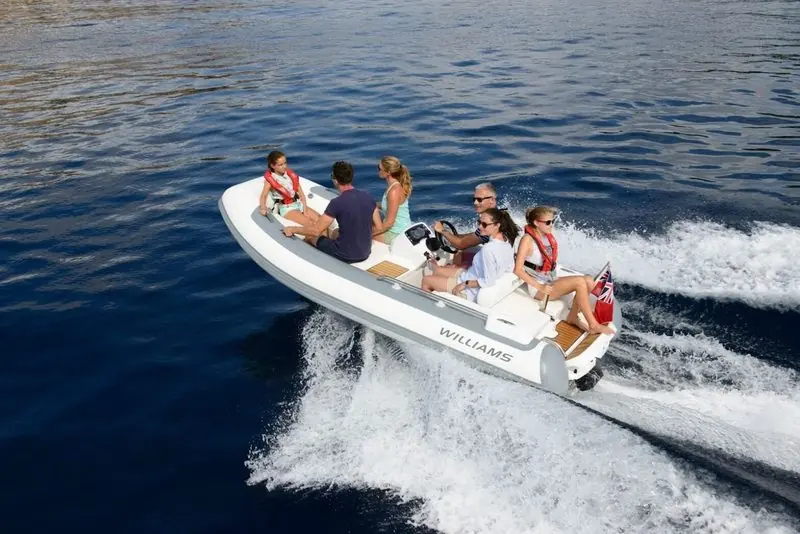
Construir para el garaje
Un tender de yate lleva una vida dura y pasa casi todo su tiempo guardado en un espacio angosto. Williams diseña sus embarcaciones para arriarlas y recuperarlas deprisa, a menudo con un solo tripulante usando los propios sistemas del yate. El jet queda recogido y deja una obra viva limpia que no engancha cabos ni pone en peligro a los bañistas. El ajuste y el acabado importan porque el tender se juzga al lado del barco nodriza. La empresa construye a un nivel que no deja en evidencia a un yate que cuesta muchas veces más.
El reto de ingeniería es meter prestaciones en un casco pequeño y ligero. Un tender tiene que planear deprisa con la carga completa de invitados y aun así pesar lo bastante poco para la grúa del yate. Williams lleva dos décadas afinando ese equilibrio en todas sus gamas. El resultado es un barco que se siente estable y previsible incluso para invitados que casi nunca llevan el timón. Esa fiabilidad es lo que mantiene fieles a los capitanes.
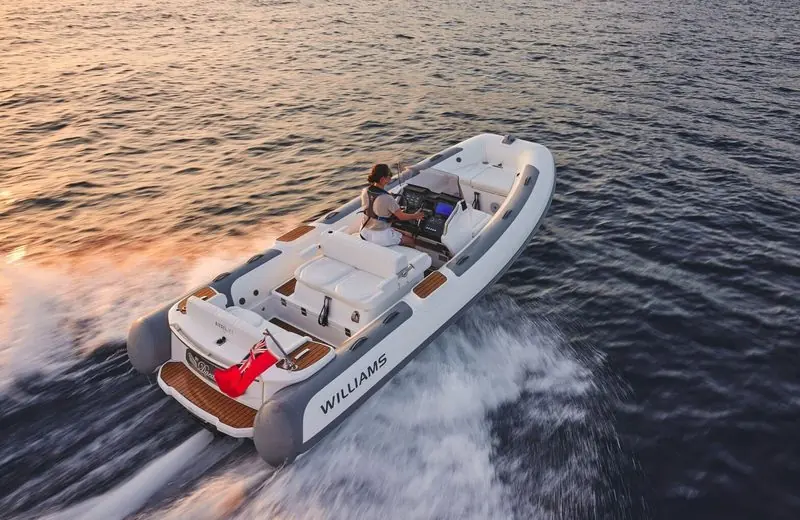
La vida a bordo del tender
Para el invitado, el tender es la puerta de entrada del yate. Es como llega al beach club, a tierra, a un restaurante o a una cala tranquila para bañarse. Un buen tender hace que esos traslados resulten fáciles y secos, y uno malo los convierte en una lata. Las embarcaciones de Williams están preparadas exactamente para ese servicio diario, con asientos y distribuciones pensados para la comodidad y no solo para lo deportivo. Los modelos mayores añaden colchonetas de sol y estiba para un día entero fuera del yate.
El formato a chorro va bien además con la forma en que se usan los tenders cerca de bañistas y de playas. Sin hélice expuesta, el barco puede acercar la proa a un banco de arena o quedarse al ralentí entre gente en el agua con menos riesgo. Eso lo convierte en una opción natural para las familias y para los clientes de charter que se pasan el día entrando y saliendo del mar. El tender pasa a ser una pequeña extensión de la vida social del propio yate. Ese argumento práctico de seguridad ha ayudado a los tenders a chorro a llevarse una gran cuota del mercado.
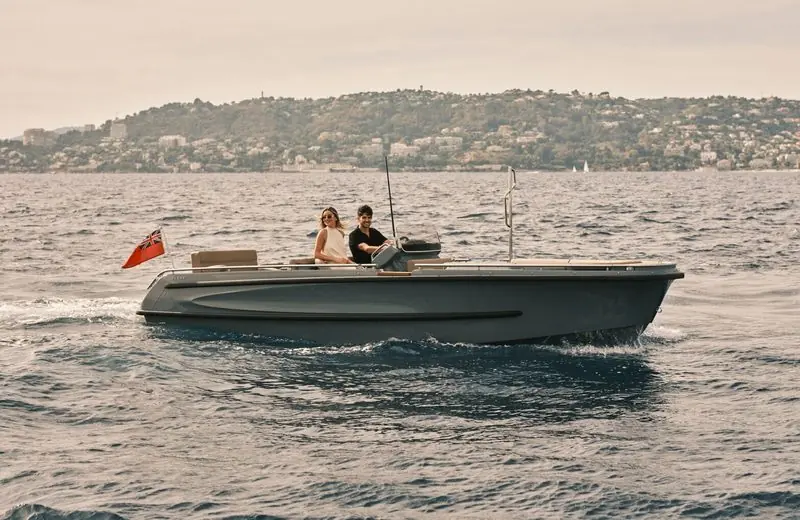
Equipamiento por defecto de los astilleros
Williams está en la punta de volumen del mundo del tender de lujo, y su fuerza es la amplitud más que la exclusividad de una pieza única. Muchos astilleros de serie y semipersonalizados especifican un tender Williams como la pareja estándar de sus garajes. Ese alcance ha convertido a la marca en uno de los nombres más reconocidos del sector. El armador que compra un yate nuevo se encontrará a menudo con un Williams ya dimensionado y presupuestado como parte del paquete. La empresa ha convertido un nicho en algo casi estándar.
El prestigio de la marca descansa más en la consistencia que en el espectáculo. Un tender Williams es una cantidad conocida que los capitanes pueden mantener y hacer funcionar temporada tras temporada. Para el armador que quiere una embarcación probada y práctica en vez de una declaración a medida, es una elección segura y popular. El paso a la propulsión eléctrica mantiene la gama al día según se mueve el mercado. Williams ha seguido por delante afinando una fórmula que en gran medida creó ella misma.
Fuel, charging and the electric question
Petrol on a large yacht is a stowage and insurance problem, and the DieselJet range solves it by drinking what the yacht already carries. On smaller boats the calculation flips, because a 90 hp petrol Rotax is far lighter than any diesel of equivalent output and the weight matters more than the fuel type. Choosing between a TurboJet and a DieselJet is really choosing between crane capacity and fuel logistics.
Williams has shown the EvoJet 70e, an all-electric version running a 58.5 kWh lithium-ion pack through control electronics from the American firm Evoa, with the same thirteen seats and the same published top speed. The company's commercial director called it a technology demonstrator built to prove what could be achieved. Williams publishes no range figure, no charge time and no price. Treat the missing range number as the whole question, because a tender that needs shore power for hours between beach trips changes a day at anchor.
What it costs to buy and to keep
Williams publishes no list prices, and the dealer network quotes against the specification. Motor Boat and Yachting listed the SportJet 520 from GBP 47,178 including VAT in its 2025 coverage. A UK tender guide consulted in July 2026 put TurboJet and SportJet boats at roughly GBP 30,000 to GBP 90,000, DieselJets at roughly GBP 100,000 to GBP 250,000 and the EvoJet 70 from roughly GBP 300,000, and described those as guidance bands with no quote behind them.
The running cost is not the fuel. It is the annual service, the impeller and wear ring that erode on any waterjet, the anodes, the tubes on the inflatable models and the hours the crew spend flushing and cleaning. Tubes are a consumable in Mediterranean sun, and a reasonable owner should budget to retube once in a long ownership. The tender also takes far more cosmetic abuse than the yacht, because it is the thing that touches docks.
Warranty, parts and a breakdown in August
Williams warrants its boats free of material defect for two years from delivery, conditional on the owner returning the completed warranty document within ten days. That clause is the sort of administrative trap that costs owners real money, and it is worth confirming with the yard's project manager that it was actually done at handover. The company runs an owners centre with manuals and parts catalogues, and sells parts through the dealers.
Coverage follows the volume. Factory-trained dealers sit across Europe, the Middle East and North America, so the Riviera, the Balearics, Italy, the Solent and Florida are well served. Caribbean cover is thinner, and a boat wintering in the islands should carry a spare impeller and a service kit. In August on the Cote d'Azur every dealer in the region is at capacity, and a failure in the first fortnight of the month is realistically a failure for the week.
Where it wins, and who should buy elsewhere
Against the custom yards, Williams competes on availability and price and loses on fit. Pascoe International and Compass Tenders design a hull around one specific garage and one owner's arrival ritual, and they will build an enclosed air-conditioned limousine that no Williams matches. Castoldi and Novurania sit between the two. What Williams offers is a boat the yard has already fitted a hundred times, delivered on schedule, with a parts network behind it.
The owner who should buy a Williams has a production or semi-custom yacht up to about 45 m, wants the tender to be a solved problem, and cares that guests can drive it safely off a beach. The owner who should look elsewhere is building full custom with the garage drawn around the tender, wants guests delivered dry and enclosed in a passing squall, or needs to move more than thirteen people in one trip.
Información práctica
| Price | no list prices published; Motor Boat and Yachting quoted the SportJet 520 from GBP 47,178 including VAT in 2025, and a July 2026 tender guide put TurboJet and SportJet boats at roughly GBP 30,000 to 90,000, DieselJets at roughly GBP 100,000 to 250,000, and the EvoJet 70 from roughly GBP 300,000 |
|---|---|
| Running cost | annual service, the impeller and wear ring that erode on any waterjet, anodes, and tube retubing on the inflatable models, budgeted roughly once in a long ownership |
| Fit before you order | garage door opening sets the beam limit, the cradle sets the length, and the transom crane's rated lift sets the weight; get the dry weight for the exact build, with options fitted, in writing from the dealer |
| Warranty | two years from delivery, conditional on the owner returning the completed warranty document within ten days of handover |
| Service network | factory-trained dealers are dense across the Riviera, the Balearics, Italy, the Solent and Florida; Caribbean cover is thinner, so a boat wintering there should carry a spare impeller and service kit |
| What is not published | no list prices anywhere in the range, and no range, charge time or price for the electric EvoJet 70e demonstrator |
Solicitar presupuesto para Williams Jet Tenders.
Dinos el modelo y adónde debe llegar. La redacción obtiene una oferta por escrito del fabricante o de un distribuidor autorizado, la contrasta con los precios publicados en esta página y te responde por email. Sin compromiso y sin coste.
- 01Una oferta por escritoEn tu moneda, con IVA, entrega y plazo indicados, no una cifra de catálogo.
- 02Entregado donde está el yateEn el puerto, el astillero o tu dirección, con la documentación que exige una batería de litio o una maniobra de grúa.
- 03IndependienteYotters no depende de ningún distribuidor, así que la oferta se compara antes de llegarte.
Lo que cuentan armadores y tripulaciones
No independently attributable owner or captain testimony found
trade coverage and dealer pages describe Williams as the tender most new yacht specifications already assume, but this research did not find a named owner or captain willing to be quoted on the record about handling, reliability or after-sales service for a specific model
Yotters research desk
Lo bueno y lo que conviene vigilar
Puntos fuertes
- A solved problem, off the shelfat roughly 1,200 boats a year Williams is the highest-volume boatbuilder in Britain by unit count, so the yard has usually sized and quoted the boat before the owner has shown anyone the garage
- No exposed propellerthe jet drive is the safer choice around swimmers and beaches, and the shallow draft lets the boat nose onto sand that would ground a propeller-driven tender
- The widest size and fuel spread in one cataloguepetrol, diesel and an electric demonstrator run from the 227 kg MiniJet 280 to the 2,000 kg EvoJet 70, a factor of nine, covering yachts from about 12 m to 40 m and above
A tener en cuenta
- No published prices anywhere in the rangeevery figure comes from a dealer quote against the owner's own specification, and Williams has form on a weight figure that did not match the eventual spec sheet: the MiniJet was announced at under 200 kg and the current sheet gives 227 kg dry
- A jet drive costs efficiency and ease of dockinga waterjet burns more than an equivalent outboard at displacement speed, astern handling takes practice guests do not have, and the intake grate fouls on weed, rope and plastic
- Service cover thins out where owners actually cruisethe Caribbean has fewer factory-trained dealers than Europe, and every dealer on the Cote d'Azur is at capacity in August, so a breakdown in high season is realistically a week's wait
- The EvoJet 70e is not yet a real optionWilliams calls it a technology demonstrator and publishes no range, no charge time and no price, so an owner who wants the diesel garage solved electrically cannot yet buy one
Para quién es: Armadores y astilleros que quieren un tender a chorro probado y pensado para el garaje, en lugar de una construcción a medida.