Bannenberg & Rowell
| Fondateur | Jon Bannenberg (studio depuis le début des années 1960) |
|---|---|
| Dirigeants actuels | Dickie Bannenberg et Simon Rowell |
| Rebaptisé | Bannenberg & Rowell en 2003 |
| Base | Fulham, Londres |
| Disciplines | design extérieur et intérieur, constructions neuves et refits |
| Yachts signatures | Valor (79,5 m), Renaissance (112 m), Avantage (87 m) |
| Héritage | Jon Bannenberg, appelé le père du design de yacht moderne |
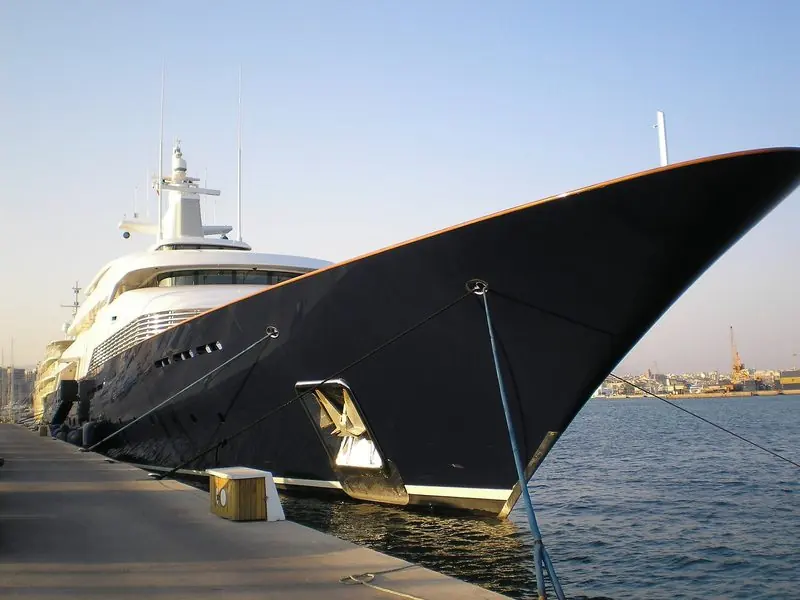
| Jon Bannenberg landmark | Nabila, 85.9 m, Benetti, 1980, now sailing as Kingdom 5KR |
| Renaissance, 112 m, Freire Shipyard, 2023: exterior and interior, and the largest superyacht built in Spain | |
| Avantage, 87 m, Lurssen, 2020 | exterior and interior |
| Valor, 79.5 m, Feadship, launched May 2025: interior, under a Studio De Voogt exterior and naval architecture | |
| Other interior-only work | Predator (72.8 m, Feadship, 2008) and Scott Free, delivered as Elandess (60 m, Abeking and Rasmussen, 2009) |
| Team | twelve people as described by Forbes in February 2017. The studio publishes no current headcount (checked 28 July 2026) |
| Design fee | not published. Market band 1 to 5 per cent of build cost, plus 2 to 4 per cent project management, both outside the yard price (SuperYachtReview 2026 price guide, updated March 2026) |
| On a refit, ownership of the original designer's as-built drawings sets the cost of the project and should be established before the design contract is signed | |
Héritier du père du yacht moderne
Jon Bannenberg a fondé le studio au début des années 1960 et a refaçonné la manière de dessiner les yachts pendant les décennies qui ont suivi. On lui attribue largement la paternité du superyacht moderne, et son influence traverse une grande part de l'industrie. Son fils Dickie Bannenberg et le designer Simon Rowell dirigent aujourd'hui le cabinet. Les deux ont travaillé aux côtés de Jon pendant de nombreuses années avant de prendre la barre. Dickie Bannenberg a passé près de vingt ans à travailler aux côtés de son père avant de diriger la maison.
Le studio a été rebaptisé Bannenberg & Rowell en 2003, l'année suivant la mort de Jon Bannenberg. Il est installé à Fulham, à Londres, et travaille sur des yachts comme sur des projets à terre. Depuis le changement de nom, il a livré une quarantaine de projets de yacht, entre constructions neuves et refits. L'héritage du fondateur reste une part vivante de l'identité du studio. L'équipe actuelle traite cet héritage comme une responsabilité à faire fructifier plutôt que comme un trophée à monnayer.
Créatif et accessible
Le studio décrit son travail comme créatif, contemporain et accessible, et il refuse un style maison figé. Il dessine les intérieurs comme les extérieurs et prend plaisir à donner à chaque yacht un caractère distinct. Le travail a souvent un sens de l'esprit et de la couleur qui le distingue de rivaux plus sérieux. Cette ouverture reflète l'esprit pour lequel son fondateur était connu. Jon Bannenberg a cassé les règles de son temps, et le studio refuse encore de s'installer dans une formule unique.
Le bureau est aussi à l'aise avec un refit audacieux qu'avec une construction neuve partie de zéro. Il traite chaque brief pour ce qu'il est plutôt que d'imposer un modèle. Cette souplesse a produit un portefeuille varié et vivant. Le studio préfère les idées aux formules. Un refit audacieux peut être aussi inventif qu'une construction neuve entre les mains du studio.
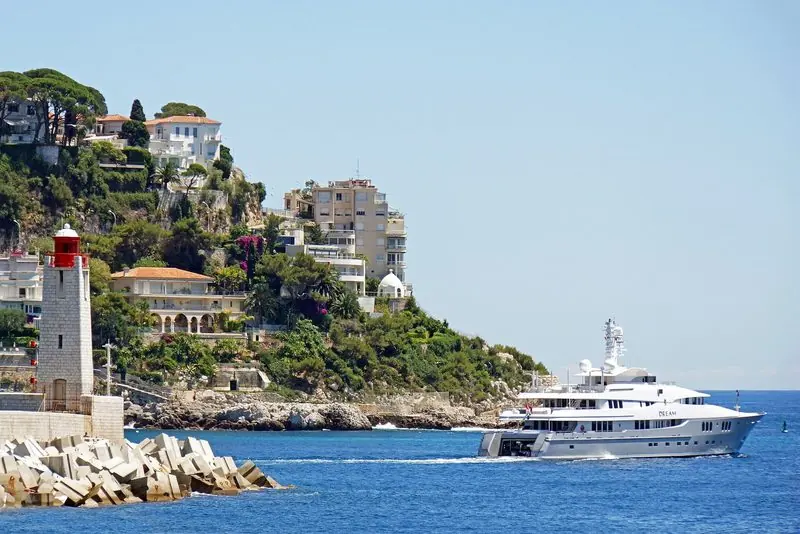
La révolution de Jon Bannenberg, portée plus loin avec esprit et couleur.
Un portefeuille varié
Les réalisations du studio comprennent le 79,5 mètres Valor de Feadship et le 112 mètres Renaissance du chantier Freire. Le 87 mètres Avantage de Lurssen et le 60 mètres Elysian, d'Abeking and Rasmussen, anciennement Elandess, les accompagnent. Des yachts plus petits de chez Heesen et Feadship complètent une large gamme de tailles. La variété des chantiers et des tailles est frappante. Travailler avec autant de constructeurs différents est la marque d'un studio largement recherché plutôt que lié à un seul chantier.
Les yachts marquants du fondateur, comme le très commenté Nabila de 1980, restent des références dans l'histoire du métier. Le studio actuel s'appuie sur cet héritage avec sa propre série de travaux. Ses refits ont redonné vie à plusieurs yachts plus anciens. Le portefeuille se lit comme inventif plutôt que répétitif. Le studio préfère surprendre un propriétaire que se répéter d'un projet à l'autre.
Propriétaires, chantiers et refits
Bannenberg & Rowell travaille avec un large ensemble de chantiers aux Pays-Bas, en Allemagne et ailleurs. Sa disposition à prendre des refits comme des constructions neuves élargit le type de propriétaire qu'il sert. Le studio engage les propriétaires de façon détendue et collaborative. Cette manière accessible fait partie de son attrait. Les propriétaires décrivent le studio comme facile et agréable à côtoyer, ce qui compte sur une construction qui dure des années.
Le bureau garde un rôle de terrain du concept à la livraison, sur les constructions neuves comme sur les refits. Ses designers protègent le caractère d'un projet à travers le long processus de construction. L'amplitude du studio lui permet de s'adapter à des briefs très différents. Cette polyvalence garde son carnet de commandes varié. Prendre à la fois des constructions neuves et des refits élargit l'éventail de propriétaires que le studio peut servir.
Porter un héritage vers l'avant
Le studio occupe une place à part comme descendant direct du cabinet révolutionnaire de Jon Bannenberg. Cette filiation lui donne une autorité que peu d'autres peuvent revendiquer. Sous Dickie Bannenberg et Simon Rowell, il s'est bâti sa propre réputation plutôt que de vivre sur le passé. L'équilibre entre héritage et travail neuf est sa force. Vivre uniquement sur le passé aurait été la voie facile, et le studio a clairement choisi de ne pas la prendre.
Le bureau continue de livrer constructions neuves et refits à un rythme régulier. Son style créatif et accessible l'a gardé pertinent sur deux générations. Le nom Bannenberg pèse toujours dans toute l'industrie. Le studio reste une voix distincte du design de yacht. Deux générations plus tard, le nom Bannenberg signifie encore une façon de faire un peu différente.
Valor, and interiors inside other people's boxes
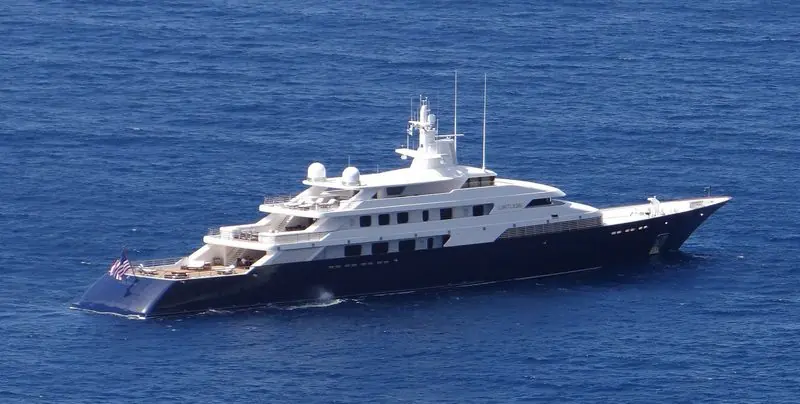
Valor was launched by Feadship in May 2025 at 79.5 metres and 2,025 GT over six decks, with Studio De Voogt taking the naval architecture and the exterior and Bannenberg and Rowell the interior. She has a two metre ice belt above and below the waterline and a Bureau Veritas Young Ice 2 notation, which qualifies her to transit the Northwest Passage. Her propulsion is diesel-electric hybrid with four variable-speed generators, a water-cooled lithium-ion battery bank, a solar array on the mast and twin Schottel azimuthing thrusters, and Feadship quotes zero-carbon operation for up to two days.
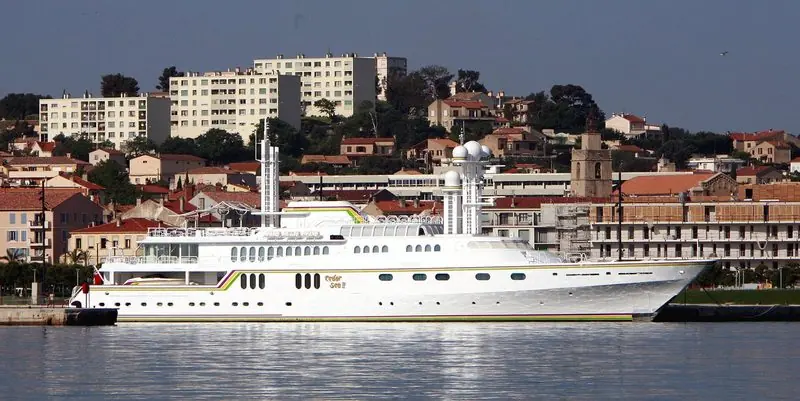
An explorer interior is a distinct discipline. Furniture has to be secured for conditions a Mediterranean yacht never sees, surfaces have to survive wet gear and cold, and the crew spaces carry a heavier load because the boat is used harder. The studio has similar work behind it. Predator, 72.8 metres from Feadship in 2008 and the first Feadship delivered with a reverse bow, carries a Bannenberg and Rowell interior and took a Neptune at the World Superyacht Awards in 2009.
Refits, which many studios avoid
The office takes refits as readily as new builds, and that is unusual at this level. Predator returned to Feadship in 2016 for a refit that added two guest suites. Scott Free, the 60 metre Abeking and Rasmussen delivered in 2009 as Elandess with a Donald Starkey exterior, carries a Bannenberg and Rowell interior.
Refit work is a harder brief than a new build and it pays less. The structure, the systems and the deck heights are fixed, half the drawings are missing or wrong, and every discovery on site costs money that was not budgeted. A studio willing to do it is a useful appointment for an owner buying a good hull with a tired interior, which at current new-build prices and delivery slots is an increasingly sensible route into a large yacht.
How a commission runs, and what it costs
The studio works closely and informally with owners from concept through delivery, on new builds and refits alike, and its designers stay on a project through construction to protect the scheme. There is no naval architecture in house, so the yard or an outside office holds the hull, the structure and every performance guarantee in the build contract. On a Feadship the platform comes from Studio De Voogt. Commercially the design agreement is separate from the build agreement and is signed and paid first, in stages, which means an owner can stop after concept for the price of the concept and can take the drawings to more than one yard for quotation, subject to the confidentiality undertakings the studio will require.
No studio at this level publishes a fee scale. The market band is 1 to 5 per cent of build cost for the designer and 2 to 4 per cent for project management, both outside the yard's quoted price, per the SuperYachtReview guide updated March 2026, and a mandate covering exterior and interior sits in the upper half of it. A refit is a different animal. It is faster, far less predictable, and the design fee is a smaller number attached to a much larger unknown, because a refit specification is written against a boat nobody has fully opened up yet. A contingency of real size should be budgeted and expected to be used.
Recognition, and who it does not suit
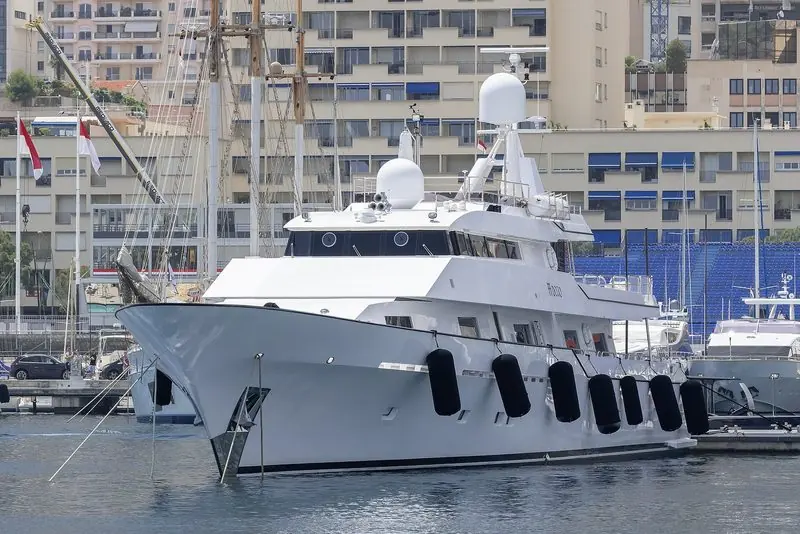
The studio's work has been recognised repeatedly, including the Neptune for Predator in 2009, and the Bannenberg name still carries weight across the industry. Awards are worth a narrow amount to an owner, confirming a finish standard and helping a broker at resale. The more useful signal is the spread of yards, which runs from Feadship and Lurssen to a Spanish builder and a German one, on new builds and refits alike.
This studio does not suit an owner who wants to buy a recognisable signature, because the practice deliberately does not have one. It does not offer naval architecture. It is not the obvious choice above about 112 metres, and it is not a sailing yacht office. Anyone who wants formal, polished grandeur will find the work too playful for the brief.
Two principals, an archive, and what the contract should cover
The practice runs on two named people, a director and a creative director, in a studio Forbes described as twelve strong in February 2017, and no current headcount is published. That concentration is part of what an owner is buying and it is also a risk that the standard documents ignore. The ITIC standard trading conditions for naval architects, dated 8 July 2025, cover intellectual property and cap liability at ten times the consultant's charges or GBP 100,000, whichever is higher, and say nothing about the unavailability of a named principal. Commercial consultancy handles this routinely, treating death or long incapacity of a key person as a termination event and requiring a replacement of equal standing subject to the client's approval.
The drawing question is sharper here than at most studios because of the archive. Copyright normally stays with the designer, with the owner licensed to build one hull, and superyacht practice at its best converts that into an exclusive, irrevocable and assignable licence, which is the standard clause Federico Santini describes in Barche magazine in August 2018. On a refit the same logic applies to the original designer's drawings, which the studio will not own and may not be permitted to copy. An owner buying a good hull that needs a new interior should establish who holds the as-built drawings before he signs anything, because that answer sets the cost of the whole project.
No signature means nothing to date
The deliberate absence of a house style is the most resale-friendly position in the directory, and almost nobody buys it for that reason. A boat that does not announce a studio also does not announce a decade. There is no fashionable silhouette to fall out of fashion and no theme the next owner has to either adopt or rip out. Ocean Independence, on 11 May 2026, ranks builder pedigree, specification and condition above cosmetic detail in what holds value, which is a polite way of saying the market prices the boat and not the byline. Work that is unformulaic by intention slips through that filter without a penalty.
Against that, the Bannenberg name still carries with brokers and with the trade, and it earns a hearing that an unknown studio would not get. The one place the approach costs money is with a buyer who wants to be told what he is looking at. Something recognisable is easier to market in a listing photograph, which matters when the median yacht of 24 metres and over took 277 days to sell in 2025 against an average of 487. A characterful boat with no obvious label needs a broker willing to explain it, and is worth more to the buyer who works that out for himself.
Informations pratiques
| Design fee | Not published by the studio; the market-wide band from the SuperYachtReview 2026 price guide is 1 to 5 percent of build cost for the designer plus 2 to 4 percent for project management, both outside the yard's quoted price |
|---|---|
| How the commission runs | Concept, then design development, then detailing, procurement and site support, each stage its own fee and each a point where an owner can stop |
| Who owns the drawings | Standard practice keeps copyright with the studio; an owner should insist on an exclusive, irrevocable, assignable licence rather than the bare non-exclusive licence the ITIC standard terms default to |
| Before commissioning a refit | Establish who holds the as-built drawings of the existing interior before signing, the original designer may own them and may not permit a new studio to copy them |
| Liability cap | The ITIC standard trading conditions (8 July 2025) cap the consultant's liability at ten times its charges or GBP 100,000, whichever is higher |
Ce que rapportent propriétaires et équipages
A captain given complete authority over the design of a major project
The owner of Predator (72.8 m Feadship) gave Captain Drewes 100 percent control over the decision-making for the entire project, including the interior brief for quiet running, no vibration and 25 knots without a turbine.
Captain Drewes, Predator (72.8 m Feadship de Vries)The studio's own account of that same project
Dickie Bannenberg said the real difficulty was making a lightweight interior look the opposite, massive and solid, using Macassar ebony and zebrano veneers, and described client contact as almost the least frequent the studio has had on any project, because Drewes had full sign-off.
Dickie Bannenberg, Bannenberg & Rowell (the studio's own account)
Les points forts et les points de vigilance
Points forts
- The name and the track record are real, not marketingDirect lineage from Jon Bannenberg, credited with founding modern yacht design in the 1960s, and roughly forty projects delivered since the 2003 relaunch, spanning Feadship and Lurssen to Spanish and German yards.
- No house style ages better than a strongly authored oneA Bannenberg & Rowell interior doesn't announce a decade the way a strongly authored scheme does, which Ocean Independence ranks among the things that actually hold resale value.
- It takes on work most studios avoidThe office does refits as well as new builds, including finishing interiors inside hulls and layouts originally designed by other people.
Points de vigilance
- The whole studio rests on two named peopleThe practice runs on a director and a creative director, last a published headcount of twelve (Forbes, 2017) with no current figure available, and the standard ITIC contract terms have no clause for a named principal becoming unavailable.
- No naval architecture in-houseThe studio doesn't offer naval architecture, so an owner has to appoint and coordinate a separate NA office alongside it.
- Not the natural pick at the very top of the marketThe studio is not positioned as the obvious choice above roughly 112 metres, and it does not do sailing yachts.
Pour qui: Les propriétaires qui veulent un design inventif et plein de caractère, avec de l'esprit, sur une construction neuve ou un refit.