Christian Liaigre
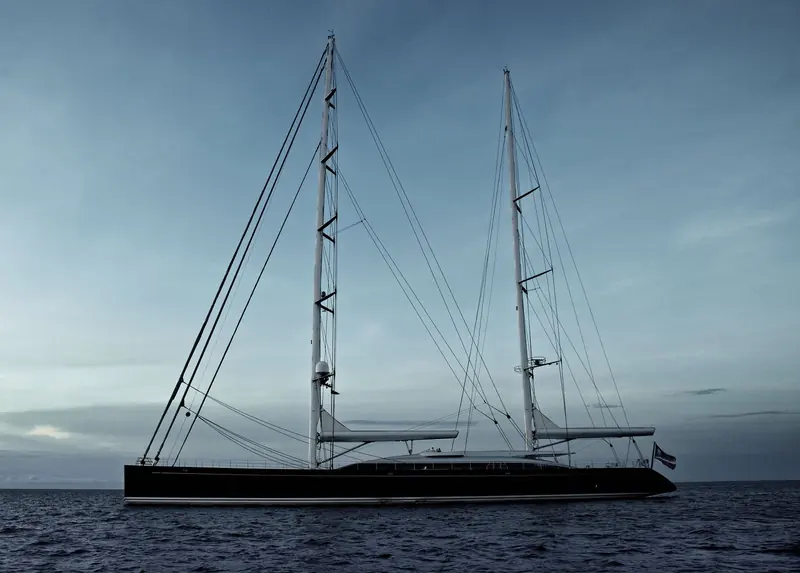
| Founder | Christian Liaigre (1943 to 2020), opened his first Paris showroom on rue de Varenne in the mid-1980s after training at the Beaux-Arts and the Arts Decoratifs |
|---|---|
| Died | 4 September 2020, aged 77; had already given up day-to-day control of the studio years earlier |
| Ownership | Liaigre was sold to Chanintr Living in 2016; shareholders include the family of collector Pierre Chen, Navis Capital Partners and Symphony International Holdings |
| Chief executive | Christophe Caillaud, since 2009, previously managing director at Jean Paul Gaultier |
| Creative leadership | longtime collaborator Frauke Meyer, with the house since 1998, alongside Caillaud since the 2016 transition |
| Design principal (overall design leadership since 2024): Guillaume Rolland, with the studio since 2002 and head of its yachting department since 2014 | |
| Studio | around 30 design professionals based in Paris, plus showrooms in Paris, London and New York |
| Confirmed yacht projects | Rosehearty (2006, Perini Navi, 56 m, owner Rupert Murdoch), Vertigo (2011, Alloy Yachts, 67.2 m), Seahawk (2013, Perini Navi, about 58.5 m), Cloudbreak (2016, Abeking and Rasmussen, 75.3 m, owner Alexander Svetakov), SL44 (about 2021, Sanlorenzo, 44.5 m) |
| Yacht awards | Vertigo took Sailing Yacht of the Year at the 2012 World Superyacht Awards and Best in Show at the 2012 Monaco Yacht Show; Seahawk took the Holistic Design Award at the 2014 Showboats Design Awards; Cloudbreak took a Neptune and Best Interior Layout and Design at the 2017 World Superyacht/Showboats Awards; SL44 won its category at the 2022 World Superyacht Awards |
| Core business beyond yachts | private residences, hospitality (Hotel Montalembert 1990, the Mercer Hotel New York 1997, a first branded residence with Capella opening in Florence in 2027), and furniture and lighting (the Christian Liaigre for Holly Hunt collection ran 1994 to 2011) |
| Design fee | not published for yacht work; no confirmed figure found anywhere in this research |
Is Christian Liaigre still alive
Christian Liaigre was born in La Rochelle in 1943 and trained at the Beaux-Arts and the Arts Decoratifs before opening his first Paris showroom on rue de Varenne in the mid-1980s. He died on 4 September 2020, aged 77; his studio announced the death on social media without giving a cause. Boat International, Dezeen and Wikipedia all confirm the date and age, and none of the yacht projects credited to him below post-date his death.
He had already stepped back well before that. Christophe Caillaud, previously managing director at Jean Paul Gaultier, became Liaigre's chief executive in 2009, and by 2016, when the company was sold to Chanintr Living and Christian Liaigre gave up day-to-day control, Caillaud had also taken on creative-director responsibility alongside longtime collaborator Frauke Meyer, who had worked with Liaigre since 1998 (Business of Home). Shareholders in the business today include the family of collector Pierre Chen, Navis Capital Partners and Symphony International Holdings (PitchBook, Crunchbase). None of that is disguised on the studio's own site, which describes the transition openly rather than presenting Liaigre as a living head of the house.
What does a Liaigre interior actually look like
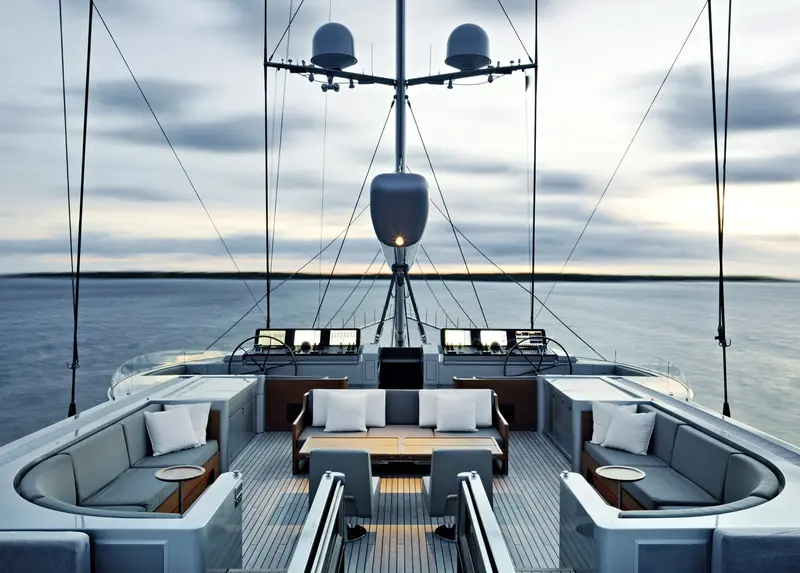
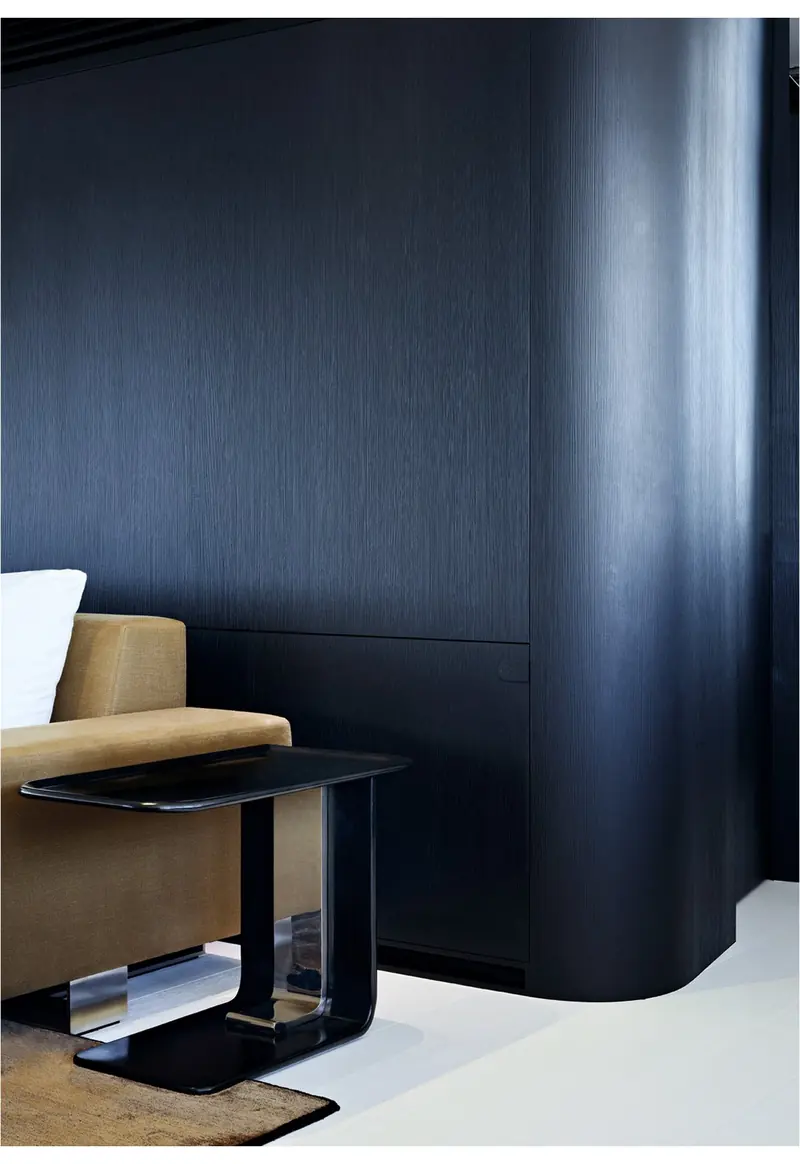
The house style runs to walnut, oak, wenge, linen and leather in a narrow, warm palette, with detail pared back rather than layered on, an approach the Wall Street Journal once summed up by calling Liaigre 'a great minimalist'. Liaigre's client list has included Calvin Klein, Rupert Murdoch, Larry Gagosian and Karl Lagerfeld, and its hotel work includes the Hotel Montalembert in Paris (1990) and the Mercer Hotel in New York (1997), two projects that did as much as anything to define the understated end of boutique hotel design through the 1990s.
The furniture side of the business matters here too: a Christian Liaigre for Holly Hunt collection ran from 1994 to 2011 and was sold across the United States, and Liaigre now runs its own showrooms in Paris, London and New York, plus a first branded-residence agreement with Capella Hotels and Resorts due to open in Florence in 2027 (WWD). None of that is yacht work, and that is the point: the reputation an owner borrows on a boat was built almost entirely on land.
Christian Liaigre told Boat International he was 'not interested in being an international brand,' and across three decades his studio built only five confirmed yachts.
How much of what Liaigre does is actually yachts
Boat International's account of the Cloudbreak project describes it as the designer's fifth yacht and only his second large motor yacht interior, a striking number set against a career that had by then produced dozens of hotels, retail interiors and private houses. The studio opened a small, dedicated Paris yacht office to handle the demand that did exist, under studio manager Guillaume Rolland, but 'small' is doing real work in that sentence: this was never built as a production yacht-interior house.
The upside of that scarcity is attention. Christian Liaigre himself told Boat International, 'I am not interested in being an international brand,' comparing the practice to haute couture rather than ready-to-wear, and each yacht brief was worked as its own problem rather than a variation on a template. The downside is what that implies directly: an owner is not hiring a firm that turns over yacht interiors at volume, and the specialist yacht-engineering and project-management depth a full-time yacht design office builds up over fifty projects is not what five projects builds. Caillaud has said openly that when he joined in 2009 he found 'not yet a brand' but an office that read more like an architecture practice (Business of Home); the yacht work sits inside that same wider push to turn a design studio's name into a recognised commercial brand, not the other way round.
Vertigo: the yacht Liaigre is actually known for
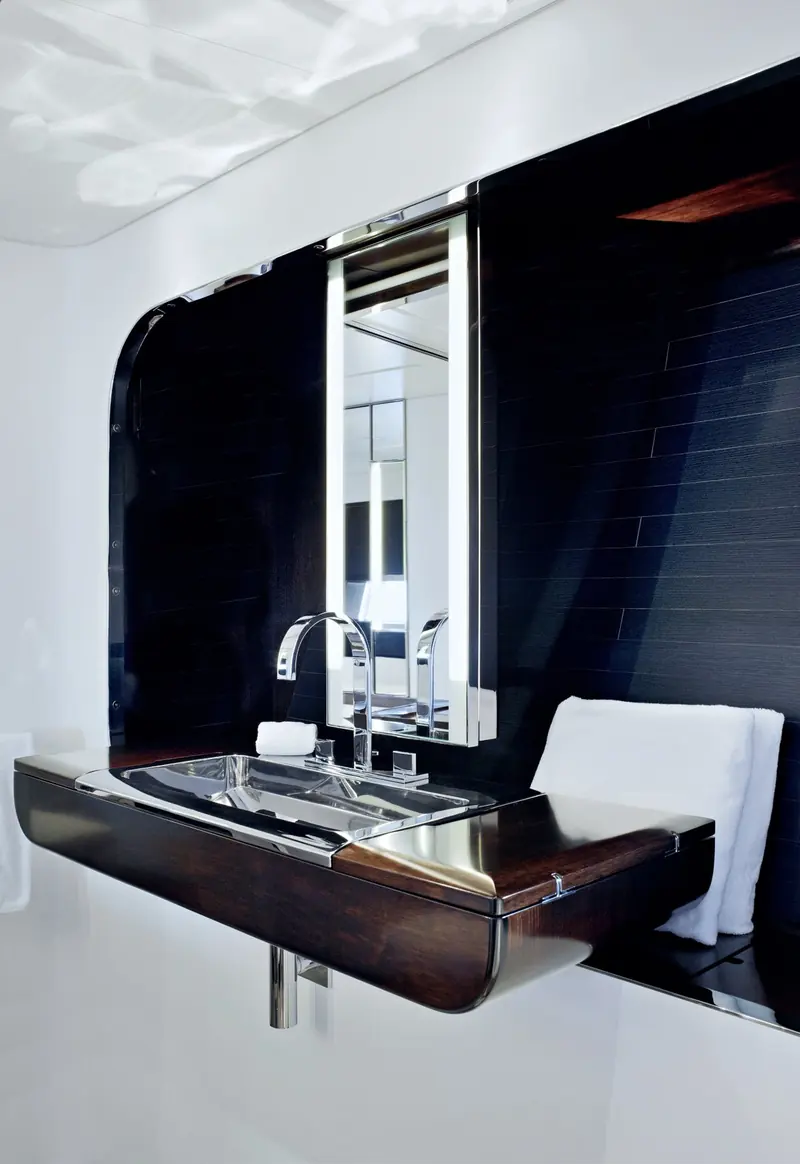
The owner had seen Liaigre's work in New York hotels and on Rupert Murdoch's Perini Navi sailing yacht Rosehearty and asked for that same feeling at sea rather than a traditional nautical interior (Boat International, Charterworld). Liaigre and Briand's studios worked closely together from the outset, an 'amazing collaboration' by Briand's own account, and the result reads as a New York loft dropped onto a hull: walnut, cream and black, two saloon spaces and a dining area for 12 guests, divided by liquid-crystal glass panels that switch between clear and opaque.
Vertigo took four awards in 2012, including Sailing Yacht of the Year at the World Superyacht Awards and Best in Show at the Monaco Yacht Show (Boat International, SuperyachtTimes). At 12.53 metres beam and 837 GT under a black-painted hull, she is a working sail-racing yacht as much as a floating apartment, and that duality is what every later piece of Liaigre yacht press refers back to: it is the clearest single statement of the studio's land-based aesthetic actually translated onto a boat, rather than a boat interior with a well-known designer's name attached after the fact.
The rest of the yacht portfolio: Rosehearty, Seahawk, Cloudbreak and SL44
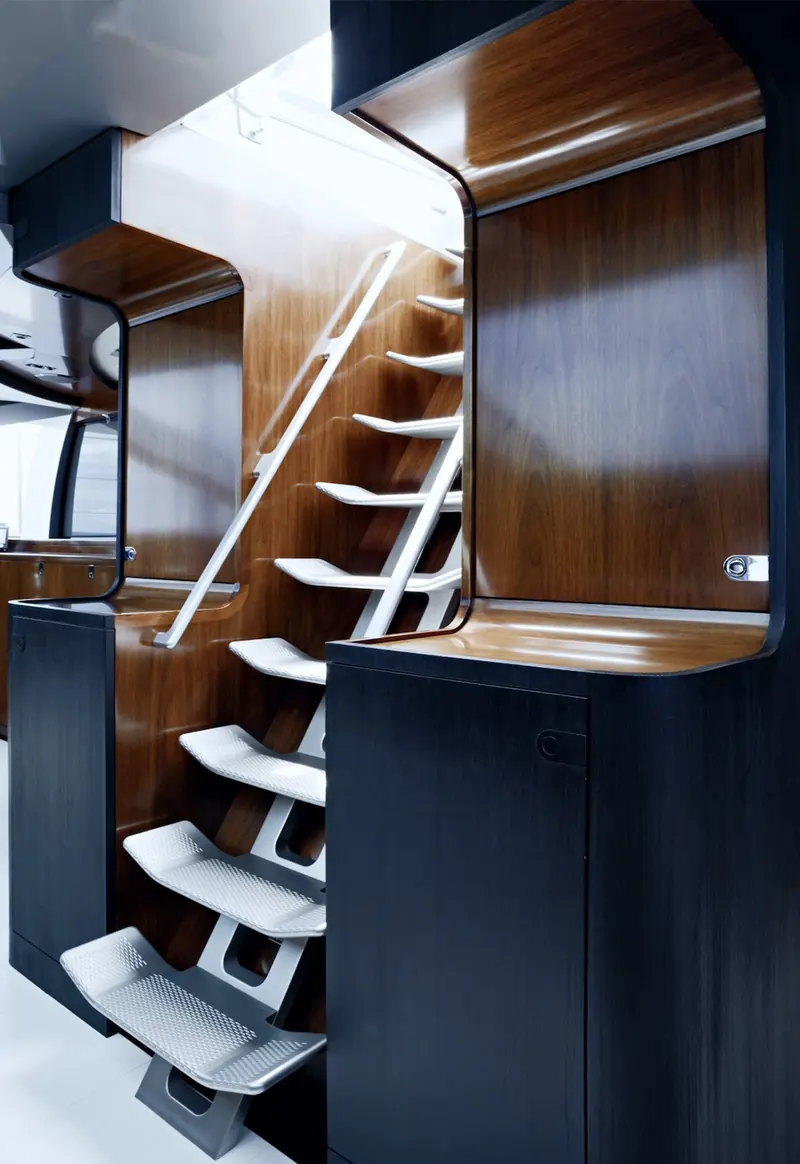
Rosehearty was built for Rupert Murdoch and delivered by Perini Navi in 2006, her interior finished in Hermes leather, ebony and pale oak across seven cabins for 14 guests, including a seventh stateroom that was unusual for a Perini Navi sailing yacht at the time (Yacht magazine, Northrop and Johnson). Seahawk followed from the same yard in 2013 at around 58.5 metres and took the Holistic Design Award at the 2014 Showboats Design Awards, a prize specifically for the fit between exterior and interior design, with a master cabin built around a custom stainless-steel sink as its signature detail (Boat International, Yachting Pages). Cloudbreak, a 75.3 metre explorer motor yacht built by Abeking and Rasmussen with exterior styling by Espen Oeino, was delivered in 2016 to owner Alexander Svetakov; her main saloon and dining space were designed around the warmth of a ski chalet rather than a marina look, connected by a 60 metre lower-deck corridor running from the beach club to the guest cabins and crew quarters, and she took both a Neptune at the World Superyacht Awards and Best Interior Layout and Design at the Showboats Design Awards in 2017. SuperYachtsMonaco's Jim Evans called the result 'just timeless, beautiful design'.
SL44, a 44.5 metre Sanlorenzo, is the outlier: delivered after Christian Liaigre's death, designed to an owner brief for 'Asian style with a French touch' and led on the studio side by Guillaume Rolland rather than the founder, it still won its category at the 2022 World Superyacht Awards (Liaigre's own site, Galerie magazine). Rolland described the approach as working in diagonal perspective rather than 'rectangle boxes with a window that goes in each one', using dark, glossy reflective surfaces to double the sense of the water outside, with narrow, rounded door frames and crystal terrariums referencing bonsai as the Asian-influenced details against a base of green and white onyx, wood and leather. It is the clearest evidence the yacht studio can still win at this level without him, which matters more to a prospective client today than any of the earlier boats.
Who actually runs the yacht side of the studio today
Rolland worked on all five confirmed yacht projects in one capacity or another and describes his approach as function before decoration: 'the bathroom or a spa is a place where you cannot lie, it tests your skills as a designer,' and 'it's quite vulgar to make a tap a feature, because it's just a tap, it simply needs to function' (Boat International). That is a useful thing for a prospective owner to hear, since it argues directly against the kind of showroom-luxury excess Liaigre's aesthetic has always positioned itself against.
Above Rolland sits Christophe Caillaud, chief executive since 2009 and the person who oversaw both the 2016 sale to Chanintr Living and the studio's later expansion into new flagship showrooms and, most recently, its first branded-residence project with Capella Hotels. Neither Caillaud nor longtime creative collaborator Frauke Meyer has a yacht-design background specific to boats; the yacht work runs substantially on Rolland's personal continuity rather than on the wider leadership around him, and that is exactly the kind of detail a buyer weighing design pedigree should ask about directly before committing to a multi-year build.
Informations pratiques
| Design fee | not published for Liaigre specifically. The general market band for yacht interior design is 1 to 5 per cent of build cost plus 2 to 4 per cent project management (SuperYachtReview 2026 price guide, updated March 2026), the only public benchmark available |
|---|---|
| What the studio covers | interior design, generally working alongside a separate exterior stylist or naval architect (Philippe Briand on Vertigo, Espen Oeino on Cloudbreak); no naval architecture in house |
| Studio size and base | around 30 design professionals in Paris across all sectors combined (residential, hospitality, furniture and yachting); the yachting department's own headcount is not published |
| Current leadership and ownership | Christophe Caillaud, chief executive since 2009; Guillaume Rolland, design principal since 2024 and head of the yachting department since 2014; owned since 2016 by Chanintr Living together with the family of Pierre Chen, Navis Capital Partners and Symphony International Holdings |
| What is not published | Liaigre's yacht design fees, the yachting department's headcount, and how many yacht projects are in progress at any one time |
Ce que rapportent propriétaires et équipages
The Vertigo owner's brief was explicitly against the standard nautical interior
having seen Liaigre's hotel work in New York and its interior on Rupert Murdoch's Rosehearty, the owner asked for the same feeling at sea, distilled to three words, 'Urban at Sea', rather than a traditional yacht interior
the Vertigo owner, reported by Boat InternationalCloudbreak's captain frames the boat around a first-there exploration ethos
'act as if you are the first guy there, don't believe anyone or rely on charts, use your eyes,' a navigation philosophy the interior had to support on long, remote passages rather than marina-hopping
Max Cumming, Cloudbreak captain, quoted by Boat InternationalA yacht-press verdict on Cloudbreak's interior specifically
'just timeless, beautiful design', a short but specific verdict from a Monaco-based yacht press figure rather than a repeat of the studio's own project description
Jim Evans, SuperYachtsMonacoNo further independently attributable owner testimony found
search covered Rosehearty, Seahawk, Cloudbreak, Vertigo and SL44 and turned up award citations, studio and press descriptions, and the two owner and crew lines above, but no further named owner interview specific to the interior design
Yotters research desk
Les points forts et les points de vigilance
Points forts
- A genuinely first-rank residential and hospitality reputationthe Hotel Montalembert (1990), the Mercer Hotel New York (1997) and a client list including Calvin Klein, Rupert Murdoch, Larry Gagosian and Karl Lagerfeld were all built before any yacht work; the pedigree an owner buys on a boat is real, earned on land over three decades, not a claim invented for the yacht press
- One person of real continuity through every yacht the studio has builtGuillaume Rolland has been with the studio since 2002, worked on all five confirmed yacht projects, and became design principal for the whole house in 2024; the design line did not vanish when Christian Liaigre stepped back or died
- A consistent award record across four different yards and three decadesVertigo (Alloy Yachts), Seahawk and Rosehearty (Perini Navi), Cloudbreak (Abeking and Rasmussen) and SL44 (Sanlorenzo) collected World Superyacht and Showboats Design Awards spread from 2012 to 2022, not one lucky boat early in the studio's history
- An aesthetic that reads as residential-grade rather than boat-brochure luxurythe walnut, oak and leather palette and Rolland's function-first philosophy, put directly as 'it's quite vulgar to make a tap a feature, because it's just a tap, it simply needs to function', are a genuine alternative to gloss-lacquer superyacht default
Points de vigilance
- The founder is gone, and the company changed hands the same decade he stepped backChristian Liaigre died in 2020 having already given up day-to-day control around 2016, the same year the company itself was sold to Chanintr Living; an owner today is buying a name and a process inherited by other people, and should ask directly how much of the current design leadership actually worked alongside him
- Yacht design is a small, occasional sideline, not a specialismfive confirmed yachts across roughly three decades against dozens of hotels and residential commissions; this research found no evidence of the dedicated yacht-engineering and project-management depth that a full-time yacht design house builds up over many more projects
- No published design fee, and thin independently sourced owner commentaryno public fee figure for Liaigre's yacht work was found anywhere in this research, and almost everything written about the yacht projects traces back to the studio's own material or boat-show press rather than a buyer's own account
- Leadership above the yacht desk has no yacht-specific pedigreechief executive Christophe Caillaud came from running Jean Paul Gaultier's business side, not yacht or furniture design, and longtime creative collaborator Frauke Meyer's public profile centres on the residential and furniture side of the house, not boats; the yacht work runs on Rolland, not on the wider leadership around him
Pour qui: Owners who want a genuinely first-rank name in French residential and hospitality minimalism carried to sea, and who accept going in that the founder is gone, that leadership above the yacht desk changed hands in 2016, and that yacht design remains a small, occasional part of what the studio does rather than its core specialism.