De Jorio Design
| Founded | 1956 in Genoa as Studio De Jorio by the architect Giuseppe de Jorio |
|---|---|
| Eight generations | the studio's own count of architects and designers trained in its office since 1956, not family generations. Cruise Ship Odyssey says ten |
| De Jorio Design International | set up in 2000 by Giuseppe de Jorio with his sons Marco and Vittorio |
| Current entity | De Jorio Design Swiss S.A., founded 2022 and based in Lugano, after De Jorio Luxury and Yacht Projects S.r.l. in 2019 |
| Led by | Marco de Jorio, chief executive since 2016, with his brother Vittorio de Jorio |
| Disciplines | exterior and interior design for yachts, cruise ships, ferries and residences, with naval architecture listed as a service |
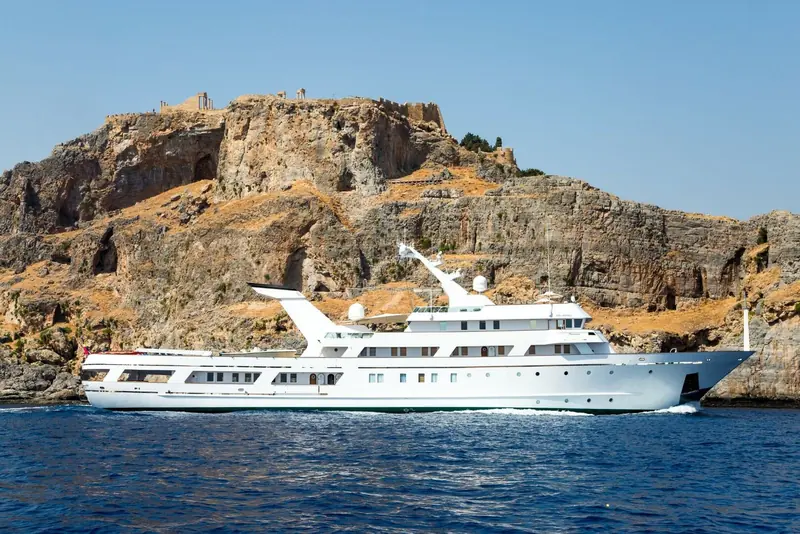
| Esmeralda | 62 m, Codecasa, 1981, 1,002 GT, exterior by Giuseppe De Jorio, naval architecture by Ugo Codecasa |
| El Bravo, now Shahnaz | 63.49 m, Nuovi Cantieri Liguri, 1991, 1,134 GT, exterior and interior by Giuseppe De Jorio |
| Fulk Al Salamah | 164 m, T. Mariotti, delivered 2016 for the Omani royal fleet. Superyacht Times credits exterior and interior to the studio, BOAT International credits the exterior to Mariotti |
| Jupiter | 83.7 m hybrid concept with T. Mariotti, presented 2024, not built |
| Cruise work | Costa, Disney Magic, MSC and Explora Journeys, plus interiors for the aircraft carrier Cavour in 2000 |
| Design fee | not published. Market reference is 1 to 5 per cent of build cost for a designer plus 2 to 4 per cent for project management (SuperYachtReview, March 2026) |
| Not included | construction, owner's supervision and classification, and on past yachts naval architecture came from the yard's side |
Genoa, 1956
Giuseppe de Jorio founded the studio in 1956 and made his name on passenger ships rather than private boats. The studio's own history dates his first major commission to 1961, when Lloyd Triestino chose him as interior architect for the liner Guglielmo Marconi. Through the following decades the office drew motor yachts for private owners and for the yards of Genoa and Viareggio alongside a steady run of liners and ferries. The Genoa office of the international company is still listed at Piazza della Vittoria in the SuperyachtNews directory.
The family story reaches further back than 1956. Marco de Jorio told Cruise and Ferry in 2023 that he likes to think he is following in the footsteps of an ancestor, Michele De Jorio, who drafted a maritime code for Ferdinand IV of Naples in 1779. That is a family account, not a design credential, and it is best read as colour. What matters to a yacht owner is that this is a studio whose habits were formed on ships carrying thousands of passengers, where circulation, fire zoning and crew flow are not optional.
What the eight generations claim actually means
The studio's profile in the SuperyachtNews directory says that eight generations of architects and designers have been trained there since it was established, and describes the office as a laboratory of qualified professionals. Cruise Ship Odyssey, profiling the Swiss company, gives the figure as ten generations trained. The two numbers disagree and neither can be checked from outside, so the honest reading is that this is the studio's own measure of how many intakes of staff it has schooled, and that the exact count depends on who is counting.
The family succession is simpler and documented twice. Marco de Jorio took his architecture degree at the universities of Genoa and Rome in 1986 and joined his father's studio. The studio's own history says both sons joined in 1986, while Cruise Ship Odyssey places them in the 1990s. Marco has described the division of labour to the Cruise Ship Interiors Expo: he runs the creative side from concept to execution, his brother Vittorio built his skills in coordination and managed building drawings for Fincantieri, and their father handled management and administration. Marco became chief executive in 2016.
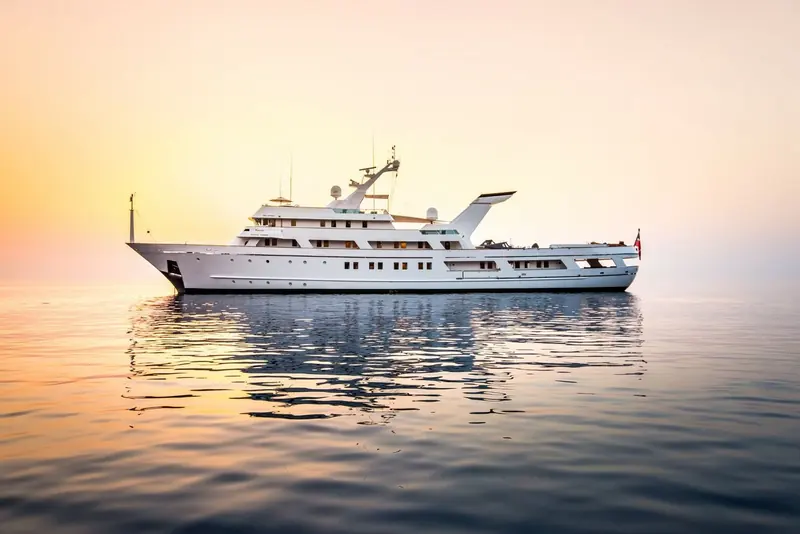
A ship architect's studio that styled a 62 metre yacht in 1981 and fitted out a 164 metre royal ship in 2016, and is still selling its next one as a sculpture.
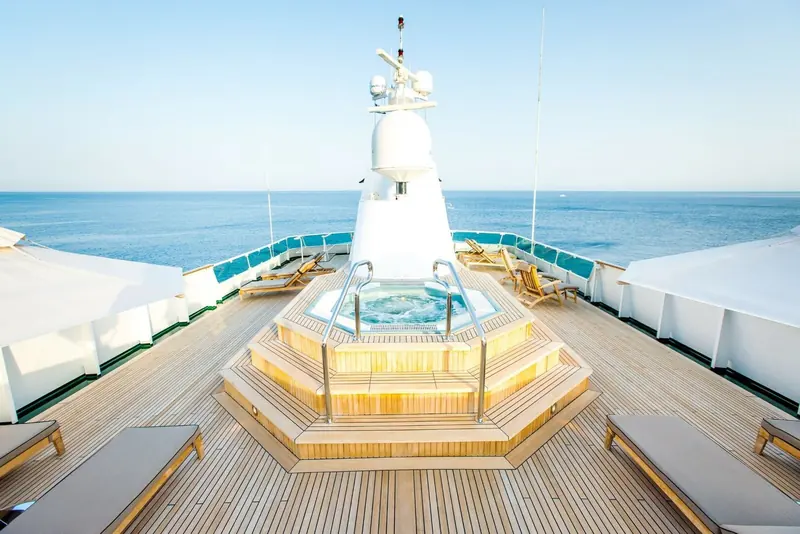
Esmeralda, 1981
BOAT International's directory lists Esmeralda at 62 metres and 1,002 GT, built in steel with an aluminium superstructure by Codecasa at Viareggio, with naval architecture by Ugo Codecasa and exterior design by Giuseppe De Jorio. Two MAK diesels give a top speed of 15 knots and a range of 5,000 nautical miles at cruising speed, figures repeated by CharterWorld. She has carried the names Luisella, Taouey and Maria Alexandra, and the charter listings put her crew at 19.
For 1981 she was a large private yacht, and her profile is the long, low and raked Mediterranean idiom a ship architect could deliver with authority. Her interior has not stayed frozen. BOAT International now credits it jointly to Giuseppe De Jorio and H2 Yacht Design, and CharterWorld records a major refit in 2001. BOAT International's charter listing quotes USD 230,000 a week in standard season and USD 250,000 in high season. For an owner the lesson is that a De Jorio exterior has aged well enough to justify refitting around it rather than replacing it.
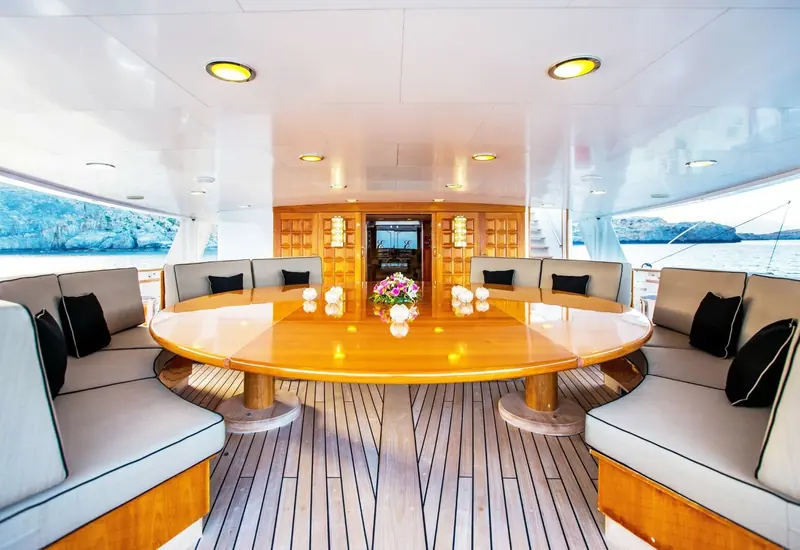
El Bravo and the early 1990s
BOAT International lists Shahnaz, formerly El Bravo and El Bravo of Cayman, at 63.49 metres and 1,134 GT, built at Pietra Ligure by Nuovi Cantieri Liguri and delivered in 1991. Naval architecture is credited to Vincenzo Ruggiero and both exterior and interior to Giuseppe De Jorio. Two Deutz MWM diesels give 17 knots and a stated range of 7,000 nautical miles. The studio's own history lists El Bravo as a 1991 motor yacht among its selected projects, which gives the attribution a second source.
Marco de Jorio told Cruise and Ferry in 2023 that his first interior designs were for the El Bravo motor yacht, which he described as 65 metres long. The registries give 63.49 metres, so read his figure as a round number from memory. The same interview credits the studio with the Prince of Monaco's sailing yacht Stalca II in the early 1980s, a project no independent registry we checked attaches to the studio, so it is reported here as his account only. In parallel the studio was pushing cruise interiors toward contemporary design, starting with Costa's Enrico C in 1990.
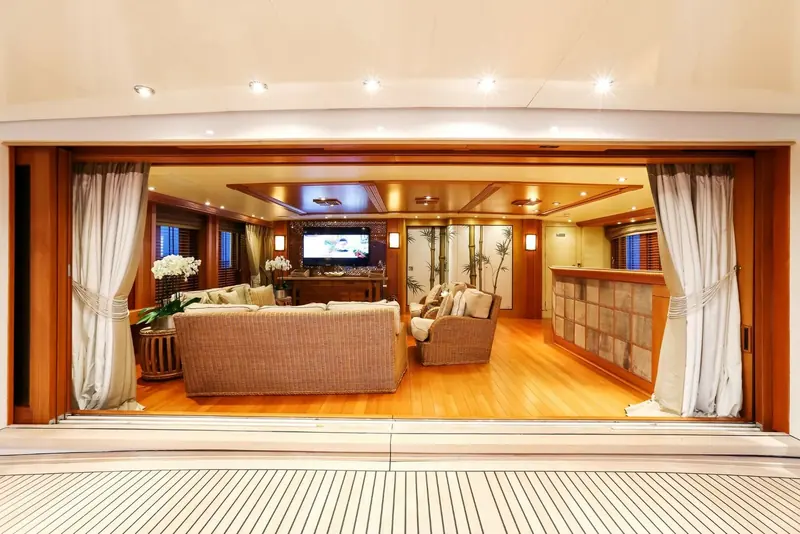
From Studio De Jorio to a Swiss company
Marco and Vittorio de Jorio set up De Jorio Design International with their father in 2000, a date given both by Cruise and Ferry's 2023 profile and by the Cruise Ship Interiors Expo. The studio's own history then records De Jorio Luxury and Yacht Projects S.r.l. in 2019 and De Jorio Design Swiss S.A. in 2022, and Cruise Ship Odyssey places the group in Lugano. The Genoa address remains on file in industry directories. Registries still credit older yachts to Studio de Jorio or to Giuseppe De Jorio personally.
The work under those names is broad. The studio lists cruise ships for Costa, Disney, MSC and Explora Journeys, the Italian navy aircraft carrier Cavour in 2000 and residential projects in Dubai and Lugano. In 2023 the Cruise Ship Interiors Awards credited De Jorio Luxury, with Explora's in house architecture team and Nenmar, for the Ocean Suite on Explora I. Marco de Jorio names Fincantieri, T. Mariotti, Sanlorenzo and Chantiers de l'Atlantique as the yards the studio has worked with most. Yachts are one line of business among several.
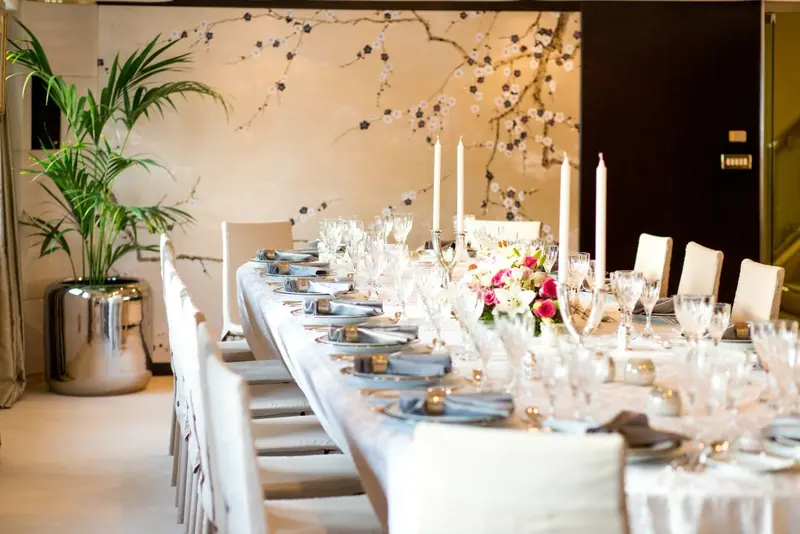
Fulk Al Salamah
Fulk Al Salamah began as Project Saffron, announced in 2014, and left Mariotti's Genoa yard for Muscat on 28 July 2016, as reported by BOAT International and repeated by Wikipedia. She runs on four Wartsila diesels in a diesel electric plant and serves the royal yacht Al Said, and at 164 metres she is among the longest private vessels afloat. Published gross tonnage figures disagree widely, 11,000 GT in BOAT International against 20,361 GT on Wikipedia, so no tonnage is given here.
Marco de Jorio told Cruise and Ferry in 2023 that the studio designed the new flagship mega yacht for the ruler of Oman, and his studio's yacht portfolio carries a large royal project with a winter garden, gym and staff lounges. The credit split matters. A reader should take the interior as De Jorio's work, supported by Superyacht Times and the studio, and treat the exterior credit as disputed between the studio and the yard. Either way the project shows a studio able to deliver interiors on a ship scale for a head of state.
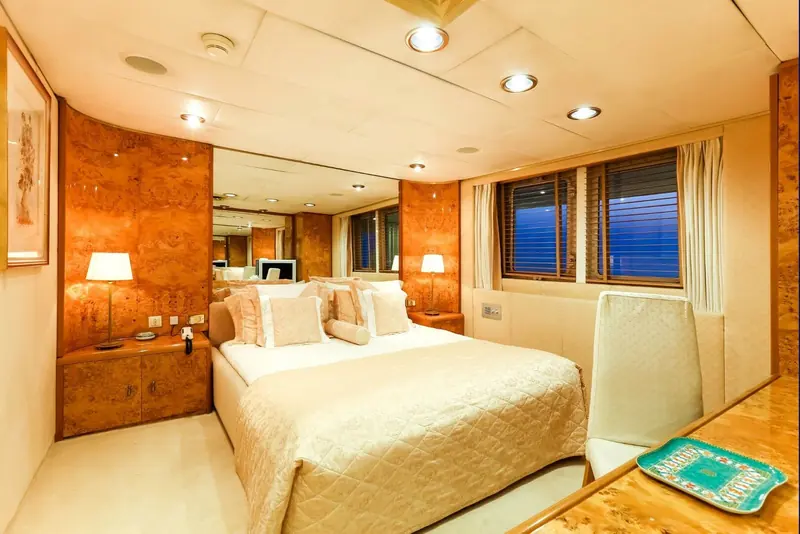
Jupiter, the 83.7 metre concept
The studio unveiled Jupiter at an art evening at its Lugano premises on 22 and 23 May 2024, staged with the Deodato Art Gallery against an exhibition of original Andy Warhol works. The sculptor Daniele Fortuna finished a model of the yacht live in front of guests. A fuller announcement on 27 August 2024 gave her length as 83.7 metres, described her as a prototype developed with the T. Mariotti shipyard in a hybrid version and called her a floating work of art that preserves functionality and ergonomics.
Every Jupiter figure comes from the studio. We found no independent report of a buyer, a hull number, a propulsion specification or a delivery date, and the images published are renders. That is normal for a concept, but it means Jupiter tells an owner how the studio wants to be seen rather than what it has built recently. An owner considering De Jorio for a new build of that size should ask how much of the engineering behind the hybrid label Mariotti has actually done, and whether the concept has been costed.
Fees and what they do not cover
Those market bands come from the SuperYachtReview cost guide updated in March 2026, which treats the designer's fee and project management as soft costs outside the per metre build price. A separate 2026 guide from the DRAFTXL studio describes the usual structure, fees quoted per phase or as a percentage of build value so an owner can commission stage by stage through concept, preliminary and detailed design. Neither source names De Jorio, and nothing public tells us where in the band this studio sits.
What an owner should assume is not included is as important as the fee. A design studio does not build the boat, does not supervise construction on the owner's behalf and does not run classification, which belongs to the yard and the society. On Esmeralda and El Bravo the naval architecture was credited to the yard's side, Ugo Codecasa and Vincenzo Ruggiero, and the pattern on Fulk Al Salamah looks similar. So an owner should budget separately for naval architecture where the yard does not supply it, for an independent owner's representative and for class.
Working with the studio
Marco de Jorio's own account of the method, given to Cruise and Ferry, is that materials are used to influence mood and perception and that the studio keeps an extensive library of patterns and textures and a dedicated signage department. He told the Cruise Ship Interiors Expo that Italian taste is expressed through formal elegance and refined details, and dismissed what he called Las Vegas style. The studio's own yacht page says it designs interiors and exteriors with a tailor made approach, and Cruise Ship Odyssey says it aims for an integrated product across both.
In practice that suggests a process built around a shipyard's schedule. The cruise side of the business works to drawings coordinated with Fincantieri, a skill Vittorio de Jorio built there, and the royal Omani project ran through Mariotti's engineering office. An owner should ask at the outset who produces the general arrangement, who owns the structural and systems drawings and how many of the studio's current staff are dedicated to yachts rather than ships and residences. That answer determines how much the owner must appoint around the studio.
Strengths and trade-offs
The strengths are real. The studio has drawn yachts that are still working decades later, Esmeralda since 1981 and El Bravo since 1991, and has delivered interiors for one of the largest private vessels in the world. Its cruise work has given it deep experience of fire zoning, circulation and crew flow at a scale few yacht studios reach, and long standing ties with Mariotti, Fincantieri and Sanlorenzo. For a large ship-like yacht that experience is directly useful.
The trade-offs are just as clear. The delivered yacht record in the registries is thin after 2016, and the most visible recent project, Jupiter, is a concept. Attribution is often confused: BOAT International lists the 2019 Sanlorenzo explorer Amo under Studio De Jorio and the studio shows it in its portfolio, while charter listings credit her interior to Francesco Paszkowski Design. The frequent changes of company name make due diligence harder. We found no published account from a yacht owner or a yard project manager about working with the studio, which an owner should ask to hear directly.
Informations pratiques
| Design fee | Not published; quoted per commission. Market reference 1 to 5 per cent of build cost for the designer, plus 2 to 4 per cent for project management (SuperYachtReview cost guide, March 2026). |
|---|---|
| What is NOT included | Construction, independent owner's supervision and classification. On Esmeralda and El Bravo naval architecture came from the yard's side (Ugo Codecasa, Vincenzo Ruggiero), so budget for it separately if the yard does not supply it. |
| Recent yards worked with | T. Mariotti (Fulk Al Salamah 2016, Jupiter concept 2024), Sanlorenzo, Fincantieri and Chantiers de l'Atlantique on the cruise side. |
| What to check before commissioning | Which studio entity signs the contract, a verified list of delivered yachts with the exact scope on each, who produces the general arrangement and systems drawings, and references from a yacht owner or yard project manager. |
| Design process an owner should expect | Interior-led concept built around materials and mood, developed with the yard's engineering office through concept, preliminary and detailed design, with exterior styling offered alongside. |
Ce que rapportent propriétaires et équipages
El Bravo was where Marco de Jorio began
Marco de Jorio told Cruise and Ferry that his first interior designs were for the El Bravo motor yacht, which he called 65 metres long. Registries list her at 63.49 metres, delivered 1991 by Nuovi Cantieri Liguri, now named Shahnaz.
Marco de Jorio, chief executive, De Jorio Design, interviewed by Rebecca Gibson, Cruise and Ferry, June 2023The studio claims the Omani royal flagship
In the same interview Marco de Jorio said the studio designed the new flagship mega yacht for the ruler of Oman. Superyacht Times credits Fulk Al Salamah's exterior and interior to Studio de Jorio. BOAT International credits her exterior and naval architecture to Mariotti, so the exterior credit is disputed.
Marco de Jorio, chief executive, De Jorio Design, Cruise and Ferry, June 2023Italian elegance over spectacle
Describing the studio's approach, Marco de Jorio said Italian taste is expressed through formal elegance and refined details, and called Las Vegas style shocking and boring. This is the designer's own view of his work, not an owner's.
Marco de Jorio, chief executive, De Jorio Design, Cruise Ship Interiors Expo spotlight interviewJupiter is described by the studio, not by a buyer
The studio's announcement calls the 83.7 metre Jupiter a floating work of art that preserves functionality and ergonomics, developed with T. Mariotti in a hybrid version. No independent report of a buyer or build exists, and no yacht owner or yard project manager has published an account of working with the studio that we could find.
De Jorio Design Swiss, studio's own announcement, 27 August 2024
Les points forts et les points de vigilance
Points forts
- Yachts that are still working decades laterEsmeralda of 1981 and El Bravo of 1991 are both still in service and chartering or listed, and Esmeralda had a major refit in 2001 with her De Jorio exterior kept.
- Ship-scale interior experienceDecades of cruise ship work for Costa, MSC and Explora and the interiors of the 164 metre Fulk Al Salamah give the studio unusual depth on circulation, fire zoning and crew flow in very large hulls.
- Deep Italian yard relationshipsLong standing work with T. Mariotti, Fincantieri, Sanlorenzo and Codecasa means the studio knows how Italian yards engineer and schedule a build.
Points de vigilance
- Thin recent delivered yacht recordRegistries show no clearly attributed delivered yacht after 2016, and the flagship recent project, Jupiter, is an unbuilt concept with studio-only figures.
- Confused attributionCredits are split between Studio de Jorio, Giuseppe De Jorio and yards, the Fulk Al Salamah exterior is disputed, and the 2019 Sanlorenzo Amo is claimed by the studio while charter listings credit Francesco Paszkowski Design.
- Yachts are a minority of the businessCruise ships, ferries and residences dominate the studio's portfolio, and no independent owner or yard account of a yacht commission is published.
Pour qui: Owners of large, ship-scale motor yachts who want classic Italian interior elegance from a studio used to working inside a major Italian yard's engineering system.