Foster + Partners Yacht Design
| Founded as Foster Associates in 1967 by Norman Foster, later Sir Norman Foster and Partners in 1992 and Foster and Partners from 1999 | |
| First yacht commission was Izanami, a 58.5m (191ft) Lurssen motor yacht delivered in 1993, styled by Foster with naval architecture by Gerhard Gilgenast | |
| Izanami was bought by Larry Ellison in 1999 and renamed Ronin after San Francisco reporters noted her original name spelled backward read as an offensive phrase, per Ellison's own 2013 biography Softwar | |
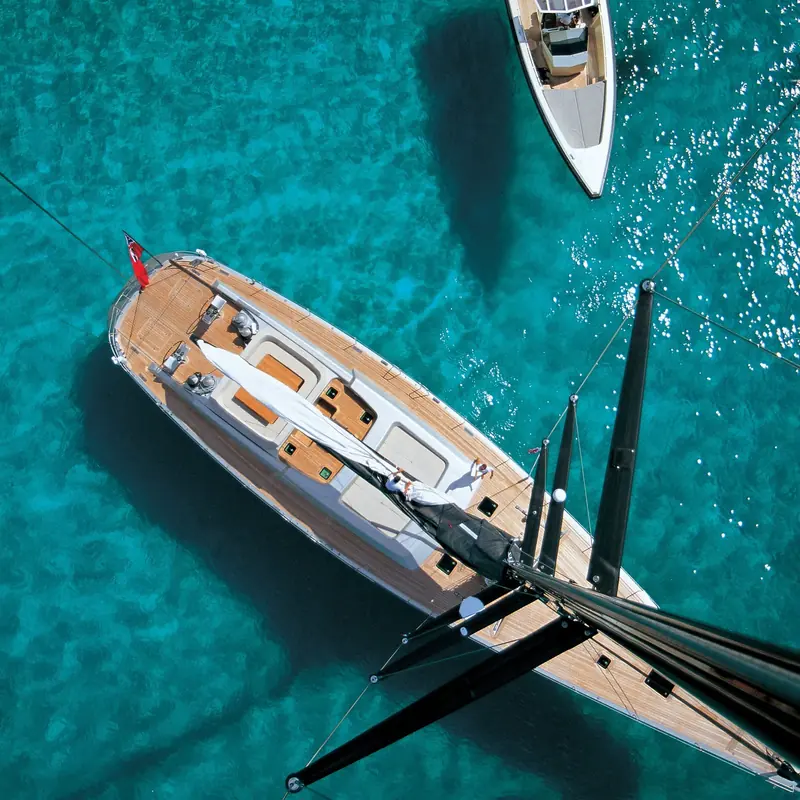
| Designed the interior of Dark Shadow, a 30.45m Wally regatta sailing yacht built in 2002 with exterior and naval architecture by German Frers | |
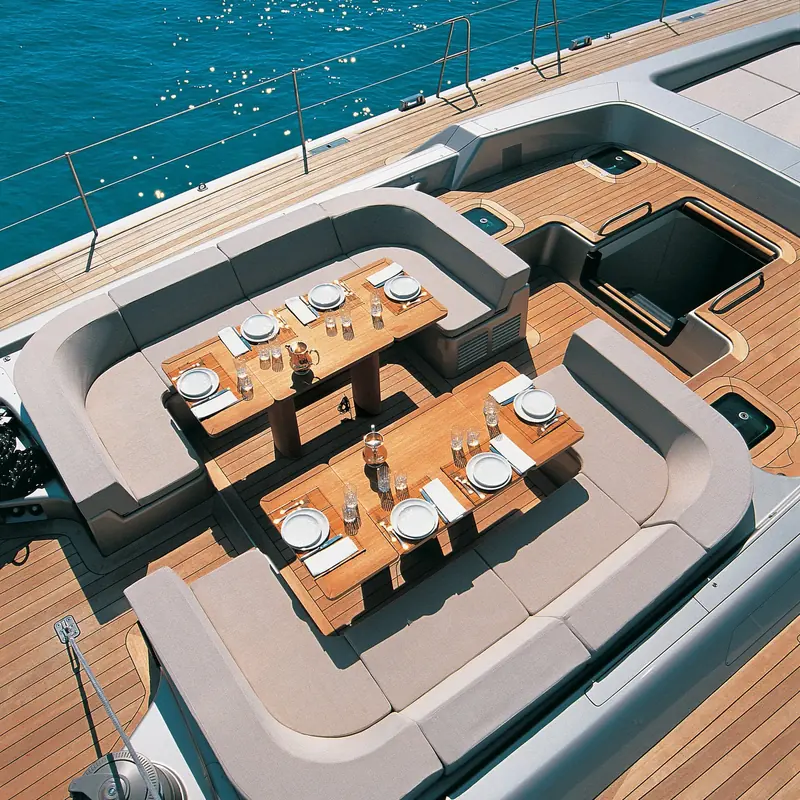
| Led the interior of Panthalassa, a 56m Perini Navi ketch delivered in 2010, under senior partner David Summerfield, who joined the firm in 1992 | |
| Designed the YachtPlus Signature Series, three identical 41m fractional-ownership motor yachts named Ocean Emerald, Ocean Pearl and Ocean Sapphire, built by Rodriquez Cantieri Navali in 2009 and 2010 | |
| Designed the Alen 68, a 20.32m (68ft) day boat launched in 2014 with Turkish builder Alen Yacht, the first hull named Iguazu and fixed-priced at 3.78 million dollars per Dezeen | |
| Unveiled the Outlier I, an 88m megayacht concept, at the 2025 Monaco Yacht Show with Lateral Naval Architects, led by senior partner Adam Newburn's newly created marine studio | |
| Every project pairs the practice with an outside naval architect rather than an in-house one: Gerhard Gilgenast, German Frers, Rodriquez, Ron Holland Design and Lateral have all filled that role in turn | |
| Panthalassa's owner since 2020, Oakley Capital founder Peter Dubens, is one of the few named yacht owners on record praising a Foster interior directly |
How an Architecture Firm Ended Up Building Yachts
Norman Foster opened his own practice as Foster Associates in London in 1967, building a reputation on airports, offices and bridges long before any boat carried his name. His own sailing kept pulling at the edges of that work, and in 1993 it produced Izanami, a 58.5 metre (191ft) motor yacht built by the German yard Lurssen for a Japanese businessman. Foster styled the yacht himself, while naval architect Gerhard Gilgenast, who had already designed high-speed custom yachts, drew a hull taken from patrol-boat lines rather than a conventional displacement shape, giving the boat a top speed past 30 knots that was unusual for her size at the time.
Izanami's second life is better known than her first commission. Larry Ellison bought her in 1999, and San Francisco reporters soon pointed out that her name, taken from a Shinto creation deity, read backward as an offensive phrase. Ellison wrote in his 2013 biography Softwar that he faced a choice between explaining Shinto mythology to the press or renaming the boat, and chose to rename her Ronin. He later sold her on, and the yacht, refit in 2023, is still marketed under that name today. The episode set a pattern that has held for three decades since: Foster and Partners takes on a yacht every few years as an individual commission rather than running a standing marine division.
A Practice, Not a Yacht Studio
Summerfield joined Foster and Partners in 1992, made partner in 2007 and became a head of studio in 2008, running major projects such as the McLaren Technology Centre and the Monaco Yacht Club alongside hotels in Turkey and Mauritius. Marine work has run through his career rather than sat beside it: he led the interior of Panthalassa, the 56m Perini Navi ketch, from the project's inception, telling Boat International that he personally had not designed a yacht before it despite sailing himself, and that a boat's brief is more codified from the outset than a house, which allows for a more artisanal back and forth as the design evolves.
That personal, project-by-project structure changed shape in 2025, when senior partner Adam Newburn, who joined the firm in 2007 and had been working on Red Sea resort projects, was named to lead a newly created marine studio inside the practice. Its first public work was the Outlier I concept, developed with the specialist naval architecture firm Lateral rather than an in-house engineering team, which is itself the constant across every Foster and Partners yacht: the practice supplies the architecture and interior, and a different outside naval architect (Gilgenast, German Frers, Rodriquez, Ron Holland Design or Lateral, depending on the project) supplies the hull engineering.
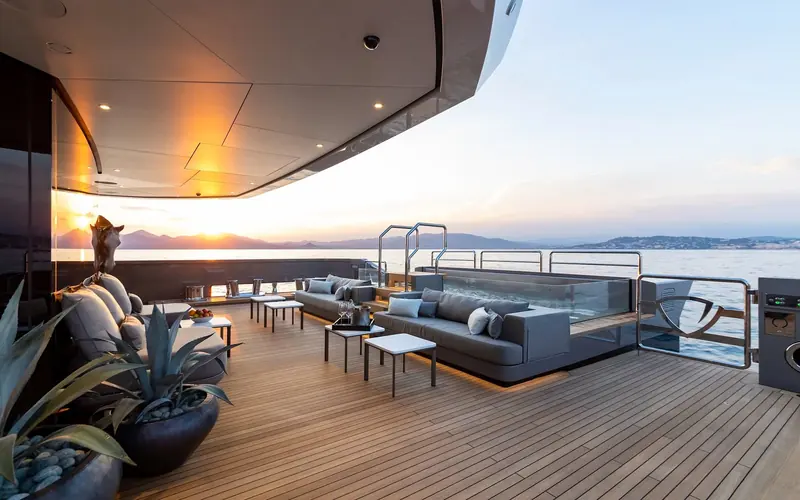
A yacht by Foster and Partners reads like a piece of architecture that learned to float, drawn by a firm that treats the hull as a building elevation and hands the keel to whichever naval architect it is working with that year.
The Delivered and Concept Fleet
After Izanami, the practice's next credited yacht was Dark Shadow, a 30.45m high-performance sailing yacht built by Wally in 2002, where naval architecture and exterior styling came from German Frers and Foster and Partners supplied the interior; she remains active on the regatta circuit and was refitted in 2019. Panthalassa followed in 2010, a 56m aluminium ketch built by Perini Navi in Viareggio, with the exterior a collaboration between the yard's in-house design team and Ron Holland Design while Foster and Partners, under David Summerfield, designed the interior from the fly deck down. The firm's largest single commercial effort came next: the YachtPlus Signature Series, three identical 41m fractional-ownership motor yachts named Ocean Emerald, Ocean Pearl and Ocean Sapphire, built by Rodriquez Cantieri Navali and launched in 2009 and 2010, with a reported fourth hull announced for early 2011 whose delivery this profile could not independently confirm.
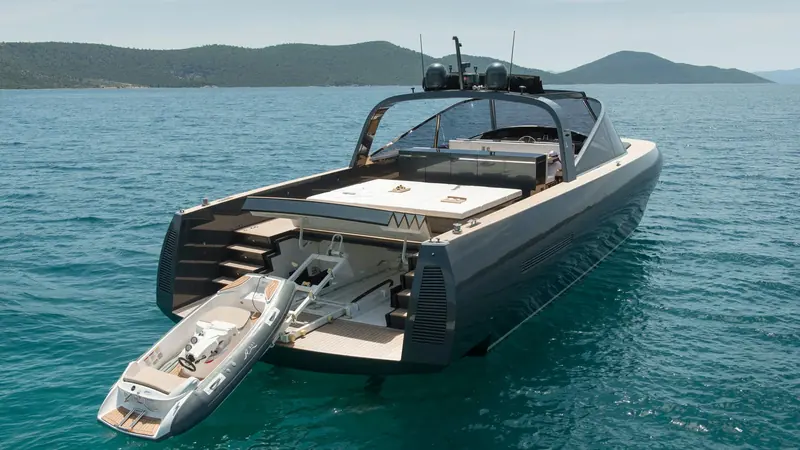
In 2014 the practice moved to a much smaller scale with the Alen 68, a 20.32m day boat built by the Turkish yard Alen Yacht, capable of 45 knots on twin V12 diesels and sold as a fixed-price production model rather than a one-off; the first hull, named Iguazu, carried a published price of 3.78 million dollars. The most recent addition is not a delivered yacht at all: Outlier I, an 88m, roughly 2,000 gross tonne concept unveiled at the 2025 Monaco Yacht Show, moves the engine room toward the bow to free a triple-height atrium amidships, a real design study rather than a boat under construction.
What a Commission Actually Costs
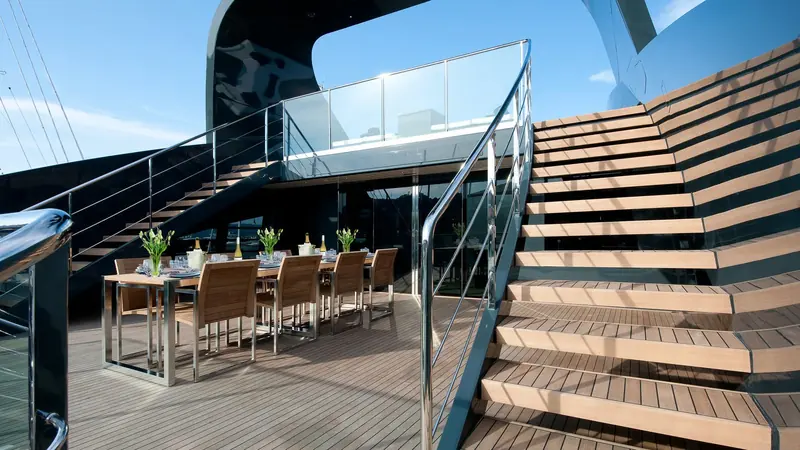
No fee schedule, day rate or commission percentage appears anywhere in the practice's own materials or in the trade press reviewed for this profile, which is consistent with how its yacht work has been commissioned: through yards and owners engaging the firm directly on a per-project basis rather than through a marketed design service. The clearest public numbers instead come from the boats themselves. Fast Company reported the YachtPlus flagship Ocean Emerald at roughly 24 million dollars in 2009, and SherpaReport documented the fractional structure sold alongside her: an initial fee of 1.85 million euros plus 200,000 euros a year bought 34 guaranteed days aboard annually, with a team of seven Foster and Partners architects reported to have spent fifteen months on the design.
At the opposite end of the scale, the Alen 68's first hull, Iguazu, was sold as a fixed-price product at 3.78 million dollars in 2014, a rare instance of a Foster and Partners yacht carrying a sticker price the way a production car would. Generic yacht design cost guides, not specific to this practice, put design and project management fees on highly customized large yachts at roughly 10 to 25 percent of build cost, which would frame a boat like Panthalassa or Ocean Emerald without giving a buyer any actual number to work from. An owner approaching the practice today would be negotiating from a blank page on fees, with only these finished-boat prices as any kind of benchmark.
How Foster and Partners Compares to the Field
Robb Report has grouped Foster among mainstream architects now working in yacht design alongside Rome based Achille Salvagni, the duo Lazzarini and Pickering and Matteo Thun with Antonio Rodriguez, all bringing a building practice's design language to a hull rather than a marine studio's. What sets Foster and Partners apart within that group is scale and duration: Norman Foster's own firm has been doing this longer than most of its residential-architect peers, stretching back to 1993, and its work spans everything from a 20m day boat to an 88m megayacht concept rather than clustering around one size of boat or one shipyard relationship the way Salvagni's work concentrates on Azimut and Rossinavi.
The tradeoff shows up most clearly in how outside critics have treated the results. The Guardian's architecture desk, comparing several architect-designed yachts in October 2013, praised Renzo Piano's Kirribilli for pairing advanced construction with a designer who understood a boat's functional requirements, while treating Foster and Zaha Hadid's yacht work far less kindly, arguing that building architects often chase form over the marine function a dedicated yacht designer would treat as the starting point. That is the central comparison a prospective owner has to weigh: a Foster design brings an architect's authorship and cross-disciplinary reputation to a boat, at the cost of the accumulated marine-specific experience a yacht-only studio like Sinot or Winch Design would bring instead.
Where the Limits Are
Writing in October 2013, The Guardian's architecture desk said Ocean Emerald's stern gave her more the look of an industrial shed than the leaping-dolphin silhouette Foster and Partners had reportedly aimed for, and it questioned the roughly 24 million dollar price against interior finishes it described as an impression of luxury rather than the real thing, calling the effect closer to a budget hotel chain than a five-star one. That is a harsher public verdict than most yacht designers in this pillar attract, and it has not been rebutted anywhere in the trade press reviewed for this profile. A second, quieter gap sits in the business result: this profile could not confirm whether the fourth YachtPlus hull, announced for delivery in early 2011, was ever built, and the fractional ownership company itself has left little public trace since those launches.
A third limitation is structural rather than critical. Because Foster and Partners keeps no in-house naval architecture practice, every yacht depends on finding and coordinating an outside partner capable of engineering the hull the firm has drawn, which is workable on a one-off commission but means the practice cannot offer a buyer the kind of integrated, repeatable engineering pipeline a marine-only studio runs by default. Finally, independent owner testimony is thin: Peter Dubens' praise of Panthalassa is the only named, on-record owner comment about a delivered Foster and Partners yacht that this profile could find, against a body of work that now spans five real boats and one concept across more than thirty years.
Where the Practice Is Headed
Unveiled at the Monaco Yacht Show in September 2025 with naval architecture partner Lateral, Outlier I proposes an 88m hull that relocates the engine room forward, freeing the vessel's midsection for a triple-height atrium with a glass lift and a helical stainless steel staircase connecting several social decks. Newburn described the goal as offering roughly 40 percent more usable deck space than a standard yacht in the same size class, packing amenities such as a swimming pool and a helipad that are normally reserved for yachts above 90 metres into a smaller hull. It is, like all of the practice's yacht work to date except the Alen 68, a concept rather than a confirmed build, so no owner or delivery date has been attached to it.
What Outlier I signals for the practice is continuity rather than a pivot: a newly named studio structure under Newburn replaces the informal, senior-partner-led pattern that carried the firm from Izanami through Panthalassa, but the underlying model is unchanged. Foster and Partners still designs the architecture and interior and still leans on an outside naval architect for the engineering, and it still treats yacht work as an occasional, high-profile commission alongside a much larger building practice rather than a parallel marine business. Anyone reading this profile in a few years' time should expect the next entry in the fleet to arrive the same way every previous one did: announced once, tied to a specific yard, and unrelated to whatever the last one was.
Informations pratiques
| Design fee | Not published by the practice or found in any trade source reviewed. Generic yacht design cost guides, not specific to this firm, cite roughly 10 to 25 percent of build cost for design and project management on highly customized large yachts. |
|---|---|
| What the practice covers | Exterior styling and full interior architecture, paired on every project with an outside naval architect for hull engineering; no in-house marine engineering team. |
| Studio structure | A marine practice inside the wider Foster and Partners architecture firm, led personally by senior partner David Summerfield since the early 1990s and, since 2025, also by a newly created marine studio under senior partner Adam Newburn. |
| Published yacht prices | YachtPlus flagship Ocean Emerald reported at roughly 24 million dollars (Fast Company, 2009), with fractional shares from 1.85 million euros plus 200,000 euros a year for 34 days aboard (SherpaReport). The Alen 68 flagship Iguazu sold at a fixed 3.78 million dollars (Dezeen, 2014). |
| Where the work has gone | Five confirmed delivered yachts across five different yards (Lurssen, Wally, Perini Navi, Rodriquez Cantieri Navali, Alen Yacht) plus one unbuilt concept (Outlier I, with Lateral Naval Architects). |
Ce que rapportent propriétaires et équipages
Panthalassa's owner calls the design cleverer the longer he lives with it
Peter Dubens, founder of the private equity firm Oakley Capital, bought the 56m Perini Navi ketch Panthalassa in 2020 and told Boat International: "The more time you spend on her, the more you realise how clever the design is. It's extraordinary, really amazing." He is, as far as this profile could establish, the only named owner on record praising a delivered Foster and Partners yacht directly rather than through a builder or broker's own marketing copy.
Peter Dubens, owner of Panthalassa, quoted in Boat InternationalNo independent owner testimony found for the other four delivered yachts
Searches of Boat International, Superyacht Times, Dezeen, Robb Report and major brokerage listings for Izanami/Ronin, Dark Shadow, the YachtPlus Signature Series and the Alen 68 turned up builder and broker supplied specifications, design-press coverage of the launches, and in Ocean Emerald's case a hostile newspaper design review, but no named owner, captain or broker commentary evaluating how any of those four yachts actually perform or live up to their design brief.
Yotters research desk
Les points forts et les points de vigilance
Points forts
- A genuinely cross-disciplinary authorial handEvery delivered yacht carries recognisable architectural thinking, from Izanami's patrol-boat profile to Panthalassa's atrium-like interior volumes, rather than a marine studio's standard vocabulary.
- Real range of scale and builderConfirmed work runs from the 20m Alen 68 to the 88m Outlier I concept across five different yards, Lurssen, Wally, Perini Navi, Rodriquez and Alen Yacht, rather than one repeated shipyard relationship.
- Continuity of leadershipDavid Summerfield has carried the firm's marine work personally since 1992, giving three decades of yachts a consistent design sensibility despite the gaps between commissions.
- A named owner's direct, positive testimonyPanthalassa's owner Peter Dubens has gone on record praising the design's cleverness after several years of ownership, rare independent validation in this part of the market.
- Willing to take structural riskThe Outlier I concept's forward engine room is a genuine departure from standard yacht layout logic, the kind of proposal a marine-only studio bound to convention is less likely to publish.
Points de vigilance
- Openly hostile design criticism on recordThe Guardian's architecture desk compared Ocean Emerald's exterior to an industrial shed and her interior finishes to a budget hotel chain, a harsher public verdict than most designers in this pillar attract.
- No in-house naval architectureEvery project depends on sourcing and coordinating an outside naval architect, from Gerhard Gilgenast to Lateral, rather than offering a buyer one integrated engineering team.
- Fee structure entirely undisclosedNo source reviewed for this profile, including the practice's own site, publishes a design fee or commission percentage for yacht work.
- Thin and irregular outputFive delivered yachts and one concept across more than thirty years is a fraction of the output of dedicated yacht design houses working the same period.
- Unresolved business questions on its biggest commercial projectThis profile could not confirm whether the fourth YachtPlus hull announced for 2011 was ever delivered, and the fractional ownership company built around the series has left little public trace since.
Pour qui: An owner who already admires Foster and Partners' buildings and wants that same authorial hand applied to a yacht, most often through a one-off commission at a yard the practice has not necessarily worked with before, rather than a buyer seeking a dedicated marine design house with a long yacht-only back catalogue.