Fulvio De Simoni Yacht Design
| Career start | early 1970s, as a naval designer in Milan |
|---|---|
| Yankee Delta | founded 1977 with Massimo Gregori, until 1983 |
| Italprojects | De Simoni sole owner from 1983 |
| Current studio | Fulvio De Simoni Yacht Design, founded 2015 |
| Career total | more than 3,500 boats built to his designs across all yards |
| Pershing | every model since the first 45-footer in 1985 except the GTX80, more than 2,000 units |
| Largest project by length | Wider 150 (delivered as Genesi, 2015), approximately 46 m, diesel-electric hybrid |
| Rossinavi Nolimits range | five explorer yachts, 30 to 63 metres |
| Recent project | a fully electric catamaran for Rossinavi, reported 2026 |
| Other yard relationships | Antago, Ars Mare, Mochi Craft, Ilver, Gianetti, Raffaelli, Abacus Marine, Astondoa, Austin Parker, Evomarine, Galart, Inace, Rodman, Trojan, Ocea Yacht |
| Disciplines | exterior design, interior design and naval architecture, in-house |
From Milan in the 1970s to a Studio Bearing His Own Name
De Simoni's career runs longer than almost any other name in this directory - he began working as a naval designer in Milan in the early 1970s, at a time when Italian production boatbuilding was still finding the styling language it would become known for globally. In 1977 he founded Yankee Delta together with Massimo Gregori, a partnership that lasted until 1983, when De Simoni took sole ownership and renamed the practice Italprojects. Across those decades and the yards that followed, more than 3,500 boats have been built to his designs, a figure specific enough - and repeated consistently enough across independent profiles - to be treated as a real career total rather than a rounded marketing claim.
Fulvio De Simoni Yacht Design, the studio operating under his own name today, was founded in 2015. Barche Magazine's own profile of him describes the founding as a deliberate choice to build on what he had established across the earlier practices rather than start again - continuity of a design language developed over four decades, carried into a studio that could outlast any one yard relationship. That framing matters for a reader comparing him to newer studios in this directory: De Simoni's body of work substantially predates most of the yachts anyone alive today has seen in a marina.
The Pershing Partnership: Defining the Open Motor Yacht
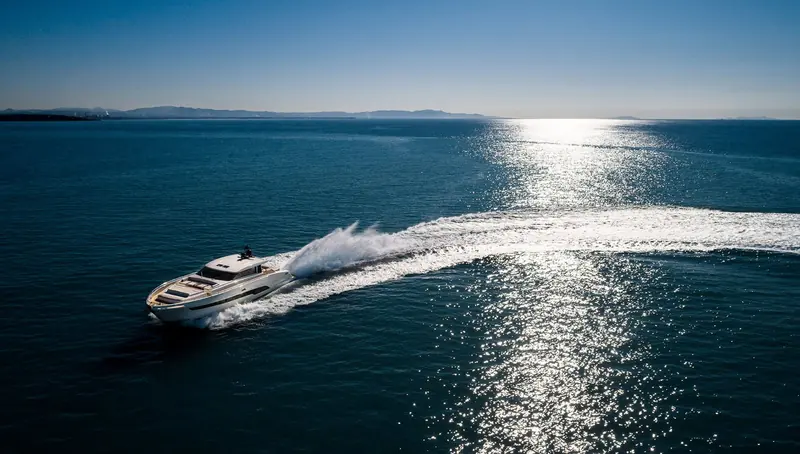
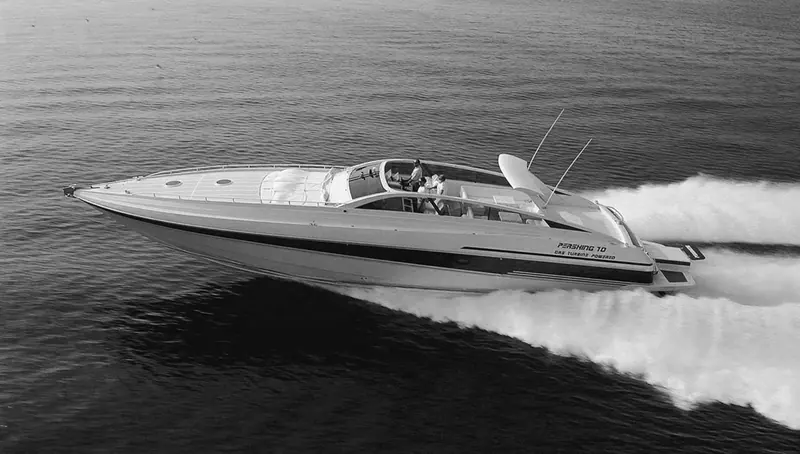
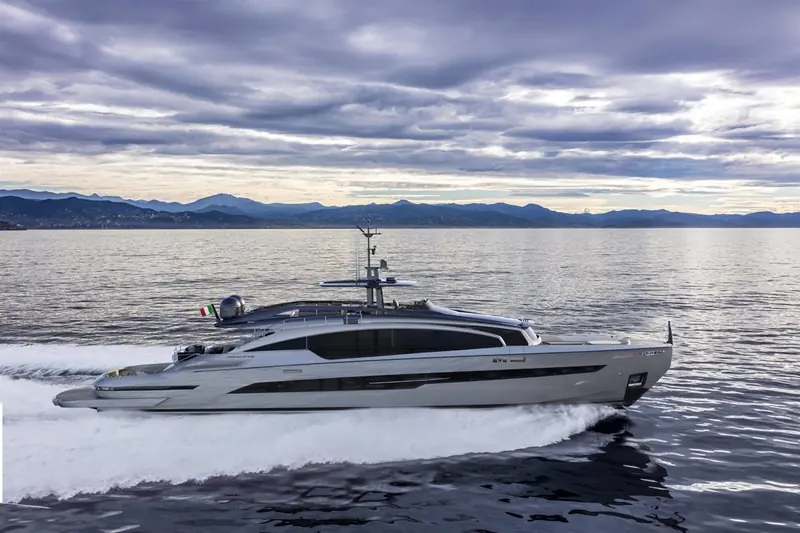
The historic core of De Simoni's career is his relationship with Pershing, which began in 1985 with the design of the yard's first 45-foot open motor yacht. He and his studio have designed every Pershing model since, with the single exception of the GTX80, across four decades of the yard's production. Independent profiles put the total at more than 2,000 Pershing units launched from his designs - a scale of production almost no full-custom designer in this directory approaches, because full-custom work by definition produces one-off yachts rather than a running series.
That work is widely credited with developing the open motor yacht as its own genre: a low, sporting sheer line, an open cockpit rather than an enclosed aft saloon, and a driving position built around performance rather than displacement cruising comfort. Pershing's current flagship, the GTX116, remains a De Simoni design and one of the studio's most recent production credits, continuing a relationship now well into its fifth decade. A buyer or professional evaluating Pershing's whole range is, in practical terms, evaluating four decades of one designer's evolving read on the same brief.
Beyond Pershing: Full Custom and Explorer Work
Alongside the high-volume Pershing relationship, De Simoni has built a distinct full-custom and semi-custom practice with other yards, most visibly Wider and Rossinavi. The Wider 150, delivered as Genesi in 2015, is his largest project by length at roughly 46 metres, and one of Wider's most significant boats: a diesel-electric hybrid superyacht with a distinctive beach club and the ability to carry a custom Wider 32 tender, built at the Wider Super Yacht Division's Ancona headquarters. It is a very different brief from an open Pershing - range, hybrid propulsion and a beach club rather than top speed and cockpit ergonomics - and it shows the studio working across a wider span of the market than the Pershing relationship alone would suggest.
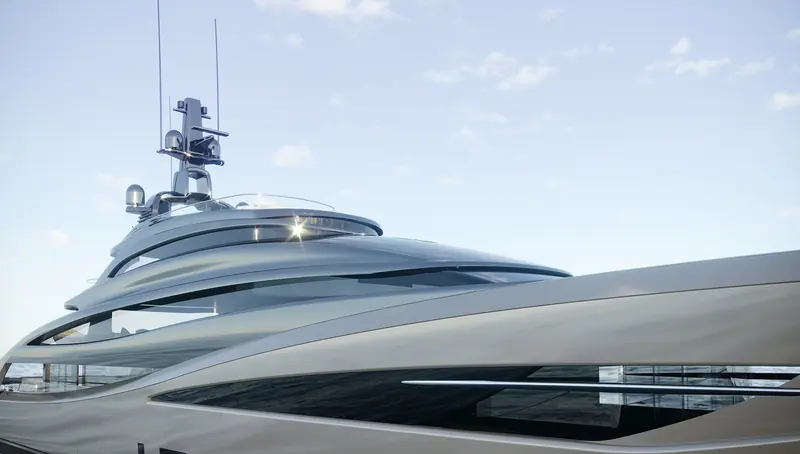
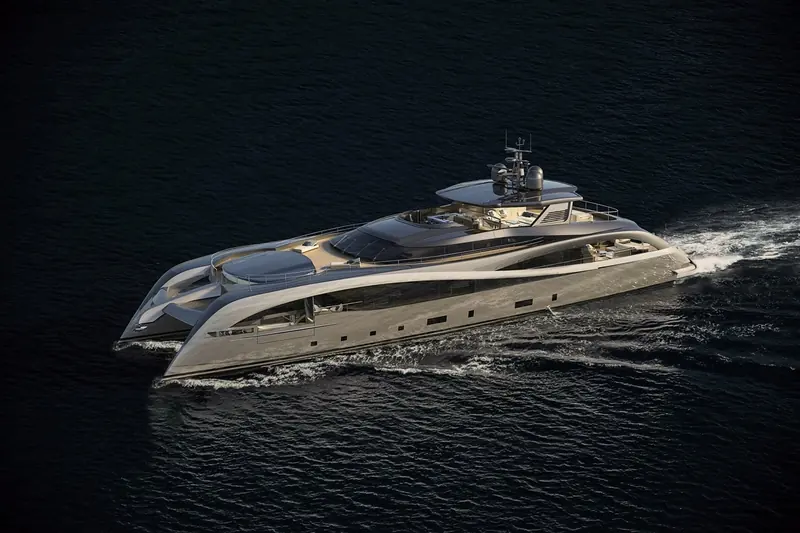
For Rossinavi, De Simoni designed the Nolimits range, five explorer yachts spanning 30 to 63 metres, and more recently a fully electric catamaran - a wave-piercing twin-hull design that departs from the planing monohulls that make up most of his production-yacht career. That project, reported in 2026, is one of the clearest signals that the studio is following the wider industry's move toward electric and hybrid propulsion rather than treating it as a one-off with the Wider 150. A designer whose reputation was built on fast, open, fossil-fuel-driven motor yachts taking on a fully electric hull is a meaningful departure worth watching, not a routine commission. That range of yards, spanning full production series through one-off explorer commissions, is itself a signal that the studio has been trusted with very different briefs by very different kinds of clients over the decades, rather than repeating one formula regardless of what a yard actually asked for.
What the Studio Does and Does Not Cover
Fulvio De Simoni Yacht Design's own description of its services covers exterior design, interior design and naval architecture, meaning the studio can and does take a project from hull lines through to finished interior without handing pieces to separate specialist offices - closer to the RWD or De Voogt model of one integrated studio than to a practice that draws only exteriors and leaves interiors to someone else. That range is useful to a yard wanting a single point of accountability across a whole project, and it lets the studio move fast on production-series work where a yard needs consistent styling across a whole model range rather than a bespoke one-off.
What the studio has not done, at least not yet in any documented project, is the kind of 90-metre-plus full-custom flagship that Espen Oeino, Winch Design or Nuvolari Lenard routinely take on for Feadship, Lurssen or Benetti. The Wider 150 at 46 metres is De Simoni's largest credited project by length, which is substantial but well short of the true gigayacht scale. A yard or buyer weighing De Simoni against the largest full-custom studios in this directory should read his portfolio as extremely deep in production and mid-size semi-custom work, and comparatively untested at the very largest end of the market.

Design Philosophy and the Studio Today
In an interview with Barche Magazine, De Simoni was unusually direct about what he sees as a defect in current yacht design: an industry-wide competition to enlarge interior spaces that produces what he called 'unidentifiable, shapeless objects,' designed by people who prioritise volume over seamanship and end up with unsafe weight distribution and reduced watertight subdivision. His own standard is that a hull should not move too much water as it runs and should stay light rather than fighting the sea - the boat 'must not be a mudskipper,' in his own phrase. That is a specific, falsifiable design position, not a vague claim to good taste, and it is consistent with the low, efficient hull forms that run through his Pershing work.
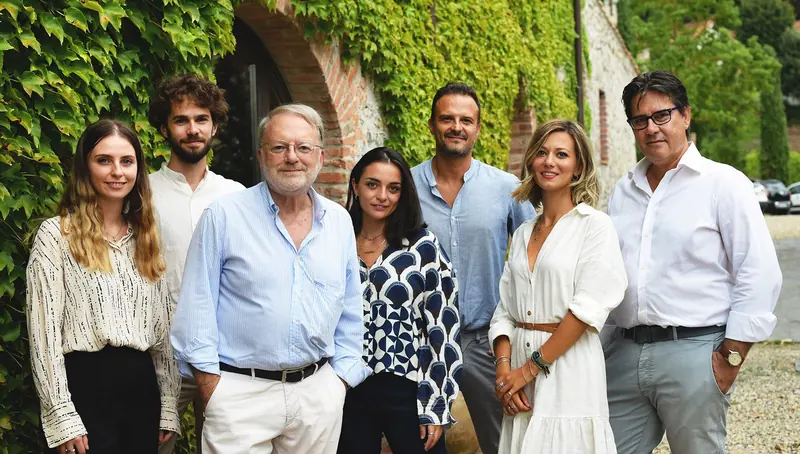
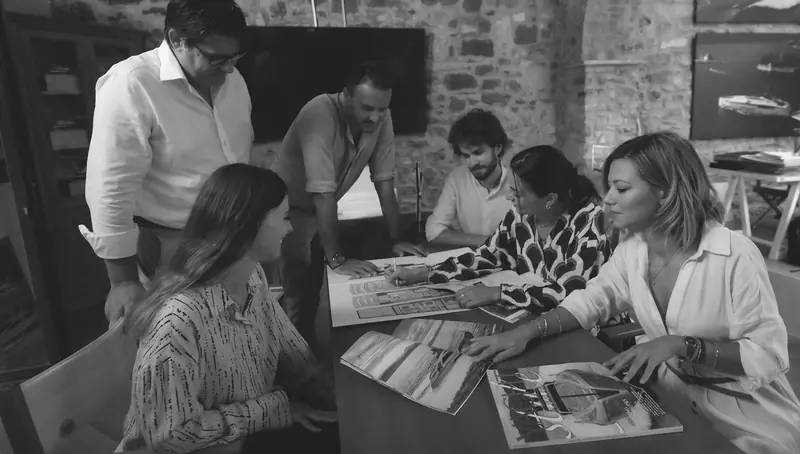
On process, he describes starting from a blank sheet of paper without checking whether an idea has been done before, and says he deliberately avoids boarding competitors' yachts so as not to be unconsciously influenced by someone else's solutions - an approach aimed at keeping each new design authentic rather than a variation on whatever else is in the water that year. The studio today is a family and partner practice: his wife Isabella is involved alongside a small team of named designers - Enrico Lotti, Cristiano Tonarelli, Giuditta Napoli, Francesco Ferrari and Ozan Copur - a team portrait of exactly this group appears among the studio's own published photography. That is a materially smaller organisation than RWD's roughly 60-person studio, consistent with a practice built around one principal designer's continuous involvement in every project rather than a large studio distributing work across many senior designers. That structure has an obvious succession question attached to it that the studio's own material does not address directly: unlike RWD, where a named partner has already been promoted through the ranks over a decade, no public statement identifies which of the current named designers, if any, is positioned to carry the practice forward under its own name once De Simoni steps back from day-to-day work.
Informations pratiques
| Design fee | Not published by the studio; not independently reported in the material available for this entry - unlike some larger studios, no market-rate band could be confirmed from two sources. |
|---|---|
| What the studio covers | Exterior design, interior design and naval architecture, in-house - a broader remit than an exterior-only studio. |
| Primary yard relationships | Pershing (since 1985, most of the range), Wider, Rossinavi, plus a long list of smaller Italian and international production yards including Astondoa, Mochi Craft and Rodman. |
| Largest project by length | Wider 150 / Genesi, approximately 46 metres, delivered 2015 - well short of the 90-metre-plus scale the largest full-custom studios in this directory routinely handle. |
| What is not published | A design fee or fee structure, and total studio headcount - unlike RWD's roughly 60-person team, no comparable staffing figure for Fulvio De Simoni Yacht Design could be confirmed. |
Ce que rapportent propriétaires et équipages
No independently attributable owner or captain testimony found naming the studio directly
Research for this entry returned De Simoni's own interview material (Barche Magazine) describing his design philosophy in detail, and Pershing's and Rossinavi's own project announcements crediting his studio, but no on-the-record quote from a private yacht owner or a named captain specifically assessing a De Simoni-designed hull's handling or livability, the way this directory has found for some full-custom studios' largest single projects. That gap is consistent with how production-yacht design credits are usually reported in the trade press - the yard and the reviewer are quoted, not the individual owner.
Yotters research desk
Les points forts et les points de vigilance
Points forts
- An unmatched production track recordmore than 2,000 Pershing units alone, across four decades and every model but the GTX80, is a scale of proven, in-service design work almost no other studio in this directory can claim
- One studio covers naval architecture through interiorunlike exterior-only practices, De Simoni's team can take a project from hull lines to finished interior without handing work to a separate office
- Demonstrated range beyond his best-known genrethe Wider 150's diesel-electric hybrid propulsion and Rossinavi's electric catamaran show a studio willing to depart from the fast planing monohulls that built its reputation
Points de vigilance
- Untested at true gigayacht scalethe Wider 150 at roughly 46 metres is his largest credited project - well short of the 90-metre-plus full-custom work that defines the largest studios in this directory
- Commercial terms are not published anywhereno design fee, fee structure or studio headcount could be confirmed from independent sources, making it harder for a prospective client to benchmark against competing studios
- The portfolio is concentrated in one yard for most of its volumethe great majority of De Simoni's built total comes from a single relationship with Pershing, which is a strength in depth but a concentration risk in breadth compared with studios that spread their production work across many yards evenly
Pour qui: A production or semi-custom yard - particularly one building open, sporting motor yachts - that wants a single studio covering naval architecture, exterior and interior together, and a buyer who values a design language proven across thousands of delivered hulls over one drawn for a single flagship commission.