Sinot Yacht Architecture & Design
| Fondateur | Sander Sinot, designer industriel |
|---|---|
| Fondé | années 1990 |
| Base | Pays-Bas, près d'Amsterdam |
| Équipe | environ 50 personnes |
| Disciplines | design extérieur et intérieur, architecture de yacht |
| Yacht signature | Aquarius (92 m, Feadship, 2016) |
| Concepts notables | Aqua (hydrogène), Nature |
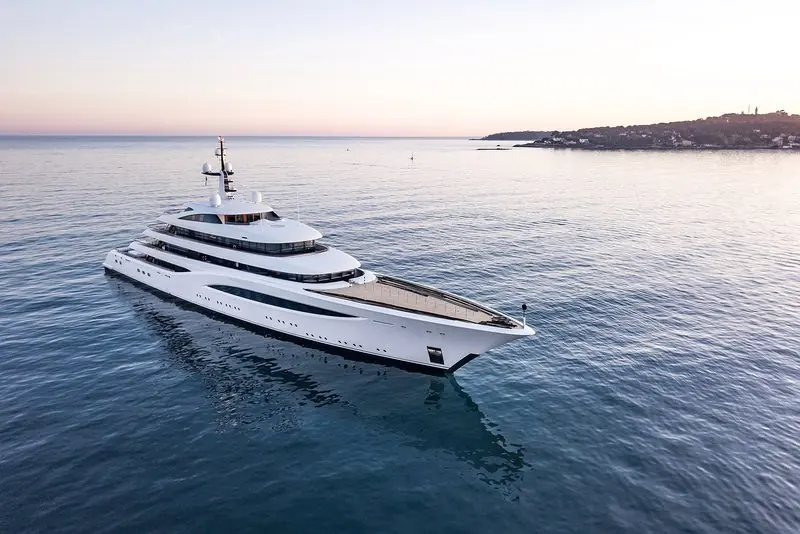
| Aquarius, 92 m, Feadship, 2016 | exterior and interior, naval architecture by De Voogt |
| Galactica Super Nova, 70.07 m, Heesen, 2016: interior, under an Espen Oeino exterior | |
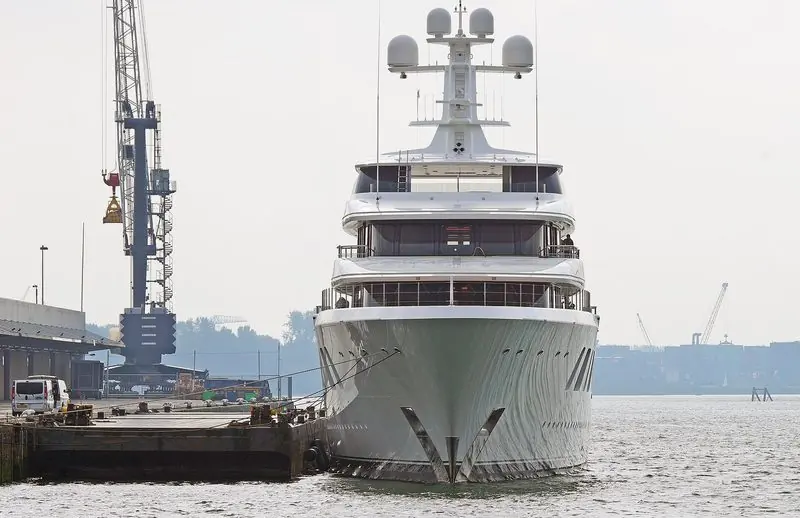
| Ulysses, 102.6 m, Feadship, 2024 | exterior and interior, naval architecture by Azure |
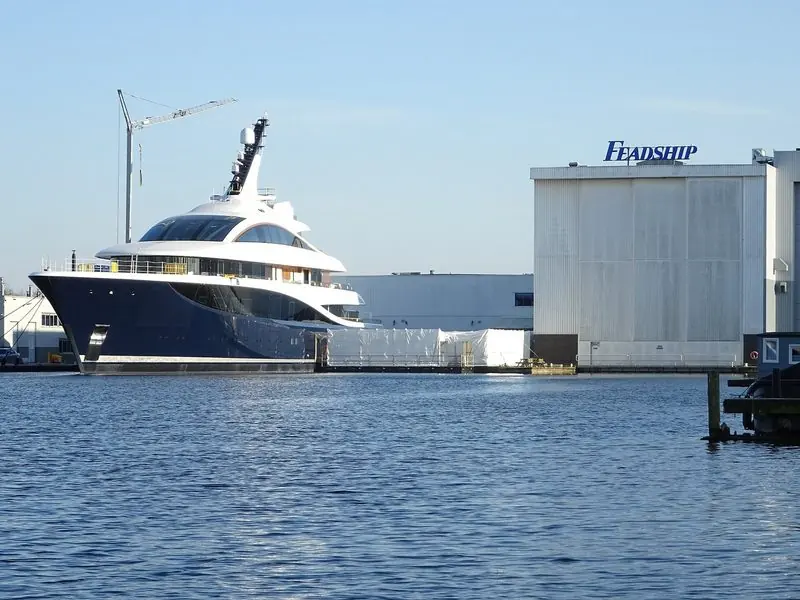
| Drizzle, 91.8 m, Feadship, 2024 | exterior and interior, naval architecture by De Voogt |
| Concepts | Nature (120 m, 2017), Aqua (112 m liquid hydrogen, 2019), Inspire (138 m, 2024) |
| Design fee | not published. Market band 1 to 5 per cent of build cost for the designer, plus 2 to 4 per cent for project management, both outside a yard's quoted price (SuperYachtReview 2026 price guide, updated March 2026) |
| Production consultancy through the build is an additional appointment, not part of the design fee. Naval architecture practice bills construction attendance separately and by the hour (ITIC standard trading conditions for naval architects, 8 July 2025) | |
| Copyright normally remains with the studio, with the owner licensed to build one hull unless the contract is negotiated further | |
Un studio néerlandais à l'oeil industriel
Sander Sinot s'est formé au design industriel avant de venir au yacht, et il a fondé son propre studio aux Pays-Bas dans les années 1990. Le bureau se trouve à une courte route d'Amsterdam et a grandi jusqu'à une équipe d'une cinquantaine de personnes réparties entre architecture, design et ingénierie. Il couvre le design intérieur comme extérieur sous un même toit. Cette approche en studio unique est au coeur de l'aspect sans couture qu'il vise. Garder l'intérieur et l'extérieur sous un même toit évite les coutures visuelles qui apparaissent quand deux cabinets se partagent un yacht.
Le bagage de design industriel se voit dans le soin porté à l'ergonomie, aux matériaux et à la façon dont les choses sont fabriquées. Sinot traite un yacht comme un objet entier plutôt que comme une coque à laquelle on ajoute des pièces ensuite. L'équipe couvre le modelage, la visualisation et le conseil en production en plus du design pur. Cette amplitude permet au bureau de suivre une idée de l'esquisse au détail fini. L'équipe sait dessiner un concept, l'étudier et en résoudre le détail sans repasser la main à chaque étape.
Calme, naturel et minimal
La signature Sinot est la retenue, avec des lignes nettes, des matériaux naturels et un lien fort entre dedans et dehors. Le studio préfère des intérieurs calmes où la lumière, la pierre et le bois font le travail plutôt que l'ornement. Ses extérieurs sont sobres et modernes, laissant la proportion porter le dessin. L'effet d'ensemble est serein plutôt que bruyant. Le studio fait confiance aux matériaux, à la lumière et à la proportion pour porter une pièce, plutôt qu'à des couches de décoration.
La nature est un thème récurrent, et le bureau fait souvent entrer la verdure, l'eau et la lumière du jour au plus profond d'un yacht. Cela donne à son travail une allure contemporaine, tournée vers le bien-être, que beaucoup de propriétaires recherchent aujourd'hui. Le studio mêle éléments naturels et artificiels d'une main légère. Cet équilibre est devenu sa marque reconnaissable. Faire entrer la lumière du jour et la verdure au fond d'une coque est bien plus difficile qu'il n'y paraît de l'extérieur.
Un minimalisme calme aujourd'hui, et un vrai plaidoyer pour l'hydrogène demain.
Aquarius et les concepts d'énergie propre
Le 92 mètres Aquarius, construit par Feadship et livré en 2016 pour Steve Wynn, est le yacht le plus connu du studio, Sinot en signant l'extérieur et l'intérieur. Le dessin a marié un style minimaliste à l'ingénierie de Feadship, pour un résultat largement admiré. Il reste un bel exemple de l'esthétique calme du studio à grande échelle. Le yacht a contribué à installer Sinot en haut du marché. Il a montré qu'une main minimaliste pouvait tenir sans peine sur un très grand yacht sur mesure.
Le bureau est tout aussi connu pour des concepts prospectifs qui testent des idées nouvelles. Aqua, dévoilé en 2019, imaginait un yacht de 112 mètres fonctionnant à l'hydrogène liquide et a attiré l'attention du monde entier sur la propulsion zéro émission. Le concept Nature, de 120 mètres, plaçait un jardin vivant au coeur du dessin. Ces études indiquent où le studio pense que le yachting de luxe pourrait aller. Les concepts se lisent comme de vraies études d'ingénierie plutôt que comme des pièces d'exposition destinées à un stand.
Le partenariat avec Feadship
Le travail étroit de Sinot avec Feadship a façonné une grande partie de son portefeuille construit et de sa réputation. La relation associe le style du studio à l'un des constructeurs les plus exigeants du monde. Travailler avec un chantier de ce calibre demande de la précision, et la rigueur industrielle du studio s'y prête bien. Ce partenariat a produit certains de ses travaux les plus aboutis. Construire avec un chantier de ce niveau laisse peu de place à l'erreur dans le détail.
Le bureau engage les propriétaires dans une conversation détaillée sur la façon dont ils veulent vivre en mer. Ses thèmes tournés vers le bien-être et la nature sortent souvent directement de ces échanges. Le studio accompagne un projet pendant la construction pour préserver l'intention de calme. Ce processus soigné convient aux propriétaires attirés par un luxe plus discret. Ces propriétaires ont tendance à préférer le calme et un sentiment de bien-être à l'apparat.
Une voix pour le yacht de demain
Sinot s'est taillé une position claire de studio de la retenue et des idées sur la durabilité. Ses concepts ont plus que d'autres façonné la conversation de l'industrie sur la propulsion propre. Cette influence intellectuelle va de pair avec un parcours respecté de yachts livrés. Le bureau est pris au sérieux sur les deux fronts. Les yachts livrés et les concepts prospectifs se renforcent mutuellement dans la réputation du studio.
Le style calme et naturel du studio s'est révélé influent à mesure que les goûts s'éloignaient de l'excès. Son travail avec Feadship le maintient près du centre de la scène néerlandaise. Sinot continue de développer des yachts réels et des concepts. Il est devenu une référence pour une idée plus propre et plus silencieuse du superyacht. Cette position a gagné en valeur à mesure que les propriétaires pèsent l'impact de leurs yachts.
The 2024 Feadships
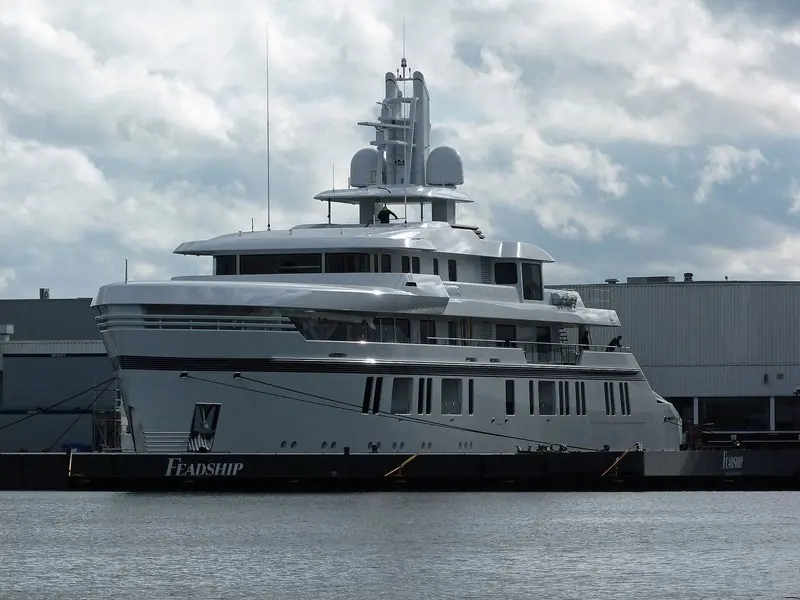
Two Feadships delivered in 2024 carry Sinot exterior and interior. Ulysses is 102.6 metres, with naval architecture by Azure Yacht Design and Naval Architecture, and she was one of the most tightly kept builds in recent Dutch memory. Drizzle is 91.8 metres, with naval architecture by De Voogt and a hybrid propulsion package.
Two boats of that size from one yard in one year, both inside and out from the same studio, is a serious statement about capacity. Feadship does not hand a designer two hulls at once on reputation. It matters to a prospective owner because it is evidence the office can staff a project properly and still answer the phone, which is the failure mode that catches out small studios when they win a big commission.
Aqua, Nature and the concepts
The studio is equally known for unbuilt work. Nature, a 120 metre concept shown at Monaco in 2017, put a climate-controlled garden at the centre of the yacht with a panorama deck above 900 square metres. Aqua, revealed at Monaco in 2019 at 112 metres, was drawn around liquid hydrogen stored in two cryogenic tanks and fuel cells, quoted at 17 knots and 3,750 nautical miles, with water as the only emission. Inspire, a 138 metre concept from 2024, carries an underwater observation room.
Concepts are easy to dismiss and this office has earned the right not to be. Aqua was published five years before Feadship launched an actual hydrogen fuel-cell yacht, and the arguments it forced into the trade press about tank volume, bunkering and range are the arguments the industry is now having in earnest. For an owner, the studio's concept work is a useful window into how it thinks. It is not a promise that any of it can be built to a budget.
How a commission runs, and what it costs
The studio works through a long dialogue about how an owner intends to live at sea, then moves through concept development to final design, with 3D visualisation used throughout to test whether an idea survives the technical and classification limits. Naval architects and yard staff join that conversation early, which is necessary when the studio does not hold the naval architecture itself. Commercially the work is bought in stages and paid for before a yard is contracted. The gates are worth naming. An owner can stop after concept for the price of the concept. A letter of intent reserves a slot. The yacht building agreement is the commitment, and from the day the yard starts engineering to these drawings, changing studio means paying for the same design twice.
No studio at this level publishes a fee scale, so the only current market figure is the SuperYachtReview 2026 price guide, updated March 2026, which puts a designer's fee at 1 to 5 per cent of build cost and project management at a further 2 to 4 per cent, both outside the yard's quoted price. On a EUR 200 million Feadship the designer's band alone is EUR 2 million to EUR 10 million. Exterior and interior from one office sits high in it, and still costs less than two appointments plus the interface between them. The studio's production consultancy is an additional service rather than part of the design fee, which is the normal way supervision is billed and, on a minimal interior, the money best spent.
Recognition, and who it does not suit
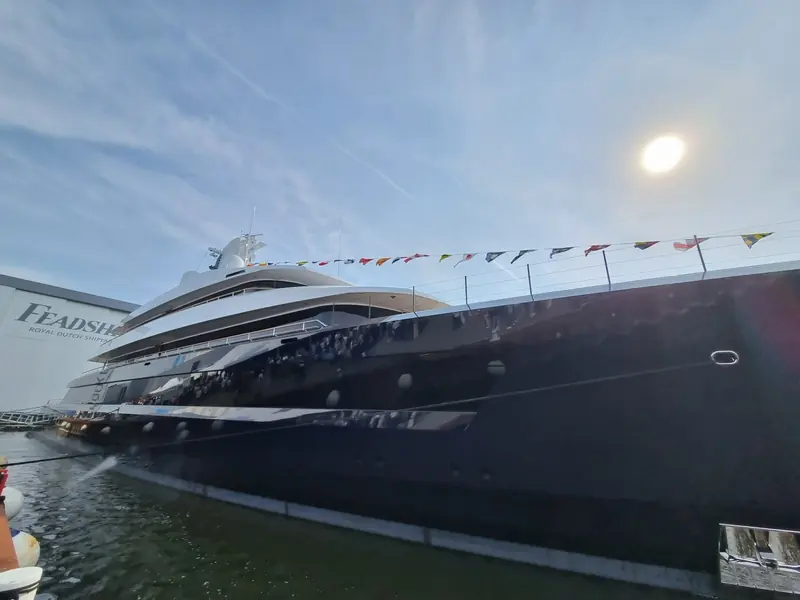
Sinot yachts have collected design awards consistently since Musashi, and the studio's concept work has taken it well beyond the trade press. The recognition is worth a narrow amount to an owner. It confirms the finish met a standard specialists would defend and it helps a broker at resale. It says nothing about behaviour in the second year of a build.
This studio does not suit an owner who wants a rich, layered, art-led interior, because the work runs the other way and a minimalist scheme executed half-heartedly looks cheap. It does not offer naval architecture, so anyone wanting hull form and styling under one contract should look elsewhere. It is not set up for boats below about 45 metres, and it is not a sailing yacht office.
The quiet interior is the one the market can absorb
A calm, daylight-led scheme is the most resale-friendly kind of authored interior in this directory, and for an unromantic reason. It does not impose a taste on the next owner, so the buyer pool is not narrowed by the decoration. Ocean Independence, writing on 11 May 2026, lists accommodation, layout, volume, technical specification and paint condition as the things that position a boat against its comparables, and a Sinot interior scores on all of them without asking a buyer to share an enthusiasm. Set against that, Feadship underneath is the real asset. Ocean Independence names the Northern European yards as those that continue to command market confidence, and a hull from one of them carries a valuation that a design signature does not.
The risk runs the other way, and it is a condition risk rather than a taste risk. Minimalism has nowhere to hide wear. A stone joint that has moved, a veneer that has faded unevenly, a cracked seal in a full-height glass panel are all invisible in a busy interior and glaring in this one. A ten-year-old Sinot boat that has been maintained looks new. One that has not looks tired in a way that costs real money to reverse, and the market does not usually give back the full cost of refit spending. The maintenance file is worth more on this boat than on almost any other in the directory.
Informations pratiques
| Typical project size | 45 metres and above; the studio does not take smaller commissions |
|---|---|
| Design fee | Not published. Market band for a full exterior-plus-interior appointment at this level is 1 to 5 per cent of build cost (SuperYachtReview 2026 price guide), EUR 2 million to EUR 10 million on a EUR 200 million Feadship |
| Project management fee | A further 2 to 4 per cent of build cost, billed separately from the design fee |
| What is not included | Naval architecture is never part of the appointment. On Feadships it comes from De Voogt in-house; on other yards the owner must appoint a naval architect separately |
| Payment structure | Bought in stages: concept, then a letter of intent to reserve a slot, then the yacht building agreement as the binding commitment. Changing studios after the yard starts engineering means paying for the design twice |
| Where to find the studio | Vlierberg 3, Eemnes, Netherlands, about 20 minutes from Schiphol airport, inside the Dutch yacht-building cluster |
| Studio size | Close to 50 staff across architecture, interior architecture, industrial design, 3D visualisation, design engineering and production consultancy |
Ce que rapportent propriétaires et équipages
A two-year, hands-on brief
Steve Wynn worked through Aquarius's interior concept for two years alongside his own longtime designer Roger Thomas before Sinot executed it. It was an unusually long and direct client involvement for a yacht this size.
YachtBuyer
Les points forts et les points de vigilance
Points forts
- One studio for the whole visible boatExterior and interior come from a single design language and a single contract, removing the friction that usually opens up at the window line between two separate designers.
- Production consultancy through the buildThe studio stays involved once the yard starts cutting, which matters most on the minimalist work it is known for, where a badly cut stone joint has nowhere to hide.
- Proven capacity at the largest sizesTwo Feadships over 90 metres delivered in the same year, 2024, both exterior and interior from this office, is evidence of staffing depth that smaller studios cannot show.
- Resale-friendly interiorsOcean Independence names calm, daylight-led schemes as the kind that do not narrow the buyer pool at resale, unlike a heavily authored, opinionated interior.
Points de vigilance
- No naval architectureAn owner wanting hull form and styling under one contract has to look elsewhere. Every Sinot yacht carries a separate naval architecture credit, from De Voogt, Azure or others.
- Not for boats under about 45 metresThe studio's own build list starts there, so smaller commissions are out of scope entirely.
- Minimalism is unforgiving of wearA calm interior with little to distract the eye shows a moved stone joint or an unevenly faded veneer far more readily than a decorated one, and refit spending to fix it is not usually recovered in full at resale.
- No published fee scaleOwners are budgeting from a third-party market band (SuperYachtReview) rather than a rate card, so a real number only comes from asking the studio directly.
Pour qui: Les propriétaires attirés par un design calme et minimaliste, et par un studio qui réfléchit sérieusement à une propulsion plus propre.