Terence Disdale Design
| Fondateur | Terence Disdale |
|---|---|
| Fondé | 1973 |
| Base | Richmond upon Thames, Angleterre |
| Équipe | petite, environ 15 personnes |
| Disciplines | design extérieur et intérieur |
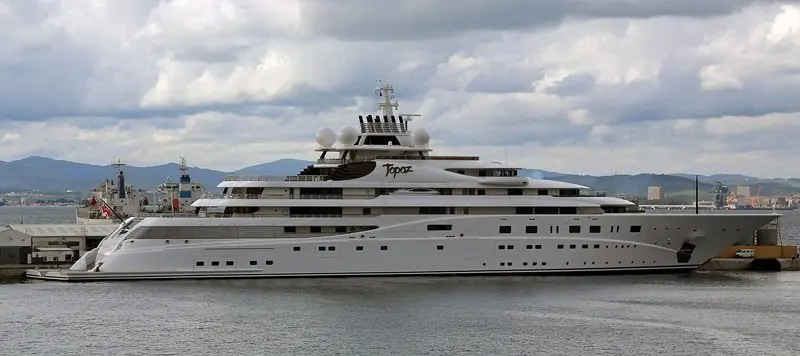
| Yachts signatures | Eclipse (162 m), Pelorus (115 m), Topaz/A+ (147 m) |
| Philosophie | 'maison de plage, pas penthouse' |
| Blue, 160.6 m, Lurssen, 2022 | exterior and interior, 14,785 GT, 48 guests and 80 crew |
| Opera, 146.35 m, Lurssen, 2023 | exterior and interior |
| Interior work under other exteriors | Pelorus (115 m, Lurssen, 2003) and A+, delivered as Topaz (147 m, Lurssen, 2012) |
| Feadship work | Sussurro (49.5 m, 1998, exterior and interior) and Ecstasea (85.95 m, 2004, interior) |
| Philosophy, in the founder's words | beach house not penthouse |
| Design fee | not published. Market band 1 to 5 per cent of build cost, plus 2 to 4 per cent project management, both outside the yard price (SuperYachtReview 2026 price guide, updated March 2026) |
| Construction attendance is charged as a separate service, not included in the design fee, which is standard naval architecture practice | |
| No marine standard form covers the unavailability of a named principal. The ITIC conditions of 8 July 2025 address intellectual property and cap liability at ten times charges or GBP 100,000, whichever is higher, and are silent on key-person cover | |
Cinq décennies au bord de la Tamise
Terence Disdale a créé son studio en 1973, ce qui en fait l'un des noms les plus anciens du design de yacht. Le bureau est installé à Richmond upon Thames et travaille avec une petite équipe soudée. Disdale a bâti sa réputation sur des décennies de travail tout en haut du marché. La longévité est une large part de l'histoire du studio. Un demi-siècle de travail au sommet du marché est un parcours rare dans n'importe quel champ du design, et peu de noms ont duré aussi longtemps.
Le cabinet est resté volontairement compact plutôt que de devenir une grande maison d'entreprise. Cette échelle garde la main du fondateur proche de chaque projet. Elle permet aussi au studio d'être sélectif sur le travail qu'il accepte. Le résultat est un corpus concentré construit sur un demi-siècle. Rester petit est un choix délibéré, et il permet au fondateur de garder la main sur chaque dessin qui sort du bureau.
Maison de plage, pas penthouse
L'idée directrice de Disdale tient dans la formule maison de plage plutôt que penthouse, une préférence pour un luxe détendu et informel plutôt que pour un glamour dur. Ses intérieurs privilégient les textures naturelles, la lumière douce et le confort plutôt que le poli et le brillant. Le but est un yacht où il est facile de vivre plutôt qu'une vitrine. Cette philosophie a façonné une allure distinctive et beaucoup copiée. L'idée paraît simple, et pourtant elle va contre un marché qui confond souvent le poli dur avec le luxe.
Les extérieurs portent la même confiance discrète, avec des lignes équilibrées qui évitent les effets. Le studio dessine l'extérieur comme l'intérieur, ce qui garde un yacht cohérent de bout en bout. Sa retenue tranche dans un marché qui court souvent après le spectacle. L'approche a bien vieilli sur de nombreux lancements. Les yachts dessinés ainsi paraissent accueillants plutôt que grandioses, et cette chaleur est difficile à copier correctement.
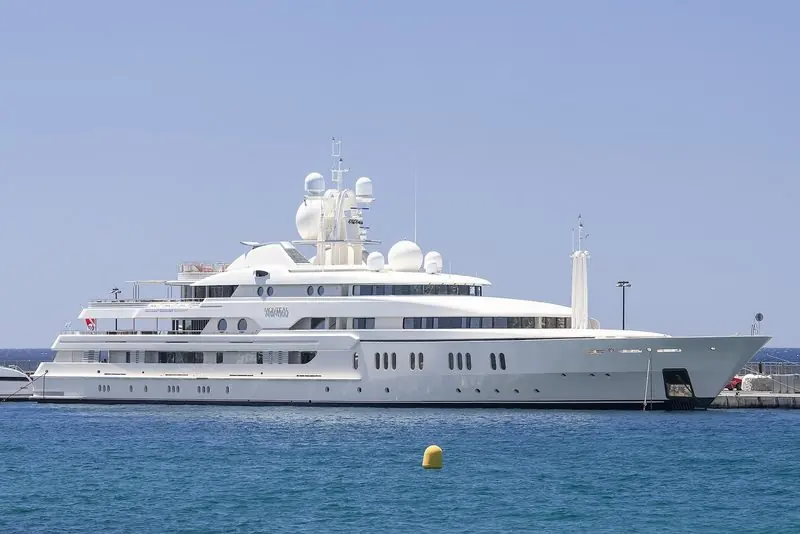
Maison de plage, pas penthouse : un luxe détendu dessiné sur les plus grandes coques.
Eclipse, Pelorus et les géants
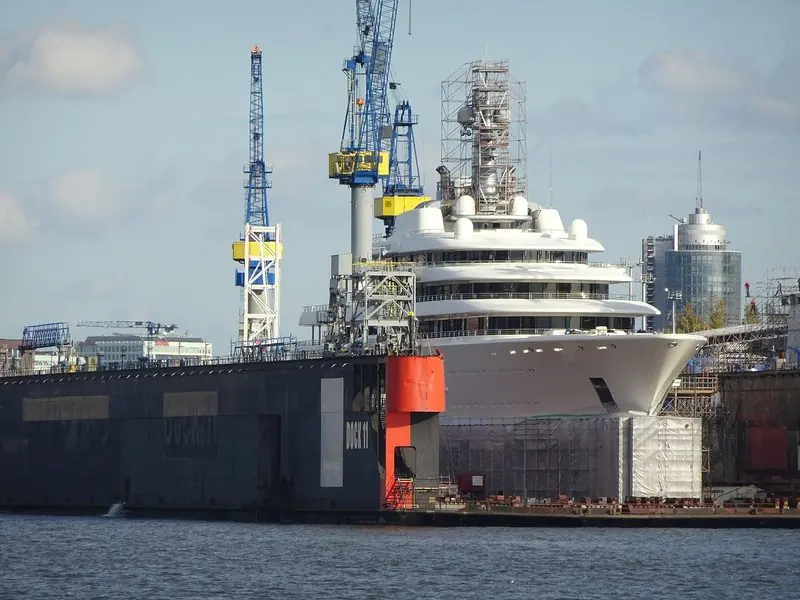
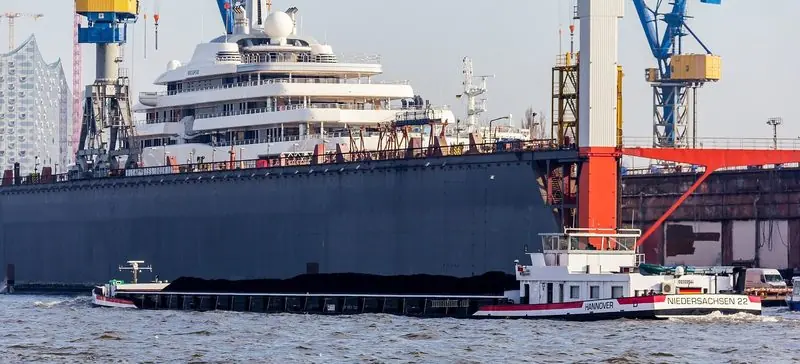
Le 162 mètres Eclipse, construit par Blohm and Voss, est le yacht le plus célèbre du studio et était le plus grand du monde à sa livraison. Le 115 mètres Pelorus est un autre jalon, un exemple précoce du studio travaillant à très grande échelle. Tatoosh, à 92 mètres, les côtoie au portefeuille. Ces yachts ont établi Disdale comme un dessinateur de géants. Travailler encore et encore à cette échelle exige la confiance des chantiers les plus sérieux, et il a fallu des années pour la gagner.
Le 147 mètres Topaz, rebaptisé plus tard A+, est un autre des plus grands yachts que le studio ait façonnés. Cette série de très grands projets est rare pour un seul bureau. Chacun porte le caractère détendu de Disdale malgré sa taille. Le studio a prouvé à plusieurs reprises qu'un luxe informel peut fonctionner sur les plus grandes coques. Faire monter une esthétique détendue vers 160 mètres est bien plus difficile qu'il n'y paraît, et pourtant le studio l'a fait plus d'une fois.
Comment travaille le studio
Disdale travaille avec de grands chantiers, avant tout les constructeurs allemands capables des plus grands yachts. La longue expérience du studio lui permet de guider un projet exigeant sans grande équipe derrière lui. Il reste proche de propriétaires qui tiennent à la discrétion et à un brief détendu. Ce service personnel fait partie de son attrait. Les propriétaires de ce niveau tiennent souvent à la discrétion avant tout, et le studio l'a compris et respecté depuis longtemps.
Le bureau dessine pour la vie à bord, et il fait émerger la façon dont un propriétaire et sa famille utilisent réellement un yacht. Ses choix de matériaux et de couleurs découlent de cette conversation. Le studio protège son intention discrète pendant la construction. Ce soin garde le yacht fini fidèle à l'idée d'origine. Le studio suit un projet de près pour que le brief détendu survive aux pressions d'une longue construction.
Un géant discret du métier
Terence Disdale compte parmi les designers de yacht les plus influents de l'époque moderne. Son seul travail sur Eclipse lui a assuré une place dans l'histoire du métier. La philosophie de la maison de plage a été largement imitée dans toute l'industrie. Cette influence pèse plus lourd que la taille modeste du studio. Beaucoup de bureaux plus grands ont emprunté l'idée de la maison de plage au fil des ans sans jamais en égaler l'exécution.
Le cabinet a montré qu'un petit bureau peut façonner les plus grands yachts du monde. Son style détendu s'est révélé durable alors que les goûts changeaient. Le studio reste sélectif et très estimé. La marque de Disdale sur le design de superyacht est profonde et durable. Son style détendu s'est révélé remarquablement durable alors que les goûts changeaient autour de lui.
The interiors under other people's exteriors
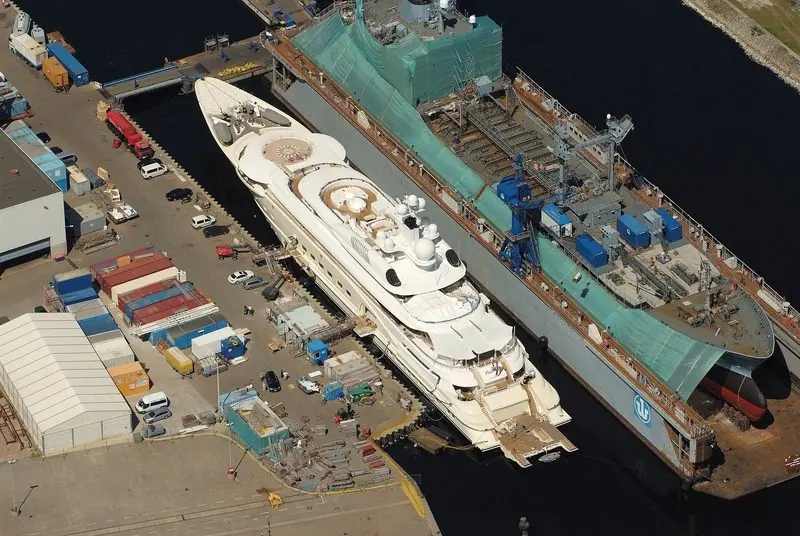
The studio's own listing singles out the interior of Pelorus, the 115 metre Lurssen delivered in 2003 to a Tim Heywood exterior. A+, delivered by Lurssen in 2012 at 147 metres under the name Topaz, is another Heywood exterior over a Disdale interior. Ecstasea, 85.95 metres from Feadship in 2004, carries a Disdale interior over a De Voogt exterior, arranged for 14 guests in seven cabins.
That pattern says something about how the industry uses this office. Two of the strongest exterior studios in the field will happily hand it the inside of their largest boats, which is not a courtesy anybody extends twice if the first result was difficult. For an owner splitting a commission between two studios, a designer with a long record of working under other people's profiles is a lower-risk appointment than one who has always controlled the whole hull.
The small end, and why it still matters
Sussurro was delivered by Feadship in 1998 at 49.5 metres with exterior and interior by Disdale and naval architecture by De Voogt. She is aluminium throughout with a GRP element in the superstructure. She was built light and built to go fast, at a point when Feadship was known for neither. She is still regarded as one of the more interesting boats the yard has produced.
A 50 metre is the harder design problem. There is nowhere to put anything, every square metre is contested, and the compromises are visible. A studio that can make a 50 metre feel generous is applying the same skill when it makes a 160 metre feel intimate. Owners looking at a first boat in the 40 to 60 metre bracket should not assume a name associated with giants is uninterested in them.
How a commission runs, and what it costs
Disdale works directly with owners and with a small number of yards, above all the German builders capable of the largest hulls. The studio takes the brief personally, and its stated method starts from the owner's actual use of the boat and his budget before it starts from a look. The engagement is staged and the design contract precedes the build contract, which means an owner is paying this office for a year before a yard is committed to anything. Site attendance through construction is billed as a separate service rather than folded into the design fee, and it is the item to protect, because an unpoliced design degrades quietly as the yard proposes cheaper details.
Nobody at this level publishes a scale. The market band is 1 to 5 per cent of build cost for the designer and a further 2 to 4 per cent for project management, both outside the yard's number, per the SuperYachtReview guide updated March 2026. On a 160 metre hull the arithmetic is uncomfortable to write down and still a small line against the build. What an owner is buying at the top of that band is exterior and interior from fifteen people rather than from two houses that have to be refereed. What he is not buying is naval architecture, which stays with the yard along with every performance guarantee in the build contract.
Recognition, and who it does not suit
The studio has taken design awards across five decades and its influence is visible in work signed by other people, since the relaxed interior has been widely copied since the 1990s. Awards are worth a narrow amount to an owner. They confirm a standard of finish and they help at resale. The more useful signal here is that the same fifteen people have been given the largest yachts in the world three times.
This studio does not suit an owner who wants hard, polished, formal glamour, because the whole practice is built against it. It does not offer naval architecture. Capacity is limited and an owner in a hurry will not be accommodated. Anyone who wants a large team of account managers responding to design changes at speed through a build should appoint a bigger house.
Fifteen people, one name, and what the contract should say about that
A studio of fifteen carrying its founder's name concentrates risk that a larger office spreads. The professional standard forms are no help. The ITIC standard trading conditions for naval architects, in the version dated 8 July 2025, cover intellectual property and cap liability at ten times the consultant's charges or GBP 100,000, whichever is higher, and say nothing at all about what happens if the named principal is unavailable in year three of a five-year build. That silence is the market norm, not an oversight by this studio.
The remedy is contractual and ordinary. Commercial consultancy treats death or prolonged incapacity of a key person as a termination event and obliges the consultant to propose a replacement of equal standing for the client's approval. A design agreement can carry the same clause, together with a right to the complete drawing and specification set in native format if the practice ceases trading. Copyright normally remains with the studio and the owner buys a licence to build one hull, so without that step-in right an owner holds permission to build a boat and no files to build it from. Fifty years of continuous trading is a good sign. It is not a substitute for the clause.
Relaxed ages well, very large does not sell fast
A Disdale interior is easier for a second owner to live with than most, because the palette is informal rather than personal and the approach has been copied so widely since the 1990s that it now reads as a familiar idiom instead of one man's signature. Teak, rattan and low-key materials also wear in a way that looks intended, which is the opposite of a high-gloss interior where every mark is a defect. That is a genuine, if unglamorous, resale advantage and it is worth more than the awards.
The constraint is size, and it overwhelms everything else. Above 140 metres the number of credible buyers worldwide is small enough to count, running costs are the real barrier to entry, and a boat can sit for years without that saying anything about its design. Against the 470 sales of 24 metres and over recorded by Denison Yachting for 2025, at an average 487 days on market, the largest yachts are a different market with different arithmetic. An owner commissioning at this scale should assume the boat is illiquid by construction and should value the design for the twenty years of use rather than for the exit.
Informations pratiques
| Design fee | not published; market band is 1 to 5 per cent of build cost plus 2 to 4 per cent project management, both outside the yard price. Construction attendance is billed as a separate service (SuperYachtReview 2026 price guide, updated March 2026) |
|---|---|
| What the studio covers | exterior styling and interior design, plus private aviation interiors; no naval architecture |
| Studio size and base | around 15 people at 6 The Green, Richmond upon Thames, Surrey |
| Key-person cover | not addressed by the standard ITIC trading conditions; an owner should ask for a named step-in or replacement clause rather than assume one exists |
| Notable full commissions | Eclipse (162.5 m, Blohm and Voss, 2010), Blue (160.6 m, Lurssen, 2022, 14,785 GT), Opera (146.35 m, Lurssen, 2023); interior-only work includes Pelorus and A+ (delivered as Topaz) |
Ce que rapportent propriétaires et équipages
No independently attributable owner testimony found
the portfolio includes some of the most secretive owners in yachting - Eclipse and Roman Abramovich, Tatoosh and the late Paul Allen - and this research found no on-the-record quote from any of them, a named captain, or a crew member about the studio's design work; only the founder's own philosophy quotes (beach house not penthouse) recur across press coverage
Yotters research desk
Les points forts et les points de vigilance
Points forts
- One of the longest continuously running practices in the businessfounded in 1973 and still at around 15 people, with close to 100 completed yachts and three of the largest vessels ever delivered - Eclipse, Blue and Opera - all carrying both exterior and interior from the same office
- A consistent, legible design philosophy over five decadesbeach house not penthouse is not a slogan invented for marketing; the studio's own account is that it deliberately avoids the wow factor because nothing dates quicker, which is a defensible position on a yacht an owner expects to keep for twenty years
- Proven on both sides of a projectfull exterior-and-interior commissions (Eclipse, Blue, Opera) sit alongside interior-only work under other designers' exteriors (Pelorus, A+ delivered as Topaz), showing the studio can slot into either role
- A founder who still answers his own phoneat 15 people, an owner commissioning this studio is buying direct access to Terence Disdale himself rather than a large organisation's account structure
Points de vigilance
- Total key-person risk, with no cover in the standard contractno marine standard form addresses the unavailability of a named principal; the ITIC conditions of 8 July 2025 cover intellectual property and cap liability at ten times charges or GBP 100,000, whichever is higher, but are silent on what happens if Disdale himself becomes unavailable mid-build
- No naval architecturethe studio's disciplines are exterior styling, interior design and private aviation interiors; hull engineering has to be appointed separately
- No published fee scalethe only public figures are the market-wide SuperYachtReview band of 1 to 5 per cent of build cost plus 2 to 4 per cent project management, and construction-phase attendance is billed separately on top of that
- A deliberately narrow aesthetican owner who wants a formal, spectacle-driven interior is shopping against the studio's stated philosophy, not with it
Pour qui: Les propriétaires qui veulent un luxe détendu et informel et un service personnel discret sur un très grand yacht.