Antigua & Barbuda
| Region | Leeward Islands, eastern Caribbean, about 17 degrees north |
|---|---|
| Two islands, one nation | Antigua, 108 square miles and hilly, and Barbuda, 62 square miles and flat coral, about 30 nautical miles apart |
| Main yacht harbours | English Harbour and Nelson's Dockyard, Falmouth Harbour, Jolly Harbour, North Sound at Crabbs, and Parham |
| Falmouth Harbour Marina | a published vessel maximum of 330 ft (100 m) and a draught limit of 20 ft (6.1 m), run by Antigua Slipway since 1994 |
| Jolly Harbour Marina and Boatyard | around 155 berths under 24 m, 9 berths for 24 to 30 m, 13 lagoon moorings, draught to 4 to 4.5 m, two mega-yacht berths to 200 ft |
| Ports of entry | English Harbour/Falmouth Harbour and Jolly Harbour are the two the fleet actually uses; Parham is designated but lightly used; Barbuda's only port of entry is Codrington, by advance approval |
| Antigua Charter Yacht Show | 4 to 9 December 2026, the 65th edition, across three marinas, around a hundred yachts |
| Antigua Classic Yacht Regatta | 15 to 20 April 2026, and 14 to 19 April 2027 |
| Antigua Sailing Week | 22 to 26 April 2026, the 57th edition in a shortened four-day, point-to-point format; 21 to 25 April 2027, the 58th edition |
| RORC Caribbean 600 | starts and finishes in Antigua, the 18th edition starting Monday 22 February 2027, a 600 nautical mile lap of eleven Caribbean islands |
| Hurricane season | 1 June to 30 November, greatest risk August through October |
| Clearance | pre-register via eSeaClear or SailClear; Jolly Harbour is the cheapest port of entry at EC 85 to check in and EC 20 to check out, cards not accepted |
| Duty-free | non-commercial yachts can receive duty-free spares, sails, rigging and provisions for up to nine months in port, on the captain's declaration |
| Barbuda's highest point is only about 125 ft, with no reliable navigation aids and charts that cruising guides describe as unreliable | |
| Codrington Lagoon Frigate Bird Sanctuary: boat-access only, the second-largest frigate bird colony in the world after the Galapagos, entry EC 2 for citizens and US 2 for non-citizens | |
| Burton-Nibbs International Airport, Barbuda: opened 3 October 2024, a 6,100 ft runway against the old Codrington strip's 1,640 ft, now takes jet traffic | |
| V.C. Bird International Airport (ANU) | about 21.7 km, 35 to 45 minutes, from English Harbour, daily long-haul to North America, year-round UK service, seasonal Frankfurt via Condor |
| Barbuda's 2026 population is estimated at around 1,874, still recovering from the 2017 hurricane evacuation | |
What two islands under one flag actually give a cruising boat
Antigua and Barbuda are one nation of two islands 30 nautical miles apart, and a yacht experiences them as two different cruising grounds rather than one. Antigua is hilly, reef-fringed and built out for yachting, with five separate harbours holding marinas, boatyards, a yacht club and the largest concentration of marine trades in the eastern Caribbean. Barbuda is flat, coral, thinly populated and almost undeveloped, with no marina, no boatyard and reef navigation that keeps most charter itineraries away from it entirely.
The distinction matters for planning. A week based in English Harbour or Falmouth Harbour covers Antigua's south coast, Jolly Harbour on the west and the North Sound on the east without ever leaving daylight motoring range of a haul-out yard. A visit to Barbuda is a separate decision: a 30 nautical mile passage each way, no port infrastructure beyond a single point of entry at Codrington, and an approach that the cruising literature has warned sailors about since the age of sail. Antigua's own tourist board still markets '365 beaches, one for every day of the year'; Barbuda has a fraction of the population and almost none of the yachting infrastructure to match.
When to be there: the season and the show calendar
Antigua's charter and racing calendar runs from December through April, and the two anchor events for owners are the Antigua Charter Yacht Show in December and Antigua Sailing Week in April, with the Antigua Classic Yacht Regatta and the RORC Caribbean 600 filling in the rest of the season. Missing the calendar by even a week means missing the fleet, the parties and the marina space that gets fully booked around each event.
The Antigua Charter Yacht Show runs 4 to 9 December 2026, its 65th edition, across Falmouth Harbour Marina, the Antigua Superyacht Marina and Nelson's Dockyard, with around a hundred yachts on display for brokers and charter clients; it marks the formal start of the Caribbean season. The RORC Caribbean 600 starts and finishes in Antigua, its 18th edition setting off on Monday 22 February 2027 on the club's 600 nautical mile lap of eleven Caribbean islands. The Antigua Classic Yacht Regatta runs 15 to 20 April 2026 and 14 to 19 April 2027 at Nelson's Dockyard, wooden boats and classic rigs racing out of English Harbour. Antigua Sailing Week follows immediately after, 22 to 26 April 2026 in a shortened four-day, point-to-point format for its 57th edition, and 21 to 25 April 2027 for its 58th; early-bird entry for 2027 is USD 12 per foot if paid by 31 October 2026. The Salty Dawg Sailing Association's Caribbean Rally, roughly 1,500 nautical miles from Hampton, Virginia, typically starts around 1 November and finishes in English Harbour, adding a wave of bluewater arrivals to the start of the season.
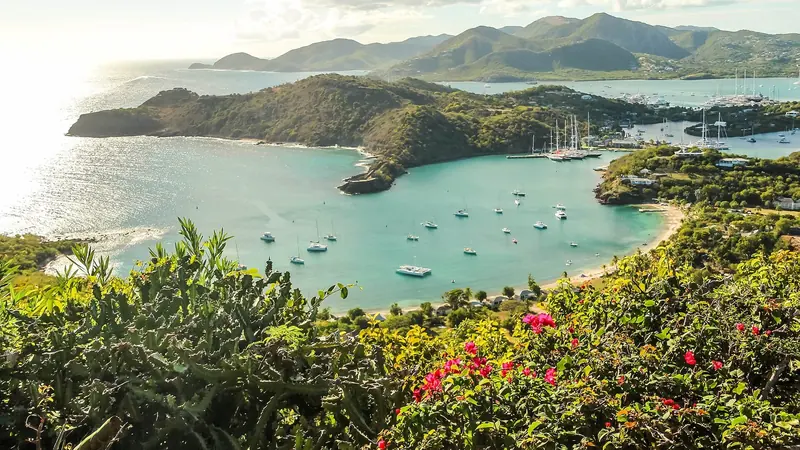
A working yacht harbour with the Caribbean's deepest bench of marine services, and thirty miles north, an island that still humbles a chartplotter.
English Harbour and Nelson's Dockyard: the historic core
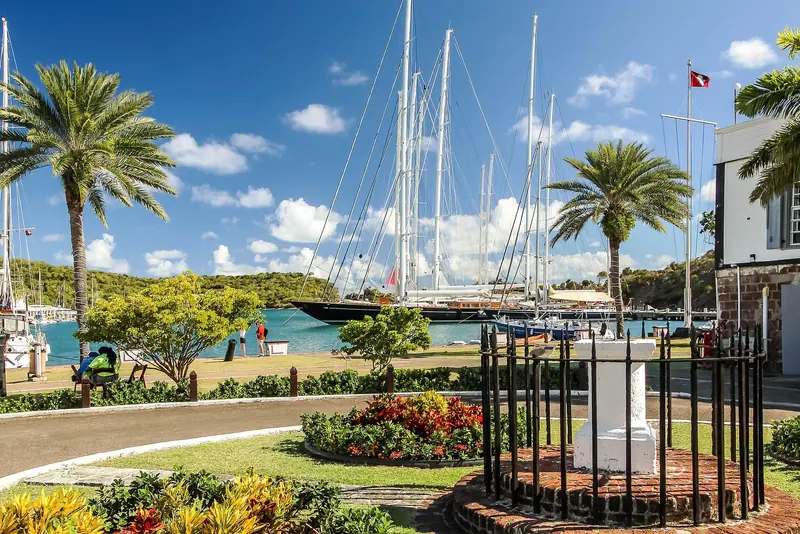
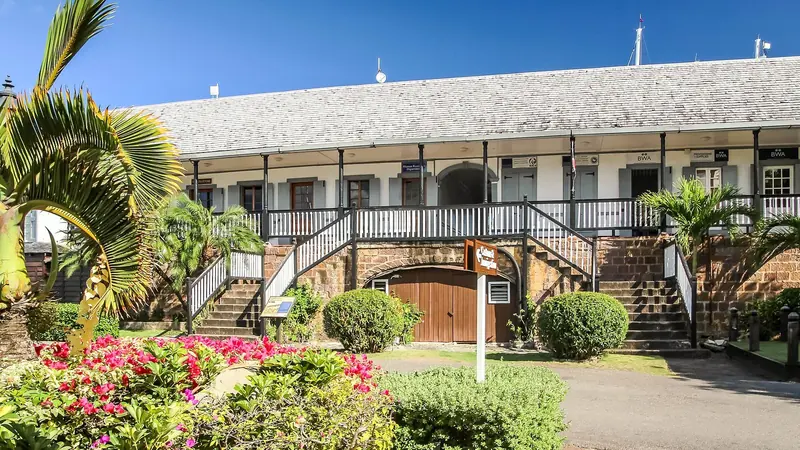
English Harbour is the deep, well-protected inlet on Antigua's south coast built around Nelson's Dockyard, the restored Georgian naval yard that gives the whole area its identity and its UNESCO World Heritage status. It is both a working marina, run by the National Parks Authority, and the base most visitors picture when they think of yachting in Antigua.
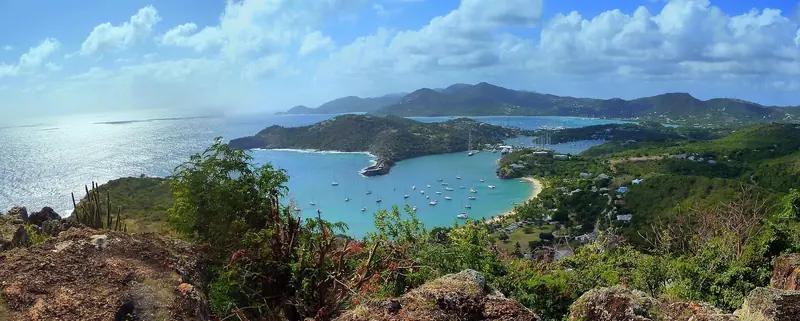
Nelson's Dockyard Marina offers around 30 stern-to berths on bow moorings and is reached on VHF 68; all three clearing authorities, Customs, Immigration and the Port Authority, share one building here, an easy walk from a Falmouth berth. Antigua Yacht Club, founded in 1967 by a group of hoteliers who began by racing Sailfish dinghies on Sunday mornings, sits in Falmouth Harbour next door and has grown into the organiser or co-host of most of the island's regattas, from Sailing Week to the RORC 600 to the Superyacht Challenge Antigua. The Shirley Heights lookout above the harbour, site of the well-known Sunday sunset party, gives the single best view of how the two harbours actually fit together.
Falmouth Harbour and the superyacht docks
Falmouth Harbour, immediately next to English Harbour and separated from it by a neck of land you can walk in fifteen minutes, holds Antigua's largest concentration of superyacht berthing and is where a big yacht actually ties up. Falmouth Harbour Marina, run by Antigua Slipway since 1994, is the island's largest mega-yacht marina, publishing a vessel maximum of 330 ft (100 m) and a draught limit of 20 ft (6.1 m) alongside a superyacht quay long enough to be separately described at 535 ft.
Next door, the marina long known as the Antigua Yacht Club Marina was gutted by fire on 2 and 3 October 2023 during Tropical Storm Philippe; it has been rebuilt and rebranded as the Antigua Superyacht Marina and Resort, with a further phase of construction due to start in summer 2026. Fuel is delivered dockside at up to 1,000 litres a minute, duty-free, and electricity is metered at USD 0.60 per kWh and water at USD 0.15 per US gallon; none of the marina's own berthing rates are published, and enquirers are directed to contact the office for a quote.
Jolly Harbour and the west coast: the budget port of entry
Jolly Harbour, on Antigua's west coast, is the island's second official port of entry and its main alternative to English Harbour and Falmouth Harbour, built around a marina, a boatyard and a residential development rather than a historic dockyard. It is also, by a wide margin, the cheapest place on the island to clear in and out.
Jolly Harbour Marina and Boatyard runs four concrete piers with around 155 berths for craft under 24 m, 9 further berths for vessels between 24 and 30 m, and 13 lagoon moorings, with a published draught limit of 4 to 4.5 m and two dedicated mega-yacht berths taking vessels to 200 ft. Its boatyard travel lifts haul to 75 and 85 tons and take catamarans to 33 ft of beam. Clearance here costs EC 85 to check in and EC 20 to check out, credit cards not accepted, against a considerably more ceremonial process at the English Harbour building; a family with children pays an extra EC 75 per child on departure.
North Sound and Parham: the working east coast
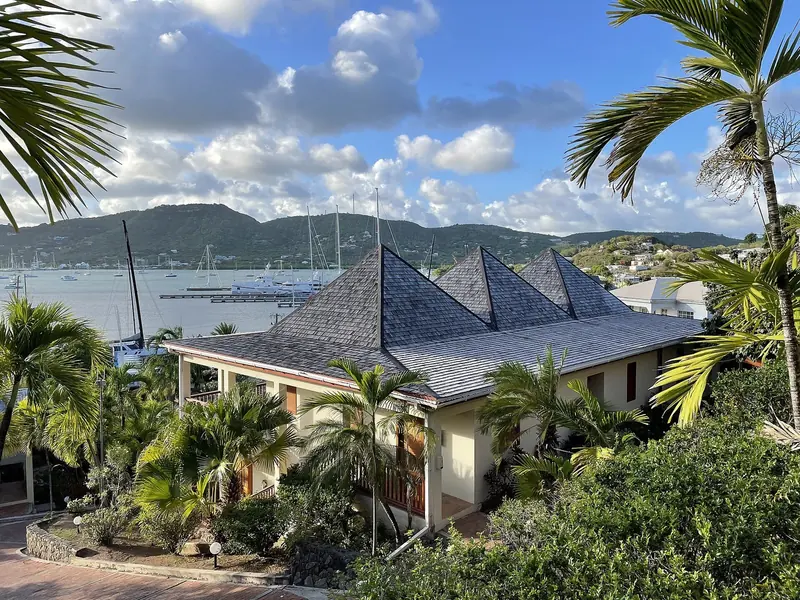
The North Sound, on Antigua's northern and eastern side, is a large, reef-protected sound holding the island's most modern boatyard and some of its best cruising anchorages, and it sees far fewer charter yachts than the south coast harbours. It is reached and left with care, since coral heads and shoal patches inside the sound demand a cruising guide and good light rather than a chartplotter alone.
North Sound Marina at Crabbs runs a 150-ton travel lift with a 30 ft beam capacity and a 22 ft maximum haul-out draught, room for around 250 boats ashore, and an optional 200 by 120 ft storage and refit shed built to Category 4 hurricane specification, with Budget Marine's chandlery on site. Green Island, inside Nonsuch Bay behind a barrier reef, and Great Bird Island, protected within the North East Marine Management Area, are the two anchorages most cruising guides single out here for snorkeling and shelter from easterly swell. Parham Harbour, on the same coast, is a third, lightly used port of entry with its own Customs and Immigration facilities.
Clearing in: customs, immigration and the cruising permit
Every vessel arriving in Antigua and Barbuda must clear within 24 hours through Customs, Immigration and the Port Authority, and every vessel needs a cruising permit before it can move between anchorages. Pre-registering online through eSeaClear or SailClear before arrival speeds up the process but does not replace the in-person stamping.
Call the Coast Guard on VHF 16 from six hours out, fly the yellow Q flag, and stay aboard until Port Health has cleared the vessel before the master goes ashore. The order ashore is Customs with the general declaration and six copies of the crew and passenger lists, then Immigration with ED cards and passports for everyone aboard, back to Customs for final approval, then the Port Authority to pay entrance, rubbish disposal, anchorage or dockage and the cruising permit itself; both US and EC dollars and Visa or Mastercard are accepted. Clearing out reverses the sequence, needs four copies of the lists, and obliges departure within 24 hours; crew leaving the boat need an onward ticket or a signed letter from the captain or a local agent. English Harbour/Falmouth Harbour and Jolly Harbour are the two ports of entry the fleet actually uses day to day, with Parham designated but little used; Barbuda's only port of entry is Codrington, and clearing there needs advance approval.
What it actually costs
No marina in Antigua publishes a public berthing rate card, so the real number is always a quote, and the closest thing to a published figure for the unpublished side of the bill comes from a yacht agency's own fee sheet rather than any government source. Budget accordingly rather than trusting a website's headline number.
Med Yacht Services' 2026 fee sheet for Antigua budgets customs clearance at USD 250 to 550 and immigration including escort at USD 250 to 500, with National Parks Authority fees carried at cost and surcharges of 10 percent for holidays and peak season, 20 to 25 percent for expedited events. The National Parks Authority's own published visitor passes, which cover anchoring inside English and Falmouth Harbours, run US 15 a day, US 100 a season, or EC 10 for residents. Duty-free fuel and up to nine months of duty-free spares, sails, rigging and provisions delivered to a vessel in port are a genuine saving for anyone doing serious work here, provided the captain declares each item is for the vessel; Epicurean Fine Foods at Jolly Harbour and St John's is the main full-scale grocery supplier, and everything on the shelves is imported and priced accordingly.
Why English Harbour is a marine services hub, not just an anchorage
English Harbour and Falmouth Harbour together hold one of the deepest benches of yacht refit, rigging and repair expertise in the Caribbean, which is why boats come here to work as often as they come to cruise. A vessel needing serious technical support has more of it within walking distance here than almost anywhere else in the region.
Antigua Rigging, in business 26 years, services Hall, Southern, Selden, Formula, Sparcraft and Z-Spars rigs in alloy and composite and runs full refit and project management alongside it. Antigua Slipway's marine railway, the boatyard behind Falmouth Harbour Marina, hauls to 200 tons and 150 ft length overall; the company announced a USD 2.5 million rebuild of the ageing underwater structure in 2026, intended to make it the largest single-vessel haul-out facility in the Caribbean once complete. Bailey's Boatyard runs a 70-ton travel lift and an 80-ton Ascon lift with hurricane cradles accepted by major insurers, and North Sound Marina at Crabbs, Jolly Harbour and Shell Beach add further lift capacity elsewhere on the island. Nothing on Antigua can lift a genuine superyacht hull for structural or paint work; that job is still a passage to another country.
Barbuda: the low island a chartplotter alone will not get you into
Barbuda is flat coral limestone with no point higher than about 125 ft, which historically made it one of the most feared islands for navigation in the West Indies because a ship could run onto its reefs before the island itself was visible. Modern GPS and satellite imagery have reduced the risk without eliminating it, and the approach still demands daylight, high sun and a slow, careful eye.
There are effectively no navigation aids around Barbuda, chart coverage is acknowledged by cruising guides as unreliable, and an estimated 200 shipwrecks lie on its reefs from the age of sail onward. Low Bay, on the west coast, anchors in 5 to 10 m over sand but is exposed to swell from the north and west; Cocoa Point, on the south coast, anchors in 5 to 8 m with moderate shelter from the trades but needs the sun behind the approaching boat to pick a path between coral heads. Cruisers who have made the passage describe roughly 30 nautical miles each way, a five to six hour daylight window once the reef-approach margin is subtracted from sunrise to sunset, and advice that amounts to the same thing from every source: go slow, watch the water colour, and turn back to deep water if the picture is not clear.
What makes Barbuda worth the passage, and what changed in 2024
The Codrington Lagoon Frigate Bird Sanctuary, reachable only by licensed boat from the Codrington jetty, is the second-largest frigate bird nesting colony in the world after the Galapagos and the single best reason cruisers give for making the trip. A new international airport opened on the island in October 2024, changing how guests, not just yachts, can reach it.
The sanctuary is best visited between September and April, with December the peak of the mating season when the males' red throat pouches are inflated; a local guide and a day's advance booking through the tourist office are required, and the entry fee is EC 2 for citizens and US 2 for non-citizens. Burton-Nibbs International Airport, which opened 3 October 2024 with a 6,100 ft runway against the old Codrington airstrip's 1,640 ft, now takes jet traffic including the Embraer E-170 and has full runway lighting for night landings, a material change for owners who previously had to bring guests in by boat or small charter plane alone. Barbuda's population, still recovering from the 2017 hurricane evacuation, was estimated at around 1,874 in 2026; the island remains thinly built and largely undeveloped compared with Antigua, which is precisely what draws the boats that do make the crossing.
Hurricane season and laying up
Hurricane season runs 1 June to 30 November with the highest risk from August through October, and Antigua's own cruising literature markets the quiet months as a genuine asset: an uncrowded base with several recognised hurricane holes rather than a place to avoid entirely. Most yachts that stay through the season haul out rather than ride it out afloat.
English Harbour itself is a well-known hurricane hole, and the island's yards, from Antigua Slipway and Bailey's Boatyard in the south to North Sound Marina at Crabbs and Jolly Harbour's yard, all secure hauled boats on concrete standing with tie-downs to deadmen, sand screws or one-ton concrete blocks rather than jack stands alone, and Bailey's cradles are specifically accepted by the major yacht insurers. Most hurricane-clause insurance policies require haul-out within 48 to 72 hours of a named storm warning, which is realistic here given the island's lift capacity, but it is worth confirming a yard has space booked well before June rather than assuming a slot will be available once a storm is already forecast.
À terre, accès et réservation
| Booking a Falmouth or Jolly Harbour berth | Falmouth Harbour Marina (run by Antigua Slipway) and Jolly Harbour Marina and Boatyard take direct bookings; neither marina publishes a rate card, so both are quote on request, and Falmouth's superyacht docks fill first around the Charter Yacht Show, the Classics and Sailing Week. |
|---|---|
| Clearing in and the cruising permit | Pre-register through eSeaClear or SailClear, then clear in person at English Harbour, Falmouth Harbour, Jolly Harbour or Parham; Jolly Harbour is the cheapest at EC 85 to check in and EC 20 to check out, credit cards not accepted. A cruising permit is mandatory for movement between anchorages and is issued at the same visit. |
| What the unpublished fees actually run | Med Yacht Services' 2026 fee sheet budgets customs clearance at USD 250 to 550 and immigration including escort at USD 250 to 500, plus National Parks Authority fees at cost; the Authority's own visitor passes for anchoring in English or Falmouth Harbour are published at US 15 a day, US 100 a season, or EC 10 for residents. |
| Duty-free provisioning and spares | Non-commercial yachts can receive duty-free spares, rigging, sails and provisions for up to nine months in port, provided the captain declares each item is for the vessel; Epicurean Fine Foods at Jolly Harbour and St John's is the main full-line grocery supplier, and prices reflect that almost everything is imported. |
| Haul-out and hurricane storage | Antigua Slipway hauls to 200 tons and 150 ft LOA; Bailey's Boatyard runs 70- and 80-ton lifts with insurer-accepted hurricane cradles; North Sound Marina at Crabbs runs a 150-ton lift, room for about 250 boats ashore and an optional Category 4-rated refit shed. Nothing on the island can lift a genuine superyacht hull for structural work. |
| Getting guests in and out | V.C. Bird International Airport (ANU) is about 21.7 km, 35 to 45 minutes, from English Harbour, with daily long-haul service to North America and year-round UK service; continental Europe is seasonal only, via Condor from Frankfurt. Burton-Nibbs International Airport on Barbuda, opened 3 October 2024 with a 6,100 ft runway, now takes jet traffic directly. |
| Visiting the Frigate Bird Sanctuary | The sanctuary in Codrington Lagoon is boat-access only; book a licensed guide through the Barbuda tourist office at least a day ahead. Entry is EC 2 for citizens, US 2 for non-citizens, and the best season is September to April with December the peak of the mating display. |
| What is not published | No marina on the island publishes a berthing rate card; every quote is by enquiry. The National Parks Authority per-vessel charge on a berthed or anchored yacht appears nowhere in any form, only its unrelated visitor day-passes are public. Barbuda's own anchoring and clearance fees at Codrington are likewise absent from any published schedule. |
Ce que rapportent propriétaires et équipages
The reef approach to Barbuda, not the anchorage itself, is what stops people going
A skipper planning the 30 nautical mile hop from Antigua called the passage 'right at the edge of my limit but no definite don't go flags,' and forum contributors converged on the same advice: arrive with the sun behind you between about 10am and 2pm, go slow, and turn back to deep water rather than push through an unclear reef gap.
Savvy SaltEnglish Harbour and Falmouth Harbour split the same fleet by temperament
Cruising guides describe English Harbour as the prettier, more historic anchorage and Falmouth Harbour as the more convenient one for actual yacht services, and owners choose between the two accordingly rather than treating them as interchangeable.
Caribbean CompassDuty-free status only survives an honest declaration
'If the captain truthfully declares that an item is for the vessel, it will be treated as duty-free,' says Sanchia Greenaway of Antigua Rigging, describing a system that leans on the captain's word rather than itemised inspection for spares, sails and rigging shipped in over a nine-month non-commercial stay.
All At Sea, quoting Sanchia Greenaway of Antigua RiggingThe Atlantic rally fleet fills English Harbour every November before the charter season even starts
The Salty Dawg Sailing Association's Fall Caribbean Rally sent 104 boats out of Hampton, Virginia and Newport, Rhode Island on the roughly 1,500 nautical mile passage to English Harbour in its 2024 running, arriving in time for weeks of what the association itself calls partying and revelry before the winter charter season proper begins.
Blue Water Sailing / Cruising CompassA fire that gutted a marina in 2023 barely slowed the season down
The Antigua Yacht Club Marina building burned during Tropical Storm Philippe in October 2023 and was locally attributed to a lightning strike; temporary services in container buildings were running again within about four months, and the operation has since reopened, rebuilt as the Antigua Superyacht Marina and Resort.
Antigua NewsroomEven a skeptical cruising writer ends up recommending Barbuda
An article titled 'Three Reasons Why Not to Sail to Barbuda,' after laying out the dangerous reefs, the detour off the main cruising route and the lack of protected bays, concludes that modern GPS and depth finders have defused most of the old danger and that the uncrowded beaches and wildlife are worth the navigation.
Caribbean Compass
Les points forts et les points de vigilance
Points forts
- The marine services bench is the deepest in the Leeward IslandsRigging, refit, haul-out to 200 tons, duty-free spares and a genuine chandlery network sit within walking distance of English and Falmouth Harbours, more concentrated technical capability than almost anywhere else a cruising or charter yacht will call in the eastern Caribbean.
- The show and regatta calendar is dense enough to plan a whole season aroundThe Charter Yacht Show in December, the Classics and Sailing Week back to back in April, and the RORC Caribbean 600 in February give an owner four separate reasons to be in Antigua rather than one, each drawing its own fleet and its own charter or brokerage business.
- Barbuda is a genuinely different island thirty miles away, not a marketing add-onThe Frigate Bird Sanctuary, the flat coral landscape and the near-total absence of development make Barbuda a real contrast to Antigua's built-out south coast, and the new Burton-Nibbs airport has made it materially easier to get guests there without a boat.
- Duty-free status genuinely reduces the cost of a long working stayNine months of duty-free spares, sails and provisions, honestly declared, is a real saving for an owner doing serious refit or maintenance work rather than a marketing line.
Points de vigilance
- Almost nothing about pricing is publishedNo marina publishes a berth rate, the National Parks Authority per-vessel anchoring charge appears in no published schedule at all, and even the trade association's own maximum-length figures for Falmouth Harbour Marina contradict the marina's own website by nearly 200 ft.
- Nothing on the island can lift a true superyacht hullThe largest travel lifts top out at 150 to 200 tons and the biggest haul-out is 150 ft length overall; any structural, paint or major steel work is a passage to another country, undercutting Antigua's claim to be a full-service superyacht base.
- Barbuda punishes a chartplotter-only approachNo navigation aids, unreliable charts, an estimated 200 historic wrecks and a narrow daylight window mean the passage is genuinely unsuitable for an inexperienced crew or a boat without a shallow-water tender to scout ahead.
- The 2023 marina fire is a reminder the infrastructure is not indestructibleA fire attributed to a lightning strike during Tropical Storm Philippe gutted the Antigua Yacht Club Marina's main building in October 2023; it has been rebuilt, but the incident is a real data point on hurricane-season risk to shoreside infrastructure, not just to boats.
Pour qui: An owner or captain who wants genuine refit and rigging capability alongside a stacked regatta calendar, and who is willing to plan the Barbuda crossing as a separate, daylight-only passage rather than a casual day trip.