French Polynesia
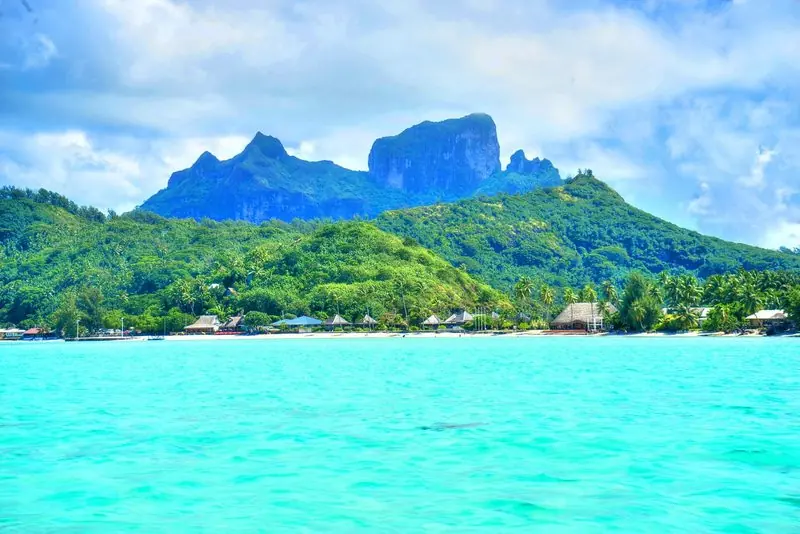
| Région | cinq archipels du Pacifique Sud, 121 îles et atolls répartis sur plus de 2 000 km |
|---|---|
| Echelle | 3 521 kilomètres carrés de terre, population de 278 786 habitants en 2022 dont environ 69 % à Tahiti |
| Saison | saison sèche de mai à octobre environ, saison humide et risque cyclonique de novembre à avril |
| Bora Bora | à 125 milles nautiques au nord-ouest de Papeete, une seule entrée océanique par la passe de Teavanui, sur la face ouest |
| Fakarava | atoll de 60 km sur 21 km avec un lagon de 1 112 kilomètres carrés, le deuxième de Polynésie française |
| Passe nord de Fakarava | 1,37 km de large, la plus grande passe du territoire |
| Passe sud de Fakarava | protégée depuis 2008 et peuplée d'environ 700 requins gris de récif |
| Marquises | à environ 1 370 km au nord-est de Tahiti, sans récif frangeant, inscrites par l'UNESCO en 2024 sous le nom de Te Henua Enata |
| Ports d'entrée | Papeete et Moorea, Nuku Hiva, Hiva Oa et Ua Pou, Bora Bora, Raiatea et Huahine, Rangiroa et Fakarava, plus les Australes et les Gambier |
| Entrée | un formulaire d'arrivée en ligne au moins 48 heures à l'avance, l'accord demandant selon les retours un à trois jours |
| Biosécurité | un questionnaire en ligne payant et une inspection à bord avant la clairance de départ |
| Accès | Faa'a International, à Papeete, est la seule porte long-courrier, avec des pistes intérieures à Bora Bora, Raiatea, Rangiroa, Fakarava et quatre aux Marquises |
| Temporary admission | 24 consecutive months for a foreign pleasure vessel, extended to 36 consecutive months for a hull of 24 m or more, with a further three months possible for force majeure |
| End of the clock | the vessel must leave French Polynesian waters or be cleared through customs, and the regime restarts only on proof of leaving the territory and entering a foreign one, with a reported minimum of six months outside |
| Charter | permitted for foreign-flagged vessels under a licence de charter nautique from the Direction Polynesienne des Affaires Maritimes, granted by presidential decree after an advisory commission, taking several weeks with a provisional licence available |
| Charter conditions | entry in the commercial register, qualifications, insurance and guarantees, a description of the activity and a level three criminal record certificate |
| Cabotage | no bar on carrying paying guests between Polynesian islands once the charter licence is held |
| Tax | French Polynesia is outside the EU VAT territory and levies its own TVA at 5, 13 and 16 per cent, with a 1 per cent rate from 1 July 2026 for operations benefiting the remote archipelagos |
| Fuel | the duty-free diesel benefit for private pleasure vessels under temporary admission was announced for suppression at the Council of Ministers of 10 June 2026 |
| Lifting | the Papeete port slipway is rated at 800 tonnes, 60 m and 4.5 m draught, and Technimarine runs travel lifts of 300 and 75 tonnes taking hulls to about 40 m |
| Berthing | Marina Taina's published tariff documents date from 1 March 2024 and its rates are not public, checked 28 July 2026 |
L'échelle du lieu
La Polynésie française a la taille de l'Europe pour la surface terrestre d'un petit département. Cinq archipels, 121 îles et atolls, et des traversées entre eux qui se comptent en jours. Tahiti concentre environ 69 % de la population et tout le reste est faiblement peuplé. Le mont Orohena, à Tahiti, culmine à 2 241 mètres, et les îles volcaniques sont en général escarpées, vertes et spectaculaires, tandis que les atolls sont des anneaux plats de corail où rien ne dépasse la hauteur d'un cocotier.
La conséquence pour un propriétaire, c'est la préparation. Ce n'est pas une côte où un yacht vagabonde et voit ce qui se présente. Les traversées sont des engagements, les fenêtres météo comptent, et un changement d'avis peut coûter deux jours. La récompense est que les mouillages, une fois atteints, valent tout ce qui existe sur terre et qu'il n'y a personne dedans.
Trois zones de navigation différentes
Les îles de la Société sont le tiers accessible : quatorze îles en deux groupes, avec Tahiti, Moorea et Tetiaroa au vent et Huahine, Raiatea, Taha'a et Bora Bora sous le vent. Moorea est à environ 12 milles nautiques de Papeete. Bora Bora à 125. Raiatea et Taha'a partagent un même lagon, ce qui en fait la navigation la plus facile et la mieux protégée du territoire et la raison pour laquelle la flotte de charter y est basée.
Les Tuamotu, à deux cents milles environ au nord-est de Tahiti, sont les atolls. Des anneaux de corail avec des lagons à l'intérieur, auxquels on accède par des passes, et la plongée y est l'objet même du voyage. Les Marquises sont 1 370 km plus loin au nord-est, îles volcaniques hautes sans récif frangeant, ce qui signifie que les mouillages prennent la houle du large de plein fouet. L'UNESCO a inscrit les Marquises en 2024 sous le nom de Te Henua Enata. Elles sont magnifiques et elles sont inconfortables.
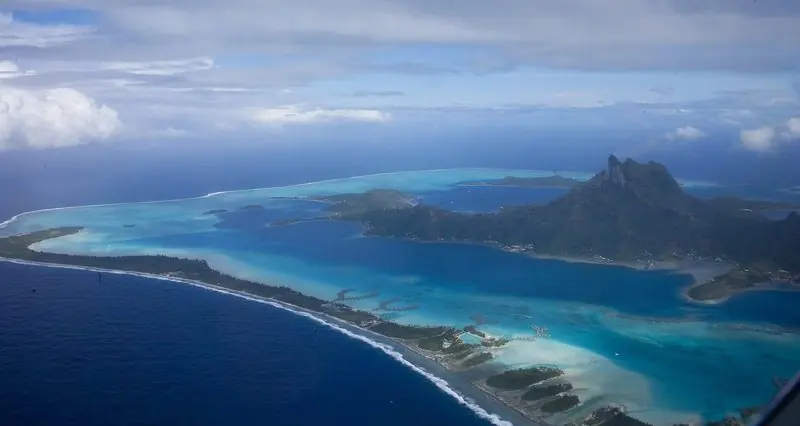
La plus belle navigation en lagon de la planète, approvisionnée par une seule piste à Papeete.
Une semaine, et trois semaines
Une semaine veut dire les îles Sous-le-Vent et rien d'autre. Les invités arrivent à Bora Bora ou à Raiatea, le bateau travaille le lagon commun de Raiatea et Taha'a, traverse vers Bora Bora et Huahine, et tout le monde reprend l'avion. C'est une très bonne semaine d'eau de lagon plate, et c'est ce que la plupart des propriétaires font réellement ici.
Trois semaines achètent les Tuamotu. Papeete ou Moorea, cap au nord-est vers Rangiroa et Fakarava pour une semaine dans les passes, retour par les îles de la Société. Ajouter les Marquises en fait un programme de six semaines avec deux traversées océaniques de plusieurs jours chacune. Un bateau qui a traversé le Pacifique arrive avec les Marquises déjà derrière lui, ce qui est la façon habituelle dont quiconque les voit.
Les passes, et où tient un 50 mètres
On entre dans chaque atoll par une passe, et la passe est le problème technique de cette zone de navigation. L'eau s'entasse dans le lagon par-dessus le récif et s'évacue par un ou deux goulets, si bien que les courants portent dur et lèvent des vagues stationnaires contre une houle contraire. Les transits se calent sur l'étale. La passe de Garuae, à Fakarava, avec ses 1,37 km de large, est la plus facile du territoire et la plus grande. D'autres font quelques centaines de mètres avec du corail des deux côtés, et certaines ne sont tout simplement pas tentées par un grand yacht.
A l'intérieur, les lagons sont peu profonds, semés de patates de corail et généralement mal cartographiés, si bien qu'un 50 mètres avance à la navigation à vue, avec un guetteur à l'avant et une bonne lumière dans le dos. Bora Bora n'a qu'une seule entrée océanique, la passe de Teavanui sur la face ouest, qui reçoit des cargos et des navires de croisière et ne présente aucune difficulté. Tetiaroa n'a aucune passe navigable, de sorte qu'un yacht reste à l'extérieur et débarque en tender. L'amarrage n'existe pratiquement pas : la Marina Taina près de Papeete et le quai de commerce de Papeete sur accord, plus Apooiti à Raiatea. Tout le reste est mouillage ou corps-mort.
Les mouillages et les plongées qui justifient la traversée
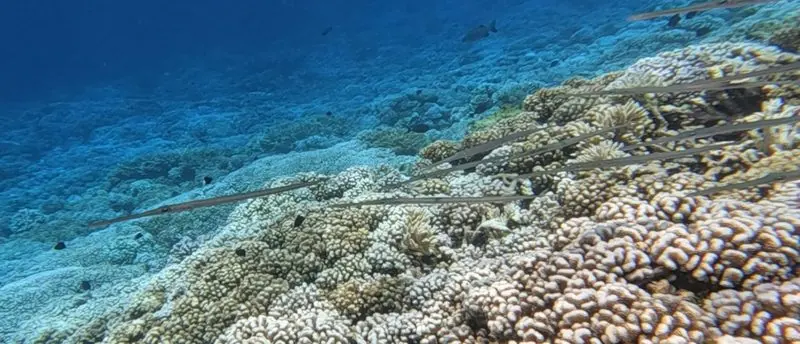
Fakarava est celui pour lequel on revient. La passe sud de Tumakohua est protégée depuis 2008 et abrite environ 700 requins gris de récif, qui se rassemblent dans la passe en un mur que les plongeurs comptent plutôt qu'ils ne le décrivent. L'atoll entier est une réserve de biosphère de l'UNESCO. La passe de Tiputa, à Rangiroa, a ses dauphins qui jouent avec le courant et constitue l'autre plongée obligatoire. Ni l'une ni l'autre n'est un endroit où l'on traverse le courant en tender à la légère.
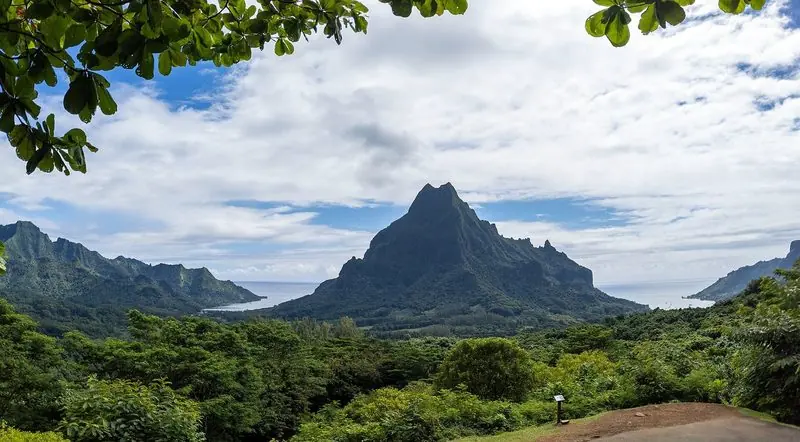
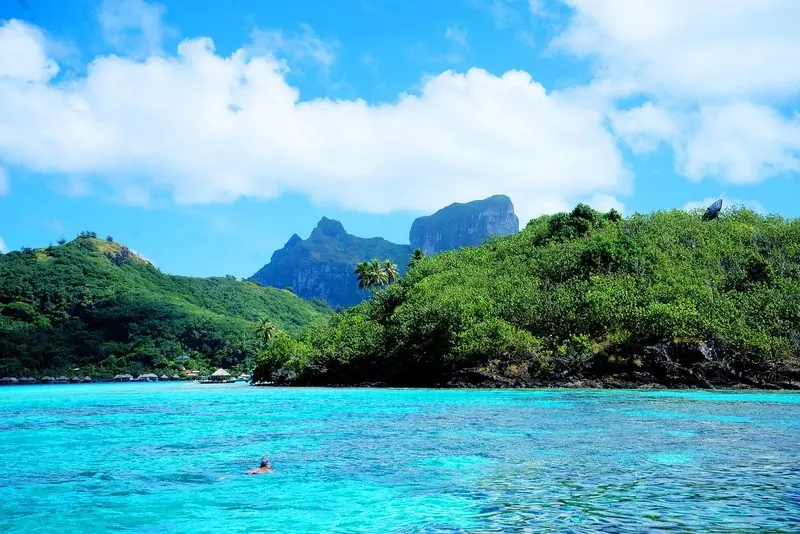
Dans les îles de la Société, les mouillages sont plus doux. Le jardin de corail de Taha'a, les mouillages sur motu au large de Raiatea, la baie d'Opunohu à Moorea sous les aiguilles volcaniques, et le lagon de Bora Bora avec ses hôtels sur les motu. Tetiaroa porte The Brando sur un atoll privé et constitue l'escale discrète pour les propriétaires qui en veulent une. Aux Marquises, Taiohae à Nuku Hiva et les baies de Fatu Hiva sont les mouillages, et tous roulent.
Météo et saison
La saison sèche court de mai à octobre environ, avec des alizés de sud-est établis, une humidité plus faible et une eau claire. C'est la saison de navigation et c'est le moment où la flotte est là. La saison humide, de novembre à avril, apporte de fortes pluies, des grains et le risque cyclonique, et les assureurs tarifent en conséquence. Très peu de grands yachts la passent sur place.
Même en saison sèche, les alizés font que les traversées vers le nord-est, jusqu'aux Tuamotu et aux Marquises, se font contre le vent et contre le courant, ce qui explique que les bateaux venus des Amériques arrivent vent arrière et repartent vers l'ouest. La houle de l'océan Austral arrive sur les passes exposées au sud pendant l'hiver austral et peut les fermer. Les baleines à bosse sont dans ces eaux les mêmes mois, ce que la plupart des invités placent au-dessus de la plongée.
Y aller et y faire venir les invités
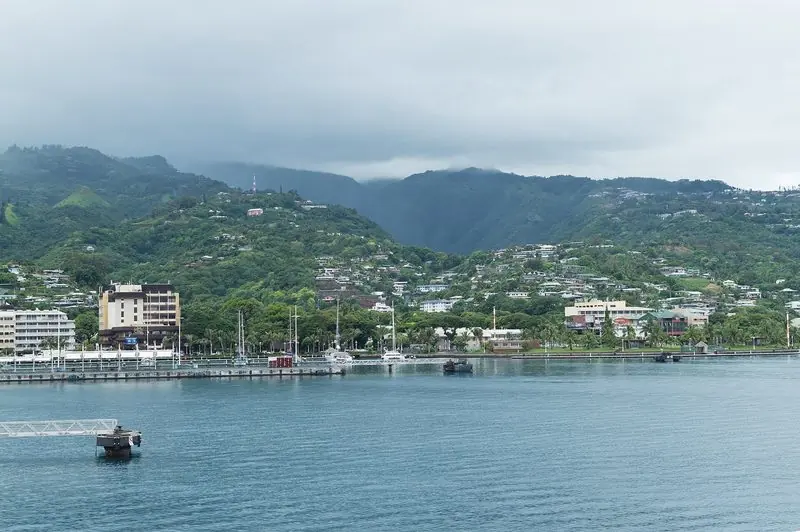
Faa'a International, à Papeete, est le seul aéroport long-courrier du territoire. Les vols viennent de Los Angeles, de Paris via Los Angeles, d'Auckland, de Tokyo et d'une poignée d'autres points, et tout mouvement d'invité passe par cet entonnoir. Depuis Papeete, les lignes intérieures desservent Bora Bora, Raiatea, Huahine, Rangiroa, Fakarava et les quatre pistes marquisiennes, sur de petits appareils avec de vraies limites de bagages.
L'effet pratique est qu'un invité venu d'Europe compte près d'une journée en l'air et une correspondance intérieure au bout. Les jets privés atteignent Papeete mais pas la plupart des terrains intérieurs. C'est pour cette raison que les propriétaires prévoient ici de longs blocs d'invités. Personne ne vient pour quatre nuits.
A terre, et ce qu'il y a à faire
La position honnête est que les invités viennent pour l'eau. A terre, Bora Bora et Taha'a ont les hôtels sur pilotis et leurs restaurants, Moorea a les vallées d'ananas et le belvédère au-dessus d'Opunohu, et Papeete a une ville qui travaille, un marché et les roulottes du front de mer, meilleures que leur nom ne le laisse croire. Raiatea a le marae de Taputapuatea, site religieux polynésien majeur inscrit au patrimoine mondial.
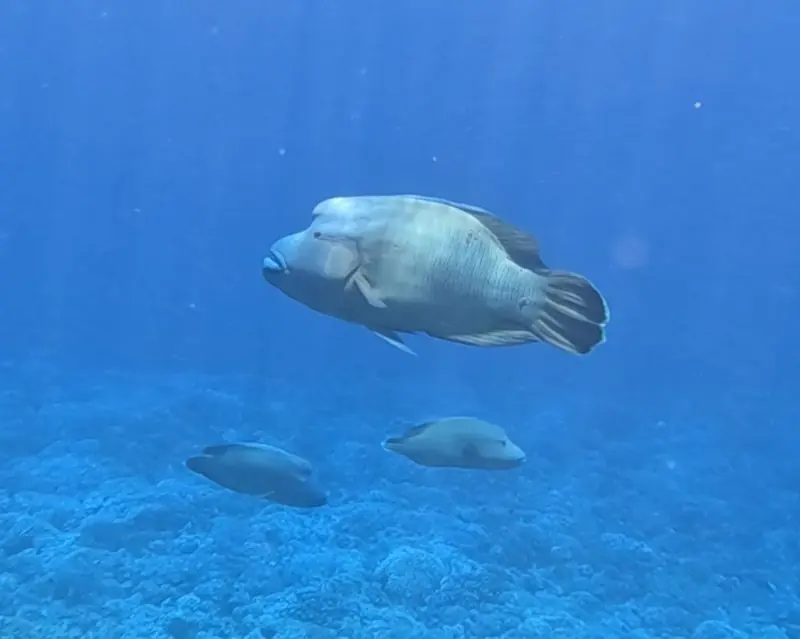
La cuisine est d'influence française et chère parce que presque tout est importé. Le poisson cru, le thon local et le mahi mahi sont les exceptions et sont excellents. La vie nocturne se résume aux bars d'hôtel et à quelques spectacles de danse. Ce qui remplit vraiment les journées, c'est la plongée, le kitesurf, le paddle en travers d'un lagon aux premières lueurs et le fait que l'eau est à 27 degrés et claire jusqu'à 40 mètres.
Papiers, soutien et le vrai inconvénient
Les formalités sont françaises, dématérialisées et faites à l'avance. Les yachts déposent un formulaire d'arrivée en ligne au moins 48 heures avant d'arriver, et les plaisanciers rapportent un délai d'accord d'un à trois jours. Les ports d'entrée sont répartis intelligemment sur les archipels, de Nuku Hiva au nord à Mangareva au sud-est. Avant de partir, un questionnaire de biosécurité payant et une inspection à bord sont exigés. L'exploitation en charter et la situation fiscale d'un yacht sous pavillon étranger sont ici des questions de spécialiste, et elles évoluent, de sorte qu'un propriétaire a besoin d'un agent local et d'un avis à jour.
L'inconvénient tient à l'approvisionnement. Le carburant est disponible à Papeete, à Raiatea et en quelques points éloignés, à des prix qui reflètent la distance, et un gros avitaillement doit être organisé à l'avance. Les pièces viennent de France ou des Etats-Unis et mettent des semaines. Il n'existe dans le territoire aucun chantier de refit capable de prendre un yacht de 50 mètres, si bien qu'une panne sérieuse impose une traversée de milliers de milles ou un spécialiste envoyé par avion. Avitailler au niveau attendu par des invités suppose de le faire venir par les airs. Un propriétaire doit considérer le bateau comme autonome pour toute la saison, parce que fonctionnellement il l'est.
Temporary admission, and the clock that decides the programme
This is the number that shapes a Pacific itinerary and it is published. A foreign pleasure vessel may stay in French Polynesia under temporary admission for a maximum of 24 consecutive months, and for a hull of 24 m or more that maximum is 36 consecutive months. Force majeure can extend it by three further months. At the end of it there are only two options, and the customs administration states them plainly: leave French Polynesian waters with the vessel, or clear her through customs, which means importing her and paying what importation costs. Renewal is not automatic and is not a paperwork exercise. The regime restarts only on proof that the vessel left the territory and entered a foreign one, and the working requirement reported by local agents is a minimum of six months outside French Polynesian waters before the clock begins again.
Two consequences follow for an owner. The first is that a 50 m yacht gets three years here, which is long enough to run a genuine Pacific programme out of Papeete rather than a single season, and long enough that the boat can be left in the territory between guest blocks. The second is that the six-month exit is a real voyage in this part of the ocean, not a run across a border, so the decision to import or to leave has to be taken a year before the clock expires and not a month before. Arrival itself is now a single online declaration filed at least 48 hours ahead, with approval reported at one to three days, and a foreign-flagged vessel operating under a charter licence is admitted temporarily without a bond.
Charter: what a foreign flag may actually do here
A foreign-flagged yacht may charter in French Polynesia, and the answer is a licence rather than a flag change. The instrument is the licence de charter nautique, administered by the Direction Polynesienne des Affaires Maritimes, and the governing text applies in terms to francised vessels and to vessels under a foreign flag alike. The conditions are commercial rather than nautical: the owner or operator must be entered in the commercial register, hold the required qualifications, carry the required insurance and guarantees, produce a description of the intended activity and a level three criminal record certificate. The licence is granted by decree of the President of French Polynesia after the advisory commission on charter navigation has been consulted, which takes several weeks, and a provisional licence can be issued while the file is pending. There is no cabotage bar of the American or Turkish kind once the licence is held, which is precisely why a charter fleet exists at Raiatea and why the Leeward Societies are the accessible week.
The tax position is its own jurisdiction and no EU rule reaches it. French Polynesia is outside the European Union VAT territory entirely and levies its own TVA at 5 per cent reduced, which covers passenger transport and hotel accommodation, 13 per cent intermediate and 16 per cent standard, with a new 1 per cent rate introduced from 1 July 2026 for operations benefiting the remote archipelagos, meaning the Tuamotus, the Marquesas, the Australs and the Gambiers. A charter that starts here is taxed here, on local rates, and none of the EU charter VAT structures an owner may have used in the Mediterranean apply or are needed. The classification of a nautical charter between the 5 and 13 per cent bands is the question worth putting to the licensed local operator in writing, because it moves the number by eight points on every booking.
Fuel, the yard, and what the season actually costs
The commercial sweetener here has been fuel, and it is being taken away. Temporary admission has carried duty-free fuel and duty-free spare parts in transit, arranged through a local broker, and it is a material part of why a long Pacific programme works out of Papeete. At the Council of Ministers of 10 June 2026 the government announced that the duty-free diesel benefit for private pleasure vessels under temporary admission is to be suppressed, as part of a hydrocarbon tax package reported at XPF 3.8 billion, on the stated ground of equity between users. An owner planning a 2026 to 2027 season should price fuel duty-paid and treat any remaining exemption as a bonus rather than a budget line, and should get the current position from the agent in writing before committing to a bunkering port.
The yard position is better than the territory's reputation. The port slipway at Papeete is rated at 800 tonnes, 60 m and 4.5 m of draught, and Technimarine at Papeete runs travel lifts of 300 and 75 tonnes taking hulls to about 40 m, with Raiatea Carenage covering the leeward islands. A 50 m yacht can therefore be taken out of the water in French Polynesia, which is not true in the Maldives or the Grenadines, but capacity to lift is not capacity to refit and the paint, joinery and systems trades are not there. Berthing is the number nobody publishes: Marina Taina's tariff documents date from 1 March 2024 and its rates are not reproduced publicly, checked on 28 July 2026. Set that against Marina di Porto Cervo's published 2026 tariff of EUR 3,698 a day in the band to 40 m from 1 to 20 August, about EUR 102,000 for the month, and the shape of a Polynesian season becomes clear. There is almost no berthing line at all. There is fuel that is about to cost more, air freight for everything, and a delivery measured in weeks.
À terre, accès et réservation
| Getting there | Faa'a International on Tahiti is the only long-haul gateway, and Marina Taina is about ten minutes from it by road. Everything else in the territory is reached by inter-island flight or by the boat itself. Guest changes are therefore built around Tahiti whether the yacht wants to be there or not, and a Marquesas or Gambier itinerary means either a long repositioning leg or an internal flight for the guests. |
|---|---|
| Arriving by sea | Authorised entry points cover the Marquesas, the Australs, the Tuamotu and Gambier groups, and the Society Islands in both the Windward and Leeward groups. Check-in is required immediately on arrival, not at leisure. The exception that catches people is Moorea: you cannot clear in there, it has to be Tahiti, which matters because Moorea is the obvious first stop for anyone arriving from the west. |
| The bond, and who has to post it | Every non-EU crew member and guest needs a repatriation guarantee. That is either cash lodged with a local bank equivalent to a one-way air ticket home, reported at roughly USD 1,700 per non-EU passport, or a bond letter from a registered local agent undertaking to cover repatriation, which is a paid service typically quoted around USD 300 to USD 400. EU nationals arriving by yacht do not post a bond. Short stays of up to 30 days can have it waived. On a yacht with a mixed crew this is a per-passport cost on every rotation, not a one-off on arrival. |
| Temporary admission | A foreign yacht may stay 24 months under temporary admission without paying import duty, which is among the longest windows available anywhere and materially longer than the 18 months the EU allows. It is the reason a Pacific programme can be based here rather than merely passing through. |
| Duty-free fuel | Duty-free fuel is obtainable on most islands, and the entitlement runs six months and is renewable after that. It is arranged through an agent rather than at the pump. In a territory where every litre has crossed an ocean, this is the difference between an affordable season and an unaffordable one. |
| Where a large yacht actually berths | Marina Taina at Punaauia is the territory's premier superyacht facility, offering limited stern-to dockage with controlling depths of 4 to 15 m. Above roughly 65 m the only suitable dock in Tahiti is Papeete Port, where fuel and water come from pipes on the quay. That is the whole of it. Outside Tahiti the yacht is at anchor or on a mooring, which shapes the itinerary far more than the weather does. |
| Parts, and what they cost to land | Nothing is stocked locally at superyacht scale, so spares are air-freighted and cleared by a customs broker. Broker fees run about XPF 10,000 to XPF 25,000 per shipment depending on the courier, on top of freight and duty. Build the lead time into a refit or a warranty job here; a part that is next-day in Antibes is a week away in Papeete. |
| What is not published | There is no public rate card for superyacht dockage at either Marina Taina or Papeete Port, and no published tariff for the agent packages that in practice are compulsory. Agents quote per call and per boat. An owner cannot cost a French Polynesian season from open sources; the honest planning method is to get two agent quotes and compare them against each other. |
Ce que rapportent propriétaires et équipages
The duty-free fuel entitlement runs six months and is renewable, and it is arranged not found
The agent's own published account of its clearance service states that duty-free fuel can be obtained on most islands, that the entitlement is valid for six months and that it is renewable thereafter. This is the agent describing a service it sells, and it should be read as that rather than as an independent audit, but it is consistent across the agents working the territory.
Tahiti CrewClearing in without an agent is possible and is a different set of trade-offs
Published cruiser accounts set the do-it-yourself route against the agent route directly, and the recurring finding is that the agent exists to convert the bond into a letter and to unlock the fuel exemption. Owners who cleared independently report the process as workable but slower, and they pay the cash bond per non-EU passport instead of a letter fee.
Cruising WorldThe customs broker fee is small and the freight lead time is not
Broker charges for a parts shipment are quoted at XPF 10,000 to XPF 25,000 depending on courier. Crews consistently report that the fee is trivial next to the schedule cost: the constraint in French Polynesia is not the price of getting a part cleared but the number of days before it arrives.
Tahiti Crew
Les points forts et les points de vigilance
Points forts
- Twenty-four months of temporary admissionSix months longer than the EU allows, and long enough to base a yacht in the Pacific across two seasons without an import event. For an owner choosing between a Mediterranean and a Pacific programme this is the single most consequential number on the page.
- Duty-free fuel across most of the territorySix-month entitlement, renewable. In a place where fuel has been shipped thousands of miles, an exemption of this kind changes the arithmetic of a long-range programme rather than merely softening it.
- The cruising ground is the pointFive archipelagos across an area the size of western Europe, with the Tuamotu atolls and the Marquesas offering anchorages that receive a handful of yachts a year rather than a handful an hour. Nothing in the Mediterranean is comparable and that is precisely why owners come.
- Clear, published entry rulesThe authorised entry ports, the immediate check-in duty and the bond regime are all stated plainly, and EU nationals are exempt from the bond outright. The paperwork is heavy but it is knowable in advance, which is not true of every remote cruising ground.
Points de vigilance
- The agent is not optionalBond letters, duty-free fuel, inter-island clearance and customs broking all run through a local agent. There is a do-it-yourself route, but it costs the fuel exemption and the bond waiver in practice, so the agent fee is better read as a fixed cost of the destination than as a service you can decline.
- The shore infrastructure is one marina and one quayMarina Taina takes a limited number of yachts stern-to at 4 to 15 m of depth, and anything above about 65 m has exactly one option in Tahiti. There is no second base, no alternative if the berth is taken, and no yard capability of Mediterranean type anywhere in the territory.
- Every non-EU passport is a recurring costThe repatriation bond attaches to people, not to the yacht, so a crew rotation with non-EU nationals repeats the cost and the paperwork each time. On a boat with a mixed nationality crew this is an administrative drag that owners consistently underestimate.
- You cannot clear in at the island you will arrive at firstMoorea is closed as an entry point and Tahiti is not, which forces an arrival routing that is not the natural one and puts the yacht into the territory's one congested area on day one.
- Nothing about the cost is publicNo dockage tariff, no published agent pricing. The figures that circulate for the bond and the broker fees come from agents and cruising guides rather than from an authority, and they should be re-quoted rather than relied upon.
Pour qui: Le propriétaire prêt à engager une saison entière et un bateau autonome, dont les invités veulent de la plongée et des lagons vides et accepteront un long vol pour les obtenir.