Indonesia & Raja Ampat
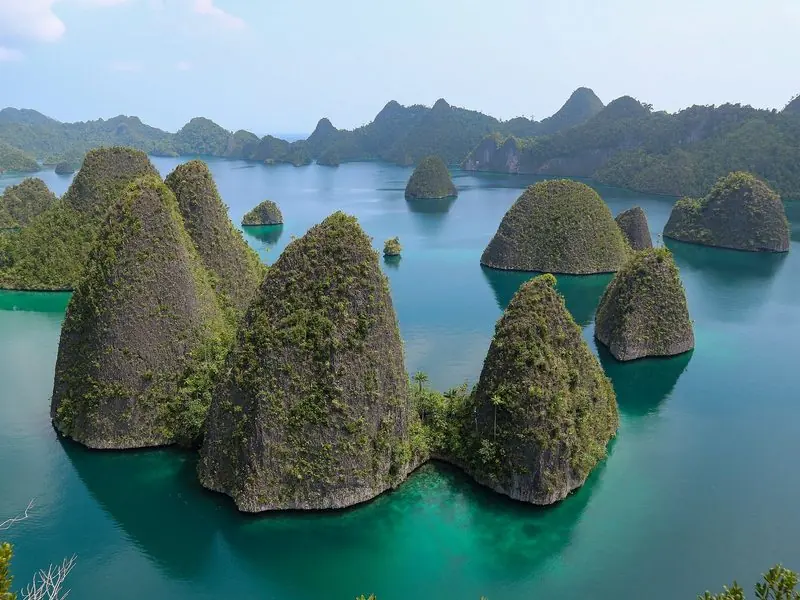
| Région | l'archipel indonésien, de Bali vers l'est par Komodo et la mer de Banda jusqu'à Raja Ampat, en Papouasie occidentale |
|---|---|
| Echelle | quelque 17 000 îles réparties sur plus de 5 000 km |
| Saisons | Komodo généralement d'avril à octobre, Raja Ampat généralement d'octobre à avril |
| Parc national de Komodo | 1 733 kilomètres carrés dont 603 de terre, inscrit au patrimoine mondial de l'UNESCO depuis 1991 |
| Dragons de Komodo | environ 1 700 sur l'île de Komodo et 1 300 sur Rinca, et disparus de Padar |
| Raja Ampat | plus de 1 500 îles, îlots et hauts-fonds autour de Misool, Salawati, Batanta et Waigeo, avec 8 034 kilomètres carrés de terre |
| Biodiversité de Raja Ampat | plus de 600 espèces de coraux durs, soit environ 75 % du total mondial connu, plus 1 508 espèces de poissons |
| Statut de Raja Ampat | parc marin récréatif créé en 2009, réserve de biosphère de l'UNESCO en 2025 |
| Distance | de Labuan Bajo à Sorong, environ 800 milles nautiques en direct |
| Formalités | un système de déclaration en ligne des navires, avec des ports d'entrée dont Benoa à Bali, Kupang, Ambon, Sorong et Biak |
| Permis de navigation | les yachts doivent déclarer à l'avance chaque port envisagé, et beaucoup de ports exigent un agent enregistré |
| Aéroports | Komodo International à Labuan Bajo, piste de 2 750 mètres, et Domine Eduard Osok à Sorong, 2 500 mètres |
| Komodo fees | IDR 150,000 on a weekday and IDR 250,000 at the weekend for international visitors, plus IDR 50,000 for snorkelling and IDR 100,000 for diving, and roughly IDR 150,000 to 200,000 per group for a ranger |
| Raja Ampat permit | IDR 1,000,000 per person for international visitors, about USD 67, valid twelve months and bought by bank transfer through the SIPARI portal |
| Charter | a foreign-flagged yacht may not charter in Indonesia, under the cabotage principle in Law 17 of 2008 on Shipping as amended by Law 66 of 2024 |
| Cruising | the online vessel declaration and e-clearance system that replaced the CAIT covers recreational use only, with no commercial carriage |
| Comparison | Turkey sells a foreign flag a charter licence at EUR 74,423.36 for 39 to 59 m since 19 June 2026 and St Vincent sells one over a customs counter, while Indonesia offers no equivalent |
| Discharge | Indonesian waters are not a MARPOL Special Area on the IMO list and reception facilities east of Benoa are effectively absent, so the standard is the operator's own |
| Berthing | there is no marina berthing for a large yacht east of Bali and no rate card to quote, checked 28 July 2026 |
Le dessin de la zone
L'Indonésie n'est pas une zone de navigation au sens où la Méditerranée en est une. C'est un pays large comme l'Atlantique, et un yacht y travaille deux ou trois secteurs définis. Bali est la porte occidentale et l'endroit qui dispose de quelque chose ressemblant à une infrastructure. Komodo, dans les petites îles de la Sonde, est à environ 250 milles nautiques à l'est. Raja Ampat, au large de la pointe ouest de la Nouvelle-Guinée, est à environ 800 milles au-delà en ligne droite, et davantage par n'importe quelle route qu'un yacht emprunte réellement.
Entre les deux se trouvent la mer de Banda et les îles aux épices, de l'eau profonde, des volcans actifs et des villages qui voient une poignée de yachts par an. Ce passage central est la partie que les propriétaires adorent ou sautent complètement. La décision pratique est de savoir si le bateau engage une saison en Indonésie ou s'il ne fait que passer dans un programme asiatique plus large.
Komodo
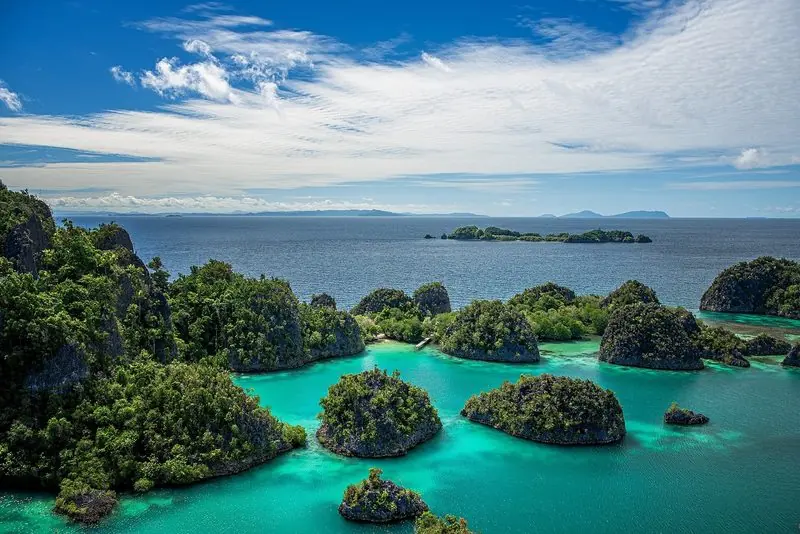
Le parc national de Komodo couvre 1 733 kilomètres carrés, dont seulement 603 de terre, sur les trois îles principales de Komodo, Padar et Rinca et 26 plus petites. Il est inscrit au patrimoine mondial de l'UNESCO depuis 1991. Environ 1 700 dragons vivent sur l'île de Komodo et 1 300 sur Rinca, et les marches encadrées par les gardes sont l'excursion que tous les invités réservent. La marche sur la crête de Padar, avec ses trois baies en contrebas, c'est la photographie.
La plongée est la vraie raison d'amener un bateau. Manta Alley, Crystal Rock, Castle Rock, Batu Bolong, the Cauldron et Tatawa Besar sont les sites qui portent un nom, et la plupart d'entre eux vivent du courant, ce qui les rend si riches et ce qui les rend sérieux. L'eau du versant sud du parc est nettement plus froide que celle du nord. Labuan Bajo, sur Flores, est la ville de base et elle a grandi vite.
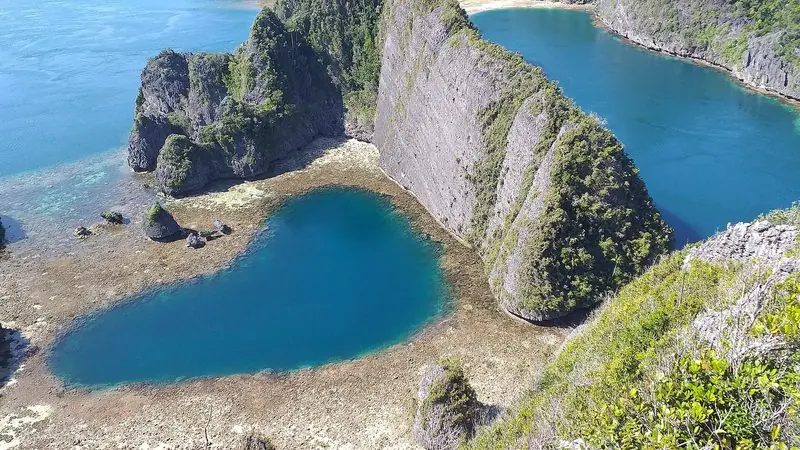
Komodo va d'avril à octobre et Raja Ampat d'octobre à avril, et c'est pourquoi un bateau qui vient ici reste.
Raja Ampat
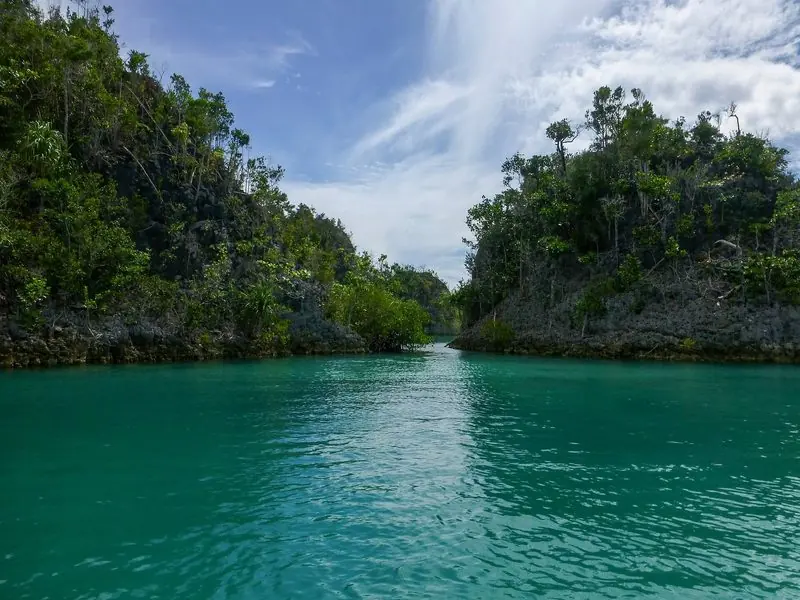
Raja Ampat, ce sont plus de 1 500 îles, îlots et hauts-fonds autour des quatre grandes, Misool, Salawati, Batanta et Waigeo, avec 8 034 kilomètres carrés de terre au total. On y trouve plus de 600 espèces de coraux durs, soit environ 75 % de toutes les espèces connues, ainsi que 1 508 espèces de poissons. La zone est devenue parc marin récréatif en 2009 et réserve de biosphère de l'UNESCO en 2025. Les récifs n'y sont pas seulement bons. Ils sont la référence mondiale à laquelle on mesure les autres récifs.
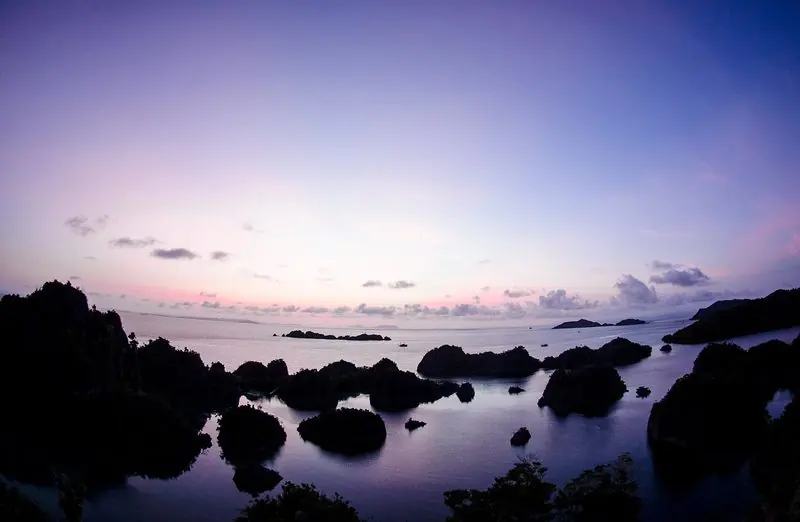
Les quatre secteurs de travail sont les eaux du nord de Salawati, Batanta et du sud-ouest de Waigeo, la baie de Mayalibit au centre de Waigeo, le sud-est de Misool, et les îles Sembilan. Wayag, à l'extrême nord-ouest, est le lagon karstique des cartes postales et se trouve loin de tout. Le détroit de Dampier, entre Waigeo et Batanta, porte dur, et tout s'y plonge en dérivante planifiée sur la marée. Les invités qui plongent ne voudront plus repartir.
Une quinzaine, et une saison
Une quinzaine à Komodo au départ de Labuan Bajo est le programme classique et il fonctionne bien. Les invités arrivent à Komodo International, le bateau couvre le parc en une semaine, et la seconde semaine file vers l'est dans la mer de Flores ou vers le sud autour de Sumba. Tout se trouve à quelques heures du mouillage précédent et l'aéroport est à la porte.
Une quinzaine à Raja Ampat au départ de Sorong constitue l'autre moitié. Ce qui ne fonctionne pas, c'est de vouloir faire les deux dans un même séjour d'invités, parce que les 800 milles qui les séparent forment un convoyage de plusieurs jours en pleine mer. Les propriétaires qui veulent les deux amènent le bateau vers l'est au second semestre, travaillent Komodo pendant la saison sèche, puis rejoignent Raja Ampat pour l'hiver boréal. C'est un engagement de six mois et c'est ainsi que fonctionne la flotte résidente.
Où tient un 50 mètres
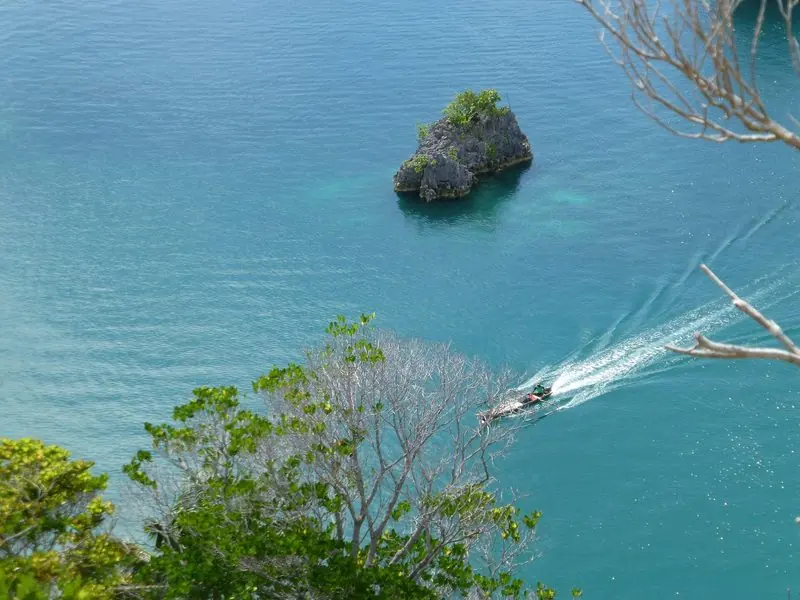
Il n'existe pratiquement aucune place de marina pour un grand yacht dans toute cette zone de navigation. Benoa, à Bali, est le port d'entrée et ce qui se rapproche le plus d'une base, et tout ce qui est à l'est se fait au mouillage. Ce n'est pas le problème que cela paraît, parce que les mouillages sont profonds, abrités et vides, mais cela veut dire que le bateau est entièrement autonome dès l'instant où il quitte Bali.
La vraie contrainte est la cartographie. Une grande partie de l'Indonésie orientale est levée selon des standards du dix-neuvième siècle ou pas levée du tout, les récifs montent à pic depuis l'eau profonde, et l'imagerie satellite s'utilise couramment à côté de la carte. Un yacht de 50 mètres avance par bonne lumière avec un guetteur et un tender en éclaireur dans les passages étroits. Les profondeurs sont souvent trop grandes pour mouiller près du bord, si bien qu'il est normal de filer beaucoup de chaîne et de vérifier soigneusement la tenue.
Météo et les deux saisons
L'archipel est à cheval sur l'équateur et vit au rythme des moussons plutôt que d'un été et d'un hiver. Komodo est généralement considérée comme la meilleure d'avril à octobre, sous la mousson sèche de sud-est, avec des conditions établies et une eau claire. Raja Ampat fonctionne à l'inverse, et c'est d'octobre à avril que la fenêtre y est la plus calme. Cette opposition est le fait le plus utile pour préparer une année en eaux indonésiennes.
La pluie, quand elle vient, tombe fort et brièvement. Les grains se forment vite et la visibilité chute avec eux. La température de l'eau est chaude partout sauf sur le versant sud de Komodo, où une remontée d'eau froide la fait baisser fortement et où les invités voudront une combinaison qu'ils n'avaient pas prévue. L'Indonésie se trouve hors des principales ceintures cycloniques tropicales, près de l'équateur, même si les îles du sud sont assez proches du système australien pour mériter une surveillance.
Faire venir les invités à bord
Komodo International, à Labuan Bajo, dispose d'une piste de 2 750 mètres, a traité plus d'un million de passagers en 2024 et a obtenu le statut international en 2024, avec des liaisons vers Kuala Lumpur. Domine Eduard Osok, à Sorong, a 2 500 mètres et se connecte via Jakarta et Makassar, la petite piste de Waisai prenant le relais vers Raja Ampat. Les deux sont accessibles en jet d'affaires.
La route réaliste pour un invité européen est un long-courrier vers Singapour, Jakarta ou Bali et une correspondance intérieure de deux à quatre heures ensuite. Ajoutez le trajet en voiture et la navette en tender et un invité compte près de deux jours depuis Londres. Le traitement des bagages sur les vols intérieurs est un vrai risque, et les équipages d'ici gardent couramment le matériel de plongée à bord plutôt que de compter sur les invités pour l'apporter.
A terre, et ce que font vraiment les invités
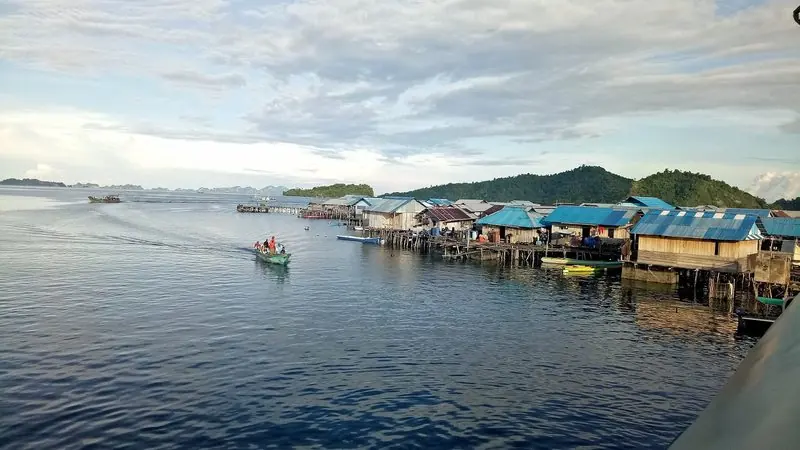
C'est une destination d'eau et un propriétaire doit régler les attentes en conséquence. A terre, à Komodo, ce sont les marches avec les gardes pour les dragons, la crête de Padar et les plages de sable rose. A Raja Ampat, ce sont les visites de village, les oiseaux de paradis à l'aube sur Waigeo et le point de vue au-dessus du karst de Piaynemo. Bali, au début ou à la fin, fournit les temples, Ubud, les restaurants et tout ce qui pourrait manquer à un invité.
En dehors de Bali, la cuisine est locale et simple, de sorte qu'un bateau avitaille sérieusement à Benoa ou fait venir ses vivres par avion. La vie nocturne à l'est de Bali n'existe pas. Ce qui remplit les journées, c'est la plongée, la nage au-dessus de récifs qui comptent plus d'espèces de coraux que toutes les Caraïbes réunies, le kayak dans le karst et le fait que la plupart des mouillages ne contiennent rien d'autre qu'un bateau de pêche.
Papiers, carburant, soutien et le vrai inconvénient
Les formalités passent par un système de déclaration en ligne des navires qui a été modifié plus d'une fois, avec des ports d'entrée dont Benoa, Kupang, Ambon, Sorong et Biak. Les yachts sont censés déclarer à l'avance chaque port envisagé, ce qui s'accorde mal avec la façon dont on navigue réellement dans un archipel, et beaucoup de ports exigent désormais un agent local enregistré. Les droits d'entrée dans les parcs nationaux et marins sont facturés à part et sont contrôlés. La situation d'un yacht sous pavillon étranger au regard du charter est la première chose à régler et exige un avis local à jour, pas une habitude rapportée d'Europe.
Le carburant est disponible à Benoa et dans les grands ports, la disponibilité est correcte et c'est la qualité qui inquiète, de sorte que le traitement et la filtration du carburant comptent. Il n'existe en Indonésie aucun chantier de refit capable de prendre un yacht de 50 mètres, et Singapour, Phuket ou l'Australie sont les solutions de repli, chacune à plusieurs jours. Une évacuation sanitaire depuis Raja Ampat est un exercice de préparation sérieux. Face à tout cela, les récifs de Misool sont les plus riches au-dessus desquels un yacht privé puisse mouiller où que ce soit sur terre.
What the permits cost, and what a berth does not
The park fees are the running cost here and they are published. Komodo National Park charges international visitors IDR 150,000 on a weekday and IDR 250,000 at the weekend, with IDR 50,000 more for snorkelling and IDR 100,000 for diving per person, and a ranger fee of roughly IDR 150,000 to 200,000 per group, and the park has been moving during 2026 to a single bundled ticket per route. Raja Ampat is the bigger number and the better value: the marine park entry permit is IDR 1,000,000 per person for international visitors, about USD 67, valid for twelve months from purchase and bought by bank transfer when registering on the SIPARI portal. For twelve guests that is IDR 12,000,000 for a year of access to the richest reefs on the planet, and it is checked.
Berthing does not exist east of Bali in any form a rate card could describe, so the berthing line in an Indonesian season is close to zero and the cost sits in fuel, agency, park permits and air freight. That is the inverse of the Mediterranean arithmetic. Marina di Porto Cervo's published 2026 tariff charges EUR 3,698 a day in the band to 40 m from 1 to 20 August, roughly EUR 102,000 for the month, and EUR 195,819 for a 1 May to 31 October contract, which is more than an entire Indonesian programme will spend on anything except fuel. What an owner is buying instead is total self-sufficiency: no yard in the country will take a 50 m yacht, Singapore, Phuket and Australia are each days away, and a medical evacuation from Raja Ampat is a planning exercise rather than a phone call.
Charter: the cabotage answer, stated plainly
A foreign-flagged yacht may not charter in Indonesia. The cabotage principle is codified in Law 17 of 2008 on Shipping, most recently amended by Law 66 of 2024, and it reserves the carriage of goods and the transport of passengers within domestic waters to Indonesian-flagged vessels crewed by Indonesian nationals. There is no permit, licence or fee that buys a foreign flag out of it for passenger carriage. What a foreign yacht may do is cruise, under the online vessel declaration and e-clearance system that replaced the old CAIT, and that clearance covers recreational use only with no commercial carriage of any kind. The narrow exemptions in the 2024 amendment are for offshore work where no Indonesian-flagged vessel is available, and they do not reach yacht charter.
That single rule explains the shape of the fleet an owner sees here. The commercial boats working Komodo and Raja Ampat are Indonesian-flagged, which is why the phinisi is the local charter platform rather than a European motor yacht, and it is why a visiting owner cannot defray a season by putting the boat out between guest blocks. An owner who wants the yacht to earn in Indonesian waters is looking at Indonesian registration and an Indonesian operating structure, not at paperwork. Set against Turkey, which since 19 June 2026 sells a charter licence to a foreign flag for EUR 74,423.36, and the Grenadines, which sell one over a customs counter, Indonesia simply does not offer the transaction.
Discharge, and why it matters more here than anywhere
Indonesian waters are not a MARPOL Special Area, so the general convention rules are the legal floor and they are a long way below what these reefs need. There is no MARPOL Special Area covering the archipelago on the IMO's own list, and there are no reception facilities of any consequence east of Benoa. The binding rules a yacht will actually meet are the park ones: Komodo and Raja Ampat both regulate anchoring and activity inside their boundaries, permits are checked, and both are UNESCO-listed, Komodo as a World Heritage site since 1991 and Raja Ampat as a biosphere reserve since 2025.
The practical position is therefore a matter of the operator's own standard rather than of enforcement, which is exactly why it should be written into the boat's orders before she leaves Bali. A yacht working Misool for a week over reefs holding about 75 per cent of the world's known hard coral species has no business discharging anything, and the tankage to avoid it is a specification question settled at build or refit. Anchoring is the same discipline. Depths are frequently too great to anchor close in, charts are nineteenth-century in places, and a chain laid across a coral head does damage that no permit fee compensates.
À terre, accès et réservation
| Getting guests aboard | Komodo International at Labuan Bajo has a 2,750 m runway and gained international status in 2024 with services to Kuala Lumpur. Domine Eduard Osok at Sorong has 2,500 m and connects through Jakarta and Makassar, with the small strip at Waisai onward into Raja Ampat. The realistic route for a European guest is a long-haul flight to Singapore, Jakarta or Bali and a domestic connection of two to four hours, the better part of two days from London. Baggage handling on the domestic legs is a real risk, which is why crews here routinely keep dive gear aboard rather than trust it to a guest's suitcase. |
|---|---|
| How the cruising clearance works | Clearance runs through an online Vessel Declaration System that replaced the old CAIT and has been changed more than once, with ports of entry including Benoa, Kupang, Ambon, Sorong and Biak. Yachts are expected to declare every intended port in advance, which sits awkwardly with how anyone actually cruises an archipelago, and many ports now require a registered local agent. The clearance covers recreational use only, with no commercial carriage of any kind. |
| Local pilots are now a rule, not a courtesy | Government rules are being implemented to require boats in Raja Ampat to engage local pilots and captains, both to provide employment and to bolster reef protection. The reason is on the record: since 2017, three vessels - the 120-passenger cruise ship Caledonian Sky and two yachts - have crashed into the corals, often at low tide, causing irreparable damage to the reef structure. |
| What the permits actually cost | Komodo National Park charges international visitors IDR 150,000 on a weekday and IDR 250,000 at the weekend, plus IDR 50,000 for snorkelling and IDR 100,000 for diving per person, and a ranger fee of roughly IDR 150,000 to 200,000 per group. Raja Ampat's marine park permit is IDR 1,000,000 per person for international visitors, about USD 67, valid twelve months from purchase and bought by bank transfer through the SIPARI portal - for twelve guests that is IDR 12,000,000 for a year of access. |
| What a berth does not cost, because there is none | There is no marina berthing for a large yacht anywhere east of Bali and no rate card to quote, checked 28 July 2026. The cost that would sit on a Mediterranean berthing line instead sits in fuel, agency fees, park permits and air freight - the inverse of the Mediterranean arithmetic, where Marina di Porto Cervo's 2026 tariff alone runs about EUR 102,000 for a August month. |
| Charter: the cabotage answer | A foreign-flagged yacht may not charter in Indonesia at any price. The cabotage principle in Law 17 of 2008 on Shipping, as amended by Law 66 of 2024, reserves domestic passenger carriage to Indonesian-flagged vessels crewed by Indonesian nationals, and there is no permit or fee that buys a foreign flag out of it. That is unlike Turkey, which has sold a foreign-flag charter licence for EUR 74,423.36 since 19 June 2026, or St Vincent, which sells one over a customs counter. |
| Fuel, refit and medical evacuation | Fuel is available at Benoa and the larger ports; availability is fine and quality is the concern, so onboard polishing and filtration matter. No refit yard in Indonesia will take a 50 m yacht - Singapore, Phuket or Australia are the fallback, each days away. Medical evacuation from Raja Ampat is a serious planning exercise, not a phone call. |
Ce que rapportent propriétaires et équipages
The reserve's own recovery numbers, not a marketing claim
Fish biomass inside the Misool no-take zones rose 250 per cent over six years, a figure drawn from a Mark Allen study at Murdoch University and cited by the foundation that runs the reserve. The Misool Marine Reserve, founded by Andrew and Marit Miners in 2005, now spans about 1,220 square kilometres of no-take zones and has been credited elsewhere with lifting shark populations sharply within its boundaries.
Marit Miners, co-founder, Misool Foundation (Ocean Panel perspective piece)Three groundings on coral since 2017 are why local pilots are now compulsory
The 120-passenger cruise ship Caledonian Sky and two yachts have crashed into the reefs since 2017, often at low tide, causing irreparable damage to the coral structure. That record is the reason Indonesia is moving to require boats in Raja Ampat to engage local pilots and captains.
Boat International, reporting from the phinisi Prana by AtzaroShark numbers are the crew's own yardstick for a healthy reef, and this one has plenty
Mick Taylor, cruise director and dive instructor aboard the 55 m phinisi Prana by Atzaro, has said shark numbers are one of the best indicators of a healthy reef system in these waters, and that Raja Ampat has them in quantity.
Mick Taylor, cruise director and dive instructor, Prana by Atzaro (Boat International)The crew who work here still find the place disorienting in a good way
Captain Saiful Hadi, who navigates Prana by Atzaro through Raja Ampat's bays, has said nothing prepares a visitor for a place like this, and that he sometimes cannot believe it exists himself.
Captain Saiful Hadi, master, Prana by Atzaro (Boat International)
Les points forts et les points de vigilance
Points forts
- The reef recovery here is measured, not just claimedMisool's no-take marine reserve, run by the Misool Foundation, saw fish biomass increase by 250 per cent over six years, a figure the foundation's own co-founder cites from a Mark Allen, Murdoch University study. Onboard, the crew of the phinisi Prana by Atzaro rate shark numbers as one of the best live indicators of a healthy reef, and Raja Ampat has plenty.
- Two seasons that run in opposition keep a resident boat in season year-roundKomodo's dry season runs April to October and Raja Ampat's calm window runs October to April, so an owner committing six months to Indonesia never has to sit out either ground's bad weather.
- The published park fees are cheap for what they buyRaja Ampat's marine park permit runs about USD 67 a guest for twelve months of access to reefs holding roughly 75 per cent of the world's known hard coral species - a fraction of a single Mediterranean berth night.
- No berth invoice, but real self-sufficiency insteadThere is no marina berthing east of Bali at any price, so the cost that would sit on a Mediterranean tariff card moves entirely into fuel, agency and permits - a different kind of ownership, not a cheaper version of the same one.
- The place still produces the reaction owners come here forCaptain Saiful Hadi, who has run guests through these waters, put it simply: sometimes he cannot believe Raja Ampat exists himself.
Points de vigilance
- The charts cannot be fully trustedMuch of eastern Indonesia is surveyed to nineteenth-century standards or not at all. Since 2017, three vessels - the 120-passenger cruise ship Caledonian Sky and two yachts - have crashed into the coral, often at low tide, causing irreparable damage to the reef structure.
- There is no refit capability in the country for a boat this sizeSingapore, Phuket or Australia are the fallback for anything serious, each of them days away by sea, and medical evacuation from Raja Ampat is a genuine planning exercise rather than a call to an ambulance.
- Cabotage closes the one thing a European owner might expectA foreign-flagged yacht cannot charter in Indonesia at any price under Law 17 of 2008 as amended in 2024. There is no licence to buy here, unlike Turkey's EUR 74,423.36 foreign-flag charter licence or the Grenadines' over-the-counter version.
- The new local-pilot rule could price some vessels out altogetherPrana by Atzaro's own cruise director and dive instructor, discussing the proposal that followed the coral groundings, said it could help price certain vessels out of Raja Ampat, though he also called streamlining boat traffic crucial to saving the destination from overtourism.
- Nightlife and food ashore do not exist east of BaliWhat fills the days is diving and village visits; a boat provisions properly in Benoa or flies supplies in, and an owner should set guest expectations accordingly before the yacht leaves Bali.
Pour qui: Le propriétaire dont les invités plongent, avec un bateau autonome, un bon agent et la patience nécessaire à des permis et à des traversées qui se comptent en jours.