New Zealand & the Bay of Islands
| Northland, New Zealand, between Cape Brett and the Purerua Peninsula; tourism sources count 144 islands, Britannica about 150 | |
| Opua is New Zealand's main Customs and MPI Place of First Arrival for yachts crossing from the Pacific | |
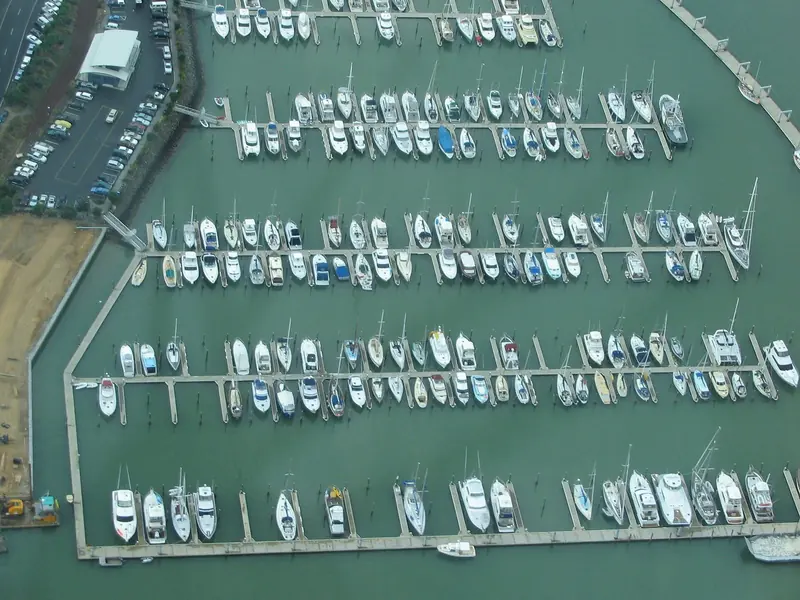
| Bay of Islands Marina at Opua | 420 berths (recently expanded), a 50-tonne travel lift, a 60-tonne haulout trailer and 74 hardstand spaces |
|---|---|
| The open anchorage is about seven miles from the marina, according to Marina Manager Dan Alexander | |
| Marsden Cove Marina, Whangarei, roughly 50 nautical miles south, is the alternative Port of Entry, with 236 berths and a bigger town behind it | |
| Norsand Boatyard, Whangarei, hauls vessels up to 120 tonnes and 11 metres beam | |
| Pacific cyclone season runs 1 November to 30 April; the cruising fleet arrives in New Zealand May/June and heads back north April/May | |
| A passage from Fiji to the Bay of Islands is about 1,100 nautical miles, typically 7 to 10 days | |
| The Queen's Birthday Storm of June 1994 killed 3 sailors, sank or dismasted 12 yachts and forced 21 rescues from a fleet of about 35 boats bound for Tonga | |
| A yacht may stay in New Zealand up to 24 months under a Temporary Import Entry without paying duty or GST; permanent import carries 15 percent GST and, in most cases, 5 percent duty | |
| A refreshed Temporary Import of Small Craft Guide, built by NZ Marine with New Zealand Customs, took effect 1 December 2025 | |
| Russell (Kororareka) was the Southern Hemisphere's biggest whaling port by the 1830s, with up to 30 ships and 1,000 men ashore at once, and was nicknamed the "hellhole of the Pacific" | |
| The Treaty of Waitangi, New Zealand's founding document, was first signed at Waitangi, on the bay, on 6 February 1840 | |
| The Bay of Islands Swordfish Club, founded 1910, is the second-oldest game-fishing club in the world after California's Tuna Club of Avalon (1898); Zane Grey's 1926 book put it on the international map | |
| Bay of Islands Sailing Week, founded in 2003 by Tony and Nina Kiff, runs every January and is now New Zealand's biggest regatta of its kind | |
What Makes the Bay of Islands a Cruising Ground
Cruising guides count roughly 144 islands between Cape Brett and the Purerua Peninsula; Britannica's figure runs closer to 150, and the gap comes down to whether every rock above the tideline gets counted. Either way, the working number for a cruising sailor is the same: dozens of genuine anchorages inside a bay small enough to island-hop across in a single afternoon, sheltered from the open Pacific by Cape Brett to the north-east. Bay of Islands Marina Manager Dan Alexander put the practical version of it to Boating New Zealand in August 2026: "The Bay is just a stunning spot to put the pick down, and its all only seven miles from the marina."
That combination of shelter and closeness pulls in two different fleets. Marina Director Paul McDonald told the same publication that the Pacific fleet is only part of the picture: "So are Auckland boat owners looking for a different base." Local launches, offshore cruising yachts, sportfishing boats and superyachts share the same pontoons for that reason, and the marina's manager has been blunt that the ecosystem cannot simply expand to meet demand: "There are only so many marina berths out there. Putting a marina into the ecosystem is quite challenging regarding the consents required."
Opua, the Port Where a Pacific Crossing Ends
Dan Alexander's description of the marina's role is unambiguous: "We see the absolute bulk of the international leisure offshore cruising market make Customs and MPI clearance into the country here... We get huge influxes of offshore flagged vessels." Vessels must arrive with a demonstrably clean hull; under New Zealand's Craft Risk Management Standard, most cruising yachts fall into the long-stay category and must show the entire hull, niche areas included, was cleaned within 30 days of arrival, checked on site by MPI officers at Opua before anyone goes ashore.
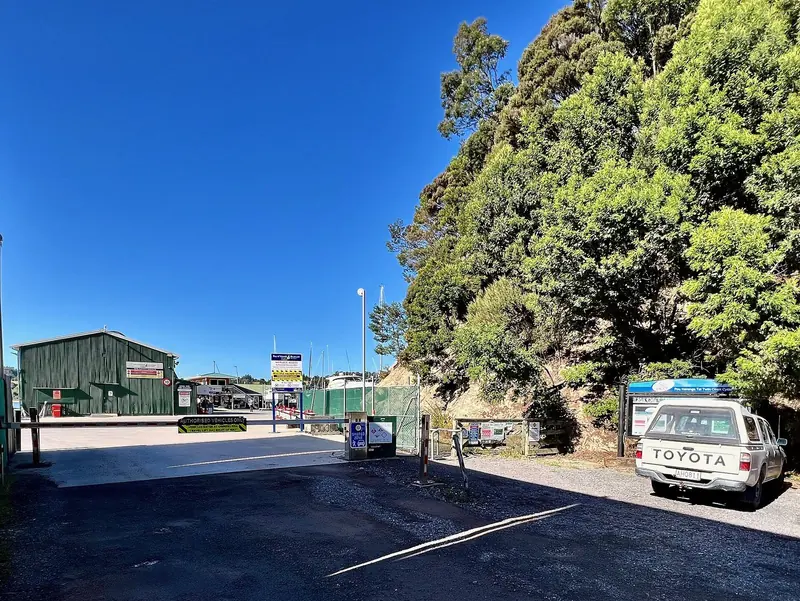
The marina itself carries 420 berths after a recent expansion, plus a 50-tonne travel lift, a 60-tonne haulout trailer and 74 hardstand spaces, all Alexander summarises as "it's got everything you need... it's all within walking distance." A crew that would rather clear in somewhere bigger has one real alternative: Marsden Cove Marina at Whangarei, roughly 50 nautical miles south, a smaller 236-berth facility but backed by a proper town and by Norsand Boatyard, which hauls vessels up to 120 tonnes and 11 metres beam, well beyond what Opua's own yard handles.
Bay of Islands Marina at Opua clears, in its own manager's words, "the absolute bulk of the international leisure offshore cruising market" into New Zealand - and the anchorage it opens onto is seven miles away.
The Season a Cyclone Belt Forces on You
New Zealand's official cyclone-season dates cover the entire tropical Pacific from Fiji to French Polynesia, which is why the annual migration is so predictable: boats make landfall through May and June once the season is closing, cruise New Zealand over its own summer, then look for a weather window north again from April. A passage from Fiji to the Bay of Islands runs about 1,100 nautical miles and typically takes 7 to 10 days; the Island Cruising Association runs an organised Pacific Rally over the route each year for crews who want routing support rather than going it alone.
That support exists because the alternative has a body count. In June 1994 the Queen's Birthday Storm caught a fleet of about 35 boats that had left Auckland for Tonga, a four-day system with winds recorded over 90 knots and seas to 12 metres; three sailors died, twelve yachts were lost or dismasted and twenty-one people were rescued, in what became New Zealand's most intensive maritime search operation. It remains the reference point for why crews now lean on organised rallies and professional routing rather than picking their own weather window on a hunch.
What It Costs to Base a Boat Here
New Zealand's Temporary Import Entry (TIE) scheme lets a foreign-owned yacht stay up to 24 months without paying duty or GST, provided the owner is not a New Zealand resident and the boat is not sold or chartered locally; a refreshed Temporary Import of Small Craft Guide, built by industry body NZ Marine together with New Zealand Customs, took effect 1 December 2025. NZ Marine's Executive Director Peter Busfield described the update as keeping "practical, approachable processes while reinforcing New Zealand's position." A yacht that is permanently imported instead faces 15 percent GST and, in most cases, 5 percent duty on its value at the date of import, according to maritime law firm Dawson & Associates, though duty is waived for vessels built in a country with a free trade agreement with New Zealand.
What is not published: Bay of Islands Marina's own berth rates. Its rates page splits pricing into Low and High Season, and Short, Extended and Long Stay tiers, but the actual figures sit inside an image-based rate chart rather than readable text, with the site directing enquiries to a phone call on +64 9 402 7124 or VHF channel 73 for urgent bookings. The boatyard is the same story: the marina's own site names its 50-tonne travel lift and 60-tonne trailer but pushes haulout pricing to a separate rates document rather than posting it. A Whangarei-based cruiser comparing Norsand Boatyard against a rival yard could only report that "the haul/launch fee was a little less at Norsand" than at Port Whangarei, without naming a figure either.
History That Explains Why Sailors Still Detour Here
Russell, known to Maori as Kororareka, was the biggest whaling port in the Southern Hemisphere by the 1830s, with up to 30 ships and as many as 1,000 men ashore at once; the drinking, brawling and disorder earned it the nickname "hellhole of the Pacific," a phrase most commonly traced to Charles Darwin's account of his own visit. New Zealand's first capital briefly sat at nearby Okiato before the seat of government moved on, and Russell itself remains the country's oldest European settlement.
Six years after Darwin's visit, the Treaty of Waitangi, New Zealand's founding document between the British Crown and Maori rangatira, was first signed on the bay's shore at Waitangi on 6 February 1840, a date still marked as a national public holiday. The bay's other export is angling history: the Bay of Islands Swordfish Club, founded in 1910 as the Bay of Islands Kingfish Club, is the second-oldest game-fishing club in the world after California's Tuna Club of Avalon. American writer Zane Grey fished here through the 1920s and published Tales of the Angler's Eldorado, New Zealand in 1926, and the scoreboards from his 1925-1930 seasons still hang, restored, in the Russell clubhouse.
A Fleet That Comes Back Every Summer
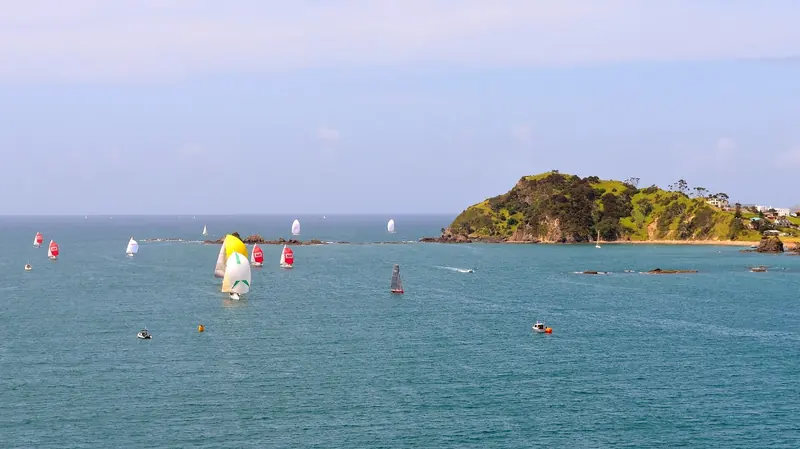
Bay of Islands Sailing Week began in 2003 with 39 boats, the idea of English-born residents Tony and Nina Kiff after they sailed in on their own yacht with four children and settled locally; it now runs every January as, in the words of the late broadcaster Peter Montgomery, "the best big boat regatta in New Zealand." Sailor Cees Romeyn has raced every edition since it started, still competing at 83 in 2025 and finishing fourth in his division, the kind of loyalty a one-off tourist stop does not usually earn.
The cruising side tells the same story. A family aboard the yacht Terikah, arriving from Alaska, described their own Opua clearance as routine rather than stressful: "Customs came by at 8am, no drama and good conversation," and found the marina itself part of the appeal, "the camaraderie and socialization of post-passage marina stays, sharing stories with friends we hadn't seen since the Marquesas." Alexander's own count of who stays backs it up: some crews provision and leave within days, but many spend an entire New Zealand summer cruising the country, and some, he says, come back for a second season.
À terre, accès et réservation
| Season | Fleet arrives from the Pacific May-June as the cyclone season (1 November-30 April) closes, cruises New Zealand's own summer, then looks for a weather window north again from April |
|---|---|
| Getting there (crew/owner) | Kerikeri (Bay of Islands) Airport has daily Air New Zealand flights to Auckland, about 50 minutes; the only other airport within 200km is Whangarei |
| Clearing in (yacht) | Opua is New Zealand's main Place of First Arrival for Pacific-crossing yachts; Customs and MPI officers work on site at Bay of Islands Marina; a clean hull within 30 days of arrival is required under the Craft Risk Management Standard |
| Berthing | Bay of Islands Marina, Opua: 420 berths, tiered Short/Extended/Long Stay seasonal rates; Marsden Cove Marina, Whangarei (~50nm south): 236 berths, alternative Port of Entry |
| Duty and GST | Temporary Import Entry allows up to 24 months with no duty or GST for a foreign-owned yacht; permanent import carries 15 percent GST and, in most cases, 5 percent duty (waived for FTA-country builds) |
| Haulout | Bay of Islands Marina boatyard: 50-tonne travel lift, 60-tonne haulout trailer, 74 hardstand spaces; Norsand Boatyard, Whangarei, handles vessels up to 120 tonnes and 11m beam for bigger jobs |
| What is not published | Bay of Islands Marina's berth rental rates and boatyard haulout pricing are both gated behind image-based rate charts or a separate PDF rather than a readable public table; enquiries go to +64 9 402 7124 or VHF channel 73 |
Ce que rapportent propriétaires et équipages
The marina manager on how much of the offshore fleet actually clears in here
"We see the absolute bulk of the international leisure offshore cruising market make Customs and MPI clearance into the country here. We get huge influxes of offshore flagged vessels."
Dan Alexander, Marina Manager, Bay of Islands Marina, to Boating New ZealandThe marina's director on who else the facility actually serves
"The Pacific Fleet is an important part of the operation. But so are Auckland boat owners looking for a different base."
Paul McDonald, Director, Bay of Islands MarinaA cruising family on how routine their Opua clearance actually was
"Customs came by at 8am, no drama and good conversation." The family also singled out "the camaraderie and socialization of post-passage marina stays, sharing stories with friends we hadn't seen since the Marquesas."
SV Terikah cruising family (from Alaska), ship's blogNew Zealand's marine industry body on why the import rules were rewritten, not loosened
The refreshed Temporary Import of Small Craft Guide keeps "practical, approachable processes while reinforcing New Zealand's position."
Peter Busfield, Executive Director, NZ MarineA racer who has done every edition of the regatta since it began, on why he keeps coming back
Cees Romeyn has raced Bay of Islands Sailing Week every year since its first edition in 2003, still competing and placing fourth in his division at age 83 in 2025.
Cees Romeyn, competitor, Bay of Islands Sailing Week, reported by Boating New Zealand
Les points forts et les points de vigilance
Points forts
- A real Port of Entry, not an improvised oneOpua has Customs and MPI officers stationed on site specifically to process the offshore cruising fleet, so a crew off a three-week Pacific passage clears in without a separate trip inland.
- A genuine tax break for anyone actually cruising rather than importingA foreign-flagged yacht can stay up to 24 months without paying New Zealand's 15 percent GST or 5 percent duty under a Temporary Import Entry, as long as it leaves again within that window.
- Density of real anchorages inside real shelter144 to 150 islands packed into a roughly 16-mile bay behind Cape Brett means a cruising boat can change scenery daily without ever standing out in open Pacific swell.
- History with genuine weight, not marketing copyThe Treaty of Waitangi was signed on this shore, Russell was the Southern Hemisphere's biggest whaling port, and the Bay of Islands Swordfish Club is the world's second-oldest game-fishing club - depth a purely scenic bay does not have.
Points de vigilance
- The season is not a choice, it is a cyclone belt's leftoverCruising the Bay of Islands means being in New Zealand from roughly May to April specifically because the South Pacific is unsafe the rest of the year; a crew that wants both the tropics and the Bay of Islands in the same season cannot really have it.
- Getting here or leaving carries real, documented riskThe Queen's Birthday Storm of June 1994 killed three sailors and sank or dismasted twelve yachts from a single fleet of about 35 boats; the passage to and from New Zealand, not the bay itself, is where the real danger sits.
- Berth and haulout pricing is genuinely opaqueBay of Islands Marina's own rates page shows seasonal tiers as unreadable images rather than a published table, and boatyard haulout pricing sits behind a separate document; a crew cannot budget the stop without phoning first.
- Berth capacity is capped and the marina manager says so himselfDan Alexander has been explicit that "there are only so many marina berths out there" and that expanding the marina is constrained by the consents required, which caps how many boats Opua itself can hold in peak season.
Pour qui: An owner or delivery skipper who has just crossed the Pacific and needs a real Port of Entry rather than a beach club, or anyone building a season around New Zealand's cyclone-free summer rather than the tropics.