The Maldives
| Région | océan Indien, au sud-ouest du Sri Lanka |
|---|---|
| Meilleure saison | de novembre à avril (mousson sèche de nord-est) |
| Porte d'entrée | Male et l'aéroport international de Velana |
| Site signature | Hanifaru Bay, atoll de Baa (réserve de biosphère de l'UNESCO) |
| Vie marine | raies manta et requins-baleines, plongée de récif exceptionnelle |
| Amarrage | quasiment aucune marina, mouillage en lagon partout |
| Accès | permis et agent local obligatoires, zones protégées contrôlées |
| À surveiller | la navigation sur récif, l'éloignement et un soutien limité |
| Hanifaru Bay | scuba diving has been banned inside the bay since 2012, snorkelling only, no anchoring in the bay |
| Manta season at Hanifaru | May to November, peaking June to October in the southwest monsoon |
| Gateway | Velana International at Male, with domestic airports and the world's largest seaplane network beyond it |
| Navigation | reef passes need high sun and good light, so passages are planned for the middle of the day |
| Green Tax | tourist vessels charge USD 12 per person per night from 1 January 2025, doubled from USD 6, under Regulation 2024/R-117 |
| Tourism GST | 17 per cent from 1 July 2025, up from 16 per cent |
| Charter | permitted for foreign-flagged yachts holding a cruising permit and a separate charter licence, with no cabotage bar on moving guests between Maldivian islands |
| Agency | only Maldivian nationals may act as agents for a foreign tourist vessel, and the agent is appointed before arrival |
| Reef damage | a yacht that grounded in Alifu Dhaalu Atoll on 28 April 2025 was fined MVR 4,889,450, about USD 311,000, under Regulation 2011/R-9 and Act 4/93 |
| Enforcement scale | an audit reported in January 2026 put over MVR 930 million of environmental fines outstanding, with MVR 228 million recovered from 37 reef-damage cases in two to three years |
| Berthing | Crossroads Maldives publishes no rate card, checked 28 July 2026, so berths are quoted against dates |
| Nearest yard | Colombo Dockyard in Sri Lanka, four dry docks of 107 to 263 m and over 1,000 m of repair berth |
Un pays d'atolls
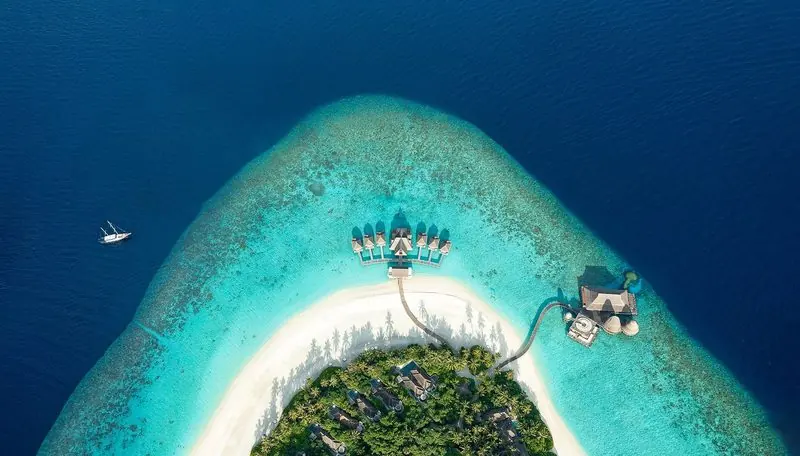
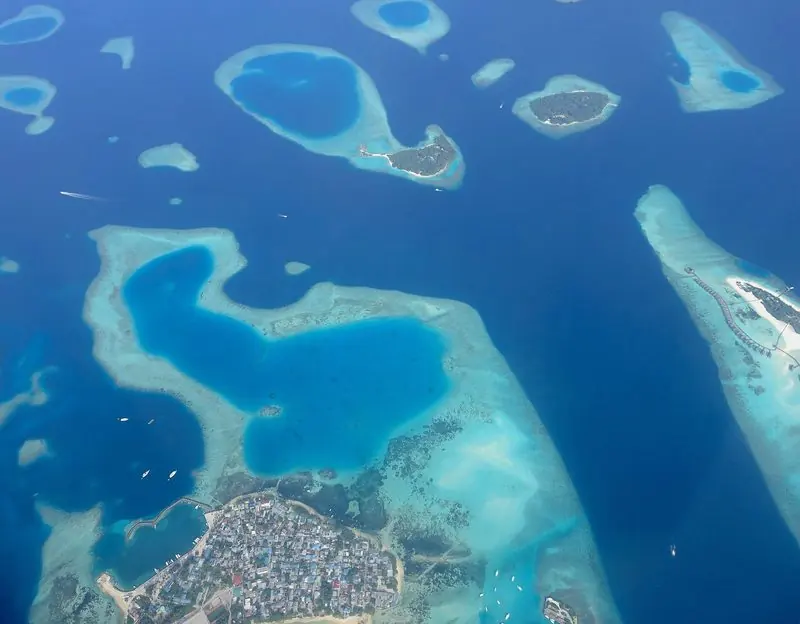
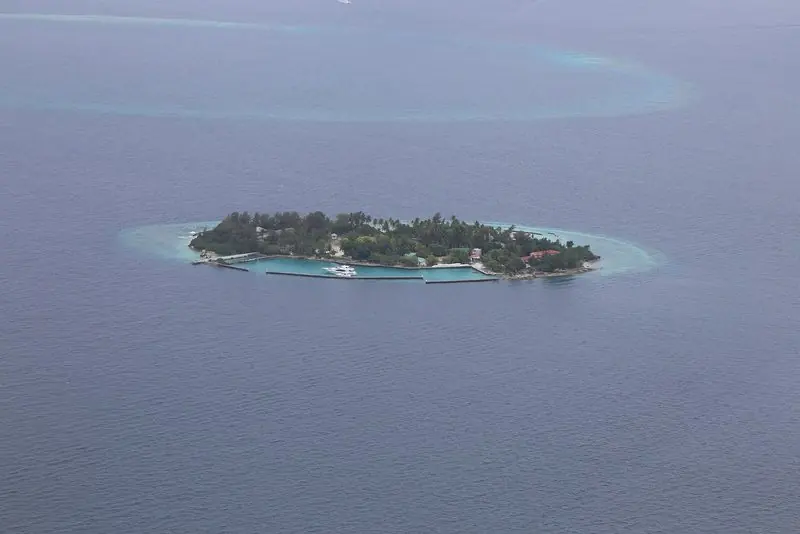
Les Maldives sont formées de plus d'un millier d'îles coralliennes basses regroupées en une chaîne d'atolls dans l'océan Indien, au sud-ouest du Sri Lanka. Peu de ces îles s'élèvent à plus de deux mètres au-dessus de la mer, et la plupart sont ceinturées de récifs et de lagons peu profonds. Le pays a bâti une réputation mondiale sur ses resorts et sa plongée. Pour le yachting, il offre une zone isolée en eau chaude, faite de lagons clairs et d'une vie marine abondante. Le sentiment d'isolement est au centre de l'attrait.
L'attrait tient ici à l'eau et à ce qui y vit. Les récifs coralliens et leur faune, des raies manta aux requins-baleines, attirent plongeurs et adeptes du snorkeling du monde entier. L'atoll de Baa est une réserve de biosphère de l'UNESCO, et sa baie de Hanifaru accueille l'un des plus grands rassemblements de raies manta de la planète. Les atolls offrent d'innombrables mouillages de récif et bancs de sable, beaucoup loin de toute habitation. Un yacht donne la liberté d'atteindre des endroits que les resorts ne peuvent pas.
La saison
La saison principale court de novembre à avril, la mousson sèche de nord-est, quand les mers sont les plus calmes et le temps le plus stable. De décembre à mars est le pic, avec un ensoleillement fiable et la plus forte demande. La mousson de sud-ouest, plus humide, de mai à octobre, apporte plus de pluie et une mer plus formée, même si elle nourrit aussi le plancton qui attire les raies manta. La plongée reste bonne toute l'année pour qui accepte le temps.
La saison des manta à Hanifaru Bay court sur les mois de la mousson de sud-ouest, les plus grands rassemblements se produisant en général vers août et septembre, quand les courants de marée concentrent le plancton dans la baie. Les propriétaires qui poursuivent ce spectacle s'organisent à contretemps de la saison de beau temps. La température de la mer est chaude toute l'année. Le choix du mois dépend de la priorité donnée à un temps stable ou à une espèce marine précise.
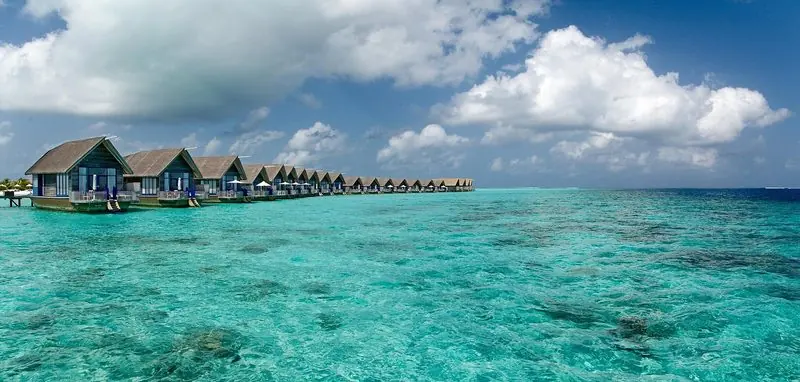
Mille îles coralliennes où le mouillage, et non la ville, est la destination.
Ports et mouillages
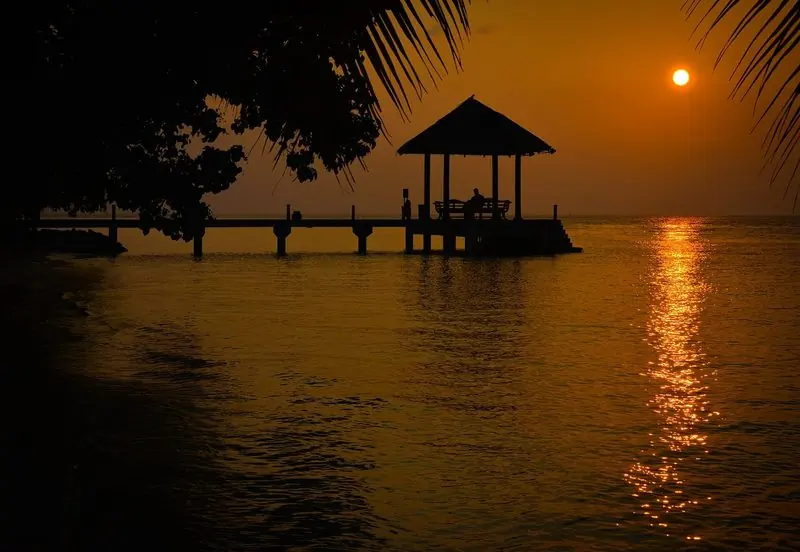
Les Maldives n'offrent quasiment pas de marinas, et le yachting y signifie mouiller dans les lagons plutôt que rester à quai. La capitale, Male, et son aéroport de Velana sont la porte d'entrée principale pour les invités et les vivres. Un yacht navigue d'atoll en atoll, mouillant au large des récifs, des bancs de sable et des îles-resorts en chemin. Le soutien et l'avitaillement sont limités et concentrés sur la région de la capitale.
Les mouillages sont tout l'intérêt. Les lagons abrités derrière les récifs donnent une eau calme et claire dans presque chaque atoll, de Male et d'Ari au centre à Baa au nord. Les bancs de sable qui apparaissent à marée basse font des lieux mémorables pour installer une plage. L'accès aux zones protégées comme Hanifaru Bay est contrôlé et s'organise à l'avance. Naviguer au milieu des récifs demande une bonne lumière et un pilotage attentif.
À terre et à flot
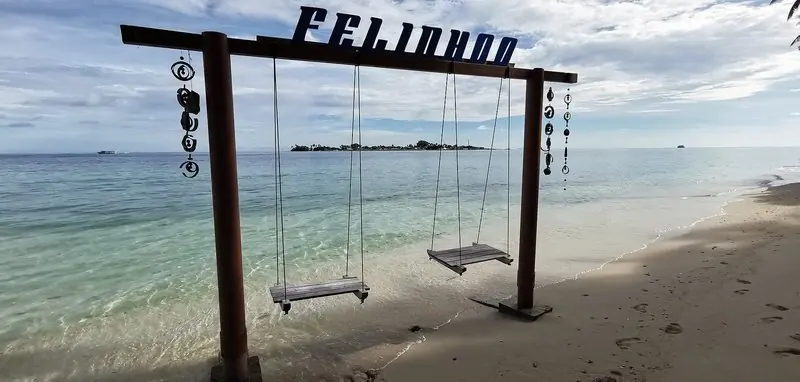
Il y a peu de vie conventionnelle à terre pour un yacht de passage, en dehors des îles-resorts, chacune étant une retraite autonome. Les invités visitent les restaurants et les spas des resorts sur arrangement, et les îles habitées donnent un aperçu de la vie maldivienne. La vraie expérience est à flot et sous l'eau : une zone pour les propriétaires qui veulent la mer plutôt qu'une ville. Les journées sont réglées par la marée et par la plongée.
Sur l'eau, les Maldives tiennent à la plongée et à la vie des récifs. Les rencontres avec les raies manta et les requins-baleines sont l'attrait signature, avec des plongées de récif d'une clarté exceptionnelle. Le surf sur les spots exposés à l'océan est un attrait supplémentaire en saison. Les tenders et les bateaux de plongée font l'essentiel du travail, atteignant récifs et passes depuis un yacht au mouillage. Une eau chaude toute l'année rend le temps passé dans la mer facile.
Notes pratiques
Naviguer aux Maldives suppose des permis et le recours à un agent local, qui organise les formalités, la documentation de navigation et l'accès aux zones protégées en routine. L'accès à des sites sensibles comme Hanifaru Bay, dans l'atoll de Baa, est limité et doit s'organiser à l'avance. Les règles sur les endroits où les yachts peuvent aller et sur ce qu'ils peuvent faire sont prises au sérieux. Les propriétaires préparent la croisière bien à l'avance avec un appui local.
L'éloignement façonne chaque décision pratique, puisque le carburant, les pièces et l'avitaillement sont limités et concentrés à Male : les yachts embarquent donc des vivres pour de longues périodes loin de tout soutien. Les distances entre atolls sont réelles et la navigation au milieu des récifs exige du soin et une bonne lumière. Les yachts de charter basés dans le pays gèrent tout cela en routine. Les opérations de tender et de plongée sont centrales, la navigation sur récif étant le principal danger à gérer.
Male, seaplanes and the daylight limit
Velana International at Male has direct wide-body service from Europe, the Gulf and Asia, and full private jet handling, so guests arrive easily. What happens next is the Maldivian problem. Domestic airports at Dharavandhoo in Baa, Maamigili in Ari, Hanimaadhoo in the north and Gan in the far south cover the country, and the seaplane network out of Male is the largest in the world and reaches most of the resort islands. Both stop flying at dusk.
That daylight limit shapes everything. A guest arriving on a late evening flight into Male cannot reach a boat in Baa Atoll until the next morning, which means a night in a hotel or a yacht that repositions south to meet them. Owners who do this repeatedly base the changeover at Crossroads or at a resort near Male and accept a delivery leg. Getting the boat itself to the Maldives is the larger question, since Male is roughly 4,500 nautical miles from the Mediterranean by way of Suez, and the Red Sea leg is its own decision.
Resort islands, local islands and the rules
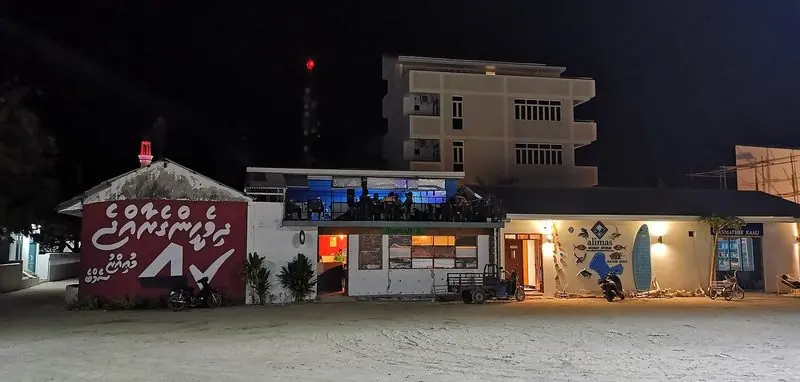
There is no town, no marina village and no restaurant scene, and an owner who has not internalised that will find the fortnight long. The three options ashore are resort islands, which are private and require arrangement in advance and often a day rate, local inhabited islands such as Dhigurah, Thoddoo and Maafushi, which offer a village, a beach and a genuine glimpse of Maldivian life, and Male itself, which is a dense working capital with markets and shops and is not a guest destination. None of the three is a substitute for a town.
The rules on the local islands matter and catch people out. The Maldives is a Muslim country and alcohol is not available on inhabited islands, modest dress is expected ashore, and bikinis are confined to designated beaches. None of that applies aboard the yacht or on a resort island. Guests who want a bar and a night out are choosing between a resort island by prior arrangement and the aft deck, and most weeks the answer is the aft deck.
Permits, agents and support
The cruising permit comes from the Ministry of Tourism and can be applied for before arrival or within four days of customs clearance, and a vessel over 20 metres staying more than seven days after clearance pays USD 1,000 to the Maldives Inland Revenue Authority, with a passenger licence fee of USD 5 per person on top, on the figures current in July 2026. Only Maldivian nationals may act as agents for a foreign tourist vessel, so the choice of agent is a real decision. Any commercial or private charter carrying tourists needs a separate charter licence.
Support is thin. Fuel is available at Male and at Crossroads and is expensive, spares are air freighted from Singapore, Dubai or Europe and clear customs slowly, and there is no yard capability for a large yacht in the country. Provisioning is done through the agent and the resort supply chain and the quality varies. A yacht planning a Maldives season carries a deep spares inventory and an engineer who can use it.
The honest downside
The Maldives ask a lot and give one thing back. There is no culture to see beyond the local islands, no restaurants, no nightlife, no shopping and nothing to do that is not in or on the water, so a fortnight here suits divers, surfers and families with young children and bores almost everybody else by day nine. And the resort islands, which are the only serious shore facility, are set up for their own guests and treat a visiting yacht as an exception.
The larger point is the delivery. Bringing a Mediterranean yacht to the Maldives commits it to a passage of several thousand miles each way and a season away from any support network, which is why most of the boats working these atolls are either based in the Indian Ocean or on a longer world itinerary. An owner who wants two weeks of this without that commitment is looking at a charter.
What the state takes, and what nobody publishes
The government's share is documented and it is the part an owner can actually budget. A vessel over 20 m staying more than seven days after clearance pays USD 1,000 to the Maldives Inland Revenue Authority, with a passenger licence fee of USD 5 per person on top, on the figures current in July 2026. Green Tax is the line that scales with guests. From 1 January 2025 tourist vessels charge Green Tax at USD 12 per person per night, doubled from USD 6, under Regulation 2024/R-117 made with the fourteenth amendment to the Tourism Act. Twelve guests aboard for a fortnight is USD 2,016 in Green Tax by itself. Tourism goods and services tax rose to 17 per cent on 1 July 2025 from 16, and it attaches to what a charter sells.
Everything else is a quotation. Crossroads Maldives is the only marina in the country and publishes no rate card, and none could be found on 28 July 2026, so a berth there is priced against the dates. There is no published fuel price for yachts either, and bunkering runs through the agent at Male or Crossroads. What that adds up to is a season with almost no berthing line at all, which is the opposite of the Mediterranean arithmetic: Marina di Porto Cervo's published 2026 tariff is EUR 3,698 a day in the band to 40 m from 1 to 20 August, roughly EUR 102,000 for the month, or EUR 195,819 for a 1 May to 31 October contract. The Maldives removes that number and replaces it with a delivery of several thousand miles each way and a spares bill that travels by air.
Charter, the Maldivian agent and the cost of a grounding
A foreign-flagged yacht may charter in Maldivian waters, and the condition is licensing rather than flag. The vessel takes a cruising permit from the Ministry of Tourism first, then a separate charter licence for foreign tourist vessels, and that licence is required whether the charter is commercial or private so long as tourists are carried. The agent is not optional and cannot be foreign, since the 2024 amendments to the foreign vessel regulations reserve agency for foreign tourist vessels to Maldivian nationals, and the agent is appointed before arrival. There is no cabotage bar on carrying paying guests between Maldivian islands once the licence is held, which is the material difference between this ground and Florida or Turkey. Tourism GST at 17 per cent and Green Tax at USD 12 per person per night both fall on the charter.
The penalty that owners actually meet is environmental, and it is large. Fines are set under Regulation 2011/R-9 made under the Environmental Protection and Preservation Act 4/93, and the Environmental Protection Agency issues them as a matter of routine. A yacht that grounded in Alifu Dhaalu Atoll on 28 April 2025 was fined MVR 4,889,450, about USD 311,000, for reef damage. An audit reported in January 2026 put more than MVR 930 million in environmental fines outstanding, with MVR 228 million recovered from 37 reef-damage cases over the preceding two to three years, which says both that the fines are handed out constantly and that the state is serious about collecting them. Anchoring in sand only, and not at all inside Hanifaru Bay, is not a courtesy.
The nearest yard, and where the waste goes
Nothing in the Maldives will lift a 50 m yacht and nothing is likely to soon. The nearest facility of any real capacity is Colombo Dockyard in Sri Lanka, which runs four dry docks between 107 and 263 m and more than 1,000 m of serviced repair berth, and reaching it is an ocean passage east. Everything short of that is an air-freighted specialist and a wait at anchor, which is why the boats that work these atolls carry an engineer who can use a deep spares inventory and why a Maldives season is planned around the yard period that preceded it.
Waste is the same problem in miniature. Reception facilities exist at Male and at Crossroads and effectively nowhere else, so a yacht working the outer atolls holds everything aboard for the length of the cruise and lands it on the way through. In a country whose entire economy sits on the reef, and whose fines regime prices reef damage in hundreds of thousands of dollars, a discharge decision taken casually inside a lagoon is the most expensive mistake available.
À terre, accès et réservation
| Getting there | Velana International at Male takes direct wide-body flights from Europe, the Gulf and Asia, plus full private jet handling. Domestic airports and the world's largest seaplane network reach the outer atolls, but both stop flying at dusk. |
|---|---|
| By sea | Reef passes are read by eye, so passages run from mid morning to mid afternoon when the sun is high. Charts are not uniformly reliable and local pilotage is normal practice, not a precaution for the inexperienced. |
| Reserving a berth | Crossroads Maldives at Emboodhoo Lagoon is the only marina in the country, 30 berths to about 55 m, 15 minutes by speedboat from the airport. It publishes no rate card, so a berth is quoted against the dates, checked 28 July 2026. |
| What it costs the state | A vessel over 20 m staying more than seven days after clearance pays USD 1,000 to the Maldives Inland Revenue Authority plus a USD 5 per person passenger licence fee. Green Tax is USD 12 per person per night since 1 January 2025, and tourism GST is 17 per cent since 1 July 2025. |
| Fluids and stores | Fuel is available at Male and at Crossroads and is expensive. Spares are air freighted from Singapore, Dubai or Europe and clear customs slowly. There is no yard capability for a large yacht anywhere in the country. |
| Clearance and permits | The cruising permit comes from the Ministry of Tourism, applied for before arrival or within four days of customs clearance. Only Maldivian nationals may act as agents for a foreign tourist vessel, and the agent is appointed before arrival. |
| Where to eat | There is no restaurant scene. Resort islands require prior arrangement and often a day rate; local inhabited islands such as Dhigurah, Thoddoo and Maafushi offer a village and a beach; alcohol is not sold on inhabited islands. |
| After dark | Aboard the yacht or a pre-arranged resort island are the only options with a bar. Local islands are dry under Maldivian law, and there is no town or marina village anywhere in the country. |
| Fixed dates | Northeast monsoon, November to April, is the calm, clear dry season and peaks December to March. The Hanifaru manta aggregation runs May to November, peaking June to October, inside the wetter southwest monsoon. |
Ce que rapportent propriétaires et équipages
The marina that finally made a Maldives season practical has an environmental record of its own
Sleeper's review of Crossroads Maldives praised the resort and marina's design but recorded that the land reclamation behind the first phase was criticised by environmental observers at the time, a detail worth weighing against a country that fines yacht grounding in the millions.
Neena Dhillon, Sleeper magazineGetting the local pilotage wrong is expensive, not theoretical
The 45 m explorer yacht Big Fish grounded on the reef at Alif Dhaal Atoll on 28 April 2025 and was fined around MVR 4.8 million, roughly USD 311,000 at the time, for the resulting coral damage, a case the Maldivian authorities and the trade press both treated as routine enforcement rather than an exception.
Boat International
Les points forts et les points de vigilance
Points forts
- Genuinely uncrowdedEven in the December to March peak, an owner can move for days without seeing another private yacht outside the handful of named dive and manta sites.
- World-class, little-competed-for divingSouth Ari Atoll holds whale sharks year-round, one of very few places on earth where that is true, and Hanifaru Bay gathers some of the largest manta aggregations recorded anywhere.
- No real cyclone riskThe atolls sit close enough to the equator that tropical cyclones are very rare, unlike the Caribbean, the Pacific or the Arabian Sea further north.
- One proper marina now existsCrossroads Maldives at Emboodhoo Lagoon takes yachts to about 55 m with fuel, water, power and provisioning 15 minutes from the airport, which has changed what a guest change or a stores run actually requires.
Points de vigilance
- Nothing ashoreNo town, no restaurant scene, no shopping and nothing to do that is not in or on the water. A fortnight suits divers, surfers and families with young children and bores most other guests by day nine.
- The delivery is the real commitmentMale is roughly 4,500 nautical miles from the Mediterranean by way of Suez. Most boats working these atolls are based in the Indian Ocean or on a long world itinerary rather than visiting for one season.
- Grounding fines are large and enforcedThe 45 m explorer yacht Big Fish was fined roughly MVR 4.8 million, about USD 311,000, for reef damage after grounding in Alif Dhaal Atoll on 28 April 2025, reported by Boat International. An audit in January 2026 found over MVR 930 million in environmental fines outstanding across the country.
- The only marina has its own criticsSleeper magazine's review of Crossroads Maldives, while positive on the design, noted that the reclamation behind phase one of the development drew criticism on environmental grounds.
Pour qui: Les propriétaires qui veulent une croisière isolée en eau chaude bâtie autour de la plongée et de la vie marine, et acceptent de mouiller dans des lagons isolés tout du long.