The Norwegian Fjords
| Région | ouest de la Norvège, Atlantique nord-est |
|---|---|
| Meilleure saison | de juin à août, longue lumière et temps stable |
| Ports d'accès | Bergen, Alesund, Stavanger |
| Fjords signatures | Geirangerfjord et Naeroyfjord (tous deux classés au patrimoine mondial) |
| Curiosités | la cascade des Sept Soeurs, le Preikestolen, le train de Flam |
| Caractère | navigation d'exploration, eau profonde et peu de marinas pour grands yachts |
| Juridiction | Norvège (Schengen mais hors Union européenne) |
| À surveiller | le durcissement des règles d'émissions dans les fjords protégés |
| Anchoring | fjord walls drop away almost vertically, so lines ashore and pre-identified spots are normal practice |
| Jurisdiction | Norway is in Schengen and the EEA and outside the EU customs union |
| Gateways | Bergen, Alesund and Stavanger, all with airports and business aviation handling |
| Water temperature | cold all summer, so swimming is brief and tenders and kayaks replace the Mediterranean toy programme |
| Berth, Bergen 2026 | NOK 420 a day up to 15 m, NOK 585 for 15 m to 20 m, NOK 795 for 20 m to 25 m, electricity included |
| Bergen publishes no rate above 25 m and requires the harbour office to be contacted for larger vessels | |
| Compulsory pilotage applies to all vessels of 70 m or more inside the baselines, met either by a state pilot or a pilot exemption certificate | |
| Pilotage fees effective 1 January 2026 | NOK 2,040 an hour up to 1,000 GT with a three hour minimum, plus a readiness fee of NOK 1.32 per GT for the first 3,000 GT, plus a NOK 1,674 booking fee |
| Pilot exemption certificate | NOK 6,170 for the examination and NOK 1,540 to issue or renew, NOK 7,710 in total |
| Norway is outside the EU customs union, so a Norwegian season discharges rather than consumes the EU 18 month temporary admission period | |
| A foreign recreational boat may be used temporarily in Norway free of Norwegian tax if it is for personal use, not used by a Norwegian resident, and taken out again | |
| Norwegian VAT is 25 per cent on a definitive importation, charged on the value of the vessel | |
| Foreign vessels of 15 m and over, or 50 GT and over, must obtain entry clearance in advance | |
| No clear published rule for commercial charter by a foreign-flagged yacht in Norwegian waters could be sourced in July 2026 | |
Une côte d'eau profonde
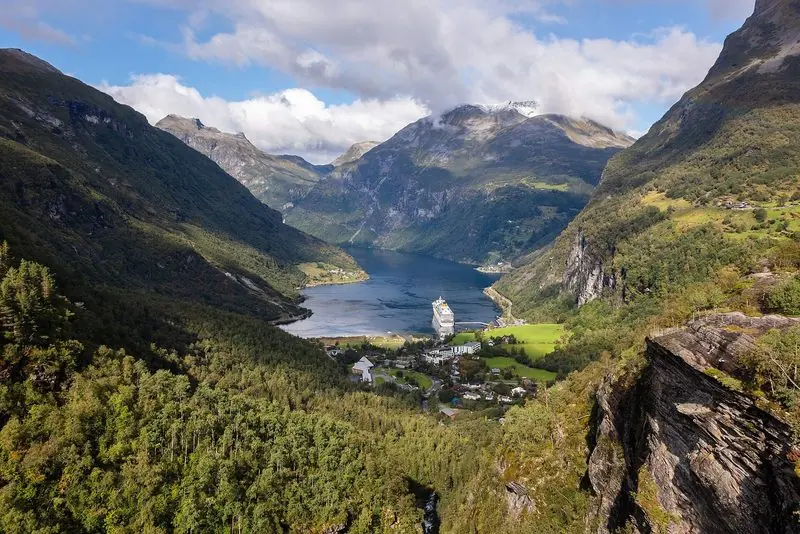
La côte ouest de la Norvège est entaillée par une série de fjords longs et profonds qui pénètrent loin dans les terres entre des montagnes abruptes. Formés par les glaciers, ils abritent parmi les paysages les plus spectaculaires accessibles en yacht au monde. Des cascades tombent de plusieurs centaines de mètres depuis les falaises, et la neige s'attarde sur les sommets jusqu'à l'été. Pour le yachting, les fjords sont un terrain d'explorateur plutôt qu'une scène sociale. Les propriétaires viennent pour le paysage et le sentiment d'éloignement.
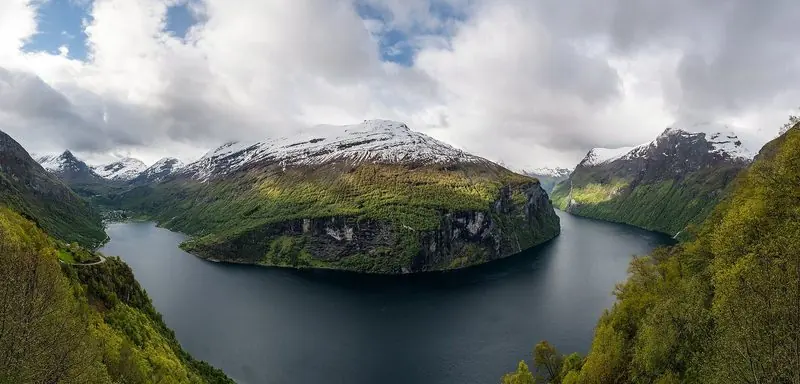
L'attrait tient à l'échelle et au silence. Le Geirangerfjord et le Naeroyfjord, tous deux classés au patrimoine mondial, sont les bras les plus célèbres, des chenaux étroits murés de roche presque verticale. Le Sognefjord, le plus long et le plus profond du pays, se ramifie en bras plus tranquilles vers l'intérieur. Bergen et Alesund servent de portes d'entrée le long de la côte, et le Lysefjord, près de Stavanger, abrite la falaise du Preikestolen. C'est un endroit où ralentir et prendre le décor.
La saison
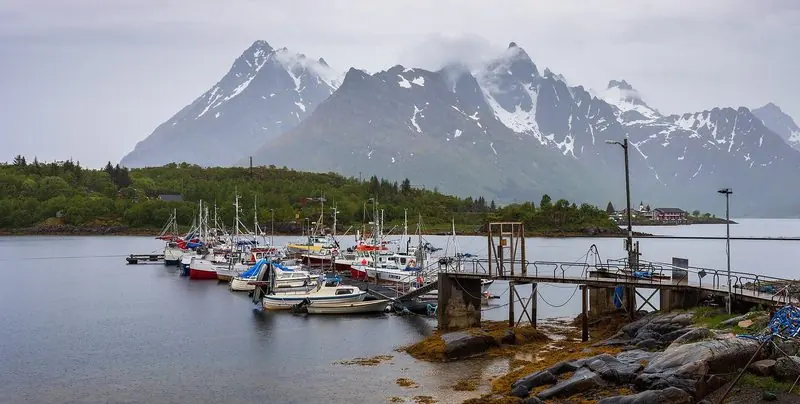
La saison pratique est courte et court surtout de juin à août, quand les jours sont longs et le temps le plus stable. La lumière est extraordinaire sur ces mois, le soleil se couchant à peine en juin et les soirées restant claires très tard. Les cascades alimentées par la fonte des neiges sont les plus puissantes au début de l'été. Beaucoup d'équipages visent la fenêtre de fin juin à juillet pour la lumière la plus fiable. Mai et septembre sont possibles mais plus frais, avec plus de risques de temps perturbé.
Le climat est bien plus frais que celui de la Méditerranée même au coeur de l'été, si bien que des vêtements chauds font partie du programme. Le temps peut changer vite, apportant pluie et nuages bas qui masquent les sommets, avant de dégager en plein soleil. Les fjords eux-mêmes sont abrités, mais la côte ouverte entre eux peut être exposée. Les équipages s'organisent autour de la prévision et profitent au maximum des éclaircies.
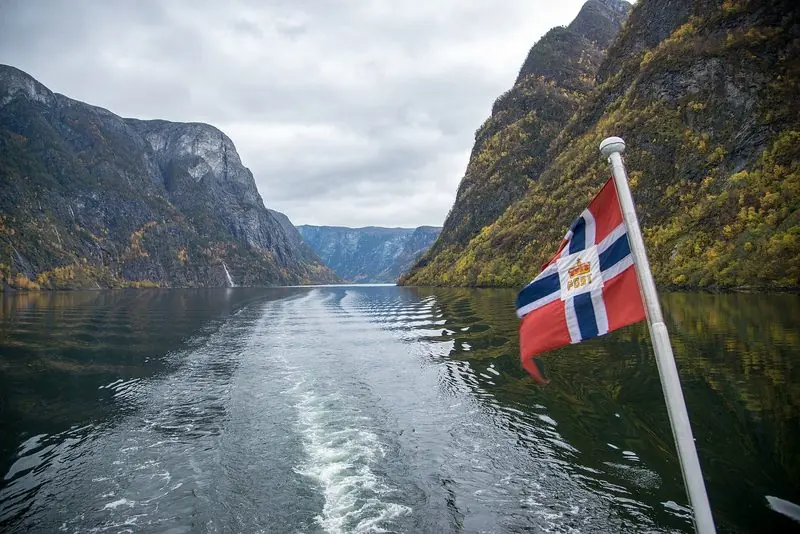
Une eau profonde, de hautes cascades et un soleil qui se couche à peine.
Ports et mouillages
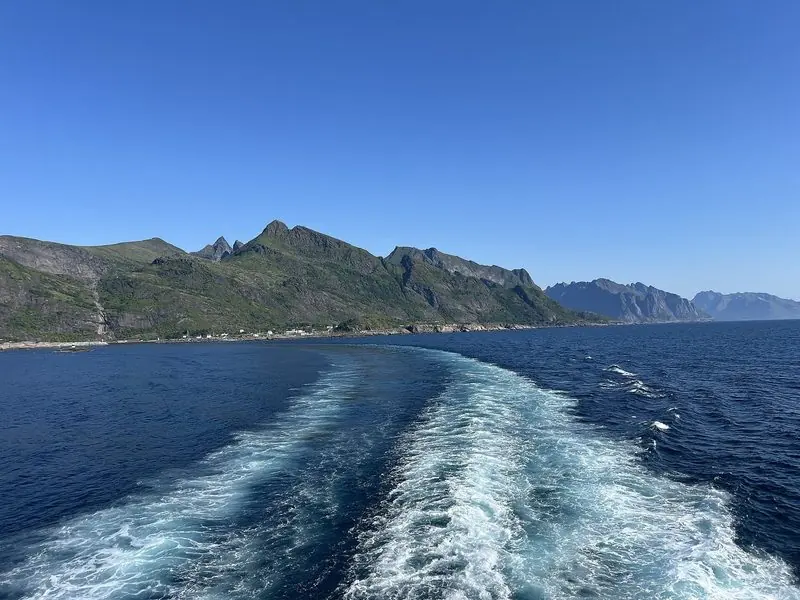
Les installations pour grands yachts sont limitées comparées à la Méditerranée, et les fjords sont un lieu de quais et de mouillages plus que de marinas dédiées aux superyachts. Bergen, Alesund et Stavanger offrent les principaux ports et le soutien le long de la côte. De plus petits villages comme Geiranger et Flam ont des quais utilisables par les yachts, même si la place est serrée pour les plus grandes unités. Une organisation soignée en amont est la norme.
Mouiller dans les fjords est compliqué par la profondeur, puisque l'eau est souvent très profonde près des rives abruptes. Des mouillages convenables existent au fond des fjords et dans les bras latéraux où le fond remonte, et de longues amarres à terre sont parfois utilisées. Beaucoup de yachts travaillent avec des pilotes et des agents locaux pour identifier des places et des mouillages sûrs. Le décor depuis un mouillage tranquille sous les falaises est la récompense de cette préparation supplémentaire.
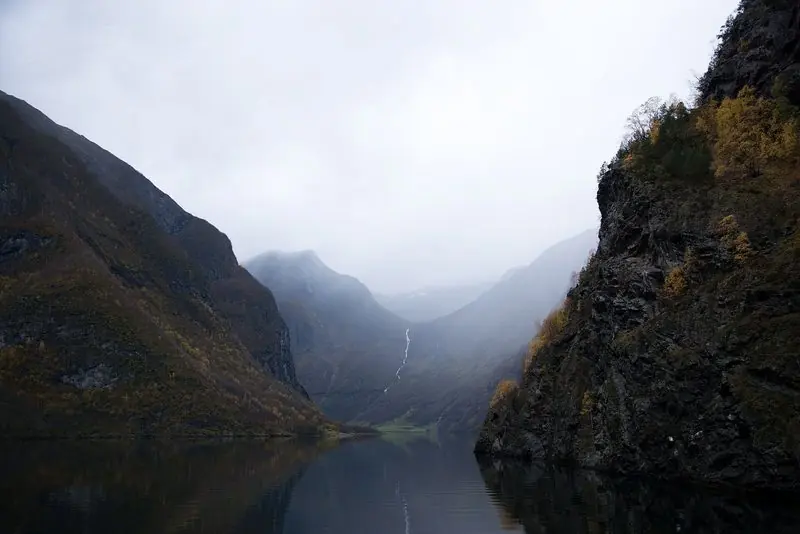
À terre et à flot
À terre, les fjords offrent la randonnée et les glaciers plutôt que la vie nocturne. Les invités prennent le train de Flam et marchent vers des points de vue comme le Preikestolen, au-dessus du Lysefjord. Les glaciers qui descendent jusqu'à la mer se visitent en tender ou en excursion organisée. Bergen, avec son ancien quai de bois, est le centre culturel de la région. Les plaisirs sont ici actifs et scéniques, pour des propriétaires qui veulent être dehors, dans le paysage.
Sur l'eau, les fjords eux-mêmes sont l'attraction, parcourus lentement sous les cascades et les falaises. Les chutes des Sept Soeurs dans le Geirangerfjord et le passage étroit du Naeroyfjord sont des morceaux de bravoure. Les tenders explorent les bras latéraux, débarquent les invités pour des marches et atteignent des endroits inaccessibles au yacht. L'eau est froide, si bien que la baignade est réservée aux courageux, et les kayaks et les sorties en bateau remplacent les jouets nautiques de Méditerranée. La faune, des aigles pêcheurs aux marsouins, complète les journées.
Notes pratiques
La Norvège n'est pas dans l'Union européenne, même si elle appartient à l'espace Schengen et au marché européen élargi, si bien que les dispositions douanières diffèrent d'une croisière européenne et se vérifient au mieux auprès d'un agent. Les règles environnementales dans les fjords classés se durcissent, avec des limites d'émissions qui conditionnent quels navires peuvent entrer dans le Geirangerfjord et le Naeroyfjord : les propriétaires doivent confirmer les exigences en vigueur. Le pays est bien organisé et sûr pour naviguer. Les distances le long de la côte sont considérables.
Le soutien aux grands yachts est plus mince qu'en Méditerranée, si bien que le carburant, les pièces et l'avitaillement demandent d'être préparés autour des grands ports. Les pilotes et les agents locaux sont largement employés vu la profondeur et la navigation. La saison courte et le climat frais façonnent l'expérience des invités et la liste des bagages. Les opérations de tender sont centrales, l'eau froide et les mouillages profonds étant les principaux facteurs à gérer.
Cruise ships and the quiet weeks
There is no yachting social season in Norway and that is much of the appeal. What there is instead is a cruise ship season, and Geiranger, Flam and Bergen take large ships through the summer, with several thousand passengers landing in a village of a few hundred people. Those are day-long events and they are predictable, because the schedules are published, so a well-planned yacht is in Geiranger the evening before and gone by nine.
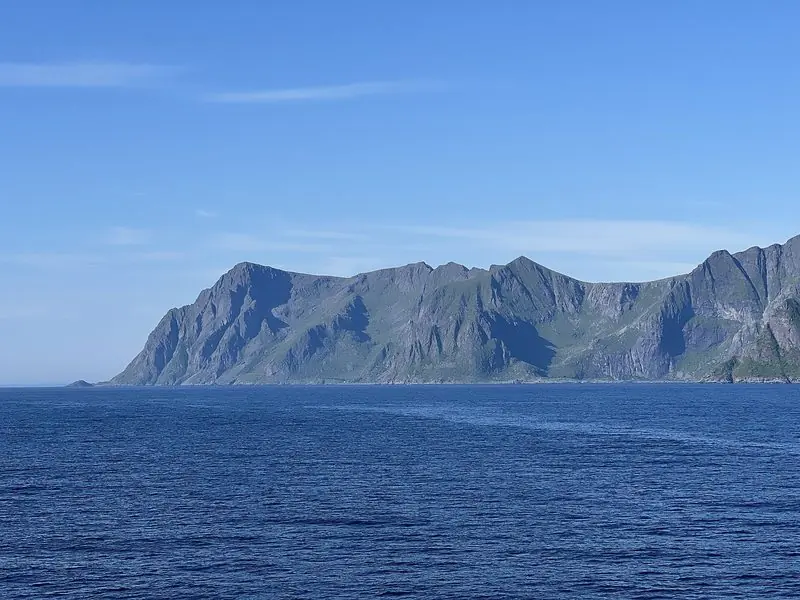
July is the Norwegian holiday month and the domestic boating traffic is at its heaviest, though heaviest in Norway means something very different from August in the Balearics. The far north has its own short window, with the Lofoten in July and August. Outside those weeks an owner can have a fjord to himself in a way that is simply not available anywhere in southern Europe.
Airports on the coast, anchorages inland
Bergen, Alesund and Stavanger all have airports with European scheduled service and business aviation handling, and Bergen is the main one with the widest connectivity. Oslo is the long-haul hub and adds a domestic leg. The practical difficulty is that the airports are on the coast and the best fjord anchorages are up to a day's cruising inland, so a guest change is not the twenty minute affair it is at Tivat or Olbia.
The fix most owners use is to plan guest rotations at the ends of the fjord legs and to accept a repositioning day. Roads exist and are spectacular and slow, with ferries and single-lane tunnels, so a car transfer from Bergen to Geiranger is most of a day. Helicopter is available and weather-dependent in a country where the weather closes in without much notice.
Ashore, and what guests actually do
This is an active destination and guests who wanted a beach club will be miserable. The set pieces are the Flam railway, which climbs 865 metres from the fjord in twenty kilometres, the walk to Preikestolen above the Lysefjord, the glacier arms at Briksdal and Nigardsbreen, and the road up to Dalsnibba above Geiranger. Kayaks, hiking boots and a good tender do more work here than any toy garage.
The eating is better than its reputation and expensive everywhere. Bergen's fish market and its restaurant scene are the high point, with Norwegian seafood, king crab and reindeer on most serious menus, and there is a genuine new Nordic movement in the cities. The villages have a hotel dining room and a cafe and that is the extent of it. There is effectively no nightlife outside Bergen and Stavanger, and Norway's alcohol pricing and licensing surprise most visitors.
Cost, support and the honest downside
Norway is in Schengen and the EEA and outside the EU customs union, so the customs position differs from an EU cruise and an agent should handle clearance and any temporary importation questions. Fuel is available at Bergen, Alesund and Stavanger and is thin in between, so the cruise is planned around tank capacity. Provisioning at superyacht standard is a Bergen exercise and specialist stores are freighted in. Technical support exists in the commercial ports and there is no superyacht service cluster of the Antibes or Palma kind anywhere in the country.
The honest downsides are the season, the weather and the cost. Ten usable weeks means a yacht coming from the Mediterranean spends a large part of its summer on delivery passages at each end, which for many owners is the deciding argument against. The rain can take the scenery away for days at a time and there is no alternative plan when it does. Norway is among the most expensive countries in the world for everything bought ashore. And the emission rules are moving in one direction, so an older conventional yacht will find its access to the best fjords narrowing over the next decade.
What Norway publishes, and the cost nobody budgets for
Norway publishes at the bottom of the range and stops before a large yacht arrives. The Port of Bergen's 2026 pleasure craft tariff is NOK 420 a day up to 15 m, NOK 585 for 15 m to 20 m and NOK 795 for 20 m to 25 m, electricity included, with a NOK 75 charge for a stop of up to three hours. It also states plainly that vessels over 25 m cannot pay through the automated system and must contact the harbour office. Nothing above 25 m is published at Bergen, and nothing at all is published for the village quays at Geiranger, Flam and Undredal, which are shared with tourist traffic. A berth in Norway is arranged rather than booked and priced, and no substitute figure is offered here because none could be sourced.
The cost that is published, and that most owners have not budgeted for, is pilotage. Compulsory pilotage applies to every vessel of 70 m or more inside the baselines, which is the threshold that decides whether an explorer carries a state pilot or a pilot exemption certificate. On the Norwegian Coastal Administration's fees effective 1 January 2026 the pilotage service is charged by the hour against gross tonnage with a three hour minimum, at NOK 2,040 an hour up to 1,000 GT and rising to NOK 5,606 an hour above 100,000 GT, plus a pilotage readiness fee on every call of NOK 1.32 per GT for the first 3,000 GT and NOK 1.12 per GT above that, plus a booking fee of NOK 1,674. The alternative is a pilot exemption certificate, at NOK 6,170 for the examination and NOK 1,540 to issue or renew it, NOK 7,710 in total, held by a named navigator for named waters. On an itinerary with a pilotage leg into each fjord, that is the difference between one certificate obtained in the spring and a bill that repeats all summer.
Outside the EU customs union, and who the emission rule actually catches
Norway is in Schengen and the EEA and outside the EU customs union, and the last of those three is the one with money attached. A non-EU flagged yacht cruising the EU privately runs 18 months of temporary admission under Article 217(e) of Delegated Regulation (EU) 2015/2446, and that period is discharged by leaving the Union. Norway is outside it, so a Norwegian summer is time that does not run against an EU clock, which is the same mechanism owners use at the other end of the continent by clearing into Montenegro. Coming the other way, a foreign recreational boat may normally be used temporarily in Norway without Norwegian tax provided it is for personal use, is not used by a person permanently resident in Norway, and is taken out again. Norwegian VAT is 25 per cent, which is what a definitive importation would cost against the value of the vessel. Foreign vessels of 15 m and over, or 50 GT and over, must obtain entry clearance in advance, which is a reporting obligation the agent handles rather than a fee.
On commercial charter the honest answer is that no clear published rule for chartering a foreign-flagged yacht in Norwegian waters could be sourced in July 2026, and an owner intending to earn here should treat that as an open question for the Norwegian tax and maritime authorities rather than as settled ground. What is settled, and what changes the itinerary rather than the invoice, is the emission rule. From 1 January 2026 a zero-emission requirement applies to passenger vessels under 10,000 GT in the World Heritage fjords, with 1 January 2032 for passenger ships of 10,000 GT and above. The rule as drafted addresses passenger vessels, and a privately used pleasure yacht is not obviously inside it, but a yacht certified as a passenger ship or one carrying paying guests may well be, and the answer belongs with the Norwegian Maritime Authority before the route is fixed rather than at the entrance to the Geirangerfjord. There is no superyacht service cluster anywhere in Norway, so a lift or a serious repair is a delivery passage rather than a phone call.
À terre, accès et réservation
| Season | About 10 usable weeks, June to early September |
|---|---|
| Berthing cost, Bergen only | Port of Bergen's 2026 tariff: NOK 420/day to 15 m, NOK 585 for 15-20 m, NOK 795 for 20-25 m, electricity included; vessels over 25 m cannot use the automated system and must contact the harbour office directly. Nothing above 25 m is published at Bergen, and nothing at all is published for the village quays at Geiranger, Flam and Undredal - a Norwegian berth is arranged, not booked off a rate card |
| Pilotage | Compulsory for vessels of 70 m or more inside the baselines: NOK 2,040/hour up to 1,000 GT rising to NOK 5,606/hour above 100,000 GT, three-hour minimum, plus readiness and booking fees - or a pilot exemption certificate at NOK 7,710 total, held by a named navigator for named waters |
| Emission rules | From 1 January 2026, zero-emission is required for passenger vessels under 10,000 GT in the World Heritage fjords (Geiranger, Naeroy, Aurland, Sunnylv, Tafjord); 2032 for 10,000 GT and above. The rule is drafted around passenger vessels - a privately used yacht may not be caught, but one certified as a passenger ship or carrying paying guests might be. Confirm with the Norwegian Maritime Authority before fixing the route |
| Customs status | Schengen and EEA but outside the EU customs union - a non-EU-flagged yacht's time in Norway does not run against its 18-month EU temporary-admission clock. Foreign vessels of 15 m or more, or 50 GT or more, must obtain advance entry clearance |
| Getting there | Bergen (best connected), Alesund and Stavanger have airports with business aviation handling; the best anchorages are up to a day's cruising inland, so guest changes need a repositioning day built in |
| Fuel and provisioning | Fuel is available at Bergen, Alesund and Stavanger only, and is thin in between; superyacht-standard provisioning is a Bergen exercise with specialist stores freighted in; there is no Antibes or Palma-style service cluster anywhere in the country |
Ce que rapportent propriétaires et équipages
An owner who moved north specifically to escape the crowded Mediterranean summer
"I love cold water - this is the new wave, because the Med is too hot and overcrowded," said the owner of the 43.3 m Baltic Yacht Canova, who cruises Norway with the boat rather than the Mediterranean it was also built for. Anchoring outside the famous fjords, he said: "It's fantastic up here. There is no one around, we can anchor amongst this incredible scenery and the people have been so welcoming."
Dario Segre, owner, M/Y CanovaA charter captain rates it above the classic yachting grounds for adventure, with a caveat
"Norway has it all. It's like New Zealand and Canada rolled into one. It's nature and off-the-beaten track adventure at its best... It may not be your classic yachting destination but it's one that's worth every nautical mile."
Captain Fraser Gow, M/Y Stardust
Les points forts et les points de vigilance
Points forts
- Genuine solitude outside two or three famous namesOwners who anchor away from Geiranger and Naeroyfjord report having entire fjord systems to themselves, in scenery nothing in the Mediterranean matches.
- Near round-the-clock summer daylightThe midsummer light lets a yacht keep exploring, photographing and tendering long past a Mediterranean evening.
- Built for long-range, ocean-capable yachtsAn owner who cruises Norway describes the boat as one that "prefers the ocean to the Med, big passages instead of short hops" - Norway rewards exactly that kind of yacht.
Points de vigilance
- A live regulatory question that is not yet fully settled for private yachtsFrom 1 January 2026 a zero-emission requirement applies to passenger vessels under 10,000 GT in the five World Heritage fjords. The rule targets passenger ships, and it is not publicly clear whether a privately used yacht counts - a yacht carrying paying guests or certified as a passenger ship may be caught where the same hull in private use is not. This should be confirmed with the Norwegian Maritime Authority before an itinerary is fixed, not assumed either way.
- A ten-week season either side of long delivery passagesThe reliable cruising window is essentially June to early September, and a yacht coming from the Mediterranean spends a large part of its summer on delivery passages at each end.
- Deep-water anchoring makes some fjords a mooring exercise, not an anchoring oneThe Sognefjord alone runs 205 km and reaches 1,308 m deep; conventional anchoring is impossible for most of it, and Norwegian practice is a bow anchor on a shallow nearshore shelf with lines ashore to rock-set mooring bolts.
- The famous fjords are also the cruise-ship fjordsGeirangerfjord alone draws roughly 700,000 summer visitors, about 500,000 of them from cruise ships - timing around the ship schedule matters more there than in the quieter arms.
Pour qui: Les propriétaires de yachts explorer qui veulent des paysages sauvages, des glaciers et la lumière de minuit dans le grand nord.