Tonga and the Vava'u Islands
| Region | Vava'u island group, Kingdom of Tonga, South Pacific |
|---|---|
| Air access | Lupepau'u Airport (VAV), Neiafu, runway about 1,699 m, capped at turboprop-class aircraft; via Fua'amotu International (TBU), Tongatapu, for larger jets |
| Domestic link | Lulutai Airlines, Tongatapu-Vava'u, 2-3x daily except Sunday |
| Port of entry | Neiafu, one of 5 official Tongan ports; Advance Notice of Arrival required 24+ hours ahead, fines to TOP 4,000 for non-compliance |
| Clearance | dock at the Neiafu customs wharf (reported poor condition); Health, Agriculture, Immigration, Customs board in sequence |
| Cruising permit | 4 months on arrival, extendable to a 12-month maximum via the CEO of Customs |
| The Moorings/Sunsail charter base | on the Neiafu waterfront, own restaurant, fuel, provisioning, laundry |
| Anchorages | 40+ across the group, referenced by The Moorings' own numbering system, now the community standard |
| Cyclone season | November-April. Dry/cruising season: May-October. Whale season: July-October, peak Aug-Sept |
| Cyclone Gita (Feb 2018, Cat 4) | ~80% of Tonga's population affected, ~TOP 356.1m damage, ~38% of GDP |
| Cyclone Ian (Jan 2014, Cat 4/5) | struck Ha'apai, ~500 buildings destroyed |
| Whale-swim rules | 7 hrs/operator/day, 4 guests + 1 guide in water, 90-min cap, 1-hr mandatory rest; PLOS One study found 38.4% rest-period breach rate and 33.5% avoidance-response rate |
| License cap | 20 set in 2020; one operator-sourced report cites 26 active licenses (single-sourced, needs confirmation) |
| Only haul-out facility | The Boatyard Vava'u, to 40 tons; anything larger routes to Vuda Marina, Fiji (63-ton lift) or New Zealand |
| Vava'u to Fiji (Savusavu) | about 450 nm direct, often 550 nm as sailed |
Getting to Vava'u
Lupepau'u's runway measures about 1,699 metres, which caps direct access at turboprop-class aircraft; a business jet has to land at Fua'amotu and connect onward, whether by the domestic flight or a sea passage, which this research could not confirm as a scheduled ferry option and which a crew should treat as an open item to check locally rather than assume.
The practical consequence for an owner planning a guest change is that Vava'u is genuinely more remote to reach than Fiji's Nadi gateway, and a schedule built around a large jet needs to build in the Tongatapu connection as a real leg, not an afterthought.
Clearing in at Neiafu
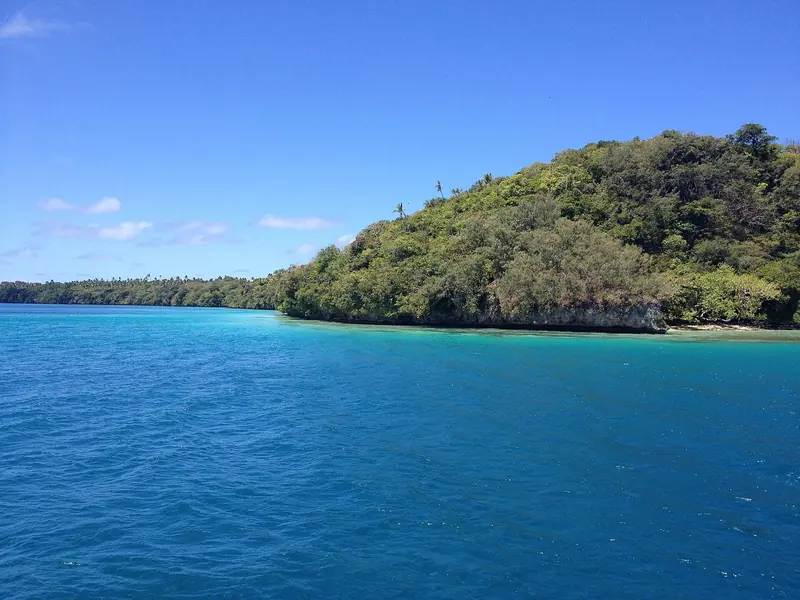
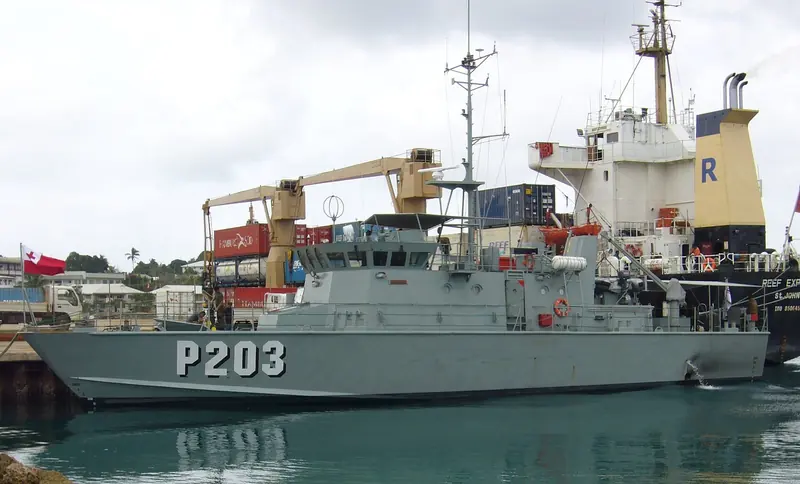
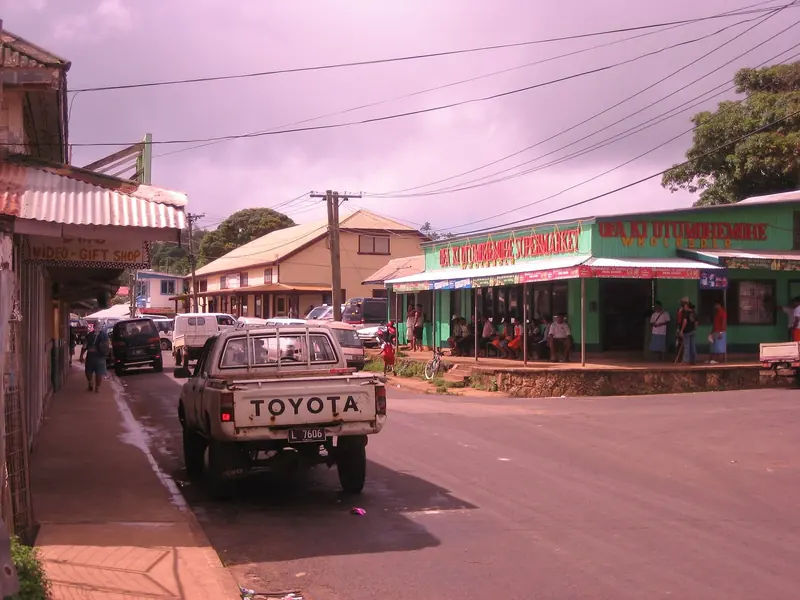
Arriving yachts hail the harbourmaster on VHF channel 16, working channel 26 outside town, and must physically dock at the Neiafu customs wharf to clear rather than anchor and dinghy in; the wharf itself is reported in poor condition, with cruiser accounts describing vessel damage incidents at it. Health, Agriculture, Immigration and Customs all board in sequence, flying the yellow quarantine flag until cleared, during office hours of 08:30 to 16:30 weekdays with a Saturday option at an overtime rate.
A cruising permit is granted for four months on arrival and can be extended, via application to the CEO of Customs, to a maximum of twelve months total. Reported fees run modest by Pacific standards: customs processing around 21 pa'anga, health clearance around 100 pa'anga, a biosecurity clearance around 20 pa'anga, and a visa extension at 69 pa'anga per person per month, though several of these figures trace to sources this research could only access indirectly and are worth reconfirming before departure.
More than 40 sheltered anchorages around one protected harbour, and one of the few places on earth licensed to swim with a humpback whale.
The Moorings base, and what a marina here actually means
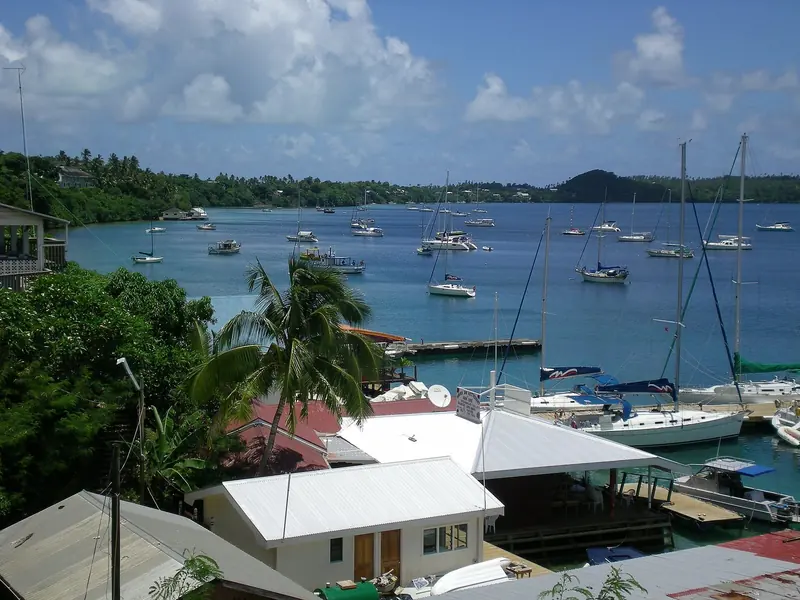
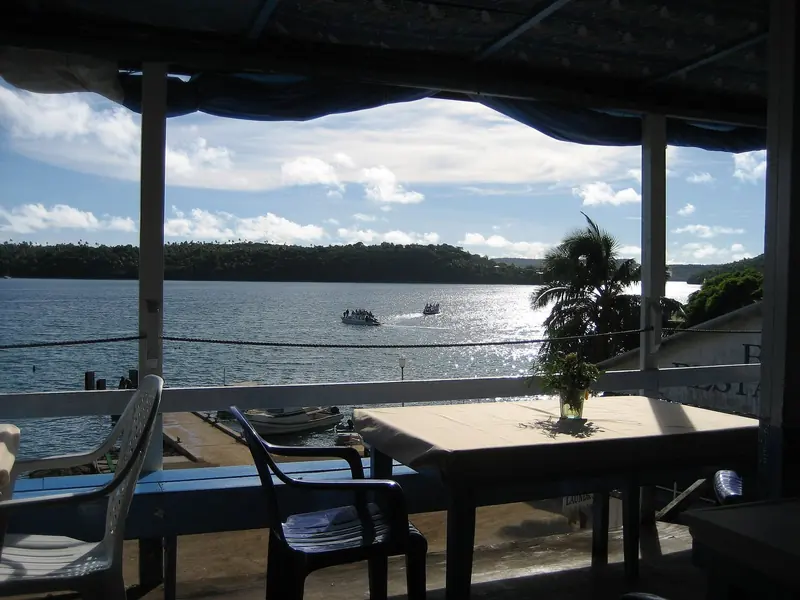
The Port of Refuge harbour itself, deep, enclosed and ringed by green hills, is widely cited by cruising sources as one of the safest natural harbours in the Pacific. Cruisers navigate the more than 40 anchorages across the Vava'u group using a numbering system originated by The Moorings for its own charter clients, now the de facto reference for the whole cruising community rather than individual bay names.
Mooring balls run by Beluga Dive Shop cost around 20 pa'anga a night, plus a tonnage-based lights-and-buoy fee of about 37 pa'anga charged in cash at checkout. There is no single main supermarket in Neiafu; provisioning runs through more than 20 small stores including Falaleu Deli for imported meat and cheese, a farmers market opposite customs on weekday and Saturday mornings, and several Chinese-run general stores.
Cyclone season and the whale season
Cyclone risk in this part of the Pacific is not theoretical: Cyclone Gita hit Tongatapu and 'Eua as a Category 4 in February 2018, affecting about 80 percent of Tonga's population and causing an estimated 356 million Tongan pa'anga in damage, close to 38 percent of the country's GDP that year, and Cyclone Ian struck Ha'apai, the group between Tongatapu and Vava'u, as a Category 4 or 5 in January 2014, destroying about 500 buildings. Water temperature in Vava'u holds around 26 to 29 degrees C year-round and never drops below 20 degrees C, so the constraint through the wet season is storm risk, not cold.
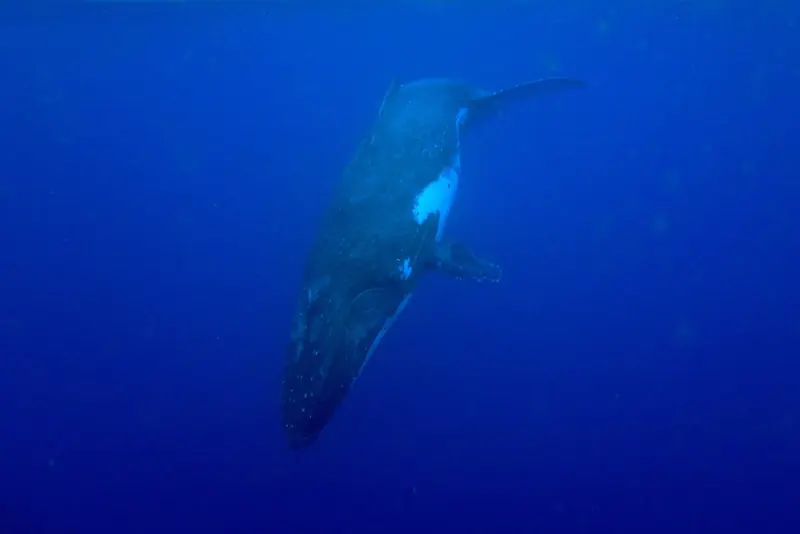
Roughly 2,000 humpback whales migrate from Antarctic feeding grounds to breed and calve in Tongan waters each year, and Vava'u is one of only a handful of places worldwide, alongside Moorea and the Dominican Republic's Silver Bank, where in-water swimming with them is licensed and regulated rather than banned outright.
The whale-swim rules, and where they are not fully working
That study found the mandated rest period was breached in 38.4 percent of interactions observed, and recorded avoidance behaviour by whales in 33.5 percent of vessel approaches, a genuinely useful, independently verified caveat against the marketing version of a fully controlled encounter. A separate figure, sourced to a single operator guide rather than a government record, states Tonga capped Vava'u whale-swim licenses at 20 in 2020 but that 26 operators were reportedly active at the time of that report, a discrepancy worth confirming with Tonga's own fisheries or tourism ministry before it is treated as settled.
Kiwi Magic, run by expatriate New Zealanders Pat and Keith McKee, is commonly credited with starting Vava'u's whale-swim industry in 1991. No live-aboard whale-swim operations are permitted anywhere in Tonga; every encounter runs as a day-boat trip out of Neiafu, typically departing the town dock around 7am and returning by early afternoon, which leaves the rest of the day free for a swim stop or a run out to one of the numbered anchorages.
The caves, the anchorages and what is genuinely worth a day
Beyond the caves, the core appeal is the protected inner-island cruising ground itself: dozens of anchorages close enough together that a boat can move daily without an open-water passage, deep water running close to shore, and hills and islands providing shelter that a more exposed Pacific atoll simply does not have. Superyacht broker Edmiston frames Tonga's pitch to the charter market explicitly as meditative cruising and cultural immersion, positioned against French Polynesia's polish and Fiji's flexibility.
A rough distance worth planning around: Vava'u to Savusavu in Fiji runs about 450 nautical miles direct, often closer to 550 nm once routed around weather and the region's numerous unlit, radar-invisible low atolls, a passage cruising accounts flag as genuinely demanding rather than routine.
Neiafu town and the wider passage planning
Tonga's own domestic ferry and flight network links Vava'u onward to Ha'apai, the less developed group midway to Tongatapu, and to Tongatapu itself, giving a crew with time the option of a longer Tongan cruise beyond Vava'u alone, though Ha'apai carries even less yacht infrastructure than Vava'u and should be treated as a genuine backcountry extension rather than a routine stop.
For an owner building a season around the Pacific Puddle Jump migration, roughly May through October in the South Pacific, Vava'u sits naturally between French Polynesia and Fiji, timed to put the boat in Neiafu for the July to October whale season before the November cyclone deadline pushes the fleet on or out of the region entirely. A passage toward New Zealand instead of Fiji runs longer again, commonly quoted at 1,000 to over 1,200 nautical miles and seven to nine days depending on the exact departure and landfall points, with Minerva Reef, an isolated atoll roughly 200 nautical miles southwest of Tongatapu, used by many crews as a weather-window waypoint partway down before the final run into the Bay of Islands.
Costs, repairs and the honest limits
The Boatyard Vava'u, using a hydraulic trailer system, is described as the Kingdom of Tonga's only yacht haul-out and service facility, lifting mono and multihulls to 40 tons with fabrication, mechanical and shipwright work plus a chandlery on site. Anything beyond that scale routes to Vuda Marina in Fiji, which offers a 63 ton travel lift and what its own listing calls international-standard repair work at reasonable rates, or further on to New Zealand, and Yacht Help Fiji, operating out of Vuda Marina, Port Denarau and Nawi Island Marina, offers maintenance, carpentry, engineering and painting for a boat that has already made the crossing west.
What is not published: current Moorings or Sunsail Vava'u charter rates direct from the operator, and a confirmed Tongatapu-to-Vava'u sea transfer option for guests who fly into Fua'amotu rather than connecting on to Lupepau'u. An owner should also weigh the cyclone-season closure of roughly half the year against the appeal of a July to October visit, since the whale season and the settled season are, usefully, the same months.
À terre, accès et réservation
| Getting there | Fua'amotu International (Tongatapu) for large jets, then Lulutai Airlines to Lupepau'u (VAV), Neiafu; runway caps VAV at turboprop-class aircraft. Seasonal direct flights reach VAV from Apia, Pago Pago and Nadi. |
|---|---|
| Clearing in | Advance Notice of Arrival required 24+ hours ahead by email to Customs. Dock at the Neiafu wharf to clear; Health, Agriculture, Immigration and Customs board in sequence. |
| Cruising permit | 4 months on arrival, extendable to a 12-month maximum via the CEO of Customs. |
| Where to base | The Moorings/Sunsail base on the Neiafu waterfront is the closest thing to full yacht support: fuel, provisioning, laundry, mooring balls around TOP 20/night plus a TOP 37 lights-and-buoy fee. |
| Season | Cyclone season November-April, most yachts haul out or leave the region. Dry season May-October. Whale season July-October, peak August-September. |
| Whale swimming | Licensed operators only, 4 guests + 1 guide per encounter, 90-minute cap, mandatory 1-hour rest between groups. Independent study found real gaps in compliance; book a licensed operator and expect other boats nearby. |
| Fuel and provisioning | Duty-free fuel after formal clearance out of Tonga, no single supermarket, 20+ small stores plus a weekday/Saturday farmers market opposite customs. |
| Repairs | The Boatyard Vava'u, to 40 tons, is Tonga's only haul-out facility. Anything larger routes to Vuda Marina, Fiji, or New Zealand. |
| What is not published | Current Moorings/Sunsail Vava'u charter rates direct from the operator, and a confirmed sea-transfer option from Tongatapu for guests not connecting by air. |
Ce que rapportent propriétaires et équipages
The harbour itself is the destination's real asset
The Port of Refuge is a deep, almost fully enclosed harbour ringed by green hills, cited as one of the safest natural harbours in the Pacific and a favourite haven for boats crossing the South Pacific.
Cool Change Adventures, cruising blogThe customs wharf itself is the weak link in an otherwise good system
Yachts must dock at the Neiafu wharf to clear rather than anchor off, and the dock's poor condition has led to reported vessel damage during the process.
Noonsite, 'Neiafu (Vava'u) - Clearance'Regulation does not fully control what happens on the water
Observed whale-tourism interactions breached the mandated rest period in 38.4 percent of cases and produced an avoidance response from whales in 33.5 percent of vessel approaches.
PLOS One, peer-reviewed study on whale-based tourism in Vava'u, Kingdom of Tonga
Les points forts et les points de vigilance
Points forts
- The most sheltered cruising ground in the South PacificMore than 40 anchorages close together around one deep, enclosed harbour, widely cited as one of the safest natural harbours in the Pacific, a genuinely different proposition from an exposed atoll.
- A licensed humpback whale encounter, not a wildlife-park versionOne of only a handful of places worldwide where in-water swimming with humpback whales is permitted and regulated, drawing roughly 2,000 migrating whales a year July to October.
- Genuinely uncrowded against FijiA small charter fleet and no comparable yacht-club scene make Vava'u the more remote-feeling of the main South Pacific yachting stops.
Points de vigilance
- Genuinely hard to reachLupepau'u's short runway caps direct jet access at turboprop aircraft; a large-jet guest change means a real connection through Tongatapu, and this research could not confirm a scheduled sea-transfer alternative.
- Closed for cyclone season nearly half the yearNovember to April brings real storm risk to the region, evidenced by Cyclone Gita's 2018 damage equal to about 38 percent of Tonga's GDP and Cyclone Ian's 2014 destruction in neighbouring Ha'apai.
- Whale-swim compliance is imperfect in practiceA peer-reviewed study found the mandated rest period was breached in 38.4 percent of observed interactions, and a single-sourced report suggests more operators are active than the 2020 license cap allows.
- Almost no technical infrastructureOne 40-ton haul-out facility serves the entire kingdom; anything beyond routine repair means a passage to Fiji or New Zealand.
Pour qui: An owner who wants a protected, close-set cruising ground and a licensed humpback whale encounter, and who accepts that Vava'u is a genuine flight connection from anywhere and closes for cyclone season half the year.