Gustavia (St Barths)
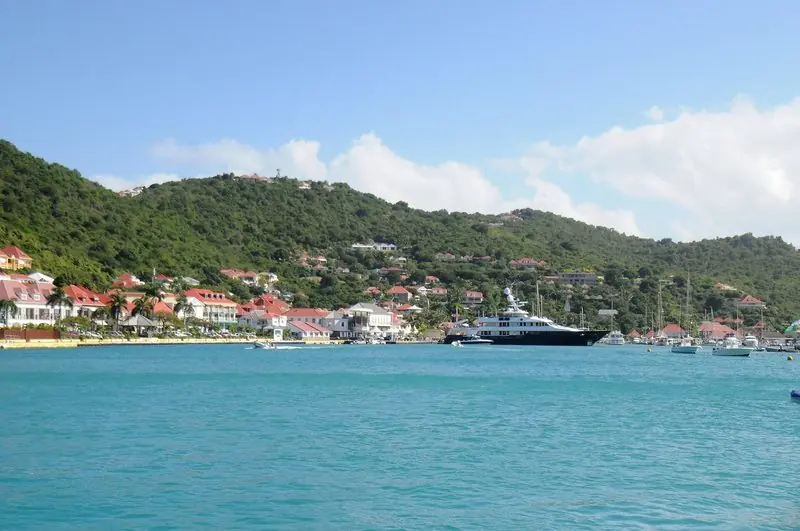
| Situation | Gustavia, Saint-Barthelemy, Antilles françaises |
|---|---|
| Administration | la capitainerie de l'île et le capitaine du port |
| Amarrage à quai | cul à quai pour des yachts jusqu'à environ 60 m |
| Plus grands yachts | au mouillage en rade extérieure |
| Port intérieur | profondeurs modestes, avec un champ de corps-morts pour les bateaux plus petits |
| Haute saison | Noël et Nouvel An, plus la régate Bucket au printemps |
| Attrait | le rassemblement hivernal le plus fermé des Caraïbes |
| Larger yachts | anchor in the outer roadstead and tender ashore |
| Depths | not published by the port, so draught should be confirmed with the port office |
| Airport | Gustaf III, a single 646 m concrete runway with a specific pilot licence required, served by Pilatus PC-12, Cessna 208B, DHC-6 Twin Otter and Britten-Norman Islander aircraft |
| Jet access | none on the island, with guests routing through Princess Juliana on Sint Maarten by commuter aircraft or ferry |
| Season | Christmas and New Year peak plus the spring Bucket regatta, with the summer closed by the Caribbean hurricane season |
| Shore power does not appear on the pleasure port's published service list at all. Voltage, amperage and frequency are published nowhere | |
| Water, metered at the tap on every quay: EUR 0.012 per litre for a subscriber boat, EUR 0.019 per litre for a visitor, which is EUR 12 and EUR 19 per cubic metre | |
| Worked comparison | the same cubic metre of water costs EUR 6.22 at Monaco and EUR 3.79 at Antibes. Fifty cubic metres at Gustavia costs a visitor EUR 950 |
| Published services | water, wifi on a code from the harbour office, refuse with compulsory sorting, sanitary facilities, marine reserve liaison, SNSM lifeboat station, postal address for crew mail |
| Refuse containers are on the Quai General de Gaulle and the Quai de La Collectivite. Sorting is compulsory island-wide | |
| Harbour office hours | 07:00 to 18:00, seven days a week, all year. Sanitary facilities 07:30 to 18:00. VHF channel 12 |
| Formalities are compulsory for access to the pleasure port and can be started online up to 24 hours ahead, but are only registered once the document is printed and signed at the port office | |
| The port states in writing that an agent is not necessary and not compulsory at Saint-Barthelemy, because every harbour office officer is bilingual | |
| Immigration questions go to the Gendarmerie nationale, not to the harbour office | |
| Speed limit in the channel | 3 knots |
Le port de Saint-Barthelemy
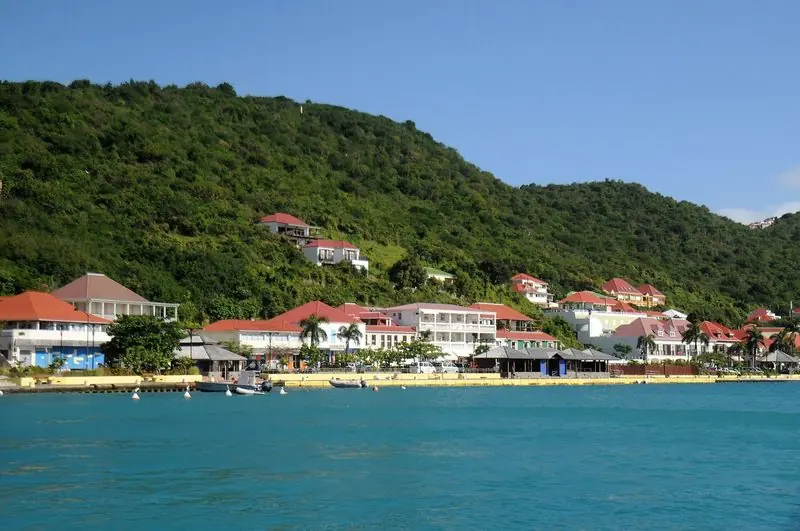
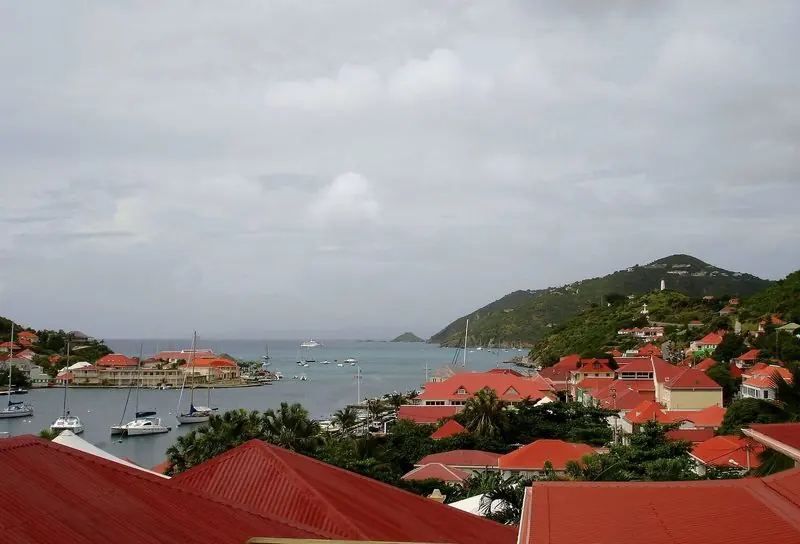
Gustavia est la ville principale et le port de Saint-Barthelemy, une petite île française du nord des Caraïbes. Le port occupe une crique naturelle cernée par la ville, avec ses bâtiments aux toits rouges qui grimpent sur les collines autour de l'eau. Saint-Barthelemy attire depuis des décennies un public fortuné et discret, et c'est à Gustavia que se concentre sa vie yachting. Le port est compact et le cadre intime. L'île est assez petite pour se traverser en une demi-heure par la route, si bien que le port n'est jamais loin des plages et des villas.
Le port est administré par la collectivité de l'île à travers la capitainerie, qui contrôle étroitement les arrivées et les amarrages. Les yachts doivent faire valider leurs mouvements par le capitaine du port avant d'entrer ou de manoeuvrer. Le port est petit, et la demande en haute saison dépasse de loin la place disponible. Cette rareté définit l'expérience d'un amarrage ici.
Cul à quai, et le mouillage
Le port intérieur de Gustavia reçoit les yachts cul à quai le long du quai, avec un champ de corps-morts pour les bateaux plus petits à l'intérieur. Le quai lui-même convient aux yachts jusqu'à environ 60 mètres, une limite dictée en partie par l'assurance et par l'abri du port. Les superyachts plus grands mouillent en rade extérieure et rejoignent la terre en tender. Cette disposition fait que les plus grands yachts sont toujours visibles juste au large de la ville. Les amarres de poupe vont sur de lourds anneaux scellés dans le vieux mur de quai, et l'équipe du port aide les yachts à manoeuvrer dans des espaces serrés.
Les profondeurs du port intérieur sont modestes, si bien que les yachts à fort tirant d'eau restent dehors. L'île dans son ensemble peut accueillir une grande flotte si l'on compte les mouillages alentour, mais les places au quai sont peu nombreuses et âprement disputées au pic. Les réservations pour la haute saison se font très en avance. Pour une place au quai de Gustavia au Nouvel An, un propriétaire s'y prend des mois à l'avance.
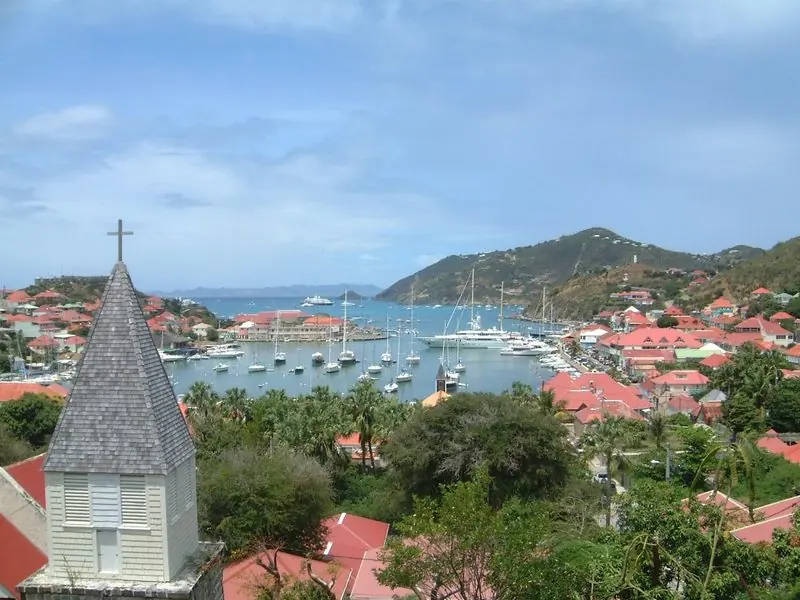
La haute saison caraïbe, mouillée au large d'un seul petit port français.
Des services sur une petite île
Pour sa taille, Gustavia offre une profondeur de service étonnante, taillée pour les yachts qui la fréquentent. Le carburant et l'eau se traitent dans le port, et un réseau d'agents facilite l'avitaillement et la logistique. L'île importe l'essentiel de ce dont elle a besoin, si bien que l'approvisionnement est bien organisé malgré l'éloignement. Les équipages trouvent l'essentiel couvert même aux moments les plus chargés. L'eau et l'électricité au quai sont limitées, si bien que beaucoup de yachts font tourner leurs propres installations et complètent quand ils le peuvent.
Ce que l'île apporte vraiment, c'est une concentration de luxe à terre que peu de destinations caraïbes égalent. Les boutiques et les villas de Saint-Barthelemy visent la même clientèle que celle qui arrive par la mer. L'avitaillement va jusqu'aux plus beaux produits français acheminés par avion pour la saison. L'expérience est construite autour de la réputation de l'île autant que du port lui-même.
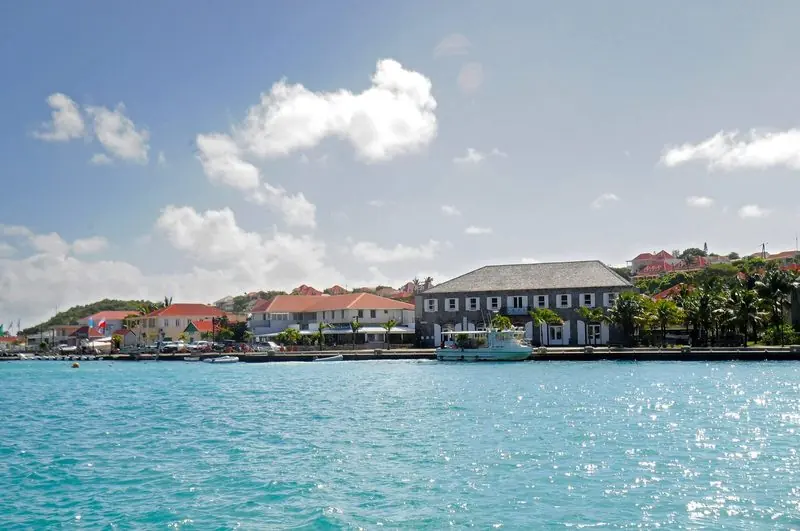
La haute saison caraïbe
L'année de Gustavia culmine brutalement autour de Noël et du Nouvel An, quand l'île devient le point de ralliement de la saison caraïbe. Le port et le mouillage se remplissent de certains des plus grands yachts à flot, et le rassemblement du réveillon est un rendez-vous du calendrier. La régate Bucket, au printemps, amène la flotte à voile pour quelques journées célèbres. Le reste de l'année est bien plus calme. Les prix culminent avec la demande, et une place pour la fenêtre du Nouvel An compte parmi les courts séjours les plus chers du yachting.
La scène autour du port est dense et fermée pendant le pic, avec les restaurants et les clubs de la ville qui tournent à plein. Être à Gustavia au Nouvel An est une déclaration au même titre que Monaco l'été. L'île joue sur la discrétion et le glamour à parts égales. Pendant ces semaines, elle est le centre du monde du yachting sur la rive ouest de l'Atlantique.
Sa place dans le programme d'un propriétaire
Gustavia est le point focal naturel d'une croisière d'hiver aux Caraïbes, l'endroit où être pour la haute saison du Nouvel An. Il convient au propriétaire dont le yacht traverse l'Atlantique pour l'hiver et fait de Saint-Barthelemy le point fort d'un tour plus large des îles. Les mouillages voisins et les îles alentour prolongent la navigation autour. Pour la saison caraïbe, aucun port ne pèse autant. Anguilla et Saint-Martin sont à courte distance, ce qui donne aux invités des sorties faciles à l'écart de la foule au plus fort de la saison.
Le port est une destination saisonnière plutôt qu'une base à l'année, et la petitesse du quai fait que la plupart des grands yachts mouillent au lieu de s'amarrer. Les propriétaires prévoient une escale à Gustavia comme pièce maîtresse d'un programme d'hiver, souvent associée à la Méditerranée en été. C'est le pendant caraïbe des grands ports méditerranéens. Son attrait tient à la saison et à l'île plutôt qu'à l'amarrage lui-même.
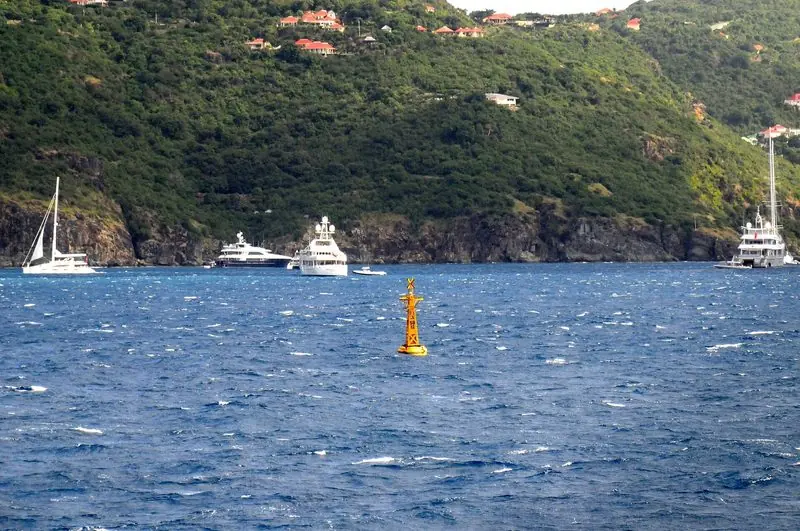
Services on a small island
For its size Gustavia handles yachts well, with fuel and water available in the harbour and a network of agents who make provisioning, transport, crew logistics and clearance straightforward. The island imports almost everything, and the supply chain into it is unusually well organised because the same chain feeds the hotels and villas. French provisions arrive for the season and can be sourced at a standard that surprises people.
What does not exist is technical capacity. There is no yard, no lift and no serious spares holding, and water and power on the quay are limited enough that many yachts run their own systems and top up when they can. Anything mechanical means St Maarten, which is a short hop, or a longer run to a proper Caribbean yard. A yacht that intends to spend the season here should arrive with everything working.
Security, privacy and how visible the yacht is
Saint-Barthelemy has been a discreet island for decades and the culture of the place protects the people who come to it. Crime is not a practical concern. The port is small enough that everyone in it is known to the harbour office.
Privacy from cameras is a different matter over Christmas and New Year. The quay is the town's promenade, the restaurants and bars back straight onto it, and the anchored fleet outside is photographed from every hillside and every tender. For those two weeks Gustavia is as exposed as Monaco in September. From mid-January it goes quiet.
Getting there, which is the real problem
Gustaf III airport has a single concrete runway of 646 metres running down a slope onto a beach, with an extremely steep arrival over the hilltop road on runway 10 and a specific pilot licence required to land there. The aircraft that use it are Pilatus PC-12s, Cessna 208B Caravans, DHC-6 Twin Otters and Britten-Norman Islanders. The largest type ever cleared for the airport was the DHC-7. No business jet is landing on Saint-Barthelemy.
In practice guests fly into Princess Juliana on Sint Maarten and transfer by commuter aircraft with Tradewind Aviation, St Barth Commuter or Winair, or come across by fast ferry. It works, and it is what everyone does, but an owner planning a week with family and staff should build the transfer into the plan and not assume the jet lands at the island.
The honest downside
The harbour cannot supply what people want from it. There are more owners who want to be alongside in Gustavia at New Year than there is quay, by a wide margin, and no amount of money changes the physical length of the wall. Prices for that window are among the highest short-stay costs in yachting. The island is expensive across the board and the peak weeks are priced accordingly.
The rest of it is the geography. This is a seasonal destination with a hurricane exposure that closes the summer, no technical support, a runway that excludes jets, and an island small enough to cross in half an hour, so a family staying a fortnight will have seen it. Owners treat Gustavia as the centrepiece of a Caribbean winter and pair it with the Mediterranean for the other half of the year.
What the port supplies, which is less than expected
The pleasure port publishes its service list and shore power is not on it. What is on it is water, wifi, refuse, sanitary facilities, a working relationship with the island's marine reserve and an SNSM lifeboat station of its own. Water is metered at the tap on every quay and it is expensive: EUR 0.012 per litre for a subscriber boat and EUR 0.019 per litre for a visitor, which is EUR 12 and EUR 19 per cubic metre. Set against Monaco at EUR 6.22 and Antibes at EUR 3.79 for the same cubic metre, water at Gustavia costs three to five times Riviera prices, which is what desalination on an island of 25 square kilometres costs. A visiting yacht taking 50 cubic metres pays EUR 950 for it.
Sorting refuse is compulsory across Saint-Barthelemy and the port provides the containers on the Quai General de Gaulle and the Quai de La Collectivite. Wifi is open to anyone on a code collected from the harbour office. The showers and WCs are reserved to port users and open 07:30 to 18:00. The harbour office itself is open 07:00 to 18:00 every day of the week and all year round, and works VHF channel 12. What the port does not list, and shore power is the conspicuous absence, is a question to put to the port office before the passage rather than an assumption to make on arrival.
Who clears the yacht, and why an agent is optional here
Entry and exit formalities are compulsory for access to the pleasure port, and there are two ways to complete them. Either at the port office directly, or online through the port's own clearance system no more than 24 hours ahead. The online route does not finish the job. The port states that the formality is only registered once the document has been printed and signed at the port office, so the online form saves the queue and not the visit. Immigration is handled separately by the Gendarmerie nationale, which is who to contact about anything to do with a crew member's status rather than the harbour office.
On agents the port is unusually direct, and it is worth taking at face value. Every officer in the harbour office is bilingual, and the port states in writing that it is in no way necessary for a vessel to have an agent at Saint-Barthelemy to represent her, then repeats on its formalities page that an agent's presence is not compulsory. Very few ports at this level publish that, and most of the ones that do not are protecting a local trade. Speed in the channel is limited to 3 knots, and the port repeats the limit on every page of its own site, which is a fair indication of how it is treated.
À terre, accès et réservation
| Booking the quay | The pleasure port does not take advance reservations by name; an owner or agent contacts the harbour office directly (VHF 12, or its online clearance system up to 24 hours ahead) with the yacht's dimensions and dates, and berthing is allocated from there. For the Christmas and New Year window, space on the wall is spoken for months ahead regardless. |
|---|---|
| What it costs to sit alongside | The port publishes no berth rate of any kind. What it does publish is water, metered at EUR 0.012 per litre for a subscriber and EUR 0.019 per litre for a visitor (EUR 12 to 19 per cubic metre) - three to five times the Riviera price at Monaco (EUR 6.22) or Antibes (EUR 3.79). A visiting yacht taking 50 cubic metres pays about EUR 950 for water alone. |
| What is not published | No maximum draught or depth alongside, no berth tariff, and no shore power specification (voltage, amperage or frequency) appear anywhere on the port's own site. A deep or power-hungry yacht should raise all three with the harbour office before committing to a date. |
| Do you need an agent | The port states in writing that an agent is not necessary or compulsory, because every harbour office officer is bilingual - unusually direct for a marina at this level. Most large yachts use one anyway for provisioning, transport and crew logistics rather than for the clearance itself. |
| Getting there | No jet lands on the island: Gustaf III airport's 646 metre runway takes only Pilatus PC-12s, Cessna 208B Caravans, DHC-6 Twin Otters and Islanders. Guests fly into Princess Juliana on Sint Maarten and transfer by commuter aircraft or fast ferry. |
| Technical support | There is no yard, no lift and no serious spares holding on the island. Anything mechanical means a short hop to St Maarten or a longer run to a proper Caribbean yard, so a yacht wintering here should arrive with everything already working. |
| Next door | The quay is the town's promenade: duty-free boutiques and restaurants back directly onto it, and the anchored fleet outside is in full view from every hillside. The season runs Christmas through the spring Bucket regatta; the Caribbean hurricane season (roughly June to November) closes it. |
Ce que rapportent propriétaires et équipages
The waters here are unusually weather-reliable for a Caribbean venue
In seventeen years running the St Barths Bucket, the regatta has lost only a single race day to weather - a track record its own race chairman points to as evidence the trade-wind season around the island is dependable rather than lucky.
Peter Craig, St Barths Bucket regatta race chairman, via Boat InternationalThe approach still needs a careful eye, tradewinds or not
The Caribbean's most established cruising guide warns sailors approaching St Barths to study the charts and keep a good lookout rather than trust the marked channel blind, noting that the navigation lights and buoys on the approach have been known to fail or shift position.
Chris Doyle, Doyle Guides, via Caribbean Compass
Les points forts et les points de vigilance
Points forts
- The one anchorage everyone else is watchingAt New Year the Gustavia roadstead is the most photographed gathering of large yachts in the Caribbean, and a berth or a good anchoring spot puts an owner in the middle of it.
- Duty-free and well organised for its sizeSaint-Barthelemy sits outside EU customs and VAT as a free port, and despite the island's tiny scale, agents, provisioning and fuel and water are handled efficiently through a supply chain built to feed the same hotels and villas.
- Genuinely weather-reliable racing and cruising conditionsTrade winds hold the season at a steady mid-20s Celsius, and the St Barths Bucket's own race chairman has lost only one race day to weather in seventeen years running it.
Points de vigilance
- The quay cannot supply the demand for itThere is more demand for a New Year berth than there is wall, by a wide margin, and no amount of money lengthens the quay - an owner deciding in October is usually deciding to anchor, not berth.
- No technical capacity at allNo yard, no lift and no meaningful spares holding on the island; a mechanical problem means St Maarten at best.
- No jet accessThe 646 metre runway excludes every business jet; guests transfer via Sint Maarten by commuter aircraft or ferry, which has to be built into any plan.
- Basic facts the port will not publishNo berth rate, no maximum draught and no shore power specification appear anywhere on the operator's own site, which leaves a captain confirming by phone what most marinas of this standing publish outright.
Pour qui: Les propriétaires qui traversent vers les Caraïbes pour l'hiver et veulent Saint-Barthelemy comme pièce maîtresse.