Marina Port de Mallorca / STP Palma
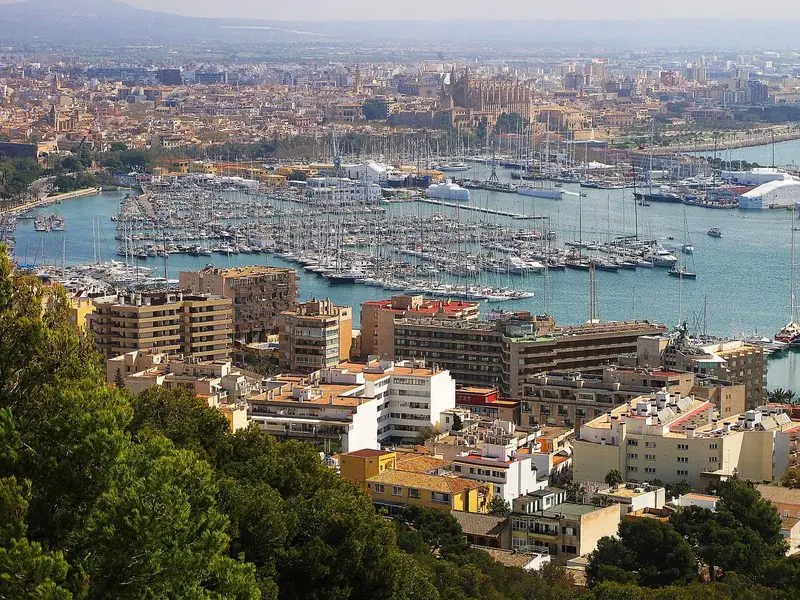
| Situation | Palma de Majorque, Îles Baléares, Espagne |
|---|---|
| Exploitant | STP Shipyard Palma, avec la Marina Port de Mallorca voisine pour le stationnement à flot |
| Capacité du chantier | yachts jusqu'à environ 120 m et 1 000 tonnes |
| Places récentes | positions ajoutées pour des yachts jusqu'à environ 110 m |
| Emprise | plus de 160 000 mètres carrés de chantier et d'ateliers |
| Modèle | chantier ouvert, laissant les propriétaires choisir leurs prestataires |
| Événement professionnel | le Palma International Boat Show chaque printemps |
| Open yard | owners appoint their own contractors from over 500 specialist companies on site, with a daily workforce above 1,500 |
| February 2026 | STP launched large-refit capability for vessels up to 115 m LOA at new facilities |
| For yachts over 50 m afloat | STP's own berthing area, or Club de Mar Mallorca with over 500 berths, more than 40 superyacht positions and a 170 m maximum |
| Certification | STP holds ISO 9001, ISO 14001 and OHSAS 45001, and the marina holds Blue Flag, EMAS and ISO 9001 |
| Next fixed date | Palma International Boat Show, 28 April to 1 May 2027 |
| Haul and launch, 2025 published maximum tariff, charged as one operation: EUR 6,964.34 high season and EUR 5,878.98 low season at 40 m, EUR 3,869.08 and EUR 3,265.87 at 30 m, EUR 1,061.24 and EUR 1,029.08 at 20 m | |
| Above 40 m the 40 m rate applies plus 10 per cent for every metre over 40 m, so a 60 m yacht is three times the 40 m figure | |
| Movement within the storage area 40 per cent of the tariff, suspension from the water 60 per cent | |
| Hardstanding | EUR 0.930 per square metre a day for days 1 to 15 and EUR 1.080 from day 16 in high season, EUR 0.720 and EUR 0.790 in low, liquid waste removal included |
| Dry dock pit occupation | hardstanding rate plus 20 per cent |
| Berth for a yacht under repair | EUR 0.710 per square metre a day high season, EUR 0.570 low |
| Low season at STP is January, July, August and December. Everything else is high season | |
| Water and electricity are the Balearic Port Authority's Palma tariffs plus 15 per cent handling. Refuse EUR 7.13 per 100 litre bag plus EUR 0.10 per square metre of boat per day, plus 50 per cent if hazardous. Telephone and data are supplier rates plus 10 per cent | |
| Ancillaries | hull cleaning EUR 4.30 per square metre, compressed air EUR 31.51 a day, ladder to 2 m EUR 14.29 a day, parking EUR 1.430 an hour, covered premises EUR 42.99 per square metre a month |
| Worked example | a 45 m yacht on a 9 m beam, hauled in October for thirty days, pays EUR 10,446.51 for haul and launch and EUR 12,210.75 for the hardstanding, EUR 22,657.26 of yard tariff before contractors |
| Formalities | entry and exit declarations are made in person at the maritime border post in the Port of Palma with all crew passports, seaman's books or on-board contracts, current crew list and ship's registration certificate |
| Border post public hours 08:00 to 14:00 Monday to Friday, with out-of-hours cases by telephone appointment only | |
La capitale du service en Méditerranée
STP Shipyard Palma se trouve dans le port de commerce de Palma de Majorque, à côté des marinas et des chantiers qui font de la ville un centre du métier. Palma a grandi dans ce rôle parce que son aéroport, son vivier de main-d'oeuvre et sa position aux Baléares l'y poussaient. Le chantier et la Marina Port de Mallorca attenante s'inscrivent dans une grappe dense de places et d'ateliers le long du front d'eau. Toute la zone est tournée vers l'affaire pratique de faire naviguer de grands yachts.
STP fonctionne sur un modèle de chantier ouvert qui laisse les propriétaires et les commandants choisir leurs propres prestataires plutôt que de passer par un chantier unique. Cette approche a attiré des centaines d'entreprises spécialisées à Palma et fait de la ville un aimant pour le refit. La marina et le chantier couvrent ensemble le stationnement à flot et la sortie d'eau. L'accent porte partout sur la profondeur de service plutôt que sur le vernis d'une marina de villégiature.
Les places et l'aire de sortie d'eau
STP s'est agrandi régulièrement et traite aujourd'hui sur son terre-plein des yachts jusqu'à environ 120 mètres et 1 000 tonnes, des travaux récents ayant ajouté des places pour des yachts jusqu'à environ 110 mètres. Son emprise totale dépasse 160 000 mètres carrés de chantier et d'ateliers. La Marina Port de Mallorca voisine assure le stationnement à flot des yachts le long du chantier. Ensemble, ils couvrent le versant humide comme le versant sec de l'entretien d'un grand yacht.
Les travel-lifts et le terre-plein du chantier permettent aux propriétaires de sortir de l'eau des yachts de belle taille pour les travaux de coque et la peinture. Les places des marinas alentour conviennent aux yachts qui restent à Palma pour l'hiver ou entre deux chantiers. La zone traite plusieurs milliers de bateaux par an sur l'ensemble de ses installations. Pour un propriétaire face à un refit, la concentration de capacité dans un seul port est le principal attrait. Les créneaux pour les plus grosses sorties d'eau se réservent bien à l'avance, puisque seule une poignée de chantiers sur la côte peuvent lever des yachts à cette échelle.
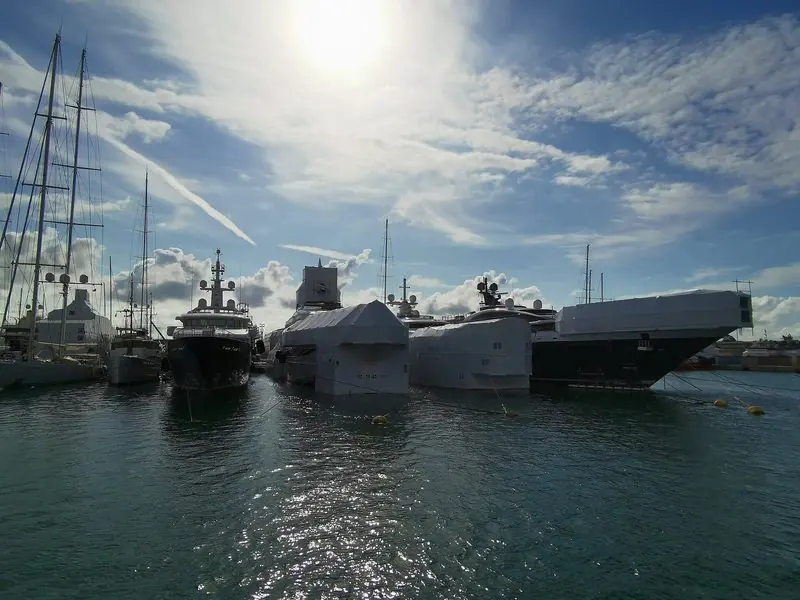
La salle des machines du refit méditerranéen.
Un chantier ouvert et une base de métiers profonde
La force de Palma tient au nombre même de métiers à portée du quai. Le modèle ouvert de STP permet à un propriétaire de faire venir les peintres et les ingénieurs de son choix, et la ville en compte assez pour armer presque n'importe quel projet. Ateliers et shipchandlers bordent le port. Peu d'endroits en Europe égalent cette densité d'expertise marine. Des métiers qualifiés sont disponibles à court préavis pendant l'hiver, ce qui tient les plannings de chantier.
Au-delà du chantier, Palma offre le carburant et l'avitaillement dont un yacht en exploitation a besoin, ainsi que d'excellentes liaisons aériennes pour les équipages et les pièces. Le Palma International Boat Show, chaque printemps, réunit la profession et marque le début de la saison. La ville elle-même est une base agréable pour les équipages pendant un long refit. C'est cette combinaison de profondeur de métiers et de qualité de vie qui fait que tant de yachts hivernent ici.
Une saison de refit et un été baléare
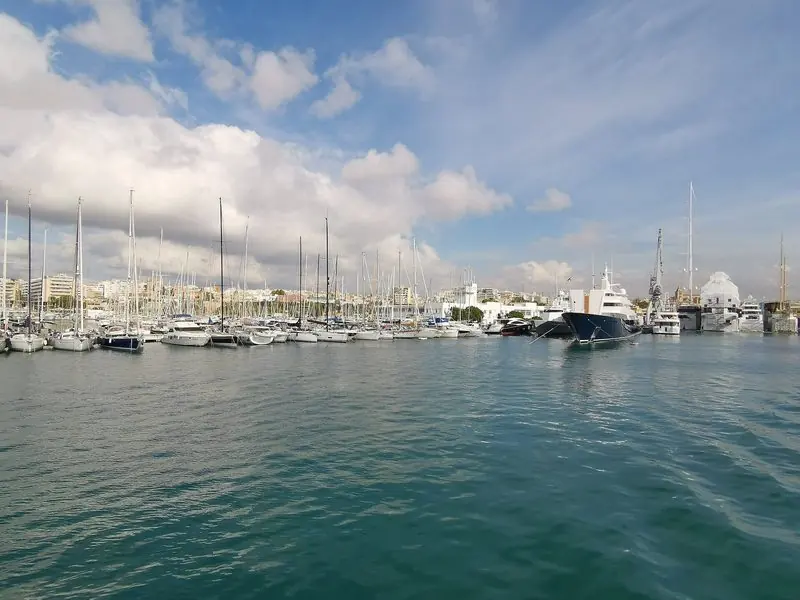
La période la plus chargée de Palma est la saison de refit, à l'automne et en hiver, quand la flotte d'été rentre pour ses travaux avant l'année suivante. Les chantiers tournent à pleine capacité d'octobre au printemps, et la ville se remplit d'équipages en chantier d'hiver. À l'approche de l'été, l'attention se tourne vers la saison de navigation et les eaux baléares toutes proches. Les mois chargés sont ici les mois d'hiver, quand les ports de villégiature se taisent.
Quand la saison arrive, Majorque offre parmi les plus belles navigations de Méditerranée occidentale, des calas de la côte nord à la traversée vers Ibiza et Formentera. La baie de Palma est elle-même un beau plan d'eau et un lieu de régates régulier. Les propriétaires peuvent passer d'un refit d'hiver directement à un été de navigation locale. Cette continuité fait partie de ce qui garde des yachts basés à Palma année après année.
Sa place dans le programme d'un propriétaire
La grappe de Palma convient au propriétaire qui prend l'entretien aussi au sérieux que la navigation. C'est l'endroit naturel pour baser un yacht en refit et en hivernage, avec les métiers et la capacité de sortie d'eau nécessaires aux gros travaux. Depuis Palma, toute la Méditerranée occidentale est à portée pour l'été. Peu de ports d'attache marient service et navigation aussi efficacement. L'aéroport dessert toute l'Europe en vols directs, ce qui compte quand des pièces ou des spécialistes doivent rejoindre le yacht rapidement.
Pour beaucoup de grands yachts, Palma est le port d'attache précisément à cause de ce que STP et ses voisins savent faire. Un propriétaire peut garder le yacht armé, lui faire passer un refit et naviguer aux Baléares sans changer de base. C'est cette dimension pratique, et non une scène mondaine, qui attire. C'est le coeur ouvrier de la flotte méditerranéenne.
Standards, waste and security
STP holds ISO 9001, ISO 14001 and OHSAS 45001, carbon footprint certification and UN Global Compact membership. Marina Port de Mallorca carries a Blue Flag, EMAS registration and ISO 9001. For an owner that matters because paint, solvent and wash-down handling in a yard of this size is exactly where an environmental problem becomes the yacht's problem.
Security is 24 hour with camera coverage on the marina side, and the commercial port perimeter adds a layer beyond that. Privacy during a refit is limited in the sense that hundreds of contractors move across the site daily, which is a consideration for owners who care about what is photographed inside their boat. Serious owners write confidentiality into contractor terms.
The city, the crew and the airport
Palma is the reason the industry settled here and not somewhere cheaper. It is a real city with a cathedral, an old town, restaurants that stay open in January and housing that crew can actually live in, so the skilled labour stays through the winter. That is the difference between a yard that can be staffed and one that cannot.
Palma's airport is one of the best-connected in the Mediterranean, minutes from the port, with direct flights from across Europe year-round and a summer schedule that is close to saturation. For a refit that matters more than it sounds, because a specialist or a part can reach the yacht the same day. For an owner it means joining the boat is easy in every month of the year.
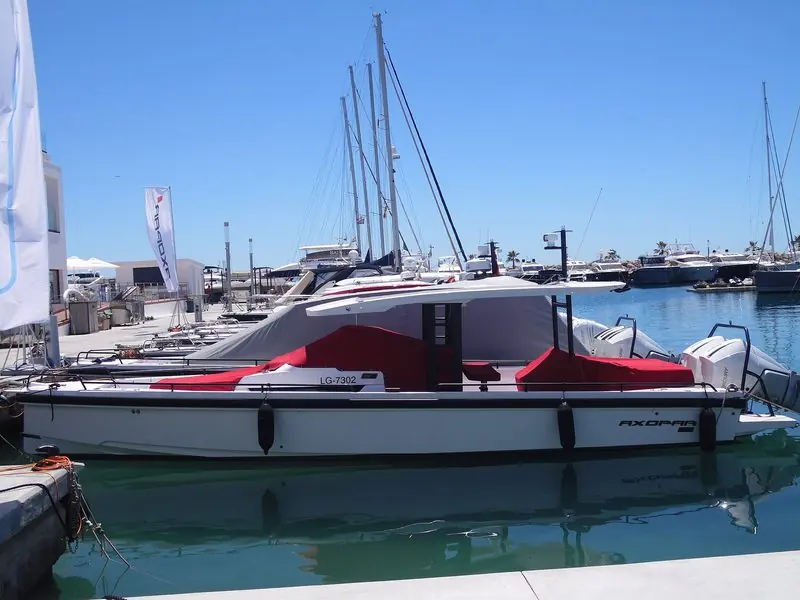
The season, which runs backwards
Palma's busy period is the opposite of everywhere else in this guide. The yards run hard from October to spring while the resort ports are shut, and the city fills with crew on winter projects. Space in the yard and the marinas is tightest in exactly the months when Porto Cervo is empty.
The turn comes with the Palma International Boat Show, which marks the start of the season and is scheduled for 28 April to 1 May in 2027. From there the fleet moves out into the Balearics, and Mallorca's north coast calas, the run to Ibiza and Formentera and the racing in the bay carry the summer. An owner can finish a refit and be cruising the same week without a delivery passage.
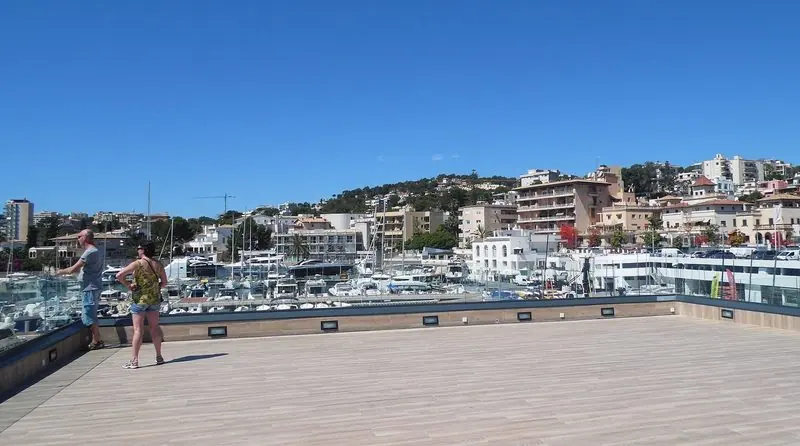
The honest downside
It is an industrial site and it looks like one. Paint tents, dust, noise, forklifts and a working commercial port are the view, and no owner should plan to entertain guests aboard while the yacht is in the yard. The afloat marina caps at 50 metres, so a large yacht is split between operators and the neat single-address arrangement that Porto Montenegro or Barcelona offers does not exist here.
Two other things need settling before a yacht bases in the Balearics. Spain levies a matriculation charge of 12 per cent, and the exemption for exclusive charter use has historically been limited to yachts under 15 metres with a reform to remove that threshold proposed and unresolved, so take Spanish advice first. And the posidonia anchoring rules that now govern the Balearics constrain where the yacht can lie once the refit is over.
What a lift actually costs, from the published tariff
STP works under a concession from the Balearic Port Authority, which means its maximum tariffs are a matter of public record rather than a quotation. On the 2025 schedule a haul and launch, charged as a single operation, costs EUR 6,964.34 in high season for a yacht of 40 m and EUR 5,878.98 in low season. A 30 m yacht is EUR 3,869.08 and EUR 3,265.87, and a 20 m yacht is EUR 1,061.24 and EUR 1,029.08. Above 40 m the published table stops and a rule takes over: the 40 m rate applies with an increase of 10 per cent for every metre of length above 40 m. Moving a yacht within the storage area is charged at 40 per cent of the tariff and suspending her from the water at 60 per cent.
The rule above 40 m is steep enough to be worth working out before a slot is booked. A 50 m yacht is the 40 m rate plus 100 per cent, or EUR 13,928.68 in high season. A 60 m yacht is the 40 m rate plus 200 per cent, EUR 20,893.02. Hardstanding is separate and charged by area, at EUR 0.930 per square metre a day in high season for the first fifteen days and EUR 1.080 from day sixteen, against EUR 0.720 and EUR 0.790 in low season, with liquid waste removal included and no additional charge permitted for it. A yacht in one of the dry dock pits pays the hardstanding rate plus 20 per cent. Water and electricity are the Port Authority's own Palma tariffs with 15 per cent added as a handling charge, refuse is EUR 7.13 for a 100 litre bag plus EUR 0.10 per square metre of boat per day and half as much again if it is hazardous, and telephone and data are the supplier's rates plus 10 per cent. The schedule is silent on VAT.
The season that runs backwards, written into the tariff
The clearest proof that Palma works against the Mediterranean calendar is in the yard's own definition of its seasons. Low season at STP is January, July, August and December. Those are the four months when the fleet is either laid up over Christmas or out cruising, and the yard discounts them. High season is everything else, which is to say the spring and autumn refit windows when every yacht in the western Mediterranean wants a slot at the same time. A berth held alongside for a yacht under repair costs EUR 0.710 per square metre a day in high season and EUR 0.570 in low, again with liquid waste removal included.
Worked through, a 45 m motor yacht on a 9 m beam hauled in October for a month of work pays EUR 10,446.51 for the haul and launch, which is the 40 m rate plus 50 per cent, then EUR 5,649.75 for the first fifteen days on the hard and EUR 6,561.00 for the next fifteen on a 405 square metre footprint. That is EUR 22,657.26 of yard tariff before a single contractor invoice. The identical job in August, in the yard's low season, is EUR 8,818.47 for the lift and EUR 9,173.25 for the thirty days ashore. Ancillaries are published on the same schedule and add up quietly: hull cleaning at EUR 4.30 per square metre, compressed air at EUR 31.51 a day, a ladder up to 2 m at EUR 14.29 a day, parking at EUR 1.430 an hour and covered premises for a contractor at EUR 42.99 per square metre a month.
Who clears the yacht, and the six-hour window
Palma is where a yacht crossing into or out of the Schengen area does its paperwork, and the procedure is published. If Mallorca is the first Schengen port, the captain presents in person at the maritime border post in the Port of Palma to make the entry declaration, carrying the passports of every crew member, each seaman's book or, in its absence, the on-board employment contract, a copy of the current crew list and a copy of the ship's registration certificate. The exit declaration on leaving the Schengen area takes the same documents. Embarking or disembarking a crew member of non-European nationality is a further separate visit, with that person's passport presented for stamping alongside the same set of papers.
The constraint is the clock. The border post is open to the public from 08:00 to 14:00, Monday to Friday. Outside those hours an urgent case is handled by telephoning the post's mobile number and arranging an appointment, which is a concession rather than a service. A yacht arriving on a Friday evening from a non-Schengen port with a crew change booked for Saturday morning has a problem no amount of money solves cleanly. Nothing in the published procedure requires an agent. What it requires is somebody standing at the border post inside a six-hour weekday window with the right documents in the right order, which is why almost every large yacht uses one.
À terre, accès et réservation
| Getting there | Palma de Mallorca's airport sits about 8 km from the port, among the busiest in the Mediterranean for direct European connections, which is part of why crew actually stay through a winter refit rather than rotating out. |
|---|---|
| Arriving by sea | The Bay of Palma is wide, deep and enters easily in almost any conditions, no bar, no narrows, no tidal constraint, inside the commercial port of Palma on the western waterfront. |
| Booking a slot or a berth | Afloat berths at Marina Port de Mallorca are booked online or through reception with long-term rates on request. Yard slots are booked directly with STP, and the large ones go early because only a handful of European yards can lift at the top of this range and the winter window is finite. Hill Robinson, which manages refits here, describes calling in January for a February start as not advisable. |
| What the yard actually costs | STP's tariffs are public record under its Balearic Port Authority concession rather than quoted privately. The 2025 schedule prices a haul and launch, as a single operation, at EUR 6,964.34 in high season for a 40 m yacht and EUR 5,878.98 in low season. |
| The open-yard model in practice | The yard supplies space, the lift and infrastructure; the owner or captain appoints from more than 500 to 600 specialist companies on site. Hill Robinson's own assessment is that this freedom is valuable only if someone coordinates the moving parts, since the binding constraint is not yard capacity but the specialist workshops, which book out early. |
| Eating and crew life | The yard sits inside a real city with a cathedral and an old town rather than a resort strip, and restaurants and shops stay open through January, which is the reason skilled crew and contractors stay through winter instead of leaving with the season. |
Ce que rapportent propriétaires et équipages
The industry here is treated as an identity, not just a trade
Tomi Salom, President of the Balearic Marine Cluster, frames the refit industry as part of the islands' economy and culture rather than a service the island happens to host, which shows up on the ground as a workforce with generational boatbuilding knowledge and a city built around the yards rather than tolerating them.
Tomi Salom, Balearic Marine ClusterBerth demand at the top of the range keeps outrunning supply
STP's own leadership points to repeated requests for berths at the largest end of the range as the reason behind its capacity expansion, which is a direct signal that the 120 m, 1,000-tonne ceiling was already the binding constraint before it was raised.
Joan Rossello, CEO, STP Shipyard PalmaThe open-yard freedom only pays off with a coordinator
Hill Robinson, which manages refit projects at STP, is explicit that choosing the best rigger, paint team and electronics contractor from the site's hundreds of companies is genuinely valuable only if someone is managing those moving parts, and that the specialist workshops rather than the yard itself are what books out first.
Hill Robinson
Les points forts et les points de vigilance
Points forts
- The only 1,000-tonne travel lift in EuropeAlongside 100, 150, 200 and 700-tonne lifts and seven keel pits across roughly 130,000 square metres, putting through around 1,500 yachts a year.
- Open-yard choice of contractorMore than 500 specialist companies operate on site, so an owner or captain picks the rigger, the paint team and the electronics contractor rather than being tied to one yard's in-house crew.
- Crew infrastructure that survives the winterPalma is a real city with housing, restaurants and an airport that stays busy in January, which is why the skilled labour base does not leave with the season the way it does at resort yards.
- Its season runs opposite the rest of the MediterraneanLow season at STP is January, July, August and December, the exact months the cruising fleet is either laid up over Christmas or out on charter, so refit slots and pricing work against the crowd rather than with it.
Points de vigilance
- It is an industrial site and it looks like onePaint tents, dust, noise, forklifts and a working commercial port are the view; no owner should plan to entertain guests aboard while the yacht is in the yard.
- Freedom of contractor choice is also the owner's problem to manageHill Robinson's own account is that the open-yard model creates opportunity and complexity together, and the value of choosing the best specialist for each trade only holds if someone is coordinating them.
- The specialist workshops, not the lifts, are what runs out firstHill Robinson names the talleres as the binding constraint over the yard itself, and describes booking a February start in January as not advisable.
- The afloat marina caps at 50 metresMarina Port de Mallorca itself tops out well below the yard's 120 m lifting capacity, so a large yacht afloat and a large yacht in for a lift are two different arrangements on two different waiting lists.
Pour qui: Les propriétaires qui basent un yacht là où les gros travaux de refit et d'entretien peuvent se faire, puis naviguent aux Baléares.