Nelson's Dockyard (English Harbour, Antigua)
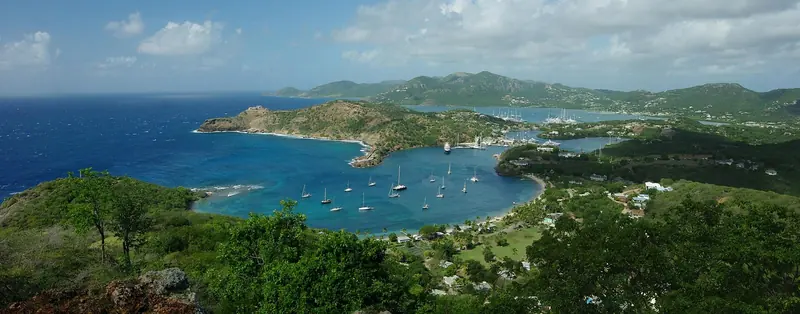
| History | local planters offered the harbour to the Crown in 1725 for its hurricane shelter and near-invisibility from open water; the modern dockyard was built out in phases from the 1740s to the 1850s, with over 75 percent of the skilled labour force enslaved Africans |
|---|---|
| Nelson himself served here as a young captain from 1784 to 1787, enforcing the Navigation Acts, which gives the site its name | |
| The Royal Navy abandoned the dockyard in 1889 as ships had grown too large for the harbour; it fell into decay until the Society of Friends of English Harbour began restoration in 1951, reopening the site in 1961 | |
| UNESCO inscribed the site in 2016 as Antigua Naval Dockyard and Related Archaeological Sites, recognising it as the only continuously working Georgian-era dockyard in the world | |
| Operator | the National Parks Authority of Antigua and Barbuda, established 1984, which also runs a separate Heritage Department and Environment Unit |
| Berths | approximately 30 stern-to berths with bow moorings, per the Antigua and Barbuda Yachting and Marine Association; four historic 18th-century British mooring chains remain in active use |
| Maximum vessel | reported as up to 220 ft using a bow-mooring system in marketing listings, against a more conservative, technically sourced 50 metres, about 164 ft, from Dockwalk's own spec sheet quoting the Parks Authority; the two figures are not reconciled by any source found |
| Depth | about 14 ft in the working stern-to quay areas, per ABYMA; a 4 knot speed limit applies harbourwide |
| VHF | channel 68 |
| Nelson's Dockyard is also the port of entry for neighbouring Falmouth Harbour: Customs and Immigration offices for both harbours are physically located inside the dockyard | |
| Antigua Charter Yacht Show runs 4 to 9 December 2026 across three marinas including Nelson's Dockyard, showing up to 60 yachts; Antigua Sailing Week's 57th edition runs 22 to 26 April 2026, based nearby on Dockyard Drive | |
Built by Enslaved Labour, for a Navy That Left It to Rot
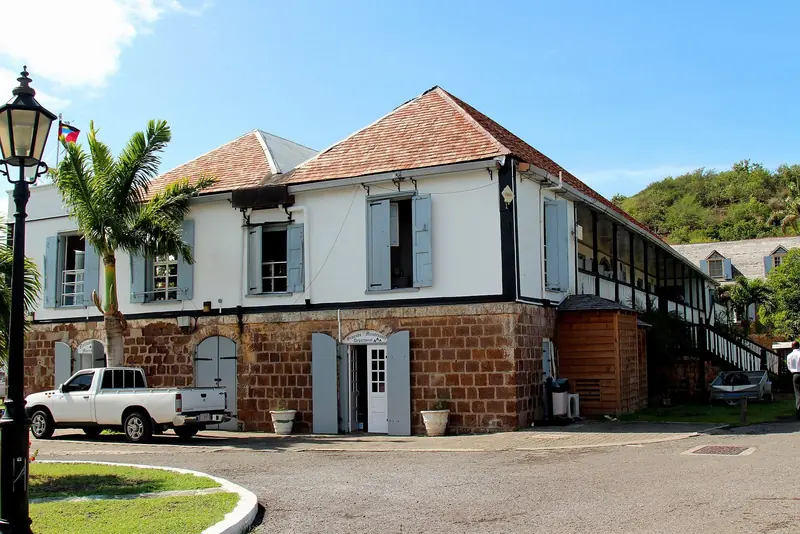
Antiguan sugar planters offered this harbour to the Crown in 1725, recognising what still makes it valuable: a shape that hides a fleet from open water and shelters it from hurricanes. Construction of the dockyard itself began in earnest in the 1740s, accelerated by the threat of French privateers, and continued in phases into the 1850s: storehouses and quarters through the 1760s, workshops and mast houses in the 1770s, a major building programme through the 1790s that overlapped Nelson's own posting here as a young captain from 1784 to 1787, and the final Georgian-era buildings, the Paymaster's Office and Officers' Quarters, finished as late as 1855. Antigua's own National Parks Authority states plainly that more than 75 percent of the skilled labour that built it was enslaved African men and women.
The Navy abandoned the yard in 1889, its ships by then too large for the harbour it was built to hide, and it decayed for sixty years, battered further by hurricanes and earthquakes, until the Society of Friends of English Harbour began restoring it in 1951. The site reopened to the public in 1961, Antigua's National Parks Act formally protected it in 1984, and UNESCO inscribed it as a World Heritage Site in 2016, under the name Antigua Naval Dockyard and Related Archaeological Sites, specifically for being the only Georgian-era dockyard anywhere still working continuously rather than preserved as a museum piece. The National Parks Authority formed in that same 1984 Act now runs a dedicated Heritage Department and, since August 2011, an Environment Unit managing both the marine and terrestrial resources of the park, which is the body an owner actually deals with today rather than any private marina company.
You Moor on the Same Stone Nelson Did
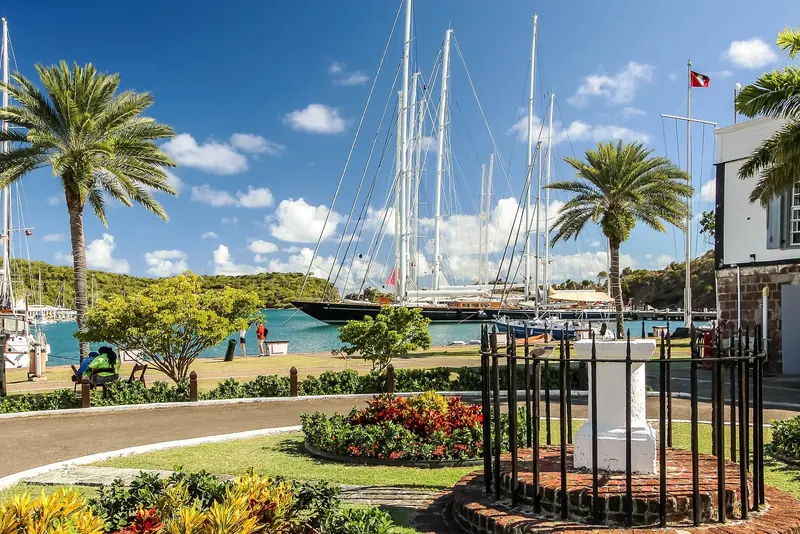
This is not a floating-dock marina. The roughly 30 berths here, confirmed independently by both the Antigua and Barbuda Yachting and Marine Association and Dockwalk's own superyacht database, moor stern-to against the historic stone quay wall, bow lines running out to fixed moorings, four of which are the original 18th-century British mooring chains still in service. Depth in the working quay areas is reported at about 14 ft, and a 4 knot speed limit applies across the whole harbour. A captain used to a modern floating-dock marina should expect a genuinely different, more exacting manoeuvre here, made tighter by the dockyard's fixed historic dimensions rather than anything a modern engineer would choose.
How big a yacht those dimensions actually admit is a real, unresolved question. Marketing listings syndicated across several yacht-charter directories describe capacity up to 220 ft using what they call a new bow-mooring system, with no date attached to when that system arrived. Dockwalk's own technical specification sheet, sourced to the Parks Authority's contact details, instead gives a firmer maximum of 50 metres, about 164 ft, with a 12 metre beam and 4 metre draft limit. No source found reconciles the two figures. A captain bringing anything over about 150 ft should confirm the current maximum directly with the Parks Authority rather than rely on either published number alone.
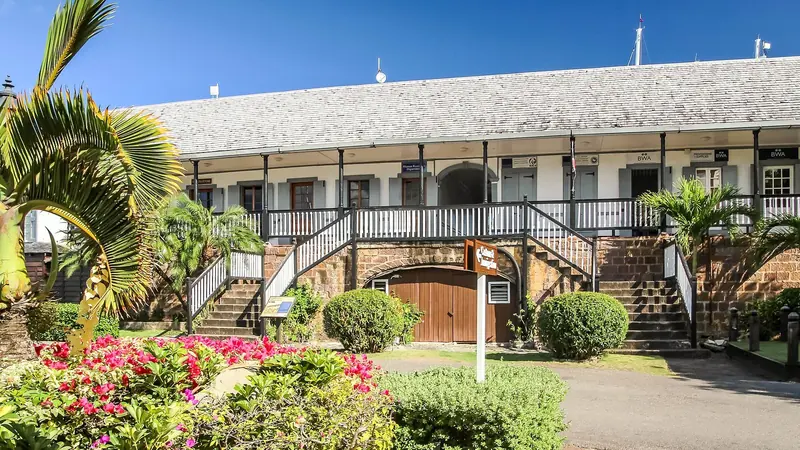
Over 75 percent of the skilled labour that built this dockyard between 1725 and the 1850s was enslaved. The site that resulted is the only continuously working Georgian naval dockyard left anywhere in the world.
A National Park Charges a Gate Fee, Not a Marina Rate Card
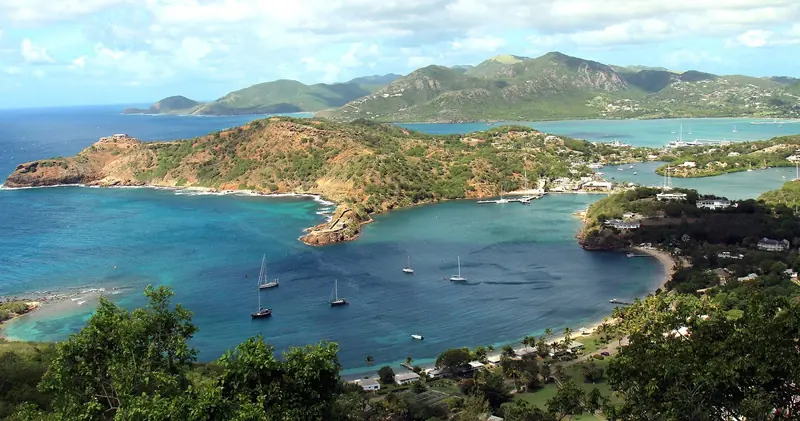
Because a government Parks Authority runs this site rather than a marina company, the pricing structure looks more like a national park's than a marina's. General admission, covering the dockyard and other park sites including Shirley Heights, runs USD 15 per visitor, with a USD 100 season pass valid through the end of the yachting season and a reduced EC 10 dollar rate for Antiguan and Barbudan residents; the Parks Authority has publicly defended this fee against criticism, which is itself the clearest evidence the number is current. Antiguan and Barbudan law separately requires every vessel, anchored or berthed anywhere in English or Falmouth Harbour, to pay National Parks Authority fees on top of the standard Customs and Port Authority charges that apply nationwide.
What is not published, anywhere checked, is a current per-foot berthing rate for an actual yacht slip. The most recent structured fee table found dates to 2012 and is explicitly caveated by its own source as subject to change without notice, which makes it useful only as historical colour, not as a number to plan a budget around. Berths do include three-phase electricity, fresh water, fibre internet and laundry according to marina listings, but no current dollar figure for any of it could be confirmed to two-source standard. A buyer should treat this as a marina that prices privately, by direct inquiry, rather than one with a rate sheet to compare against Falmouth Harbour next door. A foreign-registered vessel also needs a cruising permit, issued for up to six consecutive months through the Port Authority or National Parks, a separate document from the berthing fee itself and one worth arranging before arrival rather than at the dock.
One Harbour, Two Marinas, and a Squeeze Twice a Year
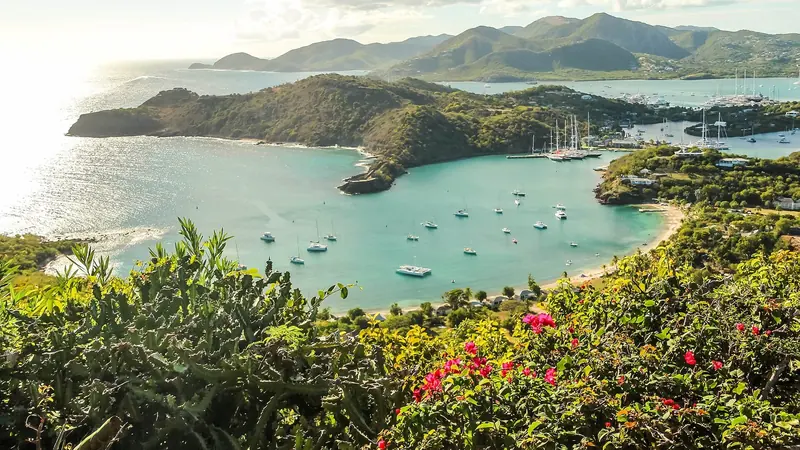
Nelson's Dockyard does double duty as the port of entry for both English Harbour and neighbouring Falmouth Harbour: the Customs and Immigration offices for both are physically located inside the dockyard, so any yacht arriving to either harbour clears in at the same buildings. Falmouth Harbour Marina itself, covered elsewhere on this site, is the larger and less historically constrained of the two, with 60 berths and room for vessels to 330 ft, which is where the bulk of a big modern fleet actually sits; Nelson's Dockyard's own tighter, historic dimensions carry the smaller vessels and the ones drawn to the setting itself.
Two events a year genuinely compress the whole bay. Antigua Sailing Week's 57th edition runs 22 to 26 April 2026, based at the National Sailing Academy on Dockyard Drive, immediately alongside though not identical to the dockyard marina itself. The Antigua Charter Yacht Show runs 4 to 9 December 2026 across three venues at once, Nelson's Dockyard, Antigua Yacht Club Marina and Falmouth Harbour Marina, showing up to 60 yachts to charter brokers with an organiser shuttle running between all three all day. No first-hand cruiser account of the resulting berth squeeze during either event could be found and none should be invented, but the structural facts, three marinas, up to 60 boats, one small historic basin, speak for themselves: a visiting yacht with no reason to be part of either event should plan its arrival around them, not into them.
What Is Genuinely Next Door
Shirley Heights Lookout, the panoramic viewpoint over both English and Falmouth Harbours, sits about 3 miles away by road or a roughly 1.2 mile round-trip walking trail from Galleon Beach, climbing to about 490 ft, all within the same national park boundary as the dockyard itself. Inside the dockyard, the Admiral's Inn houses Pillars restaurant on the water, in a building whose original 1788 pitch-and-tar store still holds a small historic bar; the Galley Bar, on the site of Nelson's own kitchen, and Cloggy's, informally rated one of the best sailors' bars anywhere, are the venues most named by crews based here.
For real mechanical work, Antigua Slipway next door, established 1966, runs a marine railway rated to 200 tons and vessels up to 150 ft by 40 ft beam and 14 ft draft, plus a smaller hydraulic trailer rated to 50 ft and 35 tons, full refit and repair services, duty-free fuel and a chandlery, making English Harbour together with Falmouth Harbour the recognised centre of Antigua's whole marine service trade. V.C. Bird International Airport is about 22 km away, roughly 37 to 40 minutes by taxi or private transfer; the public bus covers the same distance in over an hour and a half with transfers, which is worth knowing before planning a same-day crew change around it.
À terre, accès et réservation
| Getting there | V.C. Bird International Airport is about 22 km from English Harbour, roughly 37 to 40 minutes by taxi or private transfer; the public bus takes over 90 minutes with transfers. |
|---|---|
| Berthing | About 30 stern-to berths on the historic quay, four on original 18th-century mooring chains. Maximum vessel disputed between sources: 164 ft (50 m, Dockwalk/Parks Authority) versus 220 ft in marketing listings. |
| Fees | National Park general admission USD 15, season pass USD 100. No current per-foot berthing rate is published; the most recent fee table found dates to 2012 and is explicitly not current. |
| Clearing in | Nelson's Dockyard is the shared port of entry for English and Falmouth Harbours; file an eSeaClear advance notification before arrival. A cruising permit runs up to 6 consecutive months. |
| Yard | Antigua Slipway, next door, established 1966: marine railway to 200 tons, vessels to 150 ft by 40 ft beam, 14 ft draft, plus refit, repair, duty-free fuel and chandlery. |
| What is not published | No current per-foot berthing rate, no reconciled maximum LOA figure, and no first-hand cruiser account of berth availability during Sailing Week or the Charter Yacht Show. |
Ce que rapportent propriétaires et équipages
The dockyard is the only working Georgian-era naval dockyard left anywhere
UNESCO's 2016 inscription specifically credits the site's rare status as a naval dockyard that has remained continuously in use since the Georgian era, rather than a preserved museum piece.
National Parks AntiguaThe 1723 hurricane proved the harbour's shelter value early
Ships moored in English Harbour rode out a hurricane undamaged in September 1723 while 35 vessels were wrecked elsewhere in Antigua, an early demonstration of why the Navy wanted this harbour at all.
naval-history sources cited via WikipediaSixty years of decay nearly erased the site before volunteers stepped in
After the Royal Navy left in 1889, hurricanes and earthquakes further damaged the dockyard until the Society of Friends of English Harbour began restoring it from 1951, reopening the site a decade later.
Society of Friends of English Harbour, per National Parks AntiguaThe Parks Authority has had to defend its own gate fee in public
Local reporting on the USD 15 admission fee and USD 100 season pass describes the Parks Authority publicly defending the charge against criticism.
Antigua ObserverTwo major yachting events strain the same small basin every year
The Antigua Charter Yacht Show alone stages up to 60 yachts across three marinas including Nelson's Dockyard every December, a scale that industry guides describe as requiring an organiser shuttle to move brokers between venues.
Burgess Yachts
Les points forts et les points de vigilance
Points forts
- A genuine, working piece of naval historyThis is the only continuously working Georgian-era naval dockyard left anywhere in the world, UNESCO-inscribed in 2016, and a yacht here moors on the same stone quay and, in places, the same chains, that held Nelson's own squadron.
- The full refit trade is next doorAntigua Slipway's 200-ton marine railway and full chandlery sit immediately alongside, making this one of the best-served historic harbours anywhere for real mechanical work.
- Genuinely walkable to a landmark view and a working bar sceneShirley Heights Lookout, Pillars at the Admiral's Inn and the Galley Bar are all a short walk from the berth, in a working village setting rather than a resort development.
- Serves as the port of entry for two harbours at onceCustoms and Immigration for both English and Falmouth Harbours sit inside the dockyard, simplifying clearance for any yacht arriving to either.
- A hurricane hole with a three-hundred-year track recordThe harbour's shelter value was proven as early as 1723, when ships moored here rode out a storm that wrecked 35 vessels elsewhere in Antigua.
Points de vigilance
- No published berthing rateThe most recent fee table found for actual yacht berthing dates to 2012 and is explicitly caveated as subject to change; no current per-foot rate is published anywhere.
- The marina's own capacity claims disagree with each otherMarketing lists a 220 ft maximum on a new bow-mooring system; the Parks Authority's own technical spec sheet gives 164 ft. Nothing reconciles the two.
- Fixed 18th-century dimensions do not flex for a modern fleetAbout 30 stern-to berths on a historic quay is a small, fixed capacity that cannot expand the way a modern marina could, which is part of what causes the squeeze around major events.
- Two annual events compress the whole bayAntigua Sailing Week each April and the Antigua Charter Yacht Show each December both draw large fleets into this and the neighbouring harbour at once; a visiting yacht with no reason to be part of either should plan around them.
- Built on enslaved labour, a history the site does not shy away from but every visitor should knowOver 75 percent of the skilled labour that built the dockyard was enslaved; the Parks Authority states this plainly, and it is part of the honest history of the berth, not a footnote to skip.
Pour qui: An owner who wants to berth a piece of naval history rather than a modern marina, and who values walking distance to Shirley Heights and a genuine 18th-century stone quay over a published rate card, a big modern fuel dock or an easy season around Sailing Week and the Charter Yacht Show.