De Voogt Naval Architects
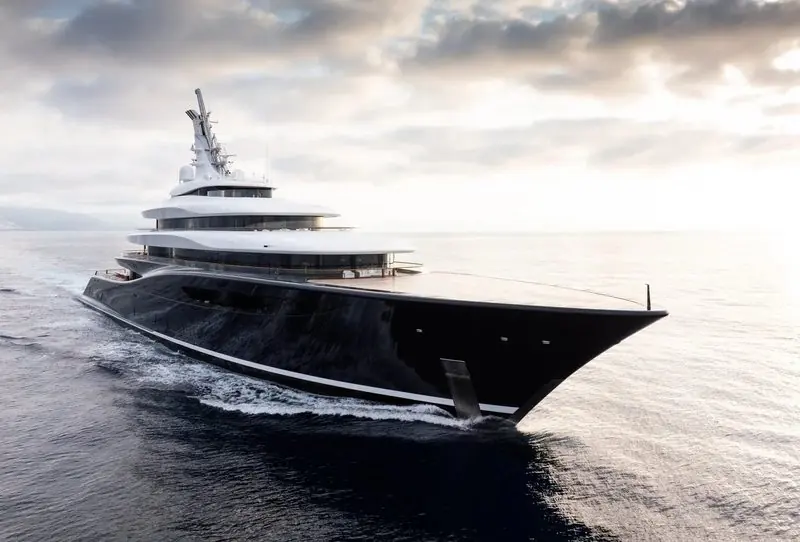
| Fondatore | Henri de Voogt |
|---|---|
| Origini | 1913, Feadship costituita nel 1949 |
| Sede | Paesi Bassi (zona di Haarlem) |
| Organico | circa 180 persone |
| Disciplina | architettura navale e ingegneria |
| Ruolo | centro di progettazione e ingegneria di ogni Feadship |
| Yacht simbolo | Anna (110 m), Symphony (101,5 m), Savannah (83,5 m) |
| Disciplines | naval architecture and engineering, plus exterior design on more than half the Feadship fleet |
| Largest Feadship | Breakthrough, 118.8 m, launched May 2024, with exterior and interior by RWD |
| Anna, 110 m, delivered 5 October 2018 and listed since as Ambassador: De Voogt naval architecture under a Michael Leach Design exterior | |
| Savannah, 83.5 m, 2015 | exterior by De Voogt with CG Design, and Feadship's first hybrid yacht |
| Savannah's package | one medium-speed main engine on a single centreline shaft, three generators, batteries and a contra-rotating azimuthing stern thruster, with a claimed 30 per cent fuel saving |
| No separate design fee. The naval architecture is inside the Feadship build price and is not negotiated by the owner | |
| The owner still appoints and pays the exterior and interior studios himself, at a market band of 1 to 5 per cent of build cost for a designer, plus 2 to 4 per cent for project management, both outside the yard price (SuperYachtReview 2026 price guide, updated March 2026) | |
| Ocean Independence names Feadship first among the Northern European yards that hold market confidence on build quality, engineering pedigree and long-term support (11 May 2026) | |
Un secolo di architettura navale olandese
Lo studio fa risalire le proprie origini al 1913, quando l'architetto navale Henri de Voogt aprì la propria attività nei Paesi Bassi. Costruì la propria reputazione fra le due guerre con grandi motoryacht, tra cui uno yacht di 54 metri consegnato allo Scià di Persia nel 1936. Nel 1949 De Voogt contribuì a formare Feadship, un'associazione per l'export che univa i cantieri Royal Van Lent e De Vries. Da allora l'ufficio di architettura navale è il perno di quella collaborazione. Quella dimensione riflette la profondità ingegneristica che un Feadship moderno oggi richiede.
Oggi De Voogt Naval Architects è una squadra numerosa di progettisti, architetti navali e ingegneri con base nei Paesi Bassi. Fornisce l'architettura navale e l'ingegneria per ogni yacht Feadship. Quel ruolo lo colloca al centro tecnico di uno dei nomi più rispettati dello yachting. Lo studio è cresciuto fino a circa 180 persone. Il lavoro dello studio decide quanto silenziosamente ed efficientemente si muove uno yacht, prima ancora che qualcuno ne veda l'interno.
Prima l'ingegneria
La disciplina di De Voogt è l'architettura navale, la scienza dello scafo, della sua struttura, della sua stabilità e del suo comportamento in mare. Lo studio progetta scafi efficienti e silenziosi, conformi ai regolamenti di classe e di sicurezza più severi. Il suo lavoro è spesso invisibile agli ospiti, eppure governa il modo in cui uno yacht si comporta. Un'ingegneria solida è la base su cui è costruito ogni Feadship. Fare bene l'architettura navale è la parte più difficile e meno visibile della costruzione di uno yacht.
L'ufficio sviluppa spesso l'architettura navale mentre uno stylist esterno modella il profilo sopra la linea di galleggiamento. È a proprio agio in quel ruolo di supporto, e fornisce la piattaforma per l'esterno di un altro progettista. Su molti yacht contribuisce anche all'esterno e al piano generale. La sua priorità è sempre una barca che funzioni in modo impeccabile in mare. L'ufficio è contento di fornire la piattaforma su cui può poggiare il profilo di un altro progettista.
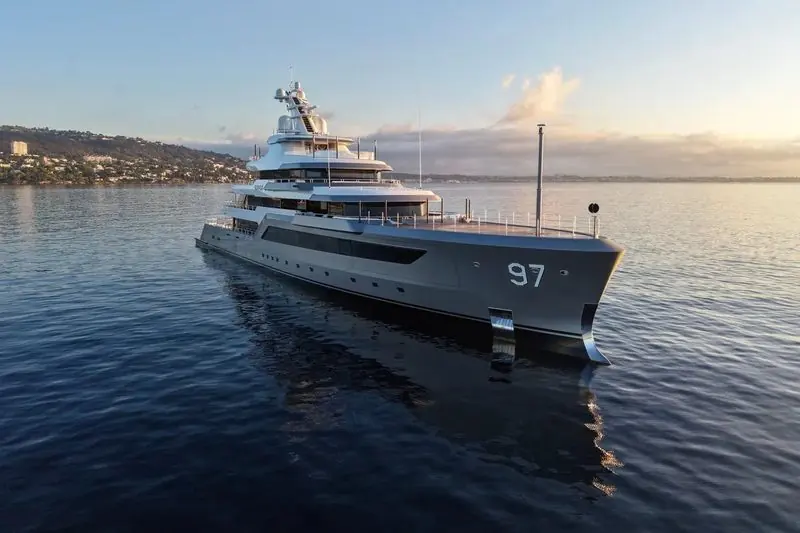
La spina dorsale ingegneristica centenaria dietro ogni yacht Feadship.
Anna, Symphony e Savannah
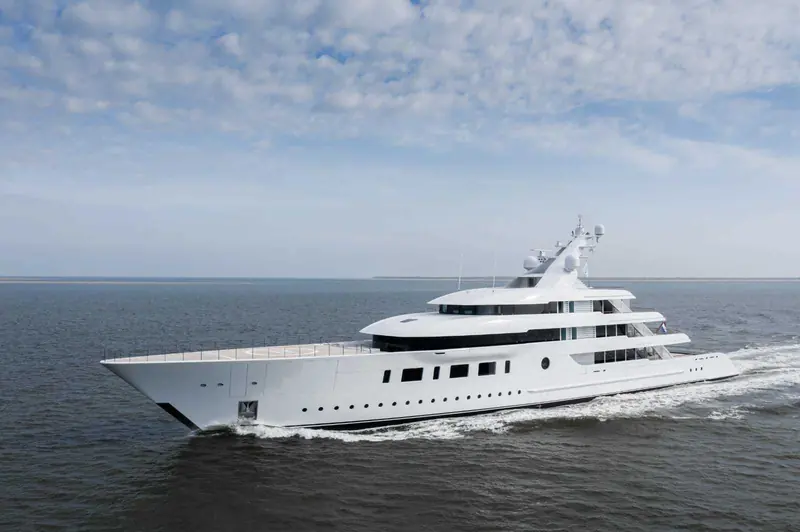
Anna da 110 metri è il più grande yacht mai consegnato da Feadship, con De Voogt responsabile dell'architettura navale. Symphony da 101,5 metri deteneva quel record prima di Anna e si affidava anch'esso all'ingegneria De Voogt, con esterno firmato da Tim Heywood. Savannah da 83,5 metri ha aperto una strada nuova come yacht pioniere della propulsione ibrida, ancora con architettura navale De Voogt. Ognuno mostra lo studio al lavoro sulla frontiera della dimensione o della tecnologia. Sono punti su una lunga curva di progresso costante più che risultati isolati.
Questi yacht si inseriscono in una lunga serie di Feadship plasmati dallo stesso ufficio nel corso di molti decenni. L'ingegneria dello studio ha reso possibili in egual misura dimensioni record e propulsioni pioneristiche. La sua coerenza attraverso generazioni di yacht è notevole. Il nome De Voogt sta dietro a una flotta che definisce la cantieristica da diporto olandese. Generazione dopo generazione, i Feadship si sono affidati allo stesso ufficio di ingegneria.
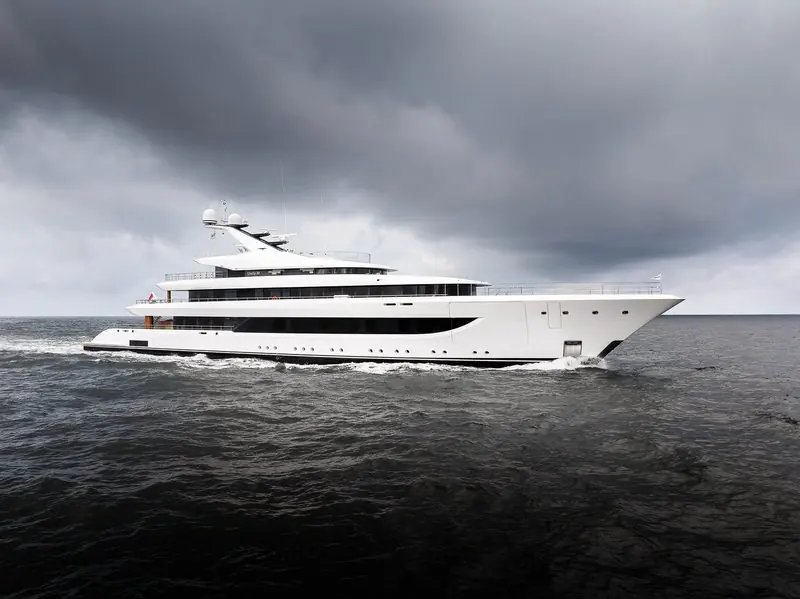
Dentro il sistema Feadship
De Voogt non lavora come studio indipendente su commissione, nel modo in cui lo fanno quasi tutti i nomi qui presenti. È il centro condiviso di progettazione e ingegneria dei due cantieri costruttori di Feadship. Quell'integrazione fa sì che gli architetti navali siedano vicino alle persone che costruiscono gli yacht. È un modello raro di progettista e costruttore sotto la stessa insegna. Quella vicinanza fra ufficio tecnico e officina è alla base di buona parte della qualità Feadship.
L'ufficio collabora spesso con i principali studi di esterni e di interni scelti dall'armatore. Fornisce la spina dorsale ingegneristica mentre quegli studi modellano ciò che l'armatore vede. Questa divisione ha prodotto molti fra gli yacht più ammirati in navigazione. Il sistema dipende dal fatto che De Voogt faccia bene le cose fondamentali. Gli esterni celebri funzionano solo perché la piattaforma sotto di essi è solida.
La spina dorsale di Feadship
La posizione di De Voogt è inseparabile dalla reputazione di qualità di Feadship. Il secolo di architettura navale dello studio è uno dei percorsi più lunghi del settore. La sua ingegneria sta sotto yacht largamente considerati tra i meglio costruiti al mondo. Quell'autorevolezza silenziosa è il suo tratto distintivo. La sua discendenza fino al 1913 è tra le più lunghe e ininterrotte dell'industria.
L'ufficio continua a spingere su dimensione ed efficienza a ogni nuovo Feadship. Il suo ruolo di cuore tecnico del cantiere lo tiene centrale nello yachting olandese. Pochi studi possono rivendicare una discendenza così lunga e ininterrotta. De Voogt è la spina dorsale di uno dei grandi costruttori di yacht. Ogni nuovo varo si aggiunge a un corpo di ingegneria costruito in più di un secolo.
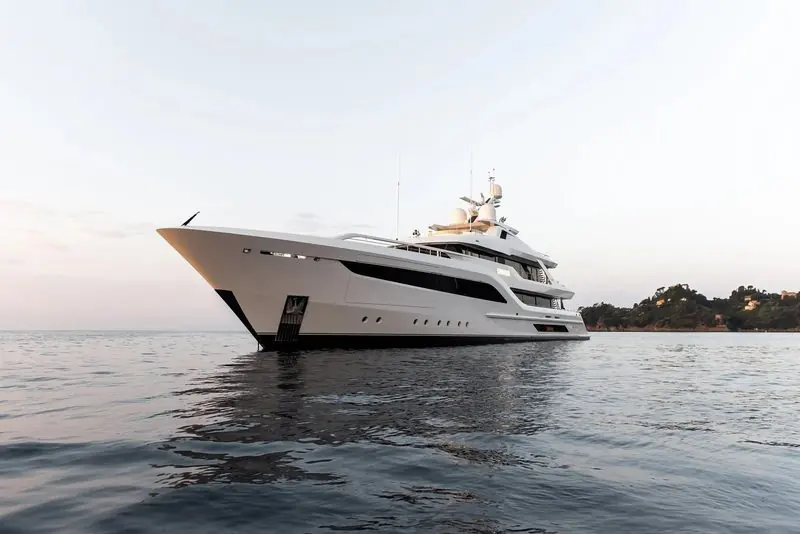
Breakthrough
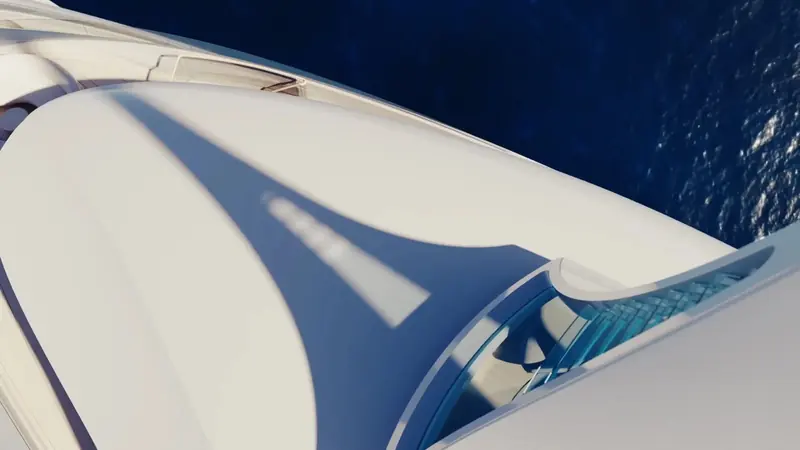
Feadship launched Breakthrough on 4 May 2024 at 118.8 metres and 7,247 GT, taking the yard's size record from Anna and becoming the largest superyacht ever launched in the Netherlands. RWD drew both the exterior and the interior. Her power comes from a 3.2 megawatt fuel-cell system running on cryogenic liquid hydrogen, with a hybrid arrangement allowing conventional diesel-electric operation as well.
The engineering problem was not the fuel cells. It was the hydrogen, which has to be stored at minus 253 degrees Celsius and occupies far more volume than diesel for the same energy, inside a hull that also had to carry fourteen balconies and seven unfolding platforms. Getting that arrangement past a classification society with no precedent to point at is naval architecture in its purest form. Five years of development went into it.
Where the naval architect's responsibility begins and ends
An owner should be clear about what this office guarantees. Speed, range, fuel consumption, noise and vibration levels and sea-keeping behaviour are the numbers that live in a build contract, and they rest on the naval architecture. Interior joinery, artwork and finish do not. If a yacht is loud at 12 knots or wet in a following sea, that is a hull and systems problem and the responsibility lies here.
The corresponding limitation is that De Voogt cannot fix a poor layout or an ugly profile chosen by somebody else. Where an outside studio holds the styling, the boundary between the two offices runs through the window line, the deck edge and the superstructure profile. On a Feadship that boundary is managed inside one project team, which removes the most common source of build disputes elsewhere in the industry.
How an owner meets De Voogt, and what it costs
There is no independent commission here. An owner does not appoint De Voogt. He orders a Feadship, and the naval architecture arrives as part of the yard's proposition, with the engineering fee inside the build price and not separately negotiated. That is a genuinely different commercial arrangement from every other studio in this directory, and it is worth pricing. On a custom project elsewhere the owner carries a designer's fee of 1 to 5 per cent of build cost and project management at a further 2 to 4 per cent, both outside the yard's number, per the SuperYachtReview guide updated March 2026. Here the first of those two lines is already inside the price for the engineering half of the job.
What an owner still chooses, and still pays for separately, is the exterior and interior studios, and Feadship is comfortable working with whoever he appoints. The sequence runs through a letter of intent, which reserves a slot, to the yacht building agreement, which is the commitment to price and delivery, as Oceanco describes the same industry practice in its owner's guide published by BOAT International on 10 June 2024. A yacht of 100 metres and above is commonly four to five years from first sketch to handover. The owner deals with the yard's project team once building starts, with De Voogt continuing through engineering, trials and delivery, which is attendance an outside naval architect would bill by the hour.
Standing, and who it does not suit
De Voogt's reputation is inseparable from Feadship's, and Feadship is generally placed at or near the top of any serious ranking of build quality. More than a century of continuous naval architecture is a record nobody else in yachting can claim. The office's contribution is invisible in photographs and decisive in ownership, which is why it is chronically underrated by buyers and never by captains.
This is not an option for an owner building anywhere other than Feadship, which rules it out for most of the market on price alone. It does not do interiors and it is not the place to go for a decorative brief. Owners who want a designer they can hire, argue with and take to a different yard should look elsewhere entirely, because that is not what this office is.
The engineering is the part the second owner pays for
A Feadship is the strongest resale position available in yachting, and the naval architecture is a larger part of that than the styling. Ocean Independence, writing on 11 May 2026, states that yachts from established Northern European yards, naming Feadship first, continue to command strong market confidence on build quality, engineering pedigree and long-term support. A buyer inspecting a fifteen-year-old boat is buying noise levels at 12 knots, fuel burn on a crossing, the condition of the steel and the quality of the systems drawings he will need at every refit. All of those are this office's work, and none of them can be improved later at a sensible price.
The consequence is that the exterior and interior studios an owner appoints move the number at the margin while the yard and the engineering set the range. That cuts both ways. A dated interior on a Feadship is a discount and a refit. A dated interior on a boat with weak engineering is a reason not to bid. It is also why the drawings matter at resale in a way they do not on a series boat. A complete, current, native-format engineering set makes a refit yard's quotation cheaper and faster, and a buyer who has been through one refit without the drawings will pay for the boat that has them.
Informazioni pratiche
| Design fee | no separate fee; the naval architecture is inside the Feadship build price and is not negotiated by the owner |
|---|---|
| What the owner still pays for | the exterior and interior studios he appoints himself, at the market band of 1 to 5 per cent of build cost plus 2 to 4 per cent project management, both outside the yard price (SuperYachtReview 2026 price guide, updated March 2026) |
| Contract sequence | letter of intent to reserve a build slot, then the yacht building agreement, which commits price and delivery date, the same sequence Oceanco describes in its owner's guide published by BOAT International on 10 June 2024 |
| Timeline | commonly four to five years from first sketch to handover at 100 metres and above |
| Where responsibility runs | speed, range, fuel burn, noise, vibration and sea-keeping sit with De Voogt and are written into the build contract; interior joinery, artwork and finish do not |
| Notable exteriors by outside studios on a De Voogt platform | Michael Leach Design (Anna), Tim Heywood (Symphony), RWD (Breakthrough), Sinot (Drizzle), Winch Design (Madame Gu) |
Cosa riferiscono armatori ed equipaggi
No independently attributable owner testimony found
Feadship owners rarely speak on the record about hull performance, and coverage of Savannah, Anna and Breakthrough draws on the yard's own engineers rather than on owners or captains; this research found no on-the-record quote from anyone who has run one of these yachts describing her sea-keeping or systems
Yotters research desk
Cosa convince e cosa va valutato
Punti di forza
- The longest unbroken naval architecture lineage in yachtingcontinuous operation since 1913, a record no other office in this directory can claim, carried through Frits de Voogt's near four decades at the head of the design side
- Naval architect and shipwright inside one organisationdrawings are checked against what the yard's own shop floor can build before they reach an owner, removing the referee role an owner normally has to play between separate design and build businesses
- Engineering that becomes the industry's reference pointSavannah's single-shaft hybrid drivetrain and Breakthrough's cryogenic hydrogen fuel-cell system were both solved at naval-architecture stage, years before either yacht's interior was chosen
- The strongest resale position the market offersOcean Independence names Feadship first among Northern European yards holding market confidence on build quality, engineering pedigree and long-term support
Da valutare
- Not an independent hirean owner cannot appoint De Voogt directly; the naval architecture only comes as part of ordering a Feadship, which prices out most of the market before design even starts
- No interior, and exterior only on part of the fleeton more than half the fleet De Voogt also draws the exterior, but on the rest an owner appoints and funds a separate studio, and interiors are almost always somebody else's work
- Not for owners who want to shop the design elsewherethe naval architecture is bound to Feadship's yards; it cannot be taken to a different builder if an owner later changes his mind
- Long build times at the largest sizesa yacht of 100 metres and above is commonly four to five years from first sketch to handover
A chi si rivolge: Armatori che commissionano un Feadship e vogliono un pedigree ingegneristico che risale a oltre un secolo fa.