Sinot Yacht Architecture & Design
| Fondatore | Sander Sinot, designer industriale |
|---|---|
| Fondazione | anni Novanta |
| Sede | Paesi Bassi, nei pressi di Amsterdam |
| Organico | circa 50 persone |
| Discipline | design di esterni e interni, architettura dello yacht |
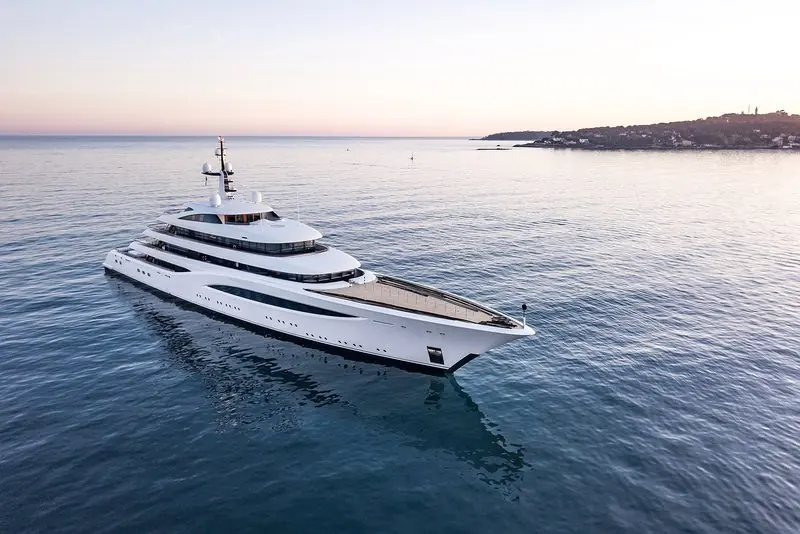
| Yacht simbolo | Aquarius (92 m, Feadship, 2016) |
| Concept di rilievo | Aqua (idrogeno), Nature |
| Aquarius, 92 m, Feadship, 2016 | exterior and interior, naval architecture by De Voogt |
| Galactica Super Nova, 70.07 m, Heesen, 2016: interior, under an Espen Oeino exterior | |
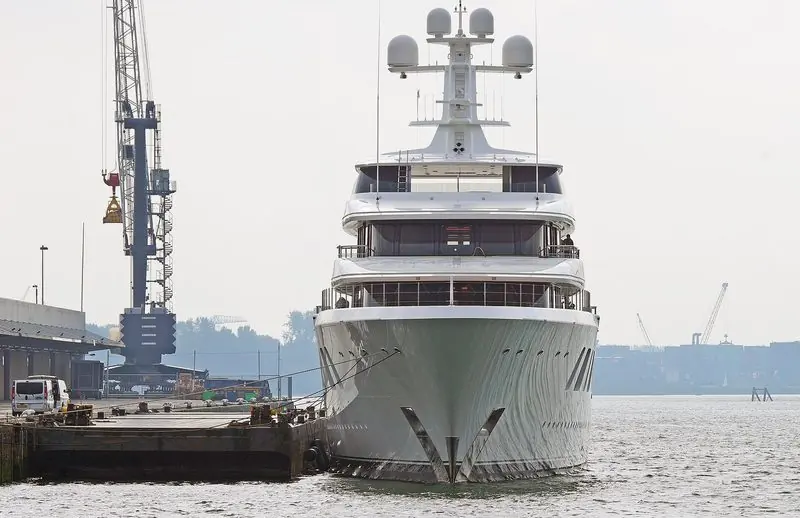
| Ulysses, 102.6 m, Feadship, 2024 | exterior and interior, naval architecture by Azure |
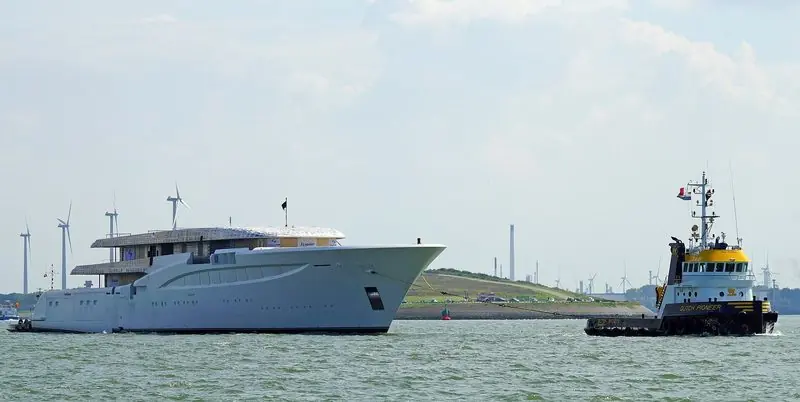
| Drizzle, 91.8 m, Feadship, 2024 | exterior and interior, naval architecture by De Voogt |
| Concepts | Nature (120 m, 2017), Aqua (112 m liquid hydrogen, 2019), Inspire (138 m, 2024) |
| Design fee | not published. Market band 1 to 5 per cent of build cost for the designer, plus 2 to 4 per cent for project management, both outside a yard's quoted price (SuperYachtReview 2026 price guide, updated March 2026) |
| Production consultancy through the build is an additional appointment, not part of the design fee. Naval architecture practice bills construction attendance separately and by the hour (ITIC standard trading conditions for naval architects, 8 July 2025) | |
| Copyright normally remains with the studio, with the owner licensed to build one hull unless the contract is negotiated further | |
Uno studio olandese con occhio industriale
Sander Sinot si è formato come designer industriale prima di passare agli yacht, e negli anni Novanta ha fondato il proprio studio nei Paesi Bassi. L'ufficio si trova a poca distanza in auto da Amsterdam ed è cresciuto fino a una squadra di una cinquantina di persone fra architettura, design e ingegneria. Copre sia il design degli interni sia quello degli esterni sotto lo stesso tetto. Questo approccio a studio unico è centrale per la continuità visiva che persegue. Tenere interni ed esterni sotto lo stesso tetto evita le cuciture visive che compaiono quando due società si dividono uno yacht.
La formazione nel disegno industriale si vede nella cura dello studio per l'ergonomia, i materiali e il modo in cui le cose sono fatte. Sinot tratta uno yacht come un oggetto intero, non come uno scafo a cui si aggiungono stanze dopo. La squadra copre modellazione, visualizzazione e consulenza alla produzione accanto al puro progetto. Questa ampiezza permette all'ufficio di seguire un'idea dallo schizzo al dettaglio finito. La squadra sa dare forma a un concept, ingegnerizzarlo e risolverne il dettaglio senza passare il lavoro ad altri a ogni stadio.
Calmo, naturale e minimale
La cifra di Sinot è la misura, con linee pulite, materiali naturali e un legame forte fra dentro e fuori. Lo studio predilige interni calmi in cui a lavorare sono la luce, la pietra e il legno invece dell'ornamento. I suoi esterni sono quieti e moderni, e lasciano che sia la proporzione a reggere il progetto. L'effetto complessivo è sereno più che rumoroso. Lo studio si affida a materiali, luce e proporzione per reggere un ambiente, invece di stratificare decorazione.
La natura è un tema ricorrente, e l'ufficio porta spesso verde, acqua e luce naturale in profondità dentro uno yacht. Questo dà al suo lavoro un carattere contemporaneo e attento al benessere, che oggi molti armatori cercano. Lo studio mescola elementi naturali e artificiali con mano leggera. Quell'equilibrio è diventato il suo tratto riconoscibile. Portare luce naturale e verde in profondità dentro uno scafo è molto più difficile di quanto sembri da fuori.
Minimalismo calmo oggi, e un argomento serio a favore dell'idrogeno domani.
Aquarius e i concept sull'energia pulita
Aquarius da 92 metri, costruito da Feadship e consegnato nel 2016 per Steve Wynn, è lo yacht più noto dello studio, con Sinot responsabile di esterni e interni. Il progetto ha unito uno styling minimalista all'ingegneria Feadship, con un risultato molto ammirato. Resta un esempio forte dell'estetica calma dello studio alla grande scala. Lo yacht ha contribuito ad affermare Sinot nella fascia alta del mercato. Ha mostrato che una mano minimalista può stare bene su uno yacht custom molto grande.
L'ufficio è altrettanto noto per concept lungimiranti che mettono alla prova idee nuove. Aqua, presentato nel 2019, immaginava uno yacht di 112 metri alimentato a idrogeno liquido e ha portato l'attenzione mondiale sulla propulsione a zero emissioni. Il concept Nature, da 120 metri, metteva un giardino vivo al cuore del progetto. Questi studi segnalano dove lo studio pensa possa andare lo yachting di lusso. I concept si leggono come studi ingegneristici seri, non come pezzi da esposizione pensati solo per uno stand.
La collaborazione con Feadship
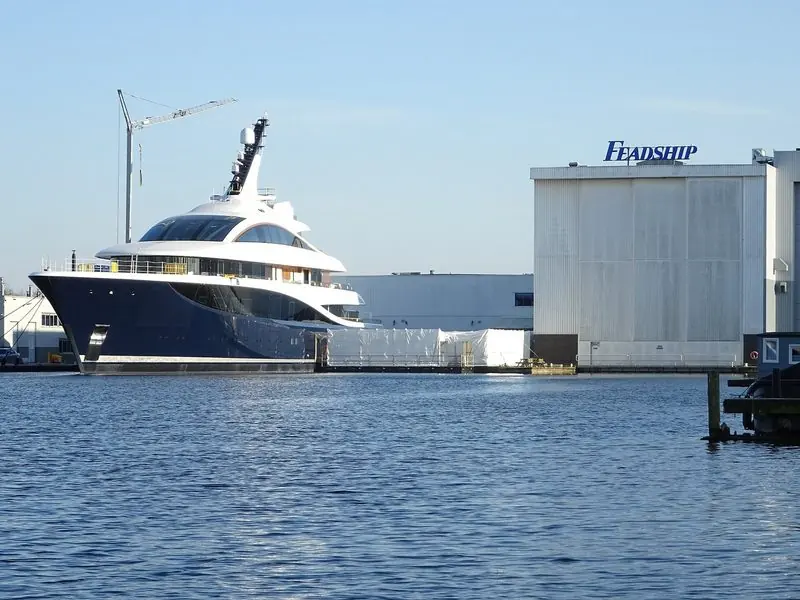
Il lavoro ravvicinato di Sinot con Feadship ha plasmato buona parte del suo portfolio costruito e della sua reputazione. Il rapporto affianca lo styling dello studio a uno dei costruttori più esigenti al mondo. Lavorare con un cantiere di quel calibro richiede precisione, e il rigore industriale dello studio si adatta bene. Quella collaborazione ha prodotto alcuni dei suoi lavori più compiuti. Costruire con un cantiere di quel livello lascia poco margine di errore nel dettaglio.
L'ufficio coinvolge gli armatori in una conversazione dettagliata su come vogliono vivere il mare. I suoi temi legati al benessere e alla natura nascono spesso proprio da quei colloqui. Lo studio segue il progetto durante la costruzione per mantenere intatto l'intento di calma. Questo processo attento si addice agli armatori attratti da un lusso più silenzioso. Quegli armatori tendono ad apprezzare la calma e una sensazione di benessere più dell'ostentazione.
Una voce per lo yacht del futuro
Sinot si è ritagliato una posizione chiara come studio della misura e delle idee sulla sostenibilità. I suoi concept hanno orientato il dibattito del settore sulla propulsione pulita più di quasi ogni altro. Quella capacità di indirizzo si affianca a un curriculum rispettato di yacht consegnati. L'ufficio è preso sul serio su entrambi i fronti. Yacht consegnati e concept lungimiranti si rafforzano a vicenda nella reputazione dello studio.
Lo stile calmo e naturale dello studio si è rivelato influente man mano che i gusti si allontanavano dall'eccesso. Il lavoro con Feadship lo tiene vicino al centro della scena olandese. Sinot continua a sviluppare sia yacht reali sia concept. È diventato un riferimento per un'idea più pulita e più silenziosa di superyacht. Quella posizione è diventata più preziosa man mano che gli armatori pesano l'impatto delle proprie barche.
The 2024 Feadships
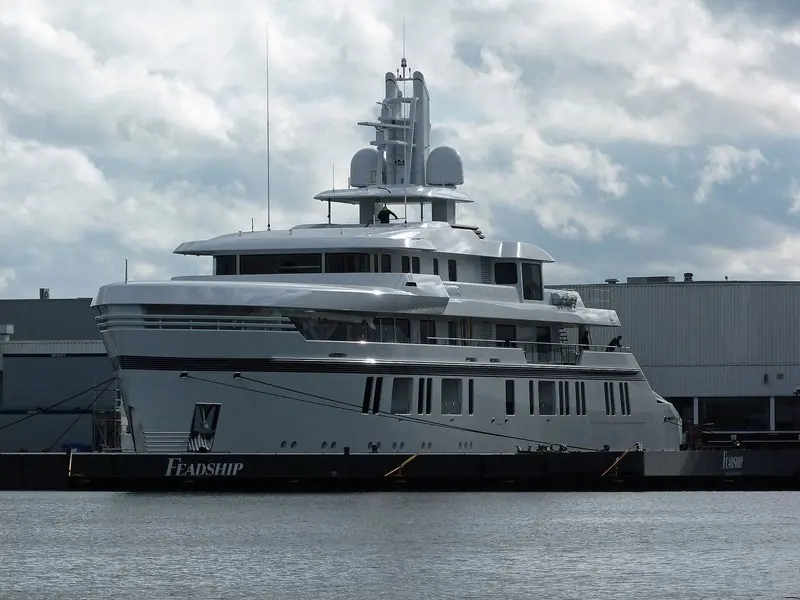
Two Feadships delivered in 2024 carry Sinot exterior and interior. Ulysses is 102.6 metres, with naval architecture by Azure Yacht Design and Naval Architecture, and she was one of the most tightly kept builds in recent Dutch memory. Drizzle is 91.8 metres, with naval architecture by De Voogt and a hybrid propulsion package.
Two boats of that size from one yard in one year, both inside and out from the same studio, is a serious statement about capacity. Feadship does not hand a designer two hulls at once on reputation. It matters to a prospective owner because it is evidence the office can staff a project properly and still answer the phone, which is the failure mode that catches out small studios when they win a big commission.
Aqua, Nature and the concepts
The studio is equally known for unbuilt work. Nature, a 120 metre concept shown at Monaco in 2017, put a climate-controlled garden at the centre of the yacht with a panorama deck above 900 square metres. Aqua, revealed at Monaco in 2019 at 112 metres, was drawn around liquid hydrogen stored in two cryogenic tanks and fuel cells, quoted at 17 knots and 3,750 nautical miles, with water as the only emission. Inspire, a 138 metre concept from 2024, carries an underwater observation room.
Concepts are easy to dismiss and this office has earned the right not to be. Aqua was published five years before Feadship launched an actual hydrogen fuel-cell yacht, and the arguments it forced into the trade press about tank volume, bunkering and range are the arguments the industry is now having in earnest. For an owner, the studio's concept work is a useful window into how it thinks. It is not a promise that any of it can be built to a budget.
How a commission runs, and what it costs
The studio works through a long dialogue about how an owner intends to live at sea, then moves through concept development to final design, with 3D visualisation used throughout to test whether an idea survives the technical and classification limits. Naval architects and yard staff join that conversation early, which is necessary when the studio does not hold the naval architecture itself. Commercially the work is bought in stages and paid for before a yard is contracted. The gates are worth naming. An owner can stop after concept for the price of the concept. A letter of intent reserves a slot. The yacht building agreement is the commitment, and from the day the yard starts engineering to these drawings, changing studio means paying for the same design twice.
No studio at this level publishes a fee scale, so the only current market figure is the SuperYachtReview 2026 price guide, updated March 2026, which puts a designer's fee at 1 to 5 per cent of build cost and project management at a further 2 to 4 per cent, both outside the yard's quoted price. On a EUR 200 million Feadship the designer's band alone is EUR 2 million to EUR 10 million. Exterior and interior from one office sits high in it, and still costs less than two appointments plus the interface between them. The studio's production consultancy is an additional service rather than part of the design fee, which is the normal way supervision is billed and, on a minimal interior, the money best spent.
Recognition, and who it does not suit
Sinot yachts have collected design awards consistently since Musashi, and the studio's concept work has taken it well beyond the trade press. The recognition is worth a narrow amount to an owner. It confirms the finish met a standard specialists would defend and it helps a broker at resale. It says nothing about behaviour in the second year of a build.
This studio does not suit an owner who wants a rich, layered, art-led interior, because the work runs the other way and a minimalist scheme executed half-heartedly looks cheap. It does not offer naval architecture, so anyone wanting hull form and styling under one contract should look elsewhere. It is not set up for boats below about 45 metres, and it is not a sailing yacht office.
The quiet interior is the one the market can absorb
A calm, daylight-led scheme is the most resale-friendly kind of authored interior in this directory, and for an unromantic reason. It does not impose a taste on the next owner, so the buyer pool is not narrowed by the decoration. Ocean Independence, writing on 11 May 2026, lists accommodation, layout, volume, technical specification and paint condition as the things that position a boat against its comparables, and a Sinot interior scores on all of them without asking a buyer to share an enthusiasm. Set against that, Feadship underneath is the real asset. Ocean Independence names the Northern European yards as those that continue to command market confidence, and a hull from one of them carries a valuation that a design signature does not.
The risk runs the other way, and it is a condition risk rather than a taste risk. Minimalism has nowhere to hide wear. A stone joint that has moved, a veneer that has faded unevenly, a cracked seal in a full-height glass panel are all invisible in a busy interior and glaring in this one. A ten-year-old Sinot boat that has been maintained looks new. One that has not looks tired in a way that costs real money to reverse, and the market does not usually give back the full cost of refit spending. The maintenance file is worth more on this boat than on almost any other in the directory.
Informazioni pratiche
| Typical project size | 45 metres and above; the studio does not take smaller commissions |
|---|---|
| Design fee | Not published. Market band for a full exterior-plus-interior appointment at this level is 1 to 5 per cent of build cost (SuperYachtReview 2026 price guide), EUR 2 million to EUR 10 million on a EUR 200 million Feadship |
| Project management fee | A further 2 to 4 per cent of build cost, billed separately from the design fee |
| What is not included | Naval architecture is never part of the appointment. On Feadships it comes from De Voogt in-house; on other yards the owner must appoint a naval architect separately |
| Payment structure | Bought in stages: concept, then a letter of intent to reserve a slot, then the yacht building agreement as the binding commitment. Changing studios after the yard starts engineering means paying for the design twice |
| Where to find the studio | Vlierberg 3, Eemnes, Netherlands, about 20 minutes from Schiphol airport, inside the Dutch yacht-building cluster |
| Studio size | Close to 50 staff across architecture, interior architecture, industrial design, 3D visualisation, design engineering and production consultancy |
Cosa riferiscono armatori ed equipaggi
A two-year, hands-on brief
Steve Wynn worked through Aquarius's interior concept for two years alongside his own longtime designer Roger Thomas before Sinot executed it. It was an unusually long and direct client involvement for a yacht this size.
YachtBuyer
Cosa convince e cosa va valutato
Punti di forza
- One studio for the whole visible boatExterior and interior come from a single design language and a single contract, removing the friction that usually opens up at the window line between two separate designers.
- Production consultancy through the buildThe studio stays involved once the yard starts cutting, which matters most on the minimalist work it is known for, where a badly cut stone joint has nowhere to hide.
- Proven capacity at the largest sizesTwo Feadships over 90 metres delivered in the same year, 2024, both exterior and interior from this office, is evidence of staffing depth that smaller studios cannot show.
- Resale-friendly interiorsOcean Independence names calm, daylight-led schemes as the kind that do not narrow the buyer pool at resale, unlike a heavily authored, opinionated interior.
Da valutare
- No naval architectureAn owner wanting hull form and styling under one contract has to look elsewhere. Every Sinot yacht carries a separate naval architecture credit, from De Voogt, Azure or others.
- Not for boats under about 45 metresThe studio's own build list starts there, so smaller commissions are out of scope entirely.
- Minimalism is unforgiving of wearA calm interior with little to distract the eye shows a moved stone joint or an unevenly faded veneer far more readily than a decorated one, and refit spending to fix it is not usually recovered in full at resale.
- No published fee scaleOwners are budgeting from a third-party market band (SuperYachtReview) rather than a rate card, so a real number only comes from asking the studio directly.
A chi si rivolge: Armatori attratti da un design calmo e minimalista e da uno studio che ragiona seriamente su una propulsione più pulita.