Terence Disdale Design
| Fondatore | Terence Disdale |
|---|---|
| Fondazione | 1973 |
| Sede | Richmond upon Thames, Inghilterra |
| Organico | piccolo, circa 15 persone |
| Discipline | design di esterni e interni |
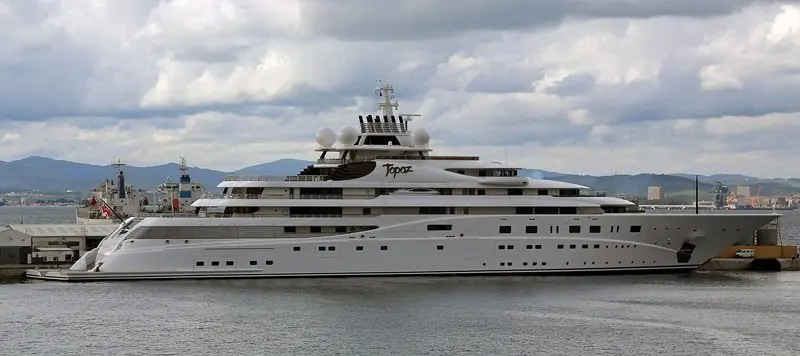
| Yacht simbolo | Eclipse (162 m), Pelorus (115 m), Topaz/A+ (147 m) |
| Filosofia | 'casa sulla spiaggia, non attico' |
| Blue, 160.6 m, Lurssen, 2022 | exterior and interior, 14,785 GT, 48 guests and 80 crew |
| Opera, 146.35 m, Lurssen, 2023 | exterior and interior |
| Interior work under other exteriors | Pelorus (115 m, Lurssen, 2003) and A+, delivered as Topaz (147 m, Lurssen, 2012) |
| Feadship work | Sussurro (49.5 m, 1998, exterior and interior) and Ecstasea (85.95 m, 2004, interior) |
| Philosophy, in the founder's words | beach house not penthouse |
| Design fee | not published. Market band 1 to 5 per cent of build cost, plus 2 to 4 per cent project management, both outside the yard price (SuperYachtReview 2026 price guide, updated March 2026) |
| Construction attendance is charged as a separate service, not included in the design fee, which is standard naval architecture practice | |
| No marine standard form covers the unavailability of a named principal. The ITIC conditions of 8 July 2025 address intellectual property and cap liability at ten times charges or GBP 100,000, whichever is higher, and are silent on key-person cover | |
Cinquant'anni sul Tamigi
Terence Disdale ha aperto il proprio studio nel 1973, il che ne fa uno dei nomi più longevi del design nautico. L'ufficio ha sede a Richmond upon Thames e lavora con una squadra piccola e affiatata. Disdale ha costruito la propria reputazione in decenni di lavoro al vertice assoluto del mercato. La longevità è una parte importante della storia dello studio. Mezzo secolo di lavoro al vertice del mercato è un percorso raro in qualunque campo del design, e pochi nomi sono durati altrettanto.
Lo studio è rimasto volutamente compatto invece di crescere in una grande casa strutturata. Quella dimensione tiene la mano del fondatore vicina a ogni progetto. Permette anche allo studio di essere selettivo sul lavoro che accetta. Il risultato è un corpo di lavoro concentrato, costruito in mezzo secolo. Restare piccolo è stata una scelta deliberata, e permette al fondatore di tenere la mano su ogni progetto che esce dall'ufficio.
Casa sulla spiaggia, non attico
L'idea guida di Disdale è racchiusa nella formula casa sulla spiaggia, non attico: una preferenza per un lusso rilassato e informale rispetto al glamour duro. I suoi interni prediligono materie naturali, luce morbida e comfort invece del lucido e della brillantezza. L'obiettivo è uno yacht che risulti facile da vivere, non una vetrina. Quella filosofia ha plasmato un'estetica riconoscibile e molto imitata. L'idea sembra semplice, eppure va contro un mercato che spesso scambia il lucido duro per lusso.
Gli esterni portano la stessa sicurezza sobria, con linee equilibrate che evitano i trucchi. Lo studio progetta sia esterno sia interno, e mantiene coerente lo yacht dall'inizio alla fine. La sua misura spicca in un mercato che spesso insegue lo spettacolo. L'approccio ha retto bene lungo molti vari. Gli yacht disegnati così risultano accoglienti più che imponenti, e quel calore è difficile da copiare bene.
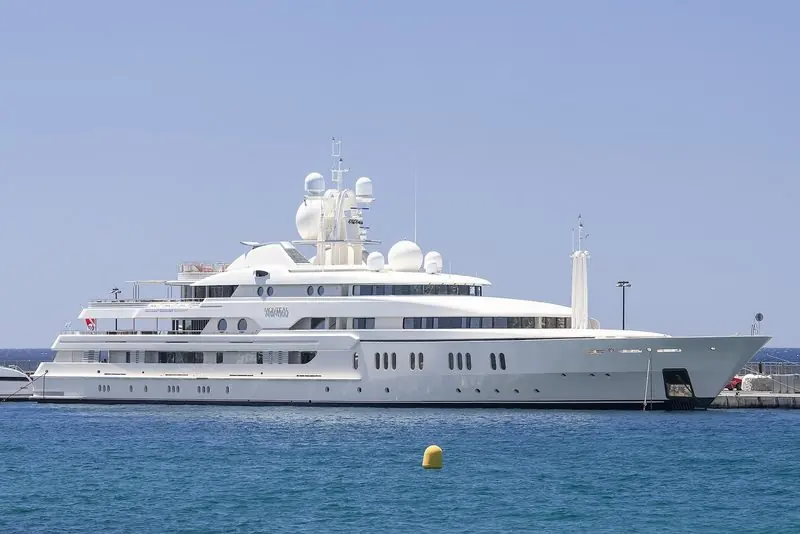
Casa sulla spiaggia, non attico: lusso rilassato disegnato sugli scafi più grandi.
Eclipse, Pelorus e i giganti
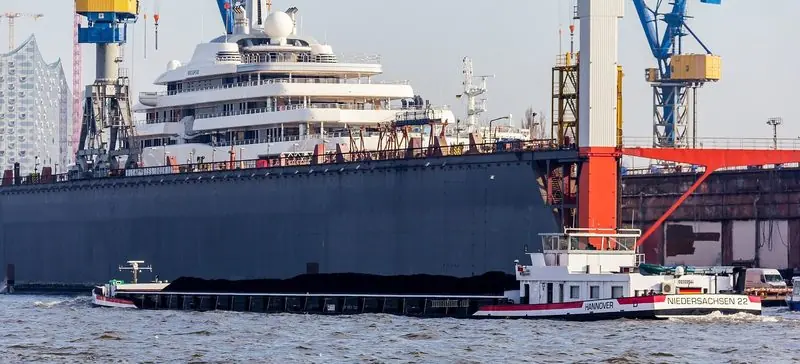
Eclipse da 162 metri, costruito da Blohm and Voss, è lo yacht più celebre dello studio ed era il più grande del mondo alla consegna. Pelorus da 115 metri è un altro riferimento, esempio precoce dello studio al lavoro su grandissima scala. Tatoosh, da 92 metri, sta accanto a loro nel portfolio. Questi yacht hanno affermato Disdale come progettista di giganti. Lavorare ripetutamente a questa scala richiede la fiducia dei cantieri più seri, e ci sono voluti anni per conquistarla.
Topaz da 147 metri, poi rinominato A+, è un altro dei più grandi yacht che lo studio ha plasmato. Quella serie di progetti molto grandi è rara per qualunque singolo ufficio. Ognuno porta il carattere rilassato di Disdale nonostante la scala. Lo studio ha dimostrato più volte che il lusso informale può funzionare sugli scafi più grandi. Portare un'estetica rilassata verso i 160 metri è molto più difficile di quanto sembri a prima vista, eppure lo studio l'ha fatto più di una volta.
Come lavora lo studio
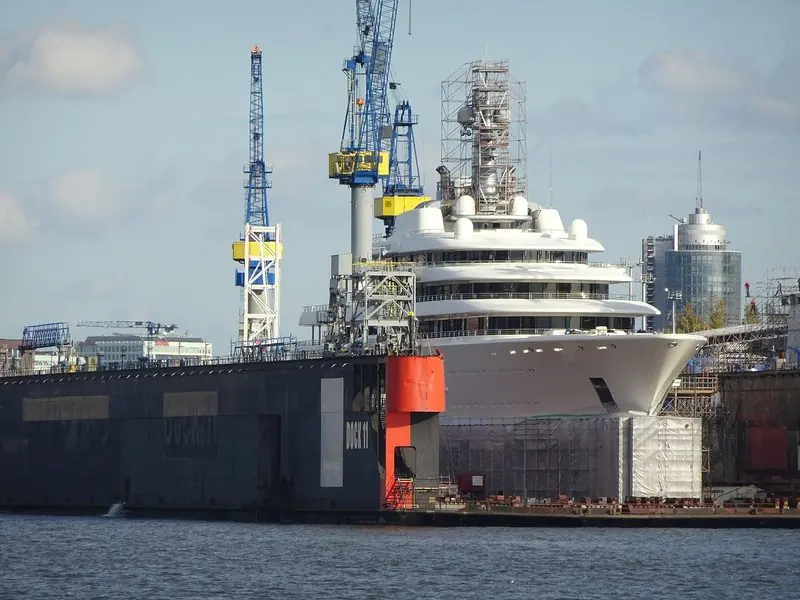
Disdale lavora con i grandi cantieri, soprattutto i costruttori tedeschi capaci degli yacht più grandi. La lunga esperienza dello studio gli permette di guidare un progetto esigente senza una squadra numerosa alle spalle. Resta vicino agli armatori che apprezzano la discrezione e un brief rilassato. Quel servizio personale è parte della sua attrattiva. Gli armatori di questo livello mettono spesso la discrezione davanti a tutto, e lo studio l'ha capito e rispettato da tempo.
L'ufficio progetta per essere abitato, e fa emergere il modo in cui un armatore e la sua famiglia usano davvero lo yacht. Le scelte di materiale e di colore discendono da quella conversazione. Lo studio protegge il proprio intento sobrio durante la costruzione. Questa cura mantiene lo yacht finito fedele all'idea originale. Lo studio segue il progetto da vicino, così che il brief rilassato sopravviva alle pressioni di una costruzione lunga.
Un gigante silenzioso del settore
Terence Disdale è tra i progettisti di yacht più influenti dell'era moderna. Il solo lavoro su Eclipse gli ha assicurato un posto nella storia della disciplina. La filosofia della casa sulla spiaggia è stata ampiamente imitata in tutto il settore. Quell'influenza pesa più delle dimensioni contenute dello studio. Molti uffici più grandi hanno preso in prestito l'idea della casa sulla spiaggia negli anni, senza mai eguagliarne l'esecuzione.
Lo studio ha dimostrato che un ufficio piccolo può dare forma agli yacht più grandi del mondo. Il suo stile rilassato si è rivelato duraturo mentre i gusti cambiavano. Lo studio resta selettivo e molto stimato. Il segno di Disdale sul design dei superyacht è profondo e destinato a durare. Il suo stile rilassato si è rivelato notevolmente duraturo mentre i gusti generali cambiavano intorno.
The interiors under other people's exteriors
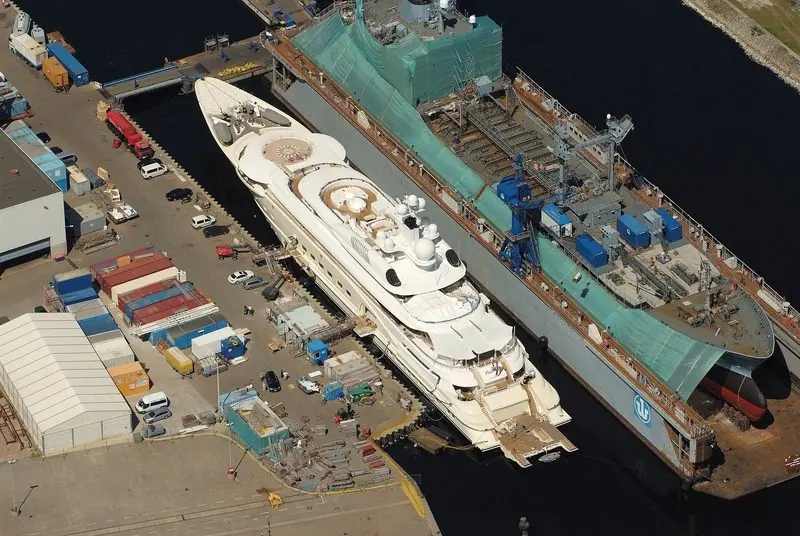
The studio's own listing singles out the interior of Pelorus, the 115 metre Lurssen delivered in 2003 to a Tim Heywood exterior. A+, delivered by Lurssen in 2012 at 147 metres under the name Topaz, is another Heywood exterior over a Disdale interior. Ecstasea, 85.95 metres from Feadship in 2004, carries a Disdale interior over a De Voogt exterior, arranged for 14 guests in seven cabins.
That pattern says something about how the industry uses this office. Two of the strongest exterior studios in the field will happily hand it the inside of their largest boats, which is not a courtesy anybody extends twice if the first result was difficult. For an owner splitting a commission between two studios, a designer with a long record of working under other people's profiles is a lower-risk appointment than one who has always controlled the whole hull.
The small end, and why it still matters
Sussurro was delivered by Feadship in 1998 at 49.5 metres with exterior and interior by Disdale and naval architecture by De Voogt. She is aluminium throughout with a GRP element in the superstructure. She was built light and built to go fast, at a point when Feadship was known for neither. She is still regarded as one of the more interesting boats the yard has produced.
A 50 metre is the harder design problem. There is nowhere to put anything, every square metre is contested, and the compromises are visible. A studio that can make a 50 metre feel generous is applying the same skill when it makes a 160 metre feel intimate. Owners looking at a first boat in the 40 to 60 metre bracket should not assume a name associated with giants is uninterested in them.
How a commission runs, and what it costs
Disdale works directly with owners and with a small number of yards, above all the German builders capable of the largest hulls. The studio takes the brief personally, and its stated method starts from the owner's actual use of the boat and his budget before it starts from a look. The engagement is staged and the design contract precedes the build contract, which means an owner is paying this office for a year before a yard is committed to anything. Site attendance through construction is billed as a separate service rather than folded into the design fee, and it is the item to protect, because an unpoliced design degrades quietly as the yard proposes cheaper details.
Nobody at this level publishes a scale. The market band is 1 to 5 per cent of build cost for the designer and a further 2 to 4 per cent for project management, both outside the yard's number, per the SuperYachtReview guide updated March 2026. On a 160 metre hull the arithmetic is uncomfortable to write down and still a small line against the build. What an owner is buying at the top of that band is exterior and interior from fifteen people rather than from two houses that have to be refereed. What he is not buying is naval architecture, which stays with the yard along with every performance guarantee in the build contract.
Recognition, and who it does not suit
The studio has taken design awards across five decades and its influence is visible in work signed by other people, since the relaxed interior has been widely copied since the 1990s. Awards are worth a narrow amount to an owner. They confirm a standard of finish and they help at resale. The more useful signal here is that the same fifteen people have been given the largest yachts in the world three times.
This studio does not suit an owner who wants hard, polished, formal glamour, because the whole practice is built against it. It does not offer naval architecture. Capacity is limited and an owner in a hurry will not be accommodated. Anyone who wants a large team of account managers responding to design changes at speed through a build should appoint a bigger house.
Fifteen people, one name, and what the contract should say about that
A studio of fifteen carrying its founder's name concentrates risk that a larger office spreads. The professional standard forms are no help. The ITIC standard trading conditions for naval architects, in the version dated 8 July 2025, cover intellectual property and cap liability at ten times the consultant's charges or GBP 100,000, whichever is higher, and say nothing at all about what happens if the named principal is unavailable in year three of a five-year build. That silence is the market norm, not an oversight by this studio.
The remedy is contractual and ordinary. Commercial consultancy treats death or prolonged incapacity of a key person as a termination event and obliges the consultant to propose a replacement of equal standing for the client's approval. A design agreement can carry the same clause, together with a right to the complete drawing and specification set in native format if the practice ceases trading. Copyright normally remains with the studio and the owner buys a licence to build one hull, so without that step-in right an owner holds permission to build a boat and no files to build it from. Fifty years of continuous trading is a good sign. It is not a substitute for the clause.
Relaxed ages well, very large does not sell fast
A Disdale interior is easier for a second owner to live with than most, because the palette is informal rather than personal and the approach has been copied so widely since the 1990s that it now reads as a familiar idiom instead of one man's signature. Teak, rattan and low-key materials also wear in a way that looks intended, which is the opposite of a high-gloss interior where every mark is a defect. That is a genuine, if unglamorous, resale advantage and it is worth more than the awards.
The constraint is size, and it overwhelms everything else. Above 140 metres the number of credible buyers worldwide is small enough to count, running costs are the real barrier to entry, and a boat can sit for years without that saying anything about its design. Against the 470 sales of 24 metres and over recorded by Denison Yachting for 2025, at an average 487 days on market, the largest yachts are a different market with different arithmetic. An owner commissioning at this scale should assume the boat is illiquid by construction and should value the design for the twenty years of use rather than for the exit.
Informazioni pratiche
| Design fee | not published; market band is 1 to 5 per cent of build cost plus 2 to 4 per cent project management, both outside the yard price. Construction attendance is billed as a separate service (SuperYachtReview 2026 price guide, updated March 2026) |
|---|---|
| What the studio covers | exterior styling and interior design, plus private aviation interiors; no naval architecture |
| Studio size and base | around 15 people at 6 The Green, Richmond upon Thames, Surrey |
| Key-person cover | not addressed by the standard ITIC trading conditions; an owner should ask for a named step-in or replacement clause rather than assume one exists |
| Notable full commissions | Eclipse (162.5 m, Blohm and Voss, 2010), Blue (160.6 m, Lurssen, 2022, 14,785 GT), Opera (146.35 m, Lurssen, 2023); interior-only work includes Pelorus and A+ (delivered as Topaz) |
Cosa riferiscono armatori ed equipaggi
No independently attributable owner testimony found
the portfolio includes some of the most secretive owners in yachting - Eclipse and Roman Abramovich, Tatoosh and the late Paul Allen - and this research found no on-the-record quote from any of them, a named captain, or a crew member about the studio's design work; only the founder's own philosophy quotes (beach house not penthouse) recur across press coverage
Yotters research desk
Cosa convince e cosa va valutato
Punti di forza
- One of the longest continuously running practices in the businessfounded in 1973 and still at around 15 people, with close to 100 completed yachts and three of the largest vessels ever delivered - Eclipse, Blue and Opera - all carrying both exterior and interior from the same office
- A consistent, legible design philosophy over five decadesbeach house not penthouse is not a slogan invented for marketing; the studio's own account is that it deliberately avoids the wow factor because nothing dates quicker, which is a defensible position on a yacht an owner expects to keep for twenty years
- Proven on both sides of a projectfull exterior-and-interior commissions (Eclipse, Blue, Opera) sit alongside interior-only work under other designers' exteriors (Pelorus, A+ delivered as Topaz), showing the studio can slot into either role
- A founder who still answers his own phoneat 15 people, an owner commissioning this studio is buying direct access to Terence Disdale himself rather than a large organisation's account structure
Da valutare
- Total key-person risk, with no cover in the standard contractno marine standard form addresses the unavailability of a named principal; the ITIC conditions of 8 July 2025 cover intellectual property and cap liability at ten times charges or GBP 100,000, whichever is higher, but are silent on what happens if Disdale himself becomes unavailable mid-build
- No naval architecturethe studio's disciplines are exterior styling, interior design and private aviation interiors; hull engineering has to be appointed separately
- No published fee scalethe only public figures are the market-wide SuperYachtReview band of 1 to 5 per cent of build cost plus 2 to 4 per cent project management, and construction-phase attendance is billed separately on top of that
- A deliberately narrow aesthetican owner who wants a formal, spectacle-driven interior is shopping against the studio's stated philosophy, not with it
A chi si rivolge: Armatori che vogliono un lusso rilassato e informale e un servizio discreto e personale su uno yacht molto grande.